
Can I buy a house and keep my council house? With rents still climbing, more working families are sitting somewhere uncomfortable in the middle. They earn too much to feel secure on a low wage, yet not enough to buy comfortably without help. If that sounds familiar, understanding how income limits really work is the first step.
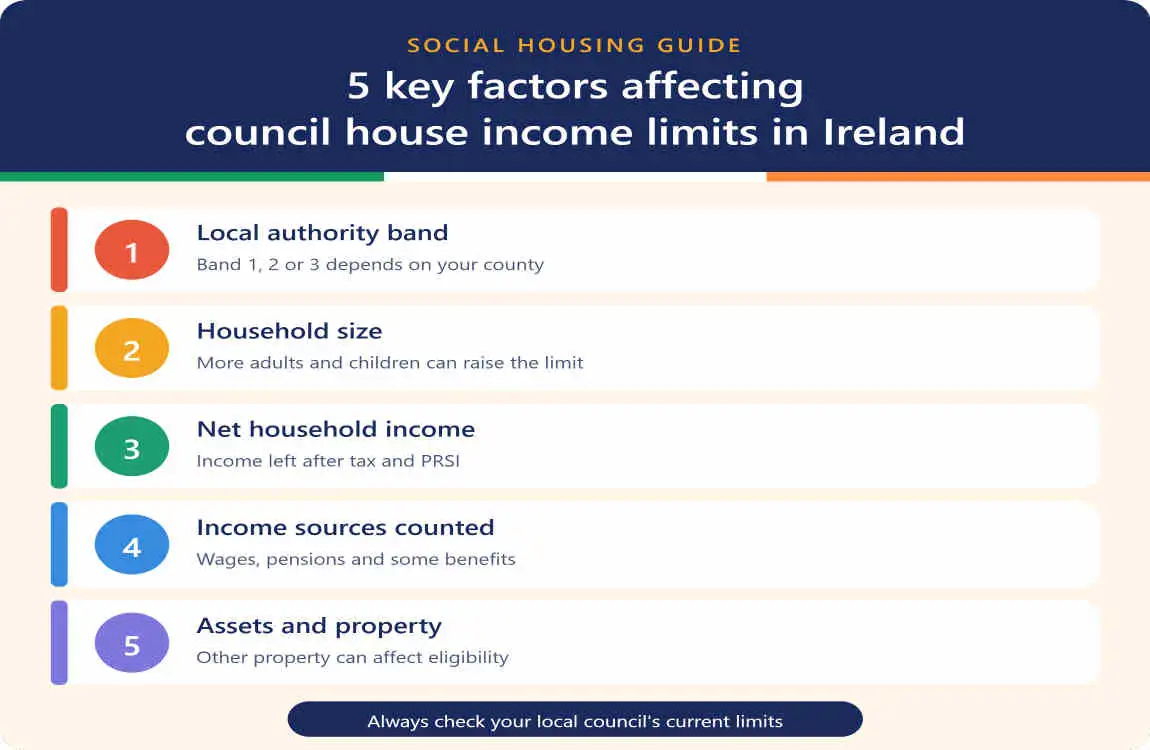
Social housing in Ireland is designed for people who cannot afford a home of their own, so owning another property that could meet your housing need generally puts your eligibility, and potentially your tenancy, at risk. The detail matters, though, and it depends on your council. Let’s walk through the five factors that shape council house income limits and what each one means for you.
Your Local Authority Area (The Income Band)
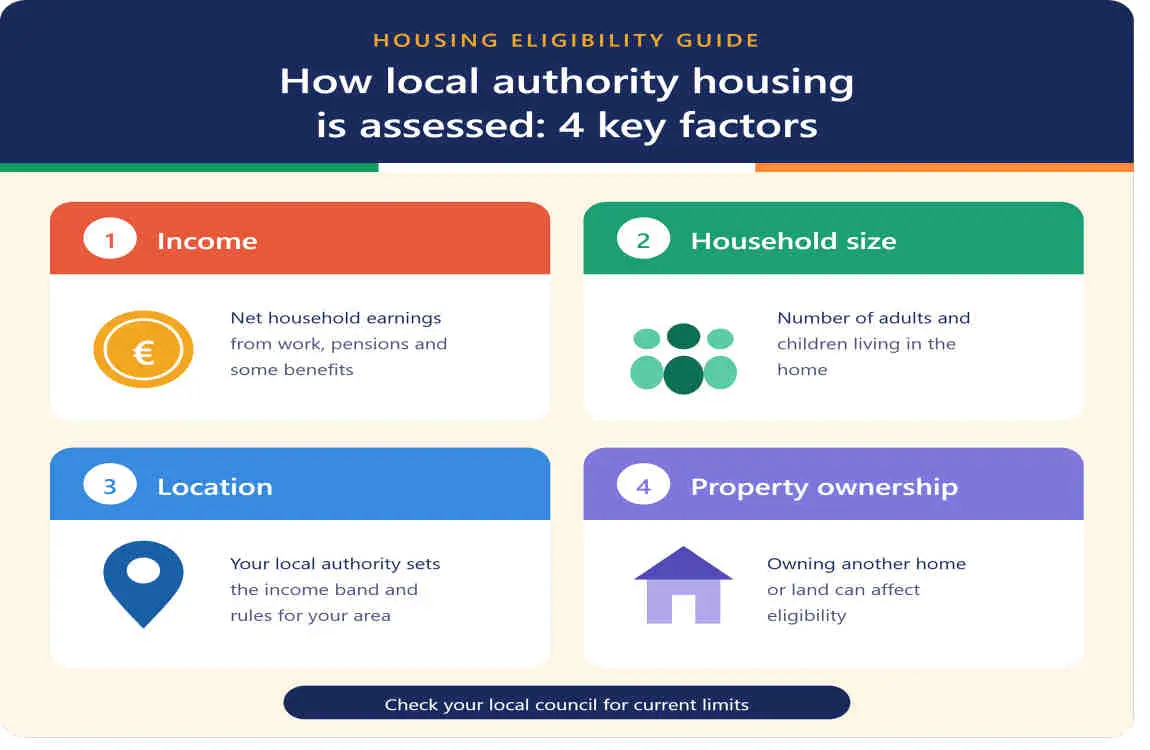
Ireland does not have one single income limit. Each local authority is placed in one of three bands, and the band sets the maximum net income for a single person. The bands were built around local private rental house costs, which is why Dublin sits higher than many rural counties.
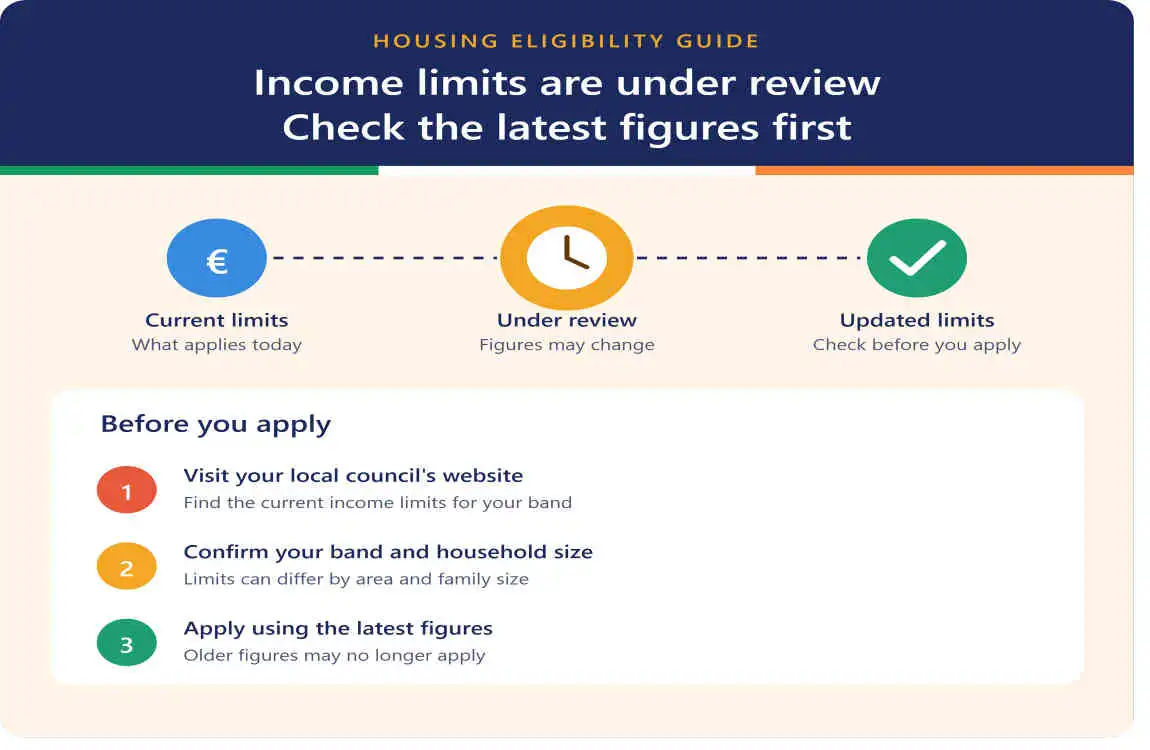
The Department of Housing confirmed that the baseline thresholds rose by €5,000 from 1 January 2023, bringing them to €40,000, €35,000 and €30,000 for bands 1, 2 and 3 respectively. A council can also set a lower limit than the maximum, so always check your own authority’s published table. The gaps are real estate: one councillor recently pointed out that Limerick’s limit sits at €35,000 compared with €40,000 in Galway.
Why it matters: two identical households can be eligible in one county and refused in the next, simply because of the band.
Household Size and Composition
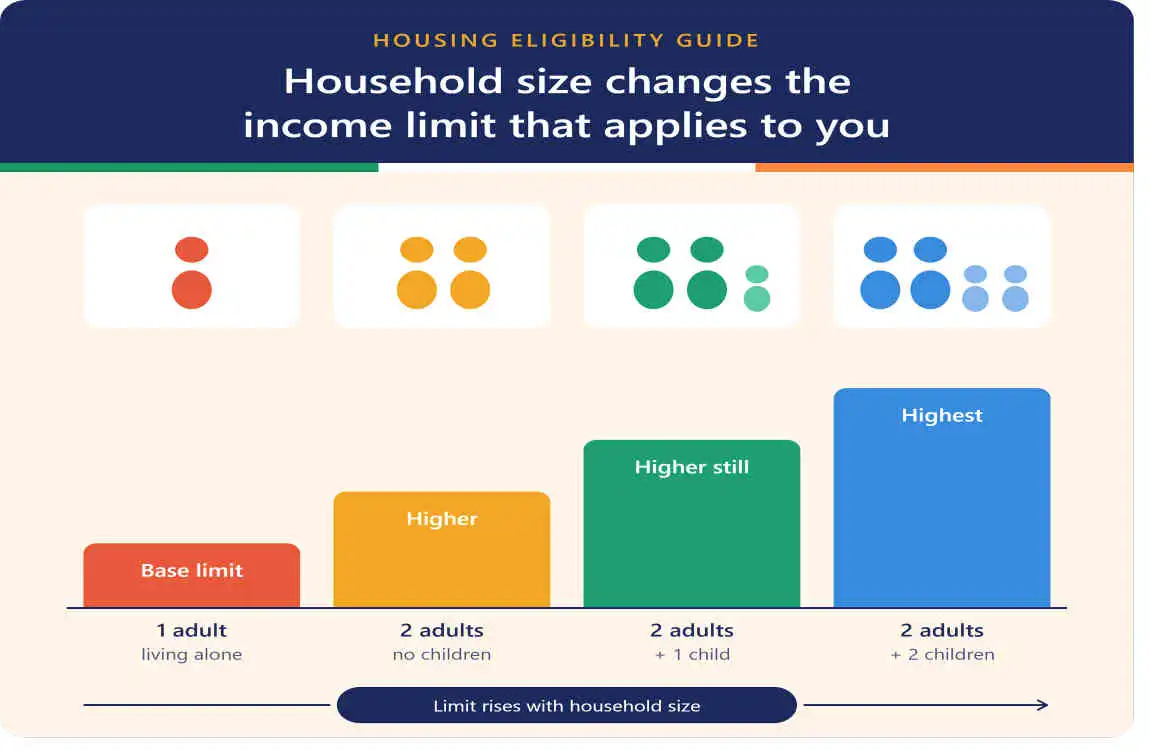
The headline figures apply to a single adult. Once you add a partner or children, the limit rises. The Department has described an allowance of 2.5% for each child within the national framework, and councils publish full tables for different house types, such as one adult with one child or two adults with two children. You can see an example in Cork City Council’s household means policy.
Why it matters: a family of four can earn meaningfully more than a single person and still qualify, so never compare your income to the single-person figure alone.
How “Net Income” Is Actually Calculated
Many applicants assume the council looks at their gross salary. It does not. Under the household means policy used in every local authority, net income is gross household income less income tax, PRSI, USC and any additional superannuation contribution.
The assessment also looks at the whole household, not just you. Income from other adults, certain social welfare payments and other sources can all count, so it pays to gather payslips and statements before you apply.
Why it matters: a salary that looks too high on paper may still fall under the limit once deductions are removed.
Owning Property (The Heart of “Can I Buy a House and Keep My Council House?”)
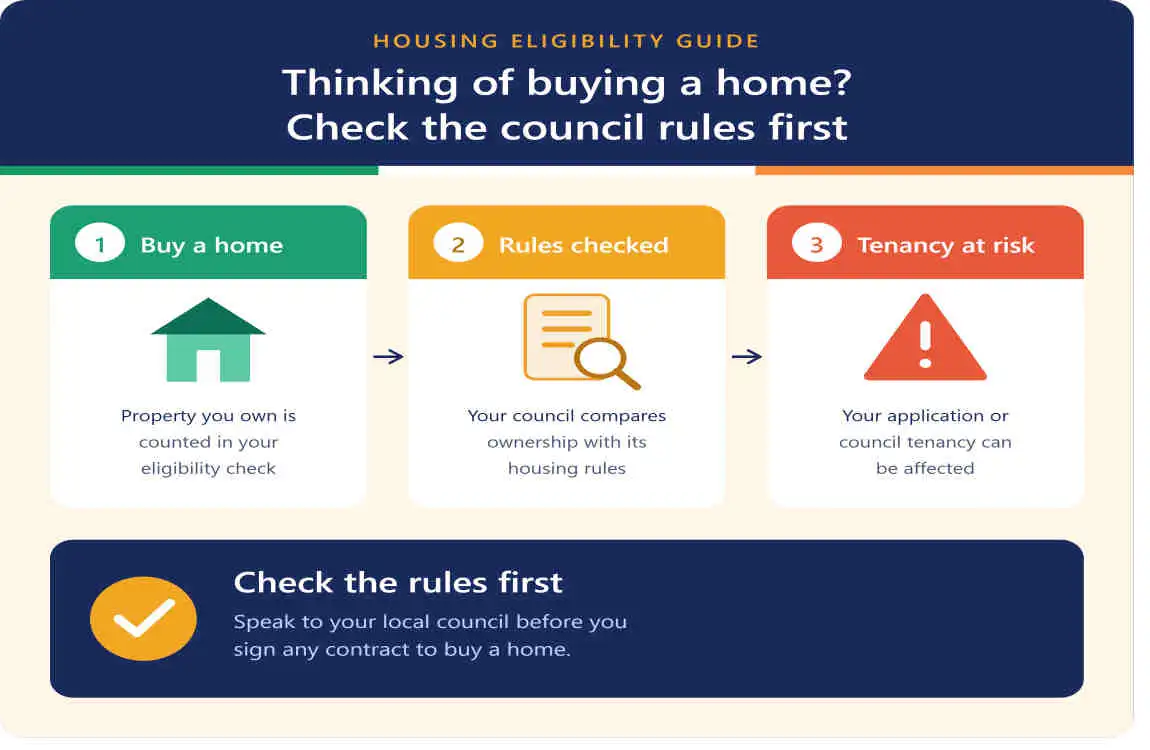
This is the factor that trips people up. When you apply for social housing cost, the council assesses whether you own alternative accommodation available to you that could meet your housing need, alongside income, residency and any rent arrears.
The principle has been tested. In a widely reported case, a Dublin couple were told by the council that owning property made them ineligible to stay on the housing list, before the case was eventually settled. The facts of each case differ, but the direction of travel is clear.
So, can you buy a house and keep your council house?
In most situations, no. If you buy a home that meets your family’s needs, the reason you were given a council tenancy has largely gone, and you are expected to tell your council about the change. Your tenancy agreement and your council’s allocation scheme set the exact rules, so read both before you sign for a mortgage. If you are unsure, ask your housing officer in writing before you commit to a purchase.
Legitimate routes if you want to own
- Buy your own council home. Under the Tenant Incremental Purchase Scheme, eligible tenants can buy the home they live in. Councils such as South Dublin require that you have been in receipt of social housing support for at least 10 years, and in joint tenancies one tenant must meet that test.
- Local Authority Home Loan. The government has raised the loan and house price limits this year, which widens access for first-time buyers. Read the Department of Housing announcement for the current thresholds.
Differential Rent and Changes in Your Circumstances
Income limits do not stop mattering once you have a tenancy. Council tenants pay rent under a differential rent scheme, which means the rent is based on household income and must be updated when your circumstances change. Each council runs its own scheme, and a recent Local Government Audit Service review found comparable households in different council areas can pay noticeably different rents.
In practice this means a pay rise, a new earner in the house or an inheritance should be reported promptly. Under-declaring income can lead to back-charges and, in serious cases, action on the tenancy.
What Could Change Next?
The smart system is under pressure. The Department has said it has been examining the existing income limits against current market and household income conditions, and opposition TDs have even tabled a bill to abolish the limits entirely. The earlier Housing Agency review of income eligibility already moved five councils into a higher band, so further change is plausible. Until anything is formally announced, treat the published council tables as the rule.
Frequently Asked Questions
Can I buy a house and keep my council house in Ireland?
Generally no. Owning accommodation that meets your housing need affects eligibility for social housing support. Check your tenancy agreement and speak to your council before buying.
Do councils look at gross or net income?
Net income. It is gross household income less income tax, PRSI, USC and any additional superannuation contribution.
Are income limits the same across Ireland?
No. They vary by band and by household size, and a council may set a lower limit than the national maximum.
Can I buy the council house I already live in?
Possibly. The Tenant Incremental Purchase Scheme allows eligible tenants to buy their home, subject to criteria such as time spent on social housing support.
