

To clean a wood burning fireplace, wait until the ashes are fully cold, scoop them into a metal bucket, sweep and vacuum the firebox, scrub soot from the walls and glass, then book a professional chimney sweep for the flue. Do the firebox clean every few weeks in burning season, and have the chimney itself swept at least once a year.
A crackling fire is the heart of a cosy home, but every log leaves ash, soot and tar behind. Left alone, that buildup dulls your hearth, fills the room with a smoky smell and, in the worst case, becomes a fire risk.
How Often Should You Clean a Wood Burning Fireplace?
- Firebox (ash and debris): every 2–4 weeks in heavy use, or when ash is a few centimetres deep. Leaving a thin layer of ash can help the next fire start, but a deep clean pile chokes airflow.
- Glass doors and hearth: every few weeks, or whenever soot clouds the glass.
- Chimney and flue: HETAS recommends sweeping at least twice a year when burning wood, and the US Chimney Safety Institute of America (CSIA) advises an annual professional inspection.
What You Need Before You Start
- Metal ash bucket with a lid
- Fireplace shovel and hand brush
- Ash vacuum or a shop vac with a fine filter
- Stiff nylon brush, sponge and microfibre cloths
- Dust mask, goggles and rubber gloves
- Dust sheet or old tarp for the floor
- Mild dish soap, white vinegar and warm water
How to Clean a Wood Burning Fireplace: Step by Step
Let everything cool completely
Ashes can hold hidden embers for a long time. Wait at least 24 to 48 hours after your last fire before you touch anything. Never use a regular household vacuum on ash, as live sparks can ignite the bag and filter.
Protect the room
Lay a dust sheet around the hearth and move rugs, cushions and ornaments away. Put on your mask, goggles and gloves. Fine ash travels, so close nearby doors and keep a clean window slightly open.
Remove the grate, then the ash
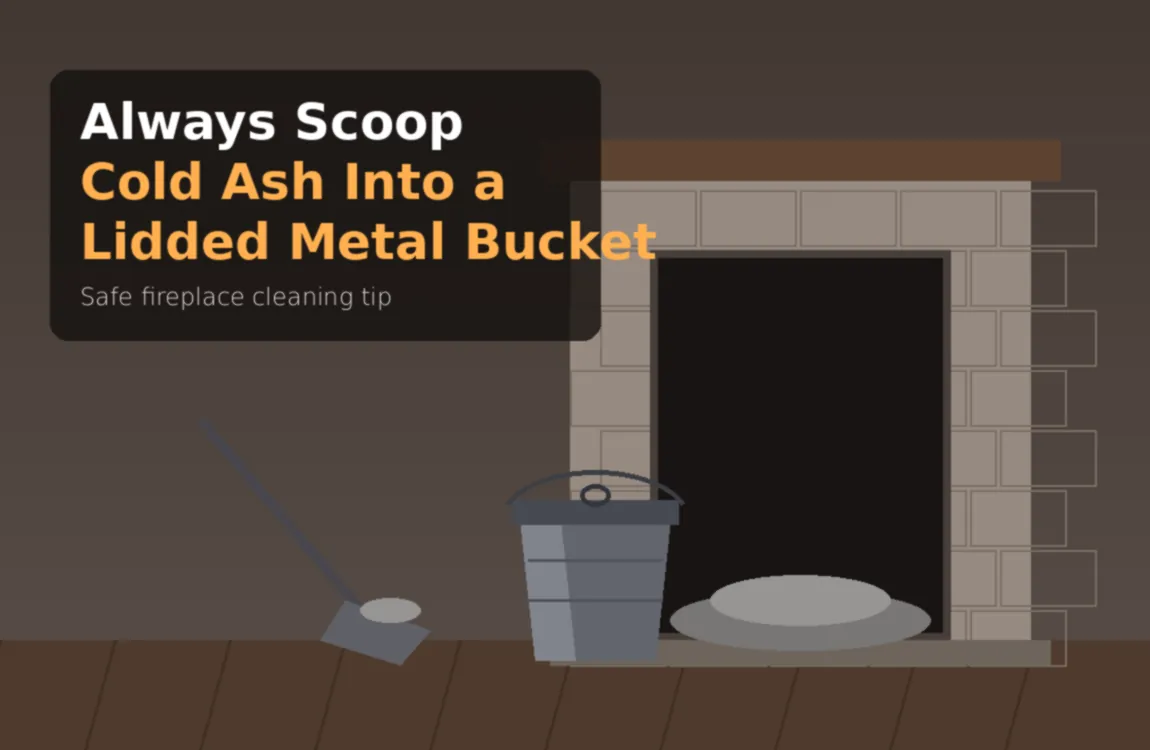
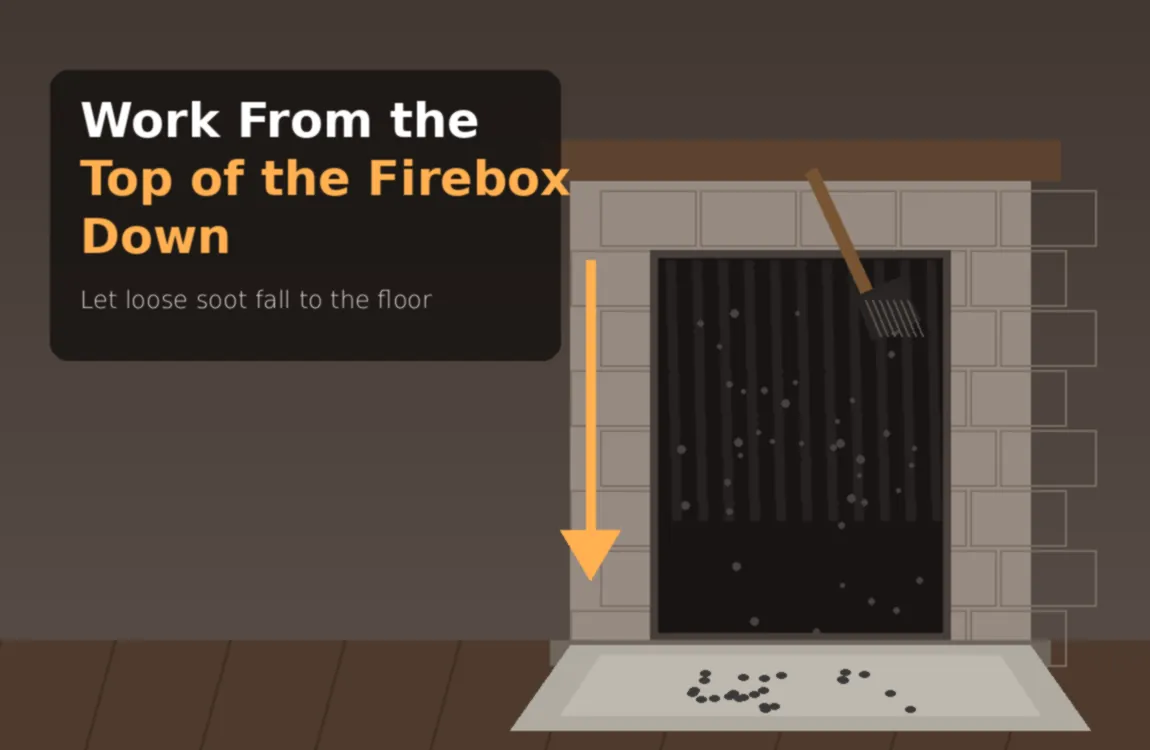
Lift out the grate or andirons and knock loose debris back into the firebox. Scoop the ash into your metal bucket with the shovel, then sweep the walls and floor with a hand brush. A tarp on the floor and clearing the firebox first makes every later step easier, as The Home Depot’s chimney cleaning guide also advises.
Vacuum what is left
Use a vacuum made for ash to lift fine dust from corners and the hearth. Empty the container often so it does not clog.
Scrub soot off bricks
Mix a few drops of dish soap with warm water, or use equal parts white vinegar and water. Scrub the bricks with a stiff nylon brush, working in small sections, then wipe with a damp sponge. Avoid soaking the masonry and skip wire brushes on soft or painted brick, which can scratch the surface.
Clean the glass doors
Spray a dedicated fireplace glass cleaner, or wipe with a damp cloth dipped in a little cold ash for gentle scrubbing, then rinse and buff dry. Only clean glass when it is fully cool.
Dispose of ash safely
Keep the lidded metal bucket outside, on a non-flammable surface and away from walls, decking and fences, until you are sure it is cold. Cold wood ash can then go on compost or garden beds in small amounts, but never put it in a plastic bin or bag.
Check the damper and the firebox
Make sure the damper opens and closes smoothly. Look for cracked bricks, loose mortar or a damp smell. Any of these is a reason to call a professional before you light another fire.
What Is Creosote and Why Does It Matter?
Creosote is a sticky, tar-like deposit that forms when wood does not burn completely. HETAS describes it as a highly flammable deposit made of soot, chemicals and particles from incomplete combustion. It is a normal by-product, but heavy buildup is the leading cause of chimney fires according to the CSIA. The US EPA, citing the National Fire Protection Association, notes that an estimated 25 percent of home heating fires are caused mainly by creosote buildup.
Warning signs: a strong tar or smoky smell, black flaky deposits, smoke blowing back into the room, or a fire that is hard to keep lit.
Should You Clean the Chimney Yourself?
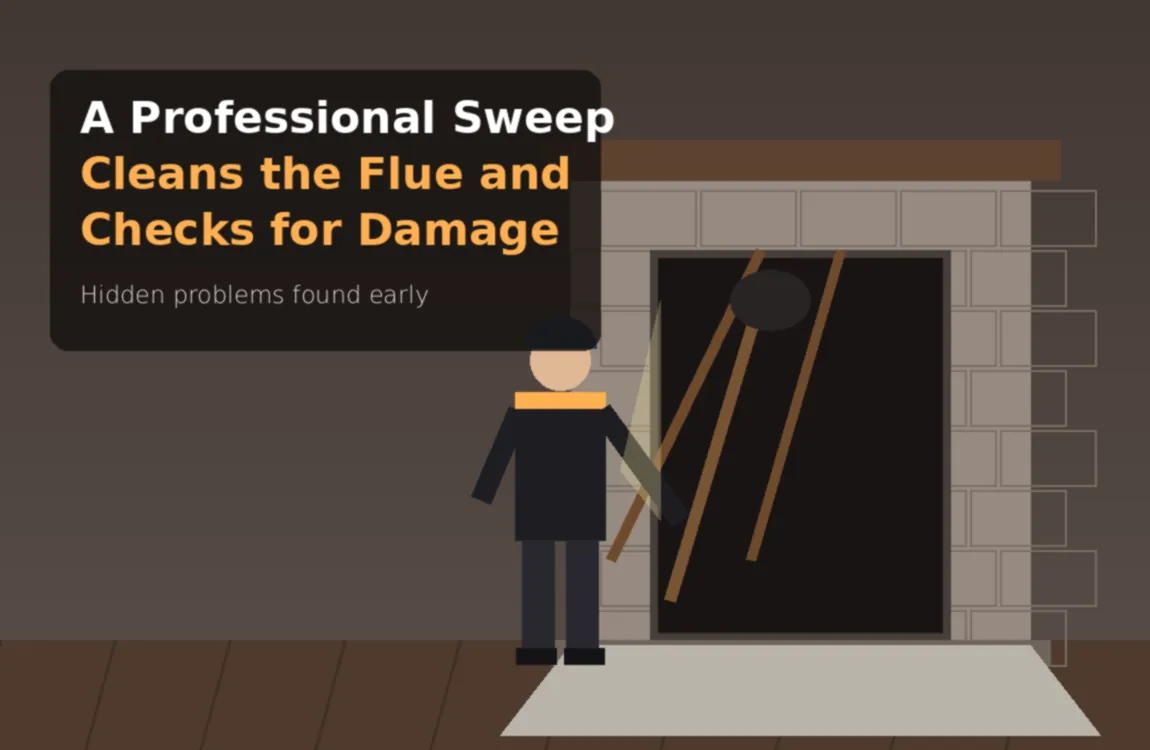
Cleaning the firebox is a safe DIY job. Cleaning the flue is different. A certified sweep uses the right brushes and rods, can spot cracks and blockages, and gives you paperwork for your home insurance. In the UK, look for a HETAS approved chimney sweep; in the US, choose a CSIA certified sweep, as the EPA also recommends.
How to Keep Your Fireplace Cleaner for Longer
- Burn dry, seasoned hardwood. Wet wood burns cooler and produces far more creosote, a point This Old House also stresses.
- Give the fire air. Slow, smouldering fires leave more soot and tar than hot, bright ones.
- Use a chimney cap and fire screen to keep out rain, debris and stray sparks.
- Install a carbon monoxide alarm near the fireplace and test it monthly.
- Clean little and often. Ten minutes every few weeks beats a messy deep clean in spring.
Frequently Asked Questions
Can I clean a fireplace right after a fire?
No. Wait 24 to 48 hours so embers are fully out, and always use a metal container for ash.
What is the best way to remove soot from fireplace bricks?
Scrub with warm water, a little dish soap and a stiff nylon brush. For stubborn stains, try a vinegar and water mix or a masonry-safe soot remover, and test a hidden spot first.
Is it OK to leave ash in the fireplace?
A thin layer of about 2 to 3 centimetres can insulate the next fire, but deeper ash blocks airflow and should be removed.
How often should a wood burning chimney be swept?
HETAS suggests at least twice a year for wood, and the CSIA recommends at least one inspection a year. Heavy use may need more.
Can a chimney fire happen without me noticing?
Yes. The CSIA warns that many chimney fires burn slowly and go undetected until a later inspection, which is another reason to book regular checks.
Final Thoughts
A clean wood burning fireplace is safer, more efficient and far nicer to sit beside. Clear the ash regularly, keep soot off the bricks and glass, burn dry wood and let a certified sweep handle the flue. Get those habits in place and your hearth will stay the warm centrepiece of your home all season.
Sources
- HETAS: How to Sweep a Chimney
- HETAS: What Is Creosote and Why Is It Dangerous in Your Chimney?
- Chimney Safety Institute of America: Preventing Chimney Fires
- US EPA Burn Wise: Annual Inspection Reminder
- US EPA Burn Wise: Wood-Burning Installation and Maintenance
- This Old House: When and How to Clean Your Chimney
- The Home Depot: How to Clean a Chimney
