


Not knowing how your home handles wastewater is more common than you would think, especially if you just bought a house, inherited a property, or moved somewhere semi-rural. It matters, because septic and sewer homes are maintained very differently, and mistakes on a septic system can get expensive fast.
Septic vs. Sewer: What’s the Difference?
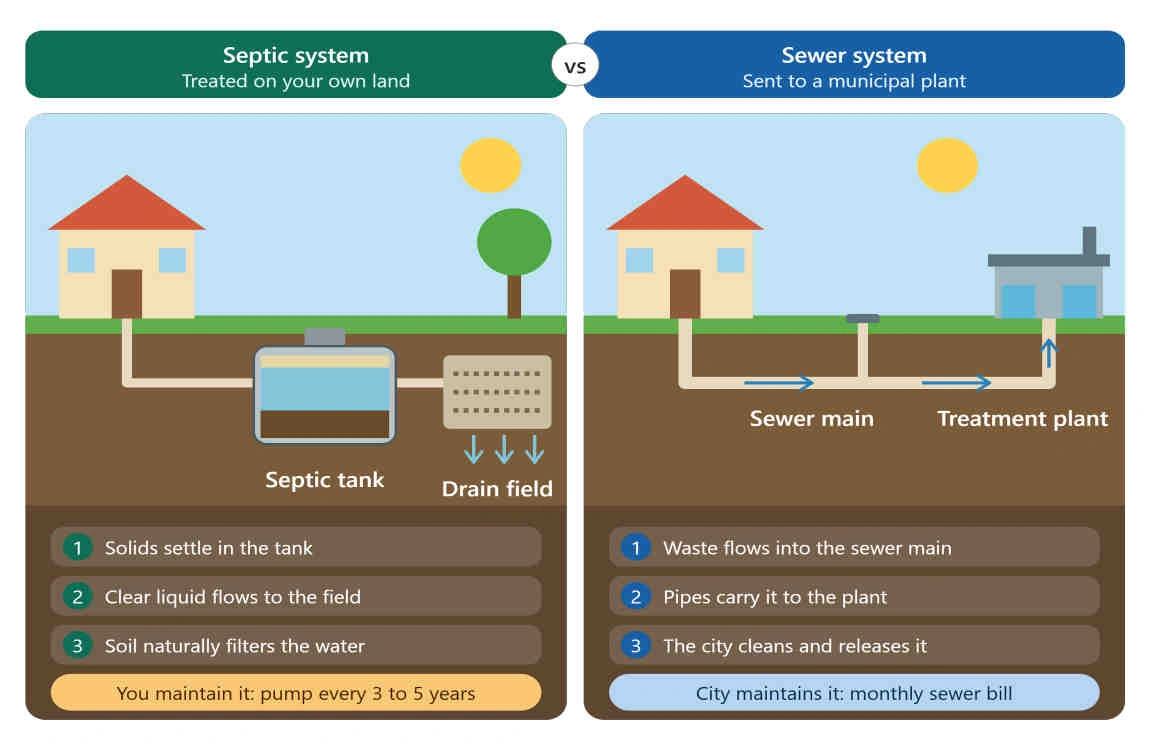
A sewer system carries household wastewater through underground pipes to a municipal treatment plant. You pay the city or a utility, usually through a monthly or quarterly sewer fee.
A septic system treats wastewater on your own property. According to the U.S. Environmental Protection Agency, septic systems are underground wastewater treatment structures commonly used in rural areas without centralized sewer systems. A typical setup has a septic tank and a drainfield (also called a soil absorption field).
The EPA has historically reported that nearly a quarter of U.S. households, more than 26 million homes, rely on septic systems, and roughly a third of new developments do too (EPA news release, 2012). That is a lot of homes, and many owners are unsure which camp they are in.
7 Ways to Tell If Your House Is Septic or Sewer
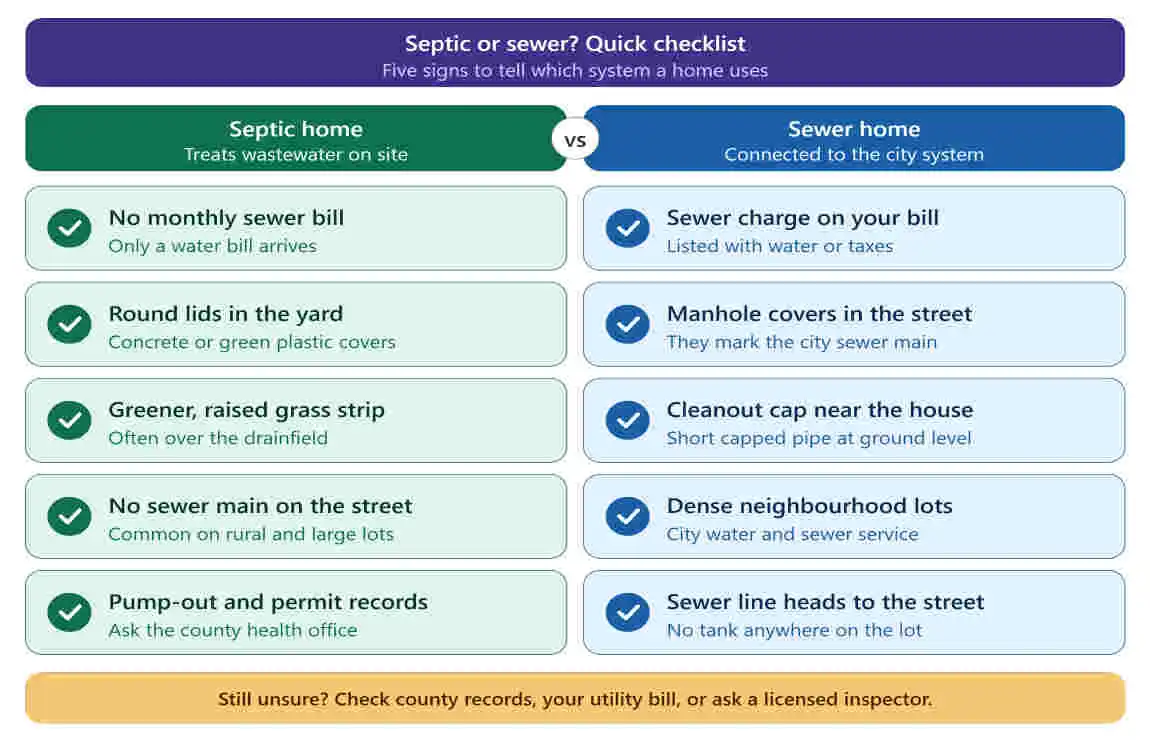
Look at your utility bill
This is the fastest check. EPA guidance says that if you have a septic system, you will see a $0.00 charge for wastewater or sewer services on your utility bill, or you will not receive a bill at all (EPA Frequent Questions on Septic Systems). Check your property tax bill as well, since some areas list sewer charges there.
Check where your water comes from
If you use private well water, a septic system is very likely. The EPA’s homebuyer guide lists well water and neighbors with septic as two of the main signs (EPA Homebuyer’s Guide to Septic Systems). Keep in mind it is not a guarantee, because some homes on city water still use septic.
Ask your neighbors
Homes built in the same era on the same street usually share the same setup. University of Georgia Extension notes that if a sewer line passes in front of your property, the home is likely connected to it, and that a building older than the local sewer system may still be on its original septic system (UGA Extension, A Beginner’s Guide to Septic Systems).
Check your property records
The EPA suggests starting with property records. Your county health department or permitting office may hold septic permits, inspection reports and an “as built” drawing of the tank and drainfield. Be aware that for very old systems, records can be incomplete or missing.
Walk the property and look for clues
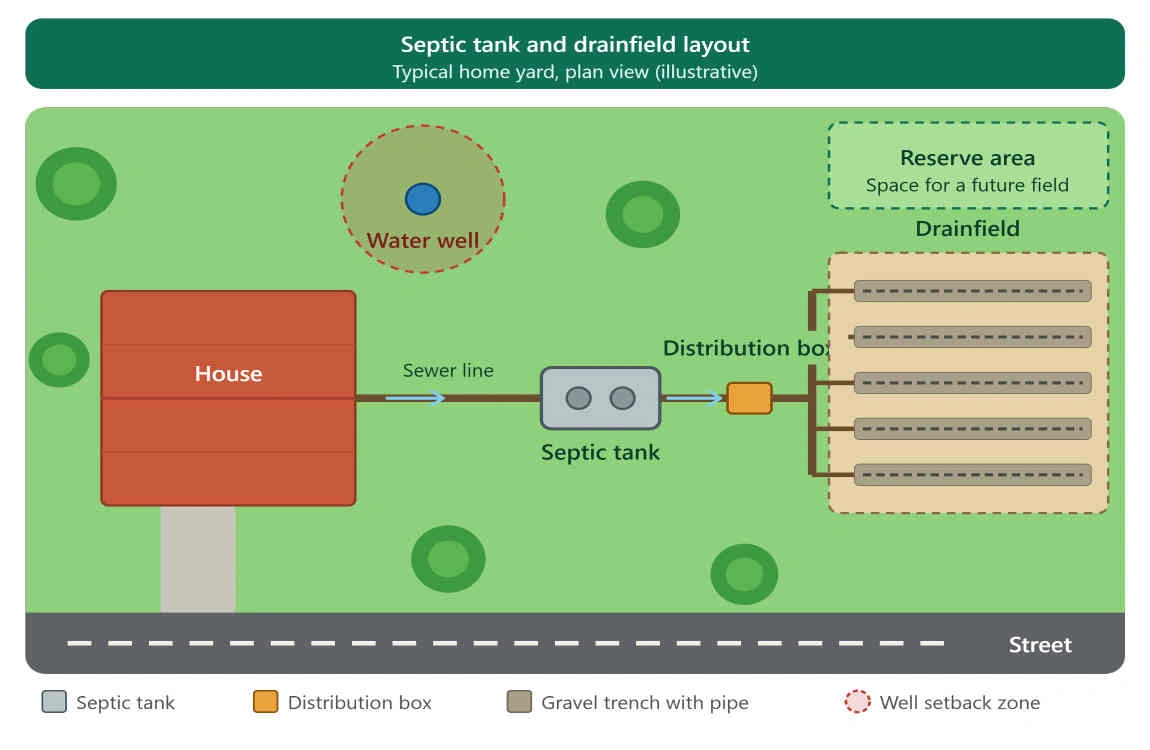
Septic systems leave visible traces. Follow the main plumbing line out of your home and look for:
- A round green or black access lid (a riser) over the tank
- A large, flat, grassy area that stays unusually green, which can mark the drainfield
- Slight depressions or rectangular patches in the lawn
- No sewer cleanout or city connection near the street
The EPA notes you might find an access riser (a black or green disc) or probe the soil above the tank along the plumbing outlet leaving your home.
Look for sewer cleanouts and vent pipes
Homes on public sewer usually have a cleanout cap near the property line or the street. Septic homes often have a tank access lid and a separate vent in the yard. Sewer-connected homes generally do not have a drainfield at all.
Call a professional or your local health department
Still unsure? The EPA recommends contacting your local permitting authority, usually the local health or environmental department, which can point you to septic professionals who can locate your tank and drainfield. The EPA also states it does not keep a national database of septic systems, so you have to go local.
Why It Matters: Maintenance and Costs
Sewer homes mostly just pay the bill. Septic homeowners are responsible for the system itself, and maintenance is what keeps it from failing early.
- Inspections: The EPA says the average household septic system should be inspected at least every three years by a professional. Systems with pumps, float switches or mechanical parts should be inspected about once a year (EPA, How to Care for Your Septic System).
- Pumping: Household tanks are typically pumped every three to five years. The right interval depends on tank size, household size, wastewater volume and the amount of solids.
- Lifespan: The EPA says the average septic system lasts 15 to 40 years, longer when it is well maintained.
- Cost: An older EPA release put home pumping at about $250 versus $5,000 to $10,000 to replace a conventional system. Those figures are from 2012, so expect higher prices today, but the gap between routine care and replacement remains huge.
Warning Signs of a Septic Problem
A bad smell is not always the first symptom. The EPA advises calling a septic professional if you notice pooling water or muddy soil near the system or in the basement, or a strong odor around the tank and drainfield. Other signals include slow drains, gurgling pipes, sewage backups, and a lawn that is oddly lush or soggy over the drainfield.
Septic-Safe Habits Every Homeowner Should Know
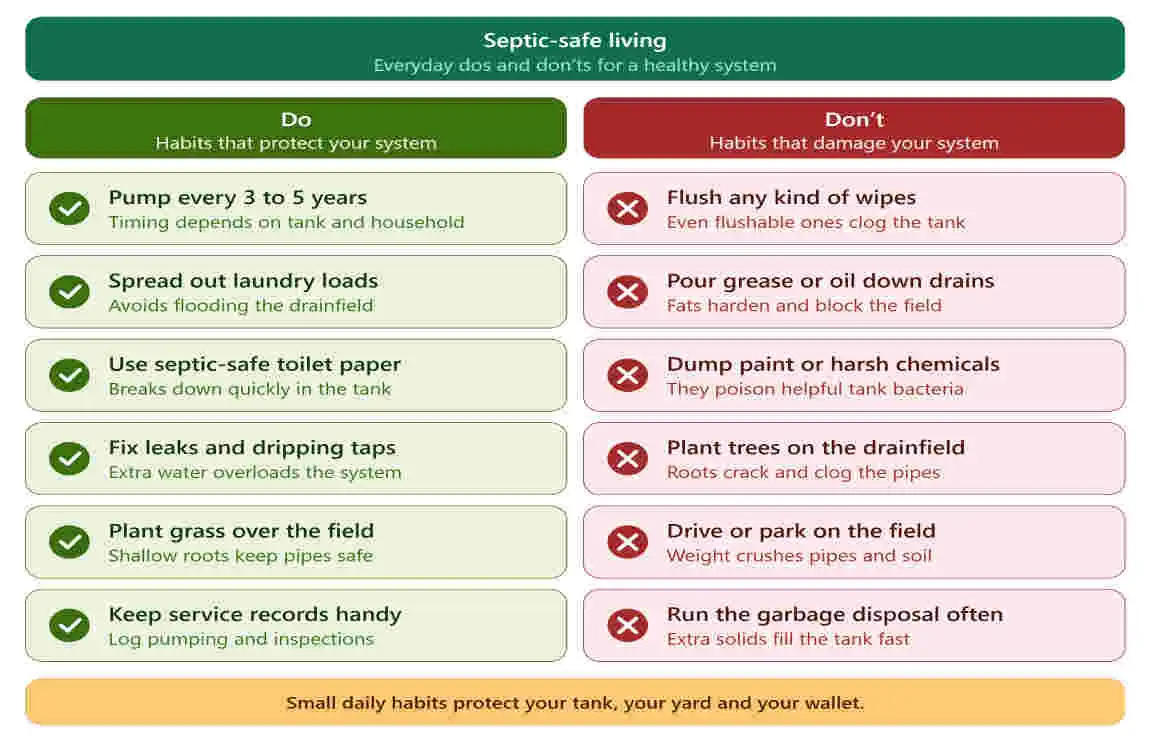
- Spread laundry across the week instead of washing many loads in one day.
- Do not flush wipes, dental floss, diapers, feminine hygiene products, cigarette butts or cat litter. The EPA lists these as items that can clog and damage septic systems.
- Keep vehicles and heavy equipment off the drainfield.
- Plant only grass near the system, since tree roots can damage pipes.
- Route roof drains and sump pump discharge away from the drainfield.
- Keep records of every inspection and pumping.
Buying a House? Do This First
If you are purchasing a home and still cannot tell whether it is septic or sewer, ask the seller for the system’s “as built” drawing and maintenance records, and hire a septic professional to inspect it before closing. The EPA’s homebuyer guide stresses that a septic system is a major, expensive piece of equipment, much like a furnace, and worth having inspected before you buy.
Frequently Asked Questions
Can a house on city water still have a septic tank?
Yes. Water supply and wastewater are separate systems. Many homes use municipal water but still rely on septic, especially where sewer lines have not been extended.
Is there a free way to find out for sure?
Your utility bill and your county health or permitting office are the best free starting points.
What if my house is on sewer but the lines are old?
You are still responsible for the lateral line from your house to the main. Ask a plumber for a camera inspection if you notice recurring clogs.
Can a septic system contaminate my well?
Yes, particularly if the system is not working properly, which is why regular inspection matters.
Final Thoughts
Start with the bill, then confirm with your water source, neighbors, property records and a quick walk around the yard. If it is septic, schedule an inspection and keep a simple maintenance log. If it is sewer, you can relax, though it still pays to know where your cleanout is. Either way, knowing your system is one of the cheapest ways to avoid a costly surprise.
