

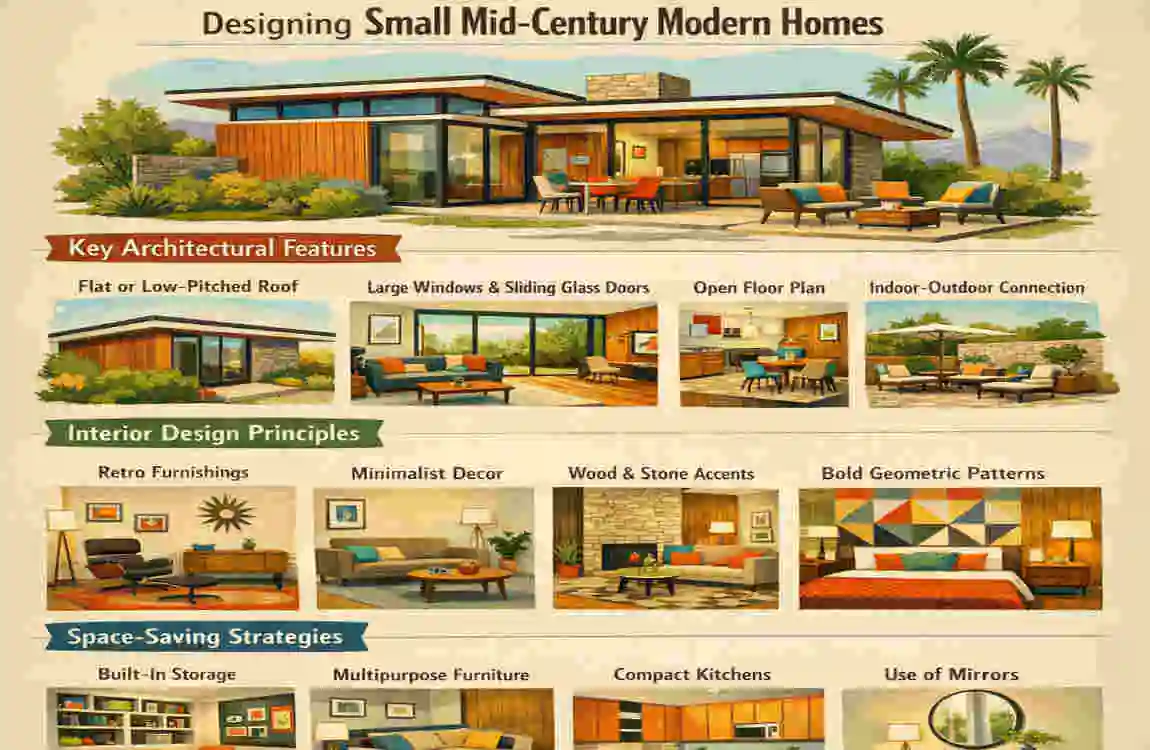
Small mid-century modern homes are loved for a simple reason: they feel timeless, warm, and practical all at once. This style works especially well in compact spaces because it emphasises clean lines, open layouts, and the smart use of every square foot.
If you want a home that feels stylish without feeling crowded, this design style is a great choice. It brings in natural light, uses simple shapes, and creates a calm look that never feels outdated.
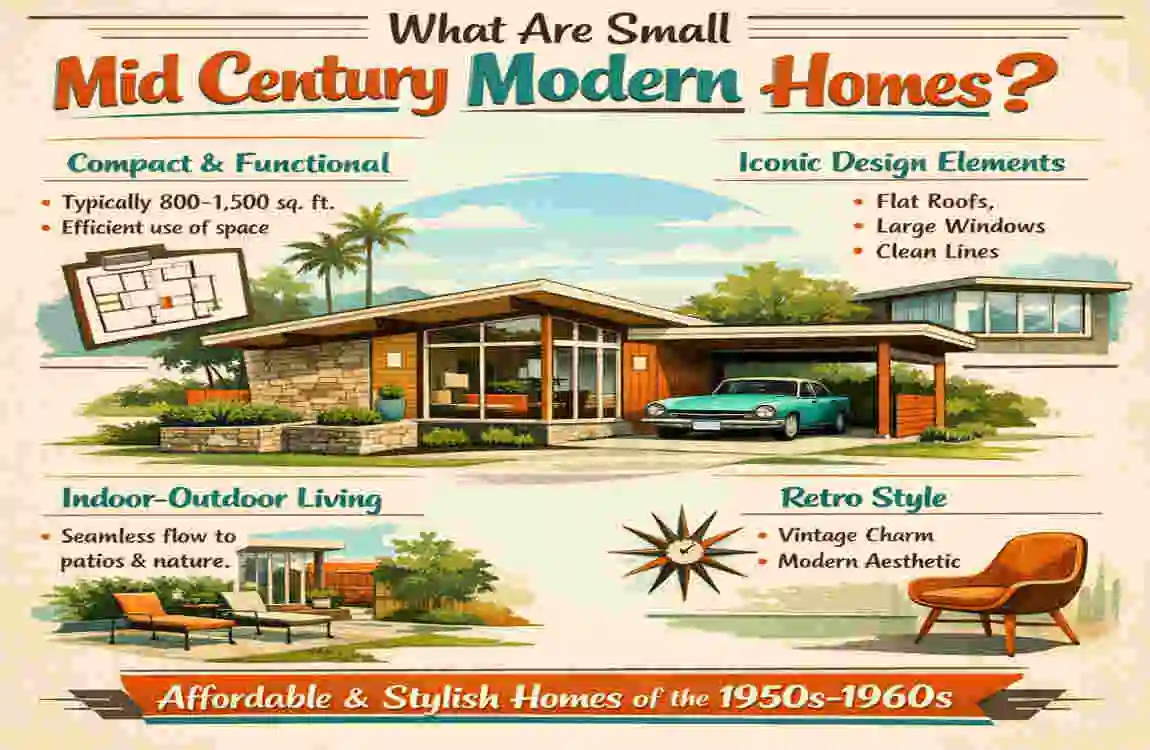
What Are Small Mid-Century Modern Homes?
Origins of Mid-Century Modern Design
Mid-century modern design became popular after World War II. At that time, people wanted homes that were simple, affordable, and efficient. Designers focused on clean structure, open rooms, and a strong connection to nature.
The style was never about excess. It was about making life easier and more comfortable.
Characteristics of Small Mid-Century Modern Homes
Small mid-century modern homes usually feature clean lines, low roofs, large windows, and simple materials. You will often see wood, glass, stone, and open spaces working together.
These homes often feel larger than they really are because they let in light and reduce visual clutter.
Why Homeowners Love This Style
People love this style because it is easy to live with. It looks beautiful, but it also supports everyday life.
It is also practical for smaller homes. The design naturally encourages smart storage, open movement, and fewer unnecessary items.
Key Principles for Designing Small Mid-Century Modern Homes
Prioritize Functionality
Every part of the home should have a clear purpose. In small spaces, this matters even more. A dining area might also work as a workspace. A bench may also provide storage.
When each item does more than one job, the home feels organised and calm.
Keep Layouts Open
Open layouts are one of the biggest strengths of this style. When the living room, dining area, and kitchen connect smoothly, the home feels more spacious.
Open spaces also help natural light flow through the house, making everything feel brighter and more welcoming.
Focus on Simplicity
Small mid-century modern homes work best when they are not overloaded with decorations. Simple furniture, clean walls, and a few strong design pieces make the space feel polished.
Too many objects can make a small room feel cramped. A lighter approach usually works better.
Create Visual Flow
A good mid-century home feels connected from room to room. You can do this by using the same wood tones, similar colours, and repeated shapes throughout the home.
This gives the whole space a smooth, balanced look.
Choosing the Right Floor plan
Open Living and Dining Areas
An open living and dining area helps a small home feel much bigger. It also supports family life because people can talk, relax, and move around more easily.
This setup is especially useful if you want a home that feels social and flexible.
Compact Kitchen Designs
In a small mid-century modern home, the kitchen should be efficient. Keep the layout simple and make sure the sink, stove, and refrigerator are easy to reach.
Use flat-front cabinets and smart storage to keep the kitchen looking clean and uncluttered.
Smart Bedroom Layouts
Bedrooms in small homes should feel peaceful, not crowded. Choose a bed with a simple frame, use built-in storage if possible, and avoid too many large pieces.
A bedroom should feel restful, with enough open space to move comfortably.
Flexible Multi-Purpose Rooms
If you have a spare room, make it do more than one job. It can serve as a guest room, an office, a hobby room, or a reading space.
This kind of flexibility is very helpful in small homes and fits the mid-century modern idea of practical living.
Exterior Design Ideas for Small Mid-Century Modern Homes
Low-Pitched Rooflines
A low-pitched roof is one of the most recognisable features of this style. It gives the house a clean and balanced profile.
Even on a small home, this roof shape adds character and helps the house feel true to mid-century design.
Large Glass Windows
Big windows are a major part of the look. They bring in daylight, connect the interior to the outside, and make the home feel more open.
Natural light is especially valuable in small homes because it creates a sense of space without changing the square footage.
Natural Building Materials
Wood siding, stone accents, and concrete details all fit beautifully with this style. These materials feel warm and honest, which is a key part of mid-century design.
They also help the home blend with its surroundings rather than stand out.
Simple Geometric Shapes
Mid-century homes often use rectangular or box-like forms. The goal is not to create a flashy shape, but a clear and purposeful design.
Simple shapes make the home easier to understand visually and help it feel calm.
Landscaping That Complements the Style
The outdoor space should support the architecture, not compete with it. Use native plants, simple garden beds, and clean paths.
A small courtyard, patio, or low-maintenance garden can make the home feel complete.
Interior Design Essentials
Mid-Century Modern Colour Palettes
Colour plays a big role in this style. Many small mid-century modern homes use warm wood tones, earthy neutrals, olive green, mustard yellow, and burnt orange.
These colours feel rich without being too loud. They also pair well with natural materials.
Here is a simple guide:
Design ElementBest ChoicesWhy It Works
Walls Soft white, beige, warm grey Keeps the space open and bright
Wood Walnut, oak, teak tones Adds warmth and character
Accent Colours Olive, mustard, burnt orange Brings in classic mid-century style
Metals Brass, black, matte finishes Adds a clean modern touch
Flooring Options
Hardwood floors are one of the best choices for this style. They feel natural and timeless.
Polished concrete can also work well in modern mid-century homes, especially if you want a more updated look. Terrazzo-inspired surfaces are another stylish option if you want a playful but refined finish.
Wall Treatments
Neutral walls are usually the safest choice in small rooms because they keep the space open. To add more interest, you can add a wood-panel accent or a bold feature wall.
The key is to keep the room balanced. One strong wall detail is often enough.
Lighting Choices
Lighting should feel simple but stylish. Look for Sputnik chandeliers, pendant lights, and floor lamps with clean lines.
Good lighting does more than brighten a room. It also acts as part of the décor, especially in a home with a simple design.
Furniture Selection for Small Mid-Century Modern Homes
Essential Furniture Characteristics
Mid-century furniture usually has tapered legs, smooth shapes, and practical designs. These features help furniture feel lighter rather than heavier.
That matters in a small home because bulky furniture can overwhelm the room.
Space-Saving Furniture Ideas
Choose pieces that can do more than one thing. For example, nesting tables, storage benches, and compact sofas are all smart choices.
These items save space while still keeping the home stylish.
Statement Mid-Century Pieces
You do not need much furniture to make an impact. One lounge chair, one clean-lined credenza, or one well-shaped coffee table can anchor the whole room.
A few strong pieces often work better than many small ones.
Avoiding Overcrowding
In small spaces, less is usually more. Choose quality over quantity and leave enough room around each piece.
When furniture has space to breathe, the room feels larger and more peaceful.
Maximising Space in Small Mid-Century Modern Homes
Built-In Storage Solutions
Built-ins are extremely useful in small homes. Shelves, cabinets, and window seating with hidden storage can reduce clutter and make the space more functional.
These solutions also help the home feel tailored and well-planned.
Using Vertical Space
When floor space is limited, look upward. Tall shelving units and wall-mounted cabinets help you use the full height of the room.
This keeps the floor open and reduces visual crowding.
Mirrors and Light Reflection
Mirrors can make a small room feel much bigger by bouncing light around the space. Place them near windows or in darker corners for the best effect.
This is a simple trick, but it works very well.
Multi-Functional Furniture
Foldable tables, convertible seating, and storage-friendly pieces are perfect for compact homes. They help the room adapt to different needs without adding clutter.
Bringing Nature Indoors
Indoor Plants for Mid-Century Interiors
Plants fit beautifully into this style, softening the clean lines and adding life to the room. Snake plants, rubber plants, and Monstera are all great choices.
They bring colour and texture without making the space feel busy.
Indoor-Outdoor Living Concepts
If possible, connect the inside and outside with sliding glass doors, a patio, or a small deck. This makes the home feel larger and more open.
It also supports the mid-century idea of living close to nature.
Natural Textures
Use wood, stone, and woven materials to add warmth. These textures keep the home from feeling too plain.
They create a balanced look that feels relaxed and welcoming.
Common Mistakes to Avoid
- Overdecorating the space with too many objects
- Blocking natural light with heavy curtains or furniture
- Choosing oversized furniture that fills the room too quickly
- Mixing too many styles at once
- Forgetting function in favour of looks alone
A small home needs clarity. Every choice should support comfort and simplicity.
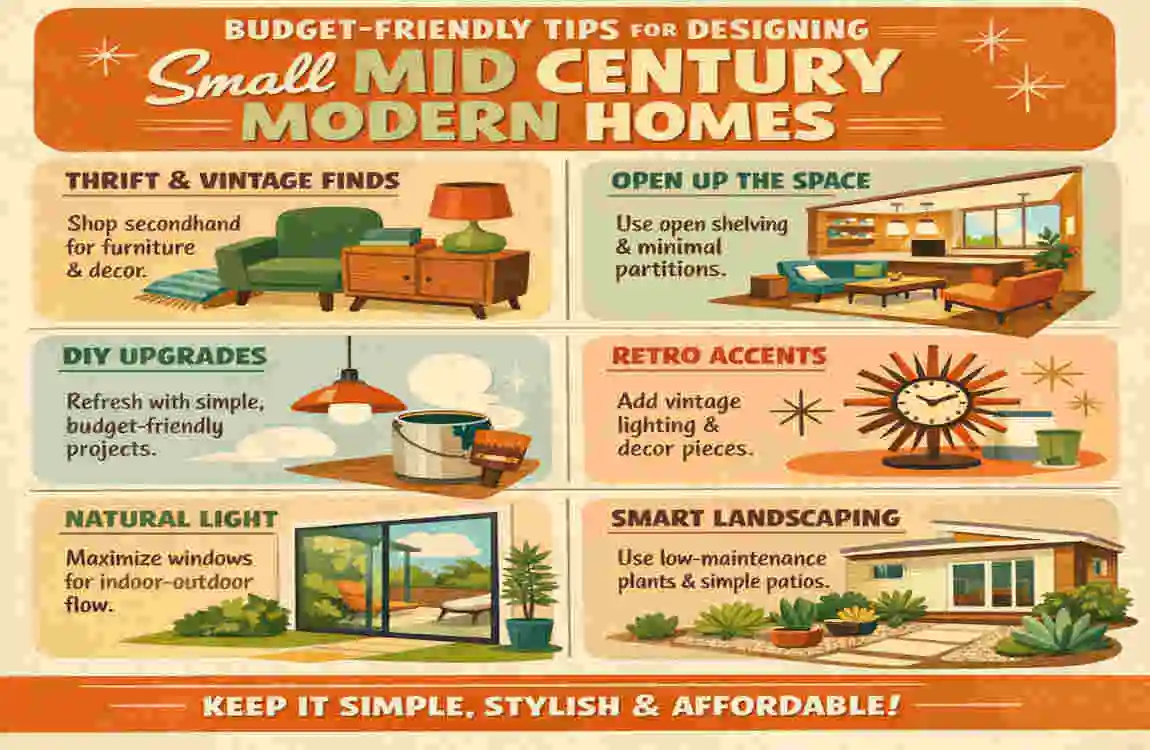
Budget-Friendly Tips for Designing Small Mid-Century Modern Homes
Shop Vintage and Thrift Stores
Vintage stores are great places to find mid-century-inspired furniture and décor. You can often find solid pieces at a lower price.
This is a smart way to get authentic style without overspending.
Repurpose Existing Furniture
You do not always need to buy new items. A simple table, chair, or cabinet can sometimes be updated with new legs, a fresh finish, or new hardware.
Small changes can make a big difference.
Focus on Key Statement Pieces
Instead of buying many things, invest in one or two strong pieces. A good sofa, a standout chair, or a quality light fixture can shape the whole room.
This approach saves money and keeps the design clean.
DIY Mid-Century Decor Projects
Simple DIY projects like painted planters, framed abstract art, or refinished furniture can help create the look on a budget.
These personal touches also make the home feel more unique.
Future Trends in Small Mid-Century Modern Homes
Sustainable Materials
More homeowners now want eco-friendly materials, such as responsibly sourced wood, recycled surfaces, and low-impact finishes. These choices fit naturally with mid-century design.
Smart Home Integration
Modern small homes often include smart lighting, thermostats, and security features. The goal is to add convenience without compromising the home’s clean look.
Energy-Efficient Design
Energy-saving windows, better insulation, and modern systems help small mid-century homes stay comfortable and efficient.
Compact Luxury Living
Today, luxury is often about smart design, not size. A small home can still feel high-end when it is well planned and beautifully finished.
FAQ
What are small mid-century modern homes?
They are compact homes designed with clean lines, open layouts, large windows, and functional spaces inspired by mid-20th-century architecture.
What colours work best in small mid-century modern homes?
Neutral shades, warm wood tones, olive green, mustard yellow, and burnt orange work especially well.
How can I make a small mid-century modern home feel larger?
Use open layouts, plenty of natural light, mirrors, light colours, and space-saving furniture.
What furniture is best for small mid-century modern homes?
Furniture with tapered legs, simple shapes, and built-in storage works best.
Are small mid-century modern homes energy-efficient?
Yes, they can be very efficient when updated with modern insulation, energy-saving windows, and smart home features.
| Design Element | Key Principles & Tips |
|---|---|
| Architectural Style | Long, low rooflines with horizontal emphasis; single-story layout; entry courtyards |
| Windows & Natural Light | Large windows (floor-to-ceiling preferred); sliding glass doors; emphasis on indoor-outdoor living |
| Layout | Open concept floor plan; efficient use of space; compact but functional rooms |
| Color Palette | Warm, rich tones: mustard yellow, burnt orange, avocado green, brown, cream, white |
| Materials | Natural wood (teak, walnut, oak); brass accents; stone; glass; avoid excessive ornamentation |
| Furniture | Low-slung furniture with tapered legs; clean lines; organic forms; minimal pieces; avoid overcrowding |
| Living Room | Geometric rugs; wooden coffee tables; credenza for TV; woven rugs; potted plants; starburst clocks |
| Kitchen | “L” shaped or galley layout; bar pass-through to dining; vintage appliances; wood cabinets; minimalist hardware |
| Flooring | Wood flooring (hardwood or laminate); terrazzo; black-and-white tile; minimal rugs |
| Indoor-Outdoor Connection | Sliding glass doors; patios; courtyards; lingering plants; large windows to bring nature inside |
| Small Space Tips | Multi-functional furniture; mirrors to expand space; vertical storage; minimal clutter; brass/wood accents |
| Exterior Materials | Wood paneling; brick; stone; horizontal siding; flat or low-pitched roofs; minimalist facade |
