

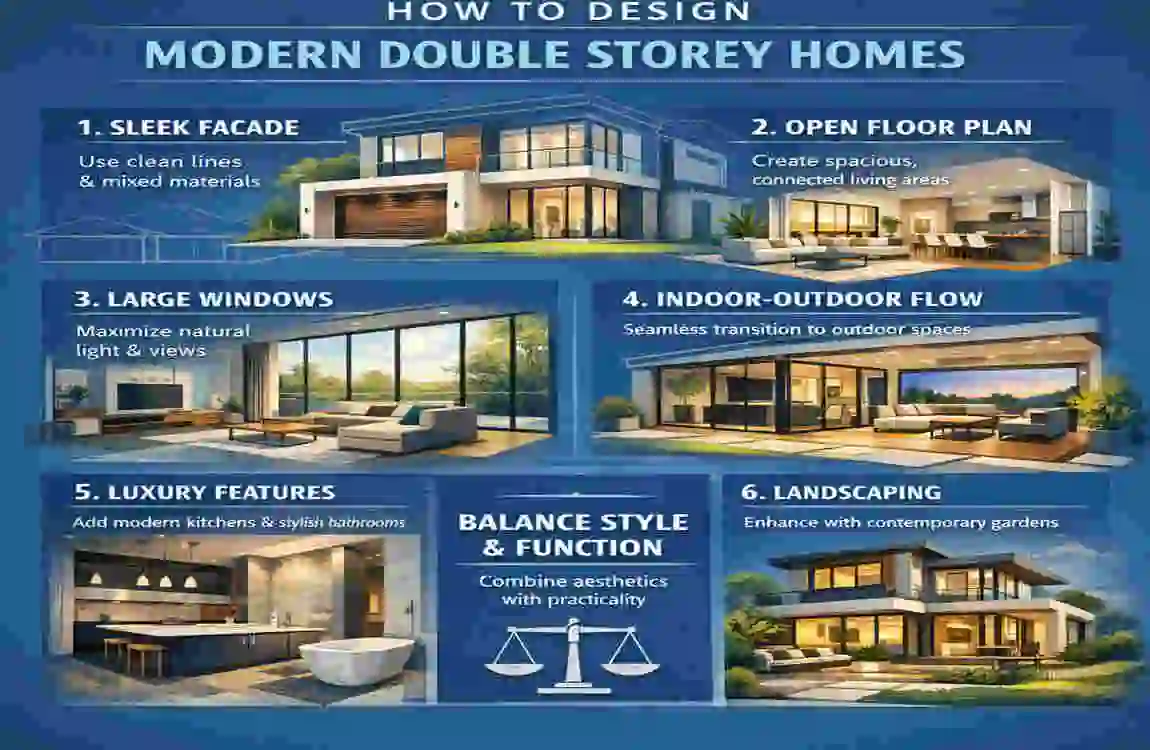
Designing a home is a big decision, and when you are planning modern double-storey homes, the choices can feel exciting and overwhelming at the same time. You want a home that looks stylish, feels practical, and works well for daily family life. You also want it to stand the test of time, both in design and comfort.
In 2026, more families are choosing vertical living as land becomes scarcer in many cities, while lifestyle needs keep growing. That is why modern double-storey homes are now seen as one of the smartest ways to build. They give you more usable space without needing a very large plot. They also allow you to create a better balance between shared family areas and private rooms.
Key Design Principles for Modern Double Storey Homes
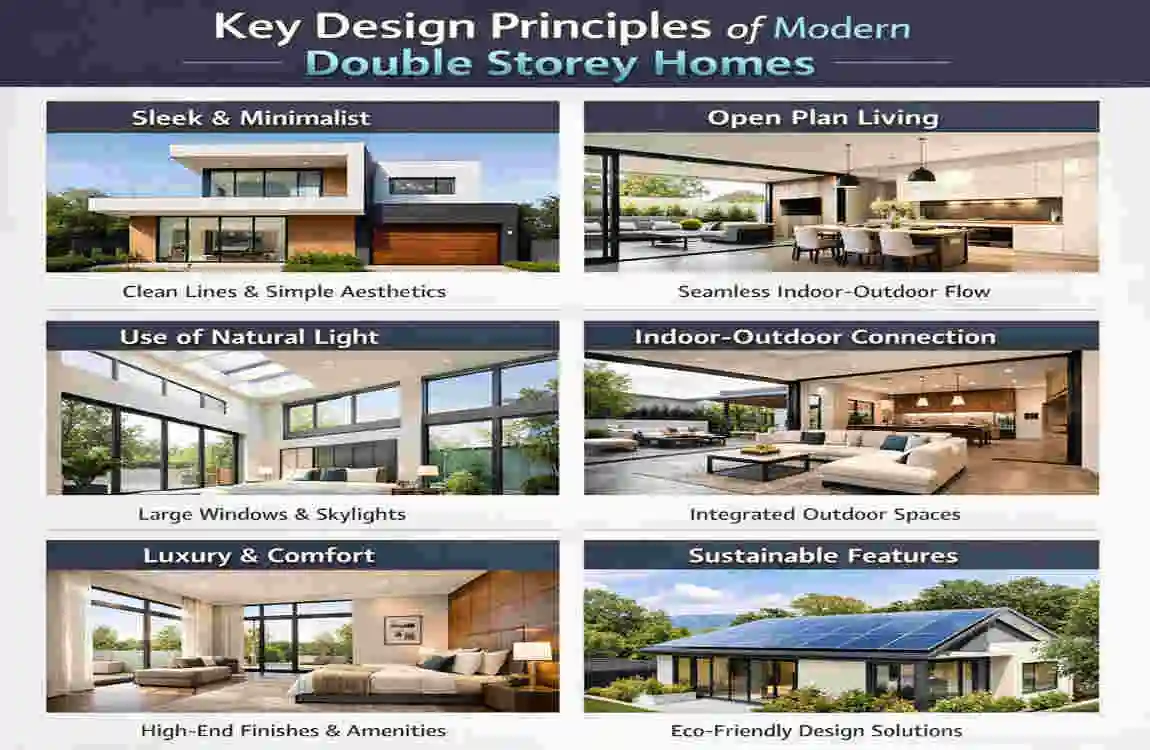
The strongest modern double-storey homes usually share a few simple design principles. These homes are not built to look busy or overdecorated. Instead, they focus on clean shapes, clear purpose, and comfortable flow. That is what gives them their modern feel.
Modern design is often misunderstood. Some people think it means ‘cold’ or ‘plain’. In reality, modern home architecture is about making every part of the home feel intentional. Every wall, window, and room should support the way you live. When you keep that idea in mind, your home becomes much easier to design.
Clean Lines and Simple Shapes
One of the first things people notice in modern homes is the shape. Modern double-storey homes usually have simple, crisp lines. The structure often feels balanced and neat rather than decorative or complicated.
You may see flat roofs, box-like forms, straight edges, and wide surfaces. These design choices help the home feel fresh and up to date. They also make the exterior easier to maintain because there are fewer unnecessary details to clean or repair.
Simple shapes also support a more timeless look. While design trends change, clean architecture tends to remain attractive for a long time. That is a major advantage if you want your home to still look good many years from now.
Light, Space, and Flow
A modern home should feel open and welcoming. That is why large windows, open interiors, and a strong connection between spaces matter so much. Natural light makes a home feel larger, warmer, and more comfortable. It also reduces the need for artificial lighting during the day.
In modern double-storey homes, light is often brought in through tall windows, glass doors, skylights, and open stair voids. These features create a brighter environment and make the home feel less boxed in.
Flow matters too. A good design lets you move easily from one room to another. Living, dining, and kitchen zones should connect in a way that feels natural. Bedrooms and private areas should still feel sufficiently separate to offer peace.
Materials That Feel Modern but Warm
Modern design does not have to mean harsh or industrial. A smart two-storey house design often mixes materials to create warmth. For example, you might combine white or grey walls with timber accents, metal details, and glass panels.
This mix keeps the home interesting without making it look cluttered. Neutral colours often work best as a base because they create a calm background. Then you can use wood, stone, or textured finishes to bring softness and character into the design.
A balanced material palette is important in modern double-storey homes because it helps the exterior and interior feel connected. The home looks polished, but still feels like a place where people can actually live comfortably.
Planning Your Space Before You Build
Before you begin sketching floor plans or choosing finishes, you need a clear plan. This is where many homeowners save money and avoid stress. Good planning makes modern double-storey homes easier to build and easier to live in later.
Think of this stage as the foundation of your entire project. If you plan well now, the rest of the process will go more smoothly. If you rush it, problems often appear later in the form of wasted space, awkward rooms, or surprise expenses.
Define Your Needs and Budget
Start with the basics. How many people will live in the house? Do you need three bedrooms or five? Will you need a home office, a guest room, a study, or a prayer room? Are you planning for children now, or do you need space that will work as your family grows?
These questions matter because modern double-storey homes should be designed around real life, not just looks. A beautiful house can still feel frustrating if it does not support your daily routine.
Your budget is just as important. In many markets, mid-range two-storey homes can fall within a wide cost range, depending on land size, materials, finishes, and labour. That is why it helps to decide early whether you want a practical build, a premium build, or something in between.
A good budget plan should cover more than construction alone. Remember to account for design fees, approvals, fixtures, landscaping, furniture, and a safety margin for changes. That extra buffer can save you from a lot of pressure later.
Site Analysis and Zoning
The land itself shapes the design. Before finalising your double-storey floor plans, study the site carefully. Check the direction of sunlight, wind patterns, road access, land slope, and nearby buildings.
If your lot is narrow or urban, building up instead of out may be the smartest move. That is one reason modern double-storey homes work so well in busy cities. They let you use vertical space efficiently while still keeping a compact footprint.
Orientation is especially important. For example, you may want living spaces that catch morning light and bedrooms that stay cooler in the afternoon. Good site planning can make the home more comfortable without extra cost.
You also need to understand local zoning rules and building restrictions. Setback rules, height limits, and coverage rules can all affect your design. A house that looks perfect on paper may need changes if it does not fit local requirements.
Choosing the Best Floor Plan
A smart floor plan is the heart of a successful home. In many modern double-storey homes, the ground floor is used for shared spaces, while the upper level is for private rooms. This is a practical and popular approach because it creates a clear separation between social and restful areas.
A common layout includes:
- Ground floor: living room, kitchen, dining area, guest bath, utility zone, and possibly a home office or extra room
- Upper floor: bedrooms, bathrooms, family lounge, study nook, and storage
This arrangement works well because it keeps everyday activity on one level while giving quieter spaces their own floor. It also helps guests feel comfortable without having to walk through private areas.
Stair placement matters more than many people realise. If the staircase is poorly positioned, it can disrupt the flow of the whole house. If it is placed well, it can become a natural centre point that connects the two floors smoothly.
When reviewing double-storey floor plans, ask yourself: Does this layout feel easy to live in? Does it reduce wasted hall space? Does it give each room enough privacy and natural light? Those questions are often more important than simply fitting as many rooms as possible.
Exterior Design Ideas for Modern Double Storey Homes
The outside of your home creates the first impression. It also affects comfort, shade, privacy, and energy use. In modern double-storey homes, the exterior is not just decoration. It is part of the home’s function and personality.
A strong modern facade feels balanced, bold, and clean. It should reflect the lifestyle inside while still fitting the site and climate. The best exteriors often combine strong structure with subtle detail.
Cantilevered Forms for a Bold Look
Cantilevered upper levels are among the most striking features of modern architecture. This style makes part of the upper floor appear to float beyond the level below. The result is dramatic, modern, and highly memorable.
This approach can also provide useful shade for ground-floor windows and outdoor seating areas. That makes it both attractive and practical. In many modern double-storey homes, cantilevering helps the home stand out without requiring much decoration.
That said, this style may increase construction complexity and cost. It works best when supported by proper engineering and careful planning. If used well, it can completely transform a home’s appearance.
Flat Roofs and Rooftop Terraces
Flat roofs are a common feature in modern double-storey homes because they create a simple, strong silhouette. They also work well with solar panels and rooftop terraces. If you want outdoor space but do not have a large yard, the roof can become a useful extra living area.
A rooftop terrace can be used for morning coffee, evening relaxation, small gatherings, or even a rooftop garden. It adds lifestyle value without increasing the land footprint.
Flat roofs require proper drainage and high-quality waterproofing, so the design must be carefully handled. But when done right, they can be a smart and stylish choice for modern living.
Mixed Materials Create Depth
A single material across the whole facade can sometimes feel flat. That is why many modern double-storey homes use a mix of materials. You might combine painted render, exposed concrete, timber cladding, metal trims, and large glass panels.
This mix creates contrast and adds depth to the exterior. Timber can soften the look. Metal can add sharpness. Glass can bring lightness. Concrete can bring strength and structure.
The goal is not to use too many materials. Instead, choose a few that work well together and repeat them deliberately. That creates a home that feels rich without feeling busy.
Exterior Styles Comparison
StyleKey FeaturesBest ForCost Level
Cantilevered Floating upper floor, large overhangs , Sloped or narrow sites , High
Flat Roof Minimalist profile, solar-friendly surface , Urban lots , Medium
Glass Facade Bright interiors, strong views , Scenic or premium locations High
Mixed Material Front Timber, concrete, stone, and glass combination. Families want warmth and style. Medium
Boxed Modern Form Strong lines, simple geometry Budget-conscious modern builds Medium
What Makes the Exterior Feel Complete?
A beautiful facade is more than a front wall. You also need to think about the driveway, boundary wall, entrance lighting, landscaping, and front door design. These smaller details help modern double-storey homes feel finished and welcoming.
Even a simple design can look impressive if it is well-proportioned. Good symmetry, smart window placement, and a clean colour palette can often do more than expensive decoration. In modern design, restraint usually looks better than excess.
Interior Layout Essentials for a Better Everyday Life
The home’s interior should make life easier, not harder. That is especially true in modern double-storey homes, where the layout needs to support both family life and privacy.
Good interior planning is about daily habits. Where do you eat? Where do you relax? Where do children study? Where do guests spend time? When you answer these questions honestly, your layout becomes much more useful.
Open-Plan Ground Floor
Open-plan layouts remain one of the strongest features in modern homes. They allow the living room, dining area, and kitchen to flow together in one larger shared space. This makes the home feel open, bright, and social.
For families, this setup is practical because it allows people to stay connected while doing different things. One person can cook, another can work at the dining table, and children can sit nearby. It keeps the whole family in sight and within easy reach.
In modern double-storey homes, the open-plan ground floor often becomes the heart of the house. It is where daily life happens. That means the layout should be easy to use, not just attractive in photos.
A kitchen island can be especially useful here. It provides extra counter space, casual seating, and a natural divider between cooking and living zones. If the home is large enough, you can also include a second sitting area or a small play zone.
Upper Floor Privacy
The upper floor should feel quieter and more private. Bedrooms, bathrooms, and a family retreat area usually work best upstairs. This separation helps create a real contrast between active and restful spaces.
In many modern double-storey homes, the upper floor also includes a home office or a study nook. That makes sense in a time when many people work from home at least part of the week. A quiet upstairs space can support focus without interfering with the main living area below.
Try to keep bedrooms well spaced if possible. If the walls are too thin or the rooms are too close together, noise can travel easily. Hallway storage, linen cupboards, and built-in wardrobes can also improve the upper floor without making it feel crowded.
Staircase Innovations
The staircase is more than a way to move between levels. In modern design, it can become a visual feature. A floating staircase, glass balustrade, timber tread, or sculptural stair form can make the interior feel elegant and modern.
A well-designed staircase in modern double-storey homes should be beautiful, but it must also be safe and comfortable. Steps should feel easy to climb, and railings should be strong. Good lighting is also important so that the stairs are safe at night.
If you have a compact home, the staircase should not consume too much space. If you have a larger home, the stairs can become a feature that adds character and movement to the interior.
Think About Storage Early
Storage is often forgotten until the last moment. That usually leads to clutter later. Built-in cupboards, under-stair storage, linen shelves, mudroom cabinets, and bedroom wardrobes can make a huge difference.
In modern double-storey homes, clean design depends on hidden organisation. The less visual clutter you have, the more peaceful the home feels. Storage is not a luxury. It is part of good design.
Sustainable Features That Make a Real Difference
Modern homes should not only look good. They should also work efficiently. Sustainability matters because it lowers bills, improves comfort, and makes the home more future-ready. That is why many modern double-storey homes now include eco-friendly features from the outset.
A sustainable home is not about adding random green products. It is about making smart choices that reduce waste and improve comfort over time.
Passive Cooling and Natural Airflow
One of the easiest ways to make a home more efficient is to design it for natural airflow. When windows are placed carefully, fresh air can circulate through the house, reducing the need for air conditioning.
Cross-ventilation works best when windows are placed on opposite sides of a room or across adjoining spaces. High windows can also help hot air escape. In many modern double-storey homes, this simple planning choice makes the home feel cooler and more pleasant.
Shading also matters. Roof overhangs, balcony projections, and window shades can reduce heat from direct sun. This is especially useful in warmer climates where cooling costs can rise quickly.
Solar Power and Water Solutions
Solar panels are becoming more common in modern construction because they help reduce long-term energy use. A suitable roof can support panels that power lights, appliances, or part of the home’s daily electricity needs.
Rainwater collection is another helpful option. Stored water can be used for garden irrigation, cleaning, or other non-drinking uses. In a well-planned home, these systems can reduce pressure on utility bills and resources.
Some modern double-storey homes also include energy-efficient water heaters, low-flow taps, and LED lighting. These may seem like small choices, but together they can make a big impact.
Strong Insulation Saves Money
Insulation often gets less attention than fancy finishes, but it is one of the smartest investments you can make. Good insulation helps keep heat out in summer and warmth in during cooler months. That means your home stays more comfortable while using less energy.
Walls, roofs, and windows should all be considered. Double-glazed windows, quality sealing, and insulated roof spaces can make a noticeable difference. In modern double-storey homes, comfort and efficiency should go hand in hand.
Energy-Saving Tips for a Smarter Home
Here are a few simple ways to improve performance in your home:
- Use LED lighting in every major room to cut electricity use.
- Choose insulated roofing to reduce heat transfer through the top floor.
- Install windows for airflow to keep rooms naturally cooler.
- Add shading devices such as awnings, louvres, or overhangs.
- Select energy-efficient appliances that use less power and water.
These steps may seem small at first, but together they support a better daily experience. When applied properly, they help modern double-storey homes stay comfortable and cost-effective for years.
Smart Tech Integration for 2026 Homes
Technology is now a normal part of home design. In 2026, many homeowners expect their house to do more than shelter them. They want convenience, security, and better control. That is why smart features are now common in modern double-storey homes.
Smart technology should make life easier. It should not feel complicated. The best systems are the ones you barely notice because they work so smoothly.
Lighting, Security, and Climate Control
Voice-controlled or app-controlled lighting is one of the most popular smart upgrades. It allows you to switch lights on and off, dim them, or set scenes for different times of day. This is useful for comfort, security, and energy savings.
Security cameras, smart locks, and motion sensors can add peace of mind. They are especially helpful if you travel often or want to monitor entrances and outdoor areas.
Climate control is another major benefit. Zoned cooling and heating systems let you manage the lower and upper floors separately. That matters in modern double-storey homes because the two levels often have different temperature needs.
Central Control Hubs
A smart home becomes easier to use when everything connects through one simple system. A main control hub can manage lights, cameras, curtains, fans, and climate settings.
Ideally, this system should be easy for every adult in the home to understand. It should improve daily life, not create confusion. Good planning helps make that possible.
EV Charging and Future-Ready Planning
Electric vehicles are becoming more common, so many homeowners now want charging readiness built into their garages or driveways. Even if you do not own an EV today, planning for one can save effort later.
This is another reason modern double-storey homes are often a smart long-term choice. They can be designed with future needs in mind, which means the house remains useful as lifestyles change.
Common Mistakes to Avoid When Designing Your Home
Even a beautiful house can become frustrating if the planning is weak. Many problems can be avoided early if you know what to look for. This is especially true of modern double-storey homes, where layout choices strongly affect daily comfort.
Poor Circulation
If hallways are too narrow, stairs are in the wrong place, or rooms are awkwardly connected, the house can feel tiring to move through. Good circulation means you can move easily from one part of the home to another without bumping into obstacles.
Fix: Review the floor plan from a real-life perspective. Walk through it in your mind. Ask whether the path from the kitchen to the dining room, from the bedrooms to the bathrooms, or from the garage to the entry feels natural.
Ignoring Natural Light
Dark upper floors are a common issue in some modern double-storey homes. If windows are too small or badly placed, rooms can feel dull and closed in.
Fix: Add well-positioned windows, stairwell light, glass doors, or skylights where possible. Light should be part of the plan, not an afterthought.
Forgetting Storage
A home may look clean in drawings, but still become messy in real life if storage is missing. Families need space for clothes, cleaning supplies, school items, seasonal objects, and more.
Fix: Build storage into the plan early. Use under-stair areas, hallway cabinets, wardrobes, and utility cupboards to keep the home organised.
Overdesigning the Exterior
Sometimes people try to add too many features at once: too many colours, shapes, materials, and decorative details. This can make the house feel crowded instead of modern.
Fix: Keep the exterior simple and controlled. A few strong design elements often look better than many weak ones.
Not Planning for the Future
Your needs may change over time. Children grow up. Work habits change. Parents may live with you later. A home that only works for today can become limiting.
Fix: Design flexible rooms and consider future use. That is one of the smartest things you can do when building modern double-storey homes.
Cost Breakdown and Timeline
Budgeting is one of the most important parts of the whole process. Costs vary depending on location, materials, contractor rates, design complexity, and finish level. Still, it helps to have a realistic idea before you begin.
For many modern double-storey homes, the structural shell, finishes, and final fittings can account for a large portion of the budget. Planning these carefully can help you stay on track.
Estimated Cost Table for a Lahore Market Example
ElementLow-EndMid-RangeHigh-End
Foundation and Structure 5M PKR 8M PKR 12M PKR
Finishes and Exteriors 3M PKR 6M PKR 10M PKR
Interior Fixtures and Joinery 2M PKR 5M PKR 8M PKR
Electrical and Plumbing 1.5M PKR 3M PKR 5M PKR
Design, Approvals, and Fees 1.5M PKR 2M PKR 4M PKR
Total for a 3BR Home 15M PKR 25M PKR 40M PKR
These figures are only a guide, but they show how quickly costs can rise when the finish level improves. A more complex facade, premium materials, or custom interiors will usually increase the total.
Typical Build Timeline
Most home builds take around 6 to 12 months, depending on size, design complexity, weather, approvals, and contractor speed. Smaller, simpler modern double-storey homes may move faster. Larger custom homes may take longer.
A basic timeline usually looks like this:
- Design and approvals: several weeks to a few months
- Foundation and structure: one to three months
- Roof, walls, and shell completion: one to two months
- Interior work and finishes: two to four months
- Final checks and handover: a few weeks
Ways to Save Without Losing Quality
You do not have to cut every corner to save money. Smart savings are better than rushed compromises. For example, a simple structure is usually more affordable than a complex one. Standard sizes for doors and windows can also reduce waste.
Material selection matters too. In many modern double-storey homes, you can save by using premium finishes in key areas and simpler finishes in less visible spaces. That balance keeps the home elegant without overspending.
Inspiration Gallery and Real-World Case Study Ideas
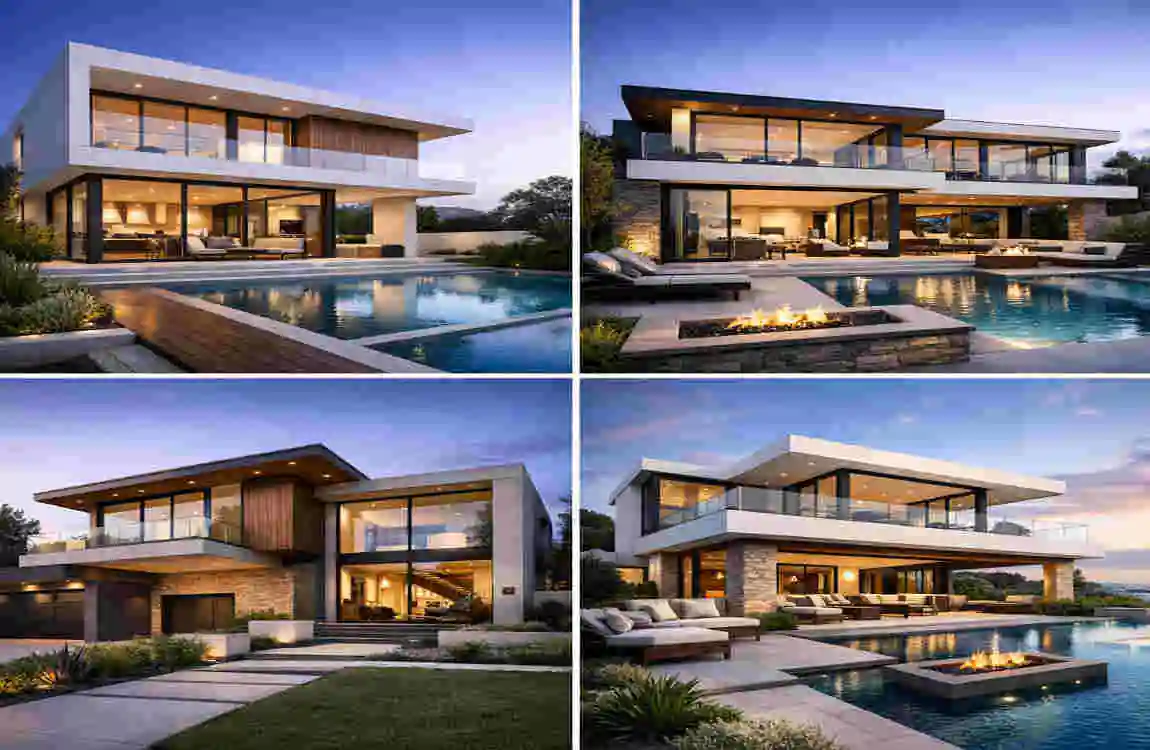
Sometimes the easiest way to understand design is to picture real examples. Looking at different types of modern double-storey homes can help you see what works and why.
A Four-Bedroom Cantilevered Family Home
This kind of design is ideal for families who want a bold exterior and a practical interior. The upper level extends slightly over the lower floor, giving the home a striking profile.
Inside, the ground floor usually includes an open kitchen, a dining area, and a family lounge. Upstairs, the bedrooms are positioned for privacy. The result is a home that feels sleek from the outside and comfortable on the inside.
This is a strong example of how modern double-storey homes can feel both stylish and family-friendly.
A Compact Urban Terrace Design
On a narrow city plot, a terrace-style two-storey house can make excellent use of limited land. The design may have a flat front, large windows, and a small internal courtyard or light shaft.
These homes often focus on vertical efficiency. Rooms are carefully stacked, storage is built into the walls, and stair placement keeps circulation smooth. This two-storey house design is especially useful in dense neighbourhoods where space is at a premium.
FAQs about modern double-story homes:
What is a modern double-story home?
A modern double-story home is a house with two floors, designed in contemporary styles with clean lines, open spaces, and minimal decoration.
What are the benefits of a double-story home?
They offer more living space, better separation of private and public areas, improved views, and efficient use of smaller land plots.
Is a double-story house more expensive?
Yes, it usually costs more than a single-story home due to additional materials, structural requirements, and labor. Still, it can be more cost-effective per square foot.
How are rooms typically arranged?
Common layouts place living areas (kitchen, lounge) on the ground floor and bedrooms on the upper floor for privacy.
Are modern double-story homes energy efficient?
They can be highly energy-efficient when designed with insulation, natural lighting, and ventilation in mind.
What styles are popular for modern double-story homes?
Popular styles include minimalist, contemporary, industrial, and Scandinavian-inspired designs.
Do double-story homes save space?
Yes, they maximize vertical space, making them ideal for smaller plots or urban areas.
Are they suitable for families?
Yes, they are great for families because they provide more rooms and privacy for each member.
| Step | Key Actions | Features to Include |
|---|---|---|
| Planning | Assess lot size, family needs, budget (PKR 20-40M in Lahore). Choose 3-4BR layout. | Ground floor: living/kitchen; upper: bedrooms/office |
| Exterior | Flat/shed roof, large glass windows, cantilevered upper level for shade. | Monochrome palette (white/gray), timber accents, rooftop terrace |
| Floor Plan | Open-plan ground floor; central staircase. Ensure cross-ventilation. | Kitchen island, ensuites upstairs, multi-use rooms like study |
| Interiors | Minimalist finishes: concrete, glass, wood. Double-height ceilings in living area. | Floating stairs, neutral tones, smart storage |
| Sustainability | Solar panels, insulation, rainwater harvest. | Skylights, energy-efficient windows for 30% savings |
| Tech & Finish | Add smart lighting, EV charging. 6-12 month build timeline. | Automation hubs, bold curb appeal |
