

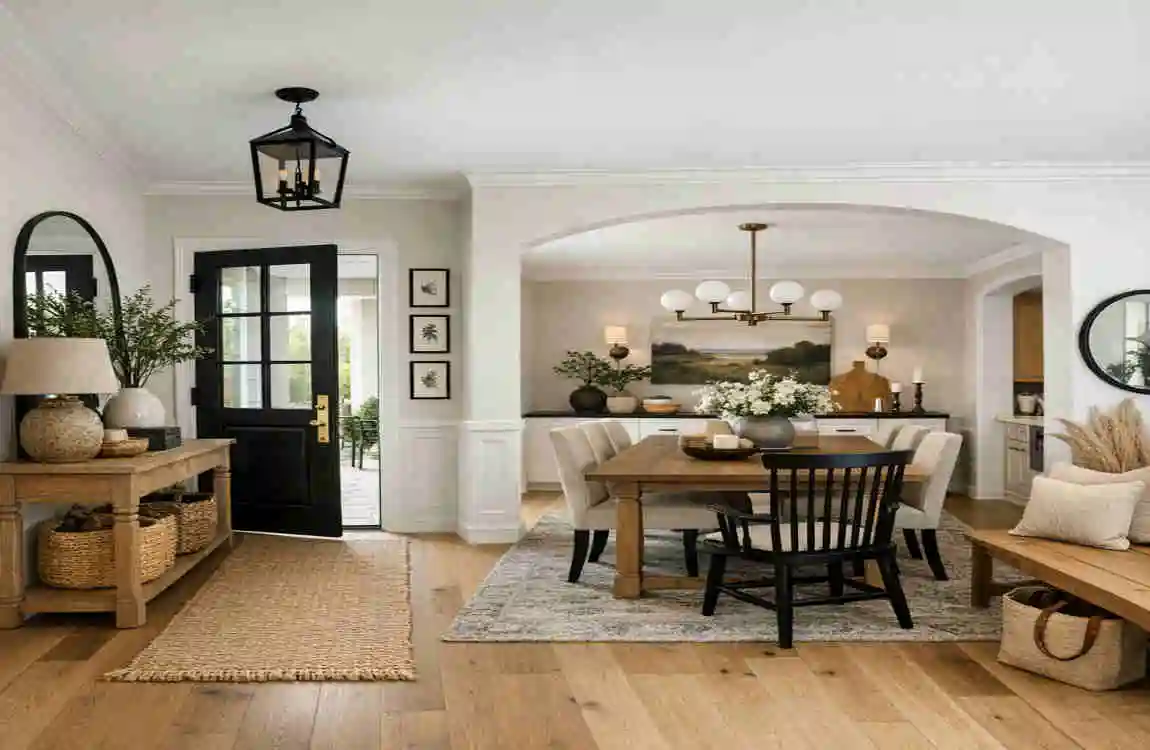
Imagine walking into a home where the first step inside feels like a deep breath of fresh air. You open the front door, and instead of a cramped, dark hallway that feels disconnected from the rest of the house, you are greeted by a seamless transition that leads your eye straight to a welcoming dining area. This isn’t just about knocking down walls; it is about creating a visual story. In 2026, homeowners are moving away from compartmentalized living and embracing layouts that encourage connection, conversation, and ease.
We are going to explore top dining room & entryway ideas for stylish house flow transformations. From modern minimalist vibes to warm bohemian textures, these tips will help you curate a home that looks professionally designed. Ready to redefine your living space? Pin your favorites and start planning!
Benefits of Unified Dining-Entry Flow
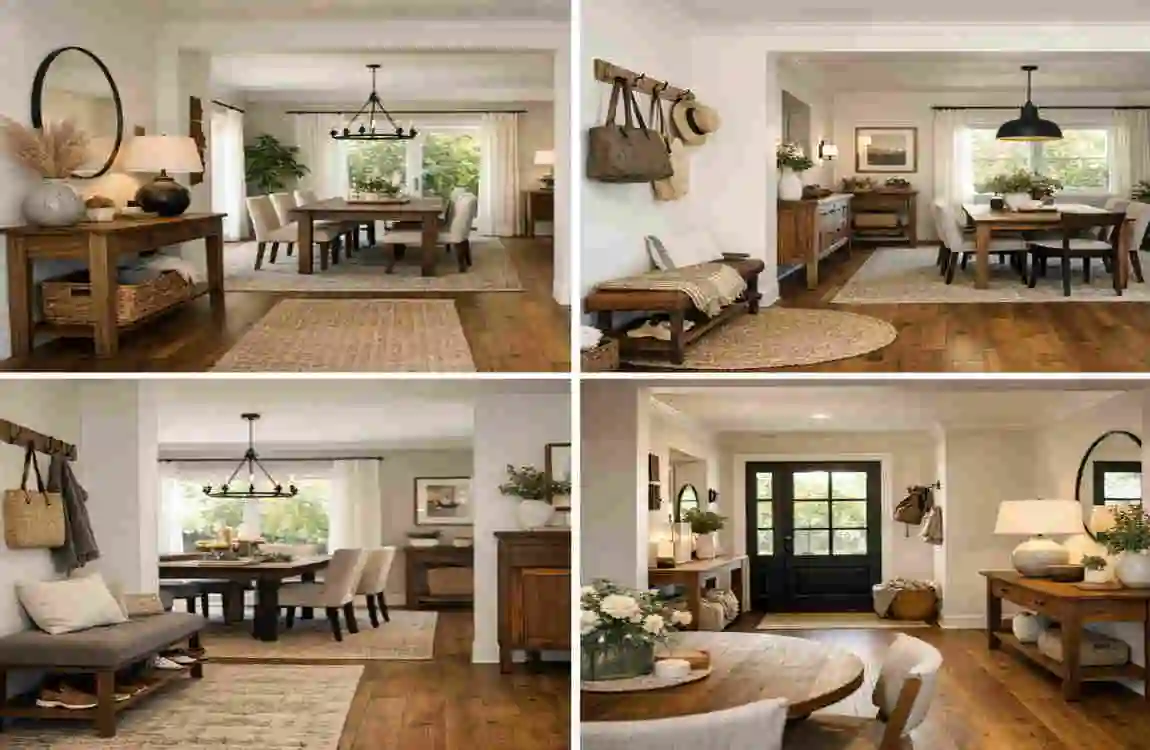
You might be asking, “Why should I worry about how my front door relates to my dinner table?” The answer lies in the subconscious experience of your home. When you link your dining room & entryway ideas, you aren’t just decorating; you are engineering an experience.
Enhancing Perceived Space
For those of us living in smaller homes or city apartments, square footage is a precious commodity. When an entryway is visually cut off from the dining room by harsh flooring transitions or clashing paint colors, both rooms feel smaller. By unifying them, you “borrow” space from one to lend to the other. Your eye travels further, tricking the brain into thinking the footprint of the home is significantly larger than it actually is.
Creating Cohesive First Impressions
Your entryway is the handshake of your home. Your dining room is the hug. When these two spaces share a design language, the transition from that initial handshake to the warm embrace of a shared meal feels natural. It eliminates the jarring transition from a rustic farmhouse entry into a stark mid-century modern dining room. Consistency creates calm.
Boosting Resale Value
Real estate trends in 2026 continue to favor open, airy flows. Buyers are looking for homes that feel “social.” A layout that allows the host to answer the door and naturally lead guests into the entertaining space is highly desirable. In fact, homes with cohesive, open flows can see up to a 15% increase in appeal during open houses.
Key Flow Principles
To achieve this, you need to master a few design principles:
- Visual Continuity: This is achieved by carrying materials, colors, or textures from the front door through to the dining table.
- Traffic Patterns: The physical path should be unobstructed. Furniture should guide the guest, not block them.
- Lighting Bridges: Lighting fixtures in both spaces should speak the same language, even if they aren’t twins.
Flow Must-Haves for a Cohesive Home:
- Sightlines: Ensure you can see a focal point (like a piece of art or a beautiful light fixture) in the dining room from the entry.
- Flooring: ideally, run the same flooring through both spaces. If that isn’t possible, use a runner rug to bridge the gap.
- Color Echoes: If your entry walls are white, use white accessories in the dining room.
- Hardware Harmony: Match the doorknobs in the entry to the cabinet pulls in the dining area.
- Greenery: A tall plant in the entry and a centerpiece on the table creates a biological connection.
Flow ChallengeSolution Idea
Narrow, dark entry. Use large mirrors to reflect light from the dining room into the hall, visually expanding the width.
Dark, cave-like dining room install pendant lights that match the entry lighting to create a “path of light” that draws people in.
Cluttered transition zone. Use a slim console table that acts as both an entryway drop-zone and a dining buffet server.
Different flooring types. Layer a large, neutral rug that spans the transition area to soften the harsh line between wood and tile.
Layout Transformations: Making the Space Work
The physical layout of your home dictates how you implement these dining room & entryway ideas. However, even difficult layouts can be tamed with the right strategy.
Open-Concept Dining Room & Entryway Ideas
If you are blessed with an open floor plan, your challenge isn’t creating space—it’s defining it. Without walls, your dining table might feel like it is floating in a gymnasium.
- Remove Walls: If you are renovating, taking down a non-load-bearing wall between a foyer and a dining room is the ultimate loft-style transformation.
- Zoning with Rugs: Anchor your dining table with a large, textured rug. This creates an invisible “room” on the floor.
- Furniture Transition: Place a sofa or a console table with its back to the dining area to act as a low partition. This keeps sightlines open while physically separating the entry zone from the eating zone.
Small Space Hacks
In smaller homes, the dining room often is the entryway.
- The Multi-Use Bench: install a bench with storage inside near the door. It serves as a place to put on shoes, but pull up a few chairs, and it becomes seating for one side of your dining table.
- Floating Shelves: Instead of bulky cabinets, use floating shelves that run from the entry wall into the dining area. This draws the eye along the length of the room, unifying the walls.
- Round Tables: In tight spaces where flow is critical, a round dining table allows for better circulation than a rectangular one. You don’t want guests bumping their hips on sharp corners as they enter the house.
Large Home Ideas
If you have a grand foyer that leads to a formal dining room, you want to maintain the grandeur while ensuring a connection.
- Grand Arches: Instead of standard doorways, widening the opening into an arch creates a sense of ceremony and openness.
- Barn Doors: install wide glass or wood sliding doors. You can leave them open for parties to create flow, or close them for intimate dinners.
Layout TypeBest ForSq Ft MinimumPrimary Focus
Open plan Families & Entertainers 200 sq ft Social interaction and visibility.
Zoned (Studio) Apartments / Singles 120 sq ft Multi-functionality and storage.
Formal Flow Traditional Homes 300+ sq ft Elegance and distinct room identities.
Color Palette Inspirations
Color is the glue that holds your design together. When considering dining room & entryway ideas, your color palette determines the mood. Do you want it to feel airy and expansive, or moody and intimate?
Neutral to Bold: A Seamless Transition
You don’t have to paint both rooms the same color, but they should be cousins, not strangers.
- Warm Earth Tones: 2026 is seeing a massive resurgence of terracotta, warm beige, and soft browns. Imagine a soft sand color in your entryway that deepens into a rich terracotta on the dining room walls. This creates a “gradient” effect that pulls you into the home.
- The Monochrome Look: Paint the walls, trim, and ceiling the same color in both spaces. This blurs the boundaries and makes the ceilings look higher.
Moody Blues and Dramatic Depth
If you love drama, try the “compression and expansion” technique. Paint your small entryway a dark, moody color like navy or charcoal. Then, keep your dining room light and airy. When you walk from the dark entry into the bright dining room, the space feels explosive and grand.
- The Connector: If you do this, carry the navy blue into the dining room through velvet dining chairs or a patterned rug.
Trends: Sustainable Greens
Green is the new neutral. Soft sage or deep olive pairs beautifully with natural wood tones.
- Brass Accents: Pair green walls with unlacquered brass light fixtures in both the entry and dining area. The warm metal pops against the cool green, creating a sophisticated, timeless look.
Earthy & Organic Jute rug, oak console, Oak table, linen curtains. Relaxed, grounded, natural.
Jewel Tones Emerald velvet bench Sapphire dining chairs Luxurious, bold, expensive.
Modern Black & White Black metal mirror White marble table Clean, sharp, high-contrast.
Soft Pastels, blush pink wall art, Dove grey upholstery, Serene, calming, airy.
Furniture and Decor Transformations
The furniture you choose acts as the landmarks in your home’s landscape. To nail these dining room & entryway ideas, you need pieces that speak to each other.
Statement Pieces that Bridge the Gap
- The Console Table: This is the MVP of the dining-entry combo. Place a long console table against a wall that spans both zones. Style the entry side with a catch-all tray for keys and a lamp. Style the dining side with a stack of serving platters or a bar setup.
- The Mirror: A massive mirror in the dining room reflects the entryway, making it feel like one continuous space. Conversely, a mirror in a small entry reflects the dining room window, bringing in natural light.
Lighting Links
Lighting is jewelry for your home. You don’t want a crystal chandelier in the dining room and a rustic industrial cage light in the entry—unless you are very skilled at eclectic mixing.
- Linear Pendants: If you have a long rectangular dining table, a linear pendant creates a line that points towards the entry, directing traffic.
- Flush Mounts: For the entryway, choose a semi-flush mount that mimics the finish or shape of the dining chandelier. If the dining light is a gold sphere, get a smaller gold sphere for the hall.
Wall and Floor Ideas
- Gallery Walls: Create a gallery wall of art that starts in the entryway and wraps around the corner into the dining room. This visual ribbon ties the spaces together perfectly.
- Herringbone Floors: Installing wood or tile in a herringbone pattern creates directional arrows. Point the “V” of the pattern from the front door towards the dining table to guide guests inward subconsciously.
Mix-Match Pieces to Buy Now:
- Mid-Century Credenza: Works as a shoe storage or a buffet.
- Ladder-back Chairs: Can sit at the table or hold a coat in the entry.
- Runner Rugs: Vintage patterns hide dirt in high-traffic zones.
- Round Mirror: Softens the hard lines of doors and tables.
- Pedestal Table: Saves legroom in tight corners.
- Ceramic Vases: Group them in the corners on the floor to hide outlets.
- Woven Baskets: Texture for the entry, storage for the dining room.
- Sconces: Save floor space and add ambiance.
- Upholstered Bench: Adds softness and seating flexibility.
- Tall Indoor Tree: Ficus or Olive trees add height and life.
Budget Breakdowns: What Does It Cost?
Transforming your space doesn’t always require a second mortgage. Here is a realistic look at what you can achieve at different price points.
Low Budget $500 – $2,000
At this level, you are relying on cosmetic changes and DIY elbow grease.
- Paint: The cheapest way to transform a room.
- Thrifted Finds: Scour Facebook Marketplace for solid wood tables or unique mirrors.
- Peel-and-Stick Wallpaper: Define the entry zone with a bold pattern without the commitment.
- Lighting Swap: Change out dated boob lights for modern fixtures from big-box stores.
Mid Budget $3,000 – $8,000
Now you can invest in quality furniture and some professional help.
- New Flooring: replacing carpet with consistent LVP (Luxury Vinyl Plank) or hardwood.
- Quality Furniture: Buying a “forever” dining table and comfortable, upholstered chairs.
- Area Rugs: Investing in high-quality wool rugs that will last for decades.
High Budget $10,000+
This is renovation territory.
- Custom Millwork: Adding wainscoting, crown molding, or built-in cabinetry that spans both rooms.
- Structural Changes: Knocking down walls, widening doorways, or adding windows.
- Designer Lighting: Statement pieces that act as art.
Budget TierKey UpgradesImpact Level
Low : Paint, Peel-and-stick wallpaper, DIY art. High visual impact, low cost.
Mid New flooring, quality dining set, improved comfort, and durability.
High Bespoke joinery, structural changes, and complete architectural transformation.
Stylish Theme Ideas
To help you visualize your new space, let’s look at specific design themes for dining room & entryway ideas.
Modern Minimalist
Think clean lines, functionality, and a lack of clutter.
- The Look: Matte black hardware, white walls, and light oak floors.
- The Entry: A simple floating shelf and a round frameless mirror.
- The Dining: A sleek tulip table with ghost chairs.
- The Flow: The absence of visual noise makes the transition seamless.
Bohemian Flow
Relaxed, layered, and full of personality.
- The Look: Woven textures, plants, and warm colors.
- The Entry: A vintage Persian rug and a rattan console table.
- The Dining: A reclaimed wood table surrounded by mismatched wooden chairs.
- The Flow: Plants hanging from the ceiling bridge the gap between rooms.
Farmhouse Chic
Cozy, welcoming, and slightly rustic.
- The Look: Shiplap, distressed wood, and industrial accents.
- The Entry: A mudroom bench with hooks and shiplap backing.
- The Dining: A trestle table with a large iron chandelier.
- The Flow: The consistent use of black metal and raw wood ties it together.
Industrial Edge
Raw, edgy, and masculine.
- The Look: Exposed brick, concrete, and leather.
- The Entry: A metal locker unit for storage.
- The Dining: A concrete top table with metal stools.
- The Flow: Exposed ductwork or piping running along the ceiling creates a literal line between spaces.
Glam Touch
Sophisticated, shiny, and luxe.
- The Look: Gold accents, velvet, and marble.
- The Entry: A gold console table with a tufted velvet bench.
- The Dining: A marble table with brass legs.
- The Flow: The sparkle of metallics guides the eye from the door to the table.
DIY Projects for Flow
You don’t need a contractor for everything. Here are three weekend projects to improve your flow.
The Unifying Trim
Install a chair rail or picture frame molding that starts in the entryway and continues right into the dining room at the same height. Paint the wall below the rail a darker color and the wall above a lighter color. This horizontal line physically connects the spaces.
- Tools: Miter saw, nail gun, level, caulk.
The Archway Molding
If you have a squared-off opening between the hall and dining room, use an “arch kit” (pre-fabricated foam or wood arches) to soften the corners. Drywall over it and paint. It instantly adds architectural character and frames the dining room view.
- Tools: Drywall knife, joint compound, sander.
The Picture Ledge
Install a long, slim picture ledge that runs along the entryway wall and extends into the dining area. Fill it with leaning art, family photos, and small plants. It acts as a guide rail for the eye.
- Tools: Drill, level, screws, anchors.
Common Mistakes to Avoid
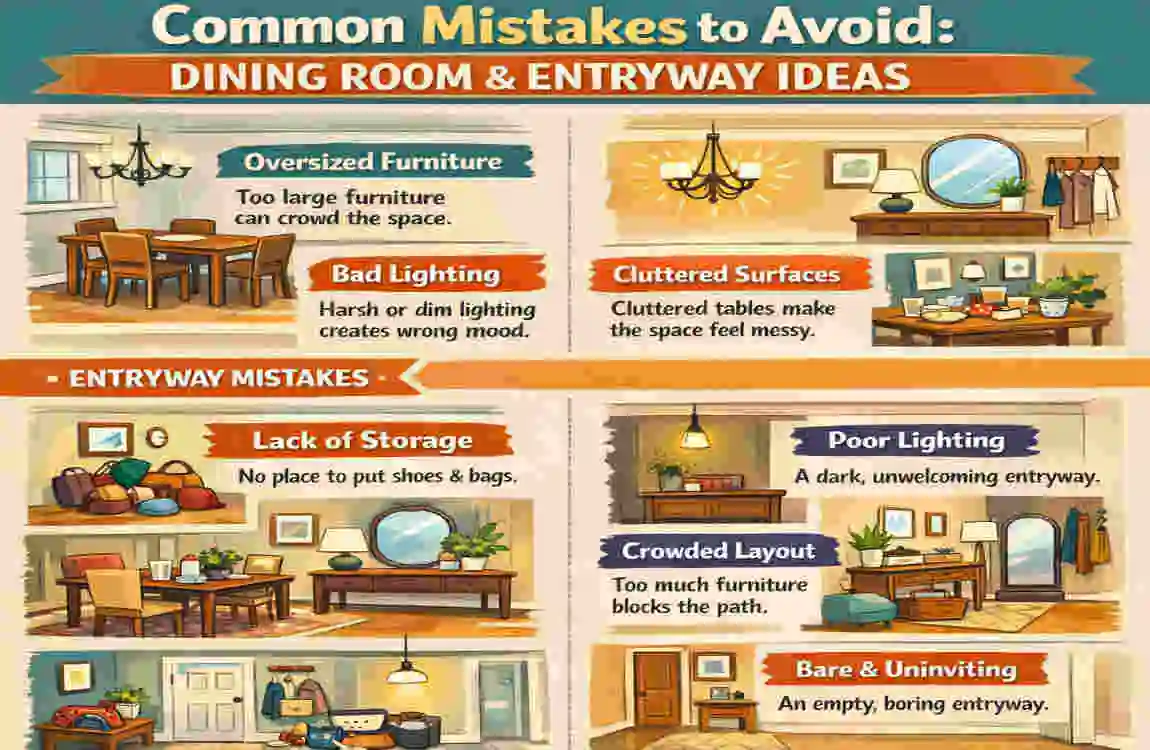
Even with the best dining room & entryway ideas, things can go wrong. Watch out for these pitfalls.
- Clashing Styles: Don’t try to force a Victorian entryway into a mid-century modern dining room. While mixing styles is possible, it requires a very skilled eye. It is safer to stick to one era or vibe.
- Overcrowding the Entry: The entryway is a high-traffic zone. If you put too much furniture there, it becomes a bottleneck. If guests have to squeeze past a table to reach the dining room, the flow is disrupted.
- Ignoring Lighting Layers: Relying on a single overhead light in each room flattens the space. Use table lamps, floor lamps, and sconces to create pools of light that lead people through the home.
- Forgetting the “Drop Zone”: If you don’t provide a place for keys and mail in the entry, they will end up on the dining table. Protect your dining aesthetic by ensuring the entry is functional.
FAQs
What are the best dining room & entryway ideas for small homes? For small homes, the best idea is “zoning.” Use a round rug to define the entryway and a rectangular rug to define the dining area. Keep furniture low-profile to maintain sightlines. Mirrors are your best friend for doubling the light and making the space feel open.
How do I create flow if my flooring is different? If you can’t change the floors, use a runner rug in the entryway that picks up the dining room floor’s colors. For example, if your dining room has dark wood and your entry has white tile, use a runner with dark brown and white patterns to bridge the gap.
What are the top trends for 2026? Sustainability is huge. Look for reclaimed woods, natural fabrics like linen and jute, and vintage furniture. In terms of color, warm neutrals and organic greens are dominating, replacing the stark cool grays of the past decade.
