

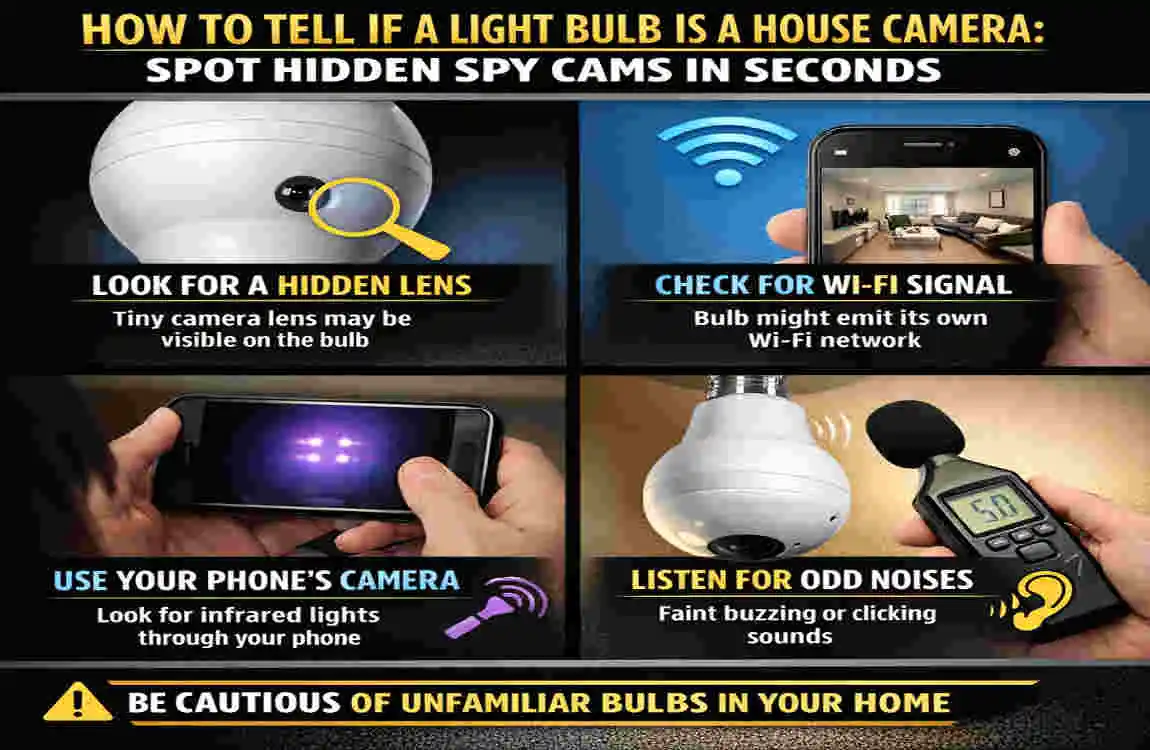
You’re in a cozy Airbnb, preparing to unwind after a long day. As you glance at the light bulb above, you notice something peculiar—a tiny, reflective dot that almost looks like a lens. Could it really be a camera hidden in plain sight?
In today’s world, privacy concerns are skyrocketing. According to a 2025 FBI report, hidden cameras in rentals and Airbnbs have surged by 40%. Among these, light bulb cameras have become particularly popular due to their discreet design, WiFi connectivity, and 360° viewing capabilities. They look just like ordinary LEDs, but can secretly record your every move.
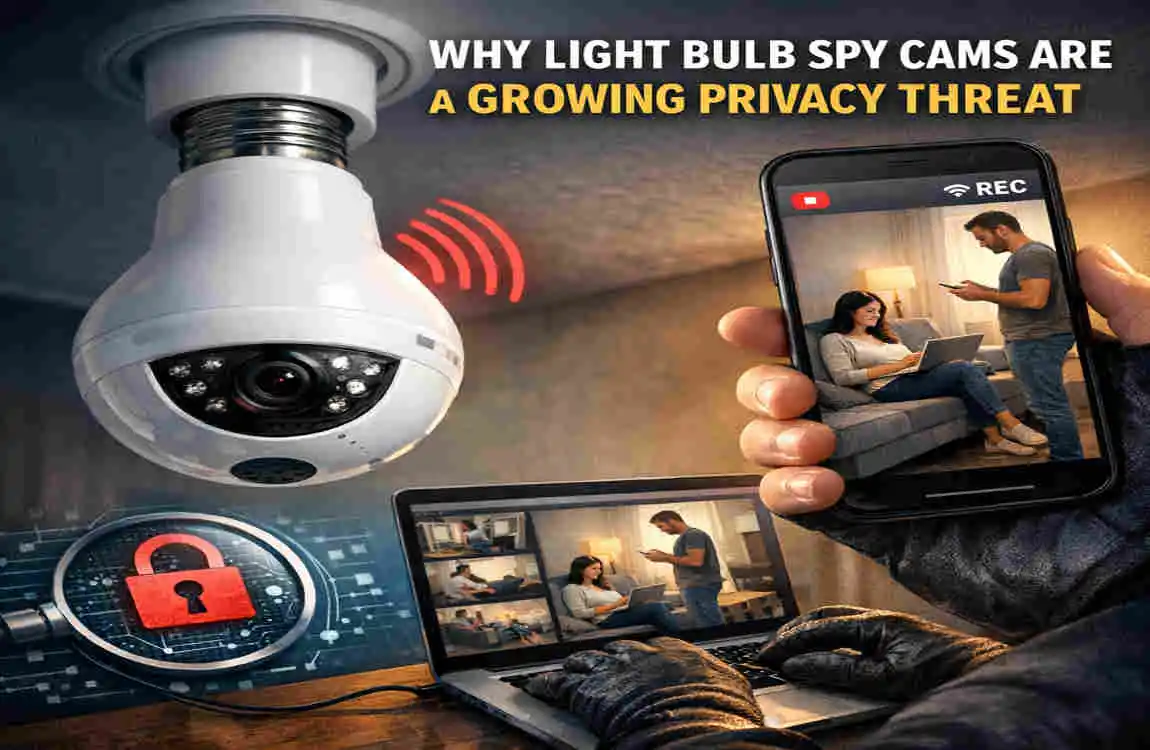
Why Light Bulb Spy Cams Are a Growing Privacy Threat
The Hidden Camera Industry: A Booming Market
The hidden camera industry is booming, with market data projecting it to reach a staggering $2 billion by 2026. Shockingly, about 20% of these cameras are disguised as everyday objects, like light bulbs, smoke detectors, or USB chargers. Light bulb cameras, in particular, are favored for their ability to blend seamlessly into any home environment.
How Do They Work?
Light bulb cameras are packed with advanced technology, such as:
- Tiny CMOS Sensors: These sensors capture high-resolution video.
- WiFi Streaming: Videos are transmitted in real time to apps, enabling remote access.
- Discreet Designs: Many have hidden lenses, making them hard to spot.
For example, popular models like the ZWCTECH light bulb camera on Amazon offer features like 360° panoramic views, motion detection, and night vision. While these devices can be helpful for legitimate surveillance, they’re often misused in rentals, offices, and even homes.
Common Hiding Spots
Spy bulb cameras can be found virtually anywhere, but the most common hiding spots include:
- Ceiling light fixtures.
- Desk or bedside lamps.
- Porch or outdoor lights.
Legal Implications
Using hidden cameras without consent is illegal in many regions. For instance, the FTC (Federal Trade Commission) warns against unauthorized surveillance, and voyeurism laws impose severe penalties for privacy violations. Always report suspicious devices to the authorities.
Here’s an infographic comparing a normal bulb to a spy bulb for reference:
Feature Normal LED Bulb Spy Bulb Camera
Lens or Hole Visibility None Pinhole lens present
Weight Lightweight, Heavier (battery inside)
Heat Output Normal Warms up when idle
Connectivity : None , WiFi or Bluetooth enabled
Quick Visual Checks: Spot a Fake Bulb in Seconds
If you suspect a light bulb might be hiding a camera, start with these quick visual checks. These simple steps can help you identify suspicious devices in seconds.
Inspect the Shape and Size
Spy bulbs are often bulkier than regular LEDs. Look for:
- A noticeable lens bulge (2-3 cm) near the center.
- A thicker design compared to slim LED bulbs.
Look for Tiny Lenses or Holes
Hidden cameras use pinhole lenses smaller than 1 mm. To detect them:
- Shine a flashlight directly onto the bulb.
- Look for any reflective glare or unusual openings.
Check for Unusual Wires or Antennas
Unlike regular bulbs, spy bulbs may have:
- Exposed WiFi antennas.
- USB ports or extra wiring near the base.
Examine the Base and Packaging
Pay attention to:
- Odd threading that doesn’t match standard bulbs.
- Missing certifications, such as UL (Underwriters Laboratories) approval.
Test the Weight and Heat
Spy bulbs are usually heavier because they house batteries or circuit boards. Additionally:
- They may warm up even when the light isn’t turned on.
Tech Tools to Detect Hidden Cameras in Light Bulbs
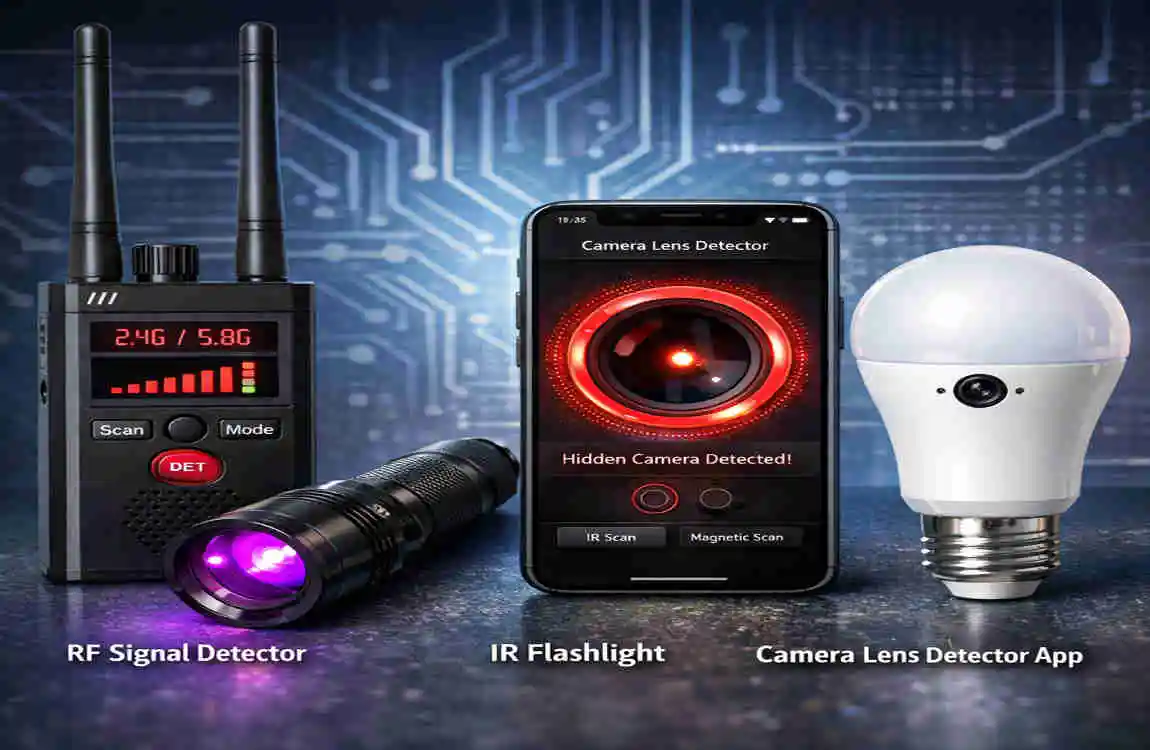
Sometimes, visual checks aren’t enough. That’s where technology steps in. Here are some powerful tools you can use to detect a light bulb camera spy cam:
Smartphone Camera Scan
Most hidden cameras emit infrared (IR) light, invisible to the naked eye but detectable with your phone’s camera. Follow these steps:
- Turn off all lights in the room.
- Open your phone’s camera app.
- Point the camera at the bulb and look for a faint purple or white glow.
RF Signal Detectors
Hidden cameras often transmit data via WiFi or Bluetooth. An RF (Radio Frequency) detector can pick up these signals. These devices, available for $20-50 on Amazon, beep when near an active transmitter. Sweep the room and listen for alerts.
Free Apps
Apps like Glint Finder (Android) or Hidden Camera Detector (iOS) use your phone’s sensors to locate cameras. Here’s how they work:
- Download and calibrate the app.
- Sweep the room slowly, focusing on light fixtures.
- The app will highlight potential lenses or IR sources.
Lens Detector Cards
For a more advanced approach, you can use lens detector cards. These inexpensive tools reflect light from camera lenses, making them easier to spot. Shine a flashlight through the bulb while using the card.
Case Study: A traveler used the Glint Finder app to uncover a bulb camera in a rental property. The app’s accuracy proved invaluable in protecting their privacy.
Step-by-Step: Full Room Sweep for Light Bulb House Cameras
If you suspect hidden cameras in your space, conduct a thorough room sweep. Here’s a simple, step-by-step guide:
Prep Your Kit
Gather essential tools, including:
- A smartphone with a camera.
- A flashlight.
- An RF signal detector.
Inspect Ceiling and Fixtures
Start by unscrewing suspicious bulbs carefully. Check for unusual components, like hidden lenses or circuit boards.
Conduct a Nighttime IR Hunt
- Turn off all lights.
- Use your phone’s camera to scan for IR glows, especially near light fixtures.
Scan the WiFi Network
Install a network scanning app like Fing to detect unknown devices. If you see entries like “ESP32-CAM” or unfamiliar IP addresses, it could indicate a spy bulb.
Perform a Physical Removal Test
Unscrew and open the bulb (if possible) to inspect its internals. Warning: Handle with care to avoid damaging the device or injuring yourself.
Verify Post-Sweep
After the sweep, reset your WiFi router and monitor network traffic for unusual activity.
What to Do If You Find a Light Bulb Spy Cam
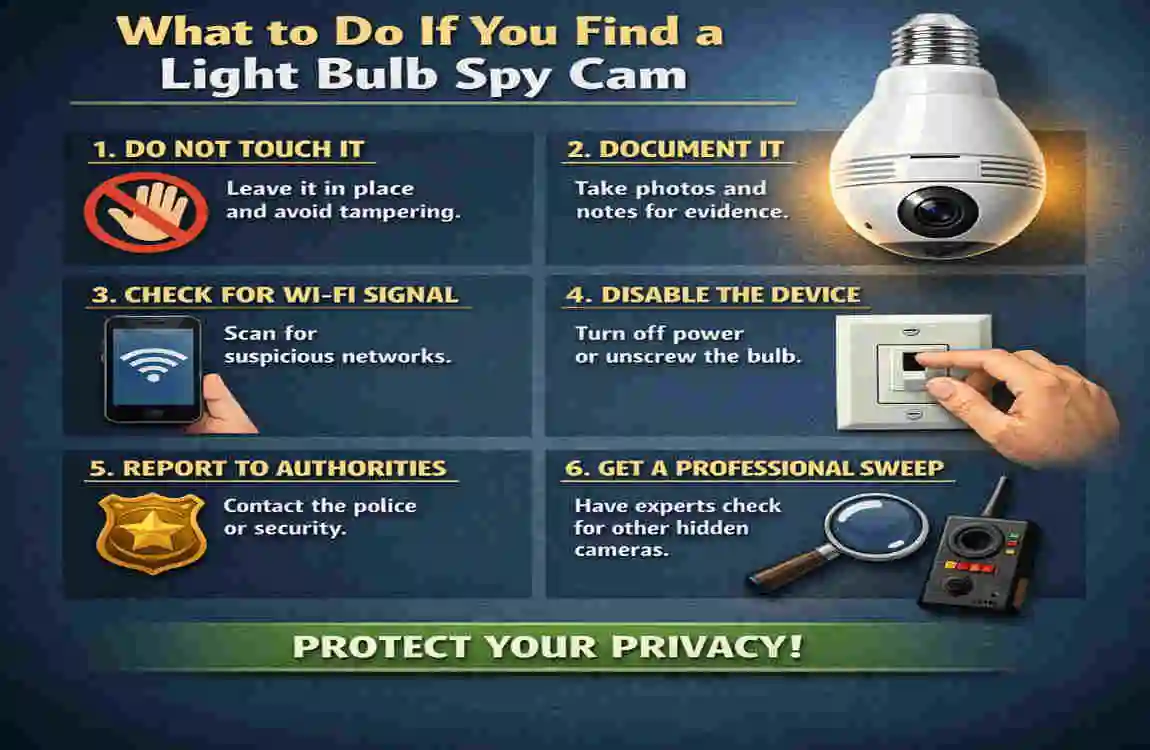
Discovering a hidden camera can be unsettling. Follow this action plan:
Document the Evidence
Take photos or videos of the device, noting its location and any identifying details (e.g., serial numbers).
Report It
- Notify the property owner, police, or Airbnb if applicable.
- File a complaint with the FCC for illegal transmissions.
Secure Your Space
- Change your WiFi password immediately.
- Consider using Faraday bags or anti-spy equipment.
Prevent Future Risks
Install anti-spy films on windows and invest in smart home security devices to maintain privacy.
Real Story: In 2025, a victim successfully sued a landlord for $50,000 after discovering a hidden camera disguised as a light bulb.
Myths vs. Facts: Debunking Light Bulb Camera Misconceptions
MythFact
All smart bulbs are spy cameras. Only fake or modified ones are; legitimate brands like Philips are safe.
Spy cameras can’t be detected. RF detectors and apps are over 90% effective in finding them.
They’re only found in hotels. They’re increasingly common in homes and rented spaces.
FAQs: How to Tell If a Light Bulb Is a House Camera
How can I tell if a light bulb is a house camera without tools?
Look for unusual shapes, tiny lenses, or wires. Check the bulb’s weight and heat output.
Do light bulb cameras record Audio?
Yes, many models include microphones to capture sound.
Can I detect them with my iPhone?
Absolutely! Use your iPhone’s camera to scan for IR light or download a hidden camera detection app.
