
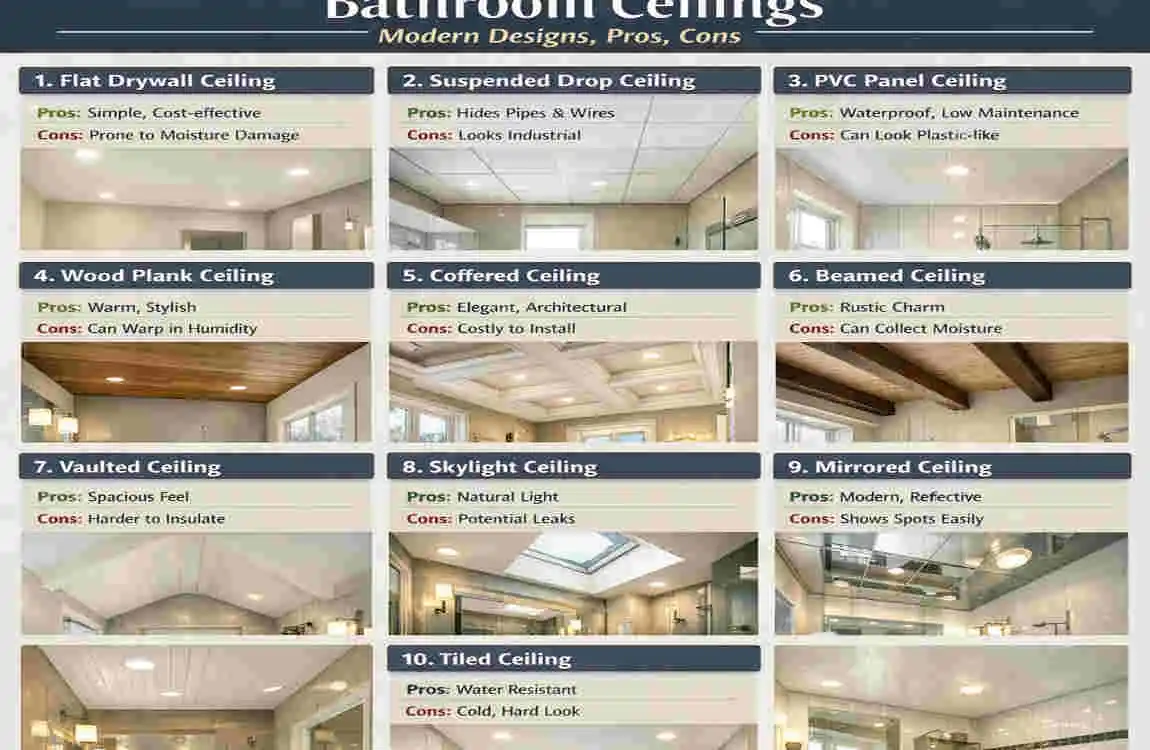
Did you know that in 2026, roughly 68% of homeowners are prioritizing bathroom upgrades? According to recent data from design hubs like Houzz, people are moving away from basic utility spaces and toward creating personal sanctuaries. And where is the biggest transformation happening? It’s starting right at the top.
We often spend hours picking out tiles, faucets, and vanities, but the ceiling usually gets ignored until the paint starts peeling. This is a missed opportunity! The ceiling is often called the “fifth wall” for a reason. In a bathroom, the ceiling does heavy lifting. It has to fight off steam, prevent mold, handle lighting, and visually expand what is often the smallest room in the house.
Why Choose the Right Bathroom Ceiling? Key Factors to Consider
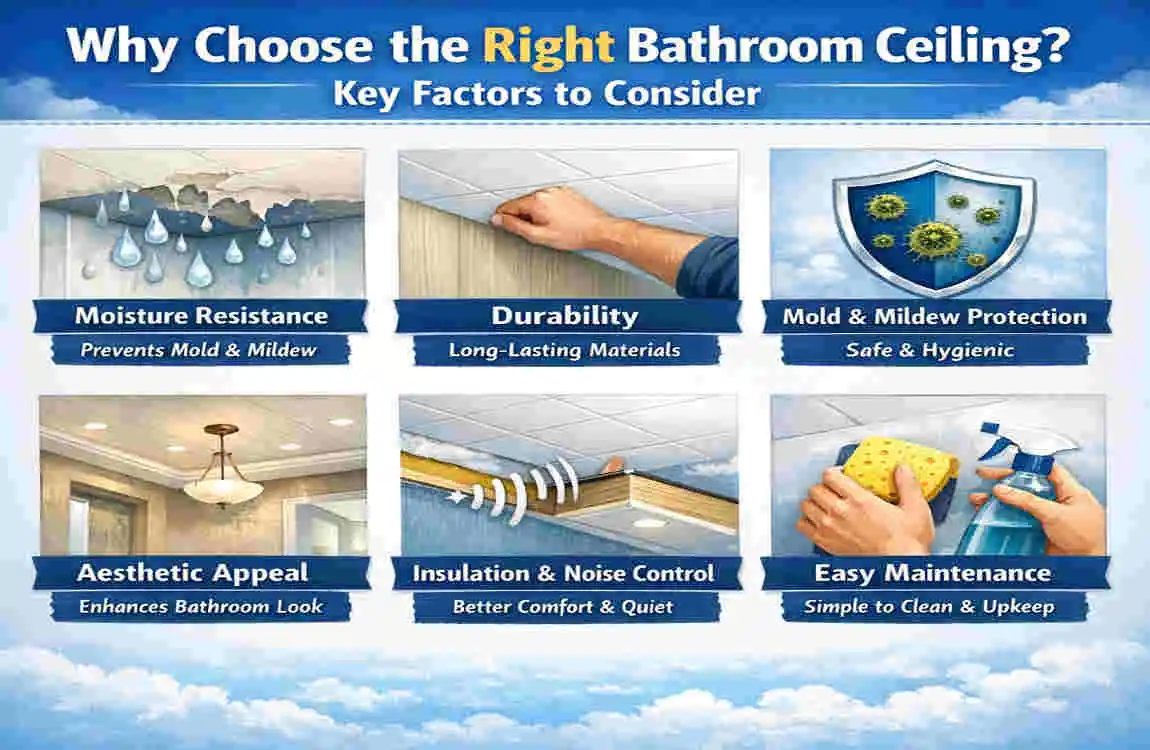
Before we jump into the specific materials, let’s talk about why your choice matters so much. A bathroom isn’t like a living room or a bedroom. It is a hostile environment for most building materials. Here is what you need to keep in mind before you buy.
Moisture and Humidity Resistance
This is the number one factor. Your bathroom gets hot, steamy, and wet. The material you choose must withstand high humidity without warping, rotting, or mold growth. If the material absorbs water, it’s a ticking time bomb. You need surfaces that repel moisture or are treated with high-quality sealants.
Ventilation Integration
A pretty ceiling is useless if it traps moisture. Your design needs to seamlessly accommodate exhaust fans or ventilation systems. Some modern drop ceilings actually make it easier to hide venting ducts, while flat drywall requires careful cutting and planning.
Lighting and Height Illusion
Bathrooms are often small. The right ceiling can make a cramped powder room feel airy and spacious. Light colors and glossy finishes reflect light, making the room feel taller. Conversely, if you have very high ceilings, a textured or wood design can bring warmth and intimacy to the space.
Budget and Maintenance
How much do you want to spend, and how much time do you want to spend cleaning it? Some materials, like PVC, are “install and forget.” Others, like wood, require annual maintenance to keep them waterproof. Be honest with yourself about how much effort you want to put in later.
PVC Panel Ceilings
When it comes to handling water, plastic is often the undisputed champion. PVC (Polyvinyl Chloride) ceilings have come a long way from the cheap-looking plastic of the past. Today, they are a top contender for types of house bathroom ceilings because they are practically built for wet environments.
Modern Designs
Forget the shiny, brittle plastic of the 90s. Modern PVC panels come in sophisticated matte finishes, realistic wood grains, and even stone textures. A popular trend right now is the “false ceiling grid.” This involves using long, interlocking PVC planks that mimic the look of white timber or whitewashed wood.
Designers are also incorporating LED strip lighting within the grooves of these panels. This creates a soft, ambient glow that turns a standard bathroom into a spa-like retreat without the harsh glare of a central bulb.
Pros
- 100% Waterproof: Water beads up and rolls off. You never have to worry about rot or water absorption.
- Mold Resistant: Since it doesn’t hold moisture, mold has nowhere to grow.
- Budget-Friendly: This is one of the most affordable options, typically costing between $5 and $10 per square foot.
- Easy DIY: The panels are lightweight and often click together, making it a weekend project for a handy homeowner.
Cons
- Aesthetic Limitations: Despite better designs, close inspection still reveals it is plastic. It can sometimes look “cheap” compared to natural materials.
- Heat Sensitivity: Standard PVC doesn’t handle high heat well, so be careful where you place high-wattage bulbs.
- Yellowing: Over time, white PVC can yellow due to UV exposure or age.
Gypsum Board (Drywall) Ceilings
If you walk into most modern homes, you will likely see Gypsum board. It is the standard for a reason. It offers a clean, seamless, and polished look that serves as a blank canvas for your design ideas. In the context of types of house bathroom ceilings, this is the “classic” choice, but it requires specific treatment for bathrooms.
Modern Designs
The trend here is all about “suspended” or “drop” designs. Designers are using moisture-resistant gypsum (often green board) to create lowered sections in the ceiling. This allows for recessed pot lights (can lights) to be installed flush with the surface for a very clean look.
Another massive trend is the “cove ceiling.” This is where the gypsum board stops a few inches from the wall, creating a hidden pocket for LED strip lights to cast a glow upwards. It feels incredibly high-end and architectural.
Pros
- Seamless Finish: You don’t see joints or grids. It looks like one smooth surface.
- Customizable: You can paint it any color, add texture, or attach crown molding.
- Fire Resistant: Gypsum has natural fire-resistant properties.
- Mid-Range Cost: It usually runs about $8 to $15 per square foot, making it affordable for the Premium look it provides.
Cons
- Not Naturally Waterproof: You must use water-resistant paint and specialized “green board” drywall. If standard drywall gets wet, it crumbles.
- Sagging Risk: In poorly ventilated bathrooms, the constant steam can eventually cause the board to sag or the tape joints to peel.
- Repainting: You will need to repaint every few years to keep the moisture seal intact.
Acrylic or Polycarbonate Ceilings
If you want to play with light, Acrylic is your best friend. These are reinforced plastic sheets that can be transparent, translucent, or opaque. They are gaining massive popularity in modern apartments where bathrooms might lack windows and natural light.
Modern Designs
The coolest modern design involving acrylic is the “artificial skylight.” Builders install LED lights on the true ceiling, then suspend a frosted acrylic panel below. When you flip the switch, the entire ceiling glows, mimicking natural daylight.
You can also find acrylic panels with printed designs—think sky patterns, geometric shapes, or even colored tints that change the mood of the room. It creates a very futuristic, clean aesthetic.
Pros
- Fully Waterproof: Like PVC, acrylic handles water perfectly.
- Lightweight: It puts very little stress on your ceiling joists.
- UV Resistant: High-quality polycarbonate won’t yellow or degrade from exposure to light.
- Easy to Clean: A simple wipe with a damp cloth keeps it looking new.
- Cost: Moderately priced at $10 to $20 per square foot.
Cons
- Scratch Prone: Be careful when cleaning; abrasive sponges can leave swirl marks.
- Echo: Plastic surfaces reflect sound, so your bathroom might sound a bit more “echoey” compared to wood or acoustical tile.
- Cost vs. Feel: While not cheap, it can sometimes feel less “solid” or luxurious than glass or stone.
Aluminum False Ceilings
For those who love the industrial-chic look or want something that will literally last a lifetime, aluminum is the way to go. Metal ceilings were once reserved for offices, but they have entered the residential market with style.
Modern Designs
We aren’t talking about boring office grids. Modern aluminum ceilings come in perforated panels (tiny holes that add texture), long linear strips, or interlocking planks. Matte black, brushed bronze, and charcoal grey are the trending colors.
A very popular design is the “linear baffle” ceiling, where long aluminum slats hang down, leaving gaps between them. It looks incredibly architectural and provides excellent airflow, which helps prevent mold.
Pros
- Durability: It is rust-proof, rot-proof, and fire-proof. It can easily last 20+ years.
- Easy Access: Most aluminum systems are suspended, meaning you can easily pop a panel out to fix a leaky pipe or change a wire above.
- Recyclable: an eco-friendly choice.
- Quick install: The systems usually clip together very fast.
Cons
- Temperature Conductor: Metal gets cold. In the winter, an aluminum ceiling can make the room feel slightly chillier.
- Condensation: If the room is very steamy and the metal is cold, water droplets will form on the ceiling (sweating). You need good ventilation.
- Cost: It is on the pricier side, often $12 to $18 per square foot.
Wooden or Teak Ceilings
Nothing beats the warmth and luxury of natural wood. It brings a spa, sauna, or nature-inspired vibe to the bathroom. However, wood and water are natural enemies, so this choice requires careful planning.
Modern Designs
Shiplap planks are huge right now. Installing them horizontally makes the room feel wider. Another trend is the herringbone pattern on the ceiling, which turns the wood into a piece of art.
Designers are favoring lighter woods like Ash or White Oak for a “Scandi-spa” look, or rich, dark Teak for a more traditional luxury feel. The wood is almost always sealed with a high-gloss or satin marine-grade varnish to protect it.
Pros
- Aesthetics: It is undeniably beautiful and adds texture that paint cannot match.
- Insulation: Wood is a natural insulator, keeping the bathroom warmer.
- Acoustics: Wood absorbs sound, making the bathroom feel quieter and more private.
- Eco-Friendly: If sourced sustainably, it’s a natural material.
Cons
- High Maintenance: You must reseal the wood every 1-2 years to prevent moisture from getting in.
- Warping Risk: If humidity fluctuates too much, wood can expand and contract, leading to warping or cracking.
- Cost: This is a Premium option, ranging from $15 to $25 per square foot depending on the wood species.
Glass Ceilings
If you want to make a bold statement, glass is the ultimate luxury. It’s not for everyone, but for specific designs, it is breathtaking. We aren’t just talking about skylights; we’re talking about decorative glass panels used as a false ceiling.
Modern Designs
Imagine a shower area with a ceiling made of frosted or tinted glass. Above that glass, lighting is installed to create a glow. Another design trend is using stained glass for a vintage, artistic look, or mirrored glass to visually double the height of the room (though this is a bold choice!).
Frameless glass panels create an “infinity” effect, making the ceiling appear to disappear.
Pros
- Aesthetics: It looks incredibly high-end and creates a sense of openness.
- Lighting: It is the best material for diffusing light throughout the room.
- Hygiene: Glass is non-porous and very easy to clean; mold cannot grow into it.
Cons
- Safety: You must use tempered or laminated safety glass. If it breaks, it’s a hazard.
- Weight: Glass is heavy and requires a strong metal framework to support it.
- Cleaning: Condensation spots form easily on glass. You’ll be wiping it down often.
- Price: It is expensive, easily reaching $20 to $40 per square foot.
Tile Ceilings
You tile the floor. You tile the walls. Why stop there? Tiling the ceiling is a growing trend, especially in steam showers and wet rooms. It creates a completely sealed, waterproof box.
Modern Designs
The most popular look is to continue the subway tile from the walls up to the ceiling. It creates a tunnel-like, cohesive effect. For a more dramatic look, designers use mosaic tiles on the ceiling to create patterns or geometric designs that contrast with the simpler wall tiles.
Large format porcelain tiles are also being used to minimize grout lines, making the ceiling look like slabs of stone.
Pros
- Ultimate Waterproofing: The best defense against steam. It is essential for steam rooms.
- Durability: Ceramics and porcelain last for decades.
- Design Continuity: It unifies the room’s design.
- Heat Resistance: Tiles withstand steam generator heat perfectly.
Cons
- Weight: Tiles are heavy. Your ceiling joists need to be reinforced to handle the load.
- Installation Difficulty: Tiling overhead is back-breaking work and requires a skilled professional to prevent tiles from falling.
- Grout Maintenance: While the tile is waterproof, the grout can attract mold if not sealed properly.
- Cost: Labor makes this expensive, usually $10 to $20 per square foot.
Plaster Ceilings (POP)
Plaster of Paris (POP) is the choice for those who love curves, intricate details, and a finish smoother than drywall. It is very popular in classic and vintage home renovations.
Modern Designs
While plaster is traditional, modern designs use it for curved bulkheads or circular ceiling insets. Instead of sharp corners, plaster allows for rounded edges where the wall meets the ceiling.
Ornate cornices and medallions are also making a comeback, painted in matte white for a subtle texture against a colorful wall. It allows for “Venetian polish” finishes which look like marble.
Pros
- Design Freedom: Plaster can be molded into literally any shape or curve.
- Finish: It provides the smoothest possible finish of any material.
- Sound Deadening: Thick plaster is excellent at blocking noise.
- Price: Materials are cheap, though labor varies. Approx $8 to $15 per square foot.
Cons
- Cracking: Plaster is rigid. If your house settles or the humidity shifts drastically, hairline cracks can appear.
- Moisture Sensitivity: Like drywall, it needs excellent sealing and painting. It is not naturally waterproof.
- Time: It takes days to apply layers, dry, and sand.
Metal Ceilings (Tin/Steel)
Step back in time with pressed tin ceilings. This style was massive in the Victorian era and is seeing a revival in “vintage modern” or “farmhouse” style bathrooms.
Modern Designs
Today, these tiles aren’t just raw tin. They come in brushed nickel, copper, and matte white finishes. The patterns are pressed into the metal, offering intricate floral or geometric designs.
A modern twist is using these panels as an accent in the center of the room, surrounded by smooth drywall. It creates a focal point above a freestanding bathtub.
Pros
- Visual Interest: It adds texture and history to a room instantly.
- Reflective: Metal reflects light, brightening up dark bathrooms.
- Cover-Up: These panels are great for covering up an ugly, damaged old ceiling without tearing it down.
- Fire/Mold Resistant: Metal doesn’t burn or support mold growth.
Cons
- Corrosion: You must ensure the metal is treated (powder coated) to prevent rust in a damp bathroom.
- Noise: Can be “tinny” sounding if water splashes or hits it.
- Style Specific: It creates a very specific “look” that might not fit a super modern home.
- Cost: ranges from $15 to $25 per square foot.
Coffered or Tray Ceilings
If you have the luxury of height, a coffered or tray ceiling is the ultimate architectural flex. This involves creating a grid of sunken panels (coffered) or a single raised center section (tray).
Modern Designs
Modern tray ceilings are less about heavy wood molding and more about clean lines. A simple rectangular tray with hidden LED strip lighting creates a “floating ceiling” effect.
For coffered ceilings, using PVC or polyurethane beams instead of heavy wood makes them moisture-resistant and lighter, and they can be painted in stark white or contrasting black for drama.
Pros
- Grandeur: It makes the bathroom feel like a luxury estate or a palace.
- Height Illusion: Adding depth makes the room feel taller and more spacious.
- Hiding Mechanics: The beams or dropped sections are perfect for hiding HVAC ducts or wiring.
Cons
- Requires Height: You generally need at least a 9-foot ceiling to pull this off; otherwise, the room feels claustrophobic.
- Dust Traps: The ledges and ridges collect dust and need regular cleaning.
- Complex install: This is a major construction job, not a quick fix.
- Cost: The most expensive option, often $25-$50 per square foot.
Comparison Table: Pros, Cons, and Costs of 10 Types of House Bathroom Ceilings
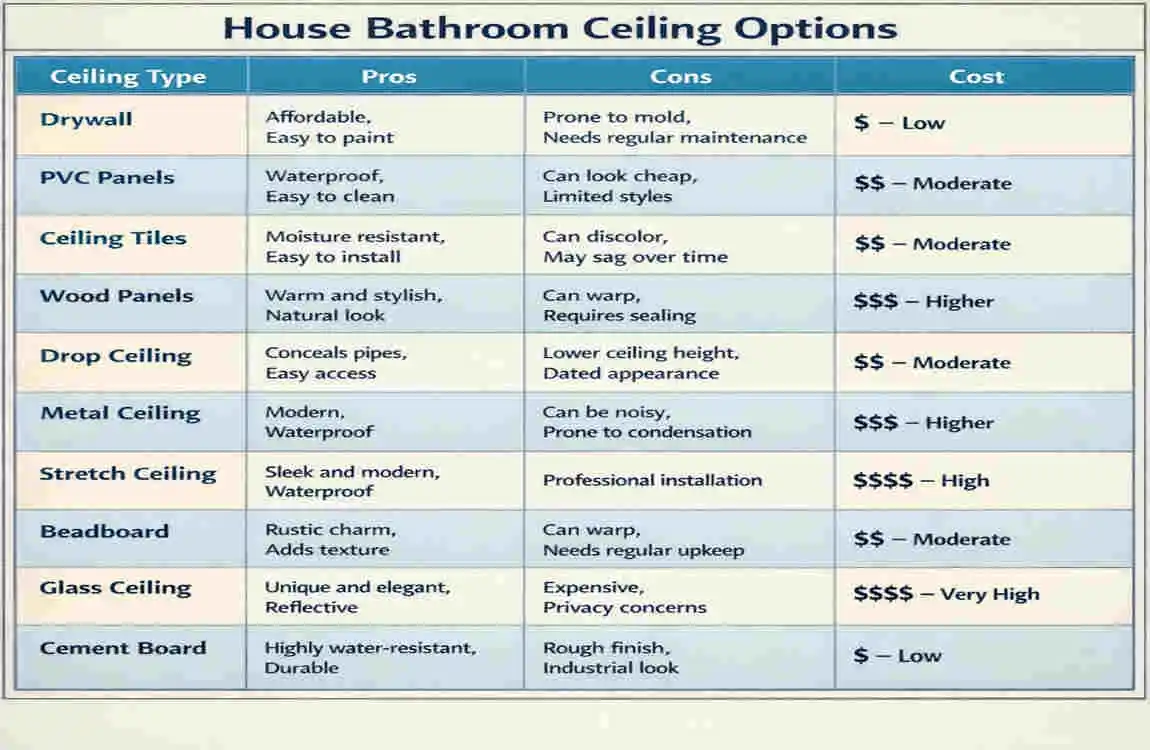
Here is a quick snapshot to help you compare your options side by side.
Type Pros Cons Cost (appro x /sq ft)Best For
PVC Waterproof, Cheap, DIY-friendly Can look “plastic”, yellows $5 – $10 Budget renovations
Gypsum Seamless, Paintable, Clean look Needs waterproofing, can sag $8 – $15 Standard modern homes
Acrylic Translucent, Waterproof, Modern Scratches easily, expensive $10 – $20 Adding light/Modern look
Aluminum Durable, Rust-proof, Easy access Industrial look, condensation $12 – $18 Contemporary/Loft styles
Wood/Teak Warm, Luxurious, Natural High maintenance, rot risk $15 – $25 Spa-style bathrooms
Glass Spacious, Light-enhancing Heavy, fragile, privacy issues $20 – $40 Luxury accents
Tile Totally waterproof, Seamless Heavy, grout cleaning $10 – $20 Steam rooms/Showers
Plaster Smooth, Artistic shapes Cracks over time, labor intensive $8 – $15 Vintage/Classic homes
Metal (Tin) Vintage charm, Durable cover-up Rust risk if untreated, niche style $15 – $25 Farmhouse/Retro styles
Coffered Architectural drama, Adds depth Expensive, needs high ceilings $25 – $50 Large Master Baths
Installation Tips and Maintenance for Bathroom Ceilings
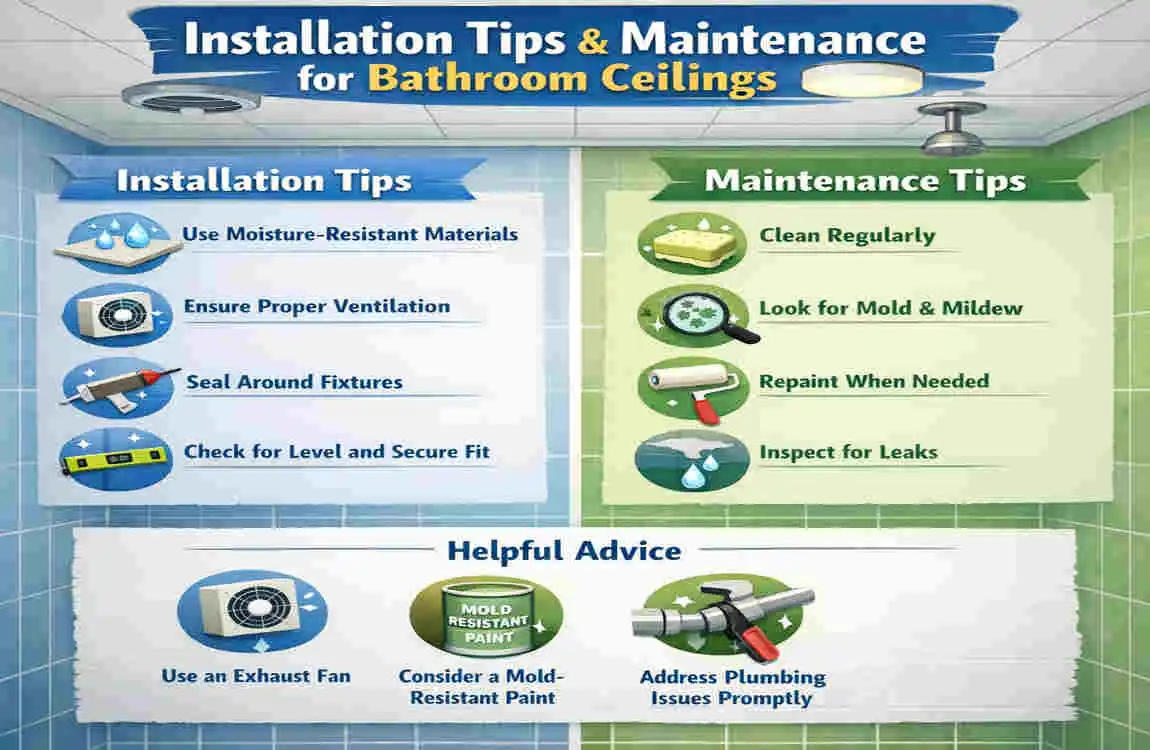
Picking the material is step one. Getting it up there and keeping it looking good is step two.
Installation Basics
- Prep is Key: Before you cover your old ceiling, check for leaks! If you have water stains, find the source (roof, pipe upstairs) and fix it. Covering a leak with new PVC won’t stop the mold growing underneath.
- Vapor Barrier: For materials like wood or gypsum, ensure your contractor installs a vapor barrier (plastic sheeting) behind the material to stop moisture from reaching the framing.
- Pro vs. DIY: PVC and tin tiles are often DIY-friendly. Gypsum, plaster, and heavy tile should almost always be left to professionals. The risk of a heavy ceiling falling is not worth the savings.
Maintenance Hacks
- The Ventilation Rule: Run your exhaust fan for at least 15-20 minutes after you shower. This pulls out residual moisture, saving your ceiling.
- Cleaning: For PVC, Acrylic, and Metal, a simple mix of water and mild dish soap works wonders. Avoid abrasive scrubbers.
- Wood Care: Check your wood ceiling annually. If water stops beading up on the surface, it’s time to apply a fresh coat of marine sealer.
- Mold Watch: If you see small black spots (mildew) on painted ceilings, clean them immediately with a bleach-water solution before they spread into the drywall paper.
FAQs
What is the best type of ceiling for a small bathroom? For small bathrooms, glossy PVC panels or light-colored Gypsum are best. They reflect light, making the tight space feel airier. Avoid dark wood or busy patterns, which can make the room feel smaller.
Can I use wood on my bathroom ceiling? Yes, but proceed with caution! You must use hardwoods like Teak, Cedar, or Red Oak that naturally resist rot. Most importantly, the wood must be sealed on all sides (even the back) with a marine-grade polyurethane before installation.
What is the cheapest bathroom ceiling option?PVC panels are generally the most affordable option. They are cheap to buy and often don’t require professional installation or painting, saving you money on labor and materials.
How do I prevent mold on my bathroom ceiling? The best defense is ventilation. Install a strong exhaust fan. Secondly, use high-gloss or semi-gloss paint designed for bathrooms (often called “kitchen and bath” paint), which has mildewcides additives.
Are drop ceilings good for bathrooms? Yes! Aluminum or PVC drop ceilings are great because they hide plumbing and wiring but allow easy access for repairs. They are also usually resistant to moisture damage.
Can I tile my bathroom ceiling? Absolutely. It is highly recommended for steam showers or wet rooms. Just ensure your ceiling joists are strong enough to hold the extra weight of the tile and adhesive.
How long do PVC bathroom ceilings last? High-quality PVC ceilings can last 15 to 20 years with minimal maintenance. They don’t rot or rust, so their lifespan is mostly determined by how well they hold their color over time.
