

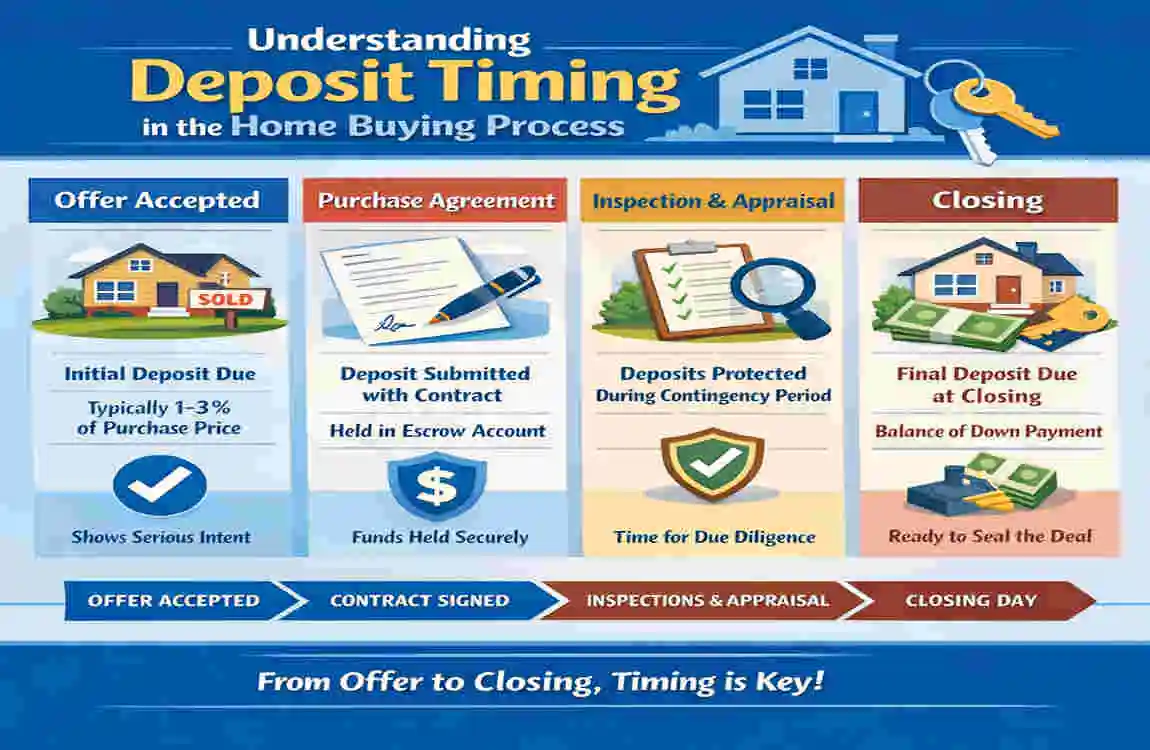
Buying a house is one of the biggest financial decisions you’ll ever make, and understanding the deposit payment timeline is crucial to avoid any hiccups. One common question buyers often ask is, “When is the deposit paid on a house purchase?” The answer depends on several factors, such as the country, property type, and stage of the home-buying process. Getting the timing wrong can lead to lost funds, canceled deals, or unnecessary stress.
What Is a Deposit in Home Buying?
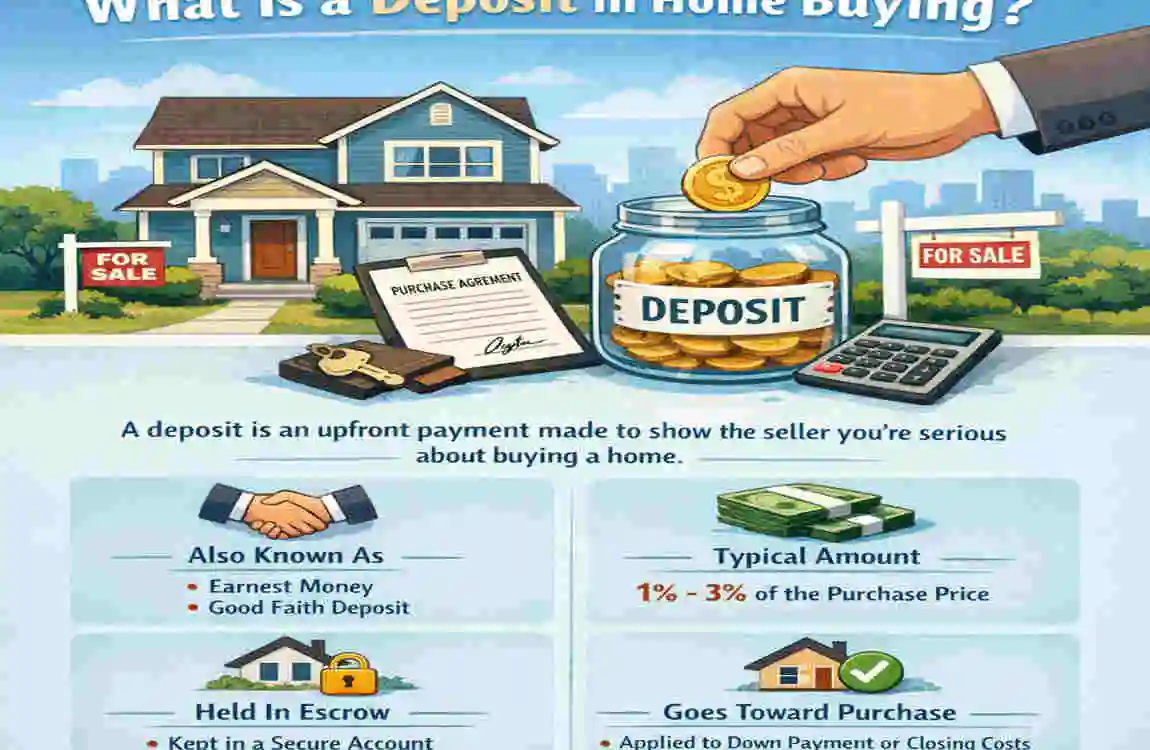
When buying a home, the deposit serves as a financial commitment to the seller, indicating that you’re serious about the purchase. This is a good-faith payment that ensures both parties are invested in the deal.
In the US, this deposit is commonly called earnest money, while in the UK, it’s known as the exchange deposit. While the deposit is distinct from the down payment, both play significant roles in the overall financial transaction.
Typical Deposit Amounts
- United States: 1-3% of the property price
- United Kingdom: 5-10% of the property price
- Global Variations: 5-10%, depending on local housing practices
Deposit vs. Other Costs
To help you understand where the deposit fits into the broader financial picture, here’s a comparison of the deposit and other home-buying costs:
Cost Type Timing Amount Example Purpose
Holding Deposit Offer stage $500-$2,000 Reserve property
Earnest Money (US) Post-offer acceptance 1-3% of price Prove seriousness
Exchange Deposit (UK) Contracts exchanged 5-10% of the price. Legally binds the deal
Why Deposit Timing Matters
Understanding when to pay your deposit is critical because it directly impacts the success of your home purchase. Paying too late—or not at all—can result in severe consequences.
Risks of Late Payment
- Deal Cancellation: Sellers may withdraw the property if the deposit isn’t paid on time.
- Lost Funds: Missing deadlines may result in forfeiture of your deposit.
- Legal Breaches: In many contracts, “time is of the essence,” meaning strict adherence to deadlines is required.
Benefits of Timely Deposit Payment
- Seller Confidence: A prompt deposit reassures the seller of your commitment.
- Better Loan Rates: Lenders may look favorably upon buyers who demonstrate financial responsibility.
Home Buying Stages Overview
To understand the deposit payment timeline, it’s essential to know the key stages of the home-buying process. Here’s a simplified overview:
Key Stages in Home Buying
- Offer Made: You submit an offer to the seller.
- Offer Accepted: The seller agrees to your terms.
- Inspections/Surveys: The property is evaluated for issues.
- Exchange of Contracts/Under Contract: Legal documents are signed.
- Completion/Closing: Ownership is officially transferred.
When is the deposit paid? (US Process)
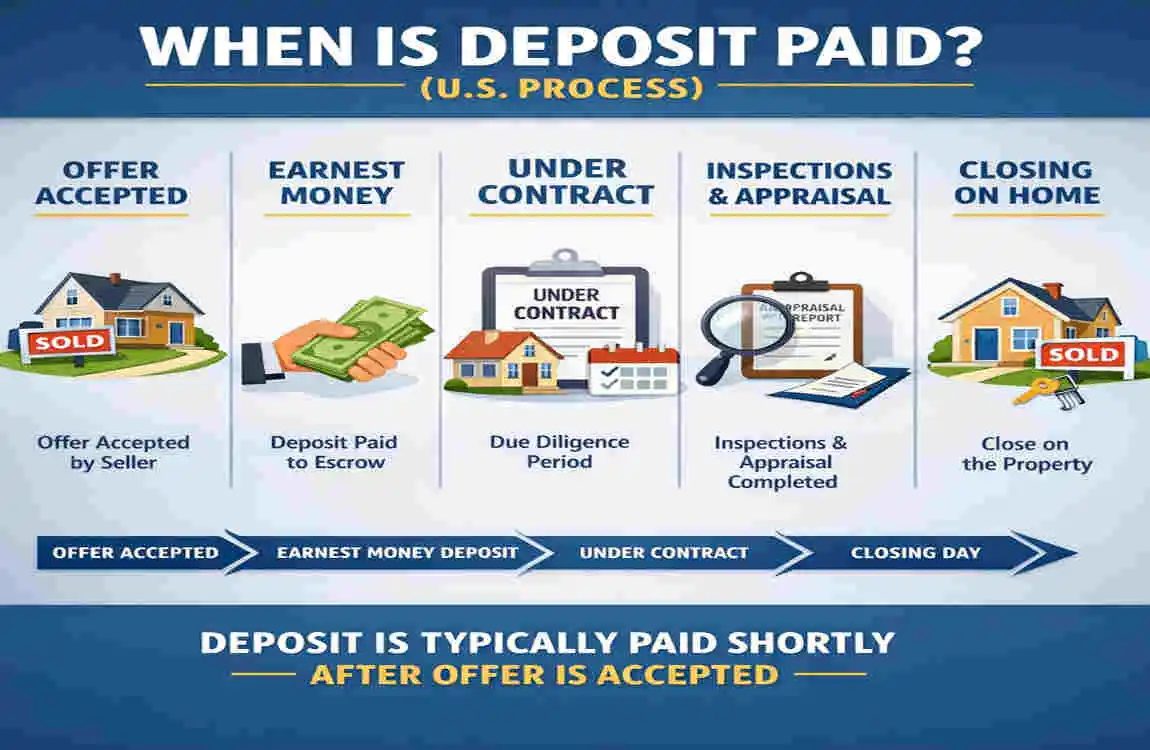
In the United States, the deposit is known as earnest money, and the timing is relatively straightforward.
Earnest Money Due Date
- When? Typically, 1-3 business days after the seller accepts your offer.
- How Much? Usually, 1-3% of the property price. For example, on a $300,000 home, the earnest money deposit might range from $3,000 to $9,000.
Step-by-Step Timeline
- Day 0: Seller’s offer accepted.
- Days 1-3: Deposit earnest money into an escrow account (managed by a neutral third party, such as a title company or attorney).
- Held Until Closing: The funds remain in escrow and are applied toward your down payment or closing costs.
Competitive Market Variations
In hot real estate markets, sellers may request the deposit within 24-48 hours to lock in the deal.
When is the deposit paid? (UK Process)
The UK home-buying process involves a slightly different timeline, with the deposit paid later, during the exchange of contracts stage.
Exchange of Contracts Deposit
- When? Upon exchanging contracts, typically 1-4 weeks before completion.
- How Much? Usually, 5-10% of the property price. For example, on a £300,000 home, the deposit might range from £15,000 to £30,000.
Step-by-Step Timeline
- Offer Accepted: No deposit has been paid yet.
- Conveyancing Process: Your solicitor prepares the legal documents.
- Exchange of Contracts: You pay the deposit to your solicitor, who transfers it to the seller’s account.
- Completion Day: The remaining balance, including your mortgage, is paid in full.
Special Cases: New Builds
When buying a new build, you may need to pay a reservation fee (e.g., £1,000) early in the process to secure the property.
Global Variations in Deposit Timing
Deposit timing varies across different countries. Here’s a quick comparison:
Country Deposit Name Exact Timing % of Price
United States Earnest Money 1-3 days post-acceptance 1-3%
United Kingdom Exchange Deposit Contracts exchange 5-10%
South Africa Purchase Deposit After the offer is signed , 10%
Australia House Deposit Contracts exchange 5-10%
Factors such as local laws, market demand, and cultural practices influence these variations.
Step-by-Step Deposit Payment Guide
Here’s a step-by-step guide to ensure your deposit payment process goes smoothly:
- Get Pre-Approved: Secure a mortgage pre-approval to show sellers you’re financially ready.
- Make Your Offer: Include your proposed deposit amount and terms.
- Verify Escrow Details: Confirm the escrow account details with your solicitor or agent.
- Fund the Deposit: Transfer the deposit via wire transfer or check. Make sure the funds are readily available in your savings or checking account.
- Confirm Receipt: Get a confirmation from the escrow agent or solicitor.
Common Mistakes with Deposit Timing
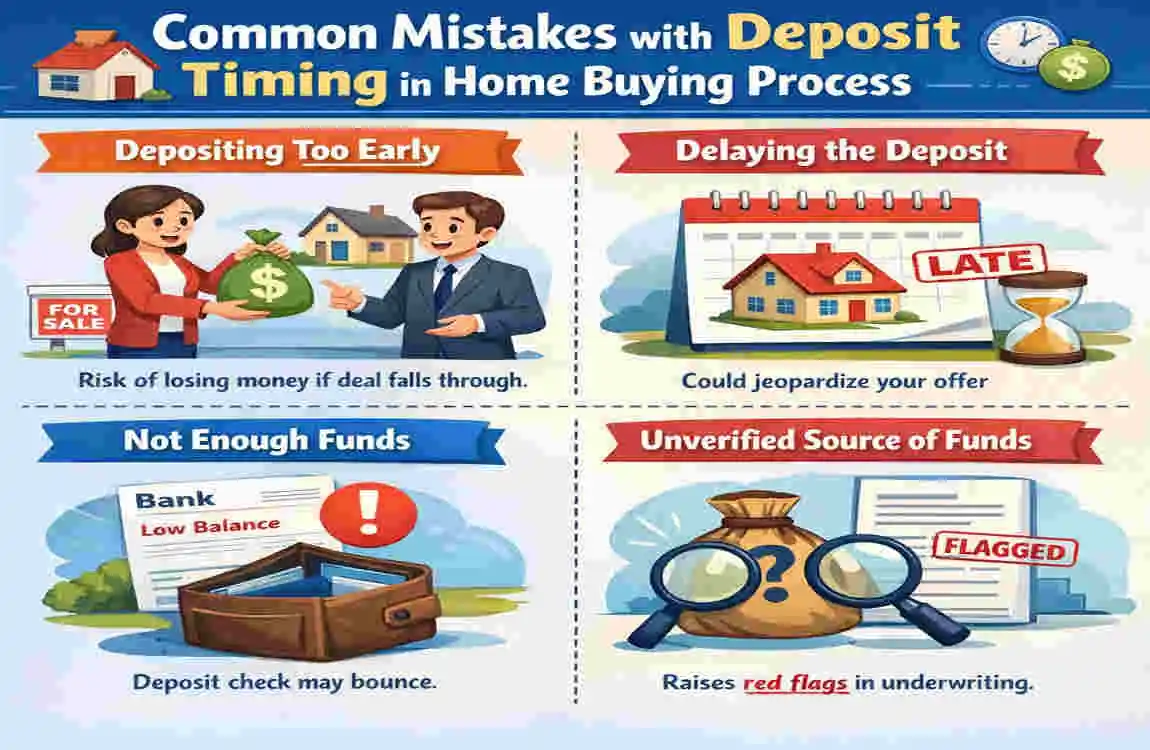
Avoid these pitfalls to prevent delays or complications:
- Paying the Seller Directly: Always use a trusted third party (escrow or solicitor).
- Missing Deadlines: Late payments can result in the loss of the property.
- Confusing Deposit with Down Payment: Remember, the deposit is only part of the total upfront costs.
FAQs: When Is the Deposit Paid on a House Purchase?
When is the deposit paid on a house purchase?
In the US, it’s due 1-3 days after the offer is accepted. In the UK, it’s paid at the exchange of contracts stage.
Is the deposit refundable?
Deposits are usually refundable if the deal falls through due to contingencies (e.g., failed inspections).
