

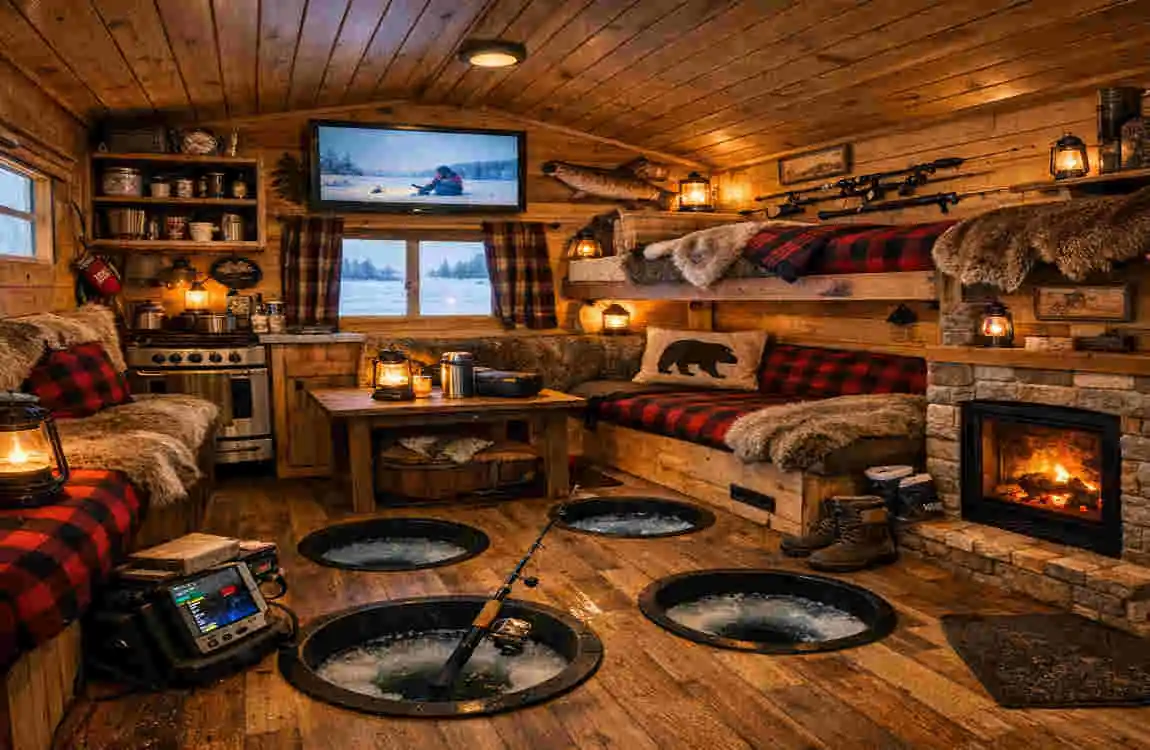
The wind is howling across a frozen lake in Minnesota, whipping up snow into a blinding whiteout. Outside, the temperature has dropped well below zero. But inside? Inside your shelter, you are sitting back in a padded recliner, stripped down to your flannel shirt. The smell of hot coffee—or maybe some sizzling bacon—fills the air. Soft LED lights cast a warm glow against rustic wood-paneled walls, and your feet are toasty warm on an insulated floor. You aren’t just surviving the elements; you are thriving in them.
Now, contrast that with the old-school reality: sitting on an overturned plastic bucket, shivering in a drafty, dark tent, watching your breath fog up the air while your toes slowly turn into blocks of ice. Which scenario makes you want to stay out and catch that trophy walleye?
For too long, ice fishing has been synonymous with “roughing it.” Anglers have dealt with discomfort, clutter, and a serious lack of personality in their setups. But why suffer? According to recent data from the Outdoor Industry Association, ice fishing participation grew by nearly 20% in 2025. As more people hit hard water, the trend is shifting from bare-bones Survival to comfort and style.
Why Upgrade Your Ice Fish House Interior?
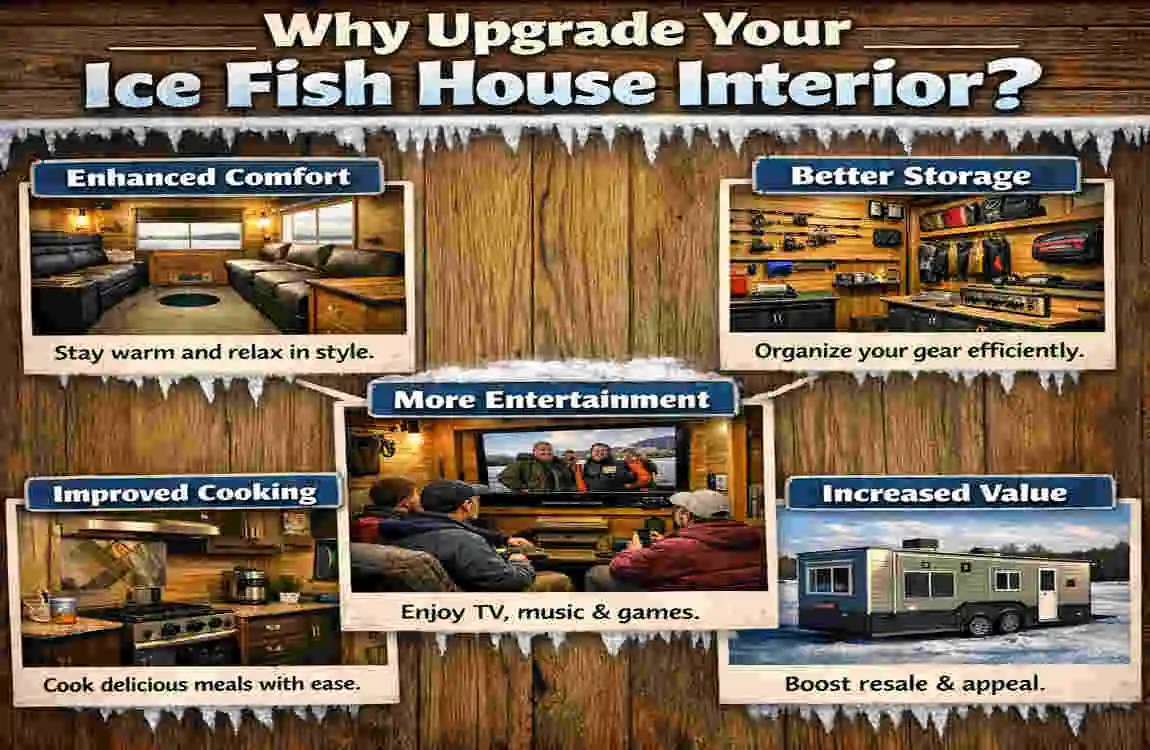
You might be thinking, “I’m just there to catch fish, why does the interior matter?” It is a fair question. But upgrading your space isn’t just about making it look pretty for Instagram (although that is a nice bonus). It is about performance.
The Benefits of a Better Build
When your environment is comfortable, you have more patience. You can stay out on the ice longer, which statistically increases your odds of catching fish. Upgrading your interior also improves safety. Proper organization prevents tripping hazards, and better insulation reduces the risk of hypothermia or carbon monoxide buildup by allowing your heater to run more efficiently.
This guide is for everyone—from the hardcore angler who spends 48 hours straight on the ice, to families who want to introduce their kids to the sport without the tears that come from freezing fingers.
Quick Wins and ROI
The best part? You don’t need a millionaire’s budget. Simple, affordable tweaks—some under $200—can yield pro-level comfort. You are investing in your own enjoyment.
Here is why you should start planning your upgrade today:
- Enhanced Warmth: Proper insulation means you use less propane and stay warmer.
- Better Organization: No more stepping on expensive rods or losing lures in the slush.
- Aesthetic Appeal: A personalized space feels like a second home, making it a place you actually want to hang out in, even when the fish aren’t biting.
Essential Planning for Ice Fish House Interior Ideas
Before you start gluing shiplap to your walls or buying expensive recliners, you need a plan. Rushing into a renovation without a strategy is a recipe for a cluttered, heavy disaster.
Assess Your Space
First, grab a tape measure. Are you working with a portable 6×10-foot hub or a massive 8×20-foot wheelhouse? The size dictates everything.
- For Portables: Weight is your enemy. You need lightweight, collapsible, and multi-purpose items.
- For Permanent Houses: You have more freedom, but you still need to consider how the house travels down the highway and onto the ice.
Budget Breakdown
Be realistic about what you want to spend.
- Low Budget ($100 – $500): Focus on DIY insulation, better lighting, and organization hacks.
- Mid-Range ($500 – $1,500): Upgrade your flooring, install a high-quality heating system, and add comfortable seating.
- Luxury ($2,000+): Custom cabinetry, solar power systems, entertainment centers, and high-end finishes.
Safety First
Never compromise on safety. Your plan must include:
- Ventilation: Tighter insulation requires better airflow to prevent CO poisoning.
- Fire-Proof Materials: Be careful with fabrics near heaters.
- Non-Slip Flooring: Slush turns into ice instantly; you need traction.
Step-by-Step Planning Guide
- Sketch Your Layout: Draw a simple floor plan. Always start with the fishing holes—they are the center of the action. Arrange seating around them.
- Source Your Materials: Look for lightweight, moisture-resistant materials. Marine-grade plywood and outdoor fabrics are your friends.
- Test for Mobility: If you have a portable sled, pile your potential gear on it. Can you pull it? If not, scale back.
Top Ice Fish House Interior Ideas for Cozy Comfort
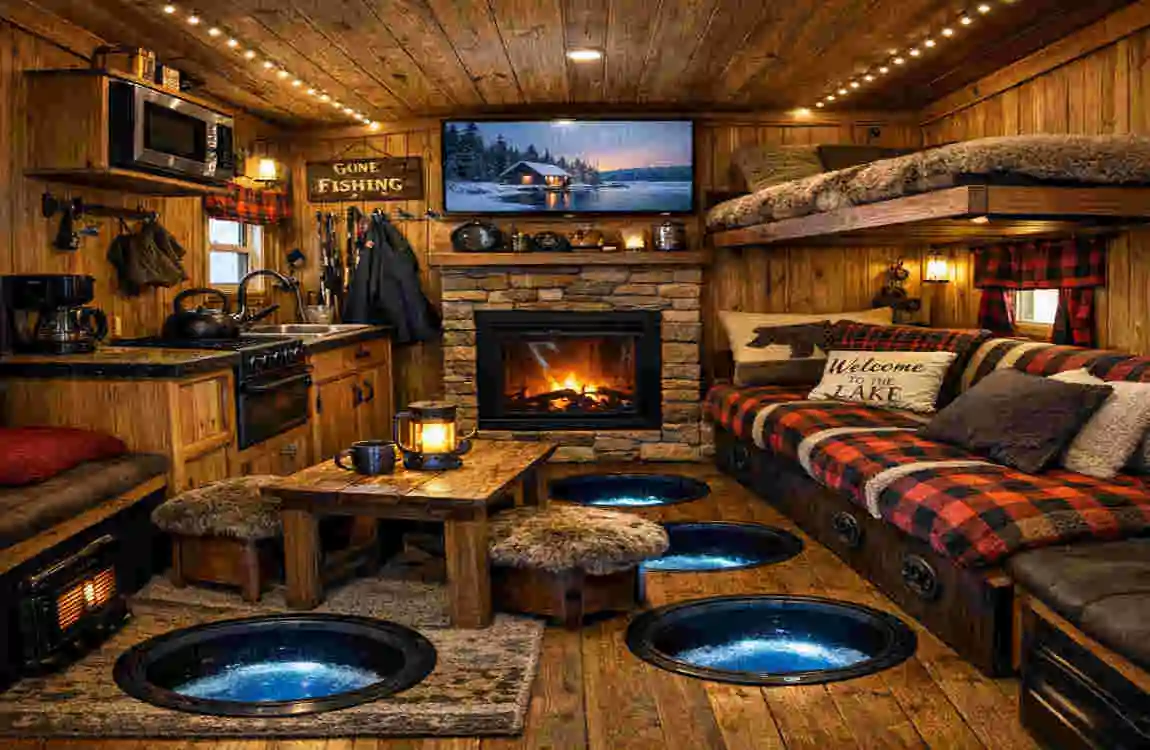
Now, let’s get into the good stuff. Here are the core upgrades that will take your shelter from “freezer” to “living room.”
Smart Insulation and Wall Upgrades
The battle for comfort is won or lost at the walls. If your shelter bleeds heat, no amount of propane will keep you happy.
Foam Board is Your Friend For hard-sided houses, rigid foam board insulation is the gold standard. It is lightweight, easy to cut, and provides a high R-value. To maximise heat retention, look for boards with a reflective foil finish. This reflects the heat from your heater back into the room rather than letting it escape through the walls.
The Curtain Hack If you have a larger house, or even a large hub shelter, consider hanging thermal curtains to create “zones.” You don’t always need to heat the entire 20-foot space if you are sitting in the back playing cards. A heavy, insulated curtain can block off the sleeping area or the storage area, keeping the heat concentrated where you are.
DIY Tip: Use magnetic strips or heavy-duty Velcro to attach fabric wall coverings. This allows you to take them down easily at the end of the season to wash them or to let the house air out, preventing mold growth during the off-season.
Flooring Solutions for Warm Feet
There is an old saying among outdoorsmen: “If your feet are cold, you are cold.” The ice is a massive heat sink, constantly sucking warmth out of your shelter.
Interlocking Rubber Tiles These are a favorite for a reason. They are cheap, lightweight, and provide a thermal break between your boots and the ice. Plus, they are comfortable to stand on.
Carpet vs. Vinyl Carpet feels warmer and cozier, but it holds moisture and smells (fish slime and carpet are a bad mix). Marine-grade vinyl is easier to clean but can be cold to the touch. The solution? Use vinyl for the main floor and toss down washable area rugs or sheepskin mats near the seating areas.
Comparison of Flooring Options
MaterialCostDurabilityWarmth RatingBest For
Interlocking Foam Mats Low Low/Mid High Portable Hubs / Tents
Marine Carpet Mid High Mid Permanent Houses (dry areas)
Rubber Utility Mats Mid High Mid High-traffic zones / Entry
Coin Vinyl Flooring High Very High Low Wheelhouses (easy clean)
Heated Floor Kits Very High Mid Very High Luxury permanent builds
Lighting That Sets the Mood
Harsh, battery-draining fluorescent lights are out. Soft, efficient LED lighting is in.
LED Strip Lights: These are perfect for ice-fishing house interior ideas. You can run them along the ceiling or under benches. They draw very little power. Look for “Warm White” (around 2700K to 3000K). This colour temperature mimics the glow of a fire or a sunset, instantly making the space feel cozier than the clinical blue-white of “Cool White” LEDs.
Motion Sensors and Dimming install a dimmer switch. Sometimes you need bright light to tie a knot, but other times you want a low light to watch the bobber without wrecking your night vision. Motion-sensor lights near the door are also great for when you stumble in from checking a tip-up outside.
Seating and Sleeping Zones
You are going to be sitting down for hours. That folding camp chair from the gas station isn’t going to cut it.
Upgrade Your Throne For permanent houses, consider installing boat seats on swivels or even a small recliner. If you are in a portable, look for “director style” chairs with a side table and a solid back support.
Versatile Sleeping Space is Premium. Use foldable bunks that hinge against the wall when not in use. Another great option is the “dinette conversion,” where your table drops down to form a bed between two bench seats.
Comfort Hack: If you have the room, a couple of high-quality bean bag chairs are surprisingly excellent for ice fishing. They insulate your backside and are great for napping.
Heating Hacks Without Overkill
You want to stay warm without sweating through your base layers.
Air Circulation A heater in the corner creates a hot spot there and a cold spot everywhere else. You must install ceiling fans or small battery-operated fans to push that rising hot air back down to floor level. This makes the whole room feel uniform.
Diesel Heaters These have become incredibly popular recently. They vent the exhaust outside (unlike non-vented propane heaters), which significantly reduces moisture buildup inside the house. Less moisture means “dry heat,” which feels warmer and prevents your windows from icing up.
Storage and Organization Hacks
Clutter makes a small space feel claustrophobic.
Vertical is Key Use the walls and ceiling. Install rod holders on the ceiling to keep gear safe. Use magnetic strips on the walls to hold pliers, knives, and lures.
The “Catch-All” Shelf install a shallow shelf around the perimeter of the house, just below window height. It is the perfect spot for your phone, a beverage, or a box of wax worms.
Modular Bins Use clear, stackable bins under benches. Label them clearly: “Cooking,” “Tackle,” “Safety.” This prevents you from tearing the house apart in search of a lighter.
Stylish Decor Themes for Your Ice Fish House
Now that the bones of the house are solid, let’s talk style. Your ice house should reflect your personality. Here are three popular themes to inspire your ice fish house interior ideas.
Rustic Cabin Vibes
This is the classic “Northwoods” look. It feels timeless and warm.
- Walls: Use knotty pine tongue-and-groove paneling (or lightweight faux-wood paneling).
- Textiles: Throw red-and-black plaid flannel blankets over the seats. Use wool rugs on the floor.
- Accents: Hang an old pair of snowshoes on the wall or use antique kerosene lanterns (converted to LED) for lighting.
- Why it works: It feels traditional and rugged, perfect for the wilderness setting.
Modern Minimalist
If you hate clutter and love tech, this is for you.
- Walls: Paint the interior a matte charcoal or slate grey. It looks sleek and actually helps absorb heat during the day.
- Finishes: Use brushed aluminum for trim and shelving.
- Lighting: Crisp, clean LED strips hidden behind coves for indirect lighting.
- Why it works: It feels clean, spacious, and high-tech. It’s the “Tesla of ice houses.”
The Personalized Angler Den
This is for the sentimental fisherman.
- Decor: Frame a map of your favorite lake. Mount a replica of your personal best catch.
- Signage: Get a custom wood sign made with your family name or the “name” of your ice house (e.g., “The Walleye Wagon”).
- Vibe: Think of it as a sports bar on ice.
- Why it works: It tells a story. It makes the space uniquely yours.
DIY Ice Fish House Interior Ideas on a Budget
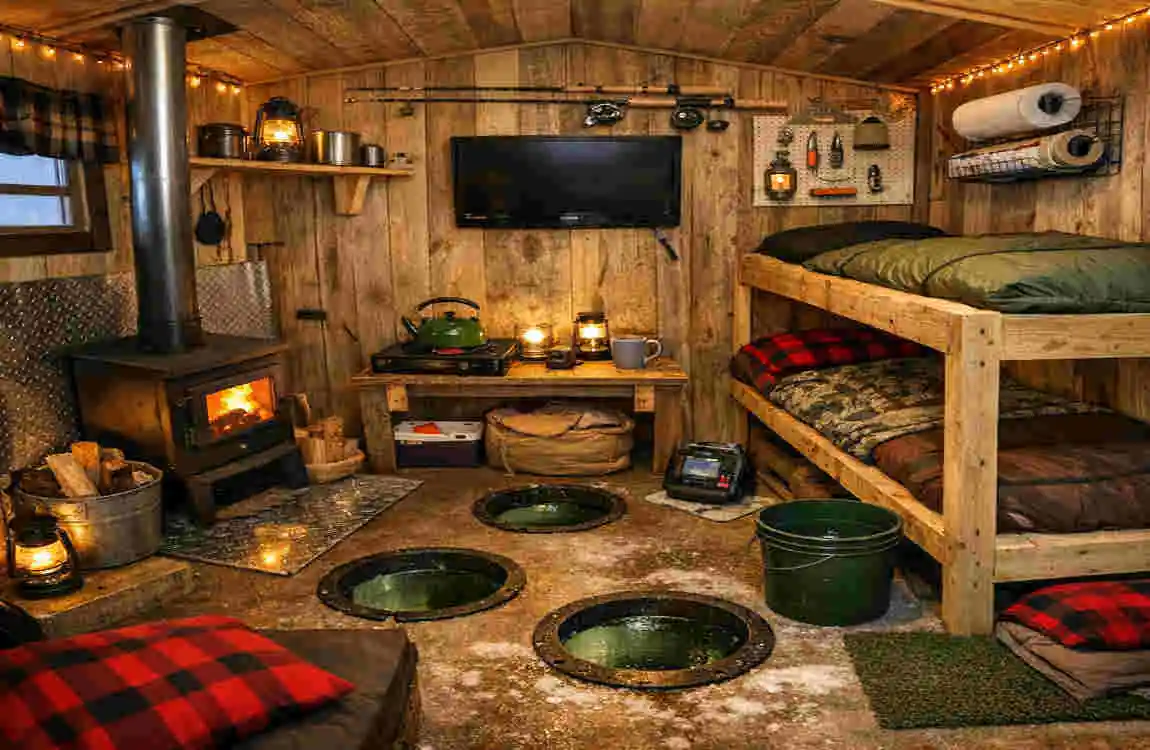
You don’t need to hire a contractor. Here are three projects you can do this weekend.
No-Sew Insulated Window Covers
Windows are major heat leaks.
- What you need: Reflectix (bubble foil insulation), black duct tape, and self-adhesive Velcro.
- How to do it: Cut the Reflectix to the exact size of your window. Wrap the edges in black duct tape for a clean look. Stick Velcro dots to the corners and the window frame.
- Result: A massive boost in warmth for under $50.
PVC Pipe Rod Holders
Stop leaning your rods in the corner where they get stepped on.
- What you need: 1.5-inch PVC pipe, a saw, and mounting screws.
- How to do it: Cut the PVC into 10-inch sections. Cut a notch in the top to accommodate the reel stem. Screw them vertically onto the wall or the side of a cooler.
- Result: Indestructible, waterproof organization.
Foam Cooler Ottoman
Turn a cheap styrofoam bait cooler into a luxury footrest.
- What you need: A sturdy foam cooler, plywood, foam padding, and fabric.
- How to do it: Cut a piece of plywood to fit the lid. Glue foam padding to the wood. Wrap it in fabric and staple it underneath. Glue this cushioned top to the cooler lid.
- Result: A warm seat that doubles as storage for live bait.
Must-Have Accessories and Gear
To truly round out your ice fish house interior ideas, you need the right gadgets. These are the finishing touches that bring the “cozy” factor home.
- Portable Power Station: Brands like Jackery or EcoFlow are essential. They run your lights, charge phones, and can even power a small TV without the noise of a gas generator.
- Cooking Gear: A small camping stove is great, but a LotusGrill (smokeless charcoal grill) lets you grill steaks indoors with minimal smoke. Don’t forget a French Press for coffee—boiling water is easy; dealing with coffee filters is annoying.
- Entertainment: A rugged Bluetooth speaker is a must. Music keeps the energy up when the bite is slow.
- The “Bathroom” Solution: Let’s be honest. A bucket with a Luggable Loo seat and some kitty litter bags is a lifesaver, especially during a blizzard. Build a small privacy screen or curtain for it.
Real Angler Transformations: Before and After
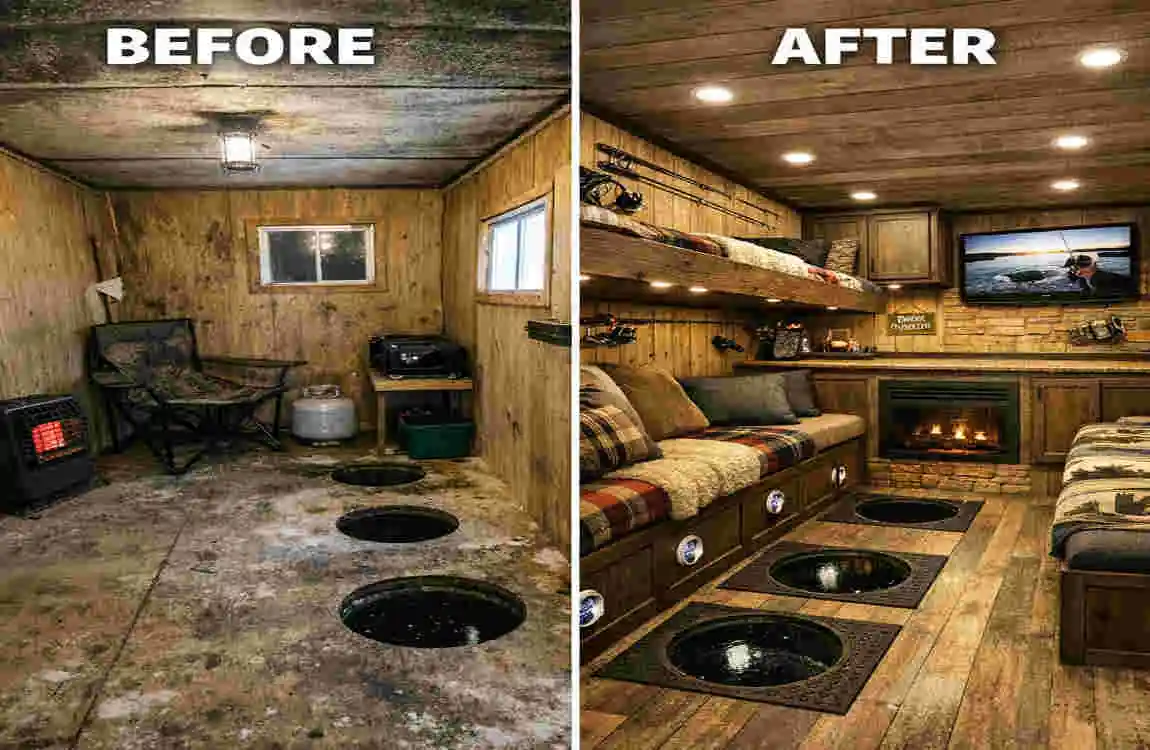
Need proof that these changes matter? Let’s look at some real-world examples.
The Weekend WarriorJohn from Wisconsin had a bare aluminum shell. It was loud and cold.
- The Fix: He added spray foam insulation, carpet tiles, and a diesel heater.
- The Result: “I used to pack up by 4 PM because my feet were frozen. Now, I stay out until midnight. I fished 30% more days last season than ever before.”
The Family HubSarah from Minnesota wanted to bring her two kids (ages 6 and 8).
- The Fix: She installed bunk beds with safety rails, added a solar-powered charging station for iPads, and created a “snack station.”
- The Result: “The kids beg to go fishing now. They have their own warm space, and I get to fish in peace.”
