

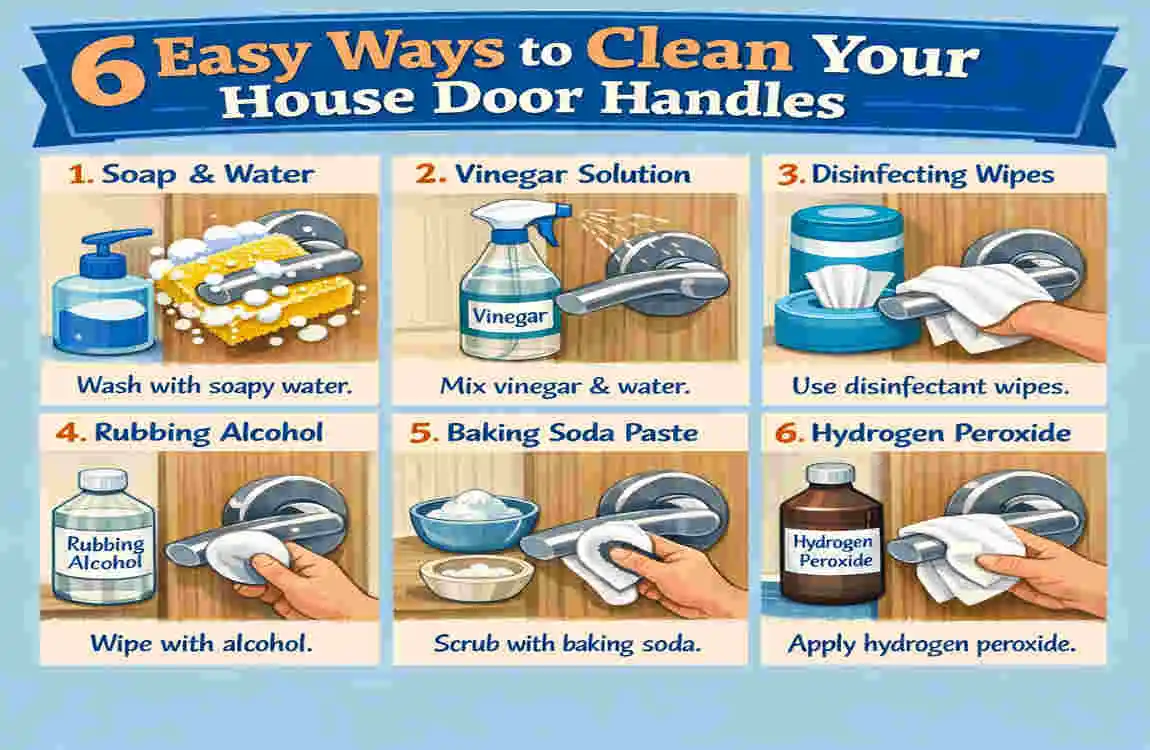
Door handles are some of the most frequently touched surfaces in any home. Yet, they’re often overlooked when it comes to cleaning. Did you know that door handles can harbor 83 times more bacteria than a toilet seat? That’s a pretty alarming thought! From sticky fingerprints to unseen germs, dirty door handles can affect both the cleanliness and appearance of your home.
Why Clean Door Handles Regularly?
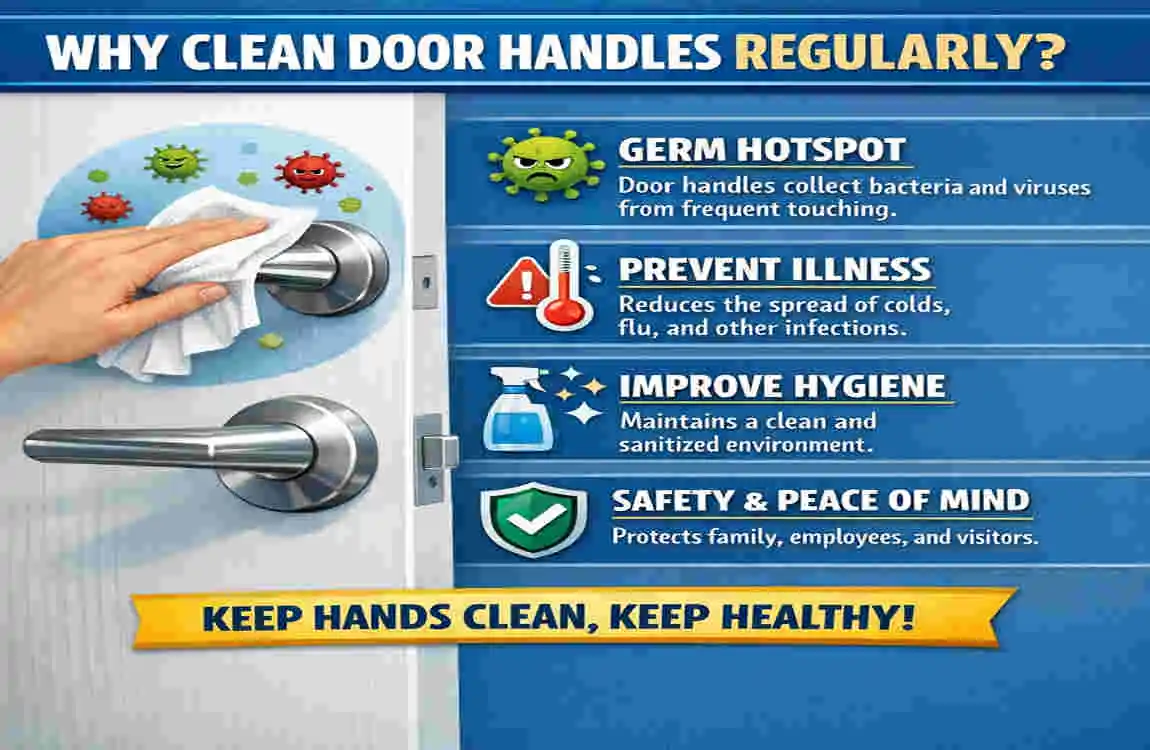
Cleaning your door handles isn’t just about keeping them shiny—it’s about protecting your family’s health and maintaining your home’s aesthetic. Let’s break down the key reasons why this task deserves a spot in your cleaning routine.
Health Benefits: Reduce Germs and Viruses
Door handles are high-touch surfaces, making them a hotspot for bacteria, viruses, and other germs. Every time someone opens a door, they leave behind oils, dirt, and potentially harmful microorganisms. Studies have shown that regularly cleaning high-touch surfaces can significantly reduce the spread of illness.
Aesthetic Appeal and Longevity
Tarnished, rusted, or sticky-residue-covered handles not only look unappealing but can also degrade over time. Regular cleaning prevents buildup, extends the life of your door hardware, and keeps your home looking polished.
Handle Material and Cleaning Frequency
Different materials require different care routines. Here’s a quick reference table to help you understand common issues and how often you should clean:
Handle Material Common Issues Cleaning Frequency
Brass Tarnish, fingerprints , Weekly
Chrome Water spots, smudges , bi-weekly
Wood Dust, oils , Monthly
Glass/Metal Germs, grime Daily (in high-traffic areas)
Pro Tip: Incorporate door handle cleaning into your regular home hygiene routine to keep your living space clean and inviting.
Supplies You’ll Need for All Methods
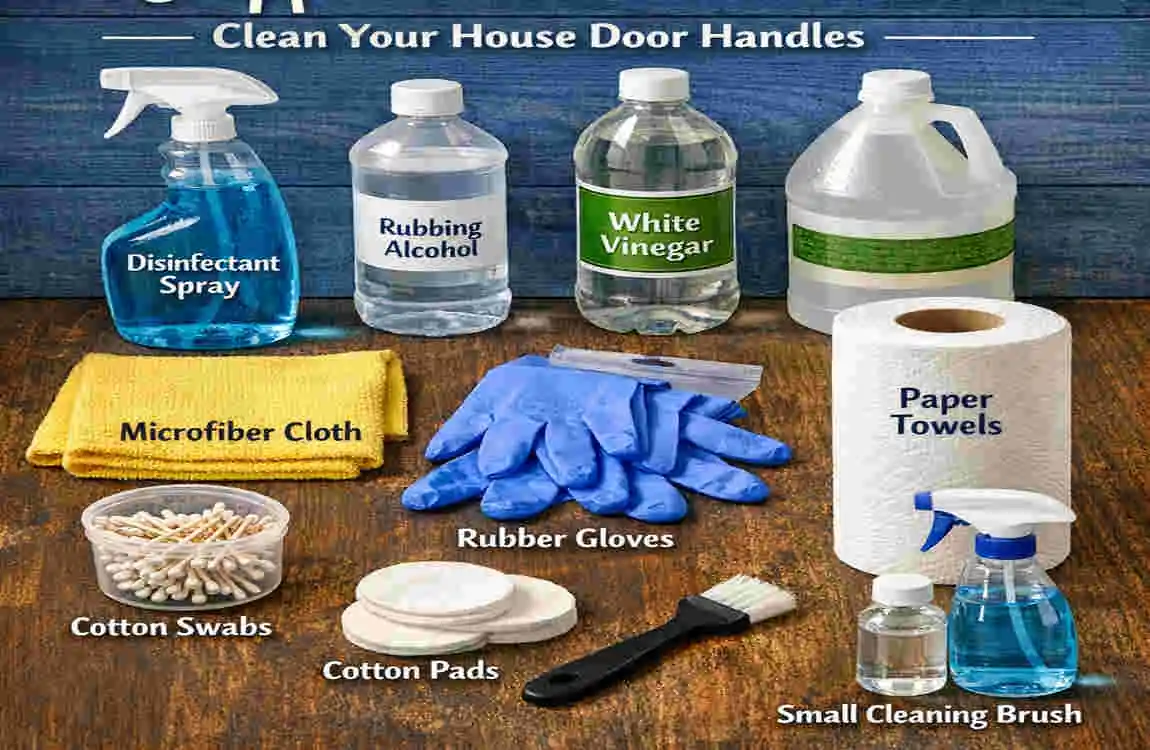
Before we jump into the methods, let’s gather the supplies. Most of these items are likely already in your home, and they’re versatile enough for multiple cleaning tasks.
Universal Cleaning Supplies:
- Microfiber cloths
- Mild dish soap
- White vinegar
- Baking soda
- Rubbing alcohol (70% or higher)
- Toothbrush (for scrubbing crevices)
- Optional: Gloves, lemon, olive oil (for polishing)
Budget Breakdown:
The best part? These supplies are budget-friendly! Most of these items cost less than $10, and many are reusable.
Eco-Friendly Alternatives:
If you’re eco-conscious, avoid harsh chemicals like bleach, which can damage certain finishes. Natural ingredients like vinegar and baking soda are not only effective but also environmentally friendly.
Soap and Water Wipe-Down
This is the simplest method and works well for everyday cleaning. It’s gentle on all materials and removes surface dirt without damaging the finish.
Why It Works
Soap and water effectively lift dirt and oils from the surface, making it a quick and easy solution for maintaining clean door handles.
Step-by-Step Guide
- Mix a small amount of mild dish soap with warm water in a bowl.
- Dampen a microfiber cloth in the soapy water (ensure it’s not soaking wet).
- Wipe down the door handles thoroughly, focusing on crevices.
- Use a clean, damp cloth to rinse away soap residue.
- Dry the handle immediately with another cloth to prevent water spots or streaks.
Quick Facts
- Time needed: 5 minutes
- Cost: $0 (using common household items)
Vinegar Solution for Tough Grime
Vinegar is a powerhouse cleaner, especially for brass and chrome handles. Its natural acidity helps dissolve tough grime and sticky residue.
Why It Works
Vinegar is a natural, non-toxic solution that’s safe for most materials. It cuts through grease and grime while leaving handles shiny.
Step-by-Step Guide
- Mix equal parts of white vinegar and water in a spray bottle.
- Spray the solution directly onto the handle.
- Let it sit for 5 minutes to loosen grime.
- Scrub gently using a soft toothbrush.
- Wipe clean with a damp cloth and dry immediately.
- For brass handles, polish with a small amount of olive oil for added shine.
Before After
Dull, sticky Shiny, smooth
Quick Facts
- Time needed: 10 minutes
- Cost: $1
Baking Soda Paste for Stubborn Stains
If your handles are plagued by rust spots, tarnish, or heavy buildup, a baking soda paste is your go-to solution.
Why It Works
Baking soda is a gentle abrasive that scrubs away stains without scratching the surface.
Step-by-Step Guide
- Mix baking soda with a small amount of water to form a paste.
- Apply the paste to the handle using a cloth.
- Gently scrub in circular motions, focusing on stained areas.
- Rinse with a clean, damp cloth and dry immediately.
- Buff the handle with a soft cloth for a polished look.
Quick Facts
- Time needed: 15 minutes
- Cost: $0.50
Rubbing Alcohol for Disinfection
When it comes to killing germs, rubbing alcohol is your best friend. It’s especially effective for glass or metal handles.
Why It Works
Rubbing alcohol evaporates quickly and kills 99.9% of bacteria and viruses without leaving residue behind.
Step-by-Step Guide
- Pour 70% isopropyl alcohol into a spray bottle.
- Spray the alcohol directly onto the handle.
- Wipe the handle with a clean cloth.
- Let it air-dry—no rinsing needed.
Quick Facts
- Time needed: 2 minutes
- Cost: $2
Lemon and Salt Scrub for Natural Polish
For a natural, eco-friendly option, try a lemon-and-salt scrub. This method works wonders on brass and wood handles while leaving behind a fresh citrus scent.
Why It Works
The acidity of the lemon breaks down grime, while the salt acts as a gentle abrasive.
Step-by-Step Guide
- Cut a lemon in half and dip the cut side in salt.
- Rub the lemon-and-salt mixture onto the handle.
- Let the juice sit for 2 minutes.
- Wipe off the residue with a damp cloth and dry thoroughly.
Quick Facts
- Time needed: 7 minutes
- Cost: $0.30
Commercial Cleaners for Stubborn Grime
When DIY methods don’t cut it, commercial cleaners can save the day. These are ideal for antique or heavily soiled handles.
Top Picks
- Microfiber sprays like Method or Weiman.
Method Pros Cons
DIY Cleaning Cheap, natural , requires more effort
Commercial Cleaners Fast, highly effective, more expensive
Step-by-Step Guide
- Follow the instructions on the cleaner’s label.
- Use a microfiber cloth for application.
- Rinse and dry as needed.
Material-Specific Tips for Cleaning
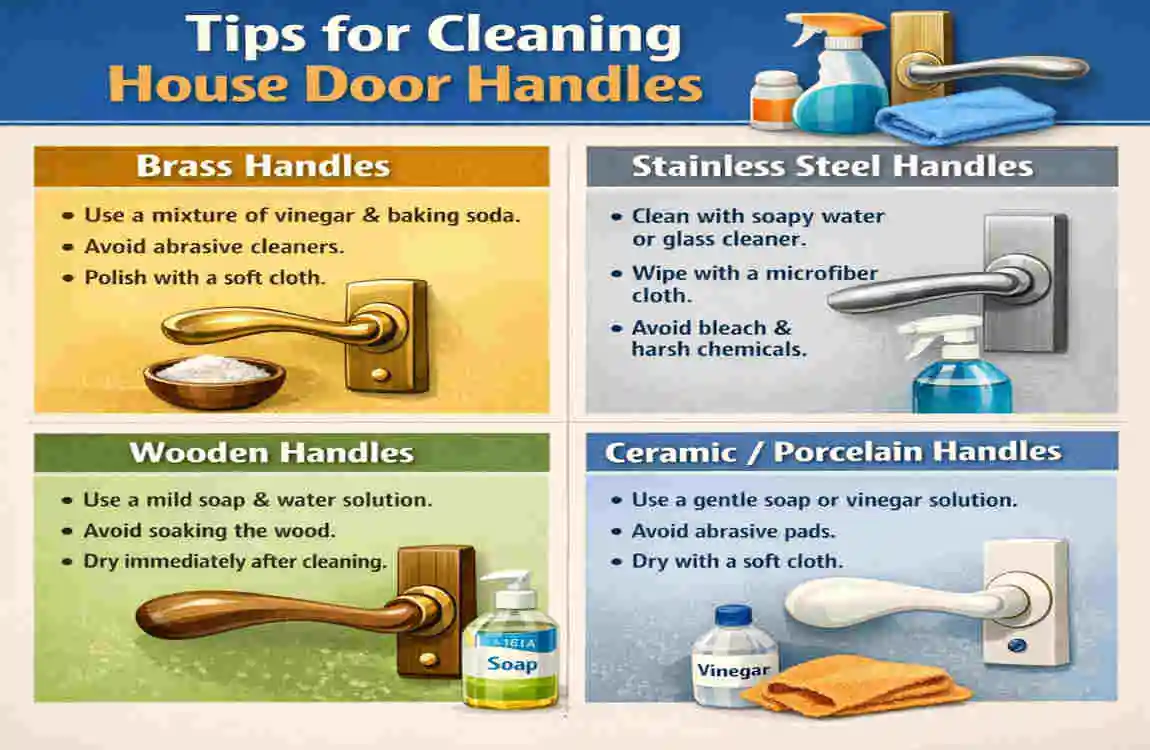
Here are some quick tips to ensure you’re treating each material with the care it deserves:
- Brass: Use vinegar and oil for polishing.
- Chrome: Stick to alcohol or mild soap.
- Wood: Avoid soaking; use only a damp cloth.
- Glass: Clean with vinegar for a streak-free shine.
Common Mistakes to Avoid
To protect your door handles, steer clear of these common mistakes:
- Over-wetting: Excess moisture can warp wood or stain finishes.
- Using harsh abrasives: These can scratch delicate materials.
- Skipping the drying step: Always dry handles to prevent streaks or water damage.
Frequently Asked Questions
How often should I clean house door handles?
In high-traffic areas, clean daily or weekly. In less-used spaces, monthly cleaning is sufficient.
Can I clean door handles without chemicals?
Absolutely! Vinegar, lemon, and baking soda are all natural, chemical-free options.
