
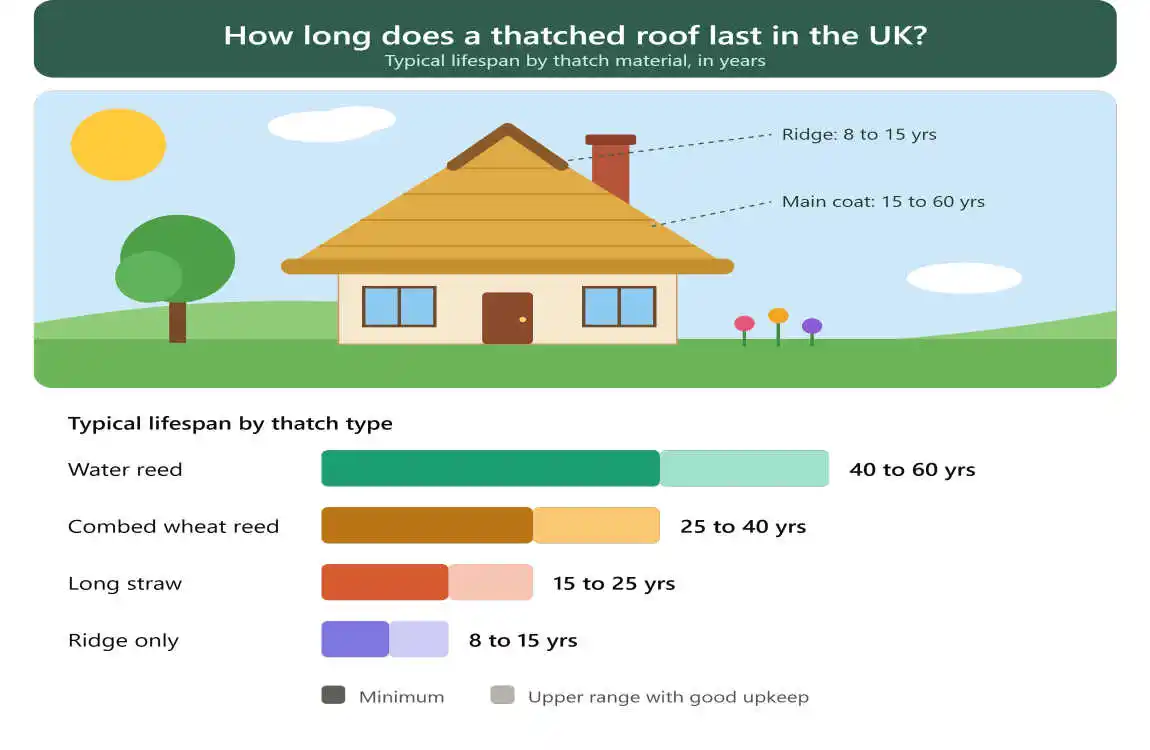
A thatched house roof in the UK typically lasts 25 to 40+ years if it is made from water reed, 25 to 35 years if it is combed wheat reed, and 15 to 30 years if it is long straw. The ridge (the capping along the top) wears out much faster and usually needs replacing every 10 to 15 years. Lifespan depends mainly on the material, the skill of the thatcher, the roof pitch, local weather and how well the roof is maintained.
If you are buying, insuring or simply admiring a thatched cottage, the first question is nearly always the same: how long does a thatched house roof last in the UK? The honest answer is “it depends”, but the ranges below, taken from specialist thatching bodies and trusted UK property publications, will help you plan with confidence.
How Long Does Each Type of Thatch Last?
Water reed: 25 to 40+ years
Water reed, often called Norfolk reed, is generally regarded as the most durable thatching material in Britain. Its hollow stems shed water efficiently and the dense layering gives good weather protection. Specialist thatchers quoted by Country Life have put the average at around 50 years for top-quality Norfolk reed, though that is at the optimistic end. A realistic planning figure for most homeowners is 25 to 40 years. Quality also matters: the Local Authority Building Control (LABC) notes that some roofs design using poor-quality imported reed have failed in well under 20 years.
Combed wheat reed: 25 to 35 years
Combed wheat reed is wheat straw that has been combed and laid so that it looks much like water reed. It sits between reed and long straw for durability. Because it is made from cereal straw, availability depends on harvests, which is a recurring concern highlighted by Historic England.
Long straw: 15 to 30 years
Long straw is the traditional home look in many English counties, with a softer, more rounded appearance. It usually has the shortest life of the three, but straw roofs are often repaired in sections and re-coated, which can extend their useful life. The New Forest National Park Authority explains that localised patching of straw thatch is common, whereas water reed roofs are rarely repaired before a full rethatch (other than re-ridging).
What Affects How Long a Thatched Roof Lasts?
- Thatching material and quality: Good-quality reed or straw, properly dried and bundled, lasts far longer than cheap or poorly sourced building material.
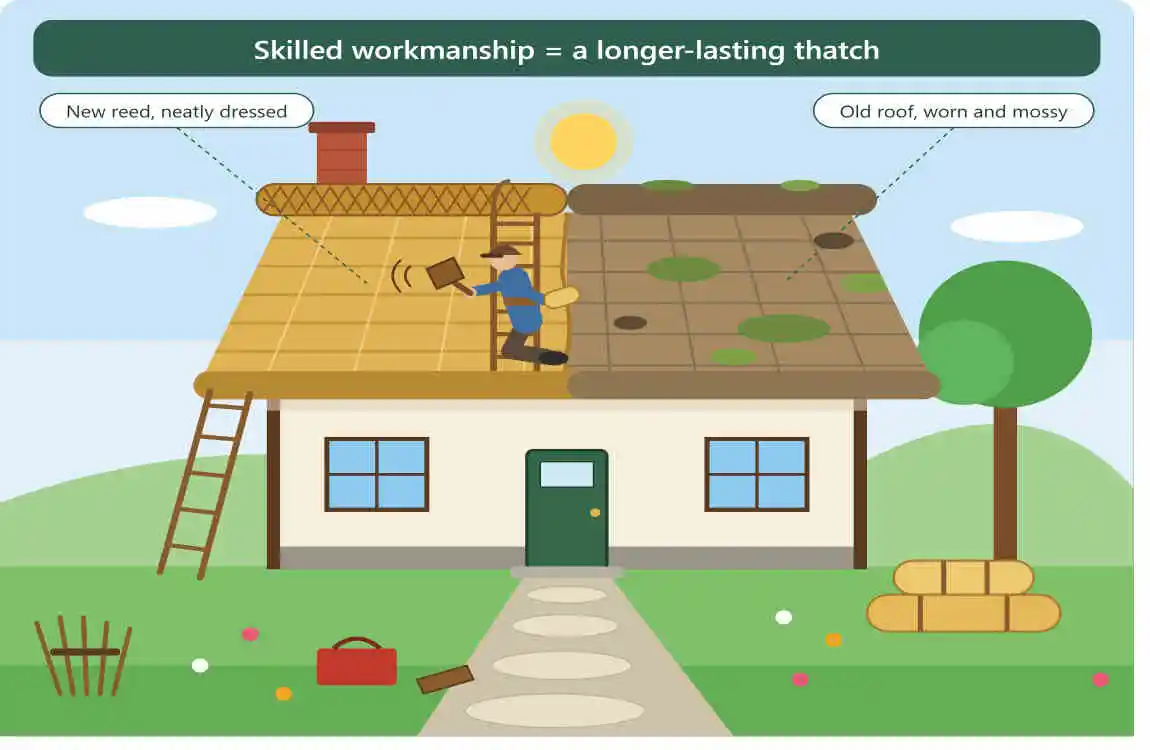
- Thatcher’s skill: A master thatcher’s workmanship is one of the biggest factors. Bodies such as the National Society of Master Thatchers help owners find qualified professionals.
- Roof pitch: Steeper roofs shed water faster, which reduces wear and moss build-up.
- Climate and location: Drier regions tend to be kinder to thatch. Overhanging trees, shade and damp conditions speed up decay, as Checkatrade also points out.
- Maintenance: Regular inspection, moss management, repairs and timely re-ridging keep small problems from becoming expensive ones.
- Protection from animals: Birds and rodents can damage thatch, so wire netting is often added, which also slightly extends the life of the surface.
- Work by non-specialists: The Thatch Advice Centre lists damage caused by tradespeople unfamiliar with thatch, and poor roof breathability, among the factors that shorten roof life.
How Often Does a Thatched Roof Ridge Need Replacing?
The ridge is the most exposed part of a thatched roof, so it ages faster than the main coat. Expect to re-ridge roughly every 10 to 15 years. Historic England notes that a flush ridge lasts as long as a block ridge and was the traditional style on most historic home thatched buildings in England, so the simpler option is not a durability compromise.
Signs Your Thatched Roof Needs Repair or Rethatching
- Visible fixings (wires, spars or hazel) near the surface
- Thinning thatch, bare patches or sagging areas
- Persistent moss or algae holding moisture against the roof
- Water stains, damp or leaks in the loft
- Bird or rodent damage
- A worn, crumbling or broken ridge
According to Homes & Gardens, a roof typically needs rethatching once the fixings are close to the surface and water can get in. The same guide says a thin “rick coat” (a protective layer over worn thatch) might buy around three years, while a thicker one can last up to ten.
How to Make a Thatched Roof Last Longer
- Book a professional inspection every few years, and after severe storms.
- Keep trees trimmed back so sunlight and airflow can dry the roofing.
- Treat moss gently. Avoid harsh scraping or pressure washing; ask a thatcher for the right method.
- Re-ridge on schedule rather than waiting for leaks.
- Use only thatch-experienced tradespeople for chimney, solar panel or loft work.
- Consider wire netting to deter birds and rodents.
- Use a thatcher who works in your local tradition. If your home is old or listed, changing the thatch material may need local authority consent, as the New Forest National Park Authority leaflet explains.
How Much Does It Cost to Rethatch a Roof in the UK?
Costs vary widely with roof size, complexity, material and region. Checkatrade’s 2026 cost guide gives an average of around £20,000 for thatching a roof in the UK. Rethatching a full roof typically takes several weeks; the National Society of Master Thatchers has told Homebuilding & Renovating that the work takes between six and ten weeks, and demand means some thatchers have waiting lists of up to two years. Always obtain at least three written quotes.
Is a Thatched Roof Worth It? Pros and Cons
| Pros | Cons |
|---|---|
| Distinctive heritage character | High upfront and rethatching cost |
| Good natural insulation | Specialist maintenance required |
| Long life when well installed (25–40+ years for reed) | Can mean slightly higher insurance premiums due to fire risk |
| Natural, renewable material | Long waits for qualified thatchers |
Rightmove’s home improvement guide notes that thatched homes can attract slightly higher home insurance premiums because of the fire risk, so speak to a specialist thatched property insurer before you buy. You can read more in its guide to thatched roof lifespan and cost.
Frequently Asked Questions
How long does a thatched house roof last in the UK?
Most last between 15 and 40+ years depending on the material: water reed 25–40+ years, combed wheat reed 25–35 years and long straw 15–30 years.
Which thatch lasts the longest?
Water reed (Norfolk reed) is generally the longest-lasting thatching material in the UK.
How often does a thatched roof need rethatching?
A full rethatch is typically needed every 25–40 years for reed and every 15–30 years for straw, with the ridge replaced about every 10–15 years.
Can a thatched roof last 60 years or more?
Occasionally. Well-installed, regularly maintained thatch has been reported to last up to around 60 years, but this is not the norm and should not be used as a planning figure.
How much does it cost to rethatch a house in the UK?
Checkatrade’s 2026 guide quotes an average of around £20,000, but prices vary significantly by size, material and region.
Are thatched roofs more expensive to insure?
They can be, because of the higher fire risk, so it is wise to compare quotes from insurers who specialise in thatched properties.
Final Thoughts
So, how long does a thatched house roof last in the UK? For most homeowners, the sensible planning range is 25 to 40 years for water reed, 25 to 35 years for combed wheat reed and 15 to 30 years for long straw, with the ridge needing attention every 10 to 15 years. Choose quality materials, hire a skilled master thatcher and keep up regular maintenance, and your thatched roof can reward you for decades.
