

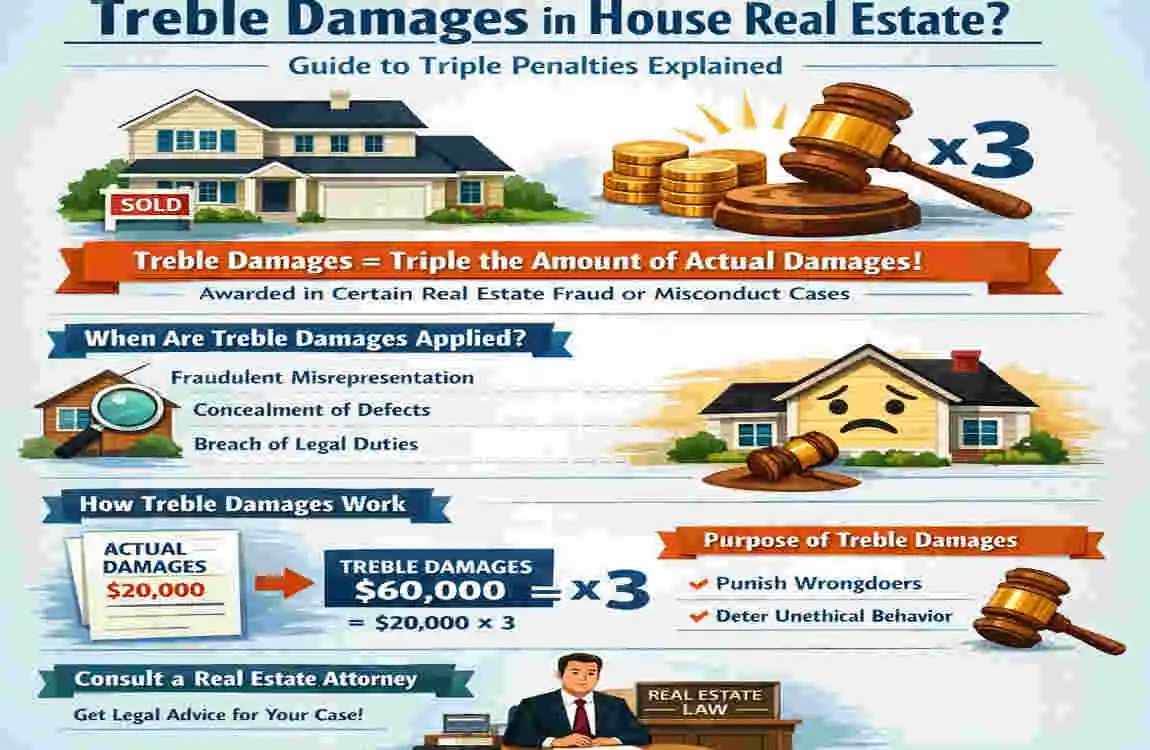
Treble damages, also known as triple damages, are a court-ordered penalty in real estate disputes that triples the actual financial losses suffered by the victim. They’re designed to punish willful misconduct like fraud and deter future violations, often arising in cases of property misrepresentation or nondisclosure.
Courts impose treble damages for intentional wrongs in house real estate, such as sellers hiding defects (e.g., foundation issues) or developers failing to disclose flaws like undersized garages. Qualifying cases typically involve fraud, statutory violations (e.g., under Florida’s FDUTPA), or bad faith in transactions, leases, or sales. Proof requires evidence of deliberate deceit, not mere negligence.
Treble damages multiply proven actual damages (e.g., repair costs) by three, rather than adding to punitive awards. For example, if repair losses total $10,000 from concealed issues, the award becomes $30,000. Not all damages qualify—only those tied to the misconduct—and they’re statutory, varying by state like Florida or New Jersey.
What Are Treble Damages? Core Definition and Basics
Definition of Treble Damages in Real Estate
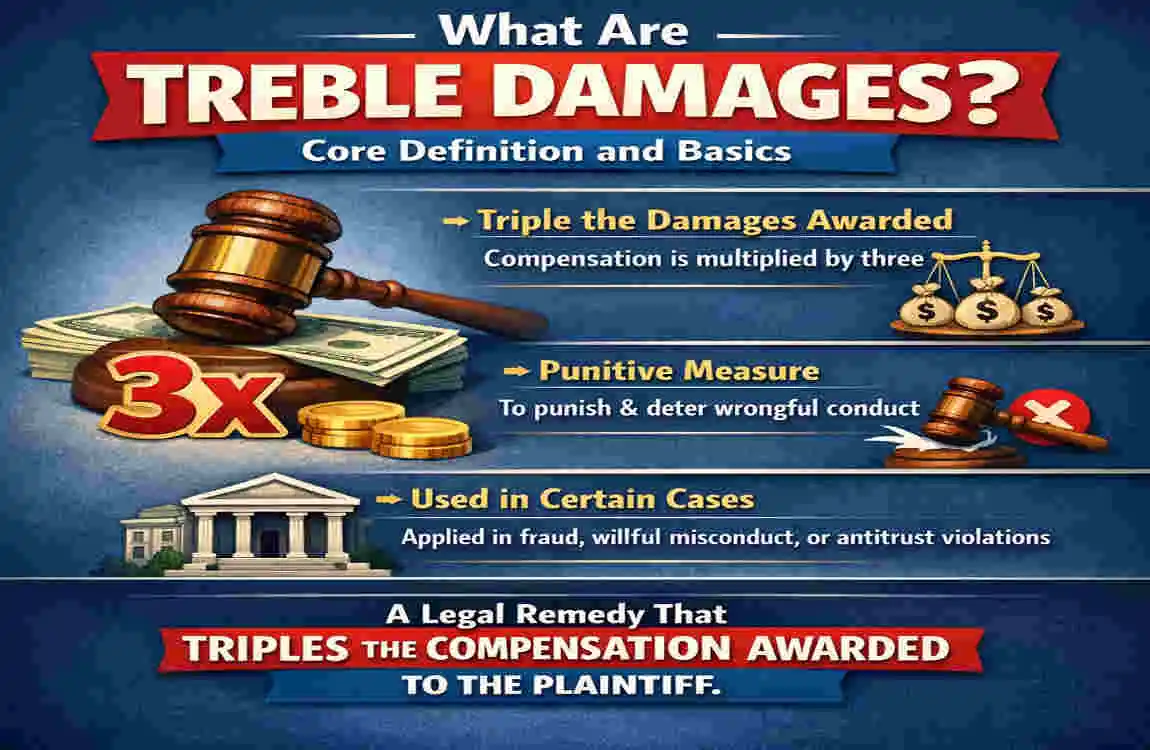
Treble damages are a legal remedy in which courts award a plaintiff three times the actual damages suffered. Unlike standard compensatory damages (which cover only losses), treble damages are designed to punish willful misconduct and deter others from engaging in similar conduct.
In the context of house real estate, treble damages often arise in cases of fraud, breach of contract, or violations of housing laws. For example, if a seller knowingly conceals major defects in a property, the buyer may sue for treble damages, recovering three times their financial loss.
Treble vs. Single/Double Damages: A Quick Comparison
To understand treble damages better, let’s compare them to other types of damages:
Damage Type Multiplier, Purpose, Example in Real Estate
Compensatory 1x Cover actual losses , Repair costs for hidden defects
Double 2x Deter minor bad faith acts Penalty for late disclosures
Treble 3x Punish willful misconduct , fraudulent property appraisals
As you can see, treble damages carry the most severe Penalty because they are reserved for cases involving intentional wrongdoing or reckless disregard for the other party’s rights.
Legal Basis: Key Statutes Enabling Treble Damages
Treble damages are grounded in statutory laws that aim to protect consumers and ensure fair practices in complex transactions, such as real estate. Some notable legal frameworks include:
- United States: The Fair Housing Act and Real Estate Settlement Procedures Act (RESPA) enable treble damages in cases of discrimination, fraud, or illegal kickbacks.
- Pakistan: While explicit treble damage statutes are rare, similar protections exist under the Consumer Protection Act and contract law principles.
These statutes empower courts to hold bad actors accountable while ensuring victims receive adequate compensation.
Why Do Treble Damages Exist in House Real Estate?

Real estate transactions often involve significant financial stakes, making them a fertile ground for fraud, misrepresentation, and other unethical practices. Here’s why treble damages are so important:
Protecting Buyers and Sellers
Treble damages exist to safeguard vulnerable buyers and sellers from being exploited in high-stakes deals. For example, a buyer who unknowingly purchases a house with undisclosed structural issues may face financial ruin without the added protection of treble damages.
Deterring Unethical Behavior
The prospect of paying triple penalties serves as a powerful deterrent for anyone tempted to engage in fraudulent or deceptive practices. Whether it’s a seller hiding defects or an agent falsifying property details, treble damages discourage such behavior.
Historical Context
The concept of treble damages gained prominence in the U.S. during the 1970s housing crisis, when consumer protection laws were strengthened to address widespread fraud in the real estate market. Today, similar protections are being adopted globally, including in markets like Lahore, Pakistan, where real estate transactions are booming.
Common Scenarios Triggering Treble Damages in House Real Estate

Treble damages aren’t awarded in every real estate dispute. They typically arise in cases involving willful misconduct or bad-faith conduct. Here are some common scenarios:
Real Estate Fraud and Misrepresentation
Fraud occurs when one party intentionally deceives another. Examples include:
- Concealing Structural Issues: A seller hides termite damage or foundational cracks to inflate the property’s value.
- False Advertising: An agent exaggerates a home’s square footage to attract buyers.
Breach of Contract with Bad Faith
Not all breaches of contract qualify for treble damages, but when bad faith is involved, courts may impose triple penalties. Examples:
- A seller fails to disclose existing liens on the property.
- A buyer intentionally delays closing, resulting in financial losses for the seller.
Violations of Fair Housing or Settlement Laws
Discrimination or illegal practices in real estate transactions can trigger treble damages. For instance:
- A landlord refuses to rent to tenants based on race or religion, in violation of the Fair Housing Act.
- Illegal kickbacks between mortgage brokers and real estate agents under RESPA.
Real-Life Case Studies
Here’s how treble damages have been applied in real estate disputes:
Case Trigger Treble Award Outcome
Smith v. Agent (2024) Fraudulent inspection report $900K (3x $300K loss) Seller declared bankrupt
Lahore Buyer’s Dispute: Hidden plumbing defects PKR 30M tripled. The buyer recovered fully.
How Are Treble Damages Calculated in Real Estate Disputes?
Step-by-Step Calculation Process
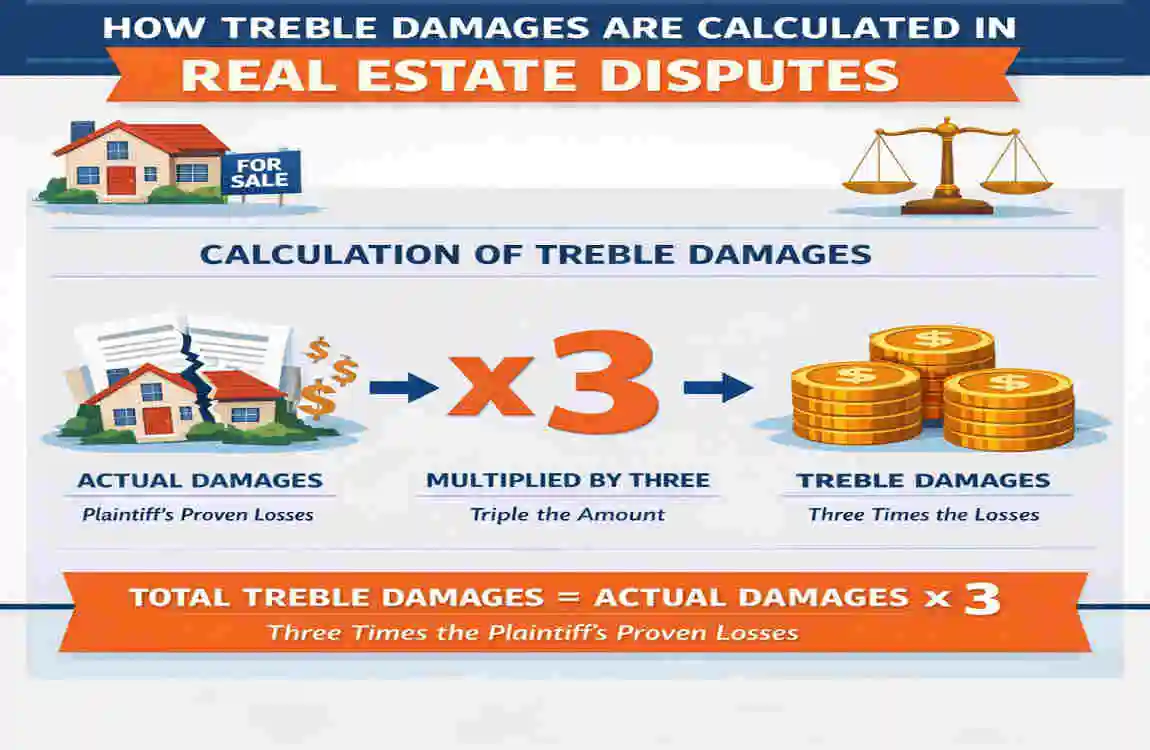
Calculating treble damages involves the following steps:
- Determine Actual Damages: Assess the direct financial losses incurred (e.g., repair costs, lost property value).
- Prove Willful Intent: Provide evidence that the wrongdoer acted knowingly or recklessly. This could include emails, contracts, or witness testimony.
- Apply the Multiplier: Courts multiply the actual damages by three to determine the total award.
Formula Example: If a buyer incurs $100,000 in repair costs due to fraud, the treble damages would be: [ \text{Treble Damages} = 3 \times (\text{Actual Damages}) = 3 \times 100,000 = \text{$300,000} ]
Factors Influencing Award Size
The size of the treble damages award may vary based on:
- The severity of misconduct (e.g., premeditated fraud vs. negligence).
- The plaintiff’s efforts to mitigate damages (e.g., conducting inspections).
How to Avoid Treble Damages in Your Real Estate Transactions
Tips for Buyers
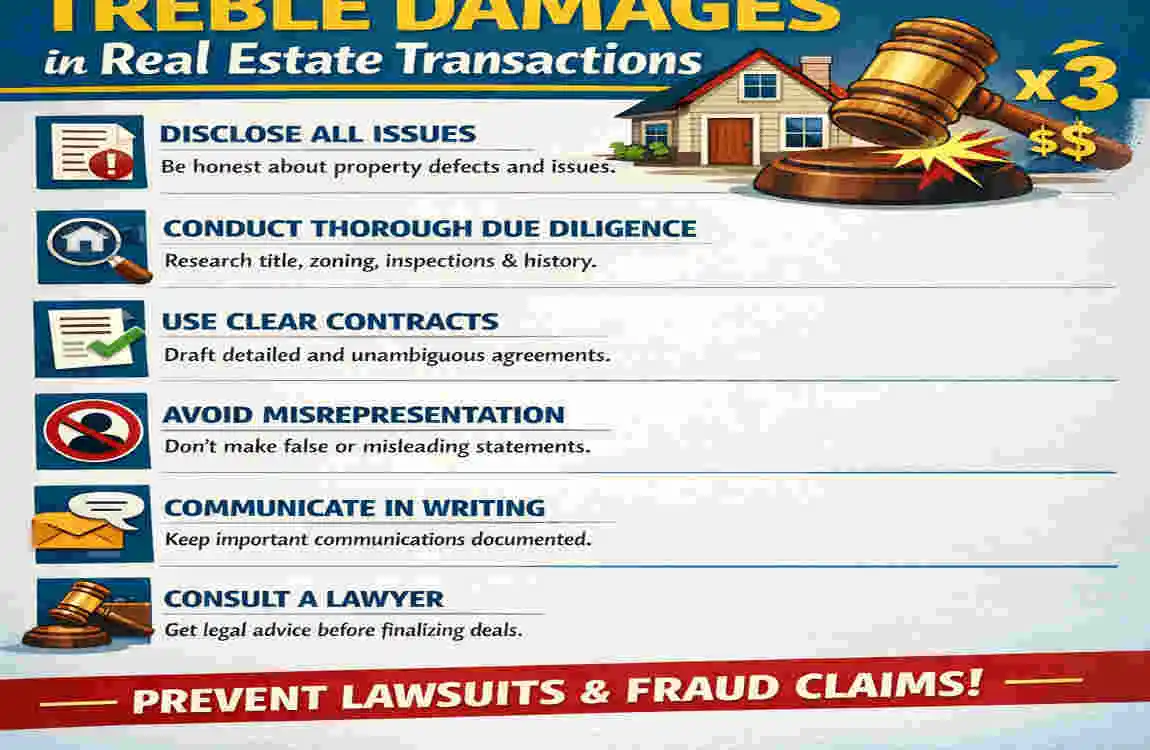
- Hire Licensed Inspectors: Ensure thorough property inspections before buying.
- Demand Full Disclosures: Request detailed disclosure statements from sellers.
Tips for Sellers
- Document Everything: Keep records of all communications and property repairs.
- Use Standard Contracts: Avoid vague or ambiguous language in agreements.
Role of Lawyers and Insurance
- Consult a real estate lawyer to review contracts and avoid legal pitfalls.
- Consider title insurance to protect against unforeseen disputes.
FAQs
What are treble damages in house real estate?
Treble damages refer to court-awarded compensation that triples the actual financial loss in cases of willful misconduct in real estate transactions.
Can treble damages apply to rental properties?
Yes, treble damages can apply if landlords engage in fraudulent or discriminatory practices.
How long do I have to file a treble damages claim?
The statute of limitations varies by jurisdiction. Typically, it ranges from 1 to 3 years.
Are treble damages applicable in Pakistan real estate?
While Pakistan doesn’t explicitly use the term “treble damages,” similar penalties exist under consumer protection and contract laws.
What’s the difference between treble and punitive damages?
Treble damages are statutory and tied to actual losses, while punitive damages are awarded to punish egregious behavior, regardless of financial loss.
