

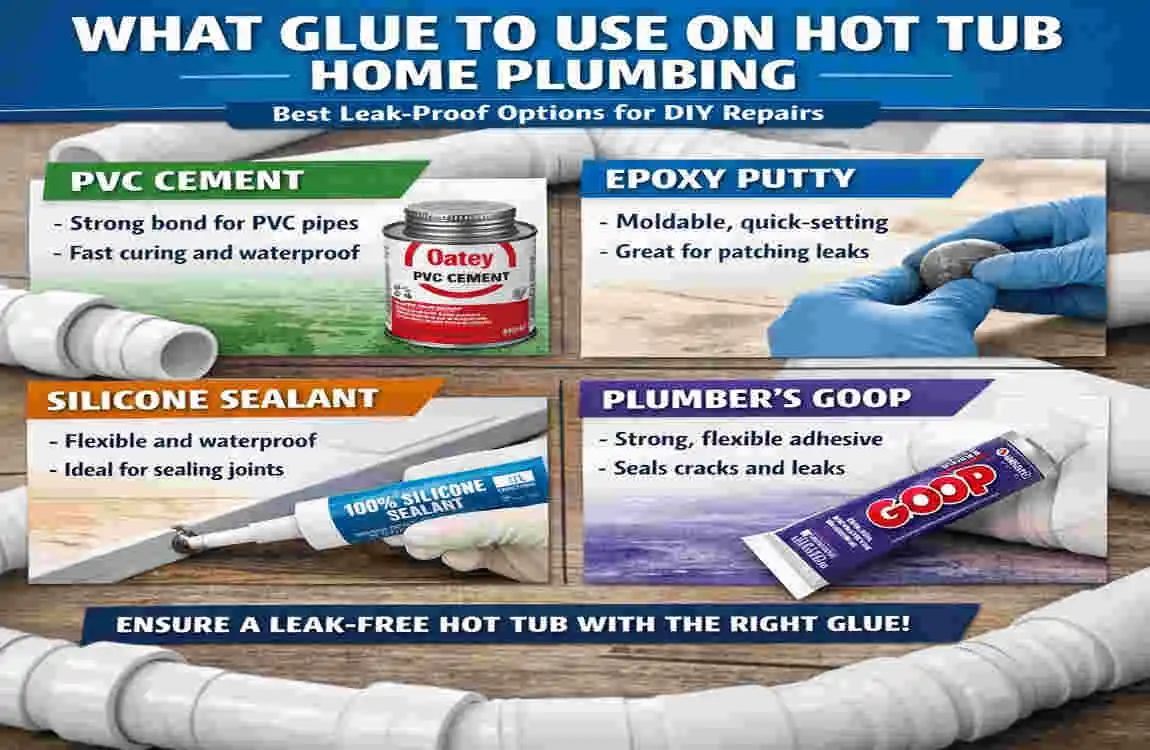
For DIY repairs on hot tub home plumbing leaks, use specialized PVC solvent cement rather than regular glue for permanent, leak-proof bonds on PVC or flex pipes. These products chemically fuse pipes and fittings, ideal for the wet, pressurized conditions in spas.
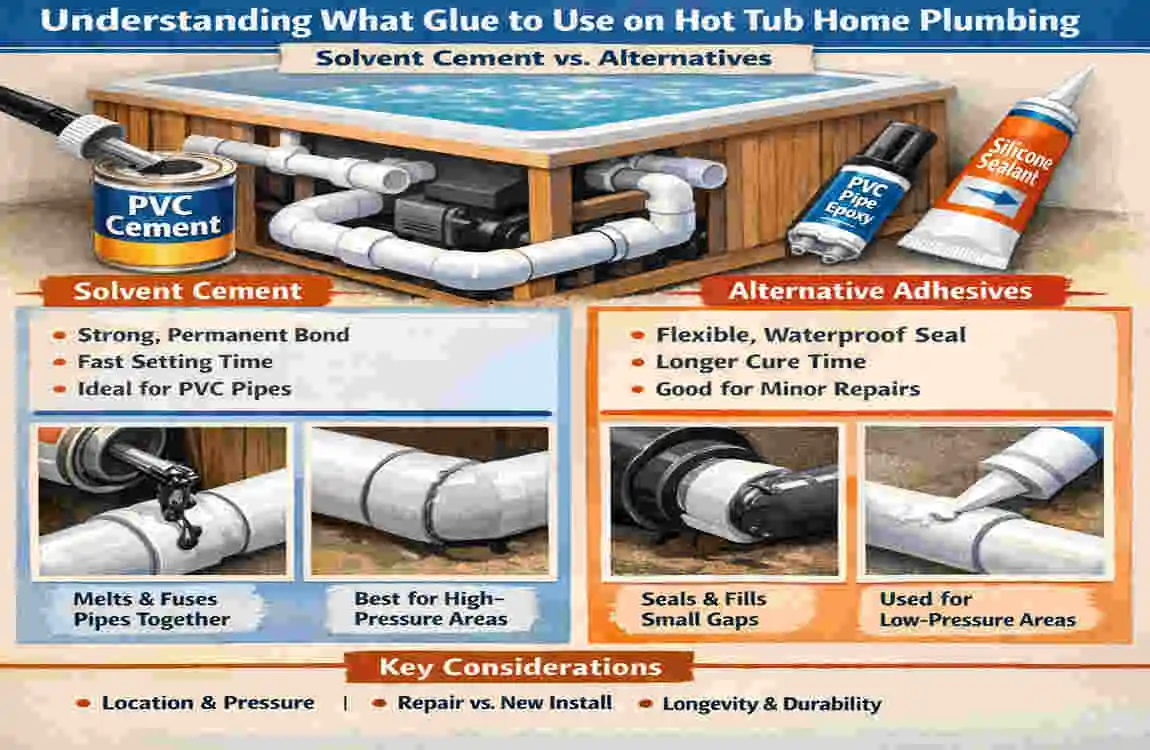
Understanding What Glue to Use on Hot Tub Home Plumbing: Solvent Cement vs. Alternatives
When you walk down the plumbing aisle, it can be overwhelming. There are cans, tubes, and putties everywhere. To really understand what glue to use on hot tub home plumbing, we need to get a little scientific for a moment.
The most effective “glue” for plumbing isn’t actually glue at all—it is Solvent Cement.
When you use wood glue, it sits between two pieces of wood and sticks them together. Solvent Cement works differently. It contains aggressive chemicals that literally melt the surface of the plastic. When you push a pipe into a fitting with solvent cement, the two melted layers of plastic fuse together. As the solvents evaporate, the plastic hardens again. The result isn’t two pieces stuck together; it becomes one single, solid piece of plastic. This is called a chemical weld.
Why Not Epoxy or Silicone?
You can grab a tube of silicone or a stick of epoxy putty. These have their place, but they are rarely the permanent solution for a pressurised joint.
- Epoxies: Great for patching a crack in a pump housing or a heater union, but they don’t penetrate the plastic. They sit on top.
- Silicone: Excellent for gaskets and sealing around jets, but it has zero structural strength. It will blow out under pressure.
- Duct Tape: Don’t. Please.
Key Properties of Leak-Proof Hot Tub Plumbing Glue
If you want a repair that lasts another 10 years, look for these three things on the label:
- NSF Certification: This means it is safe for potable water. While you aren’t drinking your hot tub water, you want to ensure the chemicals won’t leach toxins into your bath.
- Pressure Rating: Hot tub jets push hard. You need an adhesive rated for pressure systems, usually indicated by Schedule 40 or Schedule 80 ratings.
- Temperature Resistance: This is vital. Standard PVC glue can fail if the water gets too hot. You need “Hot” or “All-Weather” rated cements, or specifically CPVC cement, which handles higher heat.
Comparison: Choosing Your Weapon
Adhesive TypeBest ForPressure RatingCure TimeCost per Oz
Solvent Cement Creating new joints (PVC/CPVC) 200+ PSI 2–24 hrs $1–$2
Epoxy Putty Patching cracks/Emergency fix 100 PSI 1 hr $3–$5
Silicone Sealant Gaskets & flexible seals 50 PSI 24 hrs $2–$4
Marine Sealant Below waterline holes 150 PSI 7 days $5–$7
Top 5 Best Glues for Hot Tub Home Plumbing Leaks (DIY Tested)
Okay, let’s get to the recommendations. Based on real-world testing and professional plumber feedback, these are the top contenders when asking what glue to use on hot tub home plumbing. Whether you are in the US or searching for these in local markets like hardware stores in Lahore or ordering via Daraz, PK, these brands are the industry standard.
Oatey Clear PVC Cement (Heavy Duty)
Best For: Complete pipe replacements and new fittings.
Oatey is essentially the Kleenex of the plumbing world. Their “Heavy Duty” Clear PVC cement is a favourite for hot tub repairs because it has a thicker viscosity. This means it fills gaps better than the thin stuff, which is great when you are working in a tight, awkward cabinet space. It is low-VOC (smells less) and sets relatively fast. If you are replacing a section of pipe, this is your go-to.
- Pros: widely available, reliable bond, fills gaps.
- Cons: Requires a primer for the best bond (don’t skip the purple primer!).
Christy’s Red Hot Blue Glue
Best For: Wet conditions and quick fixes.
If you ask a pool tech what glue to use on hot tub home plumbing, they will likely hand you a can of “Red Hot Blue Glue.” This stuff is legendary. It is an aggressive, very fast-setting solvent cement. The best part? It can adhere even if the pipe is slightly damp (though dry is always better). It bonds PVC extremely fast, so you have to move quickly, but the seal is practically indestructible.
- Pros: Works in damp conditions, sets instantly, incredibly strong.
- Cons: Very messy (it’s bright blue), sets too fast for beginners sometimes.
J-B Weld Water Weld Epoxy Putty
Best For: Patching cracks without cutting pipe.
Sometimes, you can’t cut the pipe out. It could be encased in spray foam, or it’s right up against the shell. In this case, J-B Weld WaterWeld is a lifesaver. It comes in a stick that looks like clay. You mash it together with your fingers until it turns one colour, then press it over the crack. It cures underwater and gets rock hard in about an hour. It is perfect for stopping a pinhole leak immediately.
- Pros: Can be applied underwater, non-toxic, easy to use, and has no fumes.
- Cons: Not a structural weld; good for patches, not joining pipes.
Loctite PL Premium Polyurethane
Best For: Vibrating areas and non-pressurised seals.
This isn’t a pipe cement, but a construction adhesive. Why is it on this list? Because sometimes leaks happen where the spa shell meets the plumbing, or where a pump mount is loose. Loctite PL Premium is incredibly sticky and stays slightly flexible. This flexibility is key for hot tubs because it absorbs vibration without cracking.
- Pros: flexible, waterproof, sticks to everything.
- Cons: Takes 24 hours to cure, and is very difficult to remove later.
3M Marine Adhesive Sealant 5200
Best For: The “Nuclear Option” for impossible leaks.
If you have a leak that nothing else has fixed, 3M 5200 is the answer. Originally designed for boat hulls below the waterline, this stuff creates a permanent, waterproof seal that is stronger than the material it’s bonded to. It takes a long time to cure (up to a week for full cure), but once it is on, it is never coming off. Use this for leaks around jet bodies or suction fittings that you cannot replace.
- Pros: Absolutely waterproof, permanent, extremely durable.
- Cons: 7-day cure time (fast cure version available), practically impossible to remove.
Pro Tip: Always double-check your pipe type before buying. If you have yellowish pipe (CPVC), buy the orange or yellow CPVC cement. If you use regular PVC glue on CPVC, the joint will eventually fail under heat.
Step-by-Step Guide: How to Apply Glue for Hot Tub Plumbing Repairs
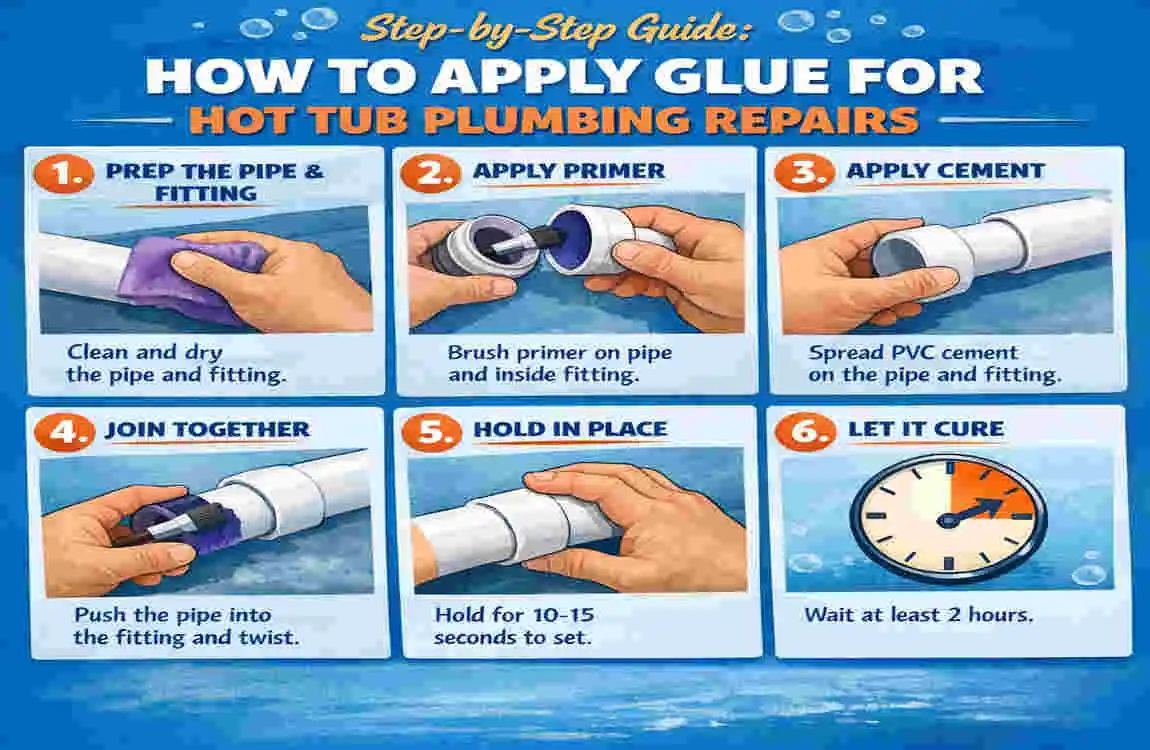
Knowing what glue to use on hot tub home plumbing is only half the battle. The application is where most DIYers mess up. A chemical weld relies on surface preparation. If the pipe is dirty or greasy, the chemical reaction won’t happen.
Follow this DIY hot tub plumbing glue application guide for a leak-proof result.
Safety First
Before you touch a tool, turn off the power to the hot tub at the breaker. You are mixing water and electricity; play it safe. Drain the tub below the level of the repair area. You cannot glue a pipe that has water rushing through it.
Prepare the Surfaces
This is the most critical step.
- Cut: Use a hacksaw or ratcheting cutter to remove the bad section. Try to make the cut as square (straight) as possible.
- Chamfer: Use a file or sandpaper to bevel the outer edge of the pipe. This prevents the sharp edge from scraping the glue off the inside of the fitting when you push it in.
- Sand: Use 80-grit sandpaper to scuff up the outside of the pipe and the inside of the fitting. You want to remove the shine. This gives the glue more surface area to bite into.
Prime the Connection
Grab your primer (usually purple). Apply a liberal coat to the outside of the pipe and the inside of the fitting.
- Why? Primer isn’t just a cleaner. It contains aggressive solvents that soften the hard outer shell of the plastic, preparing it to fuse.
- Do not wait: You want to apply the glue while the primer is still wet.
Apply the Glue
Immediately after priming, apply a layer of Cement to the pipe, then a layer to the fitting, and then a second light layer to the pipe.
- Work fast: You have about 10–15 seconds before it starts to set.
Assemble and Cure
Push the pipe into the fitting.
- The Twist: As you push it in, give the pipe a quarter-turn (90 degrees). This twists the glue around to ensure there are no air bubbles or dry spots.
- The Hold: Hold the joint together firmly for at least 30 seconds. The pipes will naturally try to push apart as the chemical reaction happens. If you let go too soon, the pipe will back out, and you will have a leak.
The Waiting Game
Look at the can instructions. Most solvent cements require 15–30 minutes to set before handling, and 2 to 24 hours to cure fully before you turn the water pressure back on. Don’t rush this!
Common Mistakes to Avoid When Using Glue on Hot Tub Plumbing
Even with the best glue for hot tub plumbing leaks, things can go wrong. Here are the pitfalls that catch people out, often leading to a “Part 2” of the repair saga.
- Skipping the Primer: This causes about 40% of all joint failures. Without primer, you are just sticking the plastic together, not welding it. It might hold for a week, but the vibration will break it loose.
- Using Too Much Glue: It’s tempting to gloop it on, but excess glue inside the pipe can drip down and clog your jets or damage the pump impeller. Apply an even coat, not a mountain.
- Wrong Pipe Match: Gluing PVC to ABS or PVC to CPVC requires “Transition Cement” (usually green). If you use standard clear glue to mix plastics, the bond will be brittle and weak.
- Ignoring Temperature: If it is freezing outside (below 40°F), standard glue won’t cure properly. You need to warm the pipes with a hair dryer (not a heat gun!) before gluing.
- Not Letting it Cure: Turning the pumps on 20 minutes after gluing is a recipe for disaster. The pressure will blow the soft plastic joint apart.
Hot Tub Plumbing Glue Alternatives for Non-DIYers
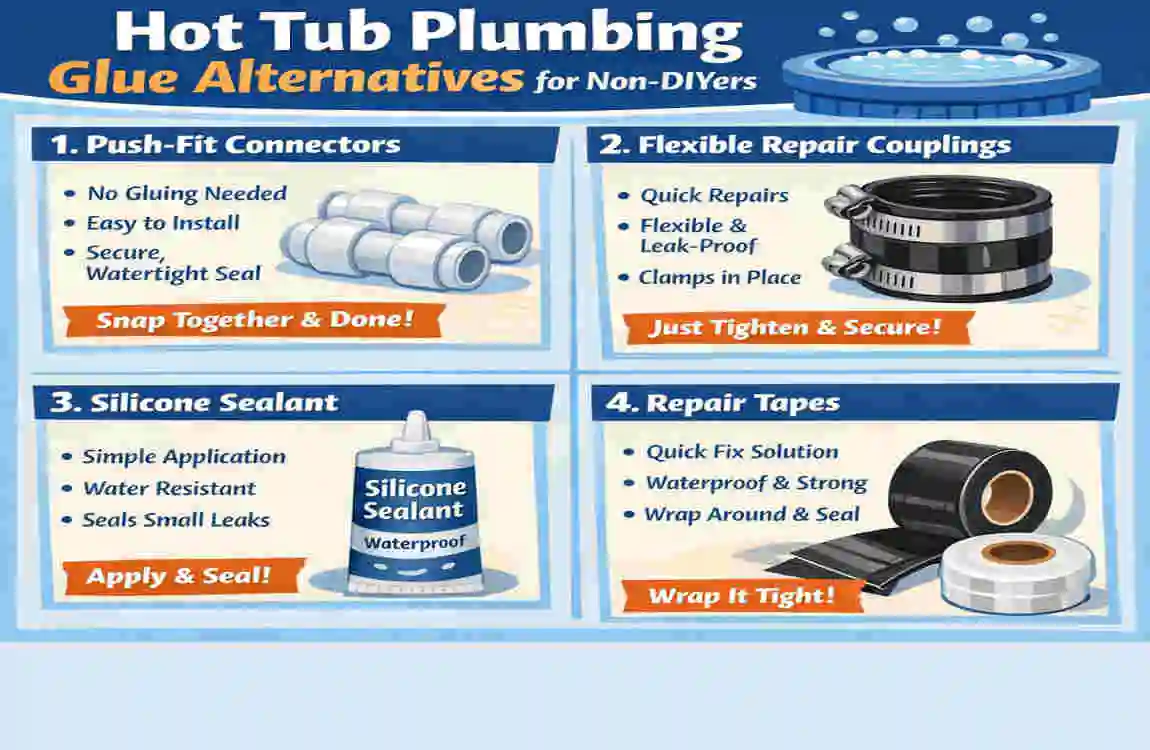
Okay, maybe you have read this far and thought, “I am not cutting pipes.” That is fair! If you aren’t comfortable with solvent welding, there are alternatives.
Compression Fittings: These are mechanical unions that screw together with a rubber O-ring seal. You can cut a section of pipe out and install a compression union just by tightening a nut with a wrench—no glue required.
Silicone Tape (Self-Fusing): For a temporary emergency fix (like when you have a party in 2 hours), you can use self-fusing silicone tape. You stretch it tight and wrap it around the leak. It bonds to itself instantly and can hold back decent pressure for a short time.
For our readers in places like Pakistan, finding specific brands like Oatey might be tough. You can check Daraz.pk for imported adhesives or visit major hardware hubs like those near Packages Mall in Lahore. Look for “high-pressure PVC cement” if you can’t find the specific brand names.
Maintenance Tips to Prevent Needing Hot Tub Plumbing Glue Again
The best repair is the one you never have to make. To keep your plumbing healthy:
- Balance Your Water: High acidity (low pH) eats plastic seals. Keep your pH between 7.4 and 7.6.
- Winterise Properly: If you aren’t using the tub in winter, drain it completely and use a shop vac to blow water out of the lines. Ice is the #1 killer of plumbing.
- Check Pump Unions: Once a year, open the cabinet and hand-tighten the large unions connecting the pipes to the pump. Vibration loosens them over time.
- Keep Vents Clear: Ensure the equipment bay has airflow so pumps don’t overheat the surrounding pipes.
FAQs: What Glue to Use on Hot Tub Home Plumbing
What glue to use on hot tub home plumbing for PVC pipes? For standard white PVC pipes, use a high-quality PVC solvent cement like Oatey Heavy Duty Clear or Christy’s Red Hot Blue Glue. Always use purple primer first.
Can I use Gorilla Glue on hot tub pipes? No! Standard Gorilla Glue expands as it dries and is not rated for the high pressure of hot tub jets. It will eventually fail and could damage your system.
Is JB Weld safe for hot tub leaks? Yes, J-B Weld WaterWeld is safe and effective for patching cracks or pinholes. However, it should not be used to join two pipes together; it is a patch, not a welding agent.
How long does hot tub glue take to dry? Most solvent cements set in 15 minutes but require 2 to 24 hours to cure before you can add water and pressure fully. Read the label on your specific can.
Can I glue a pipe while it is wet? Ideally, no. However, Christy’s Red Hot Blue Glue and Rain-R-Shine cements are formulated to work in damp conditions if getting the pipe 100% dry is impossible.
Why is my hot tub leaking from the glued joint? This usually happens because the pipe wasn’t primed, the glue was old, or the joint was moved before it finished setting. You will likely need to cut that section out and redo it.
