

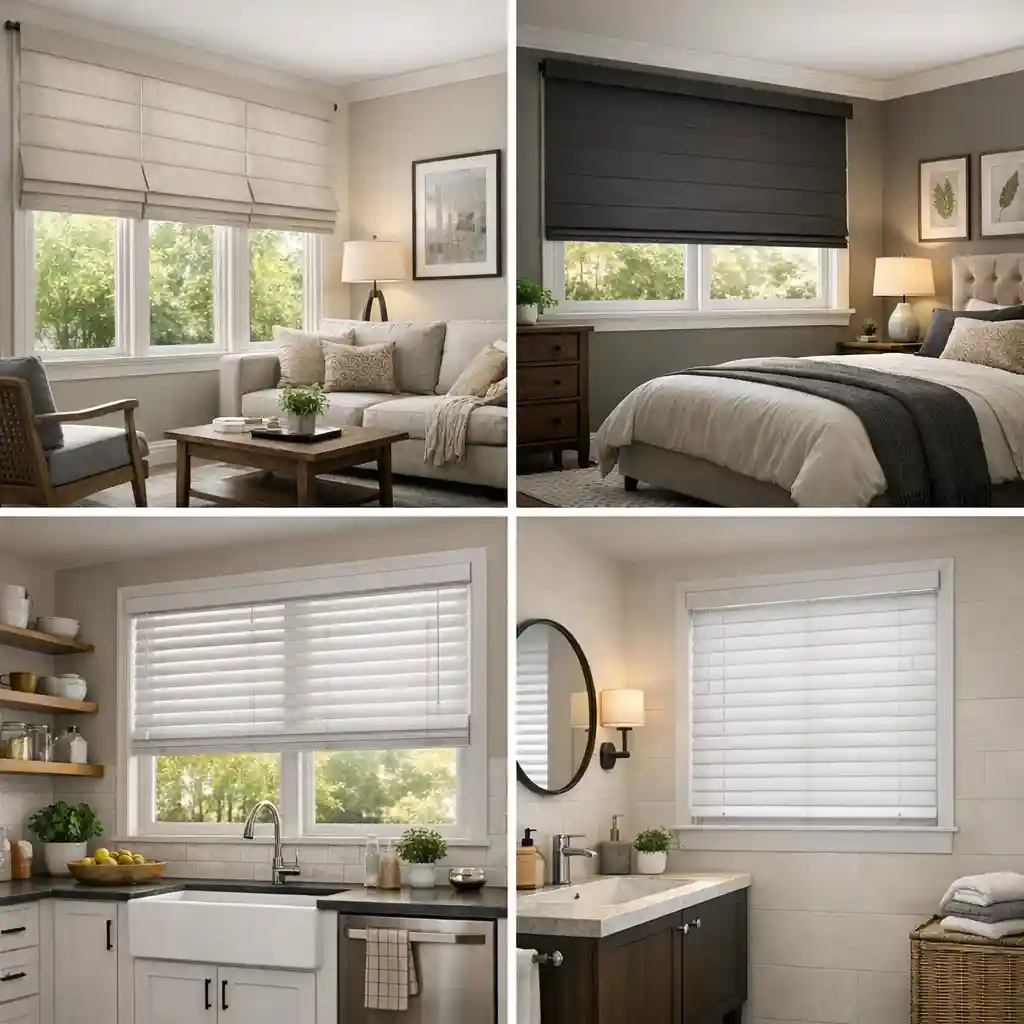
Window blinds are one of those home improvement decisions that touch almost everything – natural light, privacy, temperature, energy efficiency, and the overall feel of a room. Yet they’re often treated as an afterthought, chosen quickly and without much thought for the specific needs of each space.
Getting it right makes a genuine difference. The wrong blind in the wrong room can make a bedroom feel cold, a living room feel dark, or a kitchen feel impractical. The right one, on the other hand, pulls a room together and makes it work better every single day.
Here’s a practical guide to navigating the options.
Start With the Room’s Purpose
Before thinking about materials or mechanisms, start with how the room is used and what you actually need from your window covering.
Bedrooms demand effective light control and privacy. Blackout roller blinds or roman blinds with a blackout lining are the go-to choice for anyone sensitive to early morning light. For a softer aesthetic without sacrificing darkness, roman blinds in a lined fabric strike the right balance between style and function.
Living rooms tend to benefit from more flexibility – you might want full brightness during the day and complete privacy in the evening. Venetian blinds (wood or faux wood) are ideal here: they can be tilted to control glare without blocking light entirely, and they suit most interior styles from contemporary to traditional.
Kitchens and bathrooms need moisture-resistant materials. Faux wood venetian blinds or PVC roller blinds are the practical choice – they won’t warp, crack, or discolour with steam and humidity. Avoid fabric blinds in these rooms unless they’re specifically treated for moisture resistance.
Home offices call for glare management. A roller blind in a light-filtering or translucent fabric keeps the room bright while eliminating screen glare – a small detail that makes a big difference over the course of a working day.
Conservatories and large glazed areas are a special case. The temperature swings are more extreme and the window shapes are often non-standard. Cellular (honeycomb) blinds are particularly effective here – their unique construction traps air and provides excellent thermal insulation, keeping the space cooler in summer and warmer in winter.
Consider the Window Shape
Standard rectangular windows offer the most choice, but not every window is standard. Bay windows, roof lights, skylights, slanted gable windows, and porthole shapes all require a different approach.
For shaped or unusually sized windows, made-to-measure is essential — off-the-shelf blinds simply won’t fit properly, and a poor fit undermines both the look and the function of the blind. Specialist blind fitters can measure and manufacture to exact specifications, ensuring a clean result regardless of the window’s complexity.
Manual vs. Motorised
Motorisation has become increasingly accessible and is no longer the preserve of high-end renovations. Electric blinds – controlled via remote, smartphone, or smart home system – are worth considering in a few key scenarios:
- Hard-to-reach windows, such as skylights or high-level glazing, where manually operating a blind is awkward
- Large window runs, where operating multiple blinds individually becomes tedious
- Smart home integration, where blinds can be programmed to open and close automatically based on time of day or light levels
The convenience factor is real, particularly for households with young children – motorised blinds also eliminate the looped cords that present a safety risk with traditional manual blinds.
The Case for Professional Installation
Many homeowners underestimate how much professional installation matters. A blind that’s even slightly off-square, improperly tensioned, or fitted to the wrong fixing point will look wrong and wear unevenly over time. For anything beyond a simple replacement, having a professional measure up and fit the blinds is money well spent.
A good installer will also flag things you might not have considered – whether a particular wall material requires specialist fixings, whether a recess fit or face fit works better for the window, and how different fabrics will behave in the light conditions of that specific room.
Blindsfitted4u is a family-run business with over 50 years of experience supplying and installing made-to-measure blinds across London, Surrey, Sussex, and Hampshire. From standard roller blinds to complex rooflight installations and fully motorised smart home solutions, they handle the full process – measure, supply, and fit – with a three-year guarantee on their work.
Don’t Overlook Energy Efficiency
Window treatments play a more significant role in a home’s thermal performance than most people realise. Cellular pleated blinds, in particular, are engineered to reduce heat loss in winter and heat gain in summer – which can have a measurable impact on energy bills over time.
Even standard roller or roman blinds in a heavier fabric provide some insulation value when drawn, particularly on north-facing windows where cold draughts are most noticeable.
Pulling It All Together
The best approach to choosing blinds across a whole home is to treat each room as its own brief – factoring in light, privacy, moisture, window shape, and aesthetic – while keeping enough visual consistency across the house that everything feels considered and cohesive.
Material, colour, and operating system all contribute to the final look, but fit and quality of installation are what determine whether the result lasts. It’s one of those home improvement decisions where doing it properly the first time is far more cost-effective than revisiting it in two years.
