

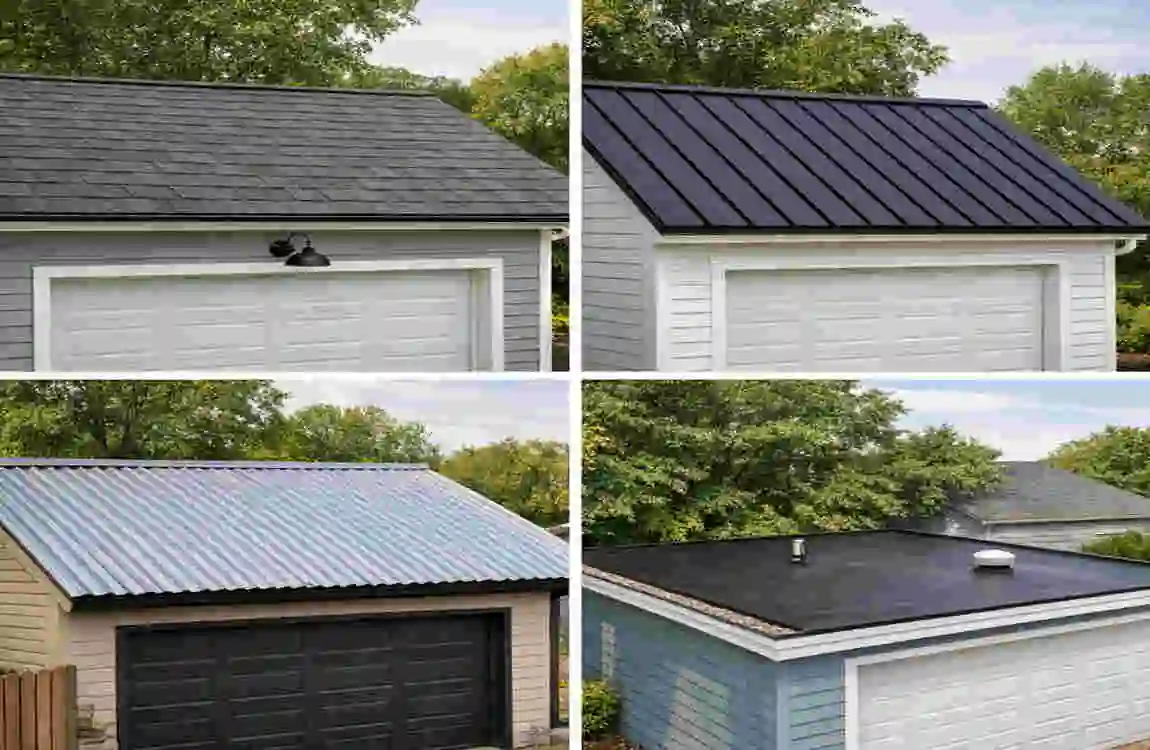
What is the best material for a garage roof that balances durability, cost, and home aesthetics? If you are asking yourself this question, you are certainly not alone. Every day, homeowners look up at their garages and wonder if the roof above their cars, tools, and holiday decorations is actually up to the task of protecting them.
Let us face it: garage roofs often get ignored until it is too late. We tend to focus all our attention on the main house, leaving the garage to fend for itself. But why do these roofs fail in the first place? The usual suspects are brutal weather conditions, sneaky water leaks that rot the wood beneath, and simply the passage of time. When a garage roof fails, it does not just put your vehicle at risk; it threatens everything you store inside.
Did you know that statistics show roughly 30% of homes need some form of roof repairs every single year? That is a massive number! It highlights just how vulnerable our outdoor structures really are. Because of this, picking the right material from the start is absolutely crucial.
Why Material Matters for Garage Roofs
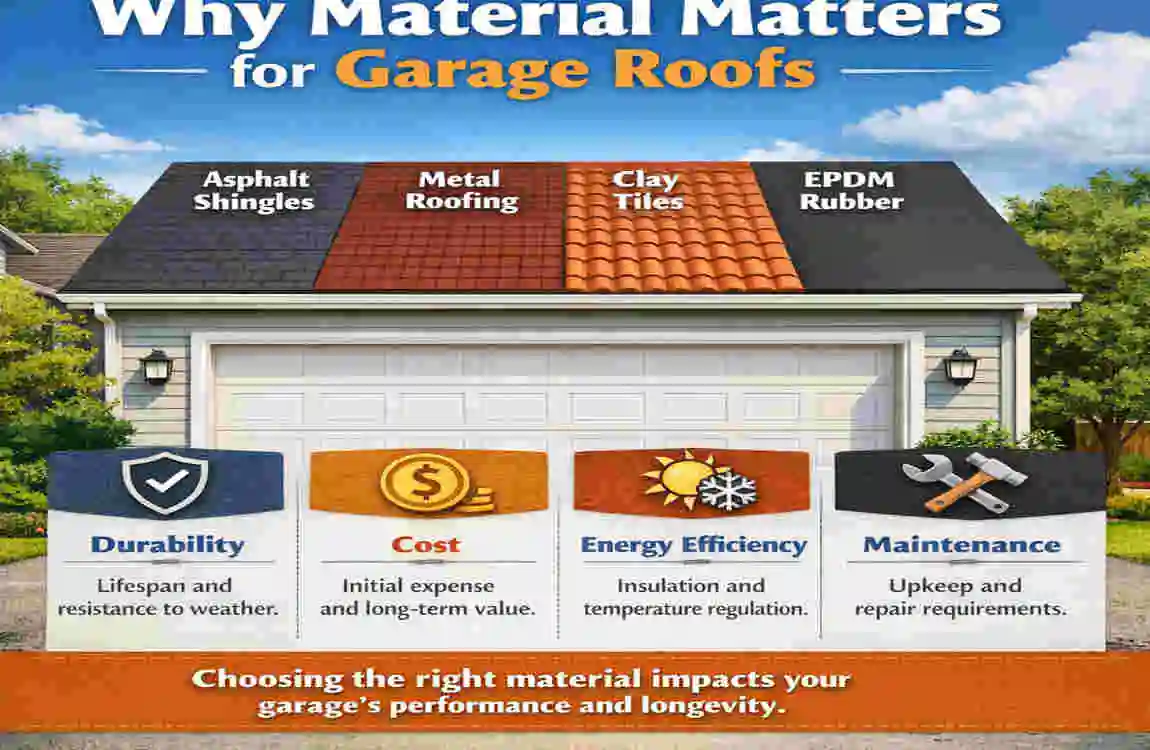
When you start shopping for roofing, it is easy to assume that whatever works for your house will automatically work for your garage. However, that is not always the case. Garages have highly specific needs that set them apart from standard living spaces.
First, consider the design. Many garages feature flat or low-slope designs. Water does not slide off a flat roof the way it does off a steeply pitched house roof. This means you need a material that acts as a waterproof seal rather than just a water-shedding layer. Furthermore, your garage roof has to bear the brunt of heavy rain and thick snow loads without sagging or collapsing.
You also have to balance your budget versus the expected lifespan of the roof. Are you looking for a quick fix that costs between $5 to $15 per square foot, or are you willing to invest more upfront for a roof that will outlive you?
Factors You Must Consider
Before you swipe your credit card, you need to weigh a few critical factors:
- Your Local Climate: Do you live in an area with scorching summers, freezing winters, or constant rain? Your weather dictates your roofing needs.
- Your Overall Budget: Think about both the immediate cost of the materials and the long-term cost of maintenance.
- Installation Ease: Can you do it yourself, or will you need to hire a professional crew?
- Ongoing Maintenance: Some roofs need annual scrubbing and sealing, while others are “set it and forget it.”
- Energy Efficiency: A roof that reflects the sun’s rays can keep your garage much cooler, which is a huge bonus if you use it as a workshop.
Quick Comparison of Key Factors
Here is a simple table to help you compare what matters most when picking your materials.
Factor: What It Means, Why It Matters for Your Garage
Cost: The money spent on materials and labour. Keeps your home improvement project within a realistic budget.
Lifespan: How many years the roof will last. Determines how soon you will have to pay for a replacement.
Climate Fit: How well it handles local weather. Prevents cracking in the cold or melting in the heat.
Maintenance: The time and effort needed for upkeep. Saves you weekend chores and hidden repair fees.
As you can see, there is no single “best” material out there. The perfect choice entirely depends on your home’s unique setup, your wallet, and your local weather. Let us dive into the top options.
Garage Roof Materials Ranked
Finding the perfect balance of price, looks, and toughness can feel overwhelming. To make things simple, we have ranked and detailed the top seven materials you should consider for your garage.
Asphalt Shingles: Affordable Everyday Choice
If you take a walk through any typical neighbourhood, you will see asphalt shingles everywhere. They are the undisputed king of residential roofing, and for good reason.
The Pros: The biggest advantage of asphalt is the incredibly low cost. Generally coming in at just $3 to $5 per square foot, they are wonderfully budget-friendly. They are also notoriously easy to install. In fact, many handy homeowners tackle shingle installation themselves over a long weekend. Plus, using asphalt allows you to easily match your garage roof to your main house, creating a beautiful, unified look.
The Cons: However, you get what you pay for. Asphalt has a shorter life expectancy, typically lasting between 20 and 30 years. More importantly, they perform terribly on flat or very low-slope roofs because water can easily sneak underneath the overlapping flaps.
Best For: We highly recommend asphalt shingles for budget-conscious homeowners who live in mild climates and have a garage with a steeply pitched roof.
Metal Roofing: Durable Long-Term Winner
When people ask, “What is the best material for a garage roof?”, metal is very often the correct answer. It is the heavyweight champion of durability.
The Pros: A high-quality metal roof boasts a staggering lifespan of 40 to 70 years. It is highly fire-resistant, meaning stray sparks from a bonfire won’t burn your garage down. Furthermore, metal is fantastic at reflecting the sun, keeping your garage surprisingly cool during the blistering summer months.
The Cons: The main drawback is the higher upfront cost, which usually sits between $7 and $12 per square foot. Also, if your garage is not well-insulated, heavy rain or hail hitting the metal can sound like a drum solo.
Types of Metal: You generally choose between standing seam (which has hidden fasteners and looks very sleek) and corrugated (the classic, wavy panels with exposed screws).
Best For: Metal is perfect for areas with harsh weather and for modern homes looking for a clean, sharp aesthetic.
Popular Metal Roofing Brands/Types:
- Galvanised Steel (Tough and rust-resistant)
- Aluminium (Lightweight and great for salty, coastal air)
- Copper (Premium look that turns green over time)
- Zinc (Self-healing and incredibly long-lasting)
- Galvalume (A blend of aluminium and zinc for extreme protection)
EPDM Rubber: Flat Roof Specialist
If your garage has a flat roof, traditional shingles are off the table. Enter EPDM (Ethylene Propylene Diene Monomer), which is essentially a giant, ultra-tough rubber mat.
The Pros: EPDM rubber can last anywhere from 30 to 50 years. It provides a flawless waterproof seal, acting like a tight swimming pool liner over your garage. It also requires incredibly low maintenance over its lifespan.
The Cons: Because it is usually black, EPDM absorbs a lot of heat, which can turn your garage into an oven in the summer. Additionally, the seams where two rubber sheets meet can sometimes peel apart and fail over time.
Best For: This is the absolute best choice for low-slope or completely flat garages.
EPDM vs TPO Membrane
Feature EPDM Rubber TPO (Thermoplastic Polyolefin)
Colour: Usually Black (Absorbs heat), Usually White (Reflects heat)
Seams glued or taped together, melted together with hot air
Puncture Resistance Good Excellent
Cost: Very Affordable, slightly more expensive
Polycarbonate Panels: Budget Transparency
Do you use your garage as a woodworking shop or an art studio? If you crave natural sunlight, polycarbonate panels might be your best friend. These are hard, transparent or semi-transparent plastic sheets.
The Pros: They let in beautiful, natural light, which saves you money on electricity. They are very cheap, running about $4 to $8 per square foot. Because they are so lightweight, they are incredibly DIY-friendly and easy to lift onto the roof.
The Cons: They are much less durable than metal or asphalt, usually lasting only 10 to 20 years. Over time, the sun’s harsh UV rays can cause the plastic to turn yellow and become brittle.
Best For: Sheds, greenhouses, and garage workshops that desperately need natural light.
Tile Roofing: Premium Aesthetic Match
For those who want pure luxury and charm, clay or concrete tile roofing is the way to go. You often see this style on beautiful homes in warm climates.
The Pros: Tiles easily last 50+ years. They offer a premium, stylish look that seamlessly integrates with the beautiful architecture of your main house. They also allow excellent airflow, which keeps the roof deck cool.
The Cons: Tiles are incredibly heavy. Your garage structure must be specially reinforced just to hold them up. They are also quite expensive, costing anywhere from $10 to $20 per square foot.
Best For: Mediterranean-style homes or upscale properties where matching the house’s luxury aesthetic is the top priority.
GRP (Fibreglass): Lightweight Alternative
GRP, which stands for Glass Reinforced Plastic (or simply fibreglass), is gaining massive popularity, especially across Europe and the UK.
The Pros: It is poured and cured as a seamless layer, meaning there are absolutely zero joints for water to leak through. It lasts a solid 25 to 40 years and is incredibly lightweight, meaning it will not stress your garage’s wooden frame.
The Cons: The installation is tricky and requires professional, dry weather to cure properly. It can be a bit costly, ranging from $8 to $15 per square foot.
Best For: UK and EU-style detached garages, especially those with flat roofs that want a clean, modern finish.
Wood Shakes/Shingles: Rustic Appeal
For a cottage or a cabin in the woods, nothing beats the natural beauty of wood shakes or shingles, usually made from cedar.
The Pros: They provide an unmatched, natural, rustic look that ages beautifully into a silvery-grey colour.
The Cons: Wood comes with a major fire risk, making it illegal in some wildfire-prone areas. It is also prone to rot and insect damage, meaning it typically only lasts 15 to 25 years.
Best For: Wood is rarely the “best” functional choice, but it is a viable and beautiful option for dry areas where aesthetic charm is your main goal.
Ultimate Material Comparison Table
To summarise everything we just covered, here is a handy cheat sheet:
Material Cost per sq ft, Expected Lifespan, Durability Rating, Affordability Score
Asphalt Shingles $3 – $5 20 – 30 Years Medium Excellent
Metal Roofing $7 – $12 40 – 70 Years Extremely High Moderate
EPDM Rubber $4 – $8 30 – 50 Years High Good
Polycarbonate $4 – $8 10 – 20 Years Low Good
Tile Roofing $10 – $20 50+ Years Very High Low
GRP (Fibreglass) $8 – $15 25 – 40 Years High Moderate
Wood Shakes $6 – $10 15 – 25 Years Medium Moderate
Cost Breakdown and Savings Tips
When figuring out your budget, it is very important to look beyond just the price tag at the hardware store. You have to understand the difference between upfront costs and lifetime costs.
Let us break it down. An asphalt roof might be cheap today, but you will likely have to replace it twice in the time a single metal roof would last. By spending a little extra on a metal roof now, you could potentially save up to $10,000 over 50 years in replacement and repair fees! Always think about your return on investment.
You must also consider regional pricing. Depending on where you live, prices can fluctuate wildly. For example, building materials in certain regions, like Pakistan, might cost more due to expensive import taxes, whereas locally sourced materials in the US or Europe might be cheaper. Shipping heavy materials like clay tiles will also drastically increase your bill.
Money-Saving Tips
- DIY vs Professional Installation: If you are handy with tools, installing simple materials like polycarbonate or asphalt yourself can cut your bill in half since you are not paying for labour. Just make sure you are comfortable working at heights!
- Look for Tax Credits: Many governments offer sweet tax breaks if you install energy-efficient roofing. Reflective metal roofs or light-colored flat roofs often qualify for these green-energy rebates.
- Buy Off-Season: Roofers are incredibly busy in the summer and fall. If you schedule your installation for late winter or early spring, you can often negotiate a much better rate.
Total Cost Calculator Estimate
Here is a rough estimate of what you might pay based on the size of your garage:
Garage Size Average Sq Ft Asphalt Cost Estimate Metal Cost Estimate EPDM Cost Estimate
Car Garage 250 – 300 $750 – $1,500 $1,750 – $3,600 $1,000 – $2,400
Car Garage 400 – 600 $1,200 – $3,000 $2,800 – $7,200 $1,600 – $4,800
Installation and Maintenance Guide
Even the most expensive, top-tier roofing material will fail miserably if it is installed incorrectly or entirely neglected over the years. Let us walk through the basics of how these systems come together and how you can keep them in perfect shape.
Step-by-Step Installation Basics
While every material has its own specific quirks, a standard pitched roof replacement generally follows these steps. Do not worry if you are hiring a pro; it is still great to know what they are actually doing up there!
- Inspect the Wooden Frame: Before anything new goes on, you must check the wooden decking underneath. Any rotten or water-damaged wood must be ripped out and replaced.
- Install the Drip Edge: This is a piece of metal that goes around the edges to ensure water flows straight into the gutters, rather than curling back under the wood.
- Choose and Roll Out the Underlayment: Think of this as your roof’s raincoat. It is a waterproof barrier (often made of synthetic felt) that acts as the last line of defence.
- Lay Down the Material: Starting from the bottom edge and working your way up to the peak, the shingles or metal panels are carefully secured in place.
- Seal the Ridges and Valleys: The peak of the roof (the ridge) and any dips (the valleys) are covered with special caps or flashing to keep blowing rain out.
Maintenance Checklist
To get the most life out of your new roof, you need to show it a little love. It does not take much time, but it makes a world of difference.
- Annual Visual Inspections: Grab a pair of binoculars and scan your roof from the ground once a year. Look for missing pieces or loose screws.
- Cleaning Out the Gutters: Clogged gutters force water to back up under your roofing materials, causing massive rot. Clean them every autumn!
- Trim Overhanging Trees: Branches that scrape against your roof act like sandpaper, wearing away the protective coating. Keep trees trimmed back at least six feet.
- Check Flat Roof Seams: If you have an EPDM rubber roof, gently check the taped seams after winter to ensure the freezing temperatures did not pull them apart.
Common Mistakes to Avoid
Many enthusiastic DIYers make innocent mistakes that end up costing thousands. Skipping ventilation is a massive one. If your garage gets hot and humid, and the roof cannot breathe, the wood underneath will literally bake and rot from the inside out.
Another major error is poor sealing around penetrations. If you have a vent pipe or a skylight, those edges must be sealed perfectly with metal flashing and roofing cement. Caulk alone is never enough!
Trends in Garage Roofing
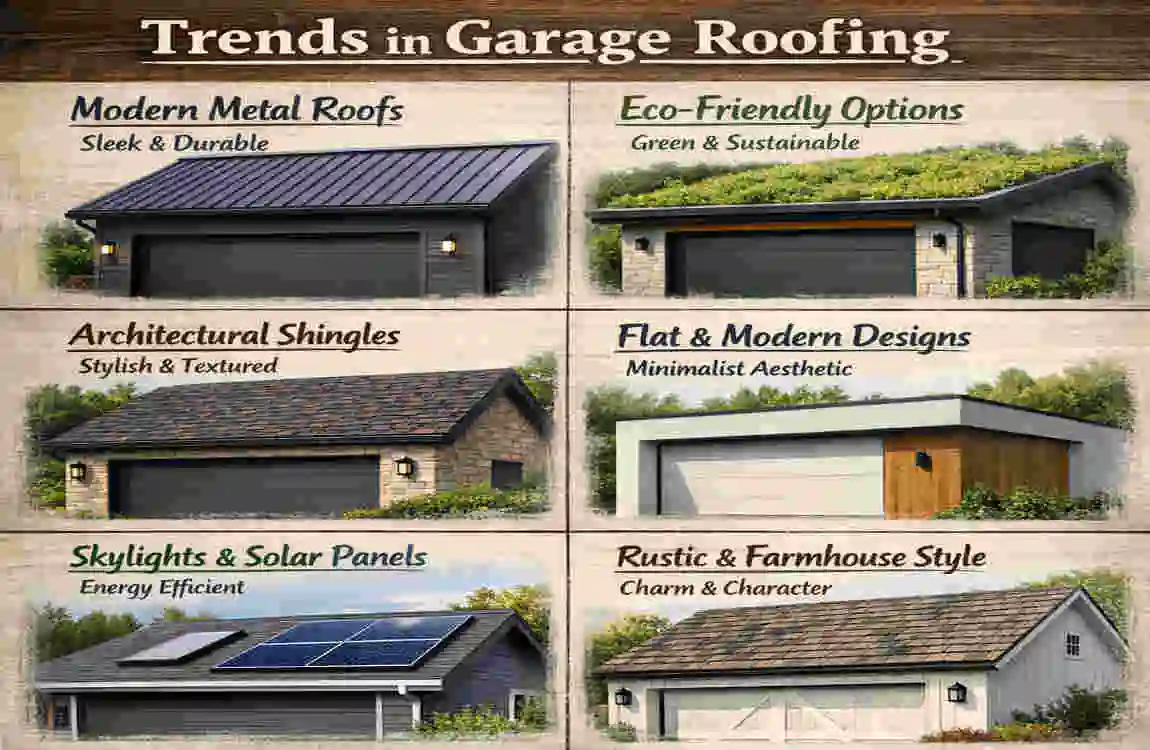
As we move deeper into 2026, the roofing industry is evolving rapidly. Homeowners are no longer settling for basic protection; they want smart, sustainable solutions.
Eco-Friendly Choices are leading the charge. We are seeing a huge spike in the use of recycled metal materials. Additionally, solar-integrated roofs (where the actual shingles generate electricity) are becoming affordable enough that people are finally installing them on their garages to charge their electric vehicles directly!
Smart Tech is also making its way onto the roof. You can now install affordable, tiny smart leak sensors under the roof decking. If water ever breaches the surface, an alert goes straight to your smartphone before a single drop hits your classic car or expensive tools.
Finally, the trend of Home Blending is bigger than ever. People are treating their garages not as separate sheds, but as true extensions of their homes. This means ditching cheap, mismatched materials in favour of premium options that boost the property’s overall curb appeal.
FAQs Frequently Asked Questions
To wrap things up, let us answer some of the most common questions homeowners have when tackling this project.
What is the best material for a garage roof in rainy climates? If you live in an area that sees constant, heavy rain, metal roofing with standing seams is your best bet. Because the metal panels run vertically and the seams are raised above the water level, it is nearly impossible for rain to penetrate. For flat roofs in rainy areas, seamless GRP (fibreglass) or a continuous sheet of EPDM rubber will keep the water out perfectly.
How much does a garage roof replacement cost? The final price depends heavily on the size of your garage and the materials you choose. On average, replacing a roof on a standard two-car garage with asphalt shingles will cost between $1,200 and $3,000. If you choose a premium material like metal, expect to pay between $2,800 and $7,200. Always get at least three quotes from local contractors!
Asphalt vs metal: Which is better? “Better” depends on your goals. Asphalt is better if you are on a strict, immediate budget and want a quick, easy installation. Metal is significantly better if you want a permanent solution that will last 50+ years, resist extreme weather, and save you money in the long run.
Can I put a new roof directly over the old one? In some cases, yes. Building codes in many areas allow you to lay a second layer of asphalt shingles directly over an existing layer. However, this traps heat, adds massive weight to the structure, and prevents you from inspecting the wood underneath. We highly recommend tearing off the old roof first.
How do I stop my flat garage roof from pooling water? Flat roofs are prone to “ponding.” To fix this, you can install tapered insulation underneath the rubber membrane. This creates a very slight, almost invisible slope that gently guides the water toward your drainage system.
Does a dark roof make a garage hotter? Yes, significantly. Dark colours, like standard black asphalt or black EPDM rubber, absorb the sun’s radiant energy and transfer that heat directly into the garage below. If heat is a concern, opt for light-colored shingles, a reflective metal roof, or a white TPO membrane.
