

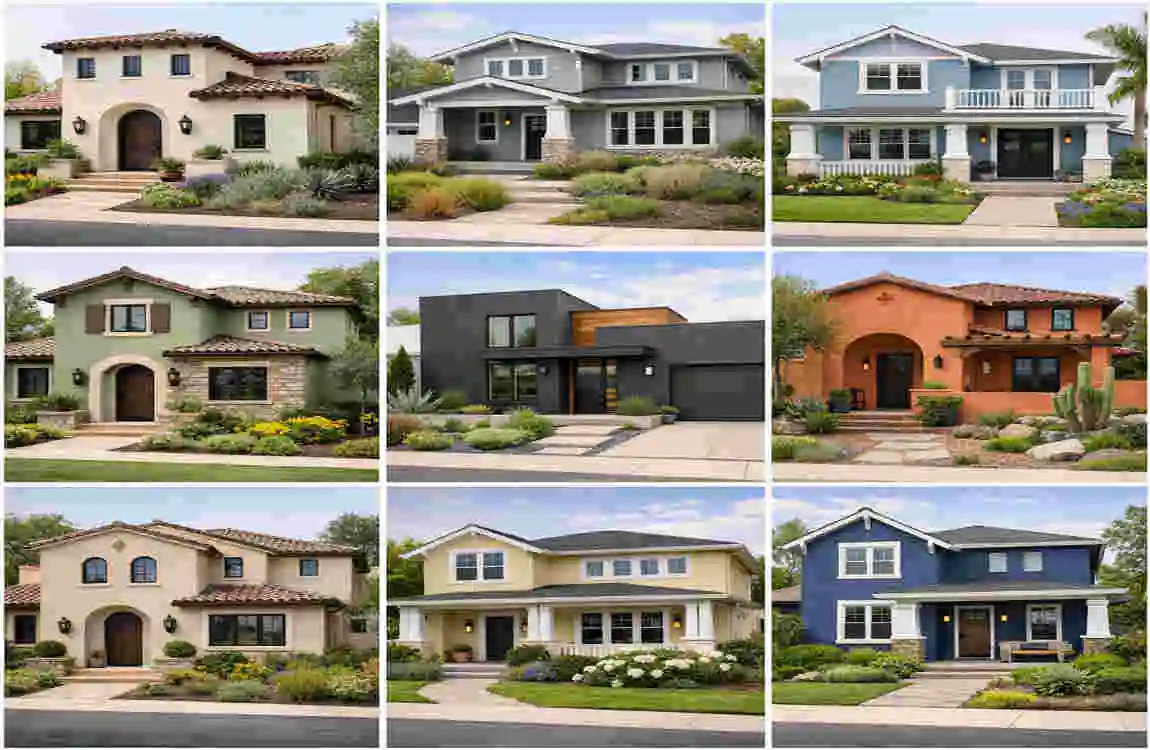
Have you ever pulled into your driveway, looked up at your house, and felt… nothing? Maybe just a slight sigh? It’s a common scenario. Many homeowners inherit stucco exteriors that have faded into a background of beige boredom or grey gloom. We often overlook stucco as just a “standard” finish, dismissing it as drab or difficult to change. But here is the secret that designers know: stucco is actually one of the most versatile canvases you can have.
Exploring stucco exterior paint ideas can instantly elevate your home’s curb appeal from “just another house on the block” to the neighbourhood showstopper. It isn’t just about vanity, either. According to a 2025 Houzz report, homes with updated, fresh exteriors tend to sell 10-15% faster than those with dated facades. That is a massive return on investment for a largely cosmetic project.
Why Choose Paint for Stucco Exteriors?
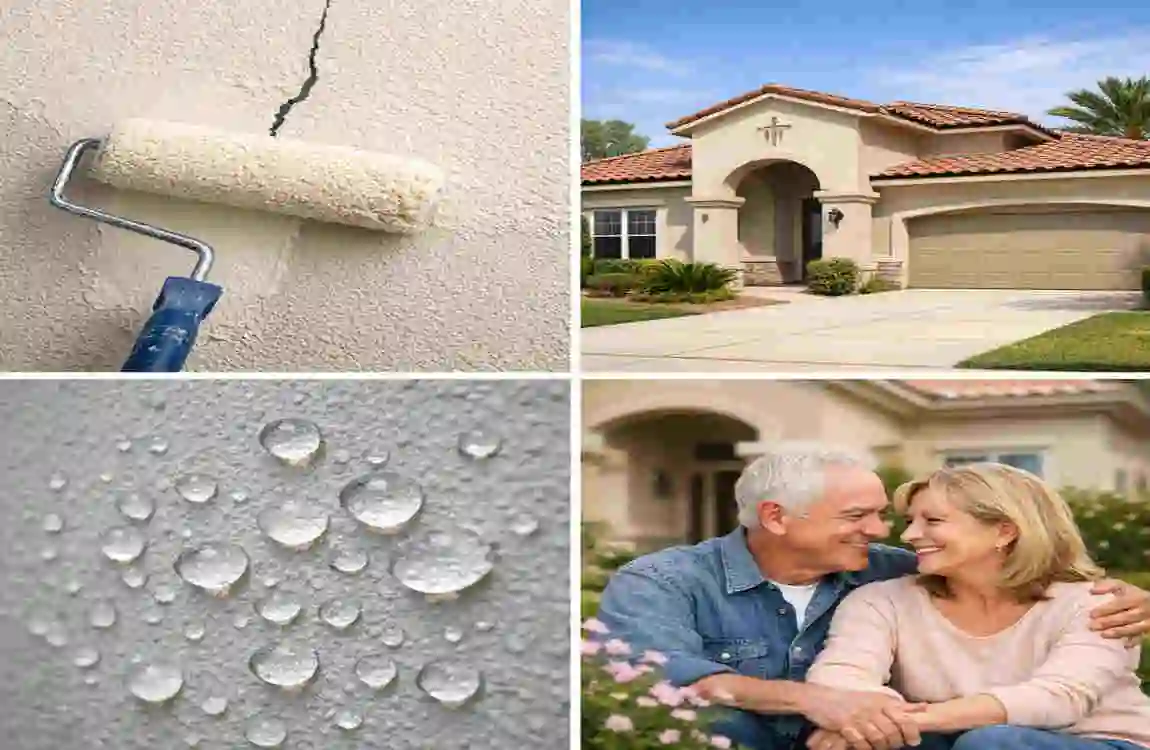
You might be asking, “Why bother painting stucco? Isn’t the colour mixed in?” While that is true for the original coat, time is the enemy of all exteriors. Stucco has a unique, porous texture. Think of it like a hard, durable sponge. Over time, it absorbs moisture, dirt, and pollution.
Painting your stucco isn’t just about changing the colour; it is about protection. High-quality exterior paint acts as a shield. It fills in those tiny pores, preventing water from seeping in and causing damage behind the walls. It also provides a barrier against UV rays, which can degrade the stucco binder over decades.
When you look into the benefits of stucco paint, you will find that breathability is key. Stucco needs to “breathe” to let internal moisture escape. Modern acrylic and elastomeric paints are designed specifically for this. They keep rain out but let water vapour escape.
Here is a quick breakdown of why painting is a smart move compared to re-stuccoing:
Aspect: Benefit of Painting Stucco
Curb Appeal provides an instant, dramatic colour refresh that modernises the home.
Durability: Elastomeric paints can bridge small hairline cracks, preventing them from growing.
Cost: Generally costs $0.50-$2.00 per sq. ft., whereas re-stuccoing is significantly more expensive.
Maintenance: A good paint job lasts 5-10 years and is easier to clean than raw stucco.
Whether you are looking for durable exterior stucco paint or just a stylistic change, painting is the most cost-effective renovation you can tackle.
Essential Prep Tips for Stucco Exterior Painting
Before we dive into the colours, we have to talk about the process. Painting stucco is not like painting a smooth drywall surface inside your bedroom. If you skip the prep work, even the most expensive paint will peel within a year.
Here is how to get professional results when you are figuring out how to paint stucco exterior surfaces:
The Deep Clean
You cannot paint over dirt. Because stucco is textured, it holds onto dust, pollen, and even mildew. You need to thoroughly wash the exterior. A power washer is your best friend here, but be careful with the pressure settings. You want to blast away the grime, not gouge holes in the stucco. If you see dark spots, they are likely mildew; use a specialised mildew remover before you start washing.
Repair the Cracks
Stucco creates hairline cracks as a house settles. This is normal, but you can’t just paint over them. You need to fill these gaps to create a watertight seal. For small cracks, a high-quality elastomeric caulk is perfect because it stretches. For larger cracks, you might need a patch kit and some mesh tape. The goal is a uniform surface.
The Prime Directive
Never skip primer on stucco. The surface is thirsty. If you apply paint directly to raw or old stucco, the wall will suck up the moisture from the paint, leaving it blotchy and weak. Use a high-quality acrylic-based primer. This acts as the “glue” for your topcoat, ensuring the colour looks consistent.
Choosing the Right Paint
This is critical. You need breathable paint. Look for 100% acrylic latex formulas. Brands like Behr, Sherwin-Williams, or Benjamin Moore offer lines specifically formulated for masonry and stucco. Avoid oil-based paints, as they seal the surface too tightly and trap moisture within the walls, leading to bubbling.
Top 10 Stucco Exterior Paint Ideas
Now, let’s get to the fun part. We have curated a list of the best stucco exterior paint ideas to inspire your transformation. These colours are selected based on longevity, trend forecasting for 2026, and their ability to complement the unique texture of stucco.
Classic Neutral Beige
You might roll your eyes at “beige,” but there is a reason it is a classic. When done right, beige is anything but boring. It is the ultimate earthy tone that grounds a home. On stucco, beige picks up the texture’s shadows beautifully, giving the house depth that flat siding can’t.
Why it works for stucco: Stucco is a material rooted in earth and stone. Beige leans into this natural heritage. It is incredibly practical because it hides dust and dirt much better than white or dark colours. If you live in a dusty area, this is your best friend.
Real-world application: Imagine a warm, sandy beige—think “Latte” or “Desert Sand.” Pair this with crisp, bright white trim around the windows and a dark wood front door. The contrast makes the beige look intentional and sophisticated, not builder-grade. This is one of the safest stucco paint colours for resale value.
Complementary Accents:
- Trim: Pure White or Cream.
- Door: Mahogany stain or deep navy blue.
- Vibe: Timeless, warm, and welcoming.
Warm Terracotta Red
If you want to embrace the history of stucco, look to the Mediterranean and the American Southwest. Terracotta is a bold, fired-clay colour that brings immediate warmth and energy to a property. It feels organic, like the earth itself.
Why it works for stucco: This colour was practically invented for textured walls. The stucco’s uneven surface softens the red’s intensity, making it feel cosy rather than aggressive. It is perfect for Spanish Colonial or Mission-style homes.
Real-world application: Picture a deep, rusty red exterior. To keep it from looking like a fast-food restaurant, ensure the tone has brown undertones rather than bright orange. Look for fade-resistant pigments, as reds are notorious for fading in the sun. Brands like Sherwin-Williams offer “Fade Resist” lines that are perfect for this.
Complementary Accents:
- Trim: Creamy off-white (never stark white) or dark bronze.
- Door: Rustic wood with iron hardware.
- Vibe: Old World charm, vacation villa, spicy and inviting.
Cool Coastal Blue-Grey
For those seeking serenity, a blue-grey blend is a stunning choice. It moves away from the warm earth tones and offers a cooling visual effect. This colour mimics the sky and the sea, making it a favourite for coastal homes or anyone seeking a “Modern Farmhouse” look with a stucco texture.
Why it works for stucco: Stucco can sometimes feel heavy. Blue-grey lightens the visual weight of the house. It reflects heat well, which is a practical bonus in warmer climates. The stucco’s texture breaks up the grey, preventing it from looking like a concrete block.
Real-world application: Think of a misty morning at the beach. This colour is sophisticated and clean. It works exceptionally well on homes with stone skirting or accents. A slate blue-grey exterior with a charcoal-grey roof is a winning combination that screams “custom home.”
Complementary Accents:
- Trim: Bright white.
- Door: Natural cedar wood or a sunny yellow for a pop of fun.
- Vibe: Breezy, calm, elegant, and modern.
Elegant Sage Green
Green is having a massive moment in design, and Sage is leading the pack. It is a nature-inspired hue that helps a home blend seamlessly into its landscaping. It is eco-friendly in appearance and promotes a sense of tranquillity.
Why it works for stucco: Sage green softens the hard edges of a stucco home. Because it has grey undertones, it doesn’t look like a cartoon colour. It looks established and high-end. It is one of the most versatile exterior stucco painting tips we can give: when in doubt, go green.
Real-world application: Imagine a home nestled among trees. A soft, dried-herb green makes the house look like it grew out of the environment. It pairs beautifully with natural wood elements, such as pergola beams or cedar shutters.
Complementary Accents:
- Trim: Beige or soft taupe.
- Door: Black or deep forest green.
- Vibe: Organic, peaceful, grounded, and harmonious.
Bold Charcoal Grey
For the brave and the modern, Charcoal Grey is a showstopper. Dark exteriors are trending hard for 2026. This colour gives a home a contemporary edge, transforming dated architecture into something that looks brand new and architectural.
Why it works for stucco: Dark paint hides imperfections. If your stucco has a lot of patch jobs or inconsistent texture, charcoal masks it all under a veil of modern sleekness. It provides a dramatic backdrop for landscaping—green plants pop incredibly well against a dark wall.
Real-world application: This is perfect for urban lofts or renovated ranch-style homes. A deep, iron-ore grey commands attention. However, be aware that dark colours absorb heat. Ensure you use paint with “cool wall” technology if you live in a hot climate to prevent your cooling bills from spiking.
Complementary Accents:
- Trim: Black (for a monochromatic look) or natural wood.
- Door: Neon lime or bright orange for a mid-century modern twist.
- Vibe: Edgy, expensive, moody, and chic.
Sunny Soft Yellow
Yellow is the colour of optimism. While bright lemon might be too much, a soft, buttery yellow is cheerful and inviting. It is a traditional choice that works surprisingly well on stucco, referencing French Country and Italian villas.
Why it works for stucco: Yellow reflects light, making your home appear larger and brighter. It highlights the peaks and valleys of the stucco texture beautifully as the sun moves across the sky. It creates an emotional connection of happiness and warmth.
Real-world application: Think of a Tuscan sun-washed wall. This colour needs to be muted—more “whipped butter” than “school bus.” It pairs incredibly well with terracotta roof tiles or grey slate roofs. It brings a bit of European flair to any suburban street.
Complementary Accents:
- Trim: Crisp white.
- Door: Powder blue or slate grey.
- Vibe: Joyful, traditional, European, and bright.
Sophisticated Taupe
Taupe is the chameleon of paint colours. Sitting right between grey and brown, it offers the best of both worlds. It is warmer than grey but more modern than beige. It is the definition of “sophisticated neutral.”
Why it works for stucco: Taupe is a mid-tone, meaning it isn’t too dark or too light. It holds up well against dirt and weathering. It effortlessly bridges the gap between different architectural materials, blending seamlessly with partial brick or stone siding.
Real-world application: A taupe exterior exudes a quiet confidence. It doesn’t scream for attention, but it looks expensive. It creates a minimalist curb appeal that allows other features, like a beautiful garden or a custom driveway, to shine.
Complementary Accents:
- Trim: Dark chocolate brown or charcoal.
- Door: Deep burgundy or black.
- Vibe: Understated luxury, versatile, and contemporary.
Vibrant Adobe Orange
This is a specific variation of the terracotta family, but punchier. Adobe Orange is vibrant, energetic, and distinct. It is essentially the “stucco exterior paint idea” for desert living or for anyone wanting to make a bold statement.
Why it works for stucco: This colour mimics the natural clay of the American Southwest. It feels authentic to the material. On a smooth wall, orange can look plastic. On stucco, the texture breaks up the light saturation, giving it a velvety appearance.
Real-world application: This is the ultimate look for a desert modern home. Picture this vibrant orange paired with xeriscaping—cacti, rocks, and gravel. It is a high-contrast look that feels artistic and curated.
Complementary Accents:
- Trim: Turquoise (a classic Southwest pairing) or dark bronze.
- Door: Distressed wood.
- Vibe: Artistic, regional, warm, and spicy.
Tranquil Light Lavender
Here is our wildcard. Purple on a house? Yes, if you do it right. A very pale, dusty lavender is unexpected but incredibly elegant. It draws on the French Provincial style and offers a unique alternative to grey.
Why it works for stucco: Lavender has cool undertones that look crisp and clean. It is distinct enough to stand out in a neighbourhood of beige houses, but subtle enough not to be an eyesore. It works particularly well with stucco’s rough texture, which grounds the feminine colour.
Real-world application: The key here is “dusty.” You want a colour that looks grey until the sun hits it. It pairs magically with wrought-iron details, like railings or light fixtures. It creates a storybook cottage feel.
Complementary Accents:
- Trim: Cream or dark grey.
- Door: Deep plum or charcoal.
- Vibe: Whimsical, romantic, unique, and soft.
Crisp White with Texture Play
White is the ultimate refresher. It creates a blank slate. But on stucco, white isn’t just white—it is a study in shadow and light. A crisp white exterior can make a home look brand new, modern, and incredibly high-end.
Why it works for stucco: White reflects the most light, keeping the home cool. It emphasises the house’s architectural lines. Because stucco has texture, a white wall changes throughout the day as shadows lengthen and shorten in the crevices. It creates a “resort” look.
Real-world application: Think of the homes in Santorini or high-end properties in Miami. White stucco with black window frames is a massive trend right now. It is high-contrast and very photogenic. However, be prepared to power wash it more often!
Complementary Accents:
- Trim: Black or dark bronze.
- Door: A bright, bold colour (teal, red, yellow) or classic black.
- Vibe: Clean, airy, expensive, and minimalist.
Colour Trends for Stucco
As we look ahead, the trends in stucco paint colours are shifting towards sustainability and a connection to nature.
Earthy, Muted Palettes: Drawing influence from Pantone’s 2026 predictions, we are seeing a move away from stark, industrial greys toward warmer, “muddy” tones. Think mushroom greys, clay pinks, and olive greens. These colours feel grounded and calming in a chaotic world.
Two-Tone Combinations: Gone are the days of painting the whole house one colour. A rising trend is using two shades of the same colour family—one for the main walls and a slightly darker shade for architectural pop-outs or the second story. This adds dimension to stucco’s flat surfaces.
Sustainable Shifts: Homeowners are prioritising eco-friendly products. Low-VOC (Volatile Organic Compounds) paints are now the standard. These stucco exterior paint ideas align with the 2026 shift toward health and environmental responsibility. People want paints that are safe for their families and their gardens.
Maintenance and Longevity Tips
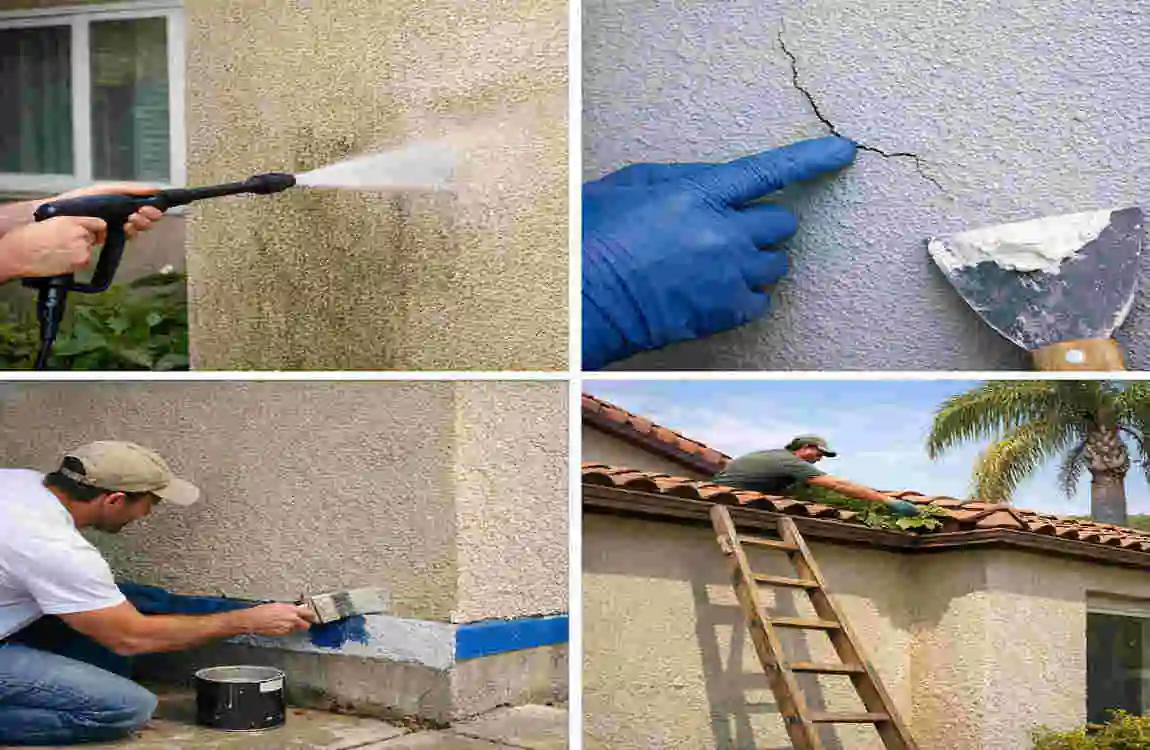
You have invested time and money into painting your home; now let’s make it last. While stucco is durable, the paint needs to be cared for.
- Annual Inspections: Once a year, walk around your house. Look for new cracks or peeling. Catching a problem early can save you thousands.
- The Gentle Wash: You don’t always need a heavy power wash. A garden hose and a soft-bristle brush can remove surface dust that dulls paint.
- Touch-Up Kits: Keep a quart of your paint colour labelled in the garage. Touch up nicks from weed whackers or stray baseballs immediately.
- Re-Paint Cycle: generally, plan to repaint every 7 to 10 years. If you use high-quality elastomeric paint, you might push this to 12 years.
Estimated Cost Breakdown (2,000 sq. ft. Home)
ItemDIY CostProfessional Cost
Materials (Paint/Primer) $600 – $1,000 Included in quote
Tools/Equipment $200 – $400 Included in quote
Labor $0 (Your time) $3,000 – $6,000
Total Estimated $800 – $1,400 $3,000 – $7,000+
Frequently Asked Questions
What’s the best paint for stucco exteriors? The gold standard is 100% acrylic latex paint. It is durable, colourfast, and most importantly, breathable. For older stucco with many hairline cracks, “elastomeric” paint is the best choice as it is thicker and stretches to bridge gaps.
How much does stucco exterior painting cost? Professionally, you can expect to pay between $1.50 and $3.50 per square foot of wall surface. For an average 2,000-square-foot home, the total usually lands between $3,000 and $7,000, depending on prep work and accessibility.
Can I paint stucco myself? Yes, you can. However, it is labour-intensive. The cleaning and prep work (patching cracks) takes longer than the actual painting. Rolling paint onto rough stucco requires significant physical effort to get the paint into the crevices. Spraying is faster but requires skill to avoid streaks.
Are dark colours okay for stucco? Yes, but with a caveat. Dark colours absorb heat, which can cause the stucco to expand and contract more, potentially leading to cracks over time. If you choose a dark colour (like Charcoal or Navy), look for paints with “heat reflective technology” to mitigate this.
How do I choose exterior stucco paint ideas for my climate? If you live in a sunny, hot climate (like Florida or Arizona), lighter colours like White, Beige, or Pale Yellow are best for reflecting heat. In cooler, overcast climates (like the Pacific Northwest), darker or warmer tones like Terracotta or Sage can add cosiness and visual warmth.
