
Have you ever dreaded opening your mailbox at the end of the month, knowing your electricity bill is waiting inside? You are not alone. With energy prices climbing higher every year, millions of homeowners are looking for a way out of the never-ending cycle of paying the utility company. Imagine opening that bill and seeing a balance of zero—or even seeing a credit where the power company owes you money. This isn’t a fantasy; it is the reality for homeowners who have switched to solar energy.
Solar Energy vs. Traditional Grid Energy
Before we dive into the “how-to,” let’s look at the numbers. Why are people making the switch? It usually comes down to the cost per unit of electricity.
Feature: Traditional Grid EnergyHome Solar System Energy
Source: Fossil fuels (Coal, Gas, Oil), Sunlight (Renewable)
Cost Trend Increases annually (Inflation/Fuel costs) Fixed upfront cost; free fuel forever
Average Cost High (e.g., $0.15 – $0.30 per kWh) Low (e.g., $0.06 – $0.08 per kWh over lifetime)
Control None (Utility sets the price) Total Control (You own the power)
Environmental Impact: High Carbon Emissions, Zero Emissions
Benefits of Home Solar Installation
You might be thinking, “Okay, saving money sounds great, but is it worth the hassle?” The short answer is yes. Learning how to install a solar system in a home setup offers benefits that go far beyond a lower monthly bill. Let’s break down why this is one of the smartest investments you can make for your home.
Massive Reductions in Energy Bills
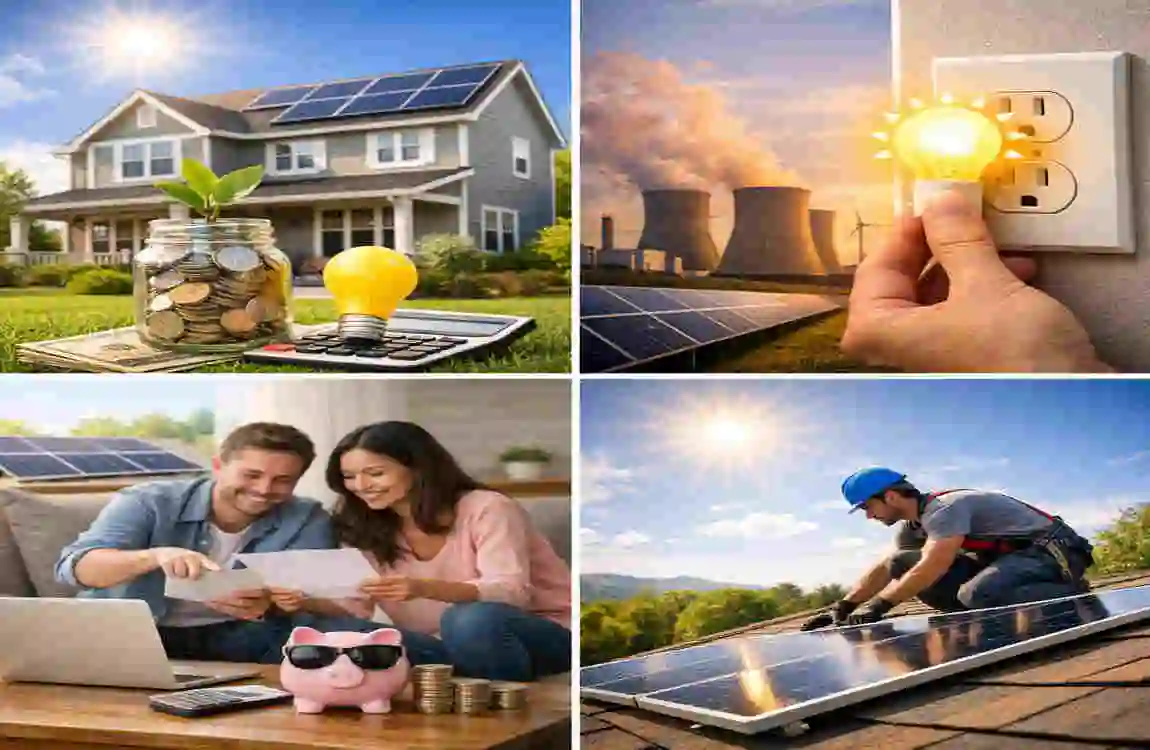
The most immediate benefit is the drop in your monthly expenses. Depending on the size of the system you install and your local electricity rates, you could reduce your bill by 70% to 100%. For the average homeowner, this translates to savings of $1,000 to $2,000 every single year over the 25-year lifespan of a solar panel system, which is tens of thousands of dollars that stay in your pocket instead of going to the utility company.
Increased Property Value
A common worry for homeowners is resale value. Will solar panels make your house harder to sell? The data says the opposite. Studies, such as those by Zillow, have shown that homes with solar panels sell for roughly 4% more than comparable homes without them. Buyers view a solar system as a Premium upgrade, like a renovated kitchen or a finished basement. They know they are buying a house with lower operating costs, which makes your property highly attractive.
Environmental Impact
We all want to leave a better world for the next generation. By installing solar, you are directly reducing your carbon footprint. A typical residential solar system eliminates three to four tons of carbon emissions each year. To put that in perspective, it’s equivalent to planting over 100 trees annually. You aren’t just saving money; you are actively fighting climate change from your own rooftop.
Energy Independence
Reliability is becoming a significant issue as power grids age. Storms, heatwaves, and infrastructure failures can leave you in the dark for days. When you pair your solar installation with a battery backup, you achieve energy independence. While your neighbors are lighting candles during a blackout, your lights stay on, your fridge keeps running, and your phone stays charged.
Is Solar Right for Your House? Eligibility Checklist
Before you start buying equipment, we need to make sure your home is a good candidate for solar. Not every house is perfect for solar panels, but most can be adapted. To figure out how to install a solar system in your house effectively, you need to run through this eligibility checklist.
Roof Suitability
Your roof is the foundation of your solar system.
- Orientation: In the Northern Hemisphere, south-facing roofs are ideal because they catch the most sun throughout the day. East and West-facing roofs can also work well, though they might produce slightly less power.
- Condition: How old is your roof? Solar panels last 25 to 30 years. If your roof needs replacing in 5 years, do it before you install the panels. You don’t want to pay to remove and reinstall the system later.
- Shade: This is the enemy of solar. Look for large trees, chimneys, or neighboring buildings that cast shadows on your roof between 9 AM and 4 PM. Even a little shade can significantly drop your system’s output.
Location Factors
Solar works almost anywhere, but it works best in sunny locations.
- Sun Hours: This refers to the number of hours per day the sun is strong enough to generate peak power. For example, in sunny regions like Pakistan, Arizona, or Australia, you might get 5 to 6 peak sun hours a day. In cloudier areas, you might get 3 to 4. You can still go solar in cloudy areas; you might need a few more panels to hit your energy goals.
Home Energy Usage Audit
You can’t build a system if you don’t know how much power you need. Grab your last 12 months of electricity bills. Look for your average monthly kWh (kilowatt-hour) usage.
- Do you use 500 kWh a month? 1,000 kWh?
- Do you use more in the summer (AC) or winter (heating)? Knowing this number is crucial for sizing your system correctly.
Budget Check
Solar is an investment. While prices have dropped significantly, an entry-level system can still cost between $10,000 and $30,000 before incentives. However, keep in mind that financing options are widely available, allowing you to swap your electric bill for a solar loan payment that is often lower than what you were paying the utility company.
Types of Residential Solar Systems
When you start researching how to install a solar system for a home setup, you will quickly realize there isn’t just one type of solar system. There are three main configurations, and choosing the right one depends on your goals and your budget.
Grid-Tied Solar Systems
This is the most common and typically the most affordable option for homeowners.
- How it works: Your panels are connected to the utility grid. When you produce more power than you use, the excess is sent back to the grid, and you get a credit (this is called Net Metering). At night, when the sun is down, you pull power from the grid using those credits.
- Pros: Cheapest upfront cost; no expensive batteries needed; reliable backup from the grid.
- Cons: If the grid goes down (power outage), your solar system shuts off for safety reasons. You do not have backup power.
Off-Grid Solar Systems
This is for the genuine independence seekers or for homes in remote locations where running power lines is too expensive.
- How it works: You are wholly severed from the utility company. You generate your own power and store it in large battery banks. You rely 100% on your system.
- Pros: Total energy independence; no electric bills ever.
- Cons: Most expensive option due to batteries; requires careful energy management (if you run out of battery, you have no lights).
Hybrid Solar Systems
This is rapidly becoming the “gold standard” for modern homes.
- How it works: It combines grid-tied and off-grid features. You are connected to the grid, but you also have a battery bank. You use your solar power first, store excess in the battery, and use the grid only when your battery is empty.
- Pros: Backup power during outages; maximizes use of your own solar energy; reduces reliance on the grid.
- Cons: More expensive than standard grid-tied systems due to the cost of the battery.
Comparison of Solar System Types
System TypeCostBattery Required?Backup Power?Best For…
Grid-Tied Low No No Maximum ROI & Savings
Off-Grid High Yes Yes Remote Cabins & Independence
Hybrid Medium/High Yes Yes Savings + security
Step-by-Step Guide: How to install a Solar System in a House
Now we get to the core of the guide. This is the practical, step-by-step process of how to install a solar system in a house environment. Whether you are managing the project yourself or hiring a pro, understanding these steps is vital.
Assess Your Energy Needs and Site
You cannot build a house without a blueprint, and you cannot install solar without a plan.
- Review Your Bills: As mentioned earlier, calculate your annual kWh usage. Divide that by 365 to get your daily usage.
- Use a Solar Calculator: There are free online tools (like PVWatts) that let you enter your address and see how much solar energy your roof can generate.
- Site Survey: If you are hiring a professional, they will come to your house to measure the roof, check the electrical panel, and look for structural issues. If you are DIY-ing, you need to get up on a ladder (safely!) and measure the available roof space precisely.
Design Your Solar System
Once you know how much power you need, you have to design the system to produce it.
- Sizing the System: Let’s say you need 20 kWh per day. If you live in an area with 5 peak sun hours, you need a 4kW system (4kW x 5 hours = 20 kWh).
- Panel Count: If you need a 4kW system and you buy 400-watt panels, you will need 10 panels (400W x 10 = 4000W or 4kW).
- Inverter Sizing: Your inverter (the device that converts solar DC power to AC power for your home) must handle the total wattage of your panels.
Choose Quality Components
Not all solar gear is created equal. Investing in quality now saves you headaches later.
- Solar Panels: Look for Monocrystalline panels. They are black, sleek, and highly efficient. Brands like Jinko, Longi, and REC are industry leaders. Avoid older Polycrystalline (blue) panels if you have limited roof space.
- Inverters: You have two main choices. String Inverters are cheaper and can be mounted on the wall near your meter. Micro-inverters go on the back of each panel. Micro-inverters are better if you have shade issues, as one shaded panel won’t drag down the whole system.
- Batteries: If you are going hybrid, choose Lithium-Ion (LiFePO4) batteries. They last much longer and are safer than old lead-acid batteries.
Obtain Permits and Incentives
This is the paperwork phase. Do not skip this!
- Local Permits: You will likely need a building permit and an electrical permit from your city or county. They want to ensure your roof can hold the weight and the wiring is safe.
- Utility Interconnection: You must apply to your utility company to connect your system to the grid. This is required for Net Metering.
- Incentives: Research tax credits (like the 30% Federal ITC in the US) or local rebates. These can knock thousands of dollars off your price tag.
Physical Installation Process
If you are doing this yourself, you need to be very handy. If you hired a pro, this is what they will do:
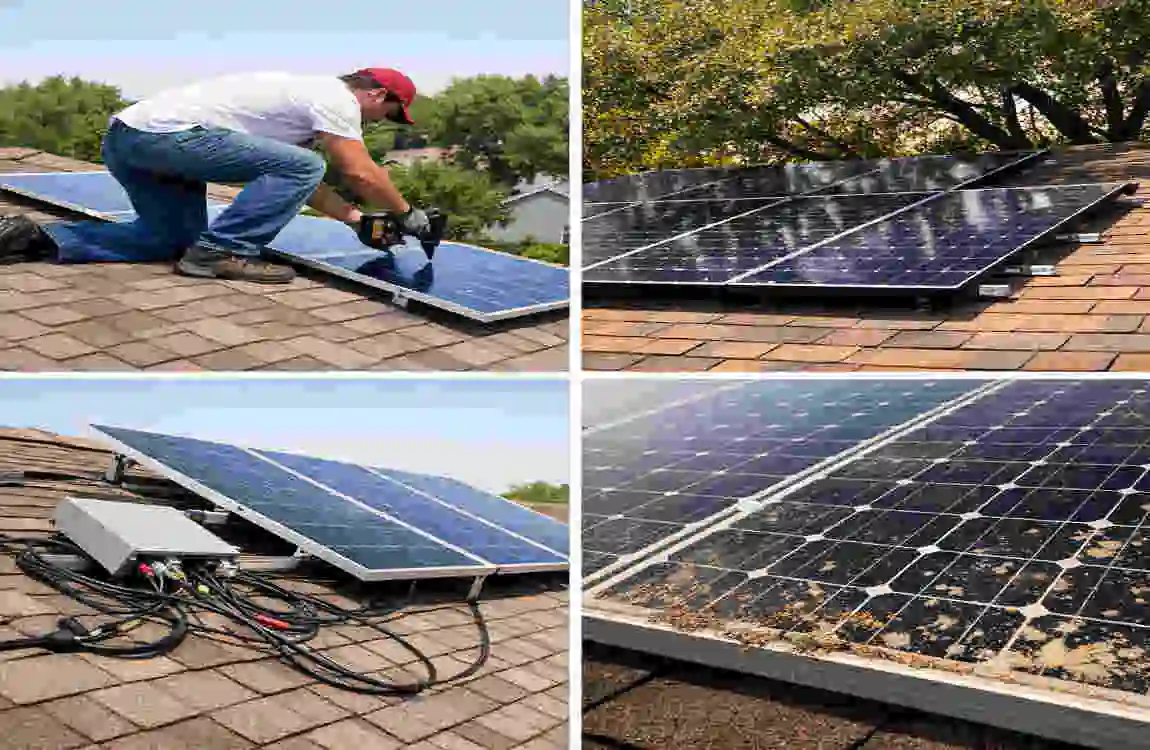
- Install Racking: Aluminum rails are bolted into your roof rafters. This is the foundation. Flashing is used to ensure there are no leaks at the drilled holes.
- Wiring: Wires are run from the roof down to your electrical panel.
- Mounting Panels: The panels are clamped onto the racking system and plugged into the wiring.
- Inverter Installation: The inverter is mounted near your main electrical panel and connected to the system.
Testing, Grid Connection, and Activation
You are almost done!
- Safety Check: An electrician should verify that all connections are tight and appropriately grounded.
- Inspection: A city inspector will come out to sign off on the work.
- Utility Approval: Once the city approves, the utility company will install a bi-directional meter (one that spins backward!).
- Flip the Switch: Once you get “Permission to Operate” (PTO), you turn the system on and start generating clean power!
DIY vs. Professional Installation Warning
FeatureProfessional InstallationDIY Installation
Cost Higher (paying for labor/expertise) Lower (save on labor costs)
Warranty Equipment + Workmanship Warranty Equipment Warranty Only
Safety High (Certified experts) Risk of electrical shock/falls
Paperwork Handled by the installer: You must handle all permits
Recommendation: Unless you are a certified electrician or have extensive construction experience, we strongly recommend hiring a professional. The money you save on DIY can be quickly lost if you damage your roof, void a warranty, or install the wiring incorrectly.
Cost Breakdown: Budgeting for Solar Setup
Understanding the “cost of installing a solar system in the house” scenarios requires looking at the price per watt.
- Average Cost: Currently, the average cost is between $2.50 and $4.00 per watt.
- Example: For a standard 6kW system (which is typical for a medium home), the total cost would be between $15,000 and $24,000.
Financing Options
You don’t always have to pay cash.
- Solar Loans: Works like a car loan. You own the system, you get the tax credits, and you pay a monthly fee.
- Solar Leases/PPA: You rent the system or buy the power from it. You don’t own the panels, and you usually don’t get the tax incentives. This is less popular now than it used to be.
- Cash: Offers the best return on investment (ROI) because you pay no interest.
Payback Period
This is the “magic number.” If your system costs $15,000 and saves you $2,000 a year on electricity, your payback period is 7.5 years. After that, your electricity is essentially free for the remaining 15-20 years of the system’s life.
Maintenance and Long-Term Savings Tips
One of the best things about learning how to install a solar system in a house setup is discovering how low-maintenance they are. There are no moving parts to break. However, a little care goes a long way.
- Cleaning: Dust, pollen, and bird droppings can block sunlight. In many areas, rain is enough to clean them. If you live in a dry, dusty area, hose them down once or twice a year. Do not use soap, as it can leave a residue.
- Monitor Output: Use your inverter’s app (like SolarEdge or Enphase) to check your production weekly. If you see a sudden drop in power, something might be wrong.
- Trim Trees: Trees grow! Keep an eye on nearby branches. If they start shading your panels, trim them back to keep your production high.
- Warranties: Most panels come with a 25-year performance warranty. Keep your paperwork safe. If a panel fails, the manufacturer should replace it.
Common Mistakes to Avoid When Installing Solar at Home

To ensure your journey in learning how to install a solar system in your house is successful, avoid these common pitfalls that trip up many homeowners.
- Undersizing the System: Don’t just build for what you use today. If you plan to buy an Electric Vehicle (EV) or add a swimming pool in the future, size your system larger now. It is much cheaper to add panels now than to upgrade later.
- Ignoring the Roof: We mentioned this before, but it bears repeating. Do not put a solar system with a 25-year life on a roof with 5 years of life left.
- Going for the Cheapest Bid: If an installer is offering a price that seems too good to be true, it probably is. They might be using inferior equipment or cutting corners on safety. Always check reviews and ask for references.
- Skipping Incentives: Billions of dollars in rebates go unclaimed. Research federal, state, and local utility incentives thoroughly.
FAQ Section
How long does it take to install a solar system in a house? The actual physical installation usually takes 1 to 3 days, depending on the size of the system. However, the entire process—including design, permitting, and utility approvals—can take 4 to 8 weeks.
Can I install solar panels myself? Yes, you can, but it is generally not recommended unless you have electrical experience. High-voltage DC electricity is dangerous. Professional installers also ensure you meet all fire codes and warranty requirements.
What is the average cost of installing solar in a home? For a standard 6kW system, the average cost before tax credits is between $15,000 and $24,000. After federal tax credits (like the 30% ITC in the US), this cost drops significantly.
How much can I save with solar panels? Most homeowners save between $1,000 and $2,000 annually. Over the 25-year life of the system, this can total over $50,000 in savings, depending on your local electricity rates.
Is solar worth it if I live in a cloudy area? Yes! Solar panels don’t need direct, blazing sunlight to work; they need daylight. Germany is a world leader in solar energy, yet it is not particularly sunny. You may need a slightly larger system to offset the lower production.
What happens to solar panels when the power goes out? If you have a standard grid-tied system, your panels will shut off for safety. If you want power during an outage, you must install a hybrid system with a battery backup.
