

You are a homeowner in Lahore, in the middle of a massive renovation. You’ve ordered a beautiful set of architectural shingles to give your home that modern, sleek look. The delivery truck arrives, but the driver refuses to enter your driveway. Why? Because the load is too heavy for the residential road, or your designated storage spot on the roof isn’t reinforced to hold that much focused weight.
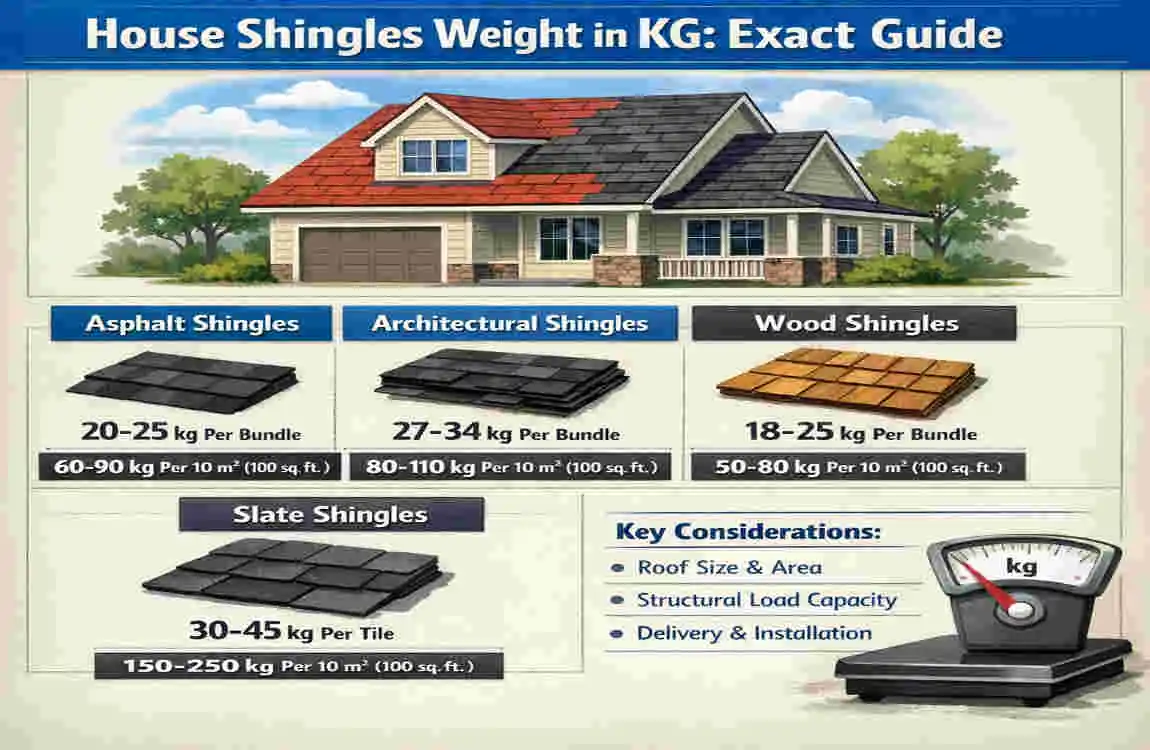
Whether you are a DIY enthusiast looking to fix a leak or a homeowner managing a full roof replacement, understanding the weight of your materials is the first step to success. Generally speaking, house shingles weigh between 2 and 5 kg per square meter, but these figures vary significantly depending on the material type, brand, and product quality.
What Are House Shingles? A Quick Overview
Before we dive deep into the numbers and the heavy lifting, let’s make sure we are all on the same page about what we are actually weighing.
Defining the Roof Shingle
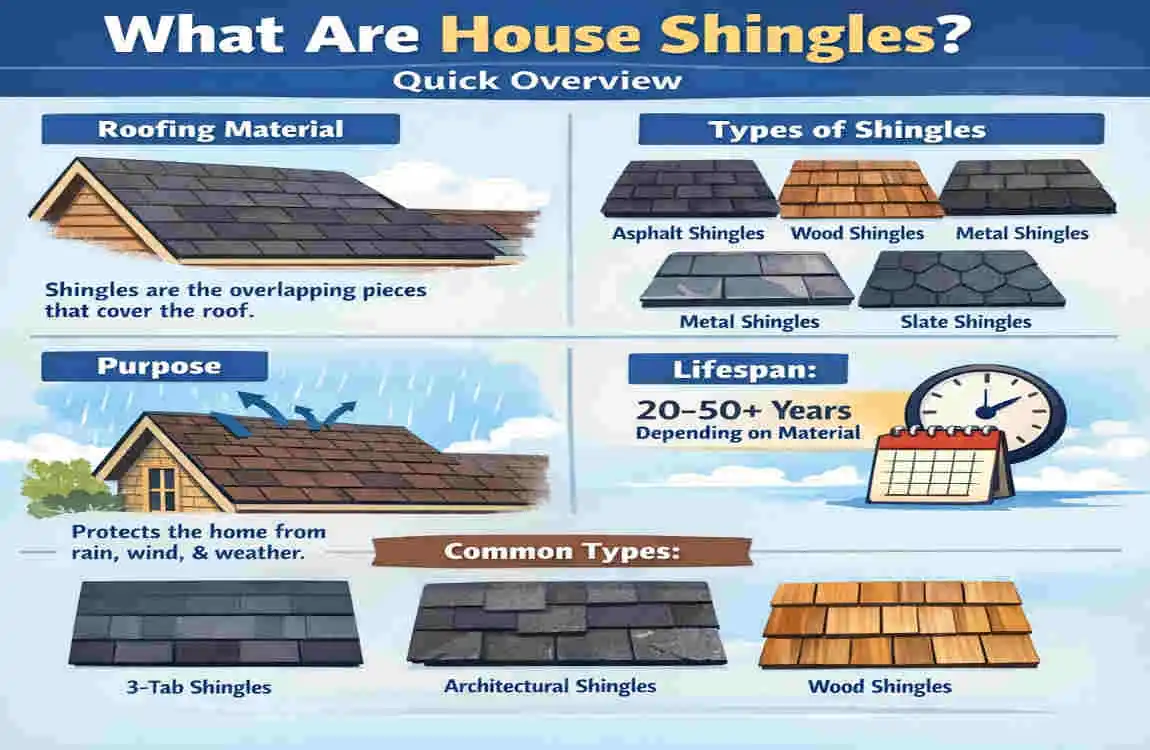
In simple terms, shingles are thin, overlapping coverings that protect your roof from the elements. Think of them as the skin of your house. They shed water, resist wind, and protect the structural wood beneath from rotting. While they used to be made primarily of wood or clay, modern technology has enabled a variety of durable, attractive, and—most importantly—lighter materials.
Common Types Used Today
If you look around neighborhoods in Pakistan or even globally, you will see a few dominant types:
- Asphalt Shingles: The most common type, made of a fiberglass mat topped with asphalt and ceramic granules.
- Composite Shingles: Made from synthetic polymers or recycled materials.
- Metal Shingles: Stamped metal designed to look like tile or slate.
- Slate: a beautiful but incredibly heavy natural stone.
The Evolution of Weight
Historically, roofs were heavy. Clay tiles and slate required massive timber structures to support them. Over the decades, the industry has evolved toward lightweight synthetics and fiberglass-based asphalt. This evolution means you can now get a durable roof without needing a fortress-like foundation to support it.
But the burning question for your specific project remains—how much do house shingles weigh in kg? Let’s get into the specifics.
How Much Do House Shingles Weigh in KG? By Type
When you ask for the weight of shingles, the answer depends entirely on what the shingle is made of. A sheet of metal weighs very different from a slab of stone. Here is a detailed breakdown by the most popular types.
Asphalt Shingles Weight (3-Tab vs. Architectural)
Asphalt shingles are the kings of the roofing world because they are affordable and easy to install. However, not all asphalt shingles are created equal.
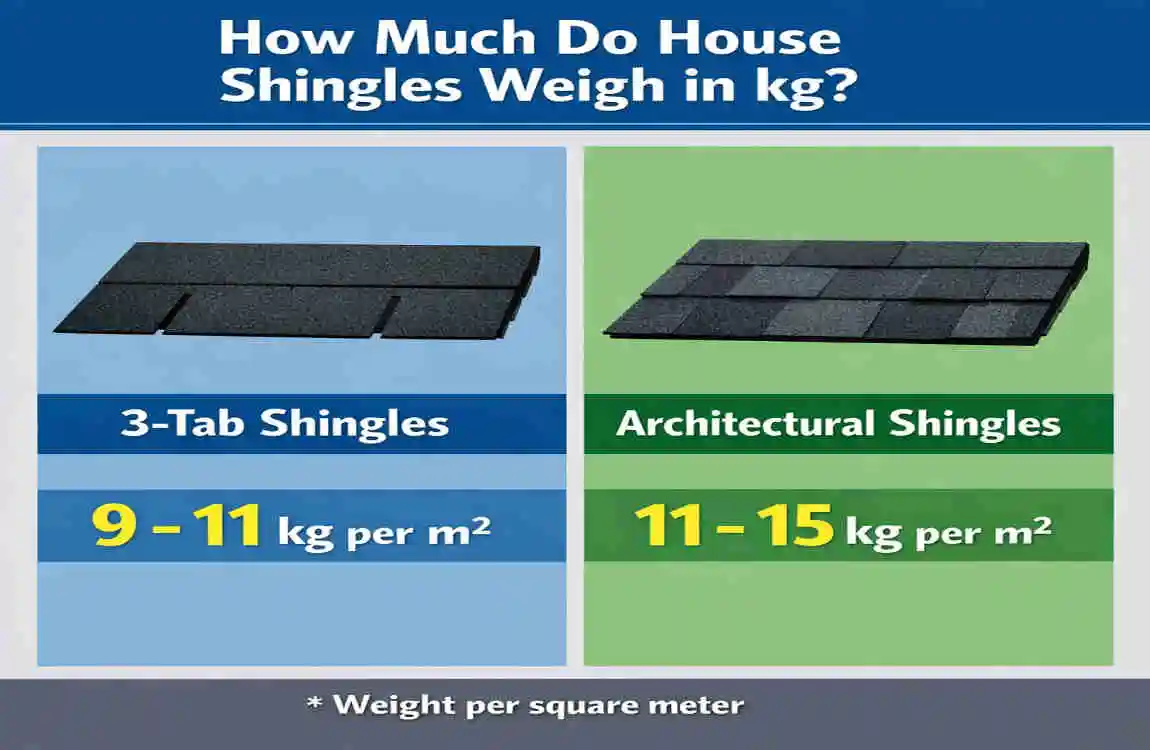
Standard 3-Tab Shingles
These are the flat, basic shingles you see on many older homes. They are the lightest option in the asphalt family.
- Weight per Bundle: A standard bundle usually weighs between 8 to 10 kg.
- Weight per square meter: This translates to roughly 2.5-3.5 kg per square meter.
Because they are thinner and have a flat profile, they put the least amount of stress on your roof structure.
Architectural (Dimensional) Shingles
These are the Premium upgrade. They are thicker and layered to create a 3D effect that mimics wood shakes or slate. Because they have extra layers of material, they are naturally heavier.
- Weight per Bundle: These bundles are hefty, weighing in at 12 to 18 kg.
- Weight per Square Meter: You are looking at approximately 4-6 kg per square meter.
Why the difference? It comes down to the granule coating and the thickness of the fiberglass mat. A shingle rated for a 50-year lifespan is physically denser than one rated for 25 years. For example, a bundle of GAF Timberline shingles often weighs around 14 kg.
Composite and Fiberglass Shingles Weight
If you are looking for modern efficiency, consider considering composite options.
Synthetic Polymer
These are engineered to look like slate or wood but are made of plastic and rubber polymers.
- Weight: They are incredibly light, typically 2 to 4 kg per square meter.
- Benefit: This low weight makes them a dream for installers to carry up a ladder.
Fiberglass Core
Most modern “asphalt” shingles actually have a fiberglass core.
- Weight: Pure fiberglass-focused shingles can weigh 3 to 5 kg per bundle, which makes them about 10-15% lighter than old-school organic asphalt shingles (which were paper-based).
Metal and Slate Shingles Weight
This is where we see the biggest contrast in the roofing world.
Metal Shingles (Steel/Aluminum)
Metal is surprisingly efficient. While a chunk of steel is heavy, metal shingles are stamped very thin.
- Weight: They typically weigh 4-8 kg per square meter.
- Durability: They are the heaviest of the “lightweight” options but offer incredible durability.
Natural Slate
This is the heavyweight champion. If you are using real stone, you need to be careful.
- Weight: Slate can weigh between 20 and 40 kg per square meter.
- Warning: Many standard home frames cannot support this weight without reinforcement.
Quick Comparison Table
To make this easy to scan, here is a comparison of the different types:
Shingle TypeWeight per Bundle (kg)Weight per Sqm (kg)Coverage per Bundle
3-Tab Asphalt 8 – 10 2.5 – 3.5 ~3 sqm
Architectural 12 – 18 4 – 6 ~3 sqm
Composite 6 – 9 2 – 4 ~3 sqm
Metal 15 – 25 4 – 8 2 – 3 sqm
Weight Variations by Brand and Region
If you are shopping in specific regions, such as Pakistan, you might encounter brands like IKRA or local imports. On average, you should expect these bundles to weigh 10-15 kg.
A Note on Conversion: Roofing is often measured in “squares” (Imperial system) but weighed in KG (Metric system) in many parts of the world.
- 1 Bundle usually covers 33.3 square feet.
- 33.3 square feet is approximately 3 square meters.
- So, if you buy one bundle, you are covering about 3 square meters of roof area.
Shingles Weight Per Square and Bundle: Detailed Breakdown
You will often hear contractors talk about “squares” and “bundles.” If you want to order the right amount of material and understand the shipping weight, you need to speak their language.
What is a “Square”?
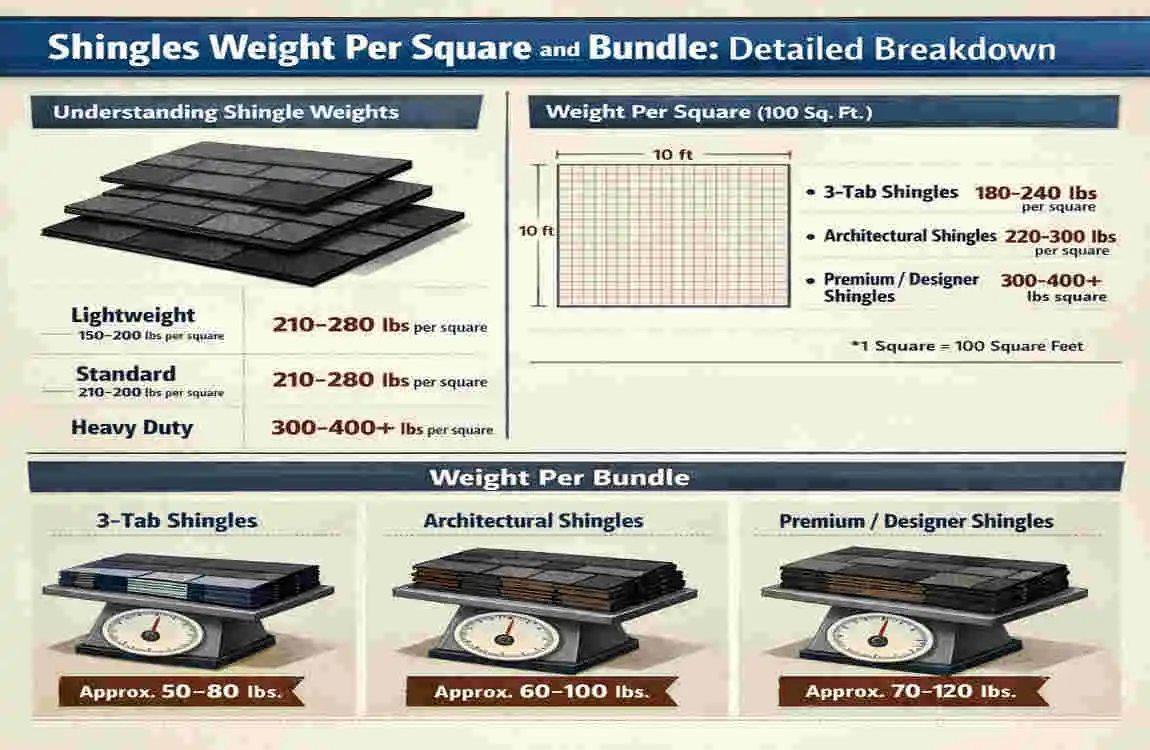
In roofing terminology, a “square” is a unit of area measurement.
- 1 Square = 10 feet by 10 feet.
- 1 Square = 100 square feet.
- 1 Square ≈ 9.3 square meters.
When we talk about the weight per square, we are talking about the total weight to cover that 9.3 square meter area.
- Asphalt Weight per Square: 90 kg to 180 kg.
- Metal Weight per Square: 200 kg to 400 kg.
The Bundle Calculator
Shingles are sold in packages called bundles. You usually need 3 bundles to cover 1 Square.
Here is a simple formula to calculate the total weight of your order:
Total Weight (kg) = Total Bundles × Weight per Bundle
Regional Example: Let’s look at a typical roofing project in Lahore. The hot climate there favors lighter-colored, lighter-weight shingles that absorb less heat. If you are roofing a standard house, you might buy 3-tab shingles.
- If you need 50 bundles.
- Each bundle weighs 10 kg.
- Your total load is 500 kg.
Pro Tip: Always double-check the manufacturer’s spec sheet. Online calculators are great, but the package label is the ultimate truth.
Weight per Square by Type Table
Type Weight per Square (kg) Bundles per Square
Asphalt (Standard) 90 – 110 3
Asphalt (Arch.) 150 – 180 3 – 4
Metal 200 – 400 varies
Factors Influencing House Shingles Weight in KG
Why does one bundle of asphalt shingles weigh 10 kg while the one next to it weighs 15 kg? They look the same, right? Not exactly. Several factors determine the product’s density and weight.
Material Density and Composition
This is the biggest factor. Asphalt is naturally heavy. However, recycled synthetic materials used in composite shingles are engineered to be lightweight. If you choose a “green” eco-friendly shingle, it will likely be lighter than a traditional petroleum-based one.
Thickness and Layers
Think about a piece of paper versus a piece of cardboard.
- Impact Resistance: High-quality shingles designed to resist hail or heavy debris are thicker. This added thickness can increase the weight by 20% to 30%.
- Architectural Style: To get that “3D” look, manufacturers laminate two layers of shingle together. You are putting two roofs on at once, which doubles the weight.
Add-ons and Granules
The rough, sandpaper-like surface on a shingle isn’t just for looks. Those are ceramic granules.
- Algae Resistance: Many modern shingles have copper-coated granules to stop algae growth (those ugly black streaks). These specialty granules can add about 0.5 kg per square meter.
Climate Adaptations
If you live in a windy area, you need “wind-rated” shingles. These often have a heavier adhesive strip and a reinforced mat to stop them from flying off in a gale. These adaptations can make the shingle 10% to 15% heavier.
DIY Tip:
If you are buying locally, go to the hardware store and physically lift a bundle. If you struggle to lift one bundle, remember that you (or your workers) will have to carry that weight up a ladder dozens of times!
How to Calculate Total Roof Shingles Weight in KG
Now that we have the theory, let’s do the math. You don’t want to order a truck that is too small, or overload your roof.
Step-by-Step Calculation Guide
Follow these four steps to get a precise number.
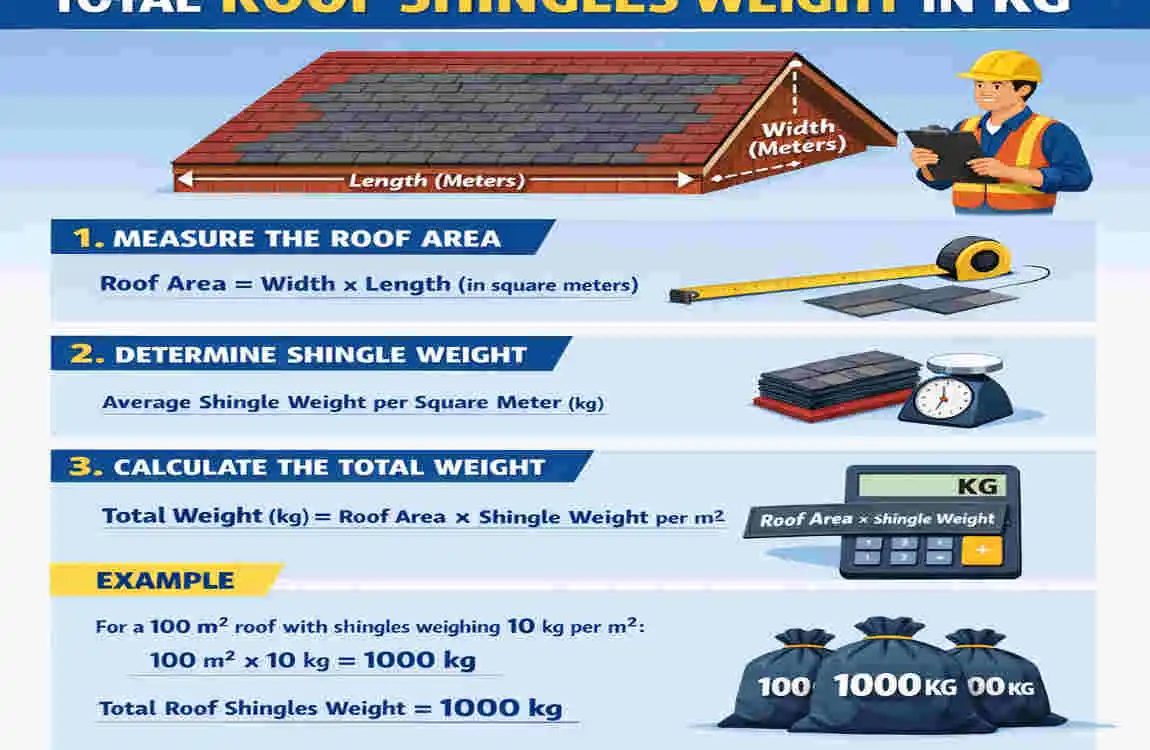
Step 1: Measure Your Roof Area Measure the length and width of your roof. Multiply them to get the area in square meters.
- Note: If you measure the floor of your attic, you must multiply that number by a “pitch factor” to account for the slope of the roof. Steep roofs have more surface area!
Choose Your Shingle Type Select your material and find the “Weight per Square Meter” from the tables above.
The Magic Formula Use this calculation:
Total KG = (Area in sqm × Weight per sqm) + 10% Waste
Why add 10%? You will have to cut shingles to fit around chimneys, vents, and edges. That cut material is waste, but you still have to buy it and transport it.
Don’t Forget Underlayment Shingles don’t sit directly on the wood. There is a layer of felt or synthetic underlayment.
- Add roughly 1 to 2 kg per square meter for this layer.
Real World Example
Let’s say you have a 150 sqm sloped roof and you chose Architectural Asphalt Shingles (which weigh 5 kg/sqm).
- Base Weight: 150 sqm × 5 kg/sqm = 750 kg.
- Add Waste (10%): 750 kg + 75 kg = 825 kg.
- Add Underlayment: 150 sqm × 1 kg = 150 kg.
- Total Project Weight: 825 kg + 150 kg = 975 kg.
You are looking at nearly a metric tonne of material!
Why Shingles Weight Matters for Your Home Project
You might be thinking, “The roof is strong, it can take it.” But weight impacts more than just the structure.
Structural Load
Every roof has a “live load” and “dead load” limit.
- Dead Load: The weight of the materials permanently attached (shingles).
- Live Load: Temporary weight (snow, workers walking on it). Most residential rafters are designed for a max load of 10-20 kg per square meter. If you put heavy slate on a roof designed for lightweight metal, you risk the roof sagging or collapsing.
Transport Logistics
This is where the Lahore example comes back in. In Punjab and many other regions, trucks are subject to strict weight limits (e.g., 10-tonne limits on certain roads).
- If your order is too heavy, you might need two trucks instead of one.
- This doubles your delivery fee.
Installation Safety
Lighter shingles are safer to install.
- Carrying 15 kg bundles up a ladder all day causes fatigue.
- Fatigue leads to accidents.
- If you are doing a DIY project, choosing a lighter composite shingle can make the job 50% faster and much safer.
Cost Savings
Weight equals money in shipping. Shipping companies charge by the kilogram.
- Heavier shingles can cost Rs. 50-100 per kg extra in shipping fees over long distances.
- By optimizing the weight, you save cash before the project even starts.
Common Mistakes and Pro Tips
To wrap up, let’s look at how to avoid the pitfalls that catch most homeowners off guard.
The “Underestimation” Mistake The most common error is underestimating waste. People calculate the exact area of the roof and order exactly that amount.
- Result: You run out of shingles with 95% of the roof done.
- Fix: Always add 10-15% for waste.
Ignoring the Pitch Multiplier A steep roof is much larger than a flat one.
- Mistake: Measuring the house’s footprint on the ground and assuming the roof area is the same.
- Fix: Use a pitch multiplier (usually 1.2x or 1.3x for steep roofs) to get the true area.
Skipping Permits If you are upgrading to a heavy material like slate or Premium architectural shingles, check your local building codes.
- Tip: You may need a permit that proves your house frame can support the extra weight.
Pro Tip: The Sample Test Before you order 100 bundles, buy one. Take it home. Lift it. See if you can comfortably carry it. If you can’t, reconsider the material or hire professionals with a mechanical lift.
FAQ: House Shingles Weight Questions Answered
Here are the quick answers to the most specific questions people ask.
Q: How much do house shingles weigh in kg per square meter? A: Generally, they weigh between 2.5 kg to 6 kg per square meter for asphalt. Metal is similar, while slate can be up to 40 kg.
Q: What is the asphalt shingles weight per bundle in kg? A: A standard 3-tab bundle weighs roughly 8-10 kg, while architectural bundles weigh 12-18 kg.
Q: Are metal shingles heavier than asphalt? A: Surprisingly, no. Steel and aluminum shingles are often lighter than thick architectural asphalt shingles because the metal is stamped very thin.
Q: Is there a shingles weight calculator for sloped roofs? A: Yes! You multiply your measured area by the manufacturer’s weight per square meter, then multiply by your slope factor (usually 1.1 to 1.3).
