
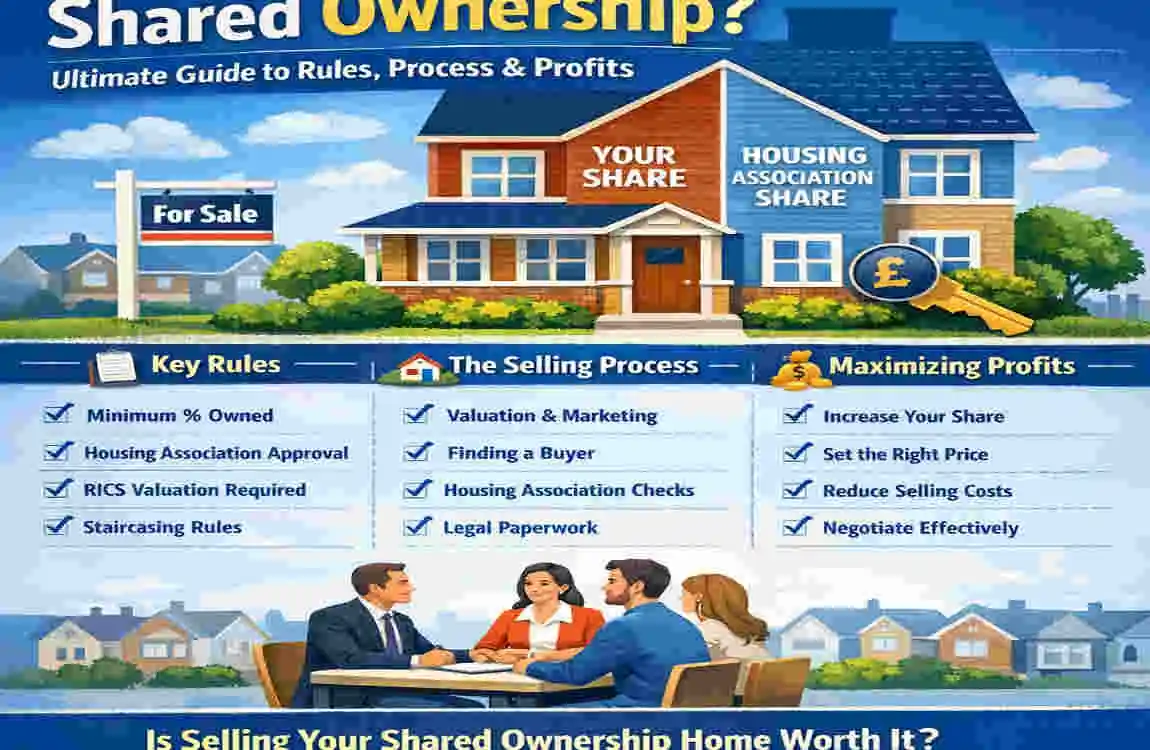
You are sitting at your kitchen table, staring at the walls of the home you worked so hard to get into. Maybe you’ve outgrown the space, you’re moving for a new job, or perhaps you’ve met a partner and want to buy a place together. But then, a nagging question pops into your head: “Can I sell my house as shared ownership without getting tangled in red tape or losing a fortune?”
Shared ownership has been a lifeline for over 200,000 households across the UK, helping people get a foot on the property ladder who otherwise couldn’t afford a deposit. But because this scheme is designed to help people enter the market, the exit strategy is slightly more controlled.
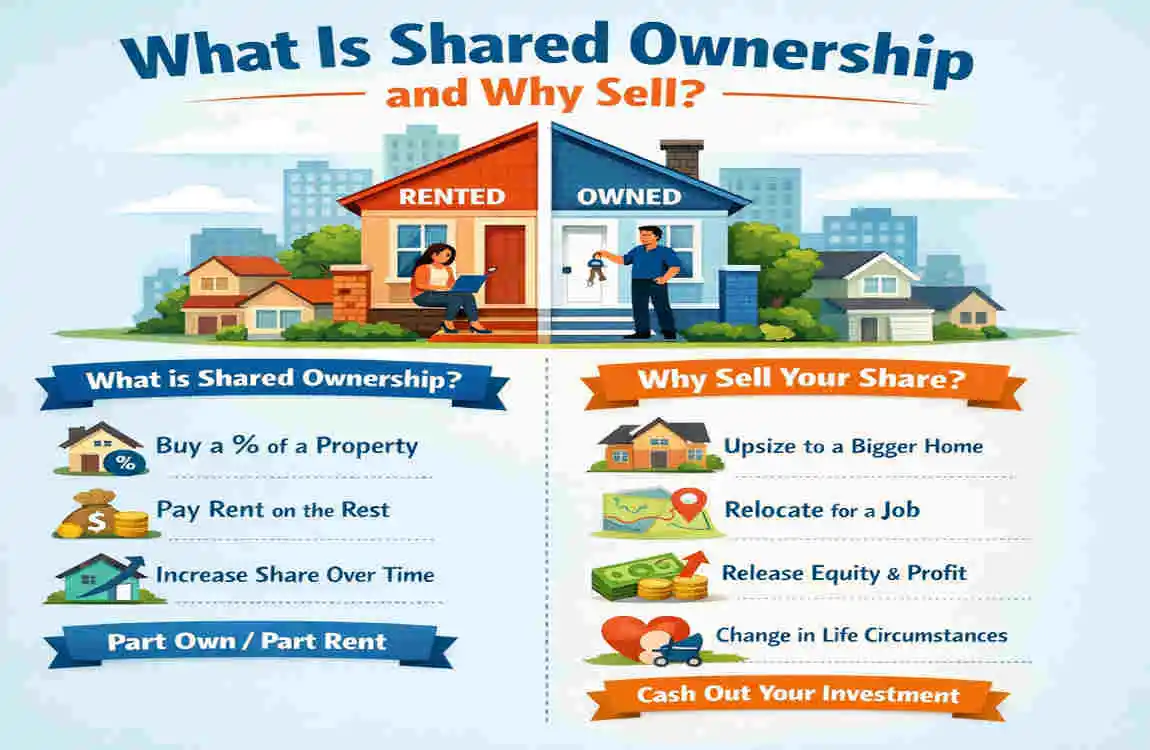
What Is Shared Ownership and Why Sell?
Before we dive into the “how,” let’s quickly revisit the “what.” Understanding the mechanics of your lease is crucial when you decide it is time to move on.
Shared Ownership is a cross between buying and renting. You purchased a share of your home (usually between 25% and 75%), and you pay a subsidised rent on the remaining share to a Housing Association or a registered provider. Because the Housing Association still owns a chunk of the building, they have a vested interest in who buys it next.
A Brief History and Its Popularity
The scheme has evolved significantly over the years. From the early days of “part-buy, part-rent” initiatives to the recent extensions of the Help to Buy era, shared ownership has become a staple of the UK housing market. It was designed to provide stability. Unlike private renting, where a landlord can evict you, shared ownership offers a secure lease (often 99 or 125 years, though newer leases are often 990 years).
But a secure lease doesn’t mean you are stuck there forever.
Why Do People Sell?
If you are asking, “Can I sell my house as shared ownership?” you likely have a good reason. Here are the most common triggers we see:
- Outgrowing the Space: What was perfect for a single professional might be too tight for a growing family.
- Staircasing to Full Ownership: Some people sell their share to buy a freehold property on the open market—essentially “staircasing” their way out of the scheme entirely by moving house.
- Relocation: Life happens. New jobs, family needs, or a desire for a different scenery often dictate a move.
- Cashing in Equity: If property prices have risen since you bought, your share is worth more. Selling allows you to unlock that cash.
It is important to understand that selling isn’t just about handing back the keys. You are selling a valuable asset. The process is designed to ensure that the home goes to another person who needs affordable housing, which brings us to the unique rules of the game.
Can I Sell My House as Shared Ownership? Eligibility Rules Explained
So, you want to sell. Is there anything stopping you? Generally, no, but there are strict criteria you must adhere to. This isn’t the Wild West of the open market; it’s a regulated environment.
The “Nomination Period”
This is the golden rule of selling shared ownership house rules. You generally cannot simply list your home on Rightmove or Zoopla immediately.
Your lease almost certainly contains a clause that gives your Housing Provider a “Right of First Refusal.” This is often called the Nomination Period. Typically, this lasts for 4 to 8 weeks (though newer leases might be shorter).
During this time, the Housing Association has the exclusive right to find a buyer for your home. They look through their list of eligible applicants—people who meet the income caps and shared ownership criteria—and try to match them with your property.
Minimum Ownership Period
You can sell at any time after you have completed your purchase. However, most providers want to see that you have owned the property for a reasonable amount of time. If you sell very quickly (e.g., within months), you might face questions about whether you bought the home with the intent to live in it.
However, the general rule is: If you own the share, you can sell the share.
Restrictions and Conditions
There are a few hurdles that can slow you down or block you temporarily:
- Rent Arrears: You cannot sell if you owe the Housing Association rent or service charges. These accounts must be cleared first.
- Negative Equity: While rare in a rising market, if your home’s value has dropped and the sale price won’t cover your mortgage redemption and the selling fees, the Housing Association may refuse the sale unless you have the cash to make up the difference.
- 100% Ownership Exception: If you have already “staircased” (bought more shares) to 100% ownership, these restrictions usually disappear. You become a standard freeholder (or leaseholder of the whole flat) and can sell on the open market immediately.
To help you check your standing, here is a quick eligibility checklist:
Table: Shared Ownership Resale Eligibility Checklist
Rule Yes/No Details
Owned for 2+ years . Yes, while not a strict law, it is the practical norm. Selling sooner is possible but rare due to costs.
Nomination Period Active: Yes. You must offer it to the provider first for 4-8 weeks.
Rent/Service Charge Arrears No. You must be up to date with all payments before the process starts.
In Negative Equity, No, the valuation must be high enough to pay off your mortgage and fees.
100% Staircased No. If you own 100%, you ignore the provider and go to the open market.
Step-by-Step Process: How to Sell Your Shared Ownership House
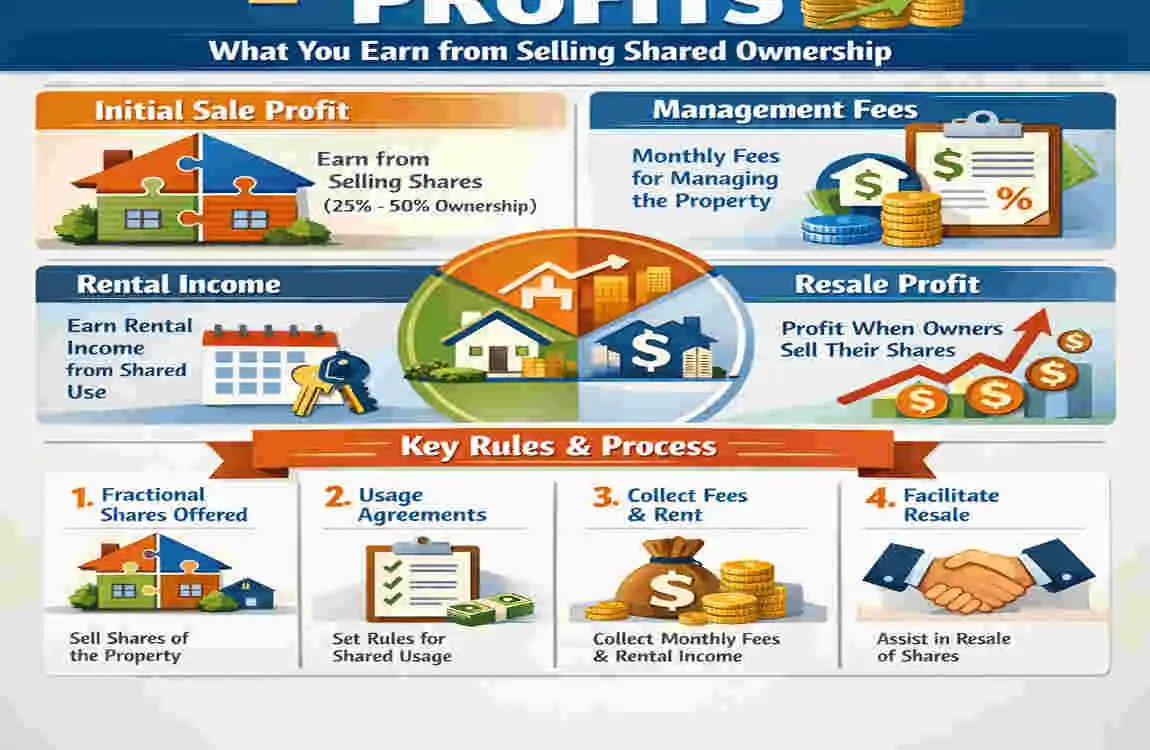
Navigating the shared ownership resale process can feel like juggling. You are dealing with your buyer, your solicitor, the Housing Association, and their solicitors.
To make this easier, let’s break it down into a chronological timeline.
Notify Your Housing Provider (Week 1)
Your journey starts with a phone call or an email. You need to tell your Housing Association that you intend to sell formally. They will send you a “Resale Instruction Pack.”
This pack will detail their fees (yes, they charge for the admin of selling) and the specific terms of your lease. Read this carefully. It will tell you exactly how long they have to find a buyer before you can go to an estate agent.
Get a RICS Valuation (Week 2-3)
You cannot just guess the price of your house, and you cannot rely on a local estate agent’s “market appraisal.”
You are required to get a valuation from a Royal Institution of Chartered Surveyors (RICS) qualified surveyor.
- Why? Because you are selling a share of a publicly funded asset. The price must be fair and accurate to protect the incoming buyer and the public purse.
- Cost: Expect to pay between £300 and £500.
- Result: This valuation sets the maximum price you can sell your share for. You cannot sell for more than this valuation.
The Marketing Period (Weeks 4-12)
Once the valuation is in, the Housing Association gets to work. They will list your property on shared ownership websites (like Share to Buy) and send alerts to their database.
- The Good News: They often have a waiting list of eager buyers.
- The Bad News: You have little control over how they market it. The photos and descriptions might be basic.
- Your Role: Keep the house tidy for viewings!
Nomination or Open Market?
Suppose the provider finds a buyer within the 8-week window. Great! You proceed with them.
If they fail to find a buyer within that time, you are given permission to instruct an estate agent and sell on the Open Market. This is a pivotal moment.
- Open Market Sale: You can now sell to anyone (investors, cash buyers, etc.) through a process called “Simultaneous Staircasing.” This means the buyer purchases 100% of the home; you use their money to pay off your share and the Housing Association’s share simultaneously. This widens your pool of buyers significantly.
Find a Buyer and Complete Sale
Once a buyer is found (either by the provider or your agent), the lawyers take over.
- Solicitors: You need a solicitor experienced in shared ownership. The paperwork is heavier than a standard sale because of the leasehold management packs.
- Timeline: This is the slow part. Expect it to take 3 to 4 months from finding a buyer to the exchange of contracts.
Post-Sale Profits Calculation
On completion day, your solicitor receives the money, pays off your mortgage, pays the Housing Association any arrears or fees, and transfers the remaining profits from selling your shared ownership home to your bank account.
Pro Tip Box: Patience is Key! The average time to sell a freehold house is about 3 months. For shared ownership, allow 4 to 6 months. The extra layer of administration between the Housing Association and two sets of solicitors inevitably adds time. Don’t book your moving van until you have exchanged contracts!
Rules and Restrictions When Selling Shared Ownership Property
We touched on eligibility, but let’s deep-dive into the specific rules that can trip you up. Understanding the nuances of shared ownership selling rules in the UK protects you from unexpected costs.
The Right of First Refusal (The Golden Handcuff)
We mentioned this, but it is worth repeating: You cannot bypass the Housing Association initially. If you try to list with an estate agent on day one, you will be in breach of your lease, and the sale will likely fall through later when the lawyers notice.
Leasehold Information Packs (LPE1)
When you sell a leasehold property (which is shared ownership), your buyer’s solicitor will demand a “Management Pack.” This document contains info on service charges, fire safety, planned maintenance, and insurance.
- The Catch: Your Housing Association charges for this pack. It can cost anywhere from £200 to £400. You usually have to pay this upfront before the sale can progress.
Clause Restrictions on Improvements
Did you renovate the kitchen or add a conservatory?
- The Rule: If you made improvements without written permission from the Housing Association, they might not be included in your RICS valuation. This means you won’t get any money back for them.
- The Fix: If you did get permission, the Surveyor essentially provides two values: one for the home as standard, and one including your improvements. You sell based on the higher value, ensuring you get the profit from your hard work.
Tax Implications
- Capital Gains Tax (CGT): Generally, if this has been your main home (Principal Private Residence), you are exempt from CGT.
- Stamp Duty (SDLT): Your buyer pays this, not you. However, if you are staircasing to 100% to sell simultaneously, there can be complex Stamp Duty implications. Always ask your solicitor.
Regional Differences
Be aware that rules can vary slightly.
- London: The market moves faster, but service charges are higher.
- Rural Areas: Some rural shared ownership schemes have “Section 106” restrictions that limit buyers to people who already live or work in the local village. This can shrink your buyer pool significantly.
Warning List: 5 Common Mistakes to Avoid
- Overpricing: You cannot sell above the RICS valuation.
- Ignoring the Lease: Failing to check the specific nomination period length (it varies from 4 to 12 weeks).
- Cheap Solicitors: Using a lawyer who doesn’t understand shared ownership will delay your sale by weeks.
- Forgetting Fees: Not budgeting for the Housing Association’s marketing and admin fees.
- Messy Paperwork: Losing your record of “approved improvements.”
Maximising Profits: What You Earn from Selling Shared Ownership
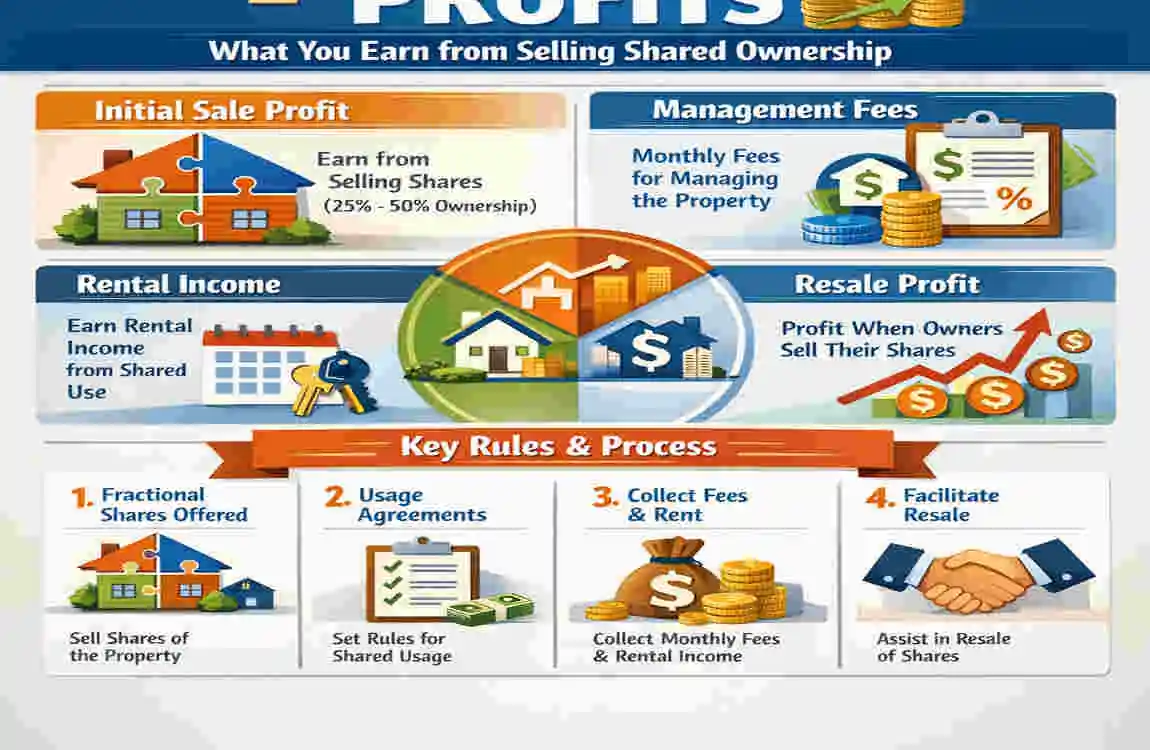
Now for the exciting part. Money. You want to know if your investment paid off.
Calculating your profits from selling a shared ownership home requires a specific formula because you only own a percentage of the equity.
The Equity Formula
Here is how you work it out:
$$ \text{Gross Profit} = (\text{Current Full Market Value} \times \text{Your Share %}) – \text{Your Outstanding Mortgage} $$
From that Gross Profit, you must deduct your costs (fees, legal, etc.) to find your Net Profit.
A Real-Life Example
Let’s imagine a scenario to make this crystal clear.
- The Past: You bought a 50% share of a flat 5 years ago. The full value was £200,000. Your share cost £100,000. You put down a £10,000 deposit and took a £90,000 mortgage.
- The Present: You get a RICS valuation today. The market has gone up! The full value is now £300,000.
- The Mortgage: Over 5 years, you have paid off some capital. You now owe £85,000 to the bank.
The Calculation:
- Current Value of Your Share: 50% of £300,000 = £150,000.
- Equity: £150,000 (Value) – £85,000 (Mortgage) = £65,000.
So, in this scenario, you walk away with £65,000 in equity (before fees). That is significantly more than your original £10,000 deposit!
Factors That Boost Value
Your profit relies heavily on the Full Market Value increasing.
- Market Trends: If house prices in your area rise by 10%, the value of your share rises by 10% too.
- Improvements: As mentioned, approved upgrades (new windows, central heating) add value directly to your share calculation.
Can You Lose Money?
It is possible, though less common, in the long term. If the market crashes and the property value drops below what you paid, you could face “negative equity.” Because you still have to pay the RICS fee and legal costs, selling in a dip is risky.
Chart Idea: Profit Scenarios Table (Based on 50% Share)
Market Change Orig. Value New Value Your Share Value Mortgage Owed Gross Equity
High Growth £200k £350k £175k £85k £90k
Moderate £200k £250k £125k £85k £40k
Stagnant £200k £200k £100k £85k £15k
Costs Involved in Selling Your Shared Ownership House
It costs money to sell money. To avoid a shock at the end of the process, you need to budget for these items. These are estimates, but they reflect the current UK market.
RICS Valuation (£300 – £600)
This is non-negotiable and paid upfront. Note that valuations only last for 3 months. If the sale drags on, you might pay a smaller fee (approx £100) to extend it.
Housing Association Marketing Fee (£300 – £1,500)
If the provider finds your buyer during the nomination period, they charge a fee. This is usually cheaper than a high street estate agent, but check your lease. Some are fixed fees; some are percentages.
Legal Fees (£1,200 – £2,000)
Shared ownership conveyancing is complex. Do not go for the cheapest online quote. You need a specialist. This fee covers their time, bank transfer fees, and ID checks.
Leasehold Information Pack (£200 – £400)
Paid to the management company to provide the necessary data to the buyer.
Energy Performance Certificate (EPC) (£60 – £100)
You legally need a valid EPC to market the property. They last for 10 years, so check if your old one is still valid.
Estate Agent Fees (1% – 2% + VAT)
Only applicable if the Housing Association fails to find a buyer. If you go to the open market, you will pay the agent a percentage of the full sale price (usually), not just your share. This is a crucial distinction to check.
Comparison Table: Shared Ownership vs. Freehold Selling Costs
Cost Item: Shared Ownership Sale, Standard Freehold Sale
Valuation RICS Required (£400+) Estate Agent (Free)
Marketing Provider Fee or Agent Fee Agent Fee Only
Legal Pack Management Pack (£300+) Not usually required
Solicitor Higher (Complex Lease) Standard Rate
Shared Ownership vs. Other Selling Options: Which Is Best?
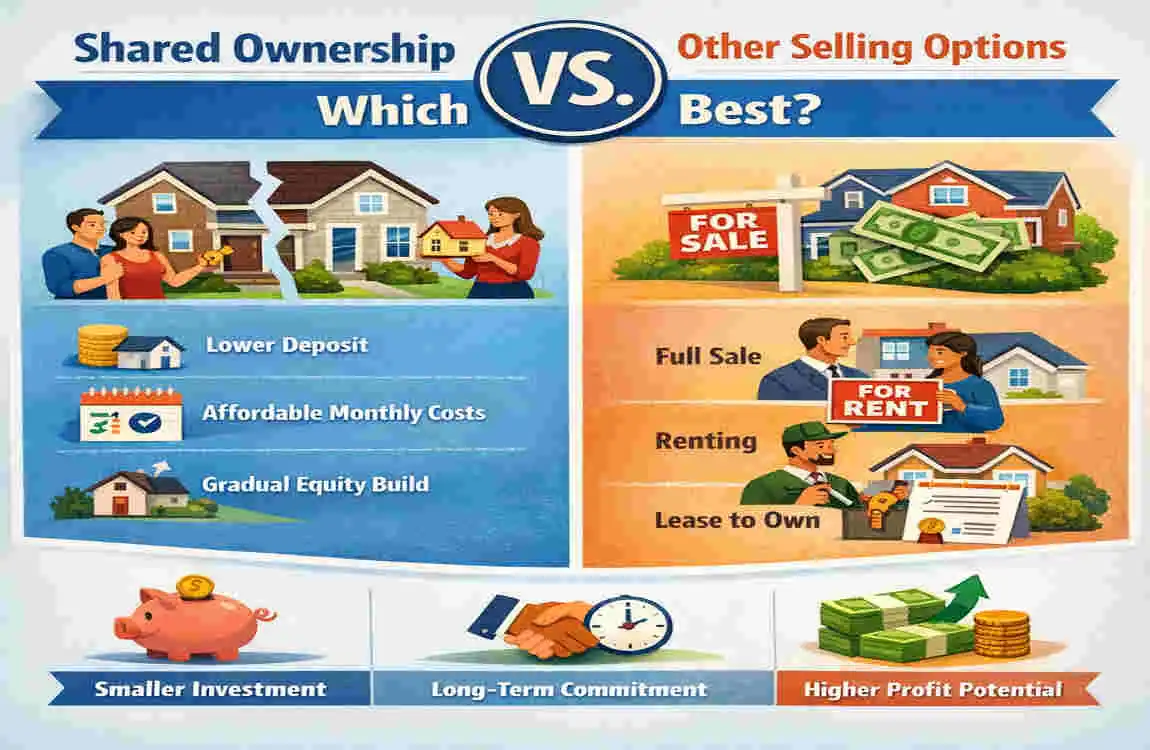
You actually have two main choices when selling. You can sell your share as it is, or you can staircase to 100% and sell the whole home. Which is right for you?
Option A: Selling the Share (Resale)
- Best for: People with limited savings (no money to buy the rest of the shares) or those who want a quicker exit via the provider’s waiting list.
- Pros: You don’t need to raise extra mortgage finance.
- Cons: Limited to buyers who meet shared ownership criteria.
Option B: Simultaneous Staircasing (Sell 100%)
- Best for: Maximising profit if your home has increased significantly in value and you want to sell to the open market (e.g., to a landlord or cash buyer).
- Pros: You get the full open market value—no restriction on who can buy.
- Cons: More complex legal work. You legally “own” the whole home for a split second, which can trigger Stamp Duty issues.
OptionFlexibilityProfitsSpeedBuyer Pool
Share Resale Low Medium Slow Restricted
Simultaneous Staircasing High High Medium Unlimited
FAQs: Answering Your Shared Ownership Selling Questions
You may still have a few specific questions. Here are the answers to the most common queries homeowners ask.
Can I sell my house as shared ownership immediately?
Technically, yes, unless your lease has a specific “lock-in” clause (which is rare). However, selling within months of buying will lose you money on fees, and providers may scrutinise your reasons.
What happens if I can’t find a buyer?
If the Housing Association can’t find a buyer in the nomination period, and your Estate Agent can’t find one on the open market, you can lower the price. However, you cannot go lower than a valid valuation without permission.
Can I sell my share to a family member?
Usually, yes, provided they meet the eligibility criteria (income caps, first-time buyer status, etc.) and pass the Housing Association’s checks.
Who pays for the repairs before selling?
You do. As the leaseholder, you are responsible for the interior condition. If the RICS surveyor notices damage, it will lower your valuation.
Does the Housing Association buy the property back?
Rarely. In almost all cases, they facilitate the sale to a new person. They are not obligated to buy it back from you.
What if my home has Cladding issues (EWS1)?
This is a major issue in the UK. If your building requires an EWS1 form and doesn’t have one (or has a failing rating), selling will be very difficult, as buyers cannot get mortgages. Speak to your provider immediately about their remediation plans.
Can I sublet instead of selling?
Generally, no. Shared ownership leases prohibit subletting. Exceptions are sometimes made for “exceptional circumstances” (e.g., working away for a year for the military), but you cannot just turn it into a rental property.
Is it harder to sell a shared ownership home?
It involves more paperwork, but demand is high. Because shared ownership homes are cheaper to get into, there is often a long line of first-time buyers waiting for properties just like yours.
