

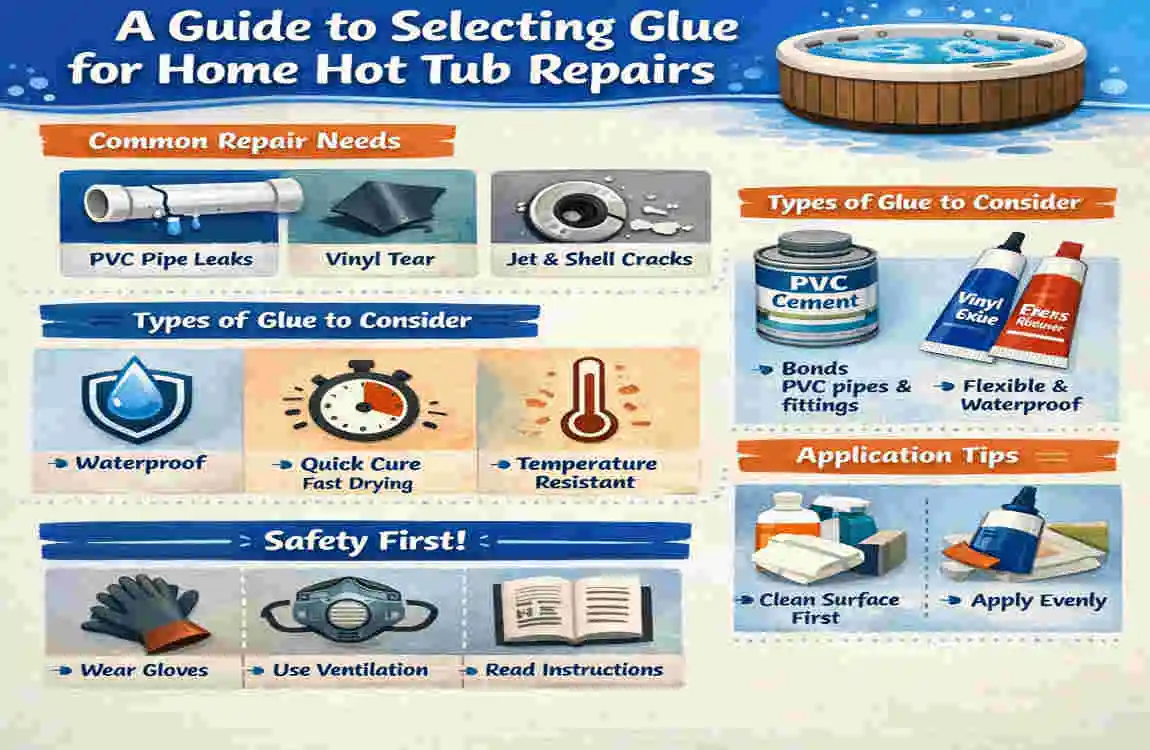
If you own a hot tub, you already know how frustrating a leak can be. One day everything works fine, and the next day you notice dripping water, a wet cabinet, a drop in pressure, or a pump that sounds a little wrong. A small leak may seem harmless at first, but in a hot tub system, even a tiny problem can escalate quickly.
That is why choosing the right adhesive matters so much. Hot tub plumbing is not like a regular household repair. It deals with warm water, constant vibration, chemical exposure, pressure, and tight fittings. A glue that works on a craft project or a quick household fix may fail fast in this kind of environment. In some cases, the wrong product can make the problem worse by creating a weak bond, clogging the line, or failing under heat.
Understanding Spa Plumbing Materials
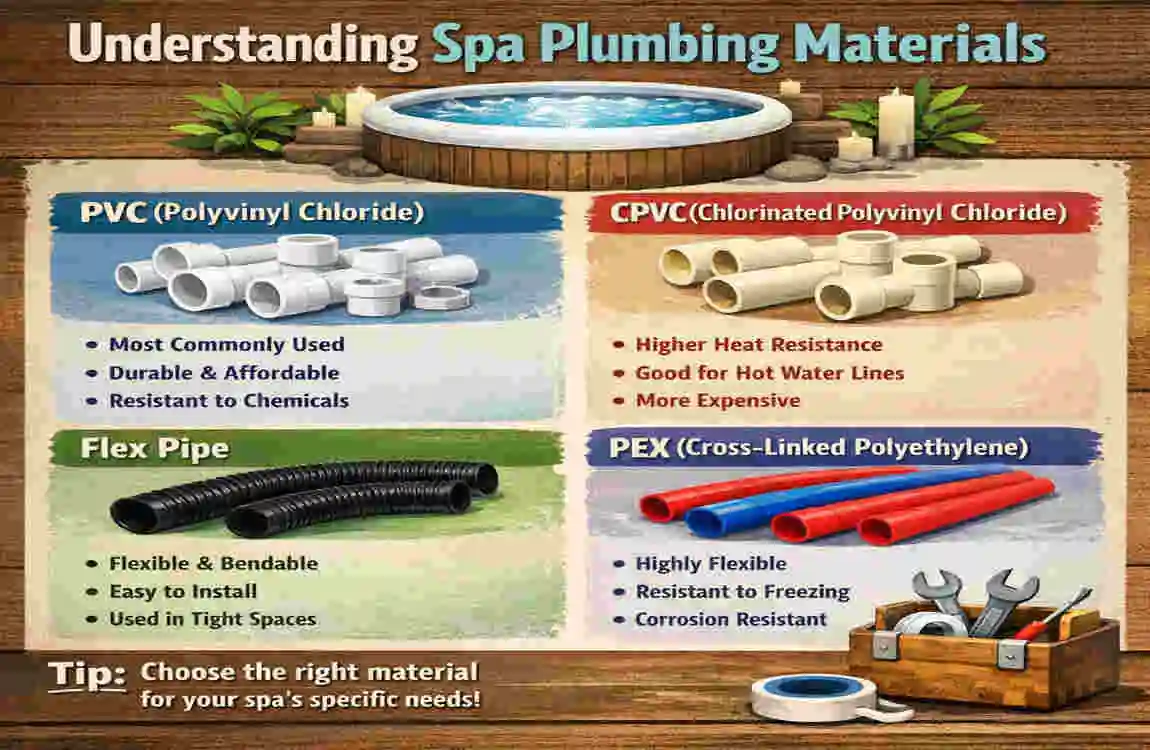
Before you pick any glue, you need to understand what kind of plumbing you are dealing with. Hot tub systems often use multiple types of pipes or hoses, and each reacts differently to adhesive.
Standard PVC Pipe vs. Flexible PVC Hose
Most hot tubs use PVC-based plumbing, but that does not mean all spa plumbing is the same.
Standard PVC pipe is rigid. You will often see it labeled as Schedule 40 or Schedule 80. These names refer to the wall thickness and pressure rating. Schedule 40 is common in many spa systems, while Schedule 80 is thicker and stronger. Both can be glued with the right PVC cement, but the fit has to be clean and tight.
Flexible PVC hose is different. It can bend more easily, which makes it useful in tight cabinet spaces and around corners. Many hot tub manufacturers use it in sections where rigid pipe would be harder to install. Flexible PVC still needs proper bonding, but it may require a product that better withstands movement and vibration than basic hardware-store cement.
That difference matters because the wrong adhesive may bond poorly to one material and hold well on another. If you are looking at your plumbing and wondering why one joint looks rigid while another feels softer or more flexible, that is a sign you should identify the material before repairing.
Why Spa Plumbing Is Harder on Glue
Hot tub plumbing lives a rough life. It is not just carrying water. It is handling:
- Heat from warm water
- Constant vibration from pumps and motors
- Pressure changes when jets run
- Chemical exposure from chlorine or bromine
- Expansion and contraction as the system heats and cools
All of that puts stress on joints. A glue that might work fine in a dry indoor project can fail quickly when exposed to repeated pressure and heat.
This is why standard PVC glue from the hardware store is not always enough. Many general-purpose PVC cements are made for basic home plumbing, not for spa systems that move, flex, and stay exposed to treated water. In a hot tub, the bond must remain strong even under stress.
Chemical Resistance Matters Too
Hot tub water usually contains chlorine, bromine, or other treatment chemicals. Those chemicals help keep the water clean, but they also put extra demand on the plumbing materials and adhesives.
A glue that is not chemically resistant can break down over time. That breakdown may happen slowly, which makes it even trickier. The repair may look fine at first, then start leaking weeks or months later.
That is why the best answer to what glue to use on hot tub home plumbing is usually a product made for pressure-rated PVC systems in wet, chemically treated environments. You want something that forms a real chemical bond, not just a sticky surface seal.
Top Recommendations: What Glue to Use
If you are trying to fix a spa plumbing leak, the safest place to start is with a specialized PVC cement made for hot tub and pool systems. These products are designed for pressure, moisture, and heat.
Primary Recommendation: Specialized Blue PVC Cements
One of the most trusted options for spa plumbing is a blue PVC cement, often called “hot blue glue” in repair circles. Products in this category are commonly used for spa manifolds, fittings, elbows, unions, and pressure joints.
Why is this type of glue so popular?
Because it is made to create a strong solvent weld. That means it does more than sit on the surface. It slightly softens the PVC and fuses the two parts as it cures. When done correctly, the joint becomes one solid connection.
That is exactly what you want in a hot tub. A simple surface adhesive might hold for a while, but a solvent weld is built for the pressure and movement found in spa plumbing.
Blue PVC cement is usually preferred because it is:
- Strong enough for pressure fittings
- Designed for wet spa environments
- Easy to see during application
- Helpful for both professionals and DIY owners
If you are bonding a rigid PVC fitting or a manifold connection, this is usually the first product to consider.
When to Use Primer
Another question that comes up a lot is whether you need purple primer.
The short answer is: sometimes yes, sometimes no.
Primer is used to clean and soften the PVC surface before cement is applied. It helps the glue penetrate the plastic and create a better bond. In many plumbing systems, especially older or heavily used ones, primer is a smart choice because it improves reliability.
You may want primer when:
- The pipe looks dirty, aged, or slightly oxidized
- You want the strongest possible bond
- The fitting is part of a critical pressure joint
- You are working with rigid PVC that has been exposed to heat and chemicals
Some one-step PVC products claim to be no-primer formulas. These can be convenient, and in some cases they work well for clean, properly fitted joints. But for hot tub plumbing, many people still prefer primer because it adds an extra layer of confidence.
If you are repairing a spa system that has already failed once, using primer is often the safer route. A little extra prep now can save you from having to tear the system apart again later.
Alternatives for Non-Pressure Leaks
Not every leak in a hot tub requires regluing a pressure joint. Some problems are smaller and more surface-level.
For non-structural cracks, epoxy putty can be useful. It is often used for temporary or semi-permanent patching on small cracks, pinholes, or damaged spots where full pipe replacement is not practical right away.
Specialized silicone sealants may also help in some non-pressure situations, such as sealing around a component housing or patching a low-stress area. But these are not the right fix for a true plumbing joint under pressure.
Think of it this way:
- PVC cement is for joining pipe and fittings
- Epoxy putty is for small surface repairs
- Silicone sealant is for certain sealing jobs, not major pressure bonds
If water is escaping from a glued joint under pressure, a sealant is usually not the answer. You need a proper plumbing bond.
What to Avoid
This part is very important. Do not use regular household hot glue, craft glue, or random multi-purpose adhesive for spa plumbing repairs.
These products are not designed for:
- Constant water exposure
- High heat
- Pressure
- Chemical treatment
- Long-term bonding on PVC plumbing
They may seem convenient, but they usually fail fast. In some cases, they can even trap moisture or interfere with a real repair later.
You should also avoid using adhesives that are not clearly labeled for PVC plumbing, pressure systems, or wet environments. If the label does not mention those uses, it probably is not the right choice for a hot tub.
Quick Comparison Table
Adhesive Type Best Use Strength Main Advantage Main Limitation
Blue PVC Cement Spa fittings, manifolds, pressure joints High Strong chemical bond Needs proper prep and curing
PVC Primer + Cement Critical rigid PVC repairs Very high Best bond quality Takes more time and care
No-Primer PVC Cement Clean, tight-fitting joints Medium to high Faster application Not ideal for every repair
Epoxy Putty Small cracks, surface patches Medium Easy to mold in place Not for pressure joints
Silicone Sealant Non-structural sealing jobs Low to medium Flexible and water resistant Not a real pipe bond
If you remember only one thing from this section, remember this: for pressure-rated hot tub plumbing, use a PVC cement made for spa applications, not a general household adhesive.
Step-by-Step Repair Guide
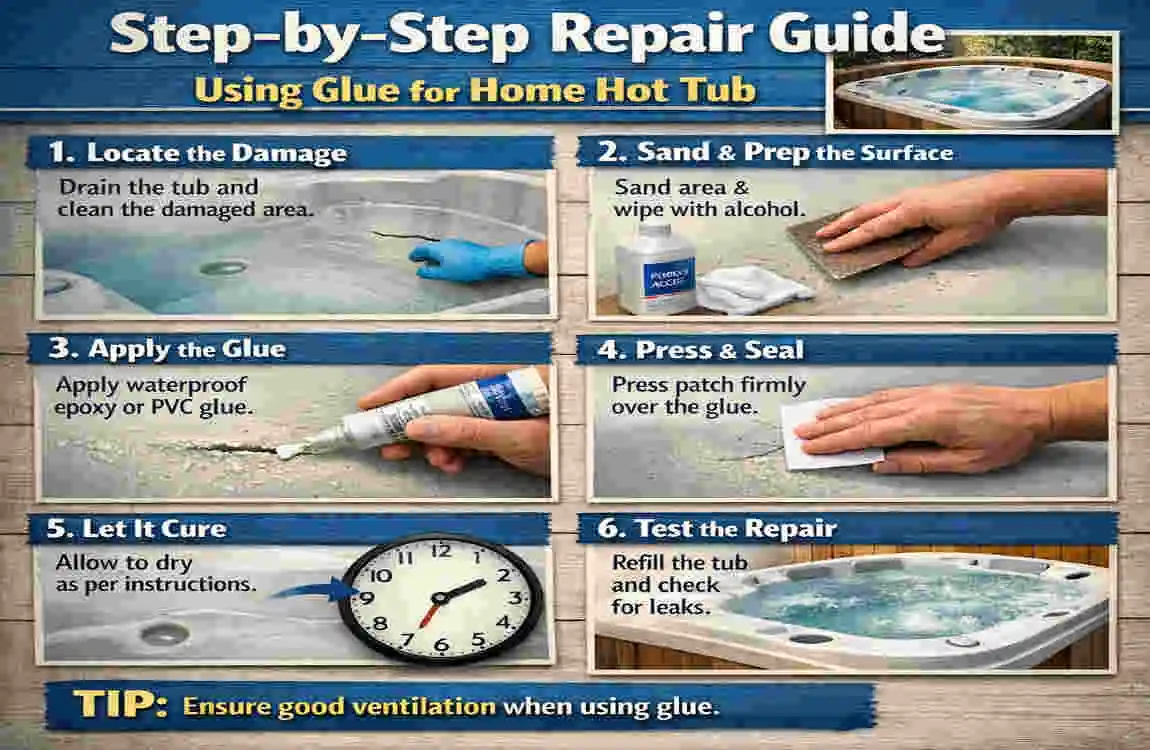
Now let’s get into the practical part. If you are wondering how to actually repair, this section will help you work through it step by step.
Diagnostic Assessment
Before you touch any glue, you need to find the source of the leak.
This sounds obvious, but many people guess wrong. Water can travel along pipes, drip from one point, and show up somewhere else entirely. What looks like a leak at one fitting may actually come from a joint a few inches away.
Start by turning off power to the hot tub. Safety always comes first. Then remove any access panels to clearly see the plumbing. Look for:
- Wet spots
- Mineral buildup
- Cracked fittings
- Loose unions
- Water stains
- Drips around pump connections
- Moisture collecting under the tub base
If possible, dry the area and watch it carefully. Sometimes a small leak only appears when the system is running and pressurized. If you are unsure, run the hot tub briefly and inspect the area again, but only if you can do so safely.
The goal here is to identify the exact failure point. That way, you do not waste time gluing the wrong joint.
Surface Preparation
This is the part many DIY repairs get wrong.
A good bond depends on clean, dry, properly prepped surfaces. If there is dirt, grease, moisture, or old glue residue on the pipe, the new cement may not hold well.
Start by draining or isolating the system as much as possible. Then:
- Wipe away visible water
- Dry the pipe and fitting fully
- Remove dirt, dust, and debris
- Scrape away loose old adhesive if needed
- Make sure the pipe end is smooth and clean
If the pipe has been exposed to hot tub chemicals for a long time, the surface may have a thin film. Clean that off carefully. A clean bond surface gives the cement the best chance to work.
If you are using primer, apply it according to the product instructions. Primer helps prepare the PVC for welding. It does not replace cleaning, though. You still need to remove grime and moisture first.
This step is critical because PVC cement is not like ordinary glue. It works best when the surface is ready to chemically fuse. If the pipe is wet or dirty, the bond can be weak from the start.
Dry Fit Before Gluing
Before you open the cement, do a dry fit.
That means push the pipe and fitting together without adhesive so you can check alignment and depth. This helps you see whether the joint seats fully and whether the pieces line up correctly.
A dry fit is useful because:
- It shows you how the parts should sit
- It lets you mark insertion depth
- It reduces mistakes once glue is applied
- It helps prevent panic during the real bond step
Use a marker to note how far the pipe should insert into the fitting. That way, when you apply cement, you can quickly seat the pipe correctly without guessing.
Apply the Glue Evenly
Now you are ready to apply the adhesive.
If you are using PVC primer and cement, prime first if needed, then apply the cement evenly to both surfaces. Coat the pipe end and the inside of the fitting. You do not need a giant blob. You need full coverage.
A few simple rules help here:
- Apply enough glue to cover the bonding surfaces
- Do not overload the joint
- Work quickly but carefully
- Make sure the cement reaches the full area that will be joined
When the pipe goes into the fitting, twist it slightly as you insert it. This helps spread the cement and reduce dry spots. Then hold it firmly in place for a few seconds so the pipe does not push back out.
A common mistake is leaving a dry patch or failing to fully seat the pipe. That can create weak points that leak later. Another mistake is applying too much glue, which can clog the inside of the pipe. You want a bond, not a blockage.
Check Alignment Right Away
Once the pipe is seated, check the alignment immediately.
Hot tub plumbing usually fits into tight spaces, so it is tempting to ignore a small angle problem. But if the joint is twisted or pushed off-center, that stress may later show up as a crack or leak.
Make sure the fitting is:
- Straight
- Fully seated
- Supported properly
- Not under tension
If a pipe is forced into place and held there under strain, the glue may hold for a while, but the joint is working against itself. Over time, vibration and heat can undo the repair.
Allow Full Curing Time
This step is just as important as the glue itself.
A joint may feel firm long before it is fully cured. That does not mean it is ready for pressure.
Curing time depends on the product, temperature, humidity, pipe size, and whether primer was used. In general, wait the full recommended cure time before refilling or pressurizing the system. If the label says longer is better, follow that advice.
Do not rush this part. Many repeat leaks happen because the system was turned back on too soon. The bond needs time to become strong enough for hot water and pressure.
If you are working in a cooler space, expect the cure to take longer. If the joint is large or the plumbing is under load, be patient. A careful repair is worth the wait.
Refill and Test Carefully
After curing, refill the system slowly and inspect the repair area closely.
Watch for:
- Seeping water
- Drips at the edge of the joint
- Moisture under the fitting
- Unusual pump noise
- Pressure loss
If the joint stays dry during the first test, let the hot tub run long enough to confirm that the repair is stable under normal conditions. Sometimes a leak only appears after the system heats up and begins cycling.
If you see a problem, shut it down and reassess before it gets worse.
Troubleshooting Common Mistakes
Even careful DIY repairs can go wrong. The good news is that many failures come from a few predictable mistakes, and once you know them, they are easier to avoid.
Why Quick Fixes Often Fail
The biggest reason quick fixes fail is simple: hot tub plumbing is under real stress.
A patch that seems fine for a day or two may fail because it cannot handle:
- Heat
- Pressure
- Vibration
- Chemical exposure
- Repeated water cycles
That is why tape, generic sealant, and random household adhesives usually do not last. They are temporary at best.
A real plumbing repair needs a bond that matches the job. If the system is pressurized, the joint must be treated as a pressure joint.
Common DIY Errors
Here are some of the most common mistakes people make:
- Applying glue to wet surfaces
- Water can interfere with the bond and weaken the repair.
- Failing to clean the pipe
- Dirt, old cement, and chemical residue reduce adhesion.
- Not seating the pipe fully
- If the fitting is only partially joined, the contact area is too small.
- Using the wrong adhesive
- A product not made for PVC plumbing may fail under pressure.
- Skipping curing time
- Turning the system back on too soon is a classic cause of repeat leaks.
- Ignoring pipe stress
- If the pipe is bent or forced into place, the joint may crack later.
When to Call a Professional
Sometimes DIY repair is not the best choice.
You may want a professional plumber or spa technician if:
- The leak is coming from a hard-to-reach area
- More than one joint is failing
- The pipe is cracked in several places
- The plumbing is badly warped or brittle
- The repair area keeps leaking after proper curing
- The system has electrical or pump complications nearby
If the damage is minor and clearly located, a DIY fix may be enough. But if the hot tub has multiple issues, a deeper inspection may save you time and money in the long run.
Safety and Maintenance Tips
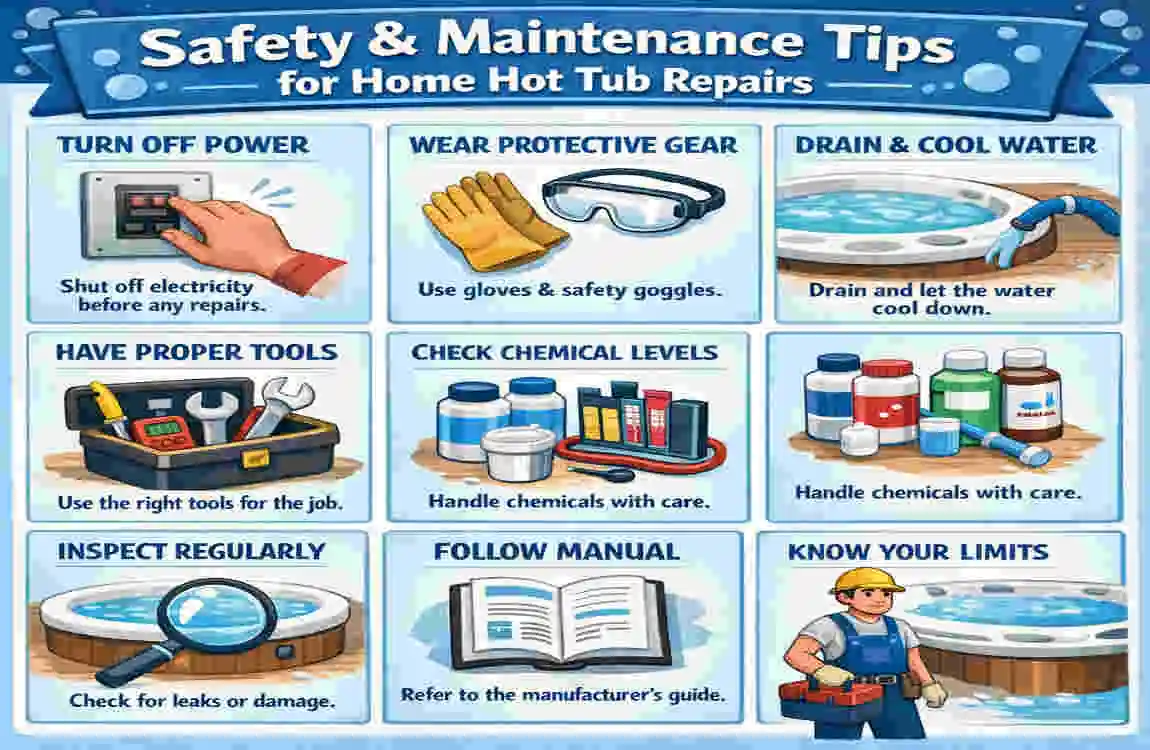
Working on hot tub plumbing means dealing with chemicals, water, tight spaces, and sometimes awkward cabinet access. A little caution goes a long way.
Safety First
When using plumbing adhesives, make sure you:
- Work in a well-ventilated area
- Wear gloves
- Avoid skin contact with cement or primer
- Keep products away from open flame
- Follow the label instructions carefully
Some adhesives have strong fumes. You do not want to inhale them for long. Open doors, remove panels, and let air circulate while you work.
Ongoing Maintenance Habits
If you own a hot tub, do not wait for a major leak before checking the plumbing. A simple inspection routine can help you catch problems early.
A smart habit is to inspect the system:
- Every few weeks during heavy use
- After any repair
- At the start of each season
- Whenever you notice pressure loss or strange sounds
Look for damp spots, cracked fittings, loose unions, or white mineral lines that may show old dripping. Catching a small leak early often means a simple fix instead of a major replacement.
Repair or Replace?
Sometimes patching is enough. Other times, replacement is the better choice.
Patch when:
- The damage is small
- The pipe is still structurally sound
- The leak is at a single fitting
- The rest of the plumbing is in good shape
Replace when:
- The pipe is brittle or badly cracked
- Multiple leaks appear in the same area
- The fitting is warped or damaged
- The repair would be too temporary to trust
If you keep patching the same area over and over, replacement is usually the smarter investment.
Frequently Asked Questions
Is it safe to use glue while there is still water in the line?
In most cases, no. For a proper PVC solvent bond, the surfaces need to be dry and clean. Moisture can weaken the bond and keep the cement from working correctly. If you cannot fully drain or dry the line, a different repair method may be needed, but for a true plumbing joint, dry surfaces are the goal.
How long does a typical PVC glue bond last on a hot tub?
A properly done PVC bond can last for many years. In some systems, it lasts the life of the plumbing section. The key is not just the glue itself, but also surface prep, alignment, pressure load, and full curing time. A sloppy bond may fail quickly, while a careful one can hold up very well.
Can I use these glues on acrylic surfaces or spa shells?
Usually, no. PVC cement is meant for PVC pipe and fittings, not for bonding acrylic spa shells or decorative surfaces. If you are repairing the shell itself, you need a product designed for that material. Using pipe cement on acrylic is not a reliable solution and may damage the surface.
What glue should I use for home plumbing in a hot tub if I am not sure about the pipe type?
If you are unsure, stop and identify the material first. The safest choice for pressure-rated PVC spa plumbing is usually a specialized PVC cement made for hot tub use, often paired with primer if needed. But if the pipe is a flexible hose, acrylic, or another material, the repair method may differ. Material identification comes first.
Can I turn the hot tub back on right after gluing?
No. You should wait for the full cure time listed by the product. Turning the system on too early can break the bond before it has fully set. That is one of the most common reasons repairs fail.
