

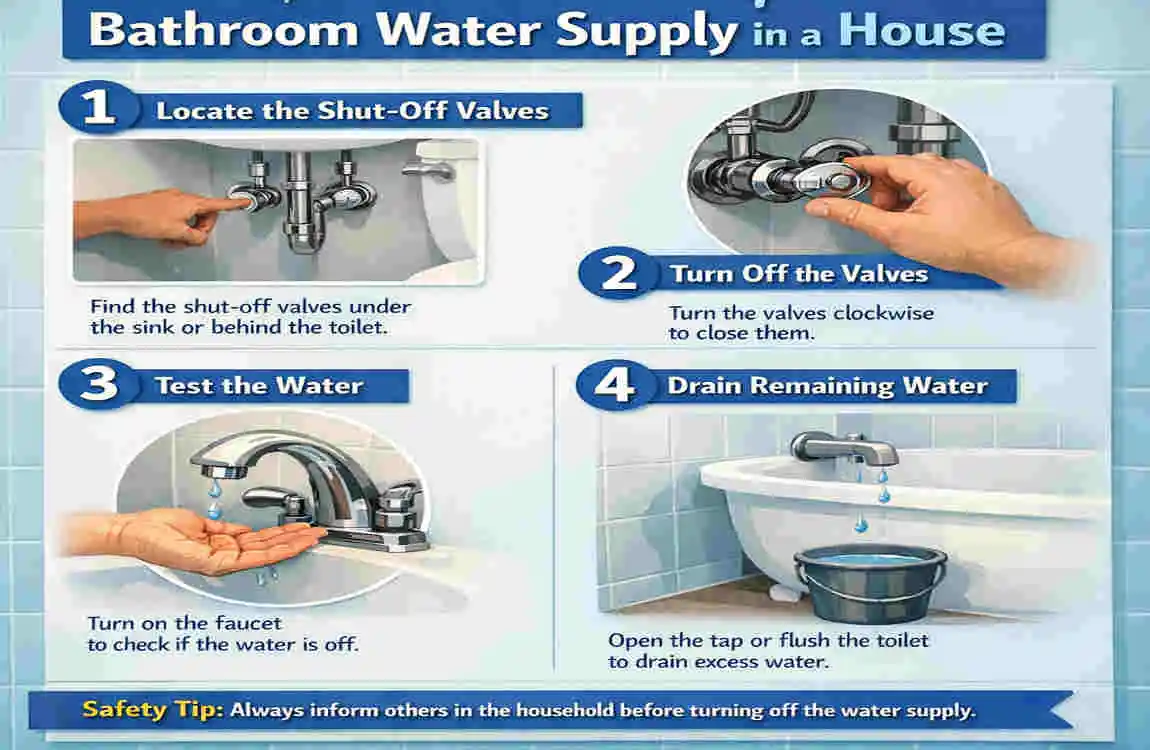
You’re brushing your teeth, and suddenly, water starts gushing uncontrollably from under the sink. Or perhaps, your toilet won’t stop running, wasting gallons of water. These situations can quickly escalate into costly disasters if you don’t know how to act. Knowing how to turn off the bathroom water supply is a simple yet essential skill that can save you from unnecessary stress and expenses.
In where plumbing issues often spike during the humid monsoon season, this knowledge becomes even more critical. Whether you’re dealing with a leaky faucet, replacing fixtures, or handling an emergency flood, understanding how to shut off water to your bathroom is a must for every homeowner and DIY enthusiast.
Common Reasons to Shut Off Water
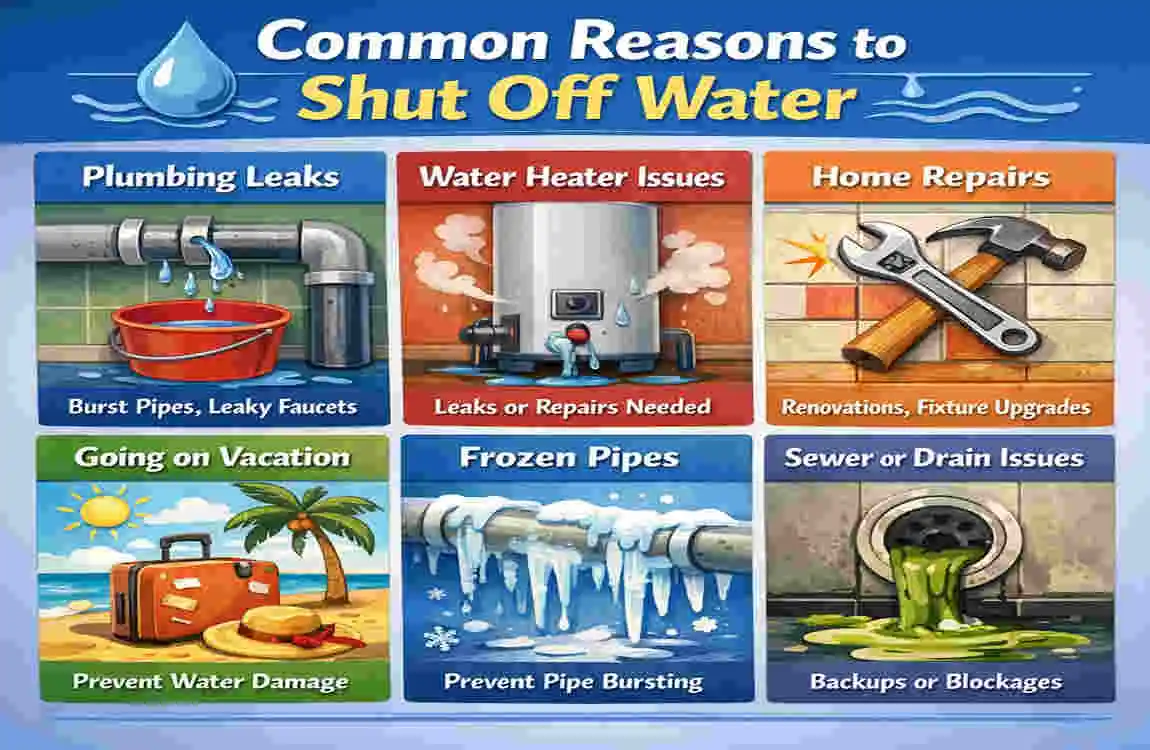
There are several scenarios where you might need to turn off the water supply in your bathroom. Let’s explore the most common ones:
Leaky Faucets or Pipes
A dripping faucet or a small leak might seem harmless, but over time, it can waste a significant amount of water. Did you know that plumbing leaks can waste up to 10,000 gallons of water per year in an average household? That’s a lot of water—and money—going down the drain!
Installing New Fixtures
Planning to upgrade your bathroom with a new sink, vanity, or showerhead? Turning off the water supply is the first step to ensure a smooth, mess-free installation.
Emergency Floods
While rare, especially in winter, frozen pipes or severe clogs can cause sudden floods. Shutting off the water supply immediately can prevent extensive damage.
Routine Maintenance
Regularly inspecting your plumbing system for corrosion or wear and tear is a good habit. Turning off the water supply allows you to check and maintain your fixtures safely.
By understanding these scenarios, you’ll be better prepared to act quickly and effectively when the need arises.
Tools and Safety Prep
Before you start, it’s essential to gather the right tools and take necessary safety precautions.
Essential Tools
Here’s a quick list of items you’ll need:
- Adjustable wrench: For loosening or tightening fittings.
- Pliers: Handy for gripping and turning stubborn valves.
- Gloves: Protect your hands from dirt and sharp edges.
- Flashlight: To see clearly in tight or dark spaces.
- Bucket: To catch any residual water drips.
Safety First
- Always wear gloves to avoid injuries.
- Avoid applying excessive force on old or corroded valves, as they might break.
- After shutting off the water, test the pressure by turning on a nearby faucet.
Preparation Steps
- Clear the area under the sink or around the toilet to easily access the valves.
- Turn on a nearby faucet to release any built-up pressure in the pipes.
With these tools and precautions in place, you’re ready to tackle the task confidently.
Step-by-Step: Turning Off Water to a Bathroom Sink
Locate the Valves
Underneath your bathroom sink, you’ll find two shut-off valves—one for hot water and one for cold water. These are usually marked with red (hot) and blue (cold) indicators or labeled accordingly.
Shut-Off Process
- Turn both valves clockwise (righty-tighty) until they are snug. If the valves are levers, a quarter-turn should suffice.
- Open the faucet to drain any residual water from the pipes.
- Test the faucet to ensure no water flows out.
Pro Tip
If the valve is stuck, apply a small amount of WD-40 and wait a few minutes before trying again. Avoid overtightening, as this can damage the valve.
Sink Valve Types: Description, How to Turn Off
Knob/Wheel Round, older style Turn clockwise fully
Lever/Ball Modern, quarter-turn Turn perpendicular to pipe
Gate Valve Multi-turn, rigid design , turn slowly clockwise
Step-by-Step: Shutting Off Toilet Water Supply
Find the Valve
The shut-off valve for your toilet is typically located on the wall behind the toilet, near the base of the tank. It’s usually an oval-shaped knob or a lever attached to the supply line.
Shut-Off Process
- Flush the toilet to empty the tank.
- Turn the valve clockwise until it stops.
- If necessary, disconnect the hose using a wrench.
Test
Try flushing the toilet again. If the tank doesn’t refill, you’ve successfully shut off the water supply.
Common Issue
If the valve is seized or hard to turn, gently tap it with a tool or call a plumber for assistance.
Step-by-Step: Turning Off Water to a Shower or Tub
In most cases, showers and tubs don’t have individual shut-off valves. If this is the case, you’ll need to use the sink or main house shut-off valve.
Steps
- Check for an access panel near the shower or tub.
- If valves are present, turn them clockwise to shut off the water.
- Run the shower to confirm the water supply is off.
Note
Older homes may require you to shut off the main water supply to stop water flow to the shower or tub.
Step-by-Step: Shutting Off Water to the Entire Bathroom
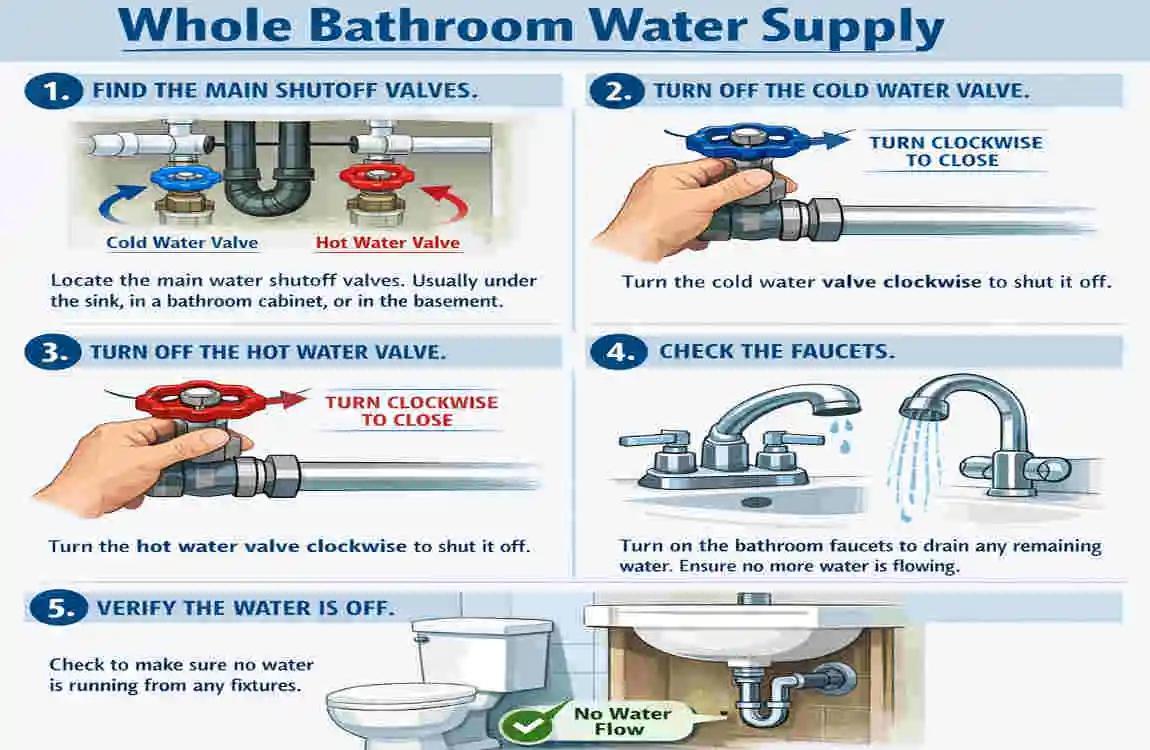
If your bathroom doesn’t have individual shut-off valves, you’ll need to turn off the main water supply.
Steps
- Locate the main shut-off valve, usually found in the basement, utility room, or near the water meter.
- Turn the valve clockwise until it stops.
- Open all faucets in the bathroom to drain the remaining water.
Caution
Turning off the main water supply affects the entire house, so notify your family members beforehand.
Troubleshooting Stuck or Leaky Valves
Stuck Valves
- Apply a lubricant like WD-40.
- Gently tap the valve with a tool to loosen it.
- If it remains stuck, consider replacing it.
Leaky Valves
- Tighten the fittings using a wrench.
- Use thread tape to seal any gaps.
No Valves?
If your bathroom lacks shut-off valves, installing them is a worthwhile investment. It’s a simple DIY project that costs around PKR 3000.
Turning Water Back On Safely
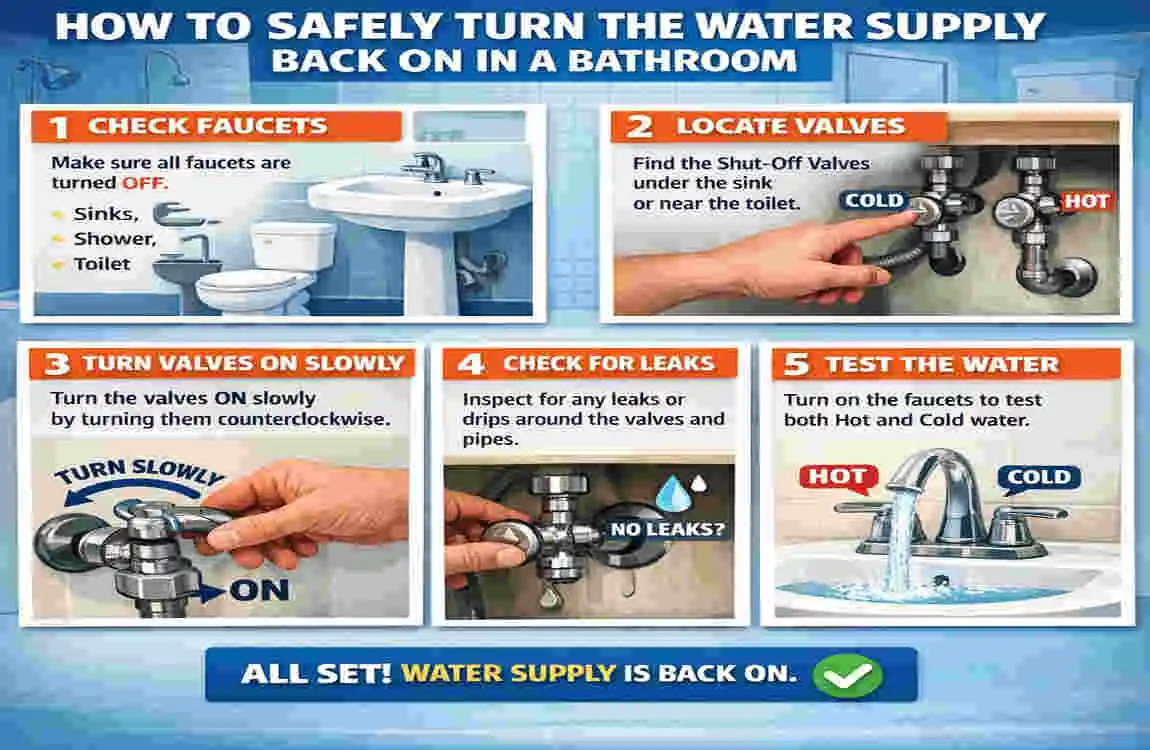
When you’re ready to restore the water supply, follow these steps:
- Turn the valve counterclockwise slowly to avoid pressure surges.
- Check for any drips or leaks and tighten fittings if necessary.
- Run cold water for 2-3 minutes to flush the lines.
Pro Tips for Homes
- Monsoon Prep: Inspect your valves annually to ensure they’re in good working condition.
- Local Materials: Opt for durable brass valves available in Hall Road markets.
- Cost Savings: DIY repairs can save you PKR 1000-5000 per plumber callout.
FAQ Section
Q: How do I turn off the bathroom water supply without a valve?
A: Use the main house shut-off valve.
Q: What if the valve won’t turn?
A: Lubricate it or replace it if necessary.
Q: Do I need to shut off both hot and cold water?
A: Yes, to ensure a complete shut-off.
