

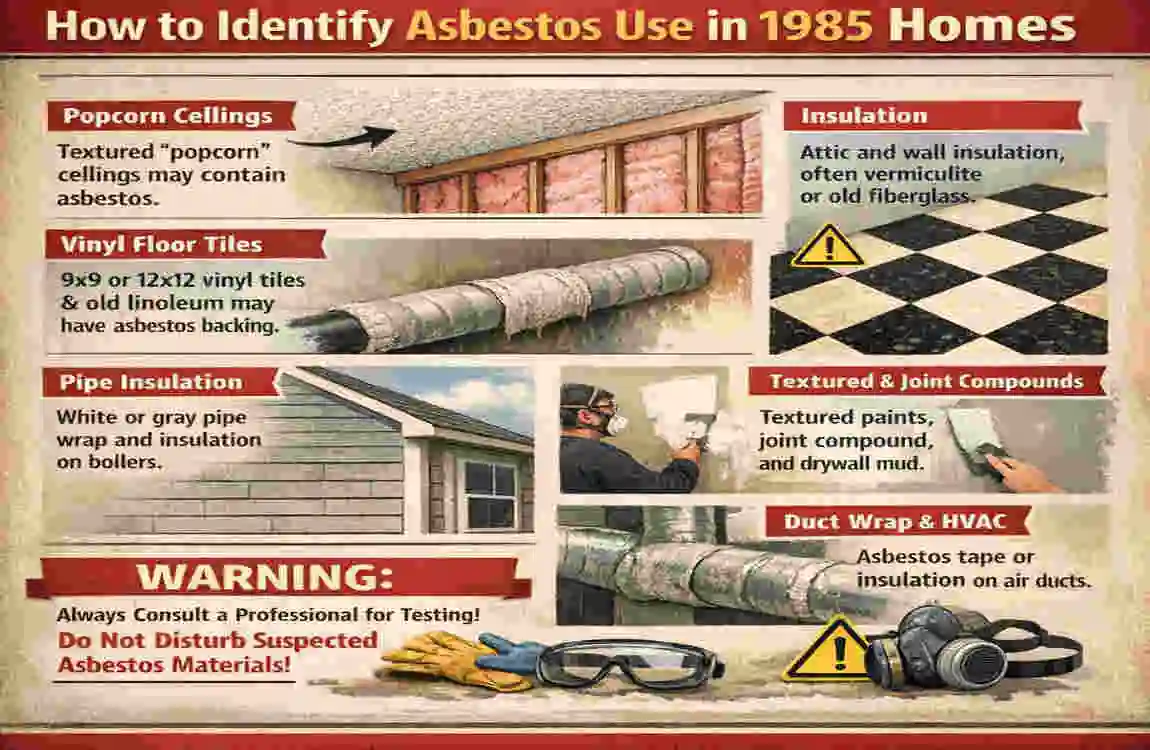
If you own or are considering purchasing a home built in 1985, you might be wondering, “Was asbestos used in 1985?” The short answer is yes—there’s a good chance certain materials in homes from that year could still contain asbestos. Although the mid-1980s marked the beginning of stricter regulations around asbestos use, it was not fully banned in many countries, including the United States, until much later.
Was Asbestos Used in 1985?
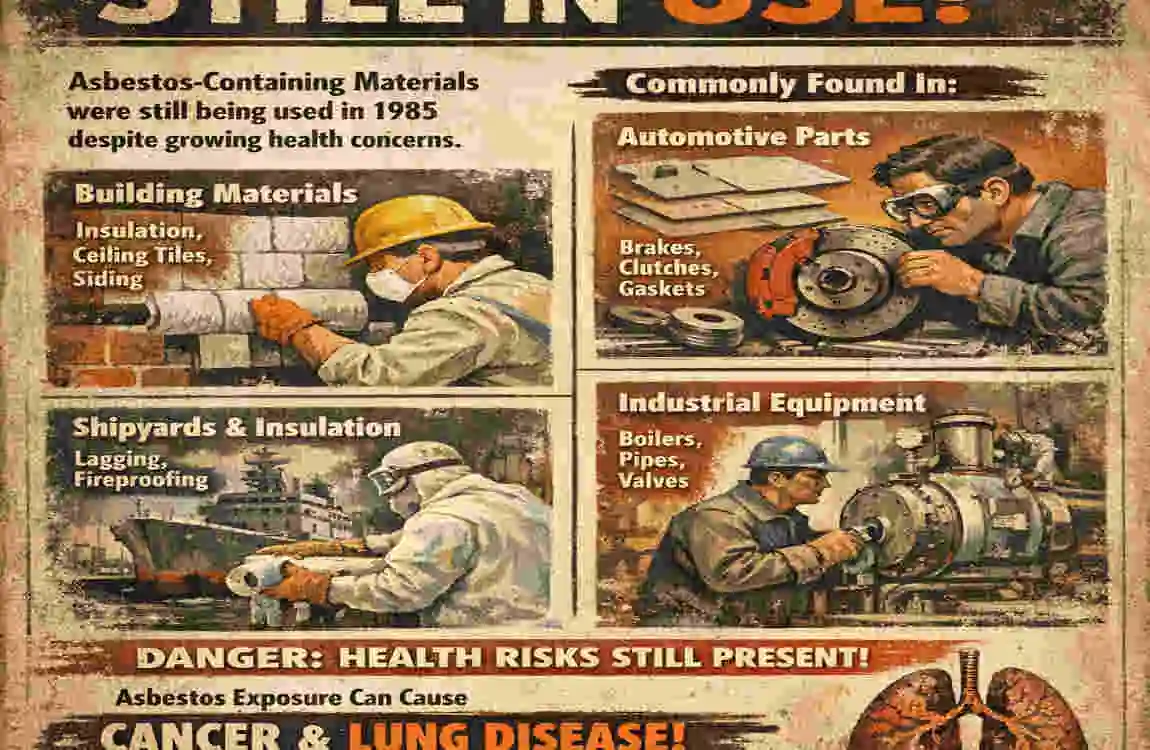
The question “Was asbestos used in 1985?” is crucial because it determines how safe your home environment is. By 1985, asbestos use was declining across many construction industries, particularly in residential projects. However, it was not completely phased out. Many builders still used asbestos-containing materials (ACMs) because:
- Existing stockpiles of asbestos-based products were still being sold and installed.
- Importation of asbestos materials continued in some areas.
- Certain applications, such as roofing, insulation, and adhesives, saw slower adoption of alternatives.
While homes built in the 1980s generally contain less asbestos than older properties, they are far from asbestos-free. The only way to be certain is to identify and test suspicious materials.
Why Homes Built in 1985 May Still Contain Asbestos
A Gradual Phase-Out of Asbestos
The 1980s marked the beginning of tighter regulations on asbestos use, primarily due to growing awareness of its health risks. However, the phase-out process was gradual rather than immediate. Manufacturers and contractors continued to use asbestos products in the mid-1980s because:
- Stockpiles of old materials were still available.
- Imports of asbestos-containing products filled gaps left by declining domestic production.
- Builders often prioritized cost efficiency over health concerns, opting for cheap, durable, and widely available asbestos materials.
Renovations and Additions
Even in homes built after the 1980s, asbestos can find its way inside through renovations or repairs. For example:
- Garage additions or roof repairs might introduce asbestos roofing or cement products.
- Replacement flooring or insulation may include asbestos if older stock was used.
- Mixed-era materials, especially in utility spaces, are common in homes with additions or updates.
Whether newly built in 1985 or remodeled later, older homes can still harbor asbestos risks.
Common Asbestos Materials in 1985 Homes
Asbestos was used in a wide range of construction materials in the 1980s. Below is a list of some of the most common asbestos-containing materials (ACMs) in homes from that period.
Likely Asbestos Materials by Location
Material Common Uses
Vinyl Floor Tiles: Kitchens, bathrooms, and basements.
Adhesives & Mastics are used to install floor tiles or wall paneling.
Textured Ceilings: “Popcorn” or “stucco” ceilings for decoration.
Pipe Insulation Around water heaters, boilers, or HVAC pipes.
Cement Sheets Exterior siding, soffits, and roofing panels.
Wallboard & Joint Compound: Interior walls and ceilings.
Attic Insulation: Some older loose-fill or vermiculite types.
It’s important to note that not all these materials automatically contain asbestos. Still, they are worth inspecting carefully if your home was built in 1985.
Where to Look in a 1985 Home
To identify asbestos risks, it helps to break down your home into specific zones. Here are the most common areas to inspect:
Ceilings and Popcorn Textures
Popcorn ceilings, popular in the 1980s, often contained asbestos. Check for textured finishes in living rooms, hallways, and bedrooms. Avoid scraping or sanding these surfaces until testing confirms they are safe.
Floors: Vinyl and Adhesives
Vinyl floor tiles and the adhesives (mastics) used to install them were prime asbestos culprits. Look for 9×9-inch tiles or older sheet vinyl in kitchens, bathrooms, and basements.
Basements and Utility Rooms
Basements often contain pipe insulation, boiler wraps, and cement boards, all of which are likely to contain asbestos. These areas are particularly high-risk due to potential wear and tear.
Attics and Crawl Spaces
Some loose-fill insulation and vermiculite insulation used in attics contained asbestos. Crawl spaces may also harbor asbestos-containing ductwork or pipe wraps.
Exterior Areas
Inspect roofing shingles, siding, and soffits for cement-based materials, which might include asbestos. Exterior materials are often overlooked but can still pose a risk if damaged.
Visual Clues That Suggest Asbestos
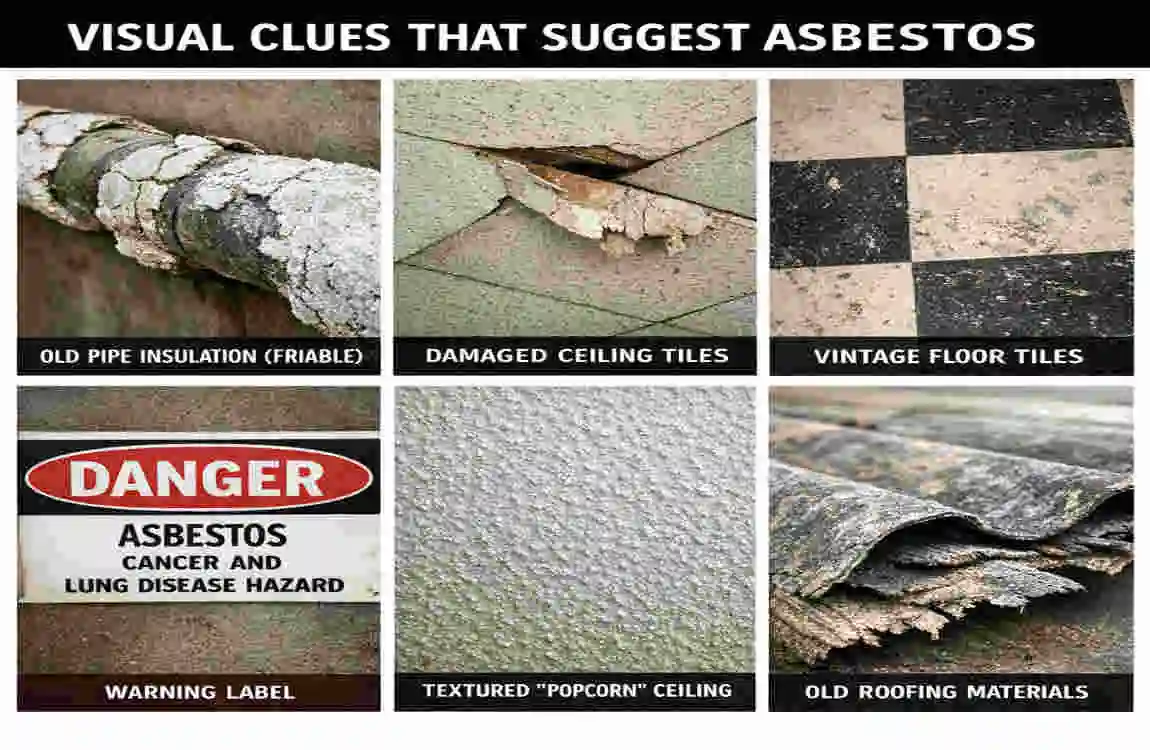
While you cannot confirm asbestos by sight alone, certain visual clues can help you identify potentially hazardous materials. Keep an eye out for:
- Age of the material: Older-looking or original materials are more likely to contain asbestos.
- Fibrous or crumbly texture: Asbestos materials often appear brittle or fibrous when damaged.
- Deterioration: Cracking, peeling, or fraying materials could release asbestos fibers.
- Manufacturer labels: Some old products may have identifiable markings or codes.
Remember, visual inspection is not enough—you’ll need professional testing to confirm the presence of asbestos.
Signs a Material May Be High Risk
Some materials are more hazardous than others, especially if they’re damaged or disturbed. Pay extra attention to:
- Crumbling pipe insulation or boiler wraps.
- Broken or chipped vinyl floor tiles.
- Peeling or cracking popcorn ceilings.
- Saw-cut or damaged cement panels and siding.
When materials are disturbed (e.g., during sanding, drilling, or cutting), asbestos fibers can become airborne. This is when health risks are highest.
How to Check Without Disturbing It
If you suspect asbestos materials in your home, follow these safe steps:
- Stop any work immediately if you uncover suspicious material.
- Avoid disturbing it—do not sand, cut, scrape, or drill.
- Look for records of past renovations or material purchases.
- Compare the material’s location and age with common asbestos-use timelines.
- Call a professional to arrange asbestos testing if you are uncertain.
Testing is the only way to confirm the presence of asbestos definitively. Avoid DIY sampling unless you are trained and local guidelines permit it.
When Testing Is Necessary
Testing becomes essential in certain situations, such as:
- Before remodeling, demolition, or major repairs.
- When replacing flooring, roofing, or HVAC systems.
- If you discover damaged or exposed materials.
Testing should be performed by qualified professionals who follow safety protocols. Homeowners should avoid breaking material samples themselves, as this increases exposure risks.
What to Do If Asbestos Is Found
If testing confirms the presence of asbestos, don’t panic. There are several options depending on the material’s condition:
- Encapsulation: Sealing the material to prevent fiber release.
- Enclosure: Covering the asbestos material with a protective barrier.
- Removal: Professional removal is necessary for damaged or high-risk materials.
Always consult with asbestos abatement experts to determine the safest and most cost-effective solution.
Safety Tips for Homeowners
Here are some quick safety guidelines for managing asbestos risks in a 1985 home:
- Do not sweep, vacuum, or dust asbestos debris.
- Seal off the area if damage is discovered.
- Keep children and pets away from suspicious materials.
- Hire certified professionals for testing and removal.
- Maintain records of any asbestos inspections or abatement work.
Mistakes People Make
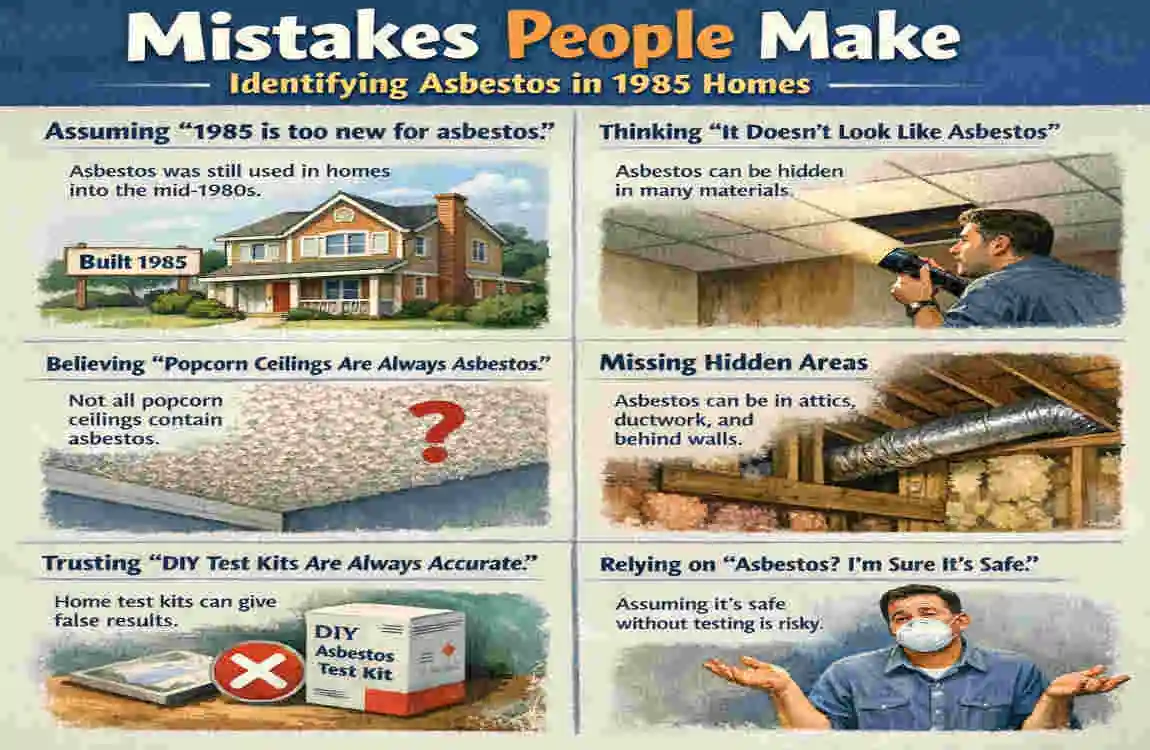
Avoid these common errors when dealing with potential asbestos in older homes:
- Assuming a 1985-built home is automatically asbestos-free.
- Trusting visual inspections instead of professional testing.
- Attempting DIY removal without proper equipment.
- Ignoring garages, sheds, and other non-living spaces.
- Disturbing materials unnecessarily during renovations.
FAQ Section
Was asbestos used in homes built in 1985?
Yes, many 1985 homes still used asbestos-containing materials, particularly in insulation, ceilings, flooring, and siding.
Is a house built in 1985 likely to have asbestos?
It’s possible. While asbestos use was declining, older stock and imported materials were still common in 1985.
What rooms usually contain asbestos?
Kitchens, bathrooms, basements, attics, and utility rooms are high-risk areas.
Can you identify asbestos by sight?
No, a visual inspection alone cannot confirm the presence of asbestos. Testing is required.
Should I test before renovating a 1985 house?
Yes, especially if you suspect asbestos in areas such as flooring, insulation, or ceilings.
Is asbestos dangerous if left alone?
Asbestos is generally safe if intact and undisturbed. Problems arise when fibers are released into the air.
