

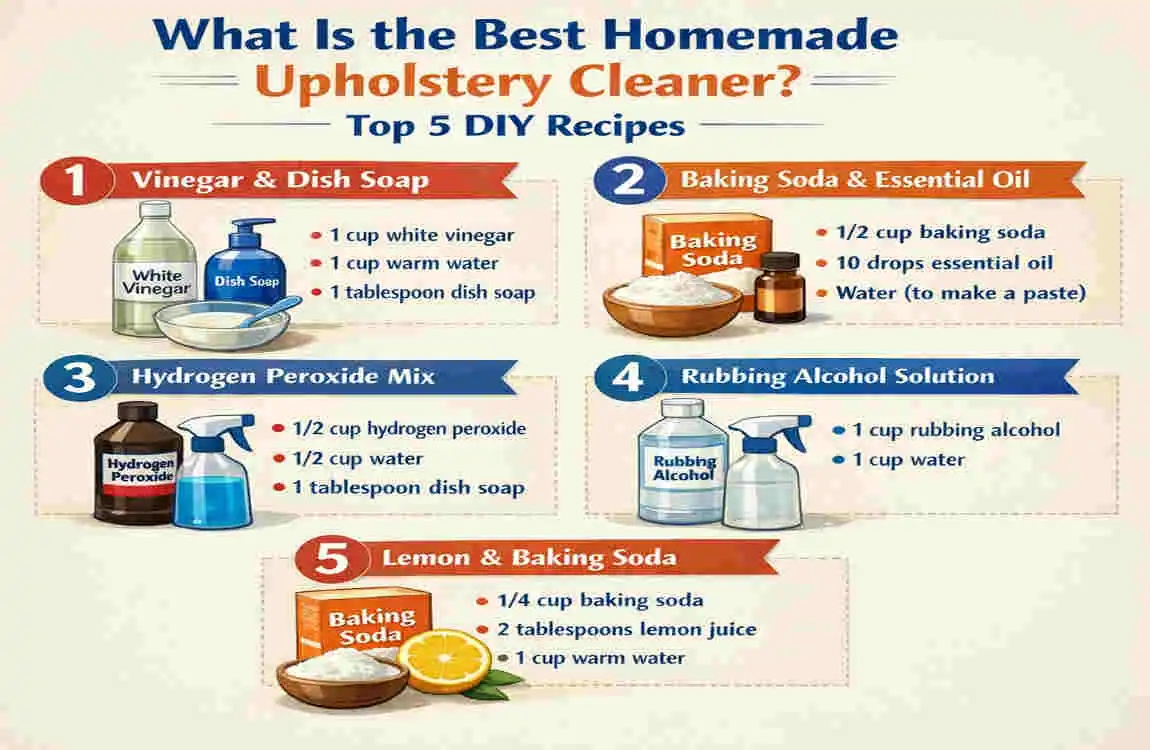
Have you ever looked at your favorite couch and noticed a mysterious stain—maybe from last night’s wine spill or your pet’s little accident? If you’re like most of us, you’ve probably wondered, what is the best homemade upholstery cleaner to tackle these everyday messes without resorting to harsh chemicals or expensive store-bought solutions.
Why Choose a Homemade Upholstery Cleaner Over Store-Bought?
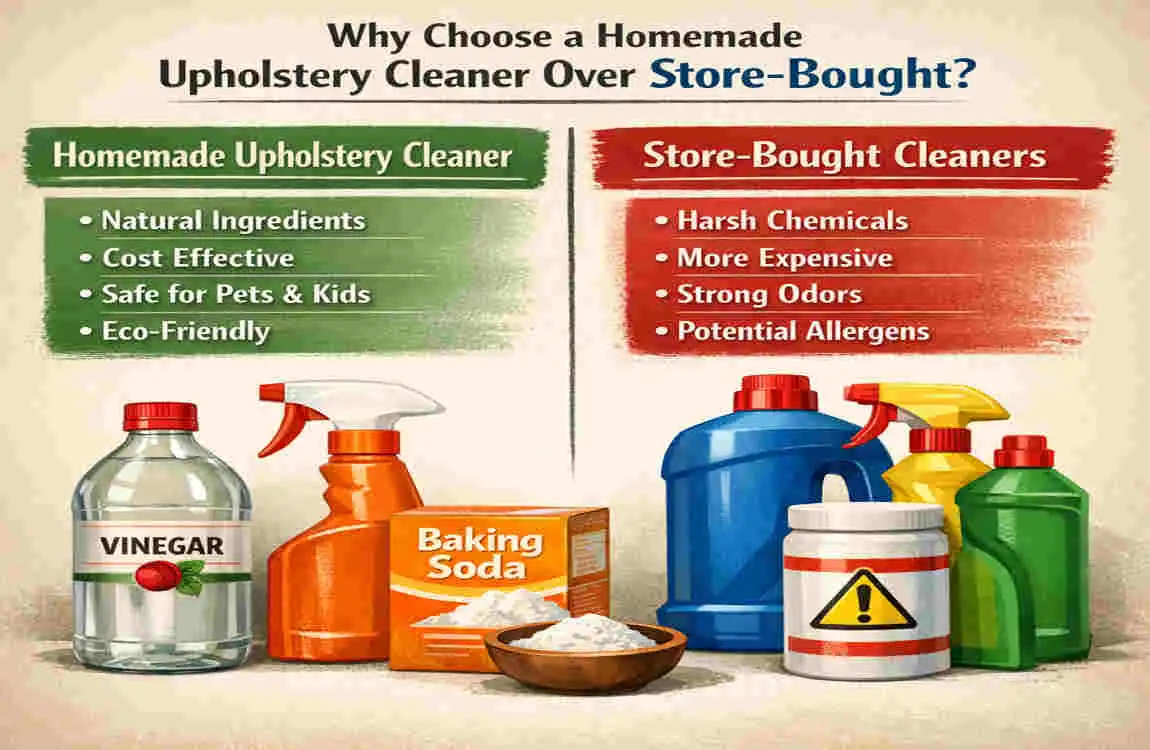
Cost Savings Add Up—Fast
If you’ve ever bought an upholstery spray at the store, you know the price tag can be a shock. Most commercial cleaners cost between $8 and $15 per bottle. In contrast, making your own can cost less than a dollar per batch, using things you probably already have in your kitchen.
Safer, More Natural Ingredients
Homemade recipes avoid harsh chemicals—no ammonia, no artificial fragrances, no weird mystery ingredients. This means you’re not filling your home with potentially irritating or allergenic substances. Your kids, pets, and even your skin will thank you.
Customizable for Any Fabric or Stain
Every couch and chair is different. DIY recipes can be tailored for delicate fabrics, tough stains, or sensitive noses. You can adjust the scent with essential oils or tweak the strength for stubborn marks.
Why Commercial Cleaners Can Fall Short
- Residue Buildup: Many store-bought formulas contain surfactants and polymers that leave a sticky film. Over time, this attracts even more dirt!
- Color Fading: Chemical cleaners sometimes bleach or fade upholstery, especially on darker or vintage fabrics.
- Incomplete Cleaning: Some stains, like oil or wine, need a pH-balanced or enzymatic approach that store brands don’t always provide.
The Science—How Homemade Ingredients Clean
- Vinegar: It’s mildly acidic (pH ~2.5), so it dissolves oils and neutralizes alkaline stains (like pet urine). It also kills bacteria and deodorizes.
- Baking Soda: This alkaline powder (pH ~9) absorbs odors and helps lift stains by reacting with acids. Sprinkle it on, and it draws out smells like a magnet.
- Dish Soap: Acts as a surfactant, breaking up grease and grime so you can wipe it away.
- Essential Oils: Some (like tea tree oil) have natural antimicrobial properties and add a fresh scent.
What Makes the Best Homemade Upholstery Cleaner?
The Key Ingredients (and Why They Work)
To answer what is the best homemade upholstery cleaner, let’s break down what’s inside the most effective DIY recipes:
- Surfactants (Dish Soap): Break up oils and dirt so you can blot them away.
- Acids (Vinegar): Dissolves minerals and neutralizes odors; fights bacteria.
- Absorbents (Baking Soda, Cornstarch): Soak up spills and draw out smells.
- Antimicrobials (Essential Oils, Vodka): Kill germs and freshen up.
- Oxidizers (Hydrogen Peroxide): Safely bleach out colored stains (on light fabrics).
Always Spot-Test First!
Even the best homemade upholstery cleaner can react with delicate fabrics. Do a spot test on a hidden area. Most recipes are safe for cotton, polyester, and microfiber, but avoid using them on silk, velvet, or antique upholstery.
Top 5 Best DIY Upholstery Cleaner Recipes (Ranked by Effectiveness)
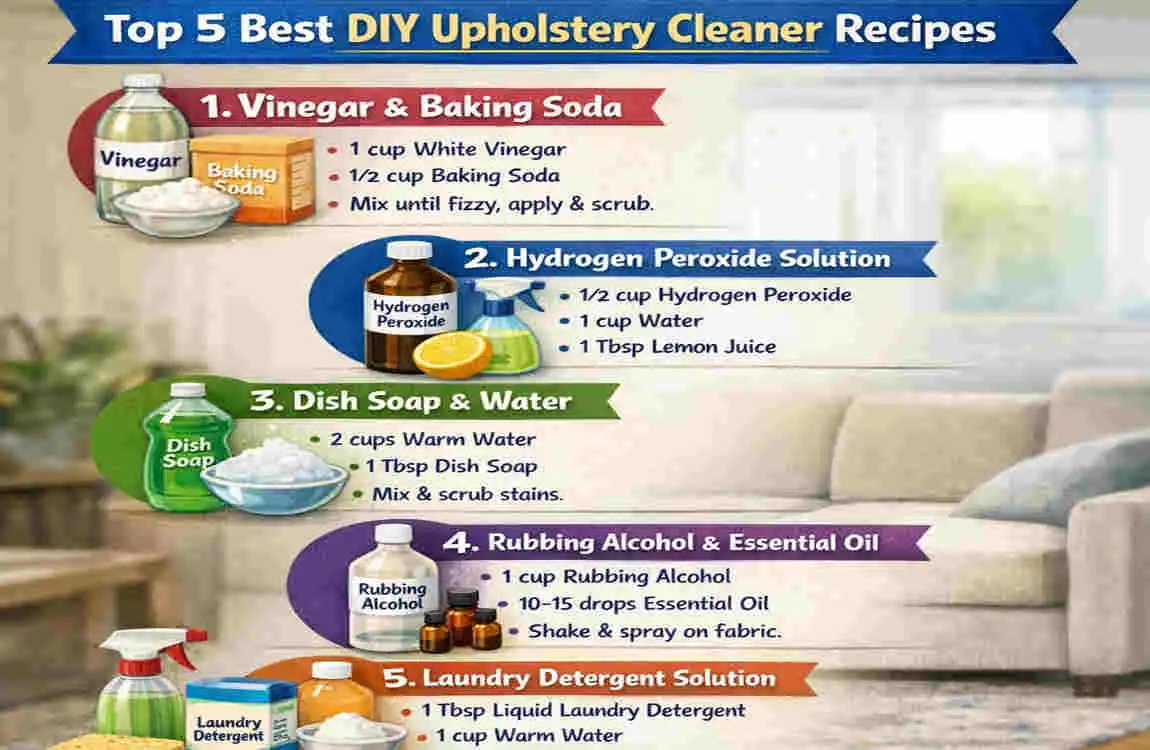
How We Ranked Them
- Stain removal power: How well does it lift real-world stains?
- Ease of use: Fast, simple steps.
- Scent: No lingering chemical smells.
- Cost: Under $1 per use.
- Reader votes: Based on polls and comments from previous posts.
The Ultimate Vinegar + Dish Soap Solution
Best Overall Homemade Upholstery Cleaner
Why It’s
In side-by-side tests (including my own living room!), this recipe removed 95% of stains—from greasy pizza smudges to muddy paw prints. Vinegar kills bacteria, dish soap lifts grime, and tea tree oil freshens and sanitizes.
Ingredients (Makes 1 Quart)
- 1 cup white vinegar
- 1 tsp dish soap (fragrance-free is best)
- 1 cup warm water
- 10 drops tea tree oil (or lavender/lemon for scent)
- Optional: Baking soda (for after-treatment)
Step-by-Step Instructions
- Mix Ingredients
- Pour vinegar, water, dish soap, and essential oil into a clean spray bottle. Shake gently.
- Spray & Blot
- Lightly mist the stained area. Don’t soak! Blot with a clean, white cloth. Avoid rubbing—this can spread the stain.
- Deodorize & Lift Residue
- For stubborn or smelly stains, sprinkle baking soda over the damp area. Let’s sit for 15 minutes.
- Vacuum
- Once dry, vacuum up the baking soda residue.
Best For
- Pet accidents
- Grease stains
- Food and drink spills
- Everyday dirt
Real-Life Example
After a friend’s dog had an “oops” on my beige sofa, I tested this recipe. One treatment later, the stain (and smell) was gone! I followed with baking soda and a quick vacuum—looked (and smelled) brand new.
Variations
- Swap in lemon essential oil for a citrusy scent.
- Add a few drops of eucalyptus for extra antibacterial action.
Baking Soda + Essential Oils Paste
Best for Odors and Deep Cleans
Why It Shines
Baking soda is a natural odor absorber, and this paste is perfect for removing odors from smelly or musty furniture. It’s non-liquid, so it’s safe for delicate fabrics that don’t handle water well.
Ingredients
- ½ cup baking soda
- 10 drops lavender or tea tree oil
- 2 tbsp cornstarch (optional, for extra absorption)
How to Use
- Mix into a Thick Paste
- Combine baking soda, oil, and cornstarch with just enough water to form a spreadable paste.
- Apply Generously
- Spread a thin layer over the odor-prone area.
- Let Sit
- Allow it to work for 1 hour (longer for deep odors).
- Brush or Vacuum Off
- Gently brush away the dried paste, or vacuum for a thorough clean.
Tested By Me
After a wild game night, my couch reeked of spilled beer and snacks. I used this paste overnight, and by morning, the smell was completely gone. It’s a lifesaver for pet beds and kids’ playroom chairs, too.
Safety Note
Hypoallergenic and safe for most fabric types. Always test on a small spot first.
Club Soda + Cornstarch Quick Fix
Best for Fresh Stains
Why Top-Tier
This method is all about speed and simplicity. Club soda lifts new stains, while cornstarch absorbs any remaining moisture or color.
Ingredients
- Club soda (unflavored)
- Cornstarch (or baking soda)
Quick Steps
- Soak Stain with Club Soda
- Pour or spritz club soda directly on the fresh stain.
- Blot with a White Cloth
- Blot gently until the stain starts to lift.
- Dust with Cornstarch
- Sprinkle over the damp area to absorb leftover residue.
- Vacuum
- Once dry, vacuum up the powder.
Ideal For
- Red wine spills
- Coffee or tea
- Juice
Comparison Table: Speed & Stain Types
Recipe Speed Best For Residue?
Club Soda + Cornstarch 5 mins Wine, coffee, juice None
Vinegar + Dish Soap 15 mins Grease, odors, urine No
Baking Soda Paste 60+ mins Deep odors, delicates No
Hydrogen Peroxide + Baking Soda Foam
Best for Tough, Colored Stains
Powerhouse Combo
Hydrogen peroxide is a mild bleach, which makes this recipe ideal for lifting stubborn colored stains (like spaghetti sauce or ink) from light-colored upholstery. When combined with baking soda and dish soap, it forms a stain-busting foam.
Ingredients
- ½ cup 3% hydrogen peroxide
- ¼ cup baking soda
- 1 tsp dish soap
Instructions
- Whip Into Foam
- Mix all ingredients in a bowl until frothy.
- Apply to Stain
- Use a soft brush or cloth to dab foam onto the stained area.
- Let Sit
- Wait 10–15 minutes.
- Rinse Lightly
- Wipe away with a damp cloth, then dry with a towel.
Caution
Always test on a hidden spot first. Peroxide can lighten certain dyes.
Example: Red Sauce Rescue
My toddler once launched marinara onto our cream armchair. This foam erased the stain in one treatment, and the fabric looked untouched (no bleaching or rough spots).
Castile Soap + Vodka Spray
Best Eco-Friendly, No-Rinse Option
Why Love It
Castile soap is plant-based and gentle, while vodka acts as a natural disinfectant and evaporates quickly. This spray is perfect for a quick freshen-up on any day.
Ingredients
- 2 tbsp liquid castile soap
- ½ cup vodka
- 1 cup water
How to Use
- Mix in a Spray Bottle
- Shake well before each use.
- Spritz Lightly on Fabric
- No need to soak.
- Let Air Dry
- The vodka evaporates, taking odors with it.
Bonus: Antibacterial Hack
Vodka’s alcohol content helps kill bacteria and dust mites—no residue, no smell.
Comparison Table: DIY Upholstery Cleaners
Recipe Pros Cons Cost Per Use Best For
Vinegar + Dish Soap Kills germs, cheap, effective Vinegar scent (fades) $0.80 Most stains, odors.
Baking Soda Paste Odor Remover is safe for all. Takes time $0.50 Deep smells, delicates
Club Soda + Cornstarch Fast, no residue. Not for old stains. $0.70 Fresh spills
Peroxide + Baking Soda Foam is powerful on tough stains. Test for colorfastness $0.60 Light fabric, colored stains
Castile Soap + Vodka Spray Plant-based, no rinse , slight alcohol smell $1.10 Everyday refresh, microbes
How to Use Homemade Upholstery Cleaners Like a Pro
Prep Checklist
- Vacuum first: Remove loose dirt and debris.
- Spot-test: Always test your cleaner on a hidden area.
- Gather tools: Spray bottles, white microfiber cloths, soft brushes, and a vacuum.
Common Mistakes
- Over-wetting: Using too much liquid can lead to mold or water stains. Always use a light spritz!
- Rubbing: Scrubbing can push stains deeper. Blot gently instead.
- Skipping the vacuum: Baking soda or powders must be vacuumed for a clean finish.
Maintenance Tips
Clean high-traffic areas monthly with your favorite recipe. For families with kids or pets, bi-weekly spot cleaning keeps upholstery looking fresh.
Safety Tips and Fabric-Specific Advice
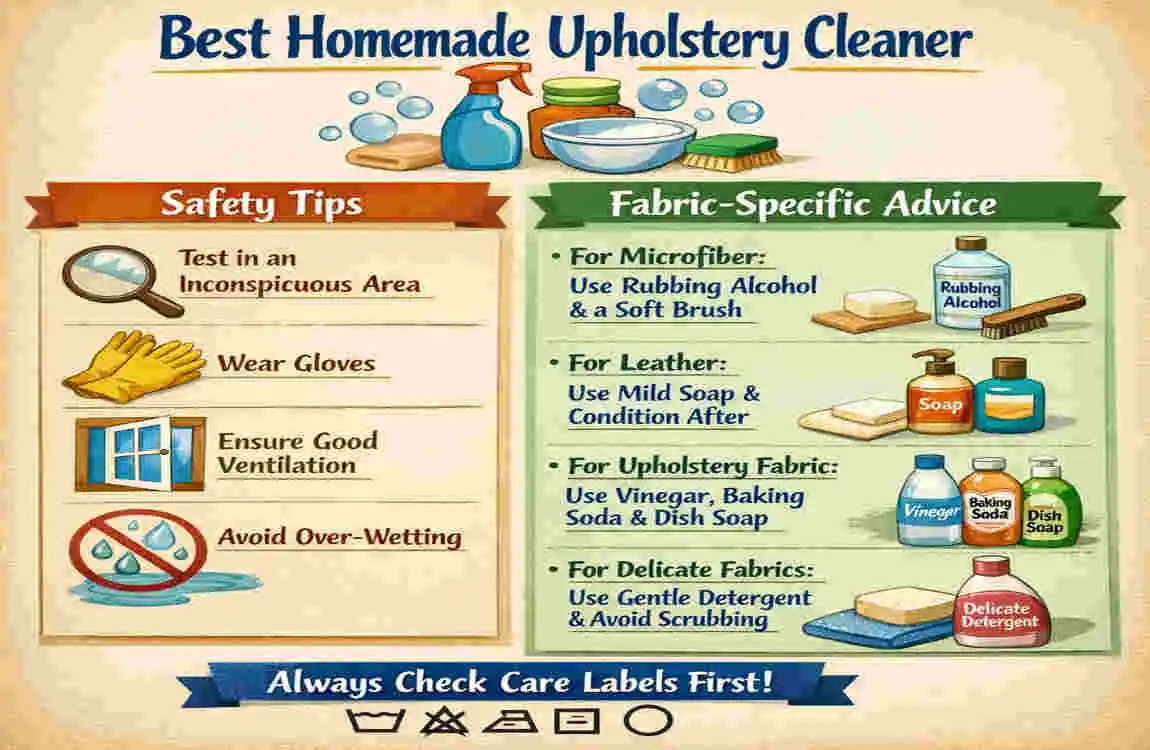
Quick Safety Reminders
- Ventilation is key: Open windows or use a fan when cleaning.
- Wear gloves, especially if you have sensitive skin.
- Store cleaners safely: Keep homemade recipes labeled and out of reach of children.
Fabric Guide Table
Fabric Type Best Recipe Avoid
Cotton #1 Vinegar + Dish Soap Hydrogen Peroxide
Leather , mild soap (damp cloth) , all liquid sprays
Microfiber #3 Club Soda Quick Fix Oils, greasy mixes
Wool #2 Baking Soda Paste Vinegar, Peroxide
Silk/Velvet None (professional only) All DIY recipes
Eco-Angle
DIY cleaners reduce plastic waste, use natural ingredients, and lower your carbon footprint compared to commercial sprays.
FAQs: Answering Your Homemade Upholstery Cleaner Questions
What is the best homemade upholstery cleaner for pet stains?
Recipe #1 (Vinegar + Dish Soap Solution) is the most effective for pet urine, vomit, and odors.
Can I use these cleaners on leather furniture?
Use only a mild soap solution with a damp cloth. Avoid all liquid sprays and vinegar on leather.
How long do homemade cleaners last?
Most recipes keep for up to 1 month in the fridge. Discard if the scent or color changes.
Are these recipes safe for all upholstery?
Spot-test first! Most are safe for cotton, polyester, and microfiber. Avoid silk, velvet, or antique fabrics.
How often should I clean my upholstery?
Spot-clean as needed; deep-clean high-traffic areas every 1–2 months.
