

Baseball’s biggest stars have turned their earnings into some of the most impressive MLB players’ homes on the market today. From multimillion‑dollar contracts to lucrative endorsement deals, these athletes can afford properties that blend sport‑centric functionality with pure luxury.
Why MLB Players Invest in Luxury Homes

From Baseball Contracts to Luxury Real Estate – High‑value contracts give players the financial freedom to purchase premium properties that match their lifestyle and future security.
What Makes a Baseball Player’s Home Different?
- Expansive floor plans that accommodate training spaces and large gatherings.
- Private outdoor areas for family fun or teammate get‑togethers.
- State‑of‑the‑art security systems that protect high‑profile residents.
Real Estate as a Long‑Term Investment – Beyond personal enjoyment, many players view their homes as assets that appreciate over time, especially when located near MLB markets or training facilities.
The Most Popular Locations for MLB Players’ Homes
Los Angeles and Southern California – Ideal climate, celebrity‑friendly neighborhoods, and easy access to entertainment venues make LA a top pick.
New York and the Tri‑State Area – Players connected to the Yankees or Mets often choose upscale apartments or suburban estates, balancing city buzz with privacy.
Miami and South Florida – Waterfront living, private docks, and year‑round sunshine attract athletes seeking a resort‑like retreat.
Texas Luxury Markets – Large lots and modern ranch‑style homes provide space for both family life and personal training areas.
Arizona and Other MLB‑Friendly Markets – Spring‑training hubs foster seasonal homes in golf communities and desert‑style estates.
Inside MLB Players’ Homes: Architectural Styles and Design Trends
Modern Contemporary Mansions – Open layouts, glass walls, and minimalist finishes create a sleek, tech‑savvy environment.
Mediterranean and European‑Inspired Estates – Stucco exteriors, tiled roofs, and courtyards bring a relaxed, resort feel.
Modern Farmhouse and Ranch‑Inspired Properties – Natural materials and large kitchens give a warm, inviting vibe.
Waterfront and Resort‑Style Architecture – Panoramic views, terraces, and private pools make the most of coastal settings.
Luxury Features Found in MLB Players’ Homes
- Private Home Gyms and Athletic Training Areas – Equipped with weight rooms, batting cages, and recovery zones.
- Home Theaters and Entertainment Rooms – Cinema‑quality screens and sports bars for game night.
- Gourmet Kitchens and Private Dining Areas – Professional‑grade appliances and spacious islands for family meals.
- Swimming Pools and Outdoor Living Spaces – Infinity pools, fire pits, and outdoor kitchens for year‑round enjoyment.
- Garages, Car Collections, and Private Driveways – Secure, climate‑controlled storage for luxury vehicles.
- Smart‑Home Technology and Security – Automated lighting, climate control, and discreet surveillance to keep life seamless and safe.
MLB Players’ Homes and the Importance of Privacy
Gated Communities and Private Estates – Secluded neighborhoods with controlled access protect athletes from unwanted attention.
Security Without Sacrificing Luxury – Modern systems blend into the design, offering both safety and aesthetic harmony.
Celebrity Neighbors and Exclusive Communities – Living among fellow high‑profile individuals adds a layer of shared security and social cachet.
Famous MLB Players and Their Luxury Real Estate Lifestyles
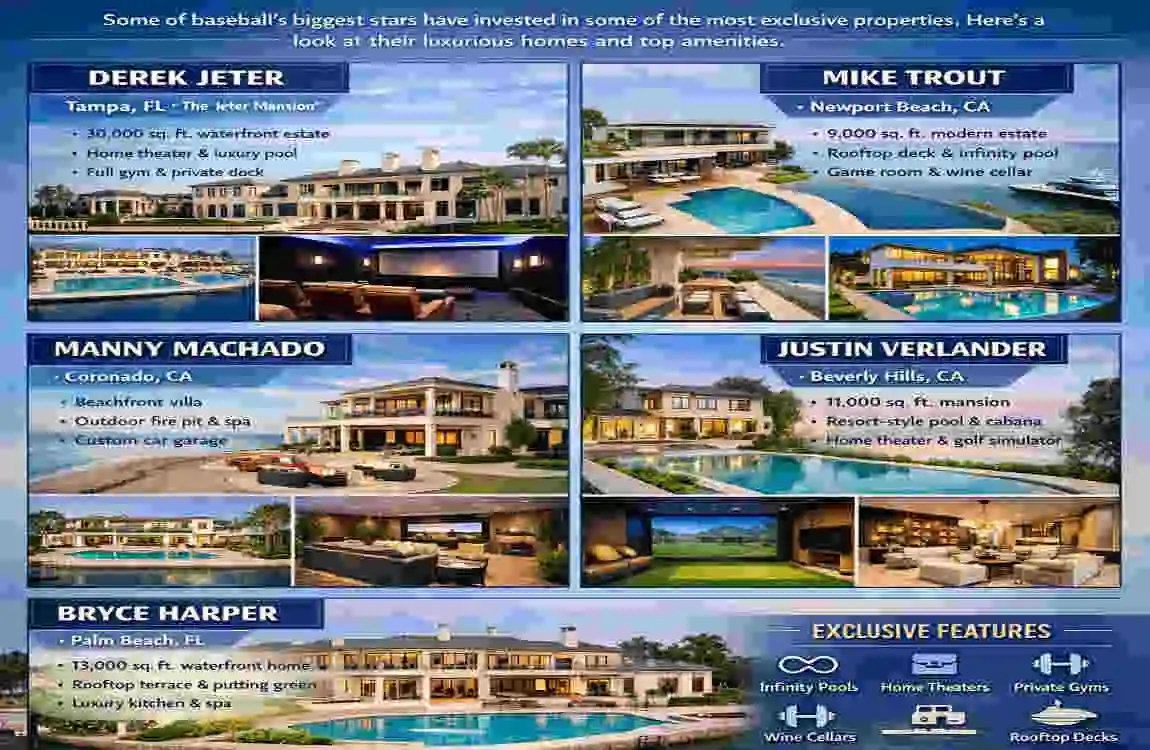
- Superstar A – A modern beachfront mansion in Miami featuring a private dock and indoor basketball court.
- Superstar B – A sprawling Los Angeles ranch with a full‑size gym, home theater, and wine cellar.
- Superstar C – A sleek downtown penthouse in New York with floor‑to‑ceiling windows and a rooftop garden.
These homes reflect each player’s personal taste, from minimalist interiors to classic, family‑focused layouts.
How MLB Players Personalize Their Homes
- Interior Design Reflecting Personality – Custom furniture, sport memorabilia, and curated art pieces create a unique vibe.
- Sports‑Inspired Spaces – Trophy rooms, dedicated viewing lounges, and training zones keep the athlete’s passion alive at home.
- Family‑Friendly Luxury – Playrooms, safe outdoor yards, and spacious family dining areas prioritize everyday comfort.
- Entertainment‑Focused Design – Large living rooms, bars, and guest suites make hosting effortless.
The Business Side of MLB Players’ Homes
- Buying vs. Building a Custom Estate – Some prefer ready‑made luxury homes, while others commission architects to craft a dream property from the ground up.
- Renovations and Custom Upgrades – Updates to kitchens, bathrooms, and outdoor spaces can boost both enjoyment and resale value.
- Real Estate as Part of an Athlete’s Wealth Strategy – Diversifying income with property helps secure financial stability beyond a playing career.
- What Happens When an MLB Player Is Traded? – Players may sell, rent, or maintain multiple residences to stay close to their new team’s city.
Comparing MLB Players’ Homes With Other Celebrity Mansions
- MLB vs. NFL – Baseball players often favor larger yards for training; football players may prioritize proximity to stadiums.
- MLB vs. NBA – NBA stars frequently choose urban luxury apartments, while MLB players lean toward spacious suburban estates.
- MLB vs. Hollywood Celebrities – Both groups value security and entertainment spaces, but baseball homes typically incorporate more athletic facilities.
What Makes an MLB Luxury Home Truly Exclusive?
Prime location, impressive architecture, extensive private grounds, high‑end amenities, cutting‑edge security, custom interiors, and strong long‑term investment potential all combine to set these homes apart.
MLB Players Homes: Key Trends to Watch
- Sustainable Luxury – Solar panels, energy‑efficient systems, and eco‑friendly materials.
- Wellness‑Centered Homes – Saunas, meditation rooms, and recovery suites.
- Indoor‑Outdoor Living – Retractable glass walls, covered patios, and poolside kitchens.
- Smart and Connected Properties – Integrated automation for lighting, climate, and security.
How Much Do MLB Players’ Homes Cost?
Prices vary widely based on location, square footage, lot size, construction quality, amenities, and market conditions. Estimates should be taken cautiously, as many transactions remain private.
What Homebuyers Can Learn From MLB Players’ Homes
- Use space strategically to balance luxury and function.
- Prioritize durable, high‑quality materials.
- Blend indoor and outdoor living for versatility.
- Incorporate privacy features into the layout.
- Choose amenities that enhance daily life, not just status.
Frequently Asked Questions About MLB Players’ Homes
Where do most MLB players live?
Players often keep a primary residence near their team while maintaining offseason homes in warm‑weather locations like Florida or California.
Do MLB players usually own multiple homes?
Yes, many own a main house, an offseason retreat, and sometimes a city condo for travel convenience.
What features are common in MLB players’ homes?
Gyms, private pools, home theaters, gourmet kitchens, advanced security, and smart‑home technology are frequent highlights.
Which cities are popular for MLB players?
Los Angeles, New York, Miami, Dallas, and Phoenix consistently rank among the top markets.
How much are MLB players’ homes worth?
Values range from a few million dollars to over $30 million, depending on the factors mentioned earlier.
Do MLB players build custom homes?
Many do, especially when they want spaces tailored to training, privacy, and personal style.
Are MLB players’ homes good real estate investments?
When chosen wisely, these properties can appreciate and provide diversified wealth, though all real estate carries market risk.
