

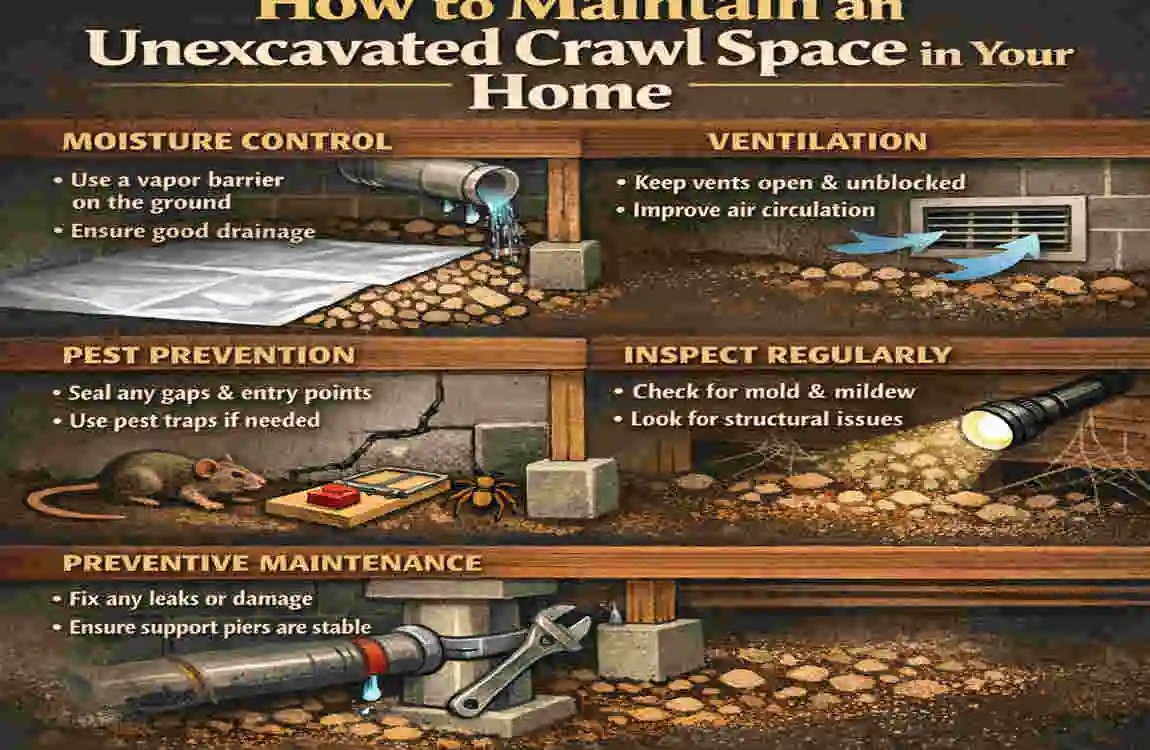
Most homeowners would check the roof, the plumbing, or the walls first. But in many older homes, the real problem starts below the floor in an unexcavated crawl space.
This hidden area is often easy to forget because you do not see it every day. Yet it can quietly affect your comfort, your air quality, and even the strength of your foundation. An unexcavated crawl space usually has a dirt floor and limited headroom, which can trap moisture, invite pests, and create the perfect environment for mold and wood rot.
That is why maintaining an unexcavated crawl space in your home matters so much. It does not just protect the space under your house. It protects the rooms you live in, the people who breathe that air, and the property’s value.
What Is an Unexcavated Crawl Space in Home?
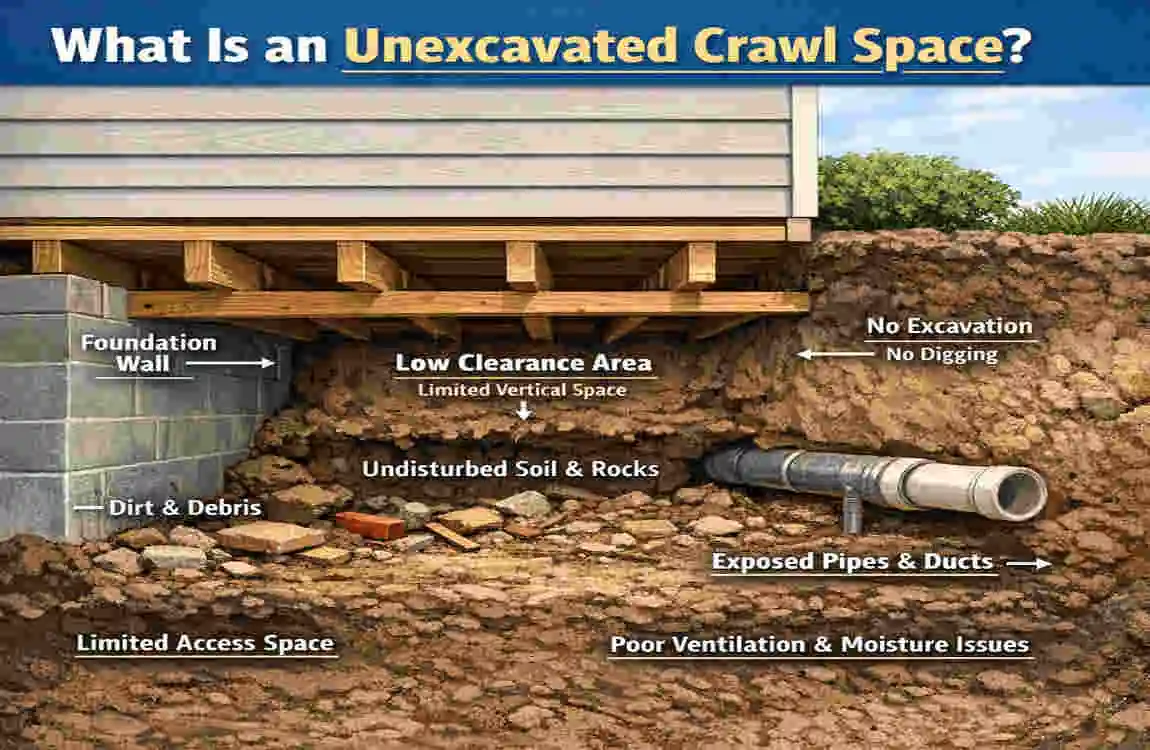
An unexcavated crawl space in home is the shallow area beneath a house that was not dug out or finished with a deeper floor system. In many cases, it has a dirt floor, low clearance, and only enough room for basic access to pipes, wiring, and structural supports.
This type of crawl space is common in older homes and in homes built on simpler foundations. It is different from a basement because you usually cannot stand upright inside it. It is also different from an excavated crawl space, which may have a more prepared base, better drainage, or improved access for maintenance.
The big issue with an unexcavated crawl space is that the soil below your home can release moisture into the air. When that moisture has nowhere to go, it can collect on beams, insulation, and pipes. Over time, that can lead to mold, wood damage, rust, and pest problems.
In hot and humid climates, the risk becomes even greater. Homes in places with strong seasonal moisture, heavy rainfall, or poor drainage are more likely to struggle with crawl space humidity. In regions with changing weather, the crawl space can also trap warm air in summer and cold damp air in winter. That creates constant stress on the structure.
Unexcavated, Excavated, and Encapsulated Crawl Spaces
It helps to compare the most common crawl space types side-by-side.
Feature Unexcavated Crawl Space Excavated Crawl Space Encapsulated Crawl Space
Floor Type Dirt/soil Gravel base or prepared ground Sealed with vapor barrier and usually conditioned
Moisture Risk High Medium Low
Maintenance Ease Moderate, often DIY-friendly for basic care Easier than dirt-only spaces Best maintained with professional help
Cost to Fix Issues Lower at first, but can become expensive if ignored Moderate Higher upfront, lower long-term risk
The key thing to remember is simple: the more exposed the soil and air are, the more moisture control matters.
Why Older Homes Often Have This Type of Crawl Space
Older homes were often built with materials and methods that made sense at the time. Builders focused on speed, access, and cost. They did not always think about long-term moisture control the way modern builders do.
That is why many older homes, including those in warm or humid areas such as Lahore, Punjab, and similar climates, often have crawl spaces that require regular attention. The foundation may still be solid, but the hidden area beneath may harbor years of dampness, dust, and debris.
Why Maintain Your Unexcavated Crawl Space in Home?
A crawl space may be hidden, but it is never isolated. The condition of this area affects the whole house. That is why maintaining an unexcavated crawl space in home is not just a repair task. It is a long-term protection strategy.
Moisture Causes More Than Just Dampness
When water enters a crawl space, it does not always show up as a puddle right away. Sometimes it appears as high humidity, damp insulation, or small wet spots on the soil. That moisture can slowly spread into the wood framing and flooring above.
Over time, this can lead to:
- Mold growth
- Wood rot
- Sagging or uneven floors
- Rust on metal parts
- Damaged insulation
- Musty indoor odors
The longer the moisture remains, the harder it becomes to fix. A small drainage issue today can become a structural repair later.
It Affects Indoor Air Quality
A surprising number of homeowners do not realize that air from the crawl space can move up into the living area. If the crawl space has mold, pest droppings, or damp soil, those odors and particles can enter the home.
That matters for people with:
- Allergies
- Asthma
- Sinus problems
- Other breathing concerns
If the air below your home is unhealthy, the air inside your home can become unhealthy too. That is why preventing mold in crawl space areas should always be part of your home maintenance plan.
It Protects the Foundation
Your crawl space is part of your home’s support system. If the soil stays too wet for too long, it can shift, expand, or settle unevenly. That can place pressure on beams, posts, and the foundation itself.
Good home foundation protection starts with good moisture control. When the crawl space stays drier, the entire structure stays more stable.
It Can Reduce Energy Waste
Damp insulation does not work well. Air leaks also make it harder to keep your home warm in winter and cool in summer. When the crawl space is not maintained, your heating and cooling system often has to work harder than it should.
That can lead to:
- Higher energy bills
- Uneven temperatures in the home
- More wear on HVAC equipment
So yes, crawl space care is about protection. But it is also about comfort and efficiency.
The Main Risks at a Glance
Here is a simple look at why this work matters so much:
- Energy loss from wet or damaged insulation
- Pest entry through cracks, gaps, and openings
- Foundation movement from wet soil and shifting ground
- Poor indoor air quality from mold and humidity
- Expensive repairs when small issues go unnoticed
If you want to avoid major damage, the time to act is before the smell, stains, or floor damage start.
Signs of Problems in an Unexcavated Crawl Space in Home
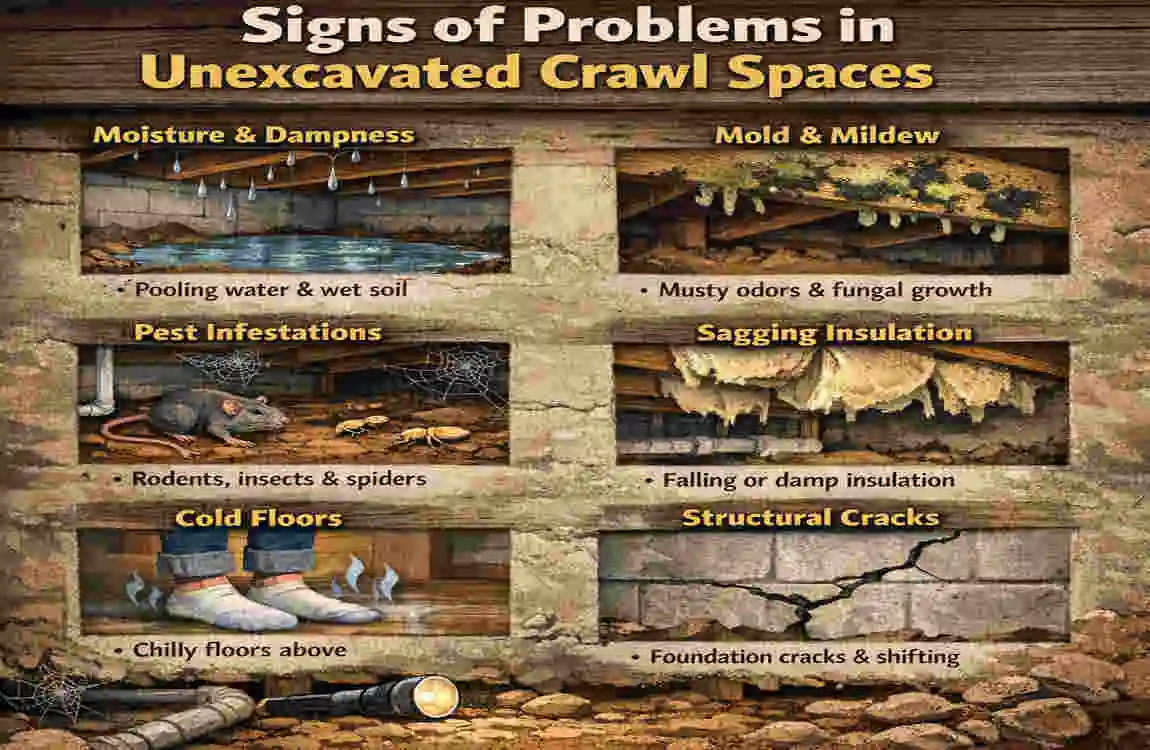
You do not need to crawl under your house every week to know something is wrong. In many cases, the signs show up inside the home first.
Common Warning Signs
Watch for these red flags:
- Musty odors that seem stronger near the floor
- High indoor humidity or a sticky feeling in the air
- Warped floors or soft spots underfoot
- Sticky doors or windows that used to open normally
- Visible mold on joists, insulation, or subflooring
- Standing water or damp soil in the crawl space
- Pest droppings, nests, or insect activity
- Rising utility bills without a clear reason
- Cold floors in winter or overly humid rooms in summer
These signs often mean the crawl space is holding too much moisture or letting in outside air the wrong way.
Small Clues Can Mean Bigger Damage
One of the biggest mistakes homeowners make is waiting too long. A small smell or a little softening in the floor might seem harmless at first. But behind that symptom, the moisture may already be affecting the wooden framing below.
If you notice several signs at once, do not wait. An unexcavated crawl space in home can shift from a maintenance issue to a repair issue quickly.
Why Early Action Saves Money
It is far cheaper to deal with humidity, sealing, and cleanup early than to repair mold, rotten joists, or damaged floor supports later. Basic maintenance may cost a little now, but ignoring the problem can lead to large structural bills later.
That is why a regular inspection should be part of your home routine, especially after heavy rain, monsoon weather, or seasonal changes.
Essential Tools for Maintaining an Unexcavated Crawl Space in Home
You do not need fancy equipment to begin basic crawl space care. A few simple tools can help you safely inspect, clean, and monitor the area.
Helpful Tools to Keep on Hand
- Flashlight or headlamp for checking dark corners
- Knee pads for comfort and protection
- Gloves to keep your hands clean and safe
- Respirator mask to reduce dust and mold exposure
- Moisture meter to check dampness in wood and materials
- Shop vacuum for dirt, dust, and debris
- Plastic sheeting or vapor barrier material for ground coverage
- Caulk gun for sealing cracks and gaps
- Insulation foam for small openings around pipes and wires
- Dehumidifier if the space needs help controlling humidity
- Hygrometer to monitor air moisture levels
Safety Comes First
Never enter a crawl space without thinking about safety. These areas can have low ceilings, sharp debris, insects, poor air quality, or exposed wiring.
Always:
- Wear protective clothing
- Check for standing water
- Look for loose wiring
- Avoid touching unknown materials
- Be careful if you smell gas or suspect radon
If the area looks unsafe, stop and call a professional. Safety matters more than speed.
Step-by-Step Maintenance Guide for an Unexcavated Crawl Space in Home
Now let us get into the real work. These steps will help you build a simple and effective maintenance routine for an unexcavated crawl space in home.
Safety Prep and Initial Inspection
Before you do anything else, prepare properly. Put on gloves, a mask, and sturdy clothing. Bring a flashlight and make sure the access hatch opens easily.
Once inside, look carefully at the full space. Do not rush. You want to understand the current condition before you start making changes.
Check for:
- Wet soil
- Condensation on pipes
- Damaged insulation
- Rotting wood
- Mold stains
- Pest signs
- Broken vents
- Cracks in the foundation walls
You should inspect the crawl space at least quarterly, and more often if the home has had moisture problems in the past. If your area has heavy seasonal rain, inspect again after storms.
Also check moisture levels. If conditions are consistently high, that is a clear sign that the crawl space needs better control.
Control Moisture in Dirt Floors
This is the heart of unexcavated crawl space moisture control. When the floor is just bare soil, moisture can rise directly into the air. That is why the dirt floor needs protection.
Install a Vapor Barrier
A vapor barrier is one of the most important upgrades you can make. It is usually a thick plastic sheet, often 6-mil to 20-mil, laid across the soil to block moisture from rising.
For best results:
- Cover as much of the floor as possible
- Overlap seams by at least 12 inches
- Tape or seal the seams
- Extend the barrier up the walls where appropriate
- Make sure it lies flat without large gaps
If exposed soil is left uncovered, moisture can still rise through those spots.
Improve Drainage Outside the Home
Sometimes the crawl space is not the only problem. Water may be entering because the land around the house drains poorly.
Check that:
- Gutters are clean
- Downspouts move water away from the house
- Soil slopes away from the foundation
- No sprinklers spray too close to the home
Good drainage outside helps a lot inside.
Consider a Gravel Layer if Needed
In some cases, a gravel layer can help improve drainage and reduce mud exposure. It is not a complete fix on its own, but it can support other moisture-control methods.
For homes with repeated water issues, this step can make the crawl space easier to maintain over time.
Improve Ventilation and Airflow
Ventilation in a crawl space is a topic people often misunderstand. Some cleaning homes benefit from open vents, while others need a more controlled approach. The right setup depends on climate, moisture level, and the age of the home.
If your crawl space uses vents, make sure debris, nests, or dirt do not block them. A blocked vent cannot properly move air.
If humidity is high, you may need a different solution, such as:
- A dehumidifier
- A sealed or semi-sealed approach
- A fan system designed for crawl spaces
The goal is not just more air. It is better air. Moist air moving through the crawl space can make the problem worse if the outside climate is already damp.
Insulate and Seal Gaps
A crawl space loses energy quickly if it has gaps, cracks, or weak insulation. It also becomes easier for pests and outside air to get in.
Focus on:
- Sealing cracks around pipes and wiring
- Closing gaps near vents or access points
- Repairing torn or fallen insulation
- Protecting pipes from cold weather
- Sealing small openings with foam or caulk
Proper insulation helps the house hold temperature better. It also reduces the chance of frozen pipes in winter and uncomfortable floors in extreme weather.
Prevent Pests Before They Move In
A damp crawl space can quickly attract insects, rodents, and other pests. They are looking for water, shelter, and quiet spaces. Your crawl space can provide all three if you do not maintain it.
Use these simple pest prevention steps:
- Seal entry points with caulk or steel wool
- Keep debris out of the space
- Remove cardboard, wood scraps, and old insulation pieces
- Set traps if needed
- Check for nests and droppings during every inspection
It is better to block pests early than deal with an infestation later. Also, avoid using methods that may create extra chemical exposure in a confined space unless a professional recommends them.
Clean Debris and Monitor the Space
A clean crawl space is easier to inspect and much easier to manage. Debris holds moisture, hides pests, and makes leaks harder to see.
Remove:
- Leaves
- Dirt piles
- Loose insulation
- Broken materials
- Trash or stored items that do not belong there
After cleaning, keep monitoring the space. A hygrometer can help you track humidity. A moisture meter can help you spot damp materials before they become damaged.
This is one of the simplest crawl space maintenance tips, but it is also one of the most effective. What you monitor, you can manage.
Seasonal Maintenance Schedule for an Unexcavated Crawl Space in Home
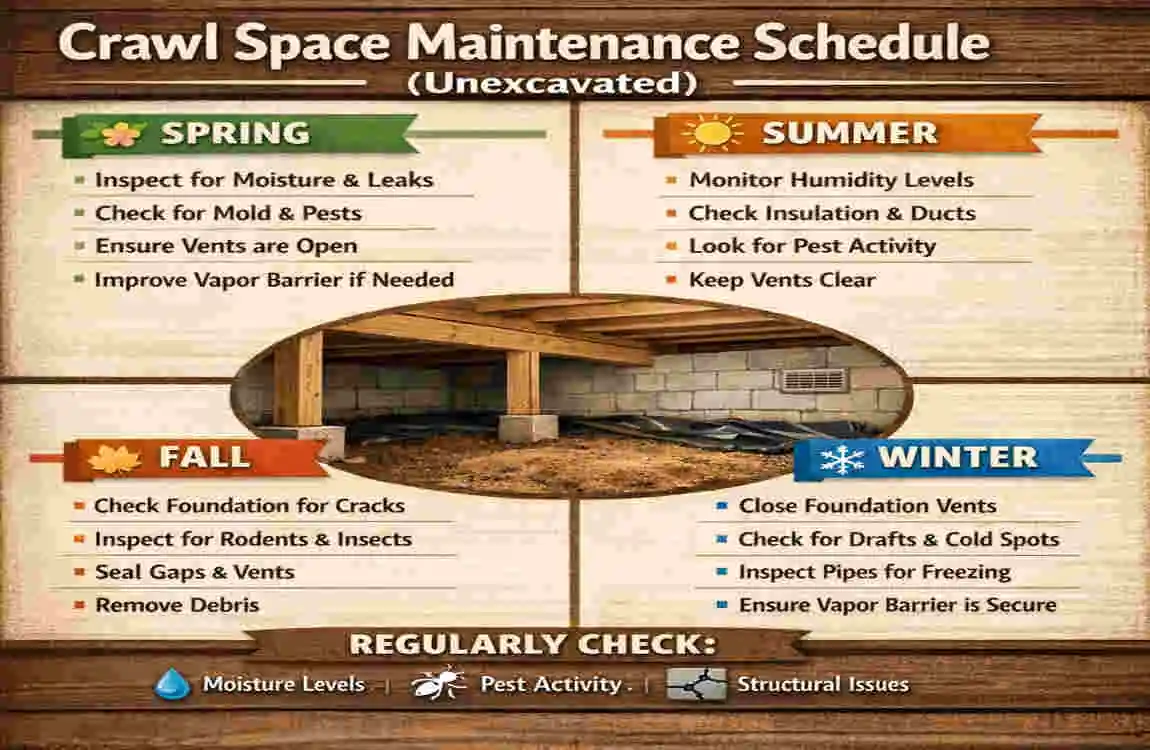
A crawl space does not need attention only when something goes wrong. The best results come from seasonal care.
Season Key Tasks Frequency
Spring Check vapor barrier, clean gutters, inspect for rain damage Monthly
Summer Run dehumidifier, monitor humidity, check for pests Bi-weekly
Fall Inspect insulation, clear vents, seal gaps before cold weather Monthly
Winter Wrap pipes, check moisture, watch for condensation Quarterly
How to Adjust for Humid Climates
If you live in a region with strong monsoon rains or humid summers, check more often during those months. Moisture can rise quickly after heavy rainfall.
In dry months, your focus may shift more toward dust, pest entry, and insulation. The goal is to stay flexible based on the season.
Build a Habit, Not a One-Time Fix
The best crawl space care is regular. Once a year is usually not enough. Even simple checks every few months can prevent major damage.
That is the real value of staying on top of an unexcavated crawl space in home. You are not just reacting to problems. You are stopping them before they grow.
Common Mistakes to Avoid with an Unexcavated Crawl Space in Home
Even well-meaning homeowners can make mistakes that create more problems later. The good news is that most of them are easy to avoid.
Ignoring Small Leaks
A slow drip from a plumbing fixture, a minor roof leak, or a little standing water can seem harmless at first. But in a crawl space, even a small leak can keep the area damp for days or weeks.
Do not dismiss tiny moisture problems. Fix them early.
Over-Ventilating in Humid Weather
More air is not always better. In damp climates, too much outside air can bring in even more moisture. That can make mold and condensation worse, not better.
Always think about the climate before changing airflow.
Skipping Protective Gear
A crawl space can contain dust, mold spores, pests, and sharp debris. Going in without protection is a bad idea.
Always use:
- Gloves
- Mask
- Headlamp
- Knee protection
Storing Things in the Crawl Space
Some people use crawl spaces as storage by accident or convenience. That is usually a mistake. Stored items can trap moisture, attract pests, and block important inspections.
Trying to Fix Big Problems Alone
Basic sealing and cleaning are often DIY-friendly. But large mold growth, structural damage, or ongoing flooding needs professional help.
Knowing when to stop is part of smart home care.
When to Call Professionals for an Unexcavated Crawl Space in Home
There comes a point where DIY maintenance is no longer enough. If the crawl space has serious damage, calling a professional can save time, money, and stress.
Signs You Need Expert Help
Contact a specialist if you notice:
- Extensive mold
- Strong, persistent odors
- Standing water that returns after cleaning
- Soft or damaged beams
- Foundation shifts or large cracks
- Suspected radon issues
- Wiring or plumbing damage
- Evidence of pests that keeps coming back
Why Professional Help Matters
Professionals can test moisture levels, identify hidden problems, and recommend the right fix. They may suggest drainage improvements, full encapsulation, mold cleanup, or structural repair depending on what they find.
For many homes, an upgrade to a more sealed system can range from basic work to a more complete encapsulation project. The right choice depends on the crawl space size, soil condition, and moisture levels.
Good Time to Upgrade
If you keep repairing the same issues again and again, it may be time to move beyond basic maintenance. A better sealing approach or a professional cleanup can often provide longer-lasting protection.
If you are unsure, get an inspection first. A clear diagnosis is always better than guessing.
Helpful Maintenance Checklist for Homeowners
Here is a simple checklist you can use during each inspection:
- Check for odors inside the house
- Inspect the crawl space access point
- Look for wet soil or standing water
- Examine joists and beams for rot
- Check insulation for sagging or mold
- Confirm gutters and downspouts are working
- Test humidity with a hygrometer
- Look for pest droppings or nests
- Inspect vapor barrier seams
- Seal new cracks or openings
- Confirm pipes are protected
- Clean debris from the area
Use this checklist every season, or more often if your home has had previous issues.
Internal Resources You May Want to Explore
If your crawl space needs more than routine maintenance, these related topics can help you plan the next step:
- Crawl Space Encapsulation Guide
- Home Plumbing Safety
These related guides can help you understand how crawl space care connects with moisture control, plumbing protection, and long-term home health.
FAQs About Unexcavated Crawl Space in Home
What is an unexcavated crawl space in home?
An unexcavated crawl space in home is a shallow space beneath the house with a dirt floor and limited height. It gives access to pipes, wiring, and structural supports, but it often needs moisture and pest control because the soil is exposed.
How often should I inspect it?
A good rule is to inspect it every three months. You should also check it after heavy rain, flooding, or major seasonal changes. If your home has had moisture problems before, more frequent checks are a smart idea.
Can I install a vapor barrier myself?
Yes, many homeowners can handle a basic vapor barrier installation if the crawl space is safe and easy to access. Make sure the material overlaps properly and covers as much soil as possible. If the space has standing water, mold, or structural issues, call a professional first.
Does encapsulation work on dirt floors?
Yes. In fact, encapsulation is often used to improve a dirt-floor crawl space. The goal is to seal out ground moisture and create a cleaner, drier environment. It works best when combined with drainage improvements and proper humidity control.
What is the biggest danger of ignoring crawl space problems?
The biggest danger is that small issues grow quietly. Moisture can lead to mold, wood rot, pest infestations, and foundation damage. By the time the signs appear upstairs, the repairs may already be expensive.
Is a dehumidifier enough on its own?
Usually, no. A dehumidifier helps, but it should be part of a larger plan. If the soil is exposed, the area leaks water, or gaps remain open, the moisture problem can recur.
What should I do first if I suspect damage?
Start with a visual inspection and moisture check. Then clean the area, look for obvious leaks, and confirm whether the vapor barrier or drainage system needs repair. If you see mold, structural damage, or standing water, bring in a professional.
