

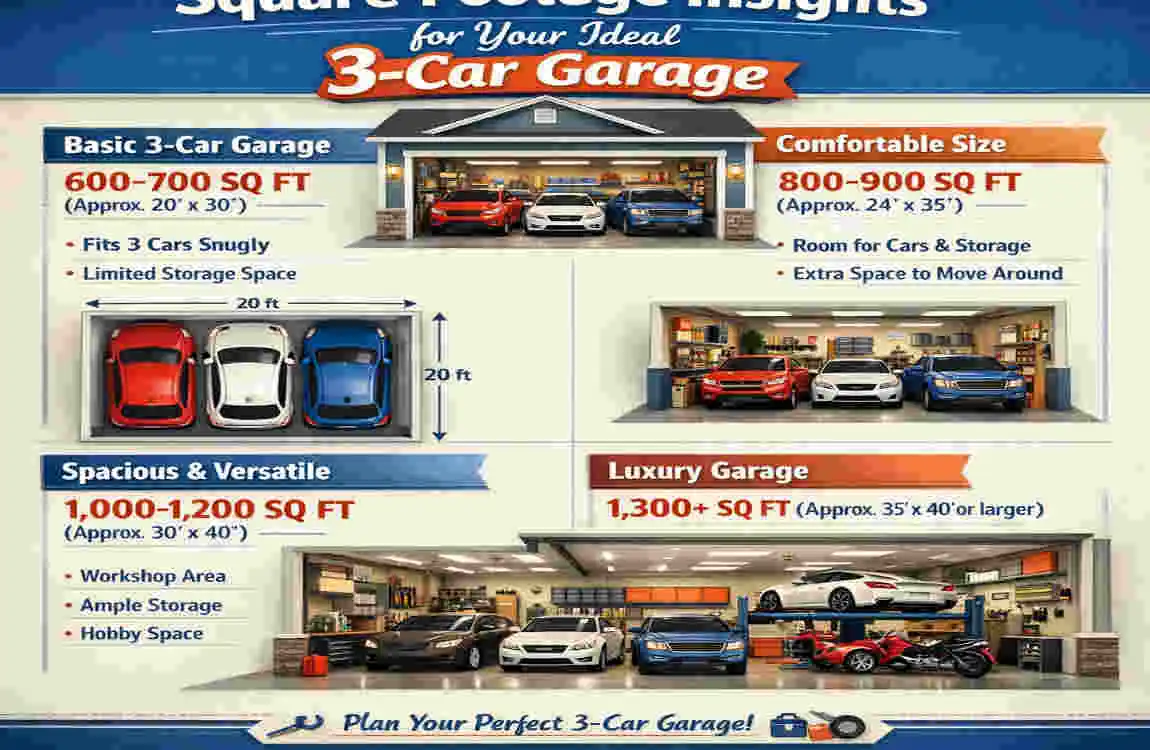
A 3-car garage sounds simple at first. You imagine a wide space, three vehicles, and maybe a little room left over for tools or storage. But once you start planning, the question becomes a lot more important: how many square feet is a 3-car garage really supposed to be?
The answer is not as fixed as many people expect. A 3-car garage can be built in a smaller footprint if you only want the bare minimum, or it can be made much larger if you want easy parking, storage, a workshop, or space to walk around comfortably. That difference matters a lot. It can be the difference between a garage that feels useful every single day and one that feels tight, cluttered, and frustrating.
If you are planning a new build, a renovation, or even just comparing options, this guide will help you understand the ideal size, standard dimensions, layout choices, and practical planning details. By the end, you will have a much clearer picture of what works best for your vehicles, your family, and your lifestyle.
Understanding the Basics: How Many Square Feet Is a 3-Car Garage?
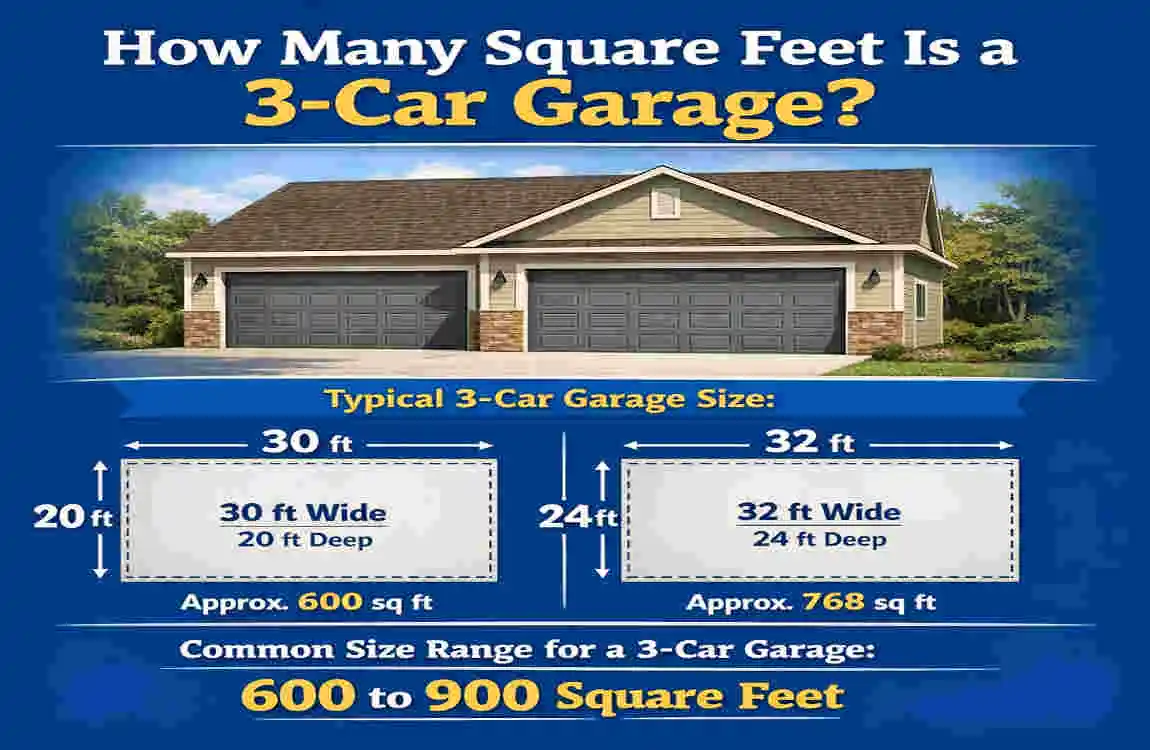
When people ask how many square feet a 3-car garage is, the first thing to know is that there is no single, universal size. A 3-car garage can be designed in several ways, depending on how much room you need, the types of vehicles you own, and how much storage you want to include.
The Basic Range
At the low end, a 3-car garage can start around 600 square feet. That is usually considered a minimum footprint, and it can work if the garage is built very efficiently and the vehicles are relatively compact.
A more common average size is around 864 square feet, which gives you a far more comfortable setup. That size tends to feel much more practical for daily use because it allows a better balance between parking space and movement space.
In many real-world projects, a 3-car garage can also go beyond that, especially when homeowners want room for shelves, bikes, lawn equipment, hobby space, or oversized trucks. So while the answer to the question is often “around 600 to 864 square feet or more,” the best number for you depends on how you plan to use it.
Why the Size Changes So Much
The footprint of a 3-car garage changes because not every household uses it the same way. Some homeowners only want to protect three cars from the weather. Others want a place to work on projects, store sports gear, keep seasonal decorations, or set up a small home gym.
Here are some of the biggest reasons the size varies:
- Vehicle size: A garage for compact sedans can be smaller than one for full-size SUVs or trucks.
- Door clearance: If you want to open car doors without bumping anything, you need extra room.
- Storage needs: Cabinets, shelves, and overhead storage all take up valuable space.
- Site limits: Lot size, setbacks, and local rules may limit the garage footprint.
- Lifestyle use: A garage used as a workshop or hobby space needs more square footage than one used only for parking.
A good rule to remember is this: the more functions you want the garage to serve, the more square footage you should plan for. A garage should not just fit cars on paper. It should fit how you actually live.
Standard Size Tiers for a 3-Car Garage
The table below gives you a simple way to compare common 3-car garage sizes.
Garage Size TierApprox. Square FeetBest ForComfort Level
Minimum 600 sq. ft. Tight parking for smaller vehicles Basic
Standard 768–864 sq. ft. Most family vehicles and daily use Comfortable
Ideal / Spacious 900+ sq. ft. Larger vehicles, storage, and work areas Very comfortable
A smaller garage may technically work, but a more generous footprint often feels better in real life. If you have ever stepped out of a car in a narrow garage and had to squeeze past another vehicle, you already know why square footage matters.
Decoding Dimensions: Width vs. Depth
Square footage is important, but it does not tell the whole story. A garage is not just about total area. It is also about how that space is shaped.
A wide garage that is too shallow may make parking awkward. A garage that is deep enough but not wide enough may leave no room for opening doors. That is why width and depth need to be planned together.
Minimum vs. Optimal Dimensions
A common minimum layout for a 3-car garage is about 30 feet by 20 feet, totalling 600 square feet. That is the kind of size that can work in a basic sense, but it can feel tight if you are using the garage for more than just parking.
A much more comfortable and widely used layout is 36 feet by 24 feet, which equals 864 square feet. This is often seen as a standard size because it gives the vehicles more breathing room and makes everyday use easier.
Why does this difference matter so much?
Because cars are not the only thing you need to think about. You also need to account for:
- opening doors without hitting a wall or another car
- walking around the vehicle
- storing trash bins, tools, and supplies
- leaving enough room to move items in and out
- using the garage safely in bad weather
When the garage is too tight, even simple tasks become annoying. You may have to back in carefully every time. You may need to move one car just to reach another. You may find yourself stacking storage items in unsafe or inconvenient places.
Why Width Matters So Much
Width is often the most important dimension in a 3-car garage because cars sit side by side. If the garage is too narrow, the vehicles will be close together, and the doors may not open comfortably.
A wider garage gives you:
- easier entry and exit
- better door clearance
- more space for storage along the walls
- a less stressful parking experience
- room for side access to tools or cabinets
For most families, width affects daily satisfaction more than almost any other design choice. You may not notice extra width on paper, but you will feel it every day when you park, unload groceries, or grab tools from the wall.
Why Depth Matters Too
Depth is just as important, especially if you own larger vehicles. Trucks and SUVs often need more room than smaller sedans. If the garage is too shallow, the front or back of the vehicle may sit too close to the wall or garage door.
Deeper garages can also support better storage placement. For example, you may want a workbench toward the back, or you may want to park vehicles with some additional space in front for bins or equipment.
Ceiling Height Should Not Be Overlooked
Ceiling height is easy to overlook when people think about garage size. Still, it plays a big role in a garage’s usefulness. A standard garage ceiling is typically 8 to 10 feet high, and that range works well for many homes.
A higher ceiling can be helpful if you want:
- overhead storage racks
- tall cabinets
- room for lifts
- space for taller vehicles
- a less cramped feel overall
If you ever hope to install storage above the vehicles or use the garage for a project car, the ceiling height becomes especially important. A garage can have a good floor plan and still feel limited if the ceiling is too low.
Vehicle Class Size Guide
The right dimensions depend heavily on what you drive. Here is a simple guide to help you think through vehicle size and garage planning.
Vehicle ClassApprox. Vehicle LengthTypical Space Need in GaragePlanning Notes
Compact car 14–16 ft Lower depth requirement Easier to fit in narrower layouts
Sedan 15–17 ft Moderate depth requirement Works well in standard garages
Large SUV 17–19 ft More depth and door clearance Needs extra side and front room
Full-size truck 18–22 ft Highest space demand Often benefits from a deeper garage
If you own a mix of vehicle types, it is smart to plan around the largest one first. That way, your garage remains functional no matter which vehicle is parked inside.
Planning for Your Specific Needs

A great garage is not just a parking box. It is a flexible part of the home. The best design is the one that supports your everyday life without feeling cramped or awkward.
For the Enthusiast
Some homeowners want their 3-car garage to do more than store vehicles. They want it to support hobbies, hands-on work, fitness, or creative projects.
If you are an enthusiast, your garage might need space for:
- a workshop table
- bikes and exercise gear
- tool storage
- a small home gym
- a hobby bench
- project equipment
- seasonal supplies
This is where extra square footage becomes very valuable. A standard garage may fit three cars, but it may not leave enough room for a proper work zone. If you want the garage to function as a workshop, think about where you will stand, where your tools will sit, and how much room you need to move around safely.
A smart strategy is to create zones. For example:
- one side for parking
- one wall for storage
- a back corner for a workbench
- overhead space for light seasonal items
That kind of layout keeps the garage useful without turning it into a cluttered catch-all space.
For the Multi-Vehicle Household
If your home includes a truck, SUV, minivan, and sedan, you already know that vehicles do not all behave the same in a garage. Some are longer. Some are wider. Some have side mirrors that make every inch matter.
A multi-vehicle household should think carefully about:
- turning space
- door swing room
- mirror clearance
- walkway access
- whether one vehicle blocks another
Oversized trucks and long-wheelbase vehicles can create a big challenge if the garage is not deep enough. Even if the vehicles technically fit, it may be hard to walk between them or access items stored around them.
This is why many people with larger vehicles choose a garage size above the bare minimum. It may cost more upfront, but it often saves stress for years.
Storage Integration That Actually Works
Storage is one of the biggest reasons people choose a 3-car garage in the first place. The extra space can be incredibly useful, but only if the storage is carefully planned.
A good storage layout should avoid blocking:
- car doors
- walking paths
- windows
- utility access
- garage door tracks
Shelving and cabinets work best when they stay along walls or in corners that do not interfere with daily movement. Overhead storage can also be a smart choice for lighter seasonal items that you do not need every week.
The key is balance. You want the garage to support storage, but you do not want storage to take over the whole garage.
Practical Storage Ideas
- Use wall-mounted shelves for small bins and tools.
- Install tall cabinets for items you want hidden.
- Add overhead racks for light, seasonal storage.
- Keep a clear path near the main parking spots.
- Place frequently used items near the entry door for easy access.
A well-planned garage makes storage feel intentional, not messy. That is a huge difference in everyday life.
Zoning, Permits, and Site Considerations
Before you get too deep into the design, you need to consider the site’s rules and physical limits. This step is often less exciting than choosing layout options, but it is essential.
Local Codes and Setbacks Matter
Every area has its own rules about what can be built and where. These rules may include:
- setback requirements from property lines
- maximum building coverage
- height restrictions
- drainage and grading rules
- permit requirements
- fire separation rules if attached to the home
If you skip this step, you may end up with a design that looks good on paper but cannot be approved for your property. That is a costly mistake, so it is worth checking early.
Even if the garage size you want makes sense for your vehicles, it still has to fit within your lot and meet local building rules. That is why many homeowners start with an ideal size and then adjust it to match real-world conditions.
Foundation and Construction Costs
The more square footage you build, the more material you need. That may sound obvious, but it affects the budget in several places.
A larger garage can increase costs for:
- foundation and concrete
- framing
- roofing
- siding
- insulation
- electrical work
- garage doors
- flooring
- finishing details
Even small increases in size can add up quickly. That is why square footage is not just a design choice. It is a budget choice too.
At the same time, going too small can cost you later if you need to expand or remodel. That is why it helps to plan how you will use the garage over the next several years, not just on day one.
Think About the Site Around the Garage
The garage does not exist alone. It must also work with the rest of the property.
Consider:
- driveway width and turning radius
- how vehicles enter and exit
- whether the garage is attached or detached
- the slope of the land
- drainage around the foundation
- snow storage or seasonal weather challenges
- access to the side or rear of the building
A beautiful garage layout can still be inconvenient if the driveway is too narrow or the site is too small for parking. Good planning always considers the entire property, not just the building footprint.
Layout Tips for Maximum Efficiency
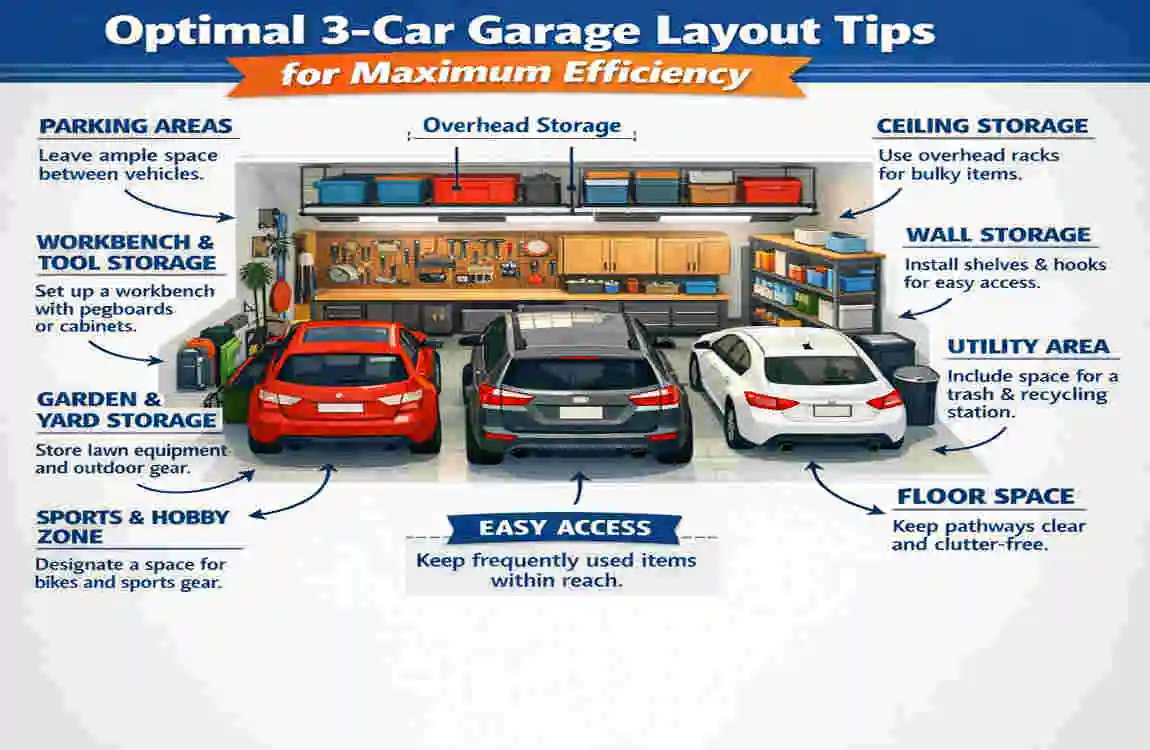
Once you know the size and the rules, the next step is making the layout work as smoothly as possible. This is where smart design really pays off.
Door Configurations
One of the biggest layout choices is how many garage doors to use and how to arrange them.
You generally have a few common options:
- Three single doors
- One double door and one single door
- One wide multi-car opening
Each option has strengths and weaknesses.
Three Single Doors
This setup gives each vehicle its own opening. It can look neat and organized, and it may help reduce the chance of one open door blocking another car.
Pros:
- very clear parking zones
- less chance of vehicle overlap
- individual access for each bay
Cons:
- more door hardware
- can be more expensive
- less flexible if vehicle sizes vary
One Double and One Single Door
This is a very common design because it balances appearance, function, and cost.
Pros:
- flexible layout
- easier access for larger vehicles
- usually more affordable than three separate doors
Cons:
- the double-door bay may need more careful parking
- one vehicle can still affect access if the space is tight
One Wide Opening
A single wide opening can make the garage feel open and easy to use.
Pros:
- simple visual appearance
- convenient for parking
- good for large equipment or oversized vehicles
Cons:
- less separation between vehicles
- may not suit every home style
- can feel less organized if storage is not planned well
The best choice depends on how you use the garage. If you want a clean, traditional layout, separate bays may work well. If flexibility matters more, a wider opening might be better.
Walk-Around Space Is a Big Deal
A garage may technically fit three cars, but that does not mean it will feel comfortable. You still need room to walk around the vehicles without squeezing between mirrors and walls.
A good target is 2 to 3 feet of clearance where possible. That space helps with:
- opening car doors
- carrying groceries or bags
- moving around safely
- reducing accidental damage
- loading and unloading bulky items
If you have ever scraped a door on a wall or bumped a mirror while getting out of the car, you already know how valuable that extra space is.
Keep Safety in Mind
Efficiency is important, but safety matters just as much. A garage should not force you into awkward or risky movement.
Make sure the layout allows for:
- clear walking paths
- enough space for emergency access
- safe storage of chemicals and tools
- room to move around while the garage door is opening
- good lighting throughout the space
A garage that feels easy to use is usually safer, too. When people have room to move, they make fewer mistakes.
A Simple Layout Checklist
Use this quick checklist while planning:
- Measure your vehicles accurately.
- Add space for door opening and walking.
- Decide how much storage you want.
- Choose a door configuration that fits your routine.
- Leave room for future needs, not just current ones.
This kind of thinking helps you avoid the common trap of building only for the present. Your garage should serve your life now and still make sense later.
Frequently Asked Questions
Does a 3-Car Garage Increase My Home Value?
In many cases, yes. A 3-car garage can increase a home’s appeal by providing buyers with more parking, storage, and flexibility. That said, the value boost depends on your neighbourhood, the home’s overall quality, and whether a 3-car garage aligns with local buyer expectations.
In some markets, a 3-car garage is a major selling point. In others, it may not add as much value as a kitchen upgrade or another interior improvement. Still, many buyers like the convenience and extra space it provides.
Can I Fit a Workshop in a Standard 3-Car Garage?
Yes, you often can, but it depends on how much room the cars actually take up and how large your work area needs to be. A standard 3-car garage may support a small workshop if you use the walls and corners wisely.
If you want a real workshop with benches, tool storage, and room to move around, a larger footprint is usually better. You may also want to dedicate one bay to the workshop and keep the other bays for vehicles.
Is It Cheaper to Build a Separate Garage or an Attached One?
It depends on the property, the design, and the materials used. An attached garage may be more convenient and sometimes easier to integrate into the home design. In contrast, a detached garage can offer more flexibility for layout and use.
Costs can vary a lot based on:
- foundation work
- site preparation
- utility connections
- roofing
- exterior finishing
- how much customization you want
There is no one-size-fits-all answer here. The right choice depends on your budget, your lot, and how you plan to use the garage.
