

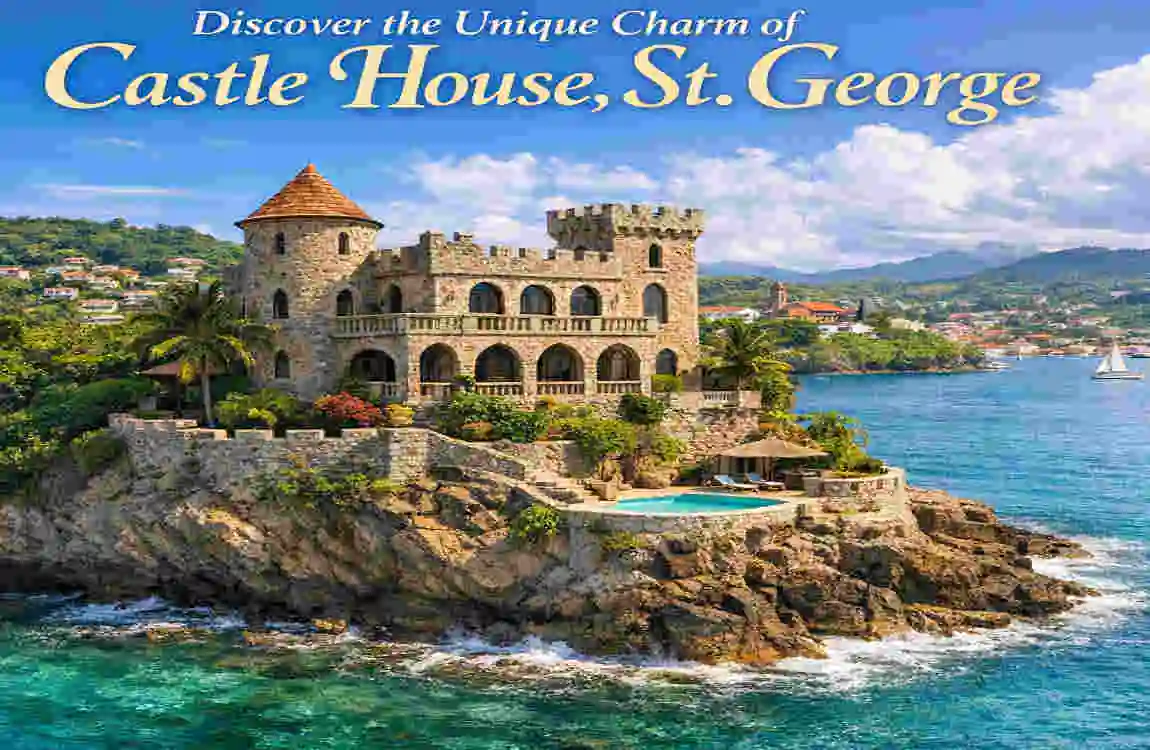
St. George, Utah, is a city steeped in history, culture, and breathtaking landscapes. Among its many treasures, one landmark stands out for its unique charm and historical significance: Castle House, St. George, Utah. This iconic structure, perched on a hill overlooking the city, is more than just a historic home—it’s a symbol of the region’s pioneer heritage, architectural ingenuity, and cultural pride.
The Historical Background of Castle House, St. George, Utah
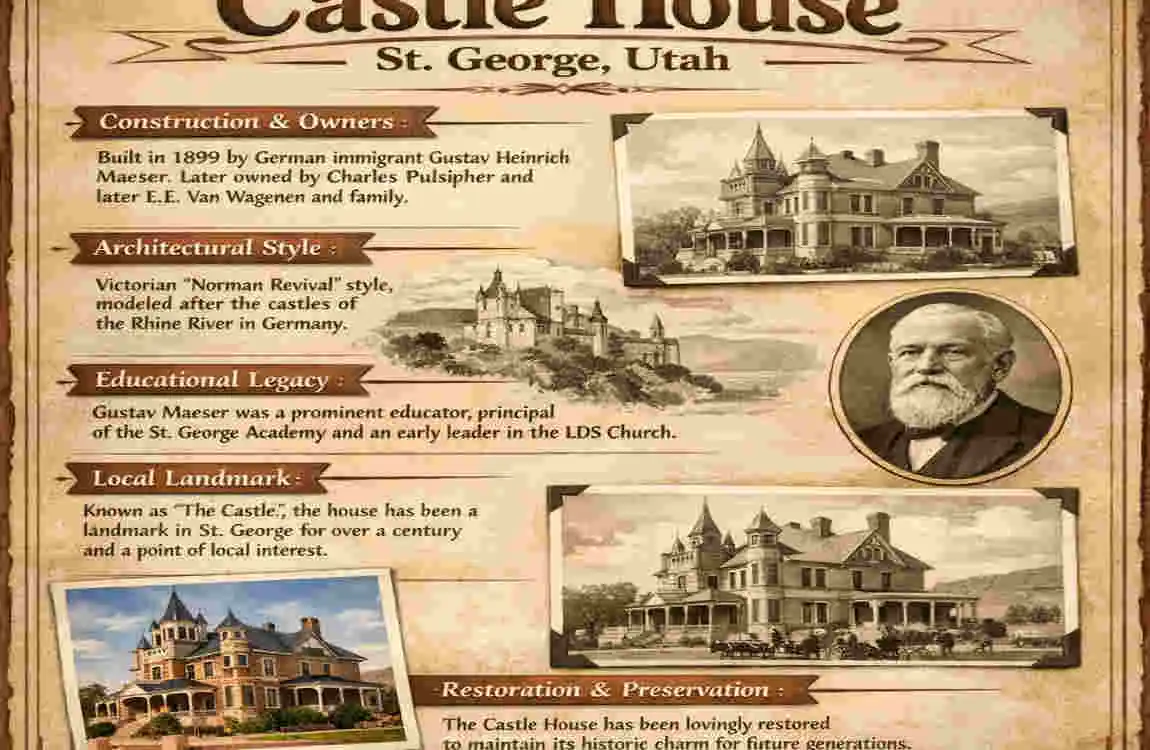
To truly appreciate the significance of Castle House, it’s essential to understand the historical context of St. George itself. This city, founded in 1861 by Mormon pioneers, has a rich history of resilience and community spirit. The settlers faced harsh desert conditions, but their determination to build a thriving community laid the foundation for landmarks like Castle House.
The Origins of Castle House
Castle House was constructed in the late 19th century, during a period of growth and development in St. George. William F. Butler, a prominent figure in the area, initially built the home. Its construction reflected the resourcefulness of the pioneers, who used locally sourced materials, such as adobe and sandstone, to create durable and beautiful structures.
Over the years, Castle House underwent several modifications, with each owner leaving their mark on the property. One notable addition was made by Henry G. Bryner, who expanded the home and added unique features that enhanced its charm. These changes not only preserved the house but also elevated its architectural significance.
A Landmark of Pioneer Ingenuity
Castle House played a vital role in the development of St. George. It served as a gathering place for the community and a symbol of the settlers’ ability to adapt to their environment. The house’s design, which included a two-level cellar-granary, showcased the pioneers’ ingenuity in creating functional spaces that suited their needs.
Local Lore and Stories
Every historic home has its stories, and Castle House is no exception. Local legends and anecdotes add a layer of mystique to the property. For instance, some residents believe the house is haunted, while others share tales of its role in community events. These stories, passed down through generations, contribute to the house’s enduring appeal.
Architectural Features and Design
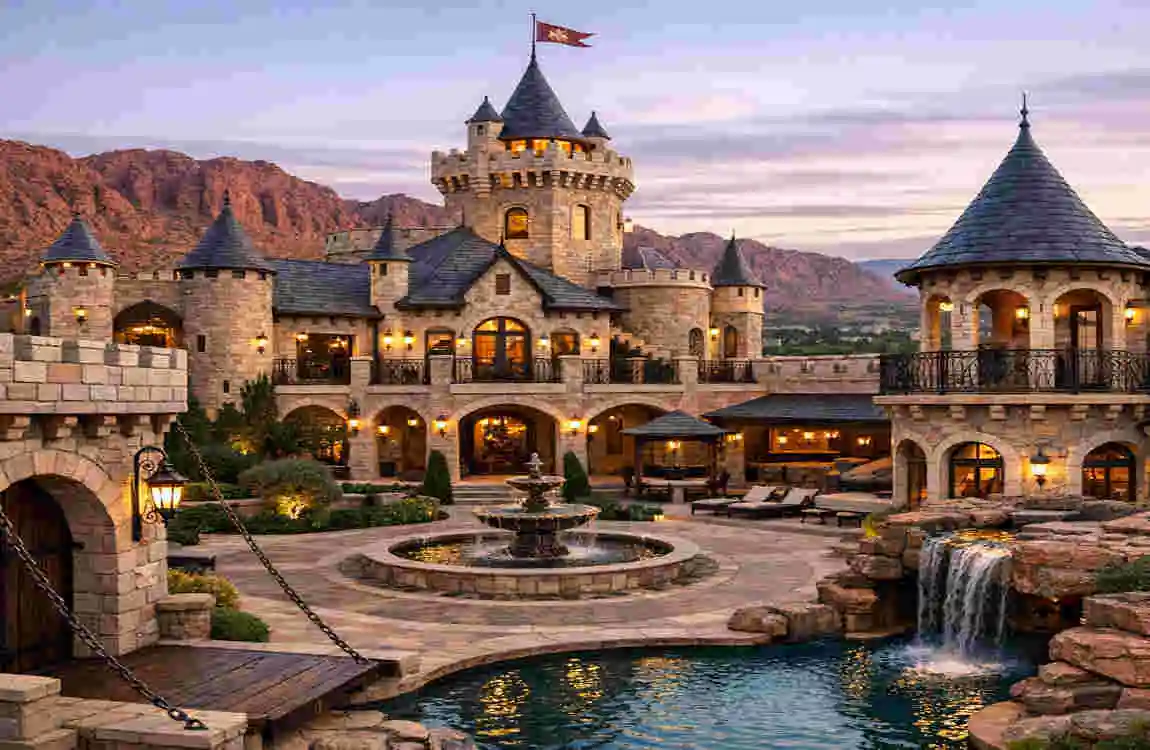
One of the most captivating aspects of Castle House is its architecture. Unlike modern homes, which often prioritise convenience over character, Castle House is a testament to the artistry and craftsmanship of its time.
Distinctive Architectural Style
Castle House’s design is a blend of pioneer practicality and aesthetic elegance. The use of adobe bricks and sandstone not only provided insulation against the desert heat but also gave the house its distinctive appearance. The structure’s castle-like features, including its turrets and steep rooflines, earned it the nickname “Castle House.”
Comparison with Other Historic Buildings
When compared to other historic landmarks in St. George, such as the St. George Utah Temple, Castle House stands out for its unique design. While the temple reflects the grandeur of religious architecture, Castle House embodies the charm of a family home with a touch of whimsy. Both structures, however, share a common thread: they were built with a deep respect for the region’s natural resources and climate.
Unique Features of Castle House
One of the most intriguing aspects of Castle House is its two-level cellar-granary, a feature that highlights the pioneers’ resourcefulness. This space was used for storing food and supplies, ensuring the family’s survival during harsh winters. Additionally, the house’s layout, with its spacious rooms and high ceilings, reflects a blend of functionality and comfort.
The later additions by Henry G. Bryner further enhanced the house’s appeal. His modifications included decorative elements that added a touch of sophistication to the home. These features, combined with the house’s original design, make Castle House a true architectural gem.
The Castle House in Modern Times

While Castle House is a relic of the past, it continues to play an essential role in the present. Its preservation and restoration efforts have ensured that future generations can appreciate its beauty and significance.
Current Status and Preservation
Today, Castle House is privately owned, but its historical value has not gone unnoticed. Local preservation groups have worked tirelessly to maintain the property, ensuring that its unique features remain intact. These efforts highlight the community’s commitment to preserving its heritage.
A Cultural Icon in St. George
Castle House is more than just a historic home—it’s a cultural icon. Locals affectionately refer to it as “Hogwarts” due to its castle-like appearance, and it has become a popular spot for photography and storytelling. Its location on a hill overlooking the city adds to its allure, making it a prominent feature of the St. George skyline.
A Part of St. George’s Tourism Landscape
As a landmark, Castle House attracts visitors from near and far. It’s often included in tours of St. George’s historic sites, alongside attractions like the St. George Utah Temple and the city’s charming downtown area. For tourists, a visit to Castle House provides a glimpse into the city’s past and an opportunity to experience its unique charm.
Visiting Castle House: What to Expect

If you’re planning a trip to St. George, a visit to Castle House should be on your itinerary. Here’s what you need to know to make the most of your visit.
Practical Information
Castle House is situated in a quiet neighbourhood, making it a serene spot to explore. While the house itself is not open to the public, visitors can admire its exterior and take in the stunning views from the hill. Be sure to check local guidelines for any updates on accessibility.
Nearby Attractions
St. George is home to several other historic landmarks and attractions. After visiting Castle House, consider exploring the St. George Utah Temple, the Brigham Young Winter Home, or the city’s vibrant downtown area. These sites offer a deeper understanding of the city’s history and culture.
Tips for Tourists
To fully appreciate Castle House, take your time to explore its surroundings. Bring a camera to capture its unique architecture and the panoramic views of St. George. If you’re visiting during the summer, plan your trip for the early morning or late afternoon to avoid the heat.
FAQ: Frequently Asked Questions About the St. George Castle
What is St. George Castle?
St. George Castle, also called Castelo de São Jorge, is a historic castle in Lisbon, Portugal . It sits high above the city in the Alfama district and was built by the Moors in the 11th century as a fortress .
Why is it called St. George Castle?
The castle was renamed in honor of Saint George, who was a popular warrior saint . One guide says João renamed the fortress in his bride’s patron saint’s honor, changing it from the Castle of the Moors to Castelo de São Jorge .
What can visitors see there?
Visitors can see castle walls and 18 towers, many of which were restored in the early 20th century after earlier destruction, including damage from the 1755 earthquake . Inside the walls, there is also a small neighborhood called Santa Cruz do Castelo, with narrow cobbled lanes and pretty streets .
Where exactly is it located?
The official location listed in the provided results is Rua de Santa Cruz do Castelo, 1100-129 Lisboa .
What is the castle known for?
The castle is known for its historic architecture, long military history, and connection to Saint George and the dragon legend . It is also well known for its elevated position and historic setting in Lisbon .
Was it always a royal residence?
No. It was first built as a military stronghold by the Moors . Later, it also served as a Royal Palace .
Can I confirm the opening hours from these results?
No, not exactly. The search results mention that opening-hour information exists, but the snippet provided does not include the exact times, so I can’t confirm them from the supplied results alone .
Quick Summary
- Location: Lisbon, Portugal
- Origin: Built by the Moors in the 11th century
- Highlights: 18 towers, walls, historic neighborhood, royal history
- Name origin: Named after Saint George
