

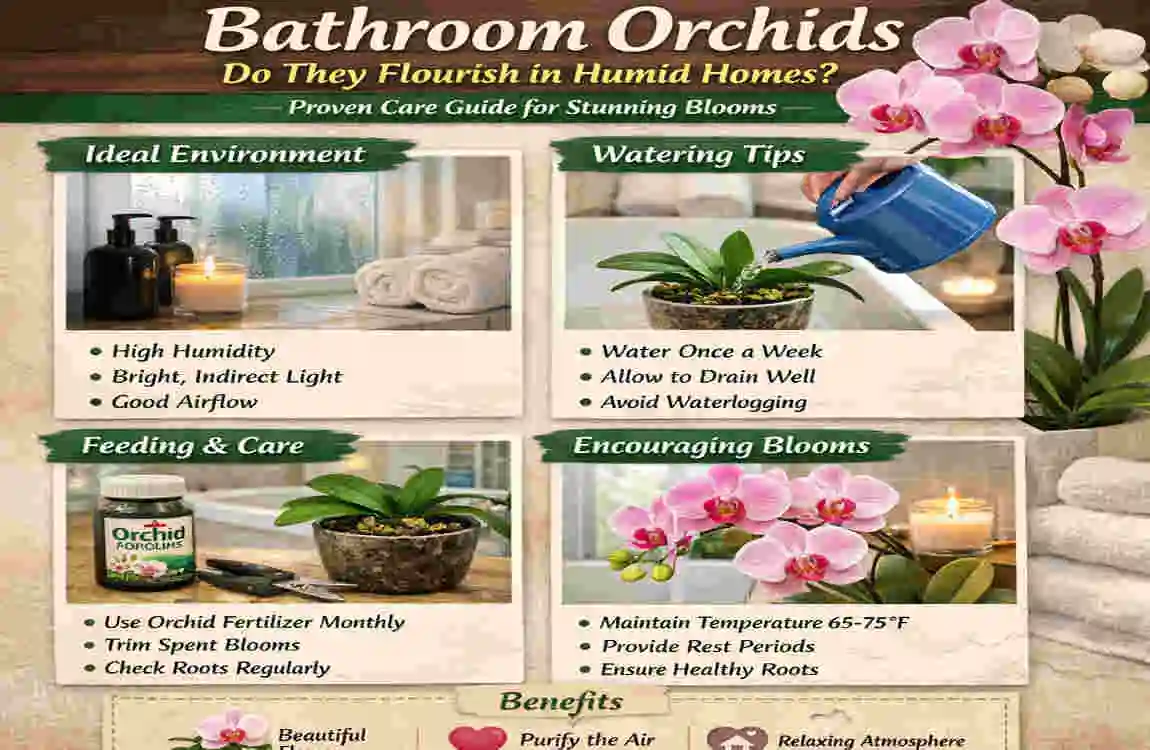
Bathroom orchids can indeed flourish in humid homes, thanks to the steamy environment mimicking their tropical origins.
Orchids thrive in bathrooms with 40-80% relative humidity from showers, but need bright indirect light (like east-facing windows) and good air circulation to avoid mold. Avoid constant fog or chemical fumes from hairspray and cleaners, which can harm plants. Suitable varieties include Phalaenopsis, Paphiopedilum, and low-light types.
Water when roots turn silvery: soak the pot in lukewarm water for 5-10 minutes (or use a dish), then drain fully to prevent root rot—bathroom humidity reduces watering frequency. Use rainwater or filtered tap water for sensitive types.
Position near a window for filtered light; supplement with grow lights if dim. Elevate on a pebble tray for extra humidity without wet feet.housedigest+2 . Fertilize weakly monthly during growth (spring-fall), mist leaves occasionally, and repot every 1-2 years in bark mix. Steady warmth (18-29°C) and occasional showers keep blooms stunning.gardenersworld+2
Why Orchids Love Humidity: The Science Behind Bathroom Bliss

To understand how to keep these beauties happy, we have to look at where they come from. It isn’t just about water; it’s about the air.
Orchid Native Habitats and Humidity Basics
Most of the orchids you see in grocery stores or garden centres—like the popular Phalaenopsis—are epiphytes. In simple terms, this means they don’t grow in soil on the ground like a daisy or a rose. Instead, in the wild, they cling to the sides of trees high up in the rainforest canopy.
Because they are hanging onto tree bark, their roots are exposed to the air. In a tropical rainforest, the relative humidity stays between 60% and 80%. Their roots are designed to act like sponges, pulling moisture directly out of that thick, damp air.
Now, compare that to your average living room. Most homes, especially when the heater or air conditioner is running, have a relative humidity of about 30% to 50%. For a rainforest plant, it feels like a desert.
This is where your bathroom comes in to save the day. Post-shower, a bathroom’s humidity can spike to 70% to 90%. This is the sweet spot.
Here is a little science snippet for you: Plants have tiny pores on their leaves called stomata. These pores open up to breathe in carbon dioxide and release oxygen. In dry air, orchids keep these pores shut tight to prevent losing water. But in high humidity, they open up freely, allowing the plant to “breathe” better, grow faster, and trigger those stunning blooms.
Do Orchids Do Well in House Bathrooms? Key Factors Analysed
So, when you ask, “Do orchids do well in house bathrooms?” you are essentially asking if your bathroom can replicate a rainforest. Let’s break down the key factors that decide if your bathroom is orchid-ready.
The Humidity Match
This is the biggest “Pro” for bathroom orchids. Data from major orchid societies indicates that sustained humidity above 50-60% significantly boosts root health and leaf firmness. If your bathroom gets steamy often, you are already halfway to success.
Indirect Light
This is often the tricky part. Rainforest floors are shady. Orchids want bright, indirect light. A north or east-facing frosted bathroom window is usually perfect. If your bathroom has no windows, don’t worry—we will talk about grow lights later. The goal is to avoid direct, harsh sunlight that can scorch their sensitive leaves.
Temperature Swings
Believe it or not, orchids like a temperature drop at night. In nature, the sun goes down, and the jungle cools off. Most bathrooms mimic this well—they get warm when you shower and cool down when not in use. A range of 65°F to 85°F during the day is ideal.
The Airflow Trade-Off
Here is the catch: Orchids love humidity, but they hate stagnant air. In the wild, there is always a breeze. In a small bathroom, wet air that sits still can lead to fungus or rot. You need ventilation—a cracked door or a small exhaust fan—to keep the air moving.
Best Orchid Varieties for Humid Bathrooms: Top Picks That Thrive
Not all orchids are created equal. Some crave the sauna life, while others prefer a cooler, drier breeze. If you are looking for orchids in humid bathrooms that will actually bloom, here are the top contenders.
Phalaenopsis (Moth Orchid)
If you are a beginner, start here. This is the classic orchid you see everywhere, and for good reason.
- Why it loves bathrooms: It loves consistent warmth and moderate humidity. It is incredibly forgiving if you forget to water it occasionally because the bathroom air helps hydrate it.
- The Look: Broad, flat leaves and long, arching spikes with large, flat flowers that can last for months.
- Care Snapshot: Low to medium light; keep water out of the centre (“crown”) of the plant to prevent rot.
Oncidium (Dancing Lady)
These are showstoppers. The flowers look like tiny skirts dancing in the wind.
- Why it loves bathrooms: Oncidiums have thinner leaves than Moth orchids, meaning they lose water faster. They arguably crave the steam even more than Phalaenopsis.
- **The Look:**Huge sprays of dozens of small, usually yellow or brown flowers.
- Care Snapshot: Needs slightly more light than a Moth orchid. If your bathroom is bright, this is your winner.
Paphiopedilum (Lady’s Slipper)
This is for the person who wants something unique and a little moody.
- Why it loves bathrooms: These are semi-terrestrial (grow near the ground) and love constant moisture. They hate drying out, so the humid air is a safety net.
- The Look: They have a distinct “pouch” flower that looks like a slipper. The leaves are often beautifully mottled or spotted.
- Care Snapshot: These are excellent low-light orchids. If your bathroom window is small or shaded, get a Lady’s Slipper.
Dendrobium
There are many types, but look for the “cane” types.
- Why it loves bathrooms: They are robust and love the warmth. They grow vertically, making them great for narrow bathroom shelves.
- The Look: Flowers grow along tall stalks (canes). They come in vibrant whites, purples, and greens.
- Care Snapshot: They like to dry out a bit more between waterings, so ensure your pot has excellent drainage.
Cymbidium
These are the cool kids—literally.
- Why it loves bathrooms: They need high humidity, but they prefer cooler temperatures.
- The Look: Grassy leaves with waxy, long-lasting flowers.
- Care Snapshot: Best for a large, drafty bathroom or for keeping near a window in the winter. They might struggle in a small, hot powder room.
Quick Reference: Choosing Your Bathroom Buddy
Orchid Variety Humidity Tolerance Light Needs Bloom Duration Difficulty
Phalaenopsis High Low – Medium 2-4 Months Easy
Oncidium Very High Bright Indirect 1-2 Months Medium
Paphiopedilum High Low 6-8 Weeks Medium
Dendrobium Moderate Medium – High 1-2 Months Easy/Medium
Cymbidium Moderate Bright 1-3 Months Hard (needs cold)
Proven Bathroom Orchid Care Guide: Step-by-Step for Stunning Blooms
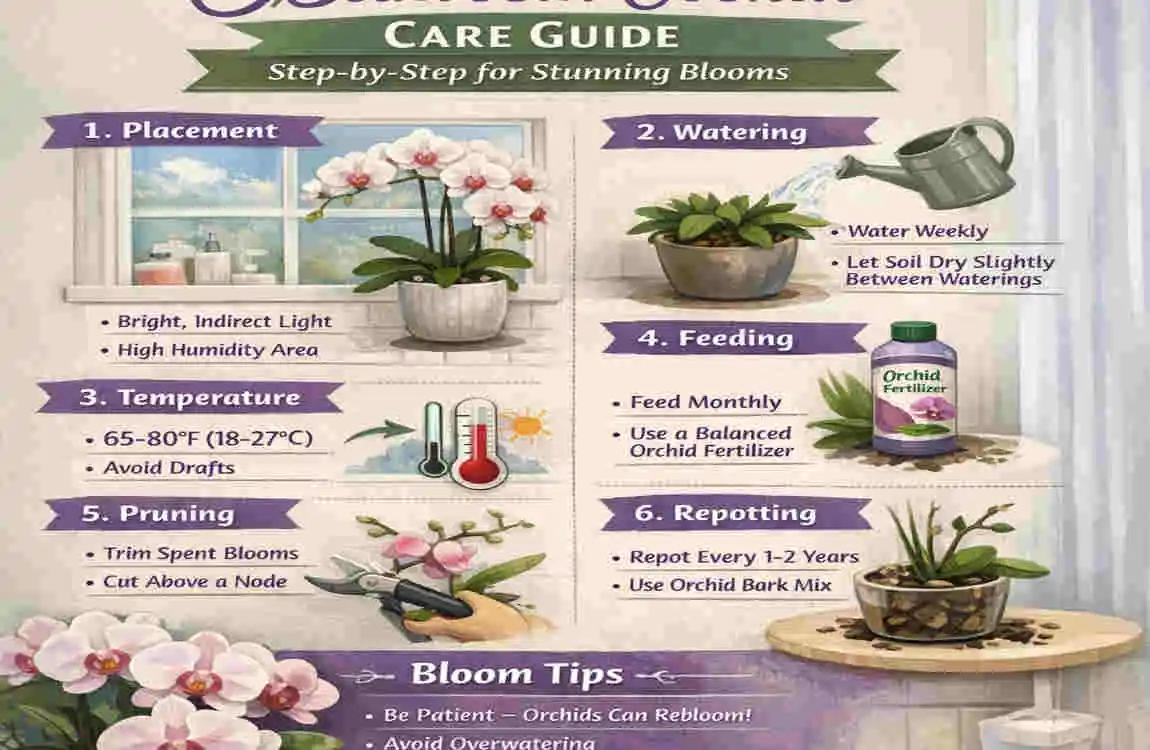
You have picked your plant. You have found the perfect spot. Now, how do you keep it alive? Caring for bathroom orchids is slightly different from caring for them in a living room. The humidity changes the rules.
Follow this step-by-step guide to ensure success.
Setup Essentials
Mounting and Placement: Because bathroom space is often tight, you have to get creative.
- The Shelf: A shelf near the shower (but not in the direct spray of water) is ideal. The water spray can damage the delicate petals.
- Hanging Baskets: Since orchids are epiphytes, they love hanging. Use slatted wooden baskets or clear plastic pots with plenty of holes.
- The Roots: Unlike other plants, orchid roots need light and air. Never use standard potting soil. It will suffocate them.
Humidity Hacks: Even in a bathroom, humidity can dip. If you have a large bathroom that doesn’t get very steamy, place your orchid pot on a pebble tray. Fill a shallow tray with stones and water. Place the pot on top of the stones (not in the water). As the water evaporates, it creates a microclimate of humidity right around the plant.
Watering and Feeding Mastery
This is where most people fail. They assume that because the bathroom is humid, they never need to water the plant. Wrong.
The Watering Routine:
- Frequency: In a humid bathroom, you only need to water every 7 to 10 days. The best test? Stick your finger an inch into the potting media (bark or moss). If it feels dry, it’s time to water.
- The Method: Take the orchid out of its decorative pot. Place it under a tap of tepid water (not cold!) and let the water run through the bark for about 1-2 minutes. Alternatively, soak the pot in a bowl of water for 20 minutes.
- Drainage is Key: Let every drop of water drain out before putting it back. “Wet feet” lead to root rot instantly.
Water Quality: Orchids are sensitive to chemicals. If you live in an area with hard tap water, the mineral buildup can burn the roots. If possible, use collected rainwater or distilled water. If you must use tap water, let it sit out in an open jug for 24 hours so the chlorine dissipates.
Feeding for Blooms: You want flowers, right? You need to feed them.
- The Golden Rule: “Weekly, weakly.” Use a balanced orchid fertiliser (like a 20-20-20 ratio).
- Dilution: Mix it at 1/4 strength of what the bottle says.
- Timing: Fertilise when the plant is growing new leaves (usually spring/summer). Stop fertilising when the flower buds open.
Light, Temperature, and Repotting Rituals
Let There Be Light: Your orchid needs to “see” the sun but not “feel” the sun.
- The Shadow Test: Hold your hand up between the window and the plant. You should see a soft, fuzzy shadow. If the shadow is sharp and dark, the light is too strong. If there is no shadow, it is too dark.
- Artificial Help: If you have a windowless bathroom, install a full-spectrum LED grow light bulb in one of your vanity fixtures. Keep it on for 12-14 hours a day.
Temperature Tricks: To trigger blooming, orchids often need a temperature drop. If possible, crack the bathroom window open a tiny bit at night to let cooler air in (aiming for a 10°F drop from daytime temps). This signals to the plant that the season is changing, and it’s time to flower.
Repotting: You only need to do this every 2 years.
- When: Do this after the flowers have dropped.
- The Mix: Use a mix of fir bark, charcoal, and perlite. For Phalaenopsis in dry climates, you can mix in some Sphagnum moss to hold moisture. In a humid bathroom, use more bark and less moss to prevent rot.
Pruning and Propagation for Endless Blooms
The flowers have fallen off. Now what? You are left with a stick.
- The Cut: If the stem is still green, find the “nodes” (the little bumps on the stem). Count up two nodes from the bottom and cut about an inch above that second node. This often stimulates a secondary bloom spike to grow from that node.
- The Brown Stem: If the stem turns brown and straw-like, cut it all the way down to the base. The plant needs to rest and focus energy on its leaves.
Keikis (Baby Orchids): Sometimes, instead of a flower, a little baby plant with its own roots will grow on the flower spike. This is called a Keiki.
- Bathroom Benefit: High humidity encourages these babies to grow roots faster. Once the baby has roots about 2-3 inches long, you can twist it off and pot it!
Common Pitfalls: Troubleshooting When Orchids Struggle in Bathrooms
Even with the best intentions, things can go wrong. If your bathroom orchid looks sad, check these common issues.
Overwatering and Root Rot Red Flags
This is the number one killer of bathroom orchids. Because the air is moist, the potting mix takes longer to dry out.
- The Symptom: Leaves look wrinkly and leathery (ironically, this looks like dehydration), and roots turn black or mushy. Healthy roots should be firm and green or silvery-grey.
- The Fix: Stop watering immediately. Remove the plant from the pot, trim off all the black/mushy roots with sterilised scissors, and repot it in fresh, dry bark. Wait a week before watering again.
Pests and Diseases in Steamy Spaces
Humidity is great for orchids, but it is also great for bugs and fungus.
- Mealybugs: These look like tiny bits of white cotton fluff hiding in the crevices where leaves meet the stem.
- Fix: Dip a Q-tip in rubbing alcohol and touch it to the bug to kill it. Wipe the leaves down with Neem oil.
- Fungal Spots: If you see black or brown spots on the leaves with a yellow ring (halo), it’s a fungus.
- Fix: This usually comes from water sitting on the leaves. Increase airflow with a small fan and apply a copper fungicide.
Light and Draft Disasters
- Leggy Growth: If your orchid leaves are growing very long, dark green, and floppy, it isn’t getting enough light. Move it closer to the window or add a grow light.
- Bud Blast: This is heartbreaking. You have buds, and suddenly they turn yellow and drop off before opening.
- Cause: This is usually caused by a sudden draft (like an AC vent blowing on it) or a sudden change in temperature. Keep orchids away from direct heating/cooling vents.
Real Homeowner Success Stories and Expert Tips

Still wondering, “Do orchids really do well in house bathrooms?” Let’s look at some real-world examples.
The Windowless Renovation Mark from Chicago remodelled his bathroom with no natural light. He really wanted greenery. He installed a simple LED grow light strip under his floating shelves.
- The Result: “I put three Moth orchids there. I assumed they would die. Two years later, they bloom twice a year. The humidity from my daily showers seems to keep them happy even when I forget to water them for two weeks.”
The Tropical Shelf. Sarah in Florida has a master bath with a large frosted window.
- The Result: She created a “living wall” using suction cup shelves on the mirror. “My Vanda orchids hang with their roots completely exposed. The steam from the bath keeps the roots green without me having to soak them every day, as the books say.”
Expert Tip from the American Orchid Society (AOS): Experts agree that while bathrooms are great, consistency is key. The AOS suggests that if you move your orchid to the bathroom for the humidity, try to keep it there. Moving a plant from a humid bathroom to a dry living room constantly can cause shock. Let it acclimate to one spot.
FAQs
Do orchids do well in house bathrooms without windows? Yes, but they cannot survive in the dark. You must provide artificial light. A simple white LED bulb (daylight spectrum, 5000K-6500K) placed about 12 inches above the plant for 12 hours a day works wonders.
How do I boost humidity for bathroom orchids if I don’t shower often in that room? If it is a guest bathroom that isn’t used much, use a pebble tray with water under the pot. You can also lightly mist the air around the plant (not the leaves directly) in the morning.
Can I use tap water for my bathroom orchids? It depends on your city. If your water is “hard” (lots of calcium/magnesium) or smells heavily of chlorine, it can damage sensitive roots over time. It is better to use filtered water or distilled water. If you must use tap water, let it sit in an open container overnight before using it.
Why are my orchid’s leaves wrinkly? Wrinkly leaves usually mean the plant is thirsty. However, check the roots first! If the roots are brown and mushy, you have overwatered (root rot), and the plant can’t drink. If the roots are dry and white, give them a good soak.
