
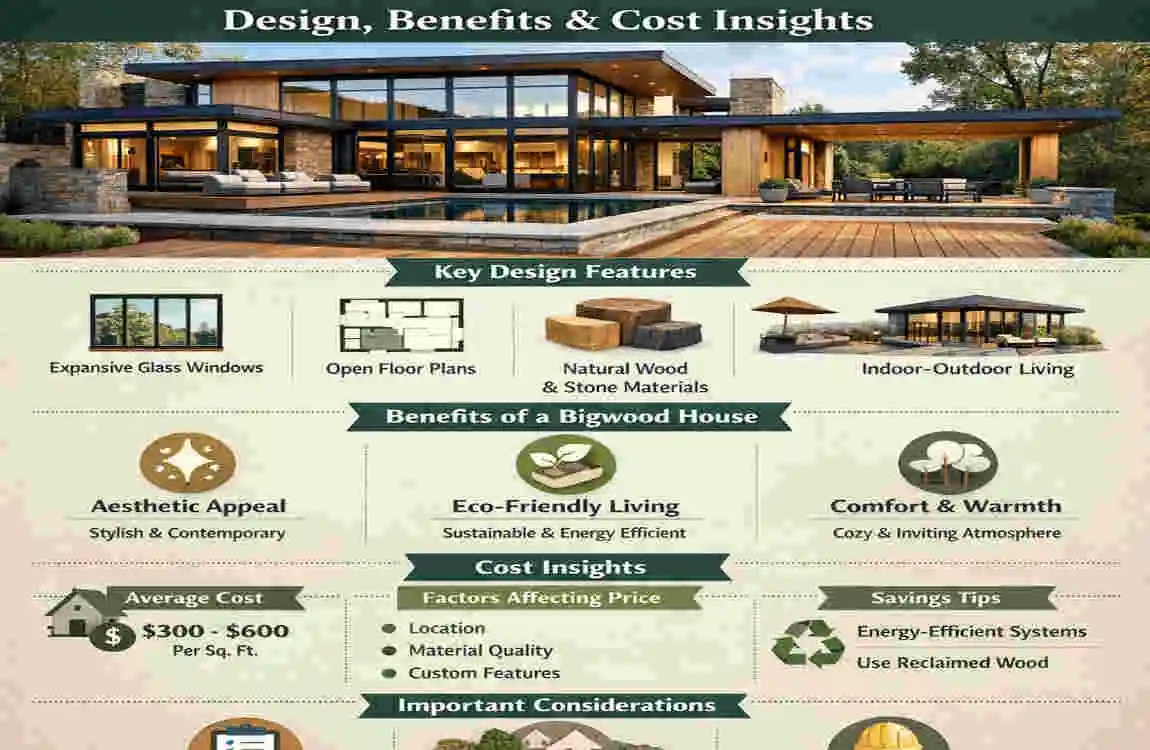
Timber-clad retreat nestled against a serene forest backdrop, blending effortlessly with nature. Picture expansive glass walls that frame the landscape, massive timber beams that exude warmth, and a minimalist design that feels both luxurious and inviting. This is the essence of a modern bigwood house—a harmonious fusion of contemporary design and natural materials.
With escalating costs of traditional home builds and a growing demand for eco-friendly, sustainable housing, modern bigwood houses have emerged as a standout choice.
What Is a Modern Bigwood House?
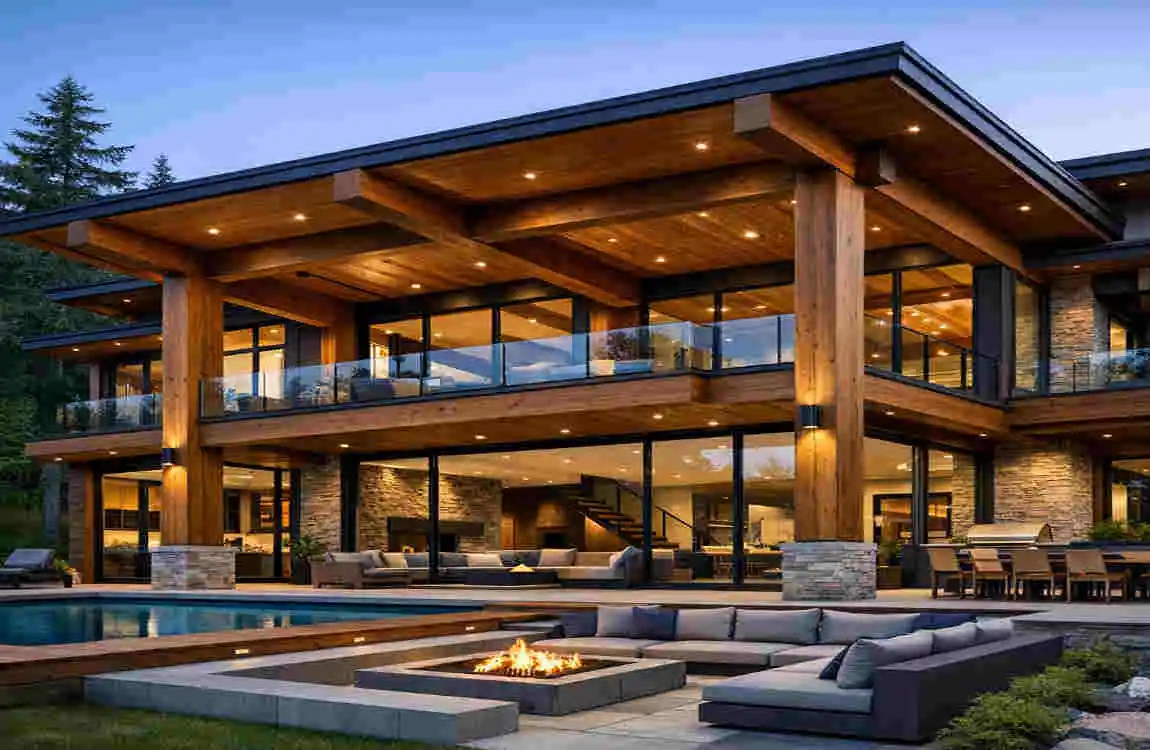
A modern bigwood house is a large-scale residence, typically over 4,000 square feet, that incorporates massive timber elements like reclaimed walnut, cross-laminated timber (CLT), or engineered beams. These homes combine the rustic charm of natural wood with sleek modern architecture, featuring flat roofs, open floor plans, and expansive glass elements that blur the line between indoors and outdoors.
How It Differs from Traditional Log Cabins
While traditional log cabins evoke coziness and rustic charm, modern bigwood houses embody sophistication. Think clean lines, minimalist aesthetics, and innovative layouts. Instead of small, compartmentalized spaces, these homes celebrate openness and natural light.
Key Characteristics of Modern Bigwood Houses
- Expansive Wood Facades: Large wooden surfaces create a sense of warmth and connection to nature.
- Landscape Integration: Features like pivot doors and 270° views make the outdoors feel like an extension of your living space.
- Sustainable Materials: Eco-friendly options such as cross-laminated timber (CLT) and low-VOC finishes support sustainability and health benefits.
Modern bigwood houses represent the evolution of architecture, moving from rustic cabins to luxurious retreats where contemporary design meets timeless materials.
Design Trends for Modern Bigwood Houses
The design of a modern bigwood house is a masterclass in blending functionality with aesthetics. Here are the latest trends shaping these homes in 2026.
Exterior Innovations
Modern bigwood homes often feature:
- Board-Formed Concrete Bases: These add a sense of industrial strength while complementing the natural wood.
- Steel-Glass Cantilevers: Striking architectural elements that make the house appear to float.
- L-Shaped Layouts: Perfect for creating private courtyards and maximizing natural light.
Interior Layouts
Inside, modern bigwood houses prioritize:
- Open-Plan Living: Spaces flow seamlessly, with wooden ceilings and salvaged walnut accents adding warmth.
- Smart Zoning: Clear divisions between communal areas and private retreats.
- Guest Wings: Separate spaces connected by bridges or walkways provide privacy for visitors.
Material Choices
Sustainability and beauty converge in material selection:
- Massive Timber: For walls, floors, and ceilings.
- Glass: Used generously to connect interiors with the outdoors.
- Eco-Friendly Finishes: Low-VOC paints and stains ensure a healthy living environment.
Customization Tips
Tailoring your modern bigwood house to your local climate is crucial. For instance, in warmer regions like Lahore, consider ventilated facades to keep interiors cool. Below is a table showcasing typical floor plan features:
FeatureDescriptionSq Ft Example
Main Wing Open living/kitchen area 3,000 sq ft
Guest Wing Bedrooms and bathrooms 1,500 sq ft
Courtyard Outdoor extension 1,000 sq ft
These design elements ensure modern bigwood houses are both functional and stunning.
Benefits of Building a Modern Bigwood House
Why are so many people choosing to build modern bigwood houses? Beyond their undeniable visual appeal, these homes offer a wealth of practical benefits.
Energy Efficiency
Wood is a natural insulator, meaning it retains heat effectively in winter and keeps interiors cool in summer. This can significantly reduce energy costs, especially in regions with extreme climates.
Health & Comfort
Did you know that wooden interiors can improve air quality and reduce stress? Studies have shown that natural wood has a calming effect, promoting better sleep and overall well-being. Additionally, wood’s acoustic properties create a quieter, more serene environment.
Durability & Aesthetics
Modern bigwood houses are built to last. With proper maintenance, the massive timber used in construction can endure for generations. And let’s not forget the visual appeal—these homes blend effortlessly into natural surroundings.
Other Perks
- Fast Construction: Prefabricated timber elements can reduce build time by up to 30%.
- Weather Resistance: Engineered timber can withstand harsh climates, from heavy rains to scorching heat.
Modern bigwood houses offer a perfect balance of style, sustainability, and practicality.
Cost Insights for Modern Bigwood Houses
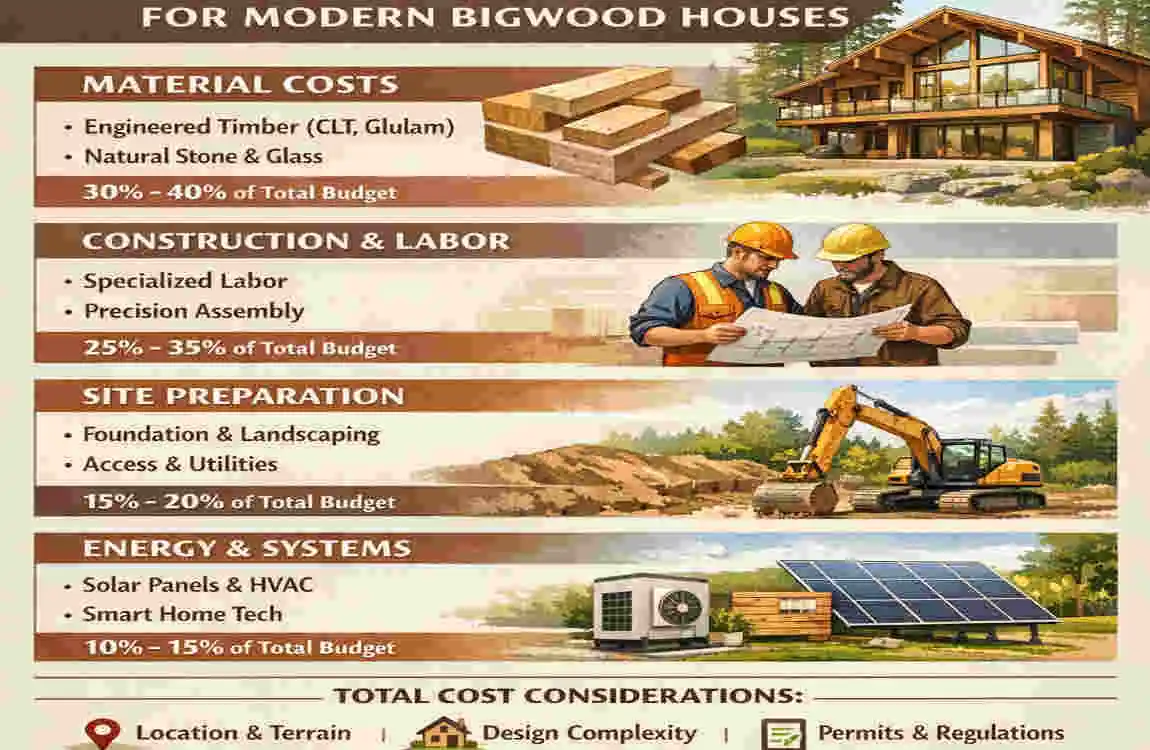
The cost of building a modern bigwood house in 2026 varies based on size, materials, and location. On average, these homes cost between $150 and $400 per square foot, translating to total costs ranging from $350,000 to $1.2 million.
Breakdown by Phase
Here’s a detailed look at the costs associated with each phase of construction:
PhaseCost Range% of Total
Design/Planning $20K-$80K 5-10%
Site Prep $10K-$40K 3-5%
Foundation $20K-$60K 5-10%
Framing $40K-$120K 10-15%
Exteriors $50K-$150K 15-20%
Factors Affecting Price
- Size: Larger homes (e.g., 6,500 sq ft) can push costs to $900,000 or more.
- Materials: Premium options like CLT can raise costs by 20%.
- Customization: Unique features like pivot doors can add $50,000 or more.
ROI Potential
While the upfront investment may be high, modern bigwood houses often deliver strong resale value. Additionally, energy savings can pay for themselves within 5-7 years, making these homes a financially sound choice.
Real-World Examples & Case Studies
Bigwood Residence by Olson Kundig
This 6,500 sq ft desert retreat exemplifies modern bigwood architecture. With pivot doors, walnut interiors, and seamless landscape integration, it was built for around $900,000. The home’s design showcases the harmony between modernity and nature.
Other Inspirations
L-shaped wooden homes and prefab options are gaining popularity for their affordability and efficiency. These designs prove that sustainability and luxury can coexist.
Expert Tips & Common Mistakes
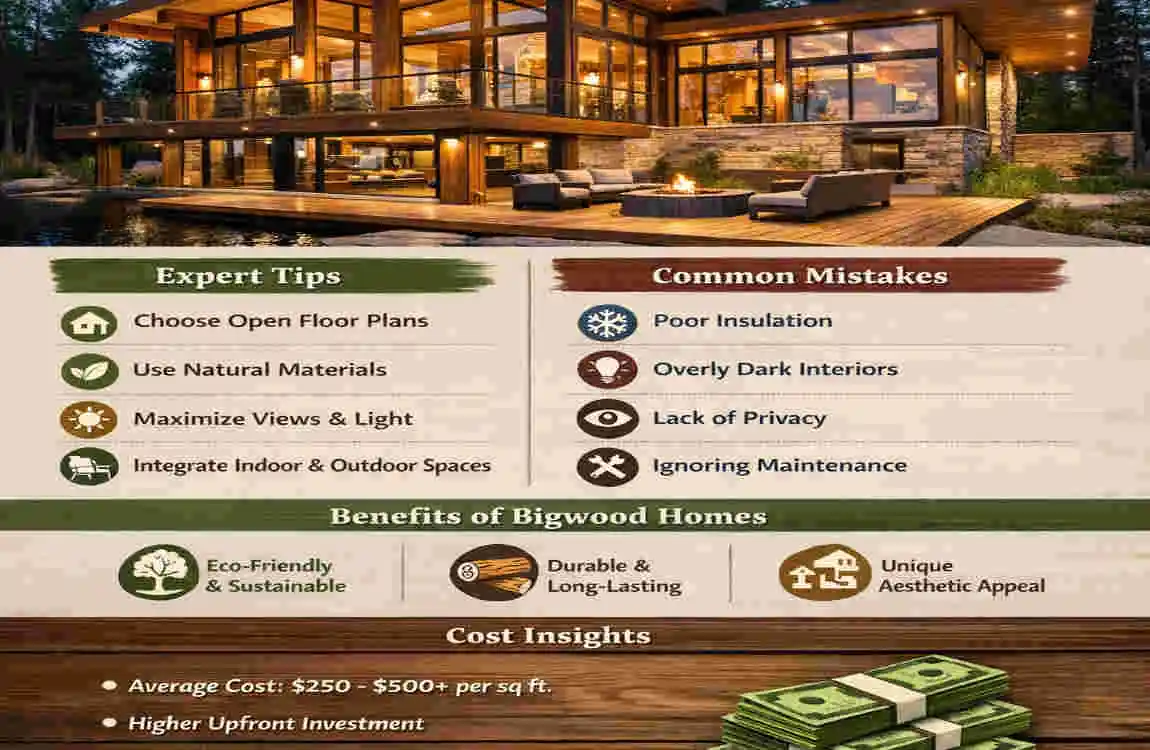
Build Tips
- Hire experienced contractors familiar with cross-laminated timber.
- Plan for local climate conditions, such as humidity or extreme heat.
- Set aside an additional 10% of your budget for contingencies.
Avoid Pitfalls
- Don’t skimp on insulation—it’s crucial for energy efficiency.
- Regular maintenance is essential to preserve the wood’s beauty and durability.
FAQs
What defines a modern bigwood house?
A large, timber-focused home combining modern architecture with sustainable materials.
How much does it cost per square foot?
Between $150 and $400, depending on design and materials.
Are these homes energy-efficient?
Yes, thanks to wood’s natural insulating properties.
Can I build one in Pakistan?
Absolutely! Just ensure it’s adapted for local conditions.
