
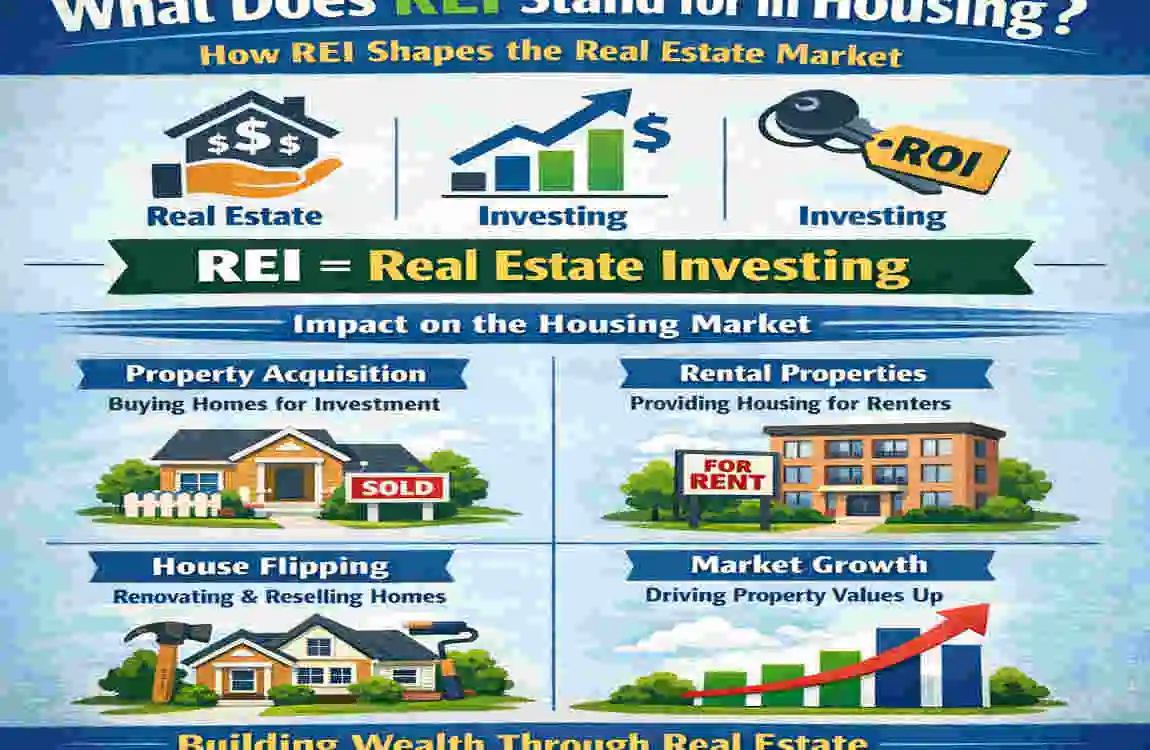
Did you know that real estate investors currently control a significant portion of the single-family housing market? Depending on where you look, investors are snapping up anywhere from 15% to 20% of available homes. It’s a staggering statistic that changes how we view neighborhoods. But amidst all the jargon thrown around at dinner parties and on financial news segments, a simple question often pops up for beginners: What does REI stand for in housing?
At its simplest level, REI stands for Real Estate Investing. It is the practice of purchasing, owning, managing, renting, or selling real estate for profit. However, reducing it to a three-letter acronym doesn’t quite do it justice. REI is more than just buying a house; it is a financial vehicle, a career path, and a massive economic engine that dictates housing prices, availability, and trends.
What Does REI Stand for in Housing? The Basics Explained
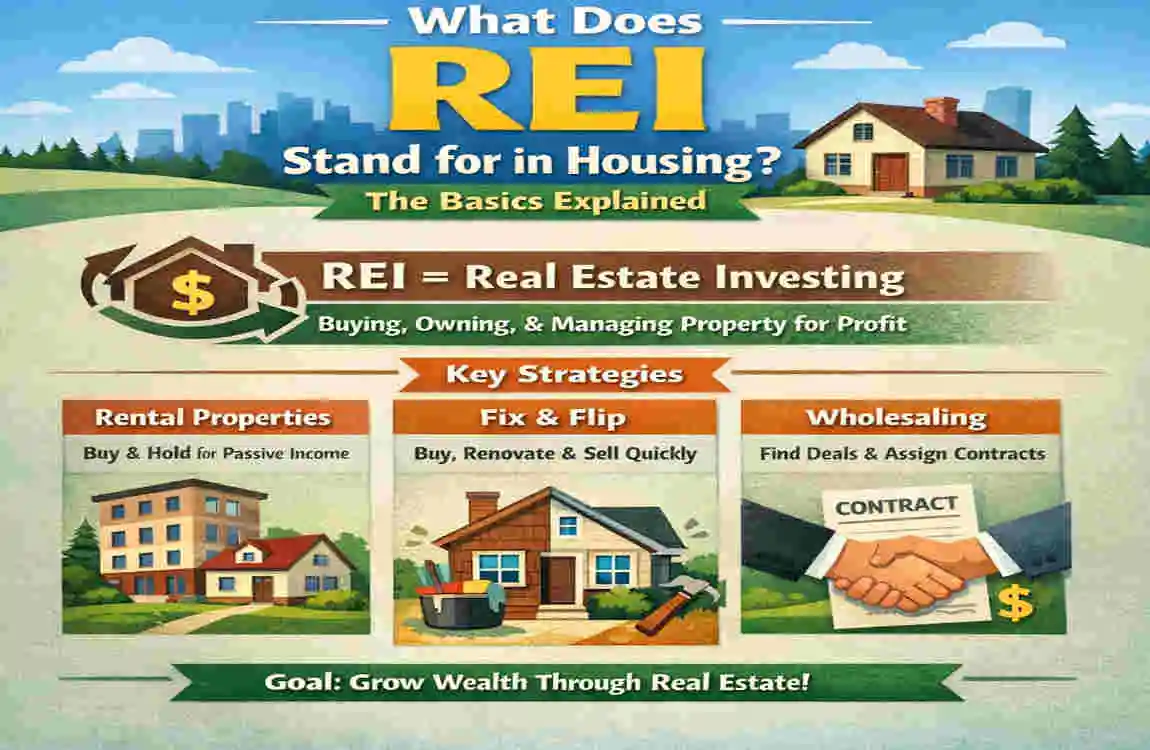
So, let’s get the definitive answer out of the way immediately: REI stands for Real Estate Investing.
While the acronym is simple, the world it represents is vast. In the context of housing, REI refers specifically to the investment in residential properties—places where people live. This differentiates it from commercial real estate (such as strip malls or office towers) or industrial real estate (such as warehouses). When we talk about REI in housing, we mean single-family homes, townhouses, duplexes, and small apartment buildings.
The Historical Context of REI
To truly understand REI, we have to look at how it has evolved. Decades ago, particularly in the post-WWII era, “investing” in housing usually meant one thing: buying a home for your family, paying off the mortgage over 30 years, and relying on that property as your primary nest egg.
However, the landscape has shifted dramatically. The late 20th and early 21st centuries saw a boom in housing as a distinct asset class for generating active income. From the suburban expansion of the 1950s to the modern, fintech-driven market where you can buy shares of a house on an app, REI has transformed from a passive savings strategy into an active business model. Today, everyday people—teachers, engineers, doctors—are becoming “REI practitioners” by buying second homes to rent out or fix up.
Why “Housing” Specifically?
You might wonder why we separate housing from other types of real estate. The answer lies in necessity. Businesses can close, and offices can go remote (as we saw recently), but people always need a place to sleep. This fundamental human need makes residential REI one of the most stable and attractive investment sectors.
Clearing Up Common Misconceptions
There is a myth that REI is reserved for the ultra-wealthy or those who want to be full-time landlords fixing toilets at 2:00 AM.
- Myth: You need millions to start.
- Reality: Creative financing often allows entry with minimal capital.
- Myth: REI is just “flipping” houses like on TV.
- Reality: Flipping is just one small (and risky) part of REI. Most REI is about long-term holding.
REI vs. REIT: What’s the Difference?
As you dive deeper into this topic, you will likely see the term “REIT” and wonder if it’s a typo. It isn’t. To help you distinguish between active investing and passive stock-market-style investing, here is a breakdown:
TermFull FormHousing FocusLevel of Involvement
REI Real Estate Investing Individual property ownership for profit (buying a house to rent). Active: You (or a manager you hire) handle the property, tenants, and repairs.
REIT Real Estate Investment Trust Pooled funds for passive investing (like a mutual fund for real estate). Passive: You buy shares of a company that owns real estate; you do no work.
Now that you know exactly what REI stands for in housing, let’s roll up our sleeves and explore how it actually works in the real world.
Core REI Strategies in the Housing Market
Understanding the definition is the easy part. The real magic happens when you understand the strategies. How do investors actually make money? It isn’t just about buying a property and hoping it goes up in value (though that helps). Successful REI involves specific, calculated business plans.
Here are the four pillars of residential real estate investing.
Buy-and-Hold Rentals
This is the “bread and butter” of the industry. The concept is straightforward: you purchase a property and lease it to a tenant for the long term.
How it works: You act as the landlord. Your tenant pays rent every month. Ideally, this rent covers your mortgage, insurance, taxes, and repairs, leaving a little extra. That leftover amount is called “cash flow.”
The Pros:
- Passive Income: Once a reliable tenant is in place, you receive a monthly check.
- Appreciation: Over 10 or 20 years, a home’s value usually increases.
- Tax Benefits: Governments often incentivize housing providers. You can often deduct mortgage interest and “depreciation” (wear and tear) from your taxes, which can shelter your income.
- Loan Paydown: The tenant is essentially paying off your debt for you.
The Cons:
- Liquidity: You can’t sell a house as quickly as you can sell a stock if you need cash.
- Management: Bad tenants can cause headaches and damage.
Example: Consider an investor in a growing city like Lahore or Austin. They buy a 3-bedroom house. The mortgage is $1,500. They rent it for $2,000. They make $500 in profit a month, and 10 years later, the house is worth double what they paid. That is the power of buy-and-hold.
House Flipping
This is the strategy made famous by reality TV. Flipping involves buying a property that is in poor condition (distressed), fixing it up (renovating), and selling it for a profit, usually within a few months.
The Math of Flipping: Successful flippers don’t guess; they use math. The golden rule involves the 70% Rule, which suggests you should pay no more than 70% of the After Repair Value (ARV) of a property, minus the cost of repairs.
The formula looks like this: $$ \text{Max Offer} = (\text{ARV} \times 0.70) – \text{Estimated Repairs} $$
The Reality: Flipping is high-risk, high-reward. If the market dips while you are renovating, or if you find termites behind a wall, your profit can vanish. Experienced flippers aim for a 20-30% profit margin to cushion against these surprises.
The BRRRR Method
This sounds like a shiver, but it stands for one of the most powerful wealth-building strategies in REI. BRRRR stands for: Buy, Rehab, Rent, Refinance, Repeat.
The Step-by-Step Breakdown:
- Buy: You purchase a distressed property below market value (often with cash or a short-term loan).
- Rehab: You renovate it to make it livable and increase its value.
- Rent: You place a tenant in the property to start generating income.
- Refinance: This is the key. You go to a bank and get a long-term mortgage based on the home’s new, higher value. The bank gives you cash to pay off your original purchase costs.
- Repeat: You take that cash and use it to buy the next house.
This strategy creates a “velocity of money,” allowing investors to build a massive portfolio without needing to save up a new down payment for every single house.
Short-Term Rentals (STRs)
With the rise of platforms like Airbnb and Vrbo, the concept of “housing” has blurred with “hospitality.”
The Trend: Instead of signing a 12-month lease, investors rent homes out by the night or week to vacationers. Why do it? The income potential is often 2x or 3x higher than long-term rentals. The Catch: It is much more work. You are running a hotel. You have to manage cleaning, check-ins, and reviews. Plus, many cities are cracking down on STR regulations. According to recent data, the global vacation rental market is projected to grow rapidly, potentially reaching $100 billion soon, driven by travelers who prefer the privacy of a home to a hotel room.
How REI Shapes the Real Estate Market
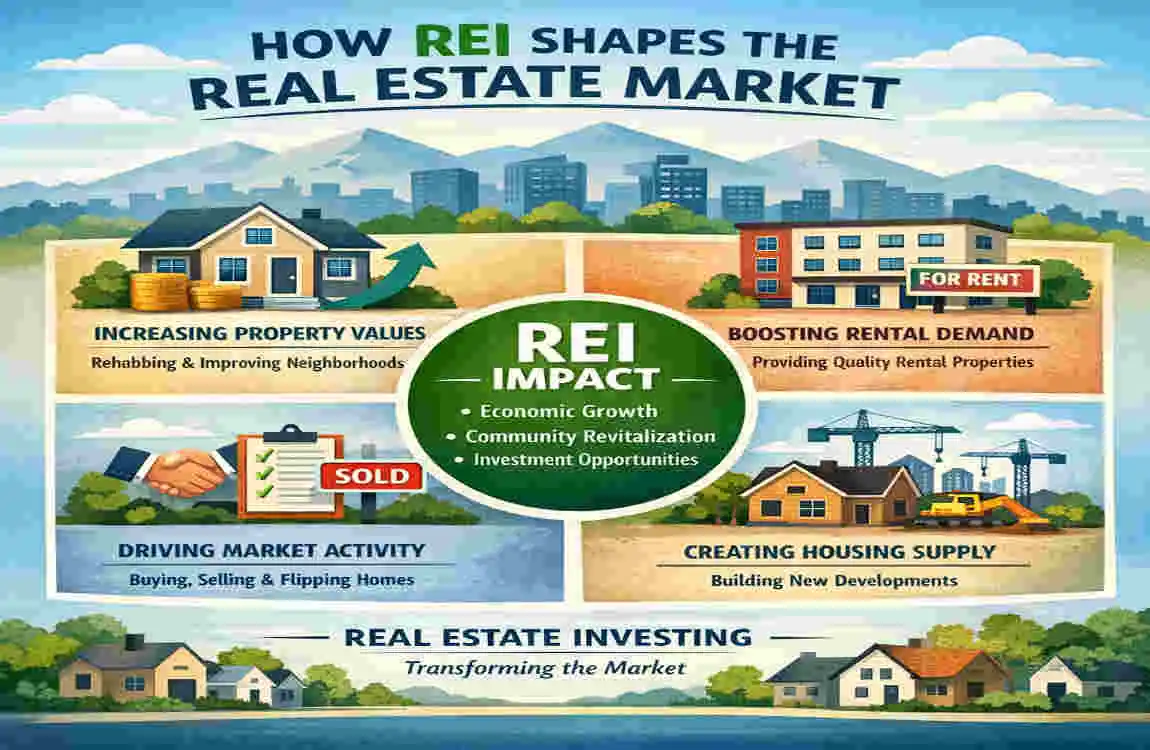
Now that we understand the “what” and the “how,” we need to look at the “so what?” Why does it matter if people are investing in real estate?
The truth is, REI is a massive force that shapes the economy, the look of our cities, and the price you pay for your own home.
Driving Housing Supply and Demand
Real estate investors act as a fluid layer in the supply-and-demand chain.
- Adding Supply: Investors often take uninhabitable “zombie” homes—houses with caved-in roofs or severe damage—and restore them. This brings inventory back into the market that regular homebuyers wouldn’t touch.
- Increasing Demand: On the flip side, investors compete with regular buyers. In 2024, reports indicated that institutional firms were buying roughly 1 in 7 homes in the U.S. When deep-pocketed investors enter a market, they can drive prices up, making it harder for first-time buyers to compete.
The Affordability Challenge
This is the most controversial aspect of REI.
- The Pro-REI Argument: Investors revitalize neglected neighborhoods. They pour money into areas that banks and developers ignored, raising property values and reducing crime rates associated with abandoned buildings.
- The Anti-REI Argument: This is often called “gentrification.” When investors flock to a cheap area, they renovate homes and raise rents. This can price out the original long-term residents. There is also the “Corporate Landlord” fear—the idea that giant companies will own all the homes, forcing everyone to be a renter forever.
A balanced view acknowledges both: REI improves housing quality but requires regulation to ensure affordable options remain available.
Market Trends Influenced by REI
Investors are often early adopters of trends that eventually reach the mainstream.
- Proptech: Companies like Zillow or Opendoor pioneered “iBuying” (Instant Buying), where an algorithm makes an offer on your house. The REI desire for speed drove this.
- Green REI: Sustainable housing is booming. Investors are realizing that energy-efficient windows and solar panels aren’t just good for the earth; they lower utility costs and attract higher-paying tenants.
- Emerging Markets: REI is global. We are seeing massive investor interest in developing markets like Pakistan’s major cities (Lahore, Karachi) and other parts of South Asia. In places like Lahore, investors are driving the development of modern, gated communities, shifting the cultural norm from multi-generational family homes to nuclear-family units.
Economic Ripple Effects
Finally, REI stimulates the economy far beyond the property itself. When an investor buys a fixer-upper, who do they hire?
- Contractors and carpenters.
- Plumbers and electricians.
- Real estate agents and inspectors.
- Insurance brokers and bankers.
It creates a localized economic boom. Furthermore, real estate acts as a hedge against inflation. When a currency (like the dollar) loses value, hard assets like housing usually rise in price, helping preserve the economy’s wealth.
Benefits and Risks of REI in Housing
Is REI right for you? It offers incredible rewards, but it is not a “get rich quick” scheme. It is a “get rich slow” scheme that carries genuine risks.
Top Benefits of Investing in Housing
Why do millions of people choose this over the stock market?
- Leverage: REI’s superpower. If you want to buy $100,000 of stocks, you need $100,000. If you want to buy a $100,000 house, you typically only need $20,000 (a 20% down payment). The bank provides the rest, but you get to keep 100% of the appreciation.
- Diversification: If the stock market crashes, housing prices don’t necessarily follow. They often move independently, stabilizing your net worth.
- Control: When you buy a stock, you can’t influence the company’s performance. When you own a rental house, you can paint it, renovate it, or change management to improve its performance. You are the CEO.
Key Risks and How to Mitigate Them
There is no reward without risk. Here is what keeps investors up at night, and how smart investors handle it.
- Market Downturns: What if house prices drop?
- Mitigation: Buy for cash flow, not just appreciation. If the rent covers the mortgage, it doesn’t matter if the house’s value temporarily drops. You can wait it out.
- Maintenance Surprises: The furnace will die. The roof will leak.
- Mitigation: Always budget 1% of the property’s value every year for repairs. If you don’t spend it, save it for when you do.
- Financing Hurdles: Interest rates can spike.
- Mitigation: Try to lock in fixed-rate debt whenever possible to keep your payments predictable.
Risk Mitigation Strategy
Vacancy (No Tenant) Screen tenants rigorously and price rent slightly below market to attract high demand.
Interest Rate Hikes Lock in long-term fixed mortgages; avoid Adjustable Rate Mortgages (ARMs) if possible.
Bad Location “Drive for dollars.” Physically visit the neighborhood at night and day before buying.
Getting Started with REI: Practical Tips for Beginners
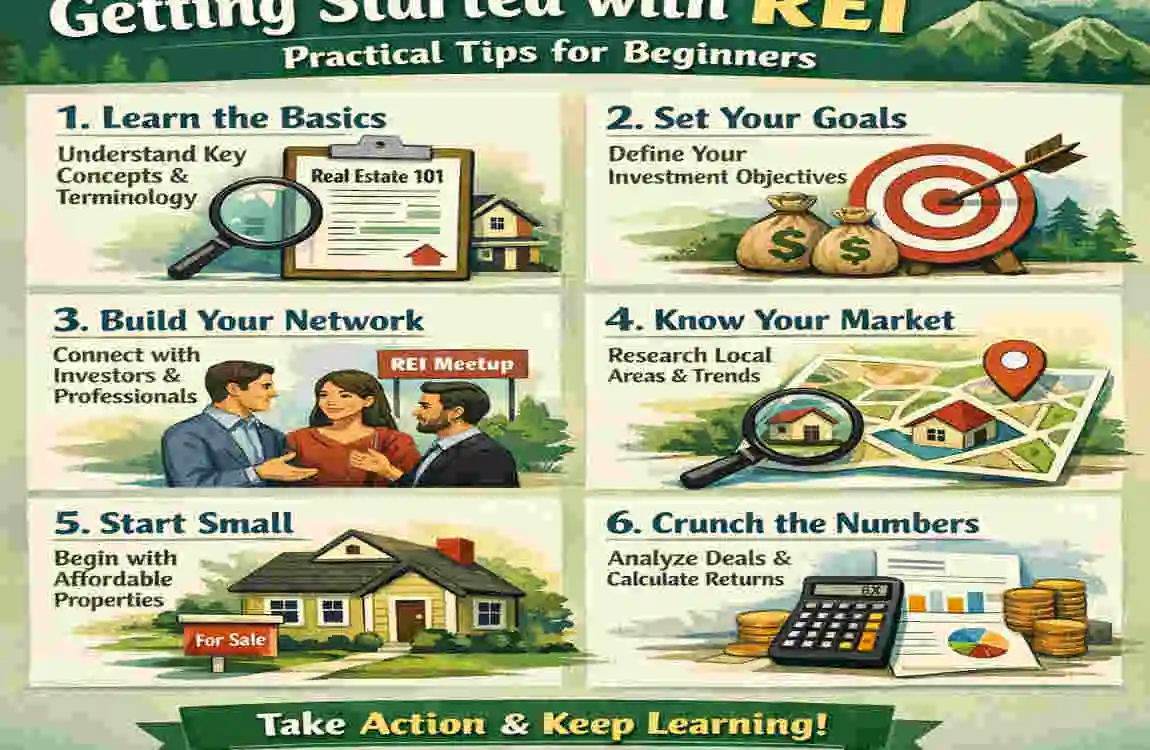
If you have read this far and are feeling the itch to start, where do you begin? You don’t need a license or be rich. You need a plan.
A Simple Step-by-Step Guide
- Educate Yourself: Before you spend a dime, invest in your brain. Read classics like Rich Dad Poor Dad to understand the mindset. Browse forums like BiggerPockets, which is essentially the “Facebook for Real Estate Investors.”
- Analyze Your Market: Become an expert in your chosen area. Whether it is a suburb in Ohio or a developing sector in Lahore, you need to know what a “good deal” looks like. Use tools like Zillow, Redfin, or local listing sites like Zameen.com to track prices daily.
- Secure Financing: Talk to lenders before you look at houses. Ask about FHA loans (if you are in the US) which allow you to buy a multi-unit property with a very low down payment as long as you live in one of the units. This is called “House Hacking.”
- Build Your Team: Real estate is a team sport. You need a Realtor who understands investing (not just home buying), a reliable contractor, and eventually, a property manager.
Essential Tools and Resources
- Calculators: Never do math on a napkin. Use free online calculators from sites like Roofstock or Mashvisor to project your rental income.
- Data Sites: In the US, sites like Realtor.com provide heat maps of hot markets. In international markets, look for dominant local portals that offer historical price trends.
Common Mistakes to Avoid
- Overleveraging: Taking on too much debt is the fastest way to go bankrupt. Don’t borrow the maximum amount just because the bank says you can.
- Ignoring Due Diligence: Never skip the home inspection. That $500 inspection could save you $50,000 in foundation repairs.
- Emotional Buying: Do not fall in love with the paint color or the view. Fall in love with the numbers. If the math doesn’t work, walk away.
REI Success Stories and Case Studies
To prove that this is achievable, let’s look at a couple of examples.
The Celebrity Angle: Many celebrities use their paychecks to buy real estate, knowing that fame is fleeting but land is forever. Arnold Schwarzenegger is a prime example. Before he was a famous bodybuilder or actor, he was a real estate investor. He used his gym earnings to buy a small apartment building in California. The inflation of the 1970s made him a millionaire through property long before he was the “Terminator.”
The Local Hero: Let’s look at a more relatable example. Consider “Ahmed,” a small investor in Lahore. He started with a modest sum inherited from his grandfather. Instead of buying a luxury car, he bought a small, older row house in a dense neighborhood. He spent three months managing renovations himself—painting walls and updating the kitchen. He sold the house six months later for a 25% profit. He didn’t spend the profit; he used it to buy two smaller apartments to rent out. Today, five years later, he owns seven units. He isn’t a celebrity; he just followed the process. Studies show that the average millionaire has seven streams of income, and real estate is almost always one of them.
FAQ: What Does REI Stand for in Housing?
Q: What does REI exactly stand for? A: In the world of housing and property, REI stands for Real Estate Investing. It is the acronym used by professionals and investors to describe the business of purchasing land or buildings to generate a financial profit, rather than just buying a home to live in yourself.
Q: Is buying my own house considered REI? A: Generally, no. If you buy a house solely to live in it as your primary residence, you are a homeowner, not necessarily an investor. REI specifically refers to buying property with the intent to make money through rental income, price appreciation, or resale profits. However, if you buy a duplex, live in one side, and rent out the other, that is considered REI (often called “house hacking”).
Q: What is the difference between REI and REIT? A: This is a common point of confusion!
- REI (Real Estate Investing): This is active. You buy a physical property (like a house or apartment), and you own the bricks and mortar. You (or your manager) handle tenants and repairs.
- REIT (Real Estate Investment Trust): This is passive. It is like a mutual fund for real estate. You buy shares of a company that owns properties, and you earn dividends without ever touching a house.
Q: What are the most common types of REI in housing? A: There are three main strategies investors use:
- Buy-and-Hold: Buying a house to rent it out for monthly income (becoming a landlord).
- Fix-and-Flip: Buying a rundown house, renovating it, and selling it quickly for a profit.
- Short-Term Rentals: Buying a property to list on platforms like Airbnb or Vrbo for vacationers.
Q: Do I need a license to start REI? A: No, you do not. You need a license to be a real estate agent (someone who sells homes for others), but you do not need a license to be a real estate investor (someone who buys homes for themselves). Anyone can get started with the right capital and knowledge!
