


Plumbing is a crucial part of any home construction project, but for homeowners building a single-story house, understanding its cost can be overwhelming. With 2025’s economic trends influencing construction expenses, plumbing costs now account for 5-15% of total building budgets. For a typical 1,500-2,500 sq ft home, the average rough-in plumbing cost ranges from $8,000 to $12,000, but this figure can fluctuate based on materials, labor rates, and location.
Factors Influencing Single Story House Plumbing Cost
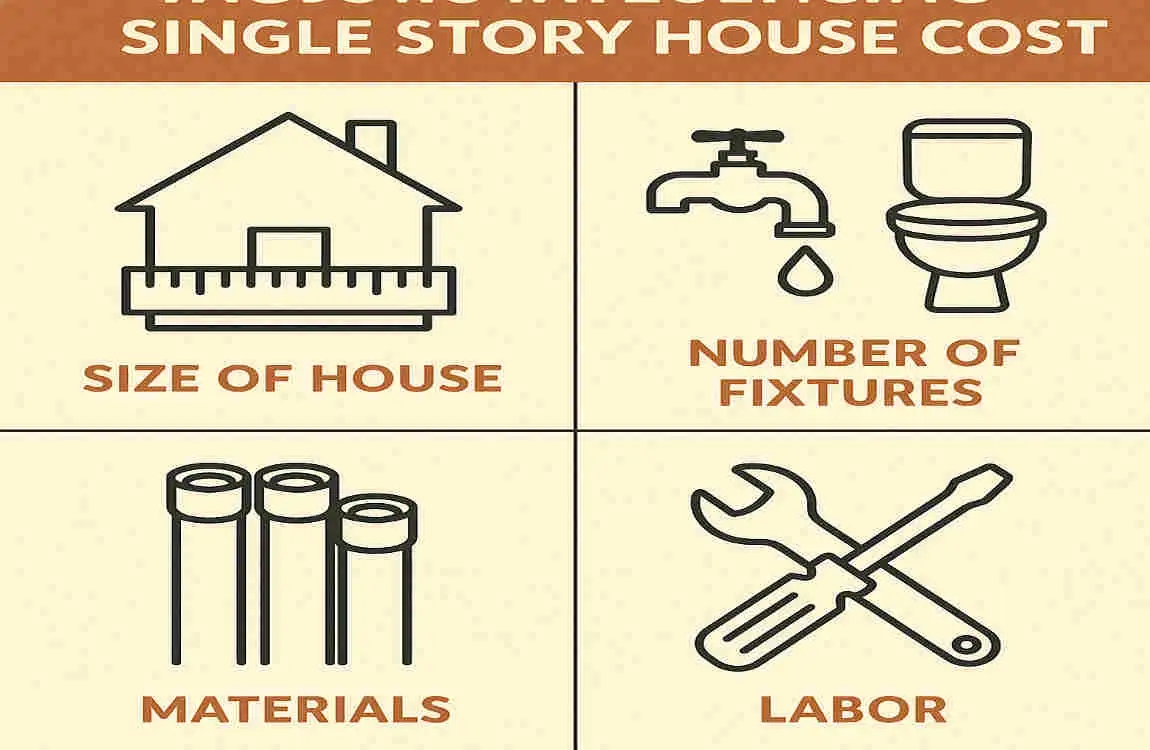
When estimating plumbing costs for a single-story house, several factors come into play. Let’s explore the main variables that affect the overall budget.
Home Size
The size of your house is one of the most significant cost drivers. Plumbing costs are often calculated on a per-square-foot basis, ranging from $4 to $7 per sq ft. A larger home will require more materials and labor, increasing your expenses.
For example:
- A 1,500 sq ft home may cost around $6,000-$10,000 for plumbing.
- A 2,500 sq ft home could scale up to $12,000-$18,000.
Labor Costs
Labor rates vary significantly depending on your location:
- In urban areas, plumbers may charge $100-$150/hour.
- In rural areas or smaller towns, rates can drop to around $50-$75/hour.
Labor typically accounts for 30-50% of the overall plumbing cost. Single-story homes are often less labor-intensive than multi-story buildings, as there’s no need for vertical pipe runs, reducing pipe lengths by 20-30%.
Material Selection
The type of pipes and fixtures you choose can dramatically impact costs:
- PEX pipes: Affordable and flexible, costing $0.50-$1.50 per linear foot.
- Copper pipes: Durable but expensive, at $3-$8 per linear foot.
- PVC pipes: Budget-friendly, ranging from $0.40-$2 per linear foot.
We’ll dive deeper into material costs in the next section.
Fixture Count
The number of plumbing fixtures (sinks, toilets, showers, etc.) in your home also adds to the cost. For example:
- Adding 2-3 bathrooms can increase the budget by $2,000-$5,000.
- Kitchens and laundry rooms also contribute significantly.
Soil Conditions and Permits
If your property requires trenching for water or sewer lines, the cost will depend on soil conditions. Rocky or clay-heavy soil is more expensive to excavate. Additionally, plumbing building permits typically range from $500 to $1,500, depending on your local municipality.
Material Costs Breakdown
The materials you select for your plumbing system play a crucial role in determining the overall expense. Below, we break down the most common materials used in single-story house plumbing.
Pipe Options
- PEX Pipes
- Cost: $0.50-$1.50 per linear foot
- Pros: Flexible, easy to install, resistant to freezing
- Lifespan: ~30 years
- Copper Pipes
- Cost: $3-$8 per linear foot
- Pros: Extremely durable, corrosion-resistant
- Lifespan: 50+ years
- PVC Pipes
- Cost: $0.40-$2 per linear foot
- Pros: Lightweight, affordable, great for drainage systems
- Lifespan: 25-40 years
Fittings and Valves
Fittings and valves are essential components for connecting pipes and controlling water flow. These components can cost $0.30-$5 each and typically account for 40-60% of total material costs.
Fixtures and Appliances
Fixtures like sinks, toilets, showers, and water heaters also add to the total cost:
- Sinks: $200-$500 each
- Toilets: $250-$600 each
- Water heaters: $1,000-$3,000 (depending on type and efficiency)
Material Cost per Unit Pros Lifespan
PEX Pipes $0.50-$1.50/ft Flexible, easy to install ~30 years
Copper Pipes $3-$8/ft Durable, corrosion-resistant 50+ years
PVC Pipes $0.40-$2/ft Affordable, lightweight , 25-40 years
Fittings $0.30-$5 each. Essential for connections. Varies
Labor Costs and Installation Process
Labor is a significant part of your plumbing budget. For single-story homes, you can expect labor to account for 30-50% of the total cost. Here’s a detailed look at where your money goes during the installation process.
Key Steps in Plumbing Installation
- Trenching and Site Preparation
- This involves digging trenches for underground pipes and preparing the site for plumbing installation.
- Cost: 10-20% of total labor cost.
- Pipe Laying and Rough-In Plumbing
- Pipes are installed during the framing stage. This includes water supply lines, drainpipes, and venting systems.
- Cost: 40% of labor expenses.
- Fixture Installation and Testing
- Plumbers install sinks, toilets, showers, and water heaters and test the system for leaks or issues.
- Cost: 30-40% of labor expenses.
Regional Variations
Labor costs can vary widely depending on your location:
- Urban areas: $100-$150/hour
- Rural areas: $50-$75/hour
It’s always a good idea to include 10-15% contingency funds for unexpected issues, such as pipe rerouting or delays.
Fixture and Appliance Integration Costs
Fixtures and appliances are essential elements of your plumbing system. Here’s a breakdown of their costs:
- High-Efficiency Toilets: $300-$600 each
- Showers and Tubs: $400-$1,200
- Water Heaters: $1,500-$4,000 (gas or electric, including venting)
For a standard single-story house with two bathrooms, a kitchen, and a laundry room, the total fixture cost typically ranges from $3,000 to $7,000.
Total Cost Estimates by Home Size
The total plumbing cost for a single-story house depends on its size, as outlined below:
Home Size Low-End Total Mid-Range Total High-End Total
1,200 sq ft $5,000 $7,500 $10,000
1,800 sq ft $7,000 $10,500 $14,000
2,500 sq ft $9,000 $12,000 $18,000
Budget Tips to Lower Single Story House Plumbing Cost
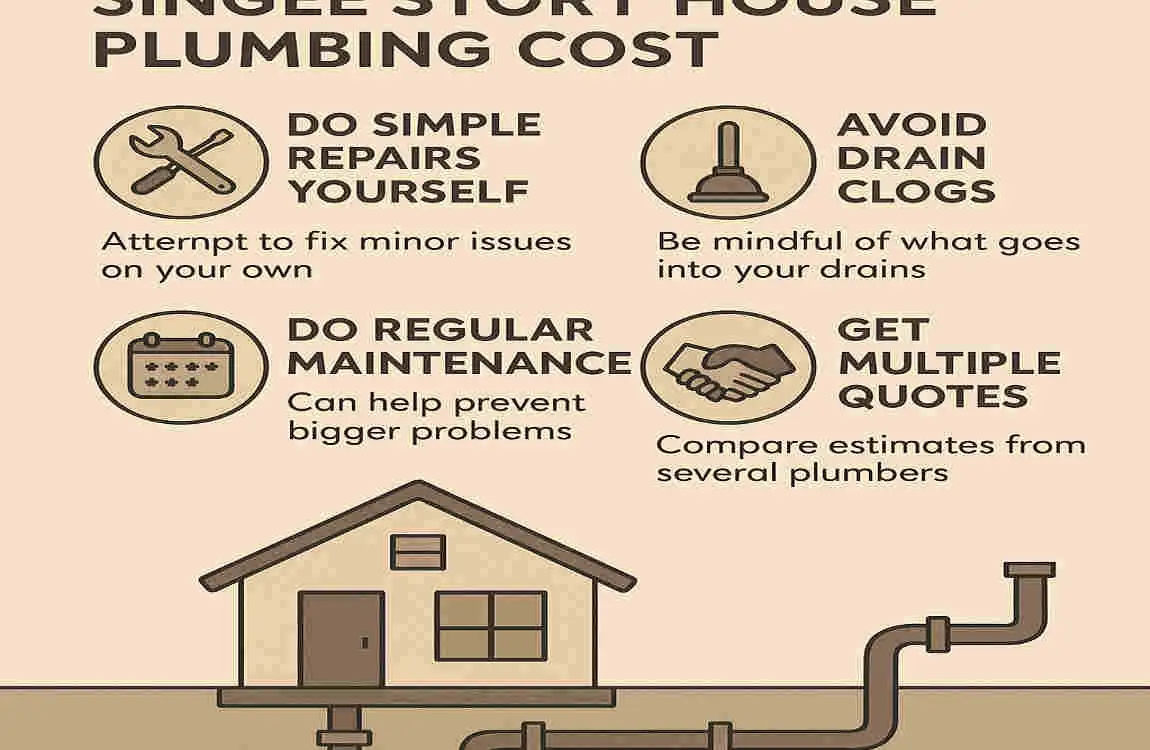
Here are some strategies to help you save money on plumbing costs without compromising quality:
- Choose PEX Pipes Over Copper
- PEX pipes cost 50-70% less than copper and are easier to install, reducing labor expenses.
- Bundle Services
- Schedule plumbing rough-ins during framing to save 15-20% on labor costs.
- Get Multiple Quotes
- Always compare at least three quotes from licensed plumbers to find the best deal.
- DIY Minor Tasks
- If you’re handy, consider handling minor fittings or fixture installations yourself. However, leave complex tasks to professionals to ensure code compliance.
- Shop Smart
- Buy materials in bulk and look for energy-efficient fixtures to qualify for rebates.
