

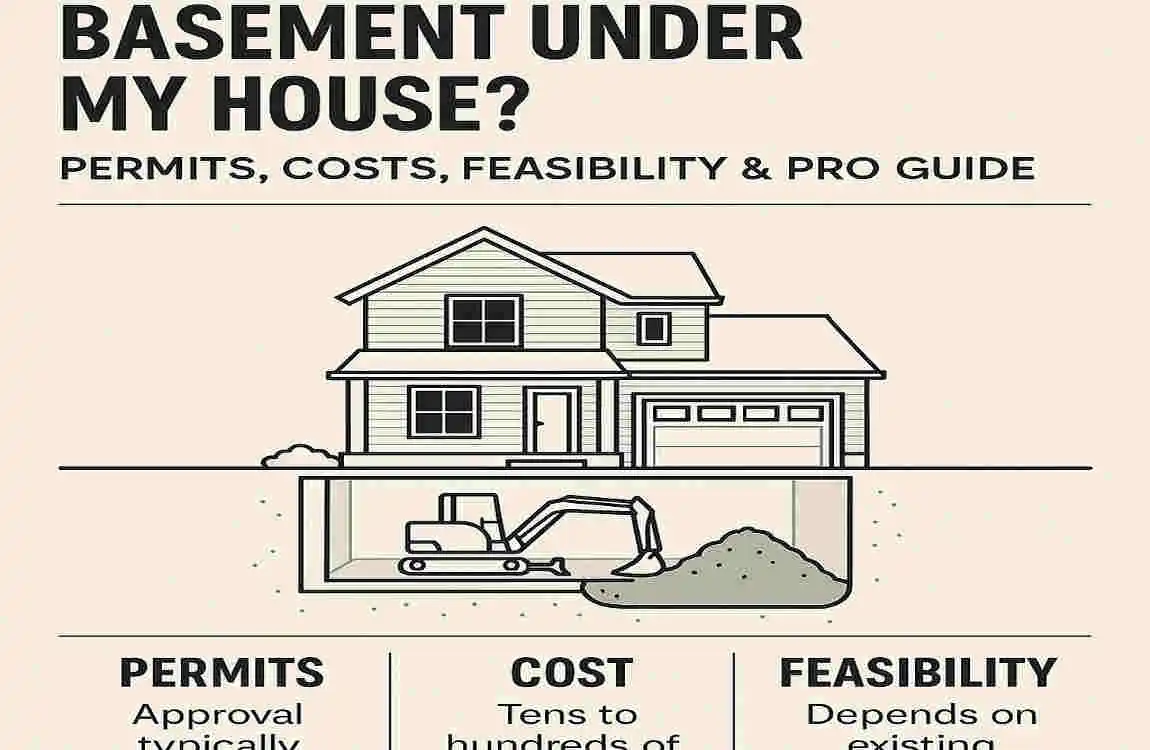
Picture this: You’re running out of room in your house, but you love your neighborhood and don’t want to move. Building a basement could be the perfect solution to add valuable living space without altering your home’s exterior. However, the process isn’t as simple as digging a hole. It requires thoughtful planning, professional expertise, and adherence to local regulations.
Feasibility Factors: Is Your Home Suitable for a Basement?
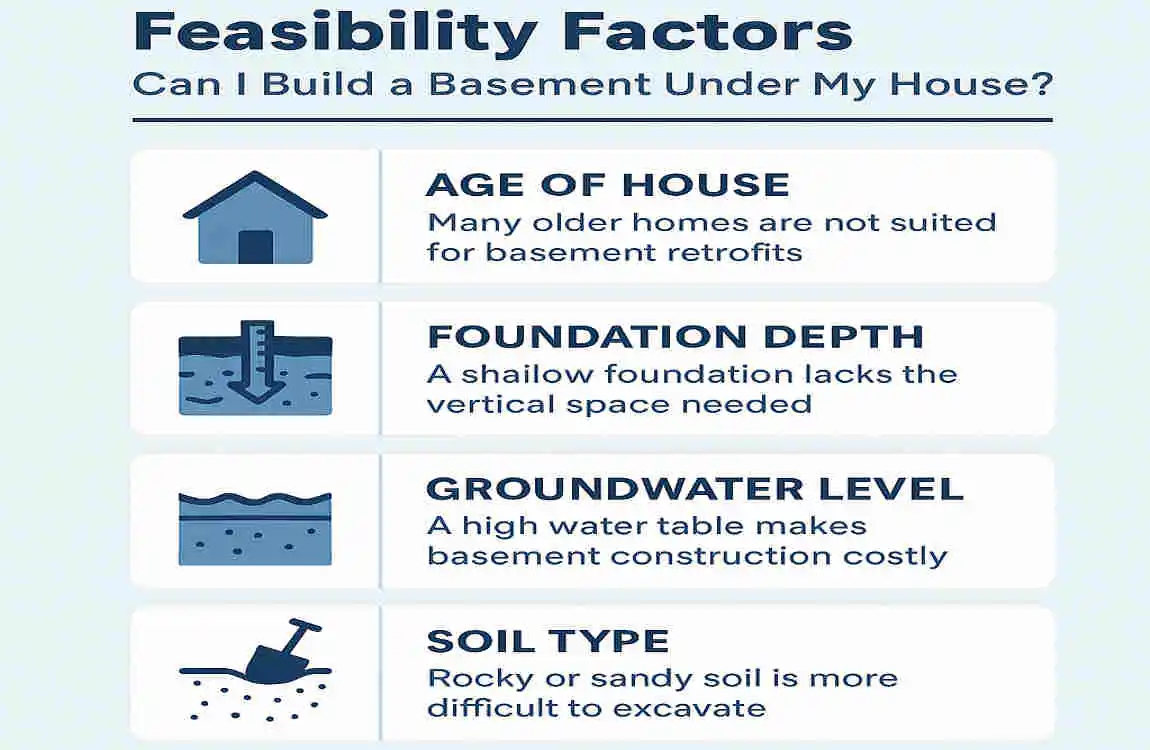
Before diving into construction, it’s essential to determine whether your property can support a basement addition. Not all homes are suitable for this type of project, and several factors can impact feasibility.
Soil and Foundation Type
The type of soil beneath your property plays a critical role in determining whether you can build a basement. Stable soil types, such as clay or gravel, are ideal. However, sandy or flood-prone soils can increase the risk of structural instability, adding high costs to address these issues.
- Stable Soil (Green Light): Clay, gravel
- Problematic Soil (Red Flag): Sand, flood-prone areas
Similarly, the type of foundation your house sits on matters. Homes with crawl spaces are easier to work with, while slab foundations may require breaking the slab and lifting the house, which adds complexity and cost.
Age and Structure of the House
Older homes, particularly Victorian-era buildings, often require specialist underpinning to strengthen the foundation. This process can cost between £800 and £1,200 per linear meter, depending on the condition and structure of the house.
Modern homes may be easier to retrofit, but it’s crucial to consult with a structural engineer to determine the best approach.
Location Restrictions
Your location may also impose restrictions on basement construction. For example:
- Homes in conservation areas or flood zones may face additional hurdles or outright bans.
- Local zoning laws can dictate whether a basement is permitted and what size it can be.
Access Challenges
The layout of your property can create logistical challenges. For example, terraced houses may require party wall agreements, which can cost £2,000-£5,000 and add time to your project. Similarly, restricted access to the construction site can raise costs by 25% or more.
Feasibility Checklist
Here’s a quick checklist to determine whether your house is a good candidate for a basement:
Factor Green Light Red Flag
Soil : Stable clay or gravel , Sandy or flood-prone
Foundation Crawl space or pier foundation Concrete slab (needs lifting)
Depth Standard 2.4m depth achievable >3m depth adds high cost
Location Zoning permits construction , Conservation, or flood zones
Permit Requirements: What Approvals Do You Need?
Building a basement is a significant construction project, and obtaining the proper permits is non-negotiable. Skipping permits can result in fines, work stoppages, or even having to demolish your new basement.
Planning Permission
In many cases, basement additions have a low impact on the exterior of your home, making planning permission relatively straightforward. However, some areas—especially in the UK—have seen a 183% increase in applications since 2017, meaning local authorities may scrutinize your plans more closely.
Building Regulations
Building regulations ensure your new basement is safe, structurally sound, and habitable. They typically cover:
- Structural integrity of the foundation
- Waterproofing measures to prevent leaks or flooding
- Ventilation and insulation for a comfortable living space
Party Wall Act
If your property shares walls with neighbors (e.g., in a terraced or semi-detached house), you’ll need to comply with the Party Wall Act. This involves notifying neighbors at least two months before construction begins and securing their agreement.
Regional Variations
Permit costs and requirements vary widely by location. For example:
- In the US, permit fees typically range from $50 to $75 per square foot.
- In the UK, total construction costs average £3,000-£5,000 per square meter, including permit fees.
Cost Breakdown: How Much Will It Cost?
Building a basement under an existing house is a significant investment. Costs can vary widely based on factors such as location, soil type, and project size. Here’s a breakdown of typical expenses:
Category Cost per sqm Total for 40sqm
Excavation/Structure £1,500-£2,500 £60,000-£100,000
Waterproofing/Drainage £250-£500 £10,000-£20,000
Finishes/Utilities £1,000-£1,800 £40,000-£72,000
Fees/Permits (10-15%) Varies £12,000-£30,000
Factors That Increase Costs
- Crane Hire: Costs around £500-£1,000 per day.
- Restricted Access: Adds 15-20% to project costs.
- Underpinning: Essential for older homes, costing £800-£1,200 per meter.
Step-by-Step Pro Guide: How to Build a Basement
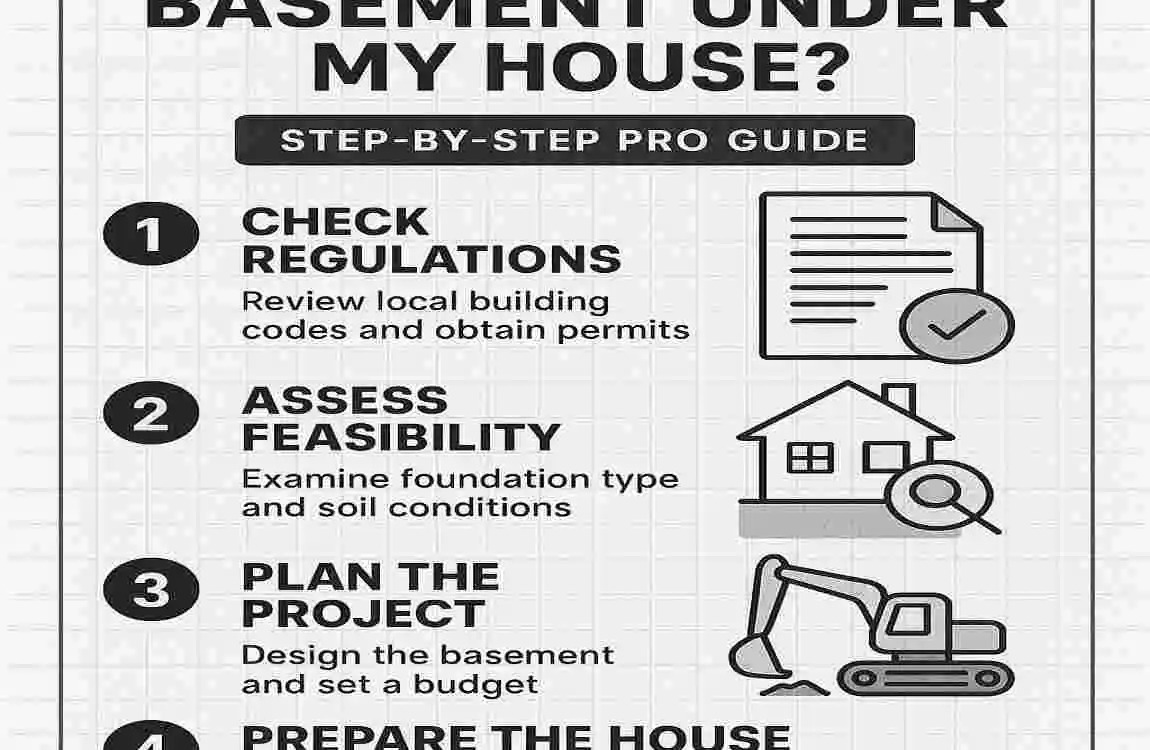
Building a basement is a complex process that can take 9-12 months from start to finish. Here’s a step-by-step guide to help you understand what’s involved:
Hire Professionals (1-2 Months)
Start by hiring a structural engineer to assess your property and an architect to design your basement plans.
Secure Permits (3-6 Months)
Submit detailed plans to your local authorities, including construction methodologies and impact assessments.
Lift and Brace the House
If your home has a slab foundation, it may need to be temporarily lifted and braced during excavation.
Excavate and Underpin
Carefully excavate the basement while underpinning the existing foundation to ensure structural stability.
Build the Shell
Construct the basement walls, install waterproofing systems, and add drainage to protect against flooding.
install Utilities
Add essential utilities like plumbing, electrical systems, and insulation.
Finish the Interior
Complete the basement with flooring, lighting, and other finishes to make it a livable space.
Benefits and Risks of Building a Basement
Benefits
- Increased Home Value: A well-designed basement can add 30-50% to your property’s value.
- Extra Living Space: Ideal for a guest suite, home office, or recreation area.
- Cost-Effective: Cheaper than building an extension in many cases.
Risks
- Structural Issues: Poorly executed projects can compromise your home’s foundation.
- Flooding: Basements are inherently more prone to water damage.
- Disruption: Construction can take up to a year and significantly disrupt your daily life.
