
If you own a rooftop solar system, you already know one thing: solar panels work best when they stay clean. In 2026, rooftop solar use in Pakistan continues to grow rapidly due to rising electricity costs, load-shedding concerns, and greater awareness of long-term energy savings. But there is a catch that many homeowners overlook. Dirty solar panels can lose around 20% to 30% of their efficiency in dusty conditions.
That matters a lot in places like Lahore, Faisalabad, Multan, and other parts of Punjab, where dust, smog, bird droppings, and dry weather settle quickly on rooftop panels. A system that should save you money can quietly underperform for months if you do not clean it properly.
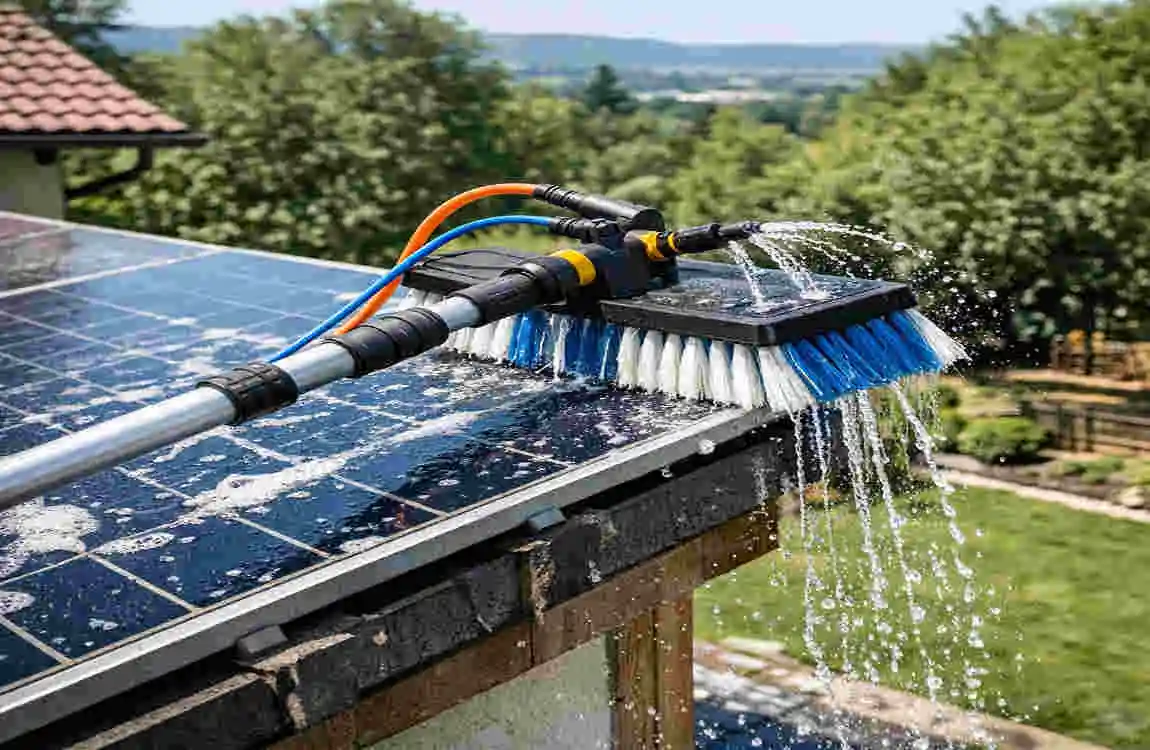
This is where a solar panel cleaning brush with a water system becomes a smart tool for homeowners. Instead of climbing up with a bucket, using a harsh broom, or calling a cleaning service every few months, you can use a water-fed brush designed for gentle, safe, and effective panel cleaning. It helps remove dirt without scratching the glass. It also makes the work easier from the ground or from a safer position on the roof.
Why Homeowners Need a Solar Panel Cleaning Brush with Water System
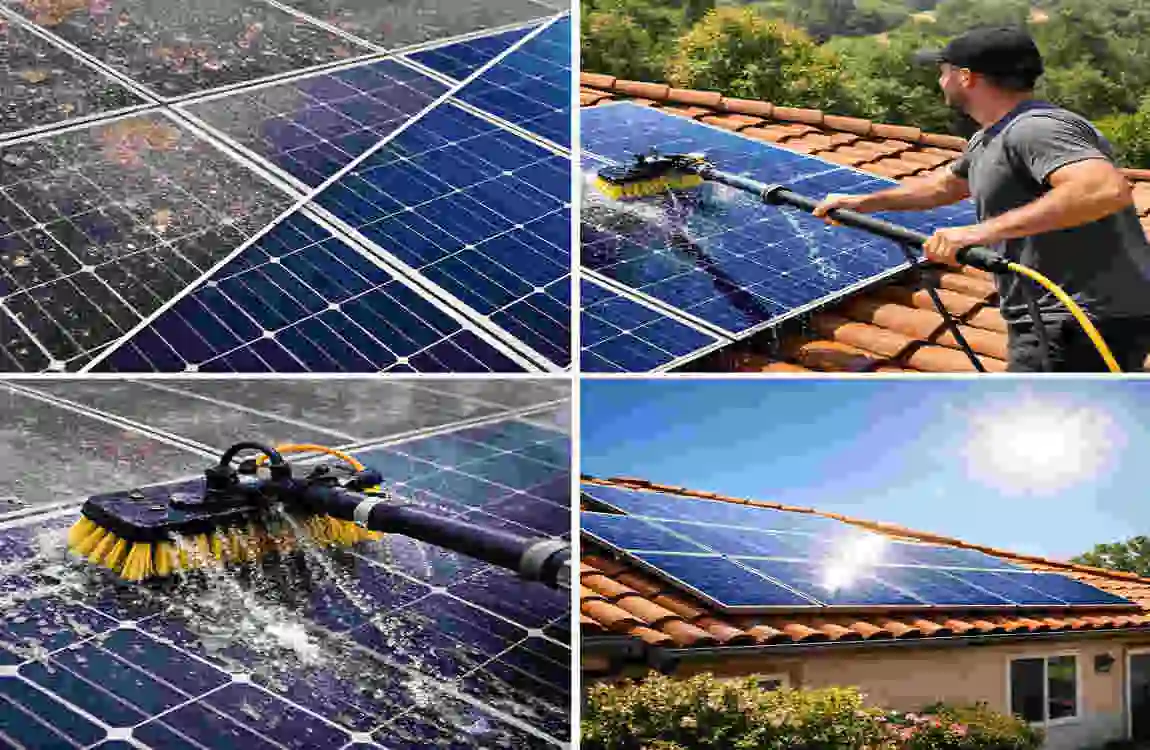
Solar panels look tough, but they are more sensitive than many homeowners think. The top glass is durable, yet it can still suffer from fine scratches, residue marks, and poor cleaning habits. If you use the wrong brush, apply too much pressure, use dirty water, or use rough fabric, you may reduce panel performance over time rather than improve it.
A solar panel cleaning brush with a water system solves many of these problems with a single, simple setup.
Dust and grime are stealing your solar output.
In many Pakistani cities, dust settles on flat and tilted surfaces almost every day. Add bird droppings, leaves, road pollution, and dry air, and your panels start developing a thin film that blocks sunlight. You may not notice it at first because the panels still look “mostly clean” from a distance. But even a light layer of dirt can reduce energy generation.
This becomes even more important in summer, when the sun is strong, and your panels should be producing their best output. If dirt blocks that sunlight, you lose part of the return from your investment right when you need it most.
Higher electricity costs make every unit of solar power more valuable.
Electricity prices are not getting cheaper. For homeowners using net metering or trying to reduce their monthly bills, every bit of lost solar production hurts. A panel producing 15% less power because of dust means you may draw more power from the grid than necessary.
That is why cleaning is no longer just a “good habit.” In 2026, it is part of smart rooftop solar maintenance.
Water-fed systems are gentler than basic manual cleaning.
A regular broom or hard household brush is a bad idea for solar panels. These tools can grind dirt into the surface, leaving microscratches. A proper water brush cleaner uses:
- Soft bristles
- Controlled water flow
- Long reach
- Better contact across the panel surface
The water loosens dirt first, and the soft brush lifts it away. This reduces friction and helps protect the panel glass.
Pure water gives a cleaner finish.
Many better systems use filtered, deionized, or purified water. That is important because normal tap water often leaves mineral spots behind, especially when it dries in the strong sun. Those spots can create a cloudy film, forcing you to clean sooner.
With cleaner water, you get a spot-free finish without needing soap or chemicals. That makes the process more eco-friendly and safer for your roof, gutters, and nearby plants.
It is safer for homeowners.
One of the biggest benefits of a solar panel cleaning brush with a water system is safety. You can often clean upper areas using a telescopic pole, which means less ladder use and fewer risky movements on a sloped roof.
For many homeowners, this is the real reason to buy one. It is not just about cleaner panels. It is about avoiding the risk of balancing a bucket, a cloth, and a brush while standing on the edge of a rooftop.
It can save money over time.
Hiring professionals every few months adds up quickly. In many areas, a single cleaning visit can cost a noticeable amount, especially if the system is hard to reach or the roof is steep. If you own a brush system, your upfront cost may pay for itself over time through:
- Lower cleaning expenses
- Better solar output
- Less wear from improper cleaning
For a homeowner who plans to keep solar panels for years, that is a strong value proposition.
How Does a Solar Panel Cleaning Brush with Water System Work?
At first glance, a water-fed brush system looks simple. But its design is smarter than a normal cleaning pole. Each part works together to clean panels more effectively and more safely.
The main parts of the system
A typical solar panel cleaning brush with a water system includes four main components.
Telescopic pole
This is the long, extendable handle that lets you reach rooftop panels without getting too close to the edge. Some poles are compact for small homes, while others extend high enough for two-story or even taller properties.
A good pole should feel light but strong. If it is too heavy, your arms will tire quickly. If it bends too much, you will struggle to control the brush head.
Soft brush head
The brush is designed specifically for delicate surfaces, such as solar panel glass. The bristles are usually soft enough to remove dust and bird droppings without scratching. Some heads are wider for faster coverage, while others are narrower for tight spaces or smaller arrays.
Water feed line
This carries water through the pole to the brush head. Instead of dipping a brush into a bucket, the system sends water directly to where it’s needed. That keeps the surface wet while you clean and helps lift dirt away.
Water purification or filtration setup
On more advanced systems, water passes through a filter, deionization unit, or reverse osmosis setup. This removes minerals and impurities that would otherwise leave marks. Even if you buy a simpler kit, many homeowners later upgrade the water quality side because it makes a visible difference.
How the cleaning process actually happens
The cleaning action is simple:
- Water flows to the brush head.
- The water softens dust, dried mud, and droppings.
- The soft bristles loosen the dirt.
- More water rinses the panel clean.
- The purified water dries with fewer or no spots.
This is why a water-fed brush works better than dry wiping. You are not just pushing dirt around. You are flushing it away while gently scrubbing the glass.
Why pressure control matters
A common mistake is thinking that more water pressure means better cleaning. It usually does not. Solar panels do not need aggressive blasting. Too much pressure can create problems around seals, edges, or mounting hardware.
A well-designed system uses steady, controlled flow, not harsh force. You want enough water to lift and rinse grime, but not so much that you waste water or stress the panel frame.
What is “pure water” technology?
You may hear sellers talk about pure water cleaning, deionized water, or reverse osmosis systems. These terms sound technical, but the idea is simple.
Normal water contains dissolved minerals. When the water dries, those minerals stay behind as spots or streaks. Pure water cleaning removes most of those minerals first. That means the water can clean better and be drier.
For homeowners, the benefit is practical: less residue, fewer streaks, and less need for wiping after rinsing.
Real-life home use: what to expect
For a typical 5kW home solar system, a homeowner can often clean the array in a manageable session, depending on roof access and dirt level. If the system is cleaned regularly, each panel may only need a few minutes of careful washing and rinsing. If it has been ignored for months, the job takes longer.
A homeowner in Lahore, for example, may notice heavy dust buildup after a dry spell and, a few days later, bird droppings near overhead wiring. In that case, a solar panel cleaning brush with a water system helps remove the mess quickly without repeated wiping.
Cleaning tool comparison for homeowners
Cleaning Method: Best For, Main Advantages, Main Drawbacks, Typical Cost Range
Manual brush and bucket. Very small systems. Cheap, simple, easy to find. More ladder work, poor reach, higher scratch risk, and water spots are likely. Low
Solar panel cleaning brush with a water system. Most homeowners prefer Safer Reach, gentle cleaning, better rinsing, less residue, and a good balance of cost and results. Higher upfront cost than a basic brush. Medium
Robotic cleaner Large or Premium setups Minimal physical effort, automation, consistent cleaning Expensive, not ideal for every roof type, maintenance required High
For most homeowners, the water-fed option offers the best middle ground. It gives you good reach, safer use, and better results without jumping into expensive automation.
Best Solar Panel Cleaning Brushes with Water Systems for Homeowners
The best choice depends on your roof, your budget, and how often you clean. A homeowner with a one-story house in Lahore may need something different from a villa owner with a taller roof in Islamabad or Karachi.
Before the detailed reviews, here is a quick comparison to help you scan the options.
Product Best For Approx. Price Range (PKR)ReachWater System Type Standout Strength
Unger nLITE HydroPower Best overall 85,000-180,000+ Medium to high Filtered pure water Reliable balance of quality and cleaning finish
XERO Water-Fed Starter Kit Budget-friendly start 45,000-95,000 Medium Basic water-fed setup Good entry point for homeowners
Reach-iT Water Fed Pole System Premium reach 120,000-250,000+ High Advanced water-fed system Excellent for tall or hard-to-reach roofs.
IDRO Gen2 Portability 55,000-110,000 Medium Compact water system Easier storage and transport
Gardiner Pole System Eco-focused performance 90,000-200,000+ Medium to high Efficient filtration options Lightweight design with strong pole control
Note: Prices vary by seller, pole length, included filters, and import costs. Always confirm local availability, warranty, and replacement parts before you buy.
Unger nLITE HydroPower – Best Overall for Pakistani Homes
If you want the most balanced option for home use, the Unger nLITE HydroPower stands out. It has a strong reputation in water-fed cleaning because it combines good reach, quality brush control, and pure water performance in one dependable system.
For homeowners in Pakistan, this matters because dust is often the main issue. A brush alone can remove surface dirt, but the HydroPower-style setup improves the final finish by reducing spotting and residue. That is especially helpful in areas where tap water leaves visible marks.
The pole system is usually lightweight enough for home use. However, full setups can still feel Premium in both performance and price. On sloped or medium-height roofs, many users find it easier to handle than heavier commercial-grade tools.
What makes it great:
It feels like a serious tool without being too complicated. You get a cleaner rinse, smoother movement, and a setup that can work for regular home maintenance over the long term.
Pros: Strong cleaning finish, dependable brand recognition, good for repeated use.
Cons: Higher price than beginner options, replacement parts may cost more.
If you want one system that covers most homeowners’ needs well, this is a safe best overall pick.
XERO Water-Fed Starter Kit – Affordable Starter
Not every homeowner wants to spend heavily on solar maintenance tools. If you are looking for a more affordable way to start, the XERO Water-Fed Starter Kit is often a practical option.
This kind of kit is well-suited for homeowners with a smaller rooftop solar setup who want to stop using unsafe manual cleaning methods. It usually includes the basic elements you need: a pole, a brush, a hose setup, and a water-fed cleaning arrangement.
The biggest advantage here is value. You do not get the same Premium feel or advanced filtration as you do with top-tier systems. However, you still move up from basic bucket cleaning to something much more effective and safer.
For a one-story or accessible two-story home, this type of system can do the job well if you clean regularly and do not let grime build up too heavily.
What makes it great:
It lowers the barrier to entry. You can begin proper rooftop solar maintenance without buying a fully professional setup.
Pros: Better affordability, simple learning curve, useful for first-time buyers.
Cons: Build quality may feel more basic, less ideal for difficult roofs or very frequent heavy-duty cleaning.
If you want an entry-level solar panel cleaning brush with a water system, this is a smart place to start.
Reach-iT Water Fed Pole System – Pro-Level Reach
Some homes need more than a basic pole. If your panels sit high above the ground, or your roof design makes access difficult, the Reach-iT Water Fed Pole System earns its Premium reputation through reach and control.
This is the option for homeowners who do not want to struggle with awkward angles or risky ladder positions. The longer reach and more advanced pole design help you clean more of the array without moving around as much. That can improve both safety and speed.
It is also useful for larger homes, villas, and systems installed over wide roof sections, where repositioning a short pole can be frustrating. The added control helps you keep brush pressure gentle while still reaching far corners.
Of course, Premium reach comes at a Premium price. In a smaller home, you may have more tools than you need. But for high roofs, the extra investment can be worth it.
What makes it great:
It gives you confidence on difficult rooftops. Better reach often means safer cleaning and less fatigue.
Pros: Excellent height access, strong professional feel, useful for larger properties.
Cons: Expensive, may be too advanced for small homes, and storage can be harder.
If your biggest problem is access rather than dirt itself, this could be your best match.
IDRO Gen2 – Travel-Friendly for Villas and Flexible Home Use
The IDRO Gen2 appeals to homeowners who want something more compact and easier to move around. If you split time between properties, own a villa, or have limited storage space, portability matters more than many buyers realize.
A bulky system that stays in the storeroom is not much use. A smaller, easier-to-handle water-fed setup is more likely to get used regularly, and regular cleaning is what protects solar output.
This system style often suits medium-sized home arrays where you want a cleaning tool that feels practical rather than industrial. It can be easier to pack, transport, and store, which is a real plus for people who do occasional maintenance on different properties.
That said, compact designs sometimes trade away a bit of power or reach. So you should check whether the pole length matches your roof height before buying.
What makes it great:
It is easier to live with. Portability makes a big difference for homeowners who value convenience.
Pros: Easier storage, good for flexible use, more travel-friendly than bulkier systems.
Cons: May not offer the longest reach; some kits need upgrades for larger homes.
If ease of use and storage are high on your list, this one deserves attention.
Gardiner Pole System – Sustainable Choice with Excellent Handling
The Gardiner Pole System is often praised for lightweight handling and strong control. For homeowners, that matters because the easier the pole feels in your hands, the easier it is to clean carefully and consistently.
This system is also a solid choice if you care about efficient water use and cleaner filtration setups. Many homeowners today want solutions that protect both their panels and the environment. A system that uses water efficiently, supports pure water cleaning, and avoids chemical cleaners aligns well with that goal.
The pole handling is often one of the biggest selling points. Better balance means less strain on your shoulders and wrists, especially during longer cleaning sessions. That can be important if you maintain a bigger home array or clean in hot weather.
It is not the cheapest option, but it often appeals to buyers who want a serious, long-term tool rather than a short-term fix.
What makes it great:
It combines comfort, quality, and smarter water use in a very homeowner-friendly way.
Pros: Lightweight feel, strong control, ideal for careful routine cleaning.
Cons: Premium pricing, full setup cost can rise with filters and accessories.
If you want a dependable, more refined, eco-friendly panel-cleaning option, Gardiner is a strong choice.
Step-by-Step Guide: Cleaning Solar Panels with a Water System Brush at Home
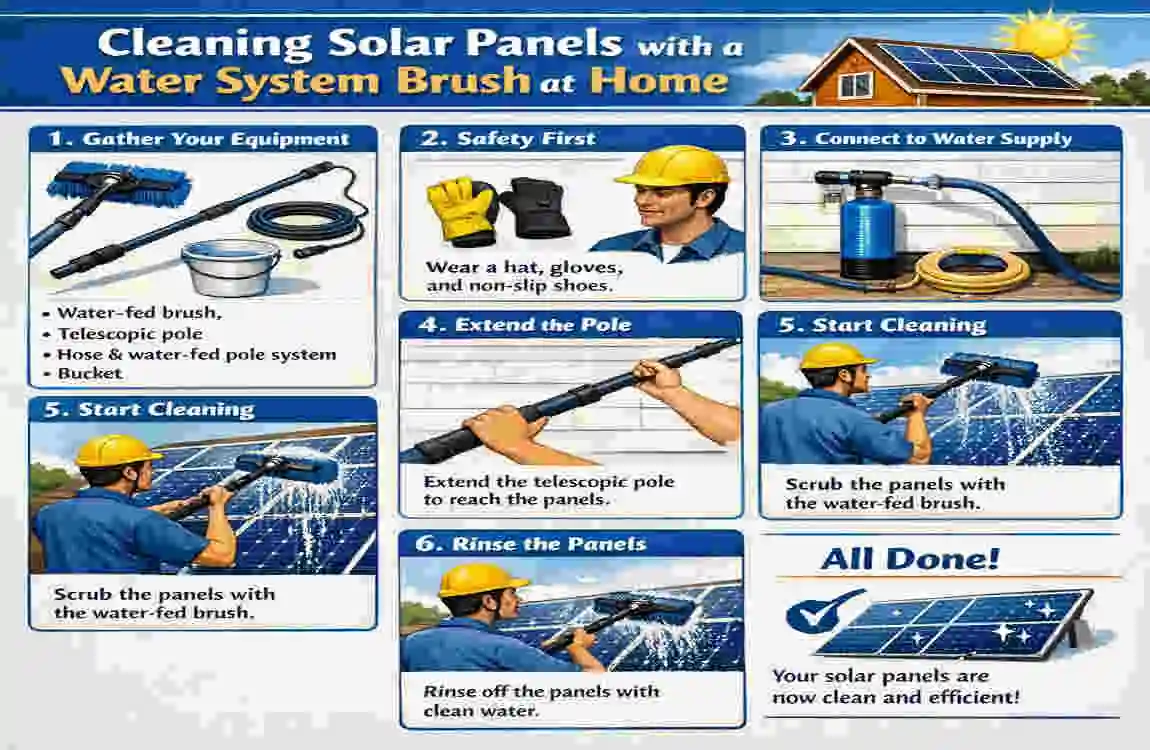
Using a solar panel cleaning brush with a water system is not difficult, but the right method matters. If you clean carefully, you protect both your safety and your solar investment.
Start with safety preparation
Check the weather first. Avoid cleaning during strong winds, heavy heat, rain, or a slippery roof surface. Early morning or late afternoon works best because the panels are cooler.
Wear shoes with a good grip. If your roof is steep or difficult to navigate, use proper fall protection or use a safer access point. If any part of the job feels risky, stop and call a trained professional. No amount of cleaning savings is worth a fall.
Assemble the solar panel cleaning brush with the water system
Lay out the pole, brush head, hose, and water connection. Make sure every connection is secure before you extend the pole. A loose hose or a weak fitting can interrupt the job and create a mess.
If your system includes a filter or deionization unit, connect it correctly and check the flow direction. This step takes only a few minutes, but it helps prevent poor rinsing later.
Fill or connect your water source and test the pressure
Use the cleanest water available. If you have a purification unit, make sure it is working properly. Then turn on the system and test the water flow before you begin cleaning the panels.
You do not need aggressive pressure. You want a steady stream that wets the panel and supports the brush. If the water is spraying too hard, reduce it. Controlled flow is safer and more effective.
Clean with a gentle top-down sweeping motion
Begin at the top of the panel and work downward. This helps dirt move off the surface instead of spreading into already-cleaned areas. Keep the brush moving in slow, even strokes.
Let the water do part of the work. If you hit a bird dropping or stuck grime, do not force it with hard pressure right away. Wet it first, let it soften, then brush gently again.
Try to maintain light, even contact across the surface. The goal is to lift the dirt, not scrub the glass aggressively.
Rinse well, let it dry, and inspect the result
After brushing, rinse the panel thoroughly. If you are using purified water, the surface should dry much cleaner with fewer spots. Once dry, step back and inspect for leftover streaks, debris around the frame, or missed patches.
If your inverter app or monitoring system shows panel output, compare production before and after cleaning over the next clear day. Many homeowners notice a visible improvement after proper cleaning, especially when the panels are heavily dusted.
Best cleaning frequency for dusty areas
If you live in a dusty place like much of Punjab, cleaning every two to three months is often a sensible routine. Homes near roads, construction sites, open fields, or areas with bird activity may require more frequent checks.
You do not have to over-clean. Instead, aim for consistent, careful maintenance.
Solar Panel Cleaning Brush with Water System: Cost, Maintenance, and Buying Tips
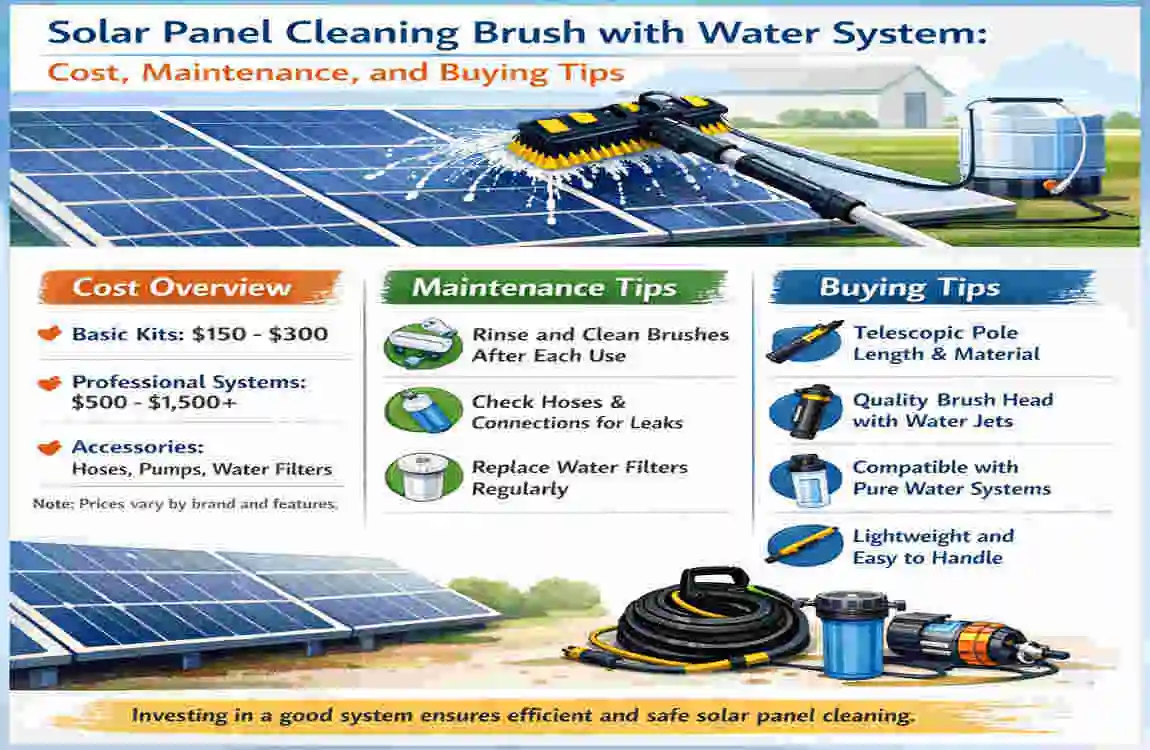
Buying the right tool is not only about price. You also need to consider durability, ease of use, and the real value it delivers over time.
What does it cost?
For homeowners, a basic solar panel cleaning brush with a water system may start around the lower end of the market. At the same time, Premium kits with longer poles and filtration can cost much more. In local terms, you may see options ranging from roughly PKR 10,000 for very simple setups to PKR 50,000 and far above for more advanced imported systems.
The real question is not “What is the cheapest option?” It is “What helps me clean safely and properly for years?”
If regular cleaning helps recover even a modest drop in panel performance, the tool can pay for itself over time through better solar output and fewer paid service visits.
How do you maintain the system?
Maintenance is simple if you stay consistent. Rinse the brush head after use to prevent dust and grit from becoming trapped in the bristles. Check hoses for kinks. Store the pole dry and safely so it does not crack or warp. If you use filters, replace them when performance drops or as directed by the manufacturer.
A well-maintained brush system lasts longer and cleans better. A neglected one can turn into the same problem as a bad cleaning tool.
What should you look for before buying?
The first thing to check is reach. If you have a two-story home, a short pole will frustrate you. If you have a small, easy-access rooftop, you may not need an oversized setup.
Next, check the brush softness, pole weight, and water feed reliability. If the pole is too heavy, you will avoid using it. If the brush is too rough, it defeats the whole purpose.
Also consider replacement parts. A great system becomes a poor purchase if you cannot find new brush heads, hose fittings, or filter media later.
In Pakistan, many homeowners buy solar equipment from local solar equipment shops, hardware suppliers, online marketplaces, or specialty cleaning tool sellers. Always ask about the warranty, return policy, and availability of spare parts.
Is it safe for all panel types?
In general, yes—if the brush is designed for solar glass, the water flow is controlled, and you avoid harsh chemicals or excessive force. Most modern panels respond well to soft-bristle, purified-water cleaning. If your manufacturer provides care instructions, follow those first.
Can you use normal tap water?
You can, but it may leave spots depending on your water quality. Filtered or deionized water usually gives a cleaner finish and reduces streaking. If your area has hard water, purification becomes even more useful.
Common Mistakes Homeowners Make with Solar Panel Cleaning Brushes
Even the best solar panel cleaning brush with a water system will not help much if you use it the wrong way. These are the most common mistakes homeowners make:
- Using too much pressure: More force does not mean better cleaning. It can stress the glass and frame.
- Cleaning during peak heat: Hot panels dry too quickly, leading to increased spotting.
- Ignoring water quality: Hard water often leaves marks, reducing the clean finish.
- Using rough or dirty bristles: Trapped grit can scratch the surface.
- Skipping safety steps: A rushed rooftop job can turn dangerous very quickly.
- Letting dirt build up for too long: Old grime takes longer to remove and requires more effort.
- Buying only on price: A cheap system that is too short, too heavy, or poorly made often becomes wasted money.
FAQ: Solar Panel Cleaning Brush with Water System
What is a solar panel cleaning brush with water system?
It is usually a soft brush with a hose-fed water line built into the handle, often paired with an extendable pole so you can reach panels more easily from the ground or a safer position . Some models are designed specifically for use with a pure water system .
Is it safe for solar panels?
Yes, if you use a soft brush and gentle water flow. A soft brush with hose attachment is commonly recommended because it helps clean without scratching the panels . Harder bristles are not advised, and it is better to wet the panel first before brushing .
Should I use a pressure washer?
No. One of the clearest recommendations is: don’t use a pressure cleaner on solar panels .
Why use water before brushing?
You should rinse first to remove loose dust, sand, and debris, because dry grit can scratch the glass during scrubbing . It is also recommended to moisten the panel first to loosen stuck dirt before brushing .
Is pure water better than normal water?
A pure water system can make cleaning easier and help improve panel efficiency without damaging nano-coatings . Some solar cleaning brushes are made specifically for pure water systems .
Do I need soap or chemicals?
Advice varies. One homeowner guide suggests using soapy water with light scrubbing , while another forum recommendation says don’t use soaps or chemicals and that water with a towel or soft brush is enough . For a safe simple approach, many homeowners stick to clean water and a soft brush .
When is the best time to clean solar panels?
Early morning, before the panels get hot, is recommended in one DIY forum answer .
What kind of brush is best?
A soft, wider brush is often preferred, because a wider brush can help the job go quicker . Soft bristles are also safer than hard bristles for panel surfaces .
Can I use this for rooftop home systems?
Yes, especially if the brush has an extendable handle and water feed through the pole, which users describe as a practical setup for panel cleaning .
