

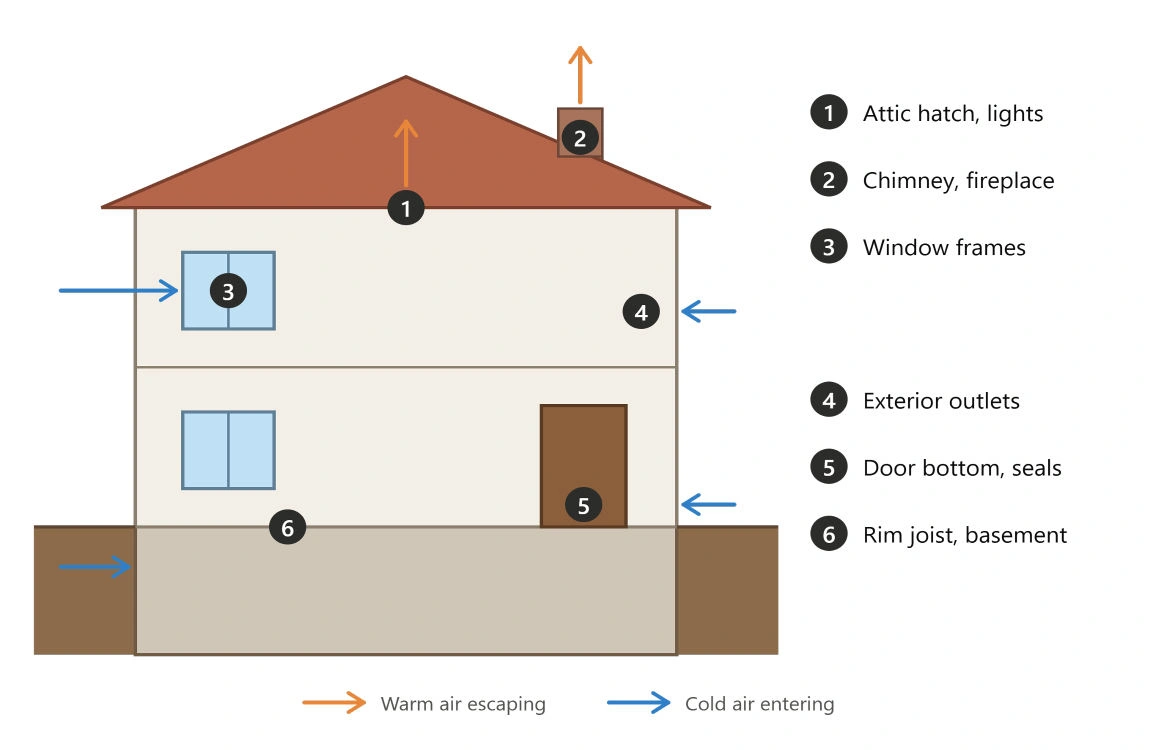
If one room never warms up, your heating bill keeps climbing, or you feel a cool breeze with the windows shut, your home probably has air leaks. Learning how to detect draughts in your house (Americans usually spell it “drafts”) takes a free afternoon and a few household items. This guide covers the tests that work, the order to do them in, and one safety step most articles skip.
How to Detect Draughts in Your House: 8 DIY Methods
Do a Visual Inspection First
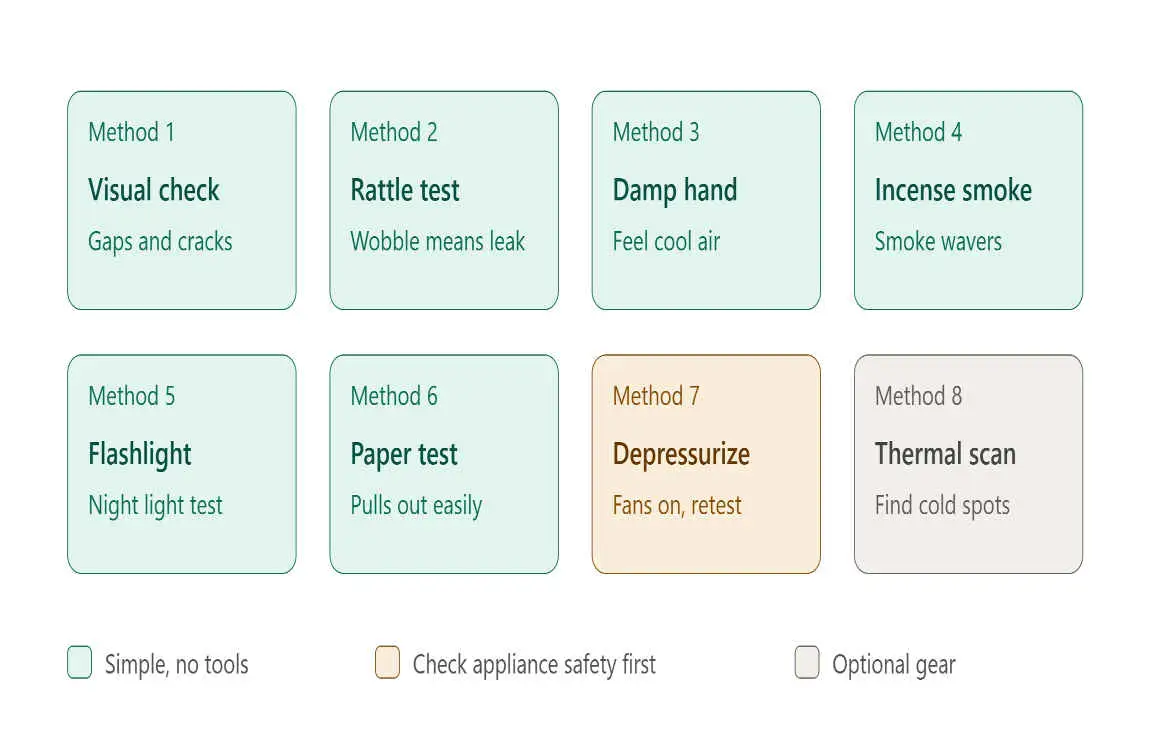
Walk each room and look for obvious gaps. Check along baseboards, around electrical outlets and switch plates, and around recessed lights. Inspect the places where different materials meet. The DOE suggests looking at joints such as brick to wood siding, foundation to walls, and chimney to siding, plus door and window frames, mail chutes, and air conditioners. Outside, look for cracked caulk, gaps around pipes and wires, and loose siding.
Rattle Test and Daylight Test
The DOE says to see whether you can rattle a door or window, since movement points to leaks, and that daylight visible around a frame means the door or window leaks. Do this in the evening with the lights off inside and a flashlight outside, if you can.
The Damp Hand Test
Lightly dampen your hand and hold it near suspected gaps. A draft will feel cool on the wet skin. It is simple and surprisingly sensitive, especially on a windy day. Try it at window sashes, door edges, and outlet covers on exterior walls.
The Incense or Candle Test
Hold a lit incense stick near the same trouble spots. The smoke will waver at the source of a leak. Incense works better than a candle because smoke shows direction as well as movement. Keep flames and embers away from drapes and paper.
The Flashlight-at-Night Test
The DOE describes shining a flashlight over potential gaps at night while a partner watches from outside. Any light that shows through is a leak path for air, too. It works especially well on garage doors, attic hatches, and basement windows.
The Paper or Dollar Bill Test
Close a door or window on a strip of paper or a dollar bill. If you can pull it out without it dragging, you’re losing energy. Test several spots around the perimeter, because weatherstripping often fails in just one corner or along the bottom.
Depressurize the House for Stronger Results
This is the trick that makes the earlier tests more reliable. The DOE describes depressurizing your home by turning on all exhaust fans that vent outside, such as bathroom fans and stove vents. With the house under slight negative pressure, outside air is pulled through leaks faster, so the damp hand and incense tests show more.
Important: if you have atmospheric combustion appliances (a natural-draft water heater or furnace), a depressurized house is exactly when backdrafting can occur. Don’t run this test unless a professional has confirmed your appliances are safe, or you have sealed-combustion or electric equipment. If in doubt, skip this step.
Use a Thermal Camera (Optional)
Thermal cameras show temperature differences on surfaces, so cold spots reveal missing insulation or air pathways. They work best on cold days, when the difference between inside and outside is large home. A cold spot does not always mean an air leak, though. It can also be a thermal bridge or an insulation gap, so confirm with one of the touch or smoke tests above. Prices and quality vary widely, and I couldn’t verify a reliable cost range, so check current reviews before buying.
Where Drafts Hide: A Room-by-Room Checklist
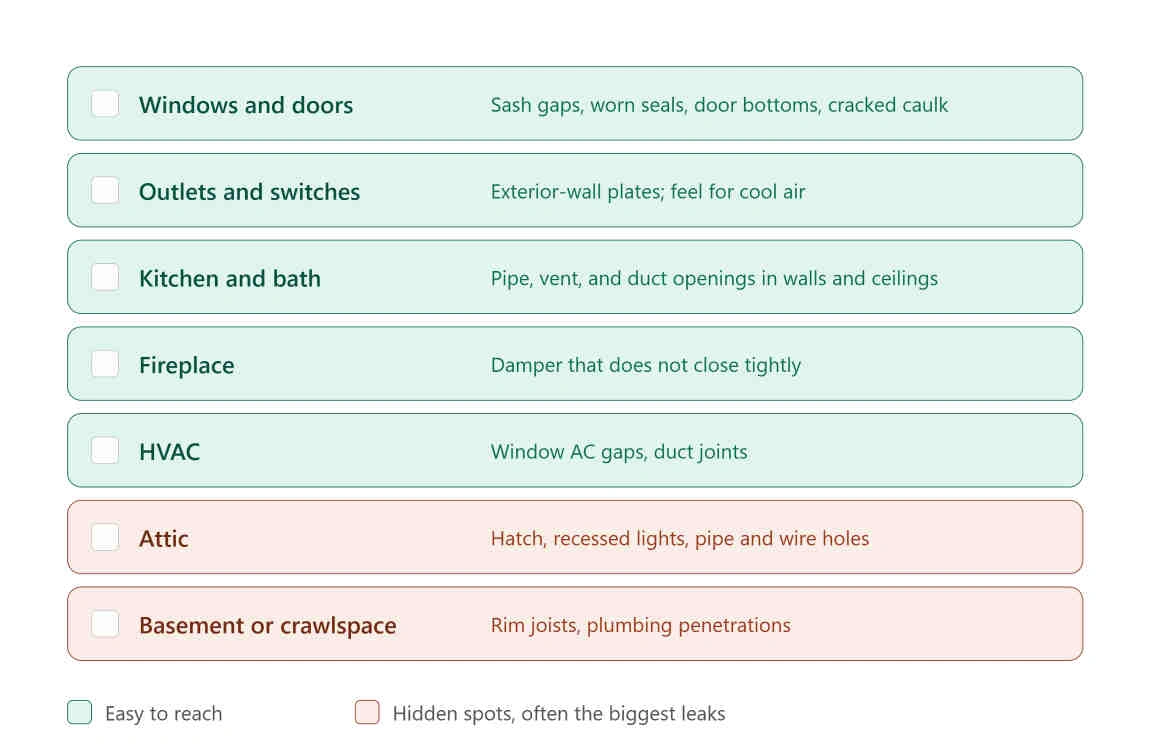
Most people find the windows and doors. The bigger leaks are often hidden.
| Area | What to check |
|---|---|
| Windows and doors | Sash gaps, worn weatherstripping, door bottoms, cracked caulk |
| Outlets and switches | Exterior-wall plates; feel for cool air |
| Attic | Hatch or pull-down stairs, recessed lights, pipe and wire penetrations |
| Basement / crawlspace | Rim joists (where the foundation meets the framing), plumbing penetrations |
| Fireplace | Damper that doesn’t close tightly |
| HVAC | Gaps around wall or window air conditioners, duct joints |
| Kitchen and bath | Where pipes, vents, and ducts pass through walls or ceilings |
Basement and attic leaks often matter most because warm air rises and escapes at the top while cold air is pulled in at the bottom. If you can only inspect one place, start with the attic.
Is It a Draft or Just a Cold Surface?
A cold window can make a room feel drafty even when no air is moving. Single-pane glass chills the air next to it and makes you feel cold from radiant heat loss. To tell the difference, hold the damp hand or incense test about an inch from the frame, not just the glass. Movement means a real leak. No movement but a cold feel points to poor glazing or insulation, which needs a different fix than caulk or weatherstripping.
When to Hire a Professional
DIY tests find the obvious leaks. For the hidden ones, the DOE recommends hiring a qualified technician for an energy assessment that includes a blower door test, which depressurizes the home and can reveal many leaks. A complete assessment can also show where you need more insulation.
What it costs. Prices vary by region and home size. HomeAdvisor reports an average home energy audit cost of $437, with most homeowners paying between $212 and $698, and a blower door test running about $350. Fixr puts a typical blower door test at $150 to $450. Get at least two quotes and ask whether the blower door test, combustion safety testing, and a written report are included.
Tax credit update. The federal 25C credit that once covered part of insulation, air sealing, and audit costs has ended. Expenditures made after December 31, 2025 no longer qualify. Many states, utilities, and local programs still offer rebates or free assessments, so check yours. For example, Energy Trust of Oregon offers resources and sometimes incentives for homeowners.
What to Do After You Find Draughts
Mark each leak with tape and note the type. Common fixes:
- Gaps in trim, baseboards, and window frames: caulk (paintable, interior/exterior as appropriate)
- Moving parts, such as doors and operable windows: weatherstripping and door sweeps
- Outlets and switches on exterior walls: foam gaskets behind the cover plates
- Large gaps and penetrations: expanding foam, used carefully
- Attic hatch: weatherstrip and insulate the cover
- Fireplace: make sure the damper closes tightly; use a chimney balloon or a glass door if you rarely burn
Always air seal before adding attic insulation. Insulation slows heat flow but doesn’t stop air movement, so leaks left behind keep wasting energy.
Pros and cons of DIY detection
| Pros | Cons |
|---|---|
| Low or no cost | Misses hidden leaks in walls and attics |
| Quick to start | Can’t measure total leakage |
| Teaches you your home | Depressurizing may be unsafe with some appliances |
| Good for prioritizing fixes | Thermal images need interpretation |
Common Mistakes to Avoid
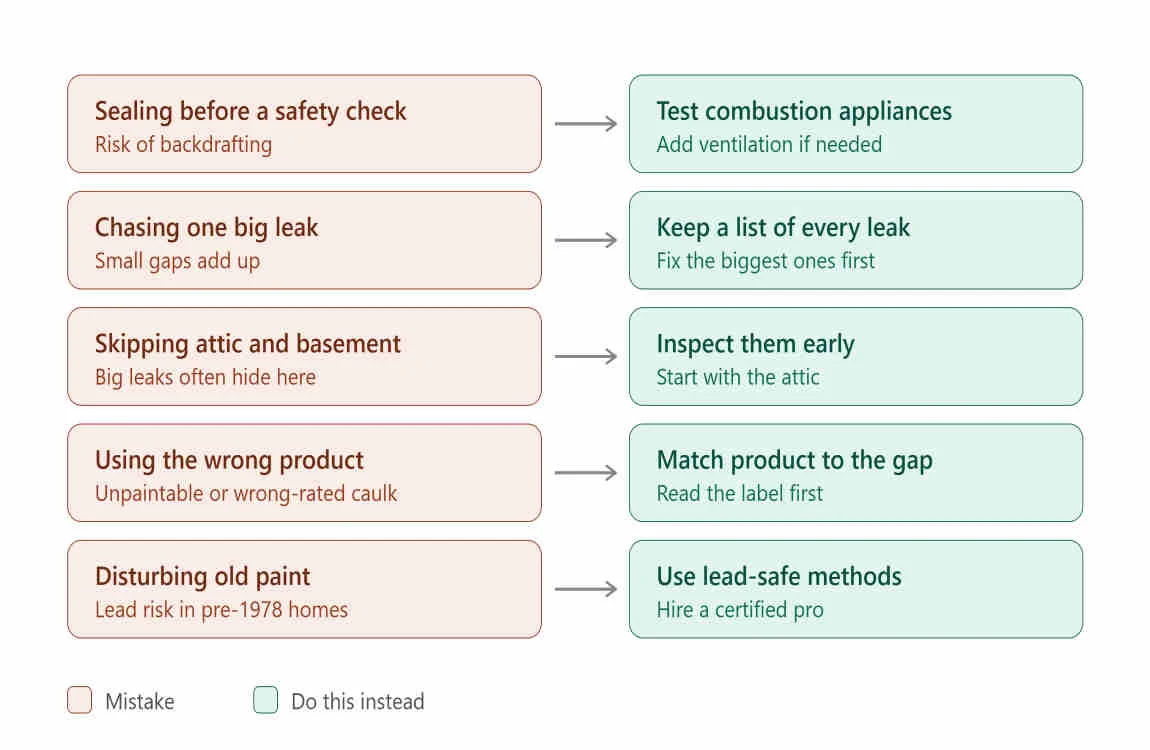
- Sealing without checking combustion safety. Covered above; this is the one that matters most.
- Chasing one big leak. Many small gaps add up, so keep a list and work through it.
- Skipping the attic and basement. These are where the biggest leaks tend to be.
- Using the wrong product. Silicone can’t be painted, foam can expand and damage window frames, and some caulks aren’t rated for exterior use. Read the label.
- Disturbing old paint carelessly. See the lead warning above.
Frequently Asked Questions
How can I tell if my house has air leaks?
Common signs include cold spots, rooms that never match the thermostat, rattling windows, visible daylight around frames, and high energy bills. Try the damp hand, incense, and paper tests to confirm.
What is the easiest way to find drafts at home?
The damp hand test and the incense test are the easiest. Both work with items you already own and show leaks right away.
Do I need a blower door test?
Not always. DIY tests are fine for obvious leaks. A blower door test is a thorough way to measure and locate leakage you can’t find yourself. It is worth it if your bills are high, rooms are uneven, or you’re planning insulation or HVAC work.
Can a house be too airtight?
A tight house needs planned ventilation. ENERGY STAR notes a tight home may need mechanical ventilation to maintain safe indoor air quality.
How much can I save by sealing drafts?
EPA’s average is 15% on heating and cooling costs from sealing plus added insulation. Your own savings will depend on your climate, home age, and what you fix.
Are draughts and drafts the same thing?
Yes. “Draught” is the British spelling and “draft” is standard in American English.
Conclusion
To detect draughts in your house, start with a visual check, then use the rattle, damp hand, incense, flashlight, and paper tests. Add depressurization only if your combustion appliances are safe. Mark every leak, fix the biggest ones first, and seal before you insulate. If the leaks are hidden or your bills stay high, a professional energy assessment with a blower door test gives you the full picture. Check combustion safety and ventilation before any major sealing, and remember lead-safe practices if your home predates 1978.
