
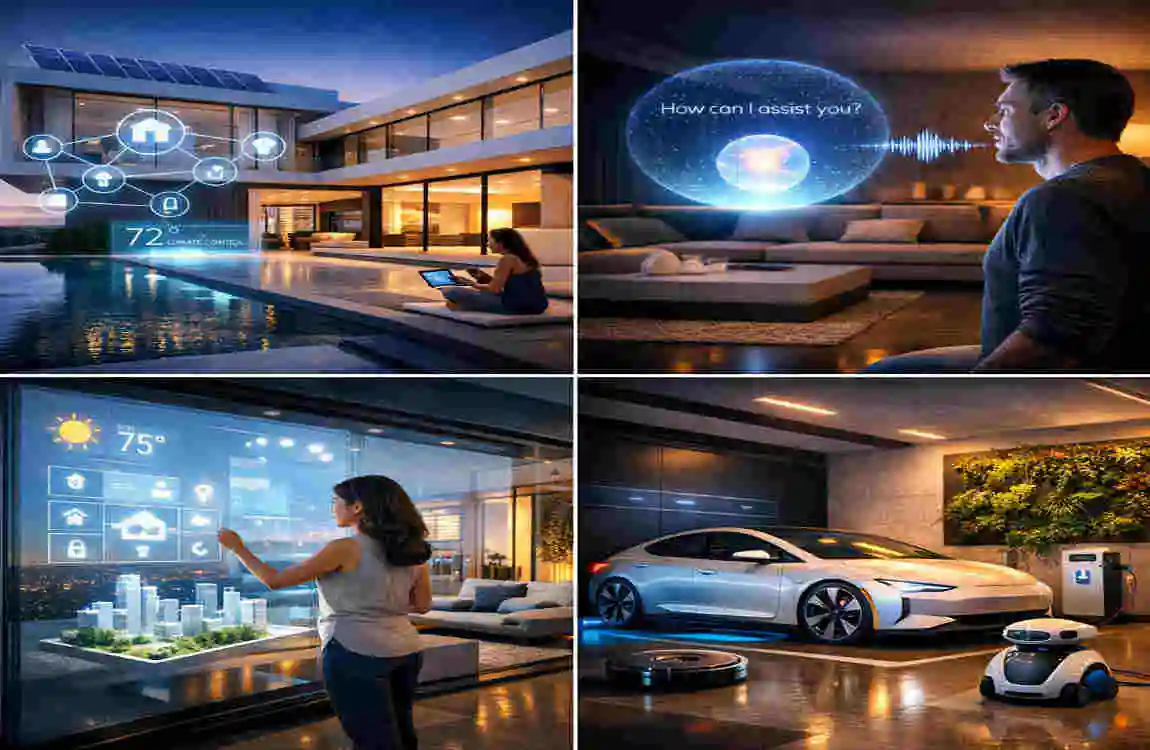
Futuristic modern homes are changing the way people live. They are no longer just stylish houses with clean lines and open spaces. They are becoming intelligent living spaces that respond to your needs, save energy, and improve comfort every day.
Today, smart home technology is not just a luxury. It is becoming a normal part of modern house innovations. Homeowners want homes that are safer, easier to manage, and more efficient. That is why future-ready homes now include voice control, automated lighting, AI-powered security, and energy-saving systems.
These homes are designed to make life simpler. They help you control temperature, lighting, appliances, and security from one place. They also support sustainable living by using less power and fewer resources. In short, futuristic modern homes combine comfort, technology, and efficiency in one smart space.
What Are Futuristic Modern Homes?
Defining Futuristic Home Design
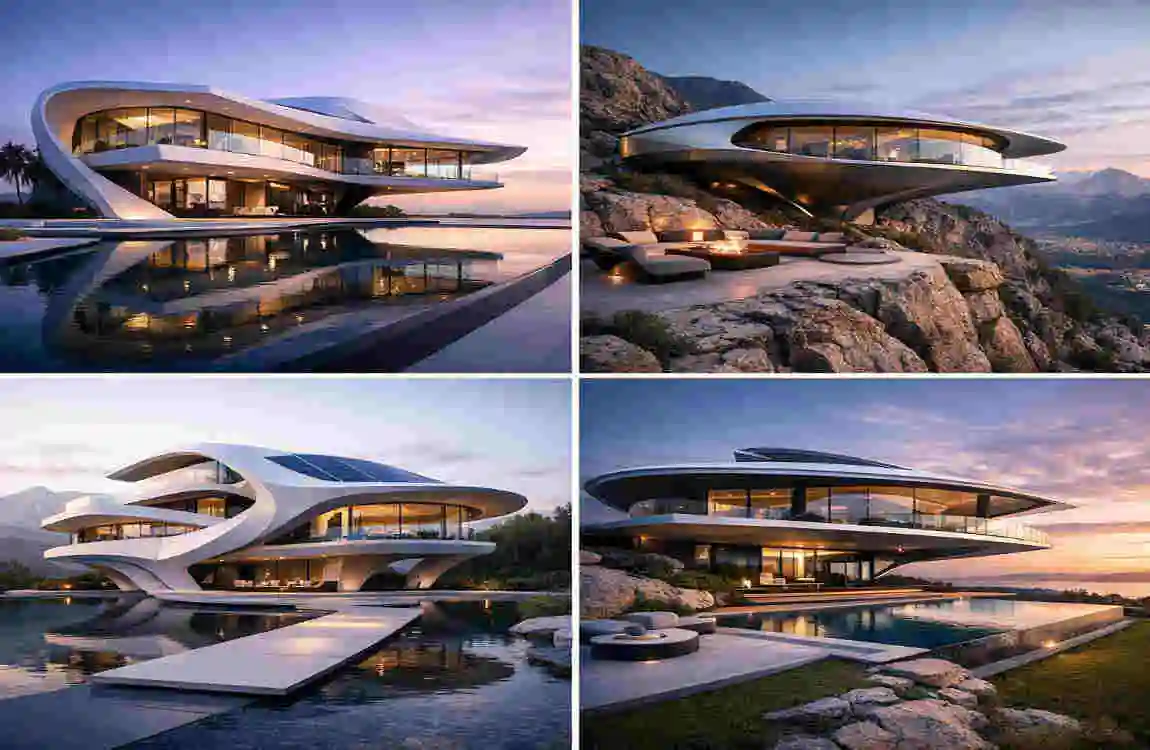
Futuristic home design blends advanced architecture with modern technology. These homes often have clean layouts, simple shapes, and smart systems built into the structure itself.
Instead of using technology as an extra feature, it becomes part of the home’s daily function. This makes the house feel more responsive, more efficient, and easier to live in.
Key Features of Futuristic Modern Homes
Some common features include:
- Energy-efficient design
- Smart automation
- Sustainable building materials
- Open floor plans
- AI-driven controls
These features help create homes that feel modern, practical, and future-ready. They also enhance the quality of life for families, professionals, and anyone who values convenience.
Smart Home Automation Systems
Voice-Controlled Living
One of the most useful parts of home automation systems is voice control. Smart assistants can turn on lights, play music, adjust the thermostat, and even manage appliances.
This makes daily life faster and easier. You do not need to move from room to room to control everything. You can speak and let the system do the work.
Automated Lighting and Climate Control
Lighting and temperature are two of the biggest areas where smart automation in futuristic modern homes makes a difference.
Motion sensors can turn lights on when someone enters a room and off when the room is empty. Smart thermostats learn your habits and adjust heating or cooling based on your routine. Automated blinds can also open or close in response to sunlight, helping reduce heat and save energy.
Remote Home Management
Another major benefit is remote control. With a smartphone app, you can check and manage your home from anywhere.
You can lock doors, turn off lights, monitor cameras, or adjust the temperature while you are at work or traveling. This gives you more control and peace of mind.
Artificial Intelligence in Futuristic Modern Homes
AI-Powered security Systems
AI plays a big role in making homes safer. It can support facial recognition, smart door locks, and AI surveillance cameras.
These systems can notice unusual activity and alert homeowners quickly. Instead of just recording events, they can help prevent problems before they grow.
Predictive Home Management
AI can also predict what a home needs. It may adjust lighting during the evening, reduce power use when rooms are empty, or keep the temperature balanced based on weather changes.
This makes the home more efficient without needing constant human input.
Personalized Living Experience
Over time, AI learns your habits. It understands when you wake up, when you sleep, and how you like your home to feel.
That means your home becomes more personal. It can automatically create a comfortable environment that matches your lifestyle.
Energy Efficiency and Sustainable Technology
Solar Power Integration
Many sustainable, futuristic, modern homes use solar panels to generate clean energy. This lowers electricity bills and reduces dependence on traditional power sources.
Solar power is one of the strongest features of eco-friendly smart homes because it supports both savings and sustainability.
Smart Energy Monitoring
Smart meters and energy tracking tools show how much power different parts of the home use. This helps homeowners spot waste and make better choices.
Water-Saving Technologies
Technology also helps save water. Homes may use:
- Smart irrigation systems
- Leak detection tools
- Water recycling systems
These tools protect resources and reduce monthly bills.
Eco-Friendly Construction Materials
Modern builders often choose materials that are better for the environment, such as recycled steel, insulated concrete, and sustainable wood. These materials improve durability while lowering environmental impact.
Technology: What It Does, Main Benefit
Smart thermostat Controls room temperature , saves energy
Solar panels produce clean electricity , lower utility bills
AI security camera detects unusual activity , improves safety
Smart irrigation Controls watering , reduces water waste
Voice assistant manages home tasks , adds convenience
Advanced security Technology
Security is a major reason people choose futuristic modern homes.
Biometric Entry Systems
Many homes now use fingerprint scanners, retina scans, or keyless entry systems. These make it harder for strangers to enter and easier for homeowners to get in quickly.
24/7 Remote Surveillance
Cloud-connected cameras allow live viewing from a phone or tablet. Motion alerts can notify you when something unusual happens.
Smart Fire and Emergency Detection
Modern homes can also detect smoke, carbon monoxide, and flooding. This gives homeowners more time to respond and protect their property.
High-Tech Interior Features
Smart Kitchens
In futuristic homes, kitchens often include intelligent refrigerators, touchless faucets, and automated cooking appliances. These tools save time and make cooking easier.
Smart Bathrooms
Bathrooms may include heated floors, sensor faucets, and temperature-controlled showers. These features add comfort while also saving water and energy.
Intelligent Furniture
Furniture is also becoming smarter. Adjustable desks, charging-enabled tables, and multifunctional pieces help people use space more effectively.
Futuristic Entertainment and Connectivity
A modern smart home should also support entertainment and fast connectivity.
Home Theater Innovations
Many homes now include voice-activated sound systems, hidden projectors, and smart TVs. These features create a more immersive experience for movies, gaming, and music.
High-Speed Connectivity
Wi-Fi mesh systems and 5G support keep every part of the home connected. This is important for smart devices, streaming, remote work, and online learning.
Benefits of Technology in Futuristic Modern Homes
Technology brings many real-life benefits to homeowners. The most important ones are:
- Improved energy savings
- Better security
- Greater comfort
- Easy automation
- Higher property value
These benefits make futuristic homes attractive for both current living and future investment.
Challenges of Building Futuristic Modern Homes
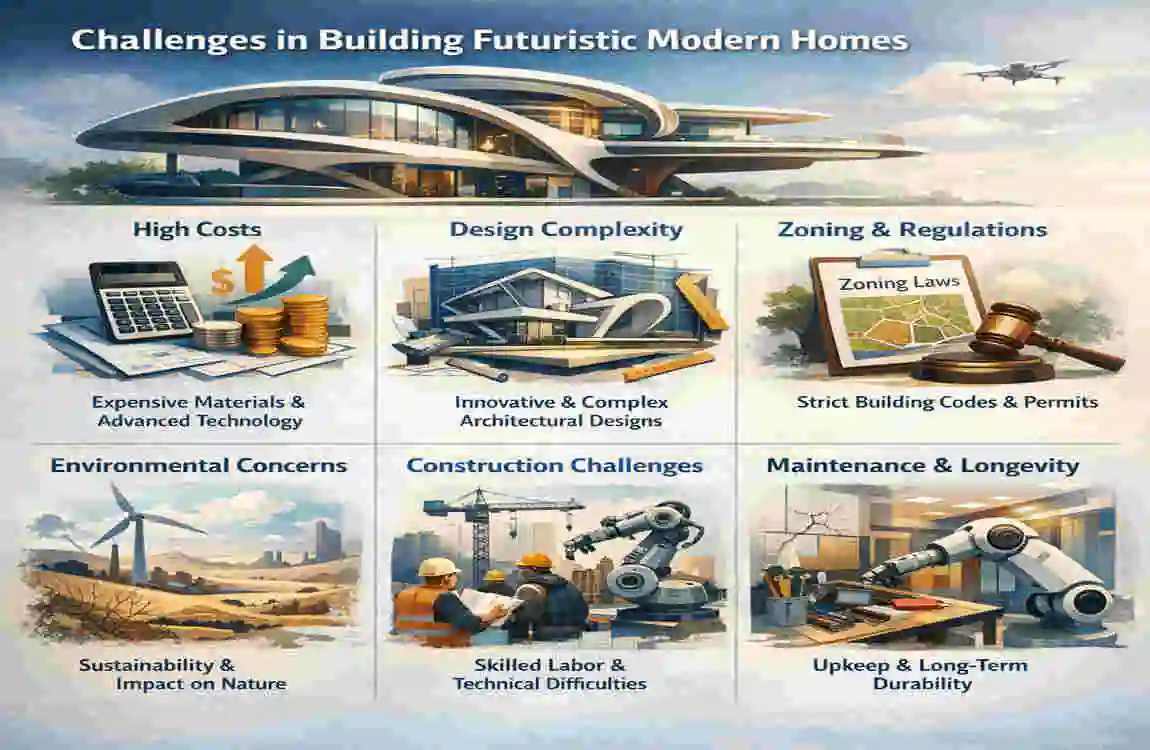
Even though these homes offer many advantages, they also come with some challenges.
High Initial Costs
Smart systems and advanced materials can cost more upfront. However, they often save money over time.
Maintenance and Upgrades
Technology needs updates and occasional repairs. Homeowners must keep systems working properly.
Cybersecurity Risks
Because many devices are connected online, homes can face digital risks if systems are not well-protected.
Dependence on Internet Connectivity
Some smart features may not work well without a stable internet connection. This is why strong network support matters.
Future Trends in Futuristic Modern Homes
The future of home design is moving toward even smarter living. We can expect:
- AI-driven entire homes
- Self-sustaining energy systems
- 3D-printed smart houses
- Robotics for household tasks
- Carbon-neutral living
These trends show that futuristic modern homes will continue to become more advanced, efficient, and user-friendly.
FAQ
What technology is used in futuristic modern homes?
They use smart automation, AI systems, renewable energy, advanced security, and connected devices.
Are futuristic modern homes energy efficient?
Yes, many use solar power, smart lighting, and energy-monitoring tools to reduce waste.
How does AI improve futuristic modern homes?
AI helps with security, comfort, and energy use by learning user habits and making smart adjustments.
Are futuristic modern homes expensive?
They can cost more at first, but the long-term savings often make them worthwhile.
Why are futuristic modern homes becoming popular?
People like them because they offer convenience, safety, sustainability, and modern living.
| Technology | How it’s used in futuristic homes |
|---|---|
| Smart security | Locks, cameras, and doorbells can be controlled remotely. |
| Automated lighting | Lights adjust by motion, time, or voice command. |
| Climate control | Smart thermostats keep rooms comfortable and save energy. |
| Automated blinds | Blinds open and close automatically for privacy and sunlight. |
| Home hubs | One app or controller manages all connected devices. |
