
Buying homes on 5 acres is a big step, and for many people, it is also a dream. This kind of property gives you something that smaller lots often cannot: space, privacy, and freedom.
With 5 acres, you may have room for a garden, a workshop, a few animals, or simply a quieter life away from crowded neighborhoods. For families, it can mean more outdoor play space. For investors, it can mean strong long-term value. For rural lifestyle buyers, it can mean a chance to live more independently.
Still, a larger property is not just about land. You need to think about zoning, utilities, home size, drainage, maintenance, and location before you buy. The right choice can improve your daily life and your future value. The wrong choice can become expensive and stressful.
Why Are Homes on 5 Acres So Popular?
More Privacy and Space
One of the biggest reasons buyers love homes on 5 acres is privacy. You are usually farther from neighbors, which means less noise, less traffic, and more peace.
This can make everyday life feel calmer. You may enjoy quiet mornings, open views, and more room to breathe.
Room for Outdoor Activities
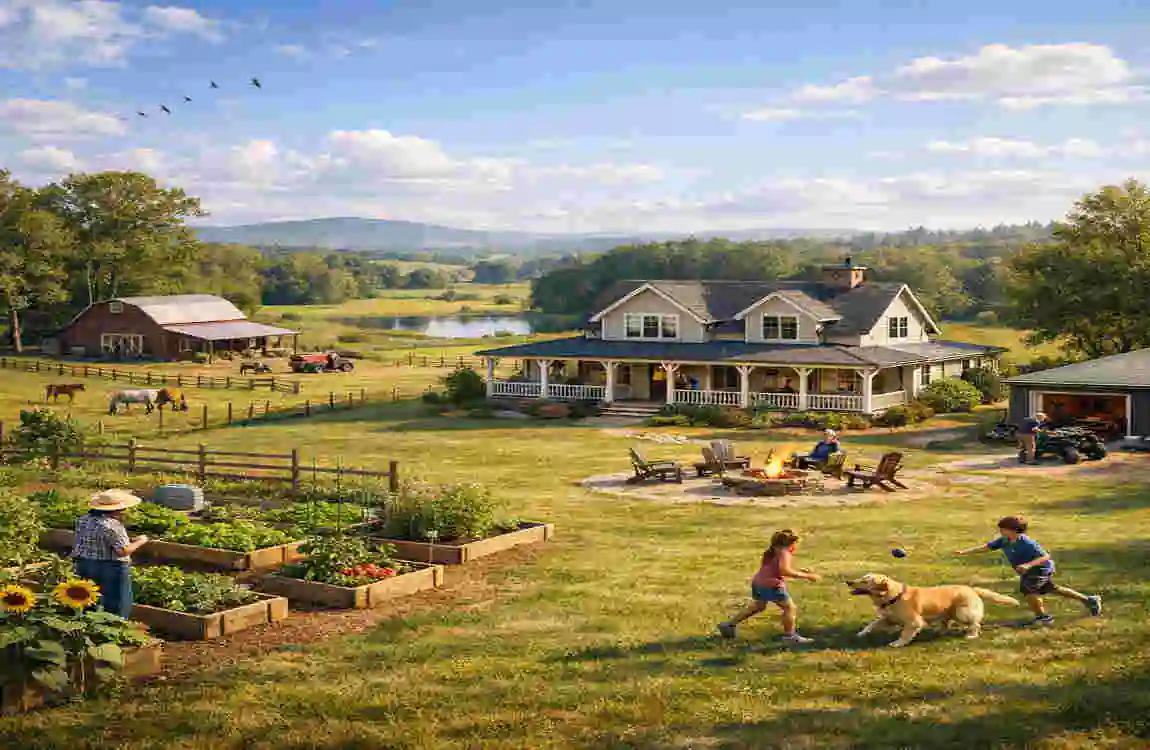
Five acres gives you space to enjoy the outdoors in a real way. You may want a garden, a play area, a fire pit, a barn, or even a few chickens or goats.
If you like being outside, this kind of property gives you more freedom than a small suburban lot.
Better Lifestyle Flexibility
A larger lot gives you options. You may want to add a guest house, workshop, shed, or extra parking later.
Some buyers also like the idea of homesteading, raising animals, or creating a small family farm. That flexibility is one of the biggest benefits.
Potential Investment Growth
Land often retains its value over time. In many areas, properties with acreage can become more desirable because they are harder to find.
That means a home on 5 acres may not only improve your lifestyle, but also support long-term resale value.
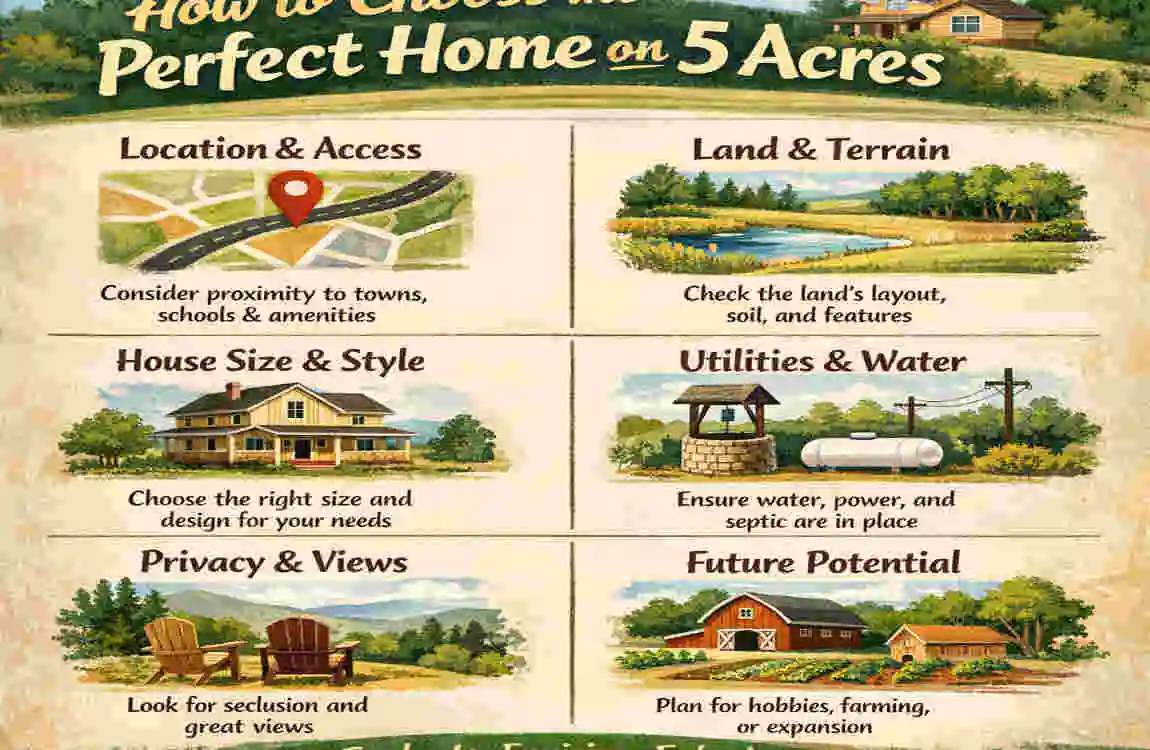
Define Your Purpose Before Buying a Home on 5 Acres
Before you shop, ask yourself one simple question: Why do I want the land?
Your answer should guide every decision.
Residential Living
If you want a quiet place for your family, focus on comfort, safety, and convenience. A good floor plan, solid road access, and nearby schools may matter more than farming features.
Farming or Hobby Agriculture
If you plan to grow food or keep animals, look closely at soil, water access, fencing, and barn space. Even a small setup can work well on 5 acres if the land is right.
Recreational Property
Some buyers want space for horses, ATVs, hunting, or outdoor fun. In that case, land shape, tree coverage, and trail access matter a lot.
Rental or Investment Property
If your goal is income, think about resale demand, expansion potential, and local rules. Some properties can support future guest homes, short-term rentals, or even subdivisions in the right area.
Evaluate the Land Quality Carefully
The house matters, but the land matters just as much. A beautiful home on poor land can turn into a costly mistake.
Topography Matters
Look at whether the land is flat, gently sloped, or steep. Flat land is often easier to use for gardens, driveways, and extra buildings.
Sloped land may look nice, but it can create drainage problems and make construction harder.
Soil Quality
If you want a garden or crops, soil quality is very important. Some land has rich soil, while other land is rocky, sandy, or poor for planting.
A soil test can help you understand what will grow well there.
Flood Risk and Environmental Concerns
Check whether the property has standing water, erosion, wetlands, or runoff issues. These problems can damage the land and lead to costly repairs later.
Always ask how water moves across the property during heavy rain.
Tree Coverage and Natural Features
Trees can add beauty, shade, and privacy. But too many trees can also mean more cleanup, root issues, and higher maintenance.
Balance is important. You want land that looks good and works well.
Check Zoning Laws and Restrictions
You should never buy acreage without checking the rules first. Even if the land looks perfect, local restrictions may limit what you can do.
Residential Zoning Rules
Some properties allow only certain types of homes or structures. You may also need to follow setback rules, which specify how far buildings must be from property lines.
Agricultural Use Permissions
If you want animals, barns, or crop space, make sure the zoning allows it. Some areas allow chickens but not larger livestock.
HOA Restrictions
If the property is in a homeowners association, ask about appearance rules, fencing, exterior colors, and building limits.
Future Development Risks
Check what is planned nearby. A quiet road today may become busier later if new roads, stores, or commercial buildings are added.
Consider Home Size and Layout
The home itself should match the land and your lifestyle.
Matching Home Size to Acreage
A large estate is not always better. A smaller, well-designed home can feel more practical and easier to maintain.
Think about how much space you really need, both now and in the future.
Functional Floor Plans
Look for a layout that makes daily life easier. Open living spaces, enough storage, and a useful laundry or utility room can make a big difference.
Expansion Possibilities
If you may add a garage, guest cottage, or outdoor kitchen later, make sure the property can support that plan.
Utilities and Infrastructure You Must Inspect
A pretty home with weak utilities can become a headache fast.
Water Supply
Many rural homes rely on a private well. If so, ask about water quality, water pressure, and testing history.
Septic Systems
Septic systems need to be inspected carefully. Repair or replacement can be costly, so do not skip this step.
Electricity and Internet
Check whether the property has reliable power and internet. Rural broadband can be limited in some areas, which may affect work or school needs.
Road Access
Look at the driveway and road conditions. Gravel roads, steep drives, or seasonal access problems can affect convenience and safety.
Location Still Matters Even with Acreage
A larger property does not mean location is less important. It still affects your daily routine and long-term value.
Distance to Schools and Hospitals
If you have children or health concerns, nearby schools and medical care are important.
Commute Time
A peaceful rural home is wonderful, but a long commute can become tiring. Be honest about your travel needs.
Local Property Taxes
Taxes vary by area, and they can have a big impact on your yearly budget.
Nearby Amenities
You may want grocery stores, fuel stations, hardware stores, and emergency services within a reasonable drive.
Budgeting Beyond the Purchase Price
The price tag is only part of the cost.
Land Maintenance Costs
You may need to pay for mowing, fencing, tree trimming, and general cleanup. Bigger land means more work.
Insurance Costs
Rural homes can have different insurance needs than city homes. Make sure you understand what is covered.
Utility Costs
Well and septic systems require maintenance. These costs may not show up every month, but they still matter.
Renovation and Improvement Costs
If you plan to add a barn, shed, driveway, or other structures, include those costs in your budget from the start.
Red Flags to Avoid When Buying Homes on 5 Acres
Some warning signs should make you slow down or walk away.
- Poor drainage
- Boundary disputes
- No utility access
- High-maintenance land
- Difficult terrain
- Zoning conflicts
If you spot one or more of these issues, get more information before moving forward.
Is Buying a Home on 5 Acres a Good Investment?

For many buyers, yes, it can be a smart investment.
Long-Term Land Appreciation
Land often becomes more valuable over time, especially in areas with growing demand.
Lifestyle Value
Even if the property does not produce income, it may still offer strong personal value through comfort, freedom, and a high quality of life.
Rental Potential
Some acreage homes can work as rental properties, vacation stays, or future family homes.
Future Expansion Opportunities
Extra land can give you room to build later, potentially increasing the property‘s value.
FAQ
Is 5 acres enough land for a family home?
Yes, 5 acres is usually enough for privacy, outdoor space, gardens, and small hobby activities.
Are homes on 5 acres expensive to maintain?
They can be, depending on the land, the fencing, the trees, and the utilities. Some properties need more work than others.
Can I farm on 5 acres?
Yes. Many people use 5 acres for hobby farming, small livestock, or orchards.
Is buying land with a house a good investment?
Often, yes. Homes with acreage can hold value well and may appreciate over time.
What should I inspect before buying acreage property?
Check zoning, utilities, drainage, soil quality, road access, and property boundaries before you buy.
| What to check | Why it matters |
|---|---|
| Zoning and permits | Confirms you can build what you want and avoids legal surprises . |
| Topography and drainage | Higher, well-drained ground helps with flooding risk and foundation planning . |
| Septic and water access | Rural homes often depend on a septic system and well, so soil and water tests matter . |
| Driveway and access | Good road access affects convenience, privacy, and construction cost . |
| Utilities | Electricity, internet, and other services can add major upfront costs if they are far away . |
| Home placement on the land | A smart location balances views, privacy, sunlight, and usable yard space . |
| Future use | Think about farming, pets, a pool, or extra buildings before choosing the layout . |
