

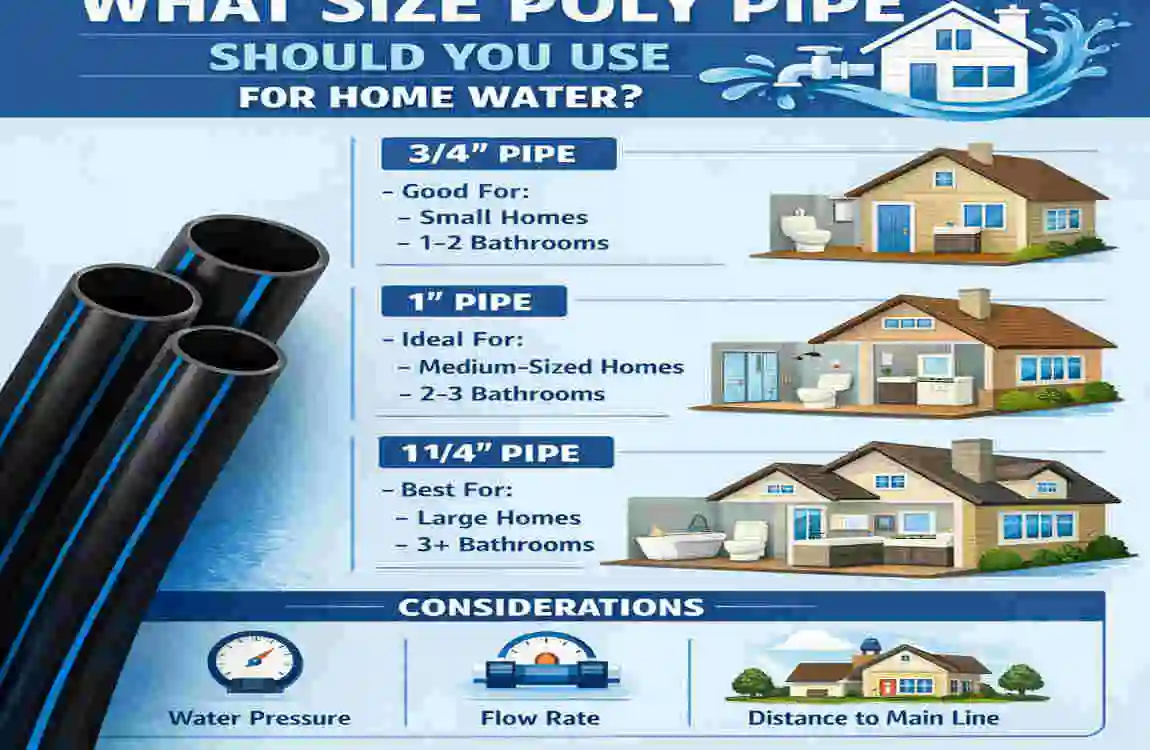
Are you struggling to figure out what size poly pipe is best for your house water supply? You’re not alone! Choosing the right pipe size can feel overwhelming, especially with so many options and technical jargon. But don’t worry—this guide will break it all down for you in simple, everyday language.
Polyethene (PE) pipes, often called poly pipes, are a popular choice for residential water systems. They’re flexible, durable, and corrosion-resistant, making them a fantastic alternative to traditional materials like PVC or copper. However, selecting the wrong size can lead to issues like low water pressure or inefficient flow. That’s why understanding the right size for your home is crucial.
What Is Poly Pipe and Why Use It for Home Water?
Understanding Polyethene Pipes
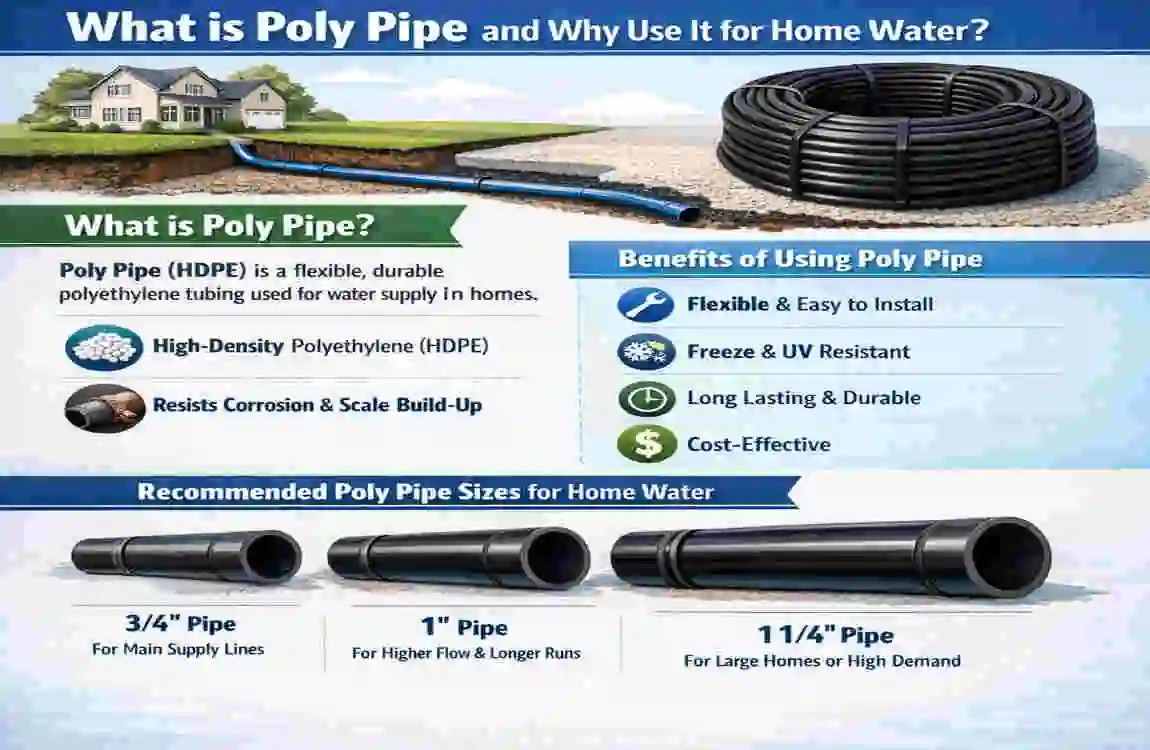
Polyethene pipes, commonly known as poly pipes, are made from high-density polyethene (HDPE). This material is known for its flexibility, strength, and resistance to environmental factors. Unlike rigid materials like PVC or copper, poly pipes can bend and flex, making them ideal for underground installations or areas prone to shifting soil.
One of the standout features of poly pipes is their NSF certification, which ensures they are safe for potable (drinkable) water. They are also UV-resistant, meaning they won’t degrade when exposed to sunlight, and they can withstand freezing temperatures without bursting.
Advantages of Poly Pipes
Poly pipes offer several benefits that make them a top choice for residential water systems:
- Durability: With a lifespan of over 50 years, poly pipes are built to last.
- Flexibility: Their ability to bend reduces the need for fittings, thereby lowering installation costs.
- Cost-Effective: Poly pipes are generally cheaper than alternatives like PEX or copper.
- Corrosion Resistance: Unlike metal pipes, poly pipes won’t rust or corrode over time.
Comparing Poly Pipes to Other Materials
Here’s a quick comparison of poly pipes with other common materials:
TypeCost/ftFlexibilityLifespanBest For
Poly (HDPE) $0.40–$1 High 50+ years Cold water mains
PVC $0.30 Low 25–40 years Drains only
PEX $0.80 High 50 years Indoor hot/cold water
Copper $2–$4 Low 50+ years Hot water systems
Factors Determining What Size Poly Pipe for House Water
Choosing the right size poly pipe isn’t a one-size-fits-all decision. Several factors come into play, including your home’s water flow needs, the number of fixtures, and the length of the pipe run.
Water Flow Rate
The flow rate, measured in gallons per minute (GPM), is a critical factor. Most homes require a flow rate of 5–15 GPM, depending on their size and the number of occupants. For example:
- A single sink typically uses 1–2 GPM.
- A showerhead averages 2.5 GPM.
- A whole-house system may require 10+ GPM.
Pipe Length and Pressure
The length of the pipe run affects water pressure. Longer pipes experience more friction, which can reduce pressure. Standard residential water pressure ranges from 40 to 60 PSI. To maintain this pressure, you’ll need to account for friction loss, which is typically 1–5 feet per 100 feet of pipe.
Home Size and Number of Fixtures
The size of your home and the number of bathrooms or water fixtures also influence pipe size. Here’s a general guideline:
- Small homes (1–2 bathrooms): 20–25mm pipes.
- Medium homes (3 bathrooms): 25–32mm pipes.
- Large homes (4+ bathrooms): 32–40mm pipes.
Flow Rates by Pipe Size
Here’s a handy table to help you understand how pipe size affects flow rate:
Pipe ID20mm (~3/4″)25mm (1″)32mm (1-1/4″)40mm (1-1/2″)
Max GPM 6–8 14 23 35
Recommended Poly Pipe Sizes for Home Water Lines
Main Service Line
The main service line is the pipe that connects your home to the municipal water supply or a well. For most single-family homes, a 25–32mm (1–1.25″) pipe is sufficient. This size ensures adequate flow and pressure for the entire household.
Branch Lines
Branch lines distribute water to individual fixtures, such as sinks, toilets, and showers. Here are some recommendations:
- Toilets and showers: 20mm pipes.
- Kitchen sinks and dishwashers: 25mm pipes.
Well or Rainwater Systems
If you’re using a well or rainwater harvesting system, you may need larger pipes, especially for long runs. A 32–40mm pipe is ideal for depths up to 350 feet.
Poly Pipe Size Chart for Residential Water
Here’s a quick reference chart for common poly pipe sizes:
OD (mm)Nominal SizeMax Pressure (PN10)Use Case
20 1/2″ 160 PSI Branch lines
25 3/4″ 160 PSI Small home main lines
32 1″ 160 PSI Standard house mains
40 1-1/4″ 125 PSI Large homes or long runs
How to Calculate Your Ideal Poly Pipe Size
Follow these steps to determine the right pipe size for your home:
- Count Your Fixtures: Add up the GPM requirements for all fixtures.
- Measure the Pipe Run: Determine the total length of the pipe from the water source to the farthest fixture.
- Apply the Velocity Rule: Ensure water velocity stays below 5 feet per second to prevent noise and wear.
- Use a Formula: For a simplified calculation, use the formula:
- GPM = π(r)^2 × v, where r is the pipe radius, and v is the velocity.
Installation Tips for Poly Pipe Home Water Systems
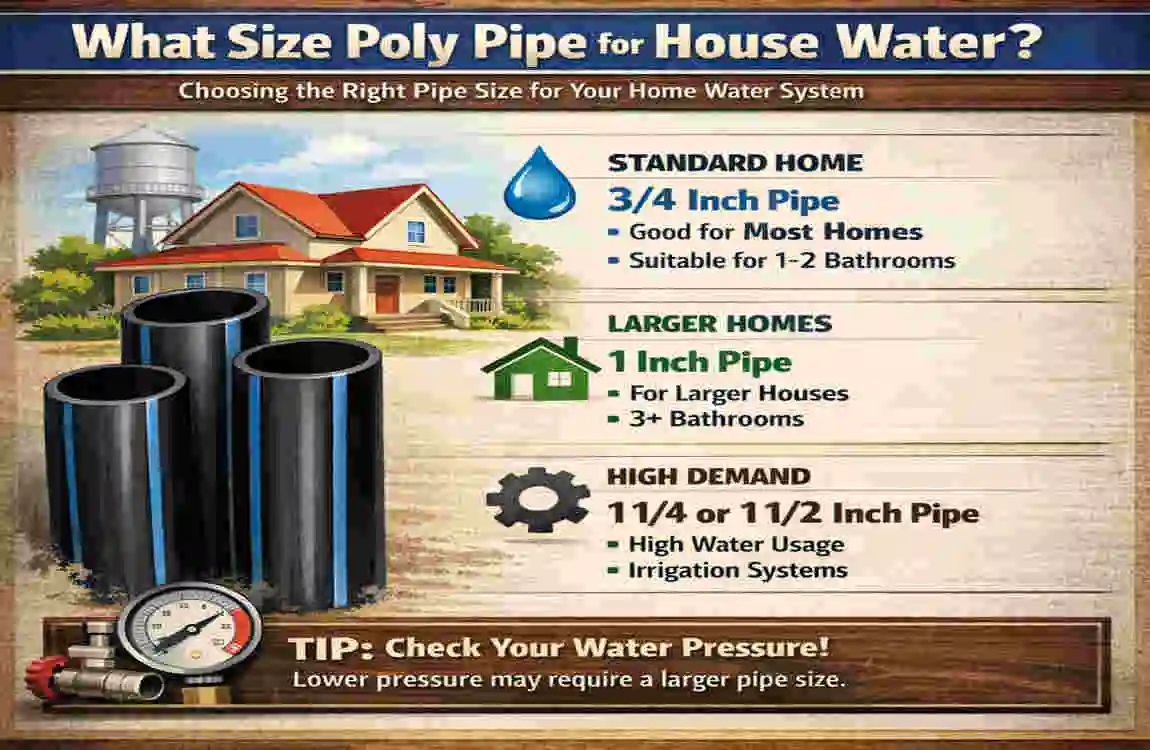
Installing poly pipes is relatively straightforward, but here are some tips to ensure success:
- Use Proper Fittings: Opt for barb or insert fittings with clamps for secure connections.
- Bury Pipes Deeply: install pipes at least 12–18 inches underground to protect them from damage.
- Check Local Codes: Always adhere to local plumbing codes to ensure compliance.
FAQ
Q: What is the standard poly pipe size for a house?
A: Most homes use 20mm (¾ inch) poly pipe for the main water supply line.
Q: Can I use a smaller pipe size?
A: Yes, 15mm (½ inch) can be used for short runs or individual fixtures, but it may reduce water pressure if used for the whole house.
Q: When should I use a larger pipe?
A: Use 25mm (1 inch) or larger if:
- The house is large
- You have multiple bathrooms
- The water source is far from the hous
Q: Does pipe size affect water pressure?
A: Yes, larger pipes improve flow and help maintain better pressure, especially when multiple taps are in use.
Q: What material is best for poly pipes?
A: High-density polyethylene (HDPE) is commonly used because it’s durable, flexible, and corrosion-resistant.
Q: What size is best overall?
A: For most standard homes, 20mm (¾ inch) is the best balance of pressure and cost.
