

Have you ever thought about how much electricity your family uses each day? In 2026, our homes are working harder than ever before. We charge our electric vehicles in the driveway, we run smart appliances from our smartphones, and many of us work from home using multiple monitors and powerful computers. Our demand for reliable power has skyrocketed. Yet surprisingly, a large number of UK homes still rely on an electrical nervous system installed decades ago.
If your home was built before the 1970s and has not had a major electrical update, you are likely living with severely outdated wiring. In fact, industry experts estimate that one in three older UK homes desperately needs a complete electrical overhaul. Living with old wiring is not just an inconvenience when a fuse trips; it is a hidden danger lurking behind your plasterboards. As energy costs continue to fluctuate and we place more strain on our systems, ensuring your home is safe and efficient has never been more critical.
This brings us to the most common question homeowners ask when they realize their home needs an upgrade. You may wonder how much it costs to rewire a 3-bed house in the UK.
We understand that stepping into a major home renovation project feels overwhelming. You are worried about the massive disruption to your daily life, the mess, and most importantly, the final bill. Let us put your mind at ease right away with a clear answer. For a standard three-bedroom property in the UK, a full professional rewire currently costs between £4,500 and £8,000.
While that might seem like a significant investment, it is an upgrade that protects your family, modernizes your lifestyle, and drastically boosts your property value. If you plan strategically, you can shave up to 20% off that final price tag.
| Rewire Type | Cost Range (£) | Typical Duration |
|---|---|---|
| Basic | 4,000–5,500 | 5–7 days |
| Mid-range | 5,500–6,500 | 5–10 days |
| Premium | 6,500–8,000 | 5–10 days |
Why Rewire Your 3-Bed House?

You might be looking at your perfectly decorated living room and thinking, “My lights turn on, and my TV works fine. Why should I tear my walls apart to replace hidden cables?” It is a fair question. However, electricity is invisible, and the degradation of your wiring happens silently over decades. Rewiring your three-bedroom house is about much more than just keeping the lights on; it is about absolute safety, legal compliance, and future-proofing your property.
Eliminating Hidden Fire Hazards
The most critical reason to rewire your home is to protect your family from devastating electrical fires. Decades ago, electricians commonly used cables coated in tough black rubber. Over the years, this rubber dries out, becomes incredibly brittle, and crumbles away, leaving live electrical wires completely exposed behind your walls.
When these exposed wires touch or overheat because you are drawing too much power through them, they spark. According to national fire safety statistics, faulty electrical distribution and outdated wiring cause roughly 13% of all domestic house fires in the UK. By stripping out this old, fragile material and installing modern, robust PVC-coated copper cables, you eliminate this terrifying risk.
Boosting Your Property Value and Securing Sales
Are you planning to sell your home or rent it out in the future? If so, your electrical system needs to pass strict legal tests. Under the latest Part P Building Regulations, any major electrical work must be certified. Furthermore, landlords must now hold a valid Electrical Installation Condition Report (EICR) to rent out a property legally.
If a potential buyer commissions a survey on your house and the surveyor spots an old, outdated fuse box with wooden backing, they will immediately flag it. Buyers will use this to aggressively negotiate your asking price down, often demanding double the actual cost of a rewire off the house price! Conversely, having a freshly rewired home with a shiny new safety certificate can boost your overall property value by a highly impressive 10% to 15%.
Meeting the Heavy Demands of Modern Living
Our homes consume more power today than they did fifty years ago. An old electrical system was designed to handle a few light bulbs, a single television, and a basic refrigerator. Today, you are likely pushing that old system to its absolute limits.
Here are just a few modern lifestyle additions that require a robust, newly wired electrical system:
- Electric Vehicle (EV) Chargers: Plugging a car into your home draws a massive, sustained amount of electrical current that old wiring cannot safely handle.
- Smart Home Technology: From automated heating thermostats and smart lighting grids to integrated security cameras, smart tech requires consistent, clean power.
- Energy Efficiency Upgrades: Modern rewiring allows you to split your home into highly efficient zones, saving you money on your monthly energy bills.
If you are unsure about the age or safety of your current setup, do not guess. Reach out to our expert team to book a comprehensive electrical inspection. We can tell you exactly what is hiding behind your walls.
Average Rewiring Costs Breakdown
Now that we understand the vital importance of updating your electrical system, let us dive into the numbers. When you ask an electrician, “How much does it cost to rewire a 3-bed house in the UK?” you will quickly realize that quotes can vary wildly.
To give you complete clarity, we have broken down the current 2026 average cost range of £4,500 to £8,000 for a typical three-bedroom semi-detached or terraced house. The final price you pay depends heavily on the “finish level” you choose. Do you want the basics, or a high-end, smart-enabled luxury finish?
Cost Table by Finish Level:
Rewire Type Cost Range (incl. VAT)What’s Included in the Price
Basic Finish £4,500 – £5,500 A brand new consumer unit (fuse box), complete fresh cabling throughout the house, standard white plastic sockets, and basic light switches.
Mid-Range Finish £5,500 – £6,500 Everything in the basic package, plus sleek brushed steel or chrome sockets, partial plastering patch-ups, and advanced RCD safety protection on every single circuit.
Premium Finish £6,500 – £8,000 Everything above, plus full ceiling re-boarding, dedicated smart-home wiring, under-cabinet kitchen lighting, and heavy-duty exterior preparation for EV chargers and hot tubs.
Understanding the Market Inflation
It is crucial to understand that building material prices are constantly changing. Over the last year, the global prices of raw copper and PVC have risen. In 2026, we have seen materials costs jump by roughly 8% compared to previous years. This means that delaying your project will likely only result in you paying more later. When you lock in a quote today, you protect yourself against future material price hikes.
Regional Variations: Where You Live Matters
The UK trades market is heavily divided by geography. The cost of living and the cost of running a business in your specific area will significantly impact your final quote.
If you live in London or the affluent South East of England, you should expect to add a 20% Premium to the prices listed above. A basic rewire in London often starts at £5,500 and can easily climb to £9,000 for a Premium finish. Why? Electricians in the capital face massive overheads, including Ultra Low Emission Zone (ULEZ) charges, expensive daily parking, and higher commercial insurance rates.
Conversely, if you live in the North of England, Scotland, or Wales, you benefit from a highly competitive market with lower business overheads. A full Premium rewire in these regions will comfortably sit in the £4,000 to £7,000 bracket.
Factors Affecting 3-Bed House Rewiring Costs
If two families live on the same street in identical three-bedroom houses, they could still receive quotes that differ by thousands of pounds. When calculating the cost of rewiring a 3-bed house in the UK, electricians consider several highly specific variables. Let us rank the most impactful factors so you can assess your own property.
Property Age and Wall Layout (High Impact)
The physical structure of your home dictates how hard the electrician has to work. If your home has modern stud walls (hollow walls made of plasterboard and timber), the electrician can easily fish cables through the empty cavities. This is fast and cheap.
However, older properties often feature solid brick walls or historic lath-and-plaster walls. To hide the new cables, the electrician must use heavy power tools to “chase” (cut deep grooves) into the solid brickwork. This is incredibly loud, creates mountains of dust, and takes days of grueling manual labor. If your home has solid walls, expect your labor costs to increase by 15% to 25%.
Physical Access Constraints (Medium Impact)
Electricians need to run cables from your ground-floor fuse box up to your bedroom ceilings. They usually do this by running wires under the floorboards and through the loft space.
If you have thick, modern carpets glued down or beautiful original hardwood floors that cannot be easily lifted, the electrician has to find alternative, more complicated routes. Furthermore, if your loft is fully boarded up and packed with thirty years of family memories, they cannot access the ceiling joists. Difficult access slows the job down, and since electricians charge for their time, your bill will increase.
Extra Add-Ons and Upgrades (Variable Impact)
A house rewire is the perfect blank canvas. Once the walls are open, you can add brilliant new features to your home. However, every addition costs money.
- Do you want an ultra-modern dual-RCD consumer unit? That adds around £500.
- Do you want to replace single ceiling pendants with a sleek LED downlight grid in your kitchen and bathrooms? That requires complex wiring and can easily add £1,000 to the job’s cost.
- Do you want dedicated USB-C charging sockets next to every bed? The physical faceplates cost significantly more than standard plug sockets.
Location and Daily Labor Rates (High Impact)
As we touched on earlier, labor makes up the largest chunk of your bill. A highly qualified, registered electrician in the UK currently charges between £250 and £400 per day. Because a full rewire requires a lead electrician and an apprentice working for over a week, those daily rates multiply quickly.
Your Quick Self-Assessment Checklist
To get a feel for where your home sits on the pricing scale, ask yourself these questions:
- Are my walls solid brick or hollow plasterboard?
- Do I want basic white sockets or expensive metal finishes?
- Are my floorboards easy to lift?
- Do I need outdoor power for a garden office or EV charger
The Rewiring Process Step-by-Step
One of the biggest reasons homeowners delay this essential work is the fear of the unknown. The thought of tradespeople taking over your house is stressful. But when you understand exactly how the process unfolds, it becomes much easier to manage.
For a standard three-bedroom house, the entire project usually takes between 5 and 7 working days. Let us walk through the journey step by step so you know exactly what to expect.
The Initial Inspection and EICR (£200–£300)
Before any work begins, you need to know the exact state of your current system. An electrician will visit your home to perform an Electrical Installation Condition Report (EICR). They will test your existing circuits to see if anything can be salvaged. If the report comes back entirely “unsatisfactory,” a full rewire is confirmed.
Thorough Planning and Approvals
You and your electrician will sit down and create a comprehensive map of your home. You will decide exactly where every single socket, light switch, and television aerial needs to go. This is your chance to redesign how your home functions. If you live in a listed building, this is also the stage where you secure the necessary permissions from your local council.
The First Fix (The Messy Phase)
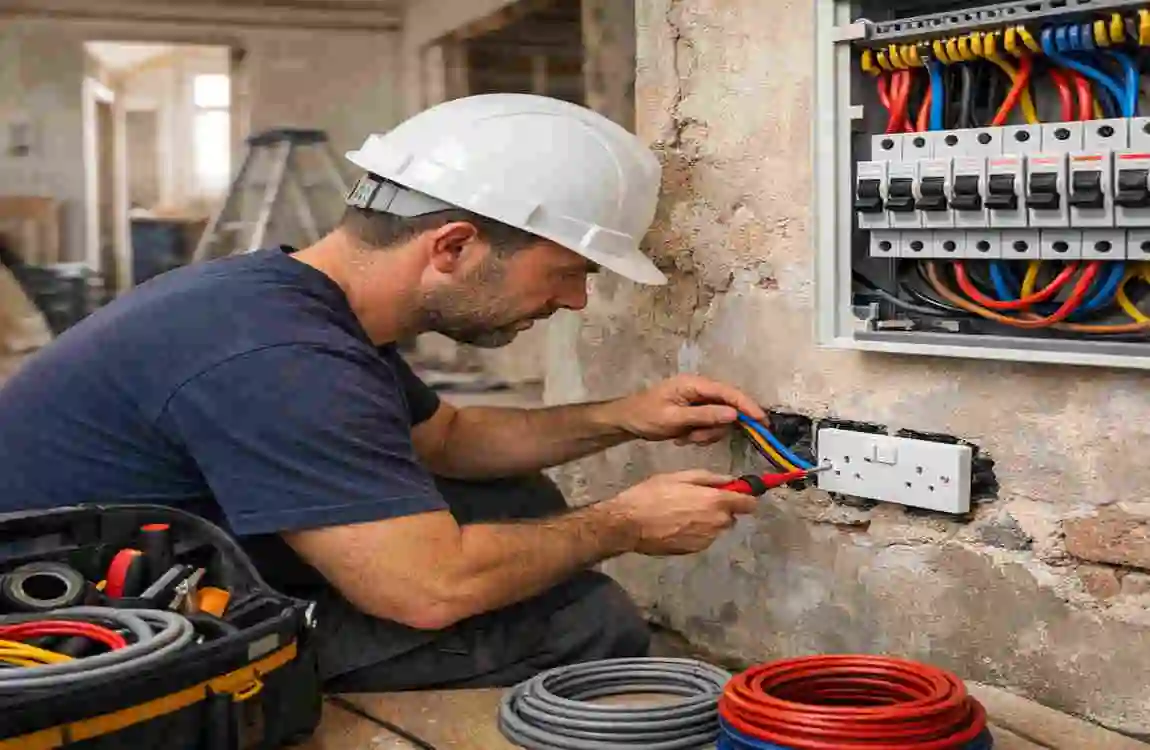
This is where the heavy lifting begins. The electrician will completely isolate the power to your home. They will lift your carpets, pull up your floorboards, and use chiseling tools to cut channels into your walls. They will then pull hundreds of meters of fresh grey PVC cable through the skeleton of your house, routing it to every room. This phase takes about 3 to 4 days and generates significant dust.
The Second Fix (Bringing it to Life)
Once the cables are in place and your walls have been patched up, the electrician returns for the second fix. This is the highly satisfying phase. They will connect all the hidden wires to your brand new consumer unit. They will screw on your fresh white socket faceplates, install your modern light switches, and hang your beautiful new light fittings. Your house suddenly transforms back into a home.
Rigorous Testing and Final Certification
An electrician’s job does not end when the lights turn on. They must spend hours pushing high voltages through the new circuits to test the earthing and ensure the safety breakers trip in milliseconds. Once they are entirely satisfied that the system is flawless, they will issue your final Part P electrical certificate and notify building control.
Managing the Disruption
Living in a house while it is being rewired is tough, but it is possible. We highly recommend setting up a “decant kitchen” in a spare room—a safe zone with a microwave, a kettle, and a temporary power supply provided by the electrician. Better yet, if you can move out and stay with family for a week, the electricians can work twice as fast!
Hidden Costs and Budget Busters
When budgeting for your project, asking “how much does it cost to rewire a 3-bed house in the UK?” only covers the electrical side of the job. Many homeowners get caught up in the secondary costs associated with tearing a house apart. If you want to keep your budget on track, you must prepare for these hidden budget busters.
The Cost of Making Things Beautiful Again
Electricians are highly skilled at wiring homes, but they are not professional decorators. When they cut deep channels into your plaster to hide the wires, they will usually fill those holes with a basic bonding compound to make them safe. However, they will not perfectly smooth, sand, and paint your walls.
To get your home looking perfect again, you will need to hire a professional plasterer to skim the walls. For a three-bedroom house, hiring a plasterer to patch up after a rewire will easily cost around £1,500.
Dealing with the Waste
A full house rewire generates a massive amount of heavy, bulky waste. You will have miles of old rubber cable, shattered brickwork, broken plasterboard, and old plastic sockets. You cannot just throw this in your regular wheelie bin. You will need to hire a medium-sized builder’s skip to sit on your driveway for the week. Skip hire currently costs around £300.
Ceiling Nightmares: The Full Reboard
Sometimes, old lath-and-plaster ceilings cannot withstand the vibration from electricians working in the floorboards above them. The old plaster crumbles and falls. If your ceilings collapse, you have to pay to have them fully re-boarded with fresh plasterboard before they can be skimmed. This is a messy, labor-intensive job that can easily add £1,000+ to your final bill.
Table of Common Rewiring Add-ons:
Extra Service or Item Estimated Cost: Why You Might Need It
Consumer Unit Upgrade £400 – £800 To replace a dangerous, old-fashioned wooden fuse box with a metal, fire-rated modern unit.
EV Charger Wiring £800 – £1,500 Preparing heavy-duty armored exterior cables to fast-charge your electric car on the driveway.
Full Ceiling Reboard £1,000+ Repairing fragile, historic ceilings that crumble during the heavy vibrations of the installation process.
How to Avoid the Headache
Coordinating an electrician, a plasterer, and a decorator is stressful. One delay throws the whole schedule off. The best way to avoid this headache is to hire a company that bundles these services together. Our multi-trade service means our electricians work hand in hand with our in-house plasterers, saving you time, stress, and money.
How to Save on Your 3-Bed Rewire

A bill of £6,000 can feel intimidating. But a rewire is not a fixed retail product; it is a service. This means that if you are proactive, organized, and willing to put in a little elbow grease yourself, you can drastically reduce the final cost. Here are some highly actionable strategies to save 15% to 25% on your project.
Always Compare Three or More Quotes
Never accept the very first price you are given. The electrical trade is highly competitive. You should always invite at least three different registered electricians to inspect your home and provide a detailed, itemized quote. By comparing the market, you can quickly spot over-inflated prices. Use our online quote comparison tool to get your first highly competitive baseline price today.
Strategic Off-Peak Scheduling
Electricians are incredibly busy during the late summer and early autumn when everyone wants to renovate their homes before Christmas. If you try to book a job in October, you will pay Premium rates. However, if you schedule your rewire during their quieter months—typically January, February, or early spring—many firms will offer significant off-peak discounts to keep their crews busy.
Do the Heavy Lifting Yourself
Electricians charge up to £400 a day for their technical expertise. You do not want to pay them that rate to move your sofa or roll up your rugs.
Before the team arrives, completely clear out as many rooms as physically possible. Move all small furniture, take down your curtains, and, if you are able, carefully lift the edges of your carpets and pull up the floorboards yourself. The easier you make their physical access, the faster they will finish the job, and the lower your final labor bill will be.
Look into Government Grants (ECO4)
If you are living on a low income or claim certain government benefits, you might not have to pay the full price yourself. The UK government’s Energy Company Obligation (ECO4) scheme is designed to help low-income households improve their energy efficiency. In some specific cases, if your home’s wiring is dangerously outdated and preventing the installation of a modern heat pump, you might qualify for substantial grant funding to help cover the costs.
A Real-Life Case Study: The Power of Phased Work
Consider the Smith family, who recently bought a tired three-bedroom home. They received a quote for £7,000 for a full rewire, which was beyond their immediate budget. Instead of giving up, they opted for phased work.
They had the electrician completely rewire and plaster the ground floor before they moved in. A year later, once they had saved more money, they had the upstairs bedrooms rewired. By breaking the job into two manageable phases, they avoided taking out an expensive high-interest loan. They effectively saved over £1,200 in potential interest payments, all while keeping their home completely safe.
Top Questions: Rewiring FAQs
When homeowners start researching this topic, the same important questions keep popping up. We have compiled the most frequently asked questions to ensure you have absolutely all the facts before you begin.
How much does it cost to rewire a 3-bed house in the UK?
For a standard three-bedroom property in the UK in 2026, the average cost for a professional, fully certified rewire ranges from £4,500 to £8,000. The final price depends on whether you choose basic fittings or a Premium finish, the type of walls in your home, and your geographical location.
Is it legal to rewire my house myself as a DIY project?
Absolutely not. At the same time, you are legally allowed to change a lightbulb or swap a socket faceplate; a full house rewire is classified as “notifiable work” under Part P of the Building Regulations. It must be designed, installed, tested, and certified by a registered, competent electrician. If you attempt a DIY rewire, you will not receive a safety certificate, which instantly voids your home insurance and makes it impossible to sell your home legally.
Just how disruptive is the rewiring process?
You need to brace yourself: it is highly disruptive. It is arguably the messiest job you can have in a house. Floorboards will be pulled up, carpets will be moved, and channels will be cut into your walls with loud power tools, creating a layer of fine dust that gets everywhere. However, the severe disruption usually lasts no more than one week in a three-bed house. A good electrician will clean up at the end of every day and ensure you have at least one working power socket overnight.
Do I get a warranty or guarantee on the new wiring?
Yes, absolutely. When you hire a professional registered with a competent person scheme (such as NICEIC or NAPIT), their work is backed by strict industry standards. Typically, the physical materials (such as the consumer unit and cables) come with manufacturer warranties, and the electrician will provide an installation guarantee that usually lasts 6 years. Always ask your electrician to confirm their warranty terms in writing before the job begins.
