

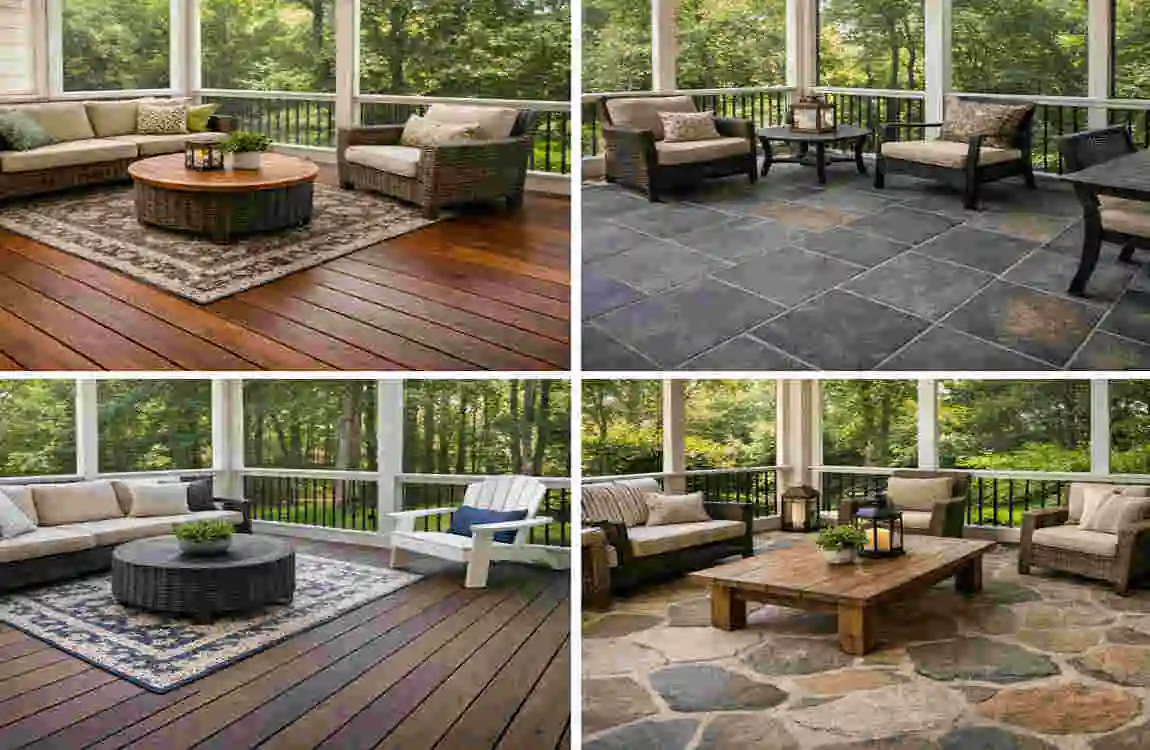
Imagine this: It is a warm, breezy Saturday afternoon. You have just settled into your favorite chair on your screened porch with a cold glass of lemonade and a good book. Suddenly, a summer thunderstorm rolls in. The wind picks up, and rain begins to spray through the screens. You don’t panic because you know your porch is protected. But then you look down.
A screened porch is a unique space. It bridges the gap between your cozy living room and the wild outdoors. Because of this, it faces challenges that your indoor kitchen floor never will. We are talking about high humidity, blowing rain, extreme temperature swings, and the occasional bug or bird that finds its way inside. You need a floor that is weather-resistant, low-maintenance, and tough enough to handle spills and heavy foot traffic.
Why Your Screened Porch Flooring Choice Matters
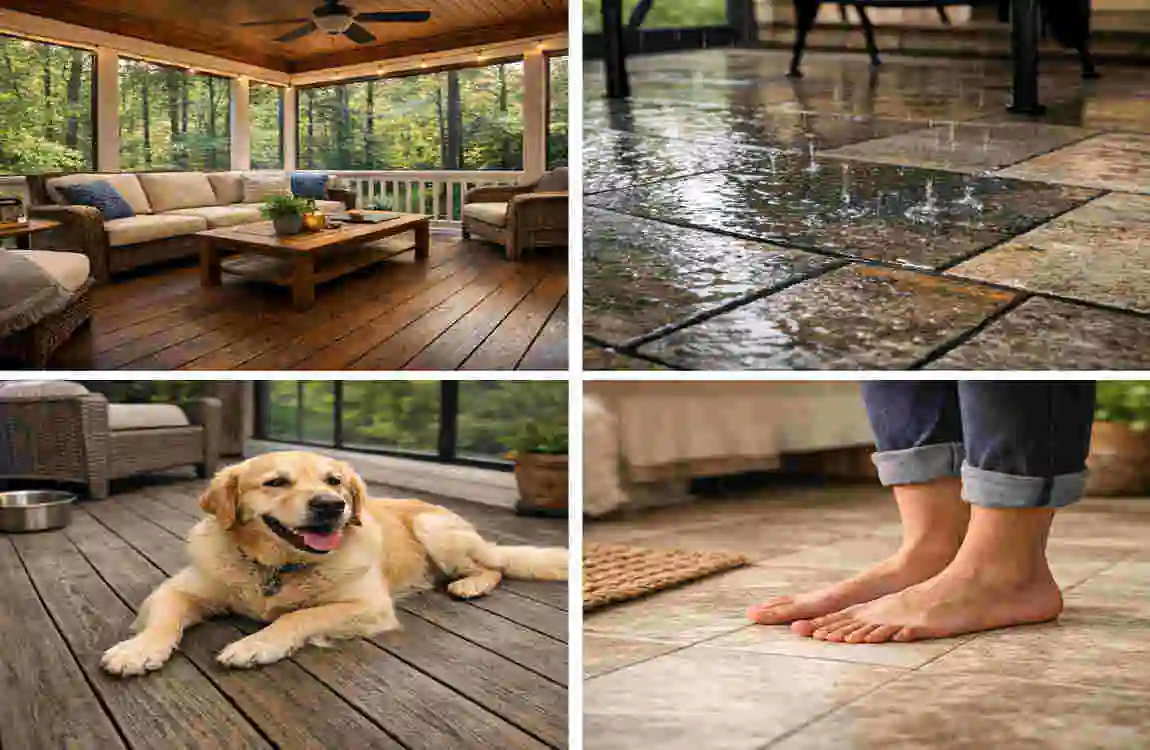
Choosing a floor for your screened porch is a much bigger deal than picking out a rug for your bedroom. Think of your porch as a “semi-outdoor” room floor. It has a roof and screens, but it doesn’t have the climate control of your house. This means your floor is constantly “breathing” the outside air.
The Battle Against the Elements
If you live in a humid area, moisture is your biggest enemy. Standard indoor wood floors can rot, warp, or grow mold if they aren’t designed for high moisture. UV rays from the sun can also fade your floor’s color over time, leaving it looking dull and aged. You need materials that offer UV stability and 100% waterproof capabilities to ensure your investment lasts for decades rather than just a few seasons.
Safety and Durability
Think about how you use your porch. Do you have kids running in and out? Do you have pets with sharp claws? Your floor needs to be tough. It also needs to be safe. A smooth, polished tile might look sleek, but it can become hazardous when wet. Choosing a slip-resistant floor texture is essential for preventing accidents during rainy months. What to Look For Before we get into the specific materials, keep these “must-have” features in mind:
- Water Resistance: It must handle rain and humidity without swelling.
- Easy to Clean: You should be able to sweep or mop it quickly.
- Slip Resistance: A textured surface is a lifesaver when it’s damp.
- UV Stability: The color shouldn’t disappear after one summer of sun.
- Budget-Friendly: It should fit your price range, typically between $5 and $20 per square foot installed.
By focusing on these factors, you can narrow down your screened porch flooring ideas to the ones that actually work for your lifestyle. Top Flooring Options Compared.
To help you see the big picture, I’ve put together a comparison of the most popular materials. This table breaks down the costs, durability, and best uses for each type.
Flooring TypeDurability (1-10)Moisture ResistanceCost per Sq FtMaintenanceBest For
Porcelain Tile 10 Excellent (non-porous) $8–$15 Low (seal grout) High-traffic, humid climates
Luxury Vinyl Plank (LVP) 9 Waterproof core $4–$10 Minimal Budget, wood-look lovers
Ceramic Tile 8 Good (less than porcelain) $5–$12 Moderate Stylish patterns
Pressure-Treated Wood 7 Fair (needs sealing) $3–$8 High (annual treat) Rustic feel
Stamped Concrete 9 Excellent $6–$12 Low (reseal yearly) Custom designs
Composite/Vinyl Decking 8 Very good $5–$10 Low No-seal ease
Natural Stone 9 Good (seal required) $10–$20 Moderate Luxury aesthetic
Outdoor Carpet 5 Fair $2–$5 High (clean/replace) Soft safety
Porcelain Tile: The Gold Standard
If you want the absolute best screened porch flooring option that’s waterproof, porcelain tile is your winner. It is fired at much higher temperatures than regular ceramic, making it incredibly dense and non-porous. This means it won’t absorb water and is nearly impossible to scratch. Plus, many porcelain tiles come with a “grip” finish specifically designed for wet areas.
Luxury Vinyl Plank (LVP): The Modern Alternative
LVP has taken the home improvement world by storm, and for good reason. It gives you the beautiful look of hardwood without the fear of rot. Most modern LVP comes with a waterproof core, making it a fantastic choice for porches that might get a little rain spray. It is also much easier on the wallet and can often be installed as a DIY project.
Stamped Concrete: The Custom Powerhouse
Don’t think of concrete as just a gray slab. Stamped concrete can be made to look like stone, brick, or even wood. It is incredibly tough and handles the weather like a pro. The only catch is that you’ll need to reseal it every year or two to keep it looking fresh and to prevent stains from sinking in.
Pressure-Treated Wood: The Classic Choice
For those who love a rustic, traditional look, wood is the go-to. It is affordable and feels great underfoot. However, be prepared for work. Wood requires regular staining and sealing to prevent it from turning gray or rotting in the humidity. Key Factors to Consider Before You Buy
Choosing the right floor isn’t just about picking a color you like. You need to think about how the floor will perform in your specific environment. Let’s break down the most important things you should consider.
Climate and Moisture
Where do you live? If you are in a place with heavy rain or high humidity, like Florida or the Pacific Northwest, you cannot compromise on moisture resistance. In these areas, porcelain tile or waterproof LVP is your best bet. They won’t expand or contract when the air gets thick with moisture.
Budget vs. Longevity
It is tempting to go for the cheapest option, like outdoor carpet, but think about the long term. A cheap rug may last 3-5 years before it starts to smell or grow mold. On the other hand, a porcelain floor might cost more upfront but can easily last 20 to 30 years. Sometimes, spending a bit more now saves you a fortune later.
Aesthetics and Style
Your porch should feel like an extension of your home. If your house has a modern vibe, a large-format gray tile might look stunning. If you have a cozy cottage, the warmth of wood or wood-look vinyl will make the space feel more inviting.
Installation: DIY or Pro?
Are you a weekend warrior? If so, Luxury Vinyl Plank is very DIY-friendly because of its click-lock system. However, if you choose porcelain tile or natural stone, you should probably hire a professional. These materials require a perfectly level subfloor and specialized tools to cut and set correctly 5. Slip Safety Never overlook the “slip factor.” When you are shopping for tile, look for the COF (Coefficient of Friction) rating. You want a rating of 0.60 or higher for outdoor or wet areas. This ensures that even if the room floor gets wet, you and your guests won’t go sliding.
Installation and Maintenance: Keeping Your Floor Like New
Once you’ve picked your material, make sure it’s installed correctly and stays looking great. Here is a simple guide to help you through the process.
Step-by-Step Installation Tips
- Prep the Subfloor: This is the most crucial step. Your subfloor must be level, dry, and sturdy. If you are laying tile over wood, you may need a cement backer board to prevent cracking.
- Choose Your Method: For LVP, you’ll likely use a “floating floor” method. For tile, you’ll use thin-set mortar.
- Seal the Edges: Use a high-quality silicone caulk around the perimeter of the porch. This prevents water from seeping under the flooring and rotting your subfloor. Maintenance Made Easy.
- Daily Care: A quick sweep with a soft-bristle broom will keep dirt and grit from scratching the surface.
- Deep Cleaning: Use a mild soap and water solution. Avoid harsh chemicals that can strip the sealer off your stone or concrete.
- Annual Check-up: If you have wood or concrete, check for signs of wear. Restaining or resealing once a year will keep moisture out and the color in—the Real Cost of Screened Porch Flooring.
Let’s talk numbers. For an average-sized screened porch (about 200 square feet), you can expect to spend between $7,000 and $15,000 for a professional installation, depending on the material you choose.
While that might seem like a lot, consider the Return on Investment (ROI): a high-quality, durable floor increases your home’s value and makes it much easier to sell later on. If you are looking for affordable flooring for a screened porch, consider doing the prep work yourself or checking for end-of-season sales at local flooring stores.
Real-Life Success Stories

To give you some inspiration, let’s look at a couple of real-world examples.
Jane from Florida had a wood-plank porch that was constantly rotting due to the intense humidity and tropical storms. She decided to upgrade to porcelain tile that looked like weathered wood. Not only did it survive three hurricane seasons without a scratch, but she also found it much easier to clean after her dogs ran through the mud. She wanted a cozy look but was on a tight budget. He chose a high-end Luxury Vinyl Plank**. He was able to install it himself over the weekend. Two years later, the floor still looks brand new, and he loves not having to worry about the occasional rain blowing through the screens: final Thoughts and Next Steps.
Choosing the right flooring for your screened porch is all about balancing beauty with brawn. While wood and carpet have their place, porcelain tile stands out as the most versatile and durable choice for most homeowners. It handles rain, sun, and foot traffic without breaking a sweat.
If you are ready to transform your porch, your next step should be to get a few custom quotes. Every porch is different, and a professional can help you spot potential issues with your subfloor before you start.
Frequently Asked Questions
Is laminate flooring okay for a screened porch? Generally, no. Even “water-resistant” laminate can swell if it’s exposed to the high humidity of a porch. Stick with LVP or tile for better results. I need to seal my porch floor. If you choose natural stone, wood, or concrete, yes. Sealing is vital to prevent water damage, and staining is the cheapest option for flooring in a screened porch. Outdoor carpet is usually the most affordable, but it requires the most maintenance and has the shortest lifespan.
