

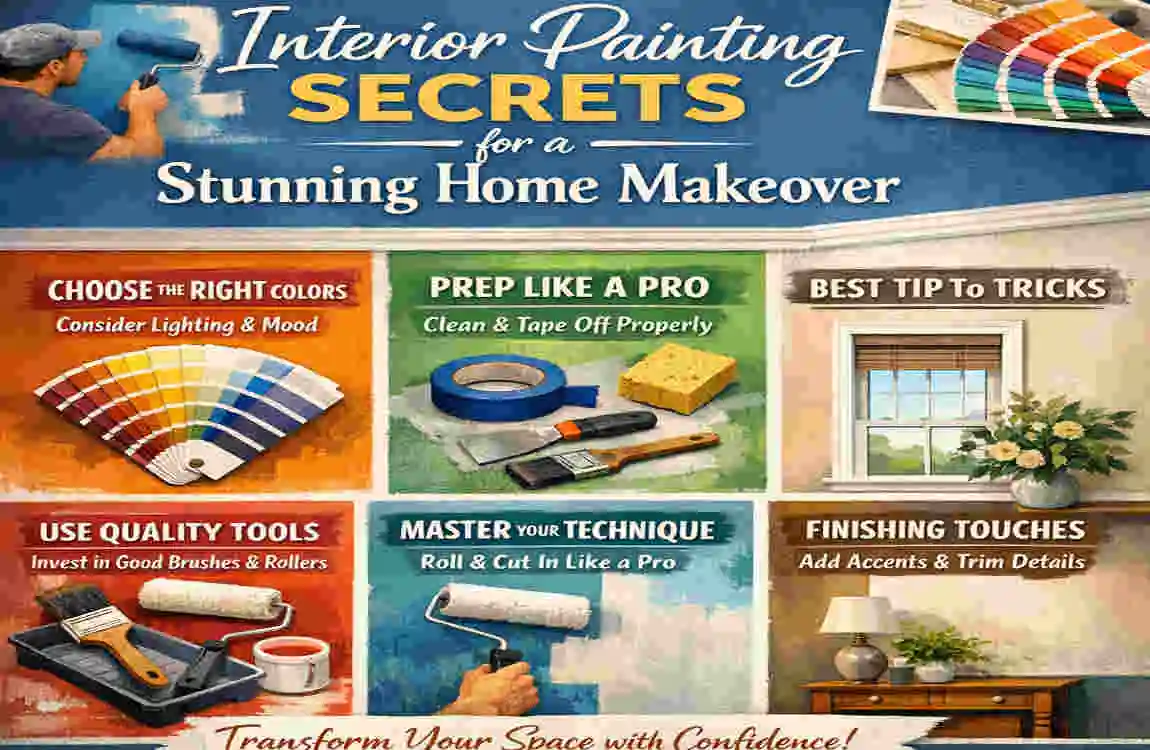
Are you ready to transform your living space with a fresh coat of paint? Learning how to paint a house interior is one of the most cost-effective ways to give your home a stunning makeover. Not only does it enhance your space aesthetically, but it also boosts your property’s value. According to experts, painting can deliver a 100-200% return on investment, making it a smart choice whether you’re staying put or planning to sell.
Why Interior Painting Transforms Your Home (And Boosts Value)

Emotional and Practical Benefits of Fresh Paint
A fresh coat of paint does wonders for your dream home. On a practical level, it can mask imperfections, protect walls, and prevent moisture- or wear-and-tear-related damage. Emotionally, colors have a profound impact on mood. Imagine walking into a room painted in calming blues or energizing yellows—it’s an instant mood booster!
Real Estate Value and ROI
A freshly painted home isn’t just beautiful; it’s valuable. Studies show that painting your home’s interior can increase its value by up to 5%, making it a top recommendation from real estate professionals. Particularly in markets like Pakistan, using humidity-resistant paints can further enhance durability, especially during monsoon seasons.
Common Mistakes to Avoid
Before you start, avoid these common mistakes:
- Skipping prep work often leads to peeling paint in humid conditions.
- Choosing the wrong paint sheen for specific rooms.
- Underestimating the importance of high-quality tools.
Essential Tools and Materials for How to Paint a House Interior
Before you begin, gather the right tools and materials to ensure success. Here’s a handy table to guide you:
Category Recommended Items Why It Matters Price Range (PKR)
Prep Tools: Drop cloths, painter’s tape, sandpaper (220-grit). Protects floors, smooths surfaces 500–2,000
Painting Gear: Angled sash brush, 9-inch roller, extension pole. Ensures precision and even coverage 1,000–3,500
Paints & Finishes Low-VOC latex, primer (e.g., anti-mold) Durable and safe for indoor use 2,000–5,000/gallon
Safety/Extras Ladder, respirator mask, gloves Protects health during the process 800–2,500
Step-by-Step Guide: How to Paint a House Interior Like a Pro
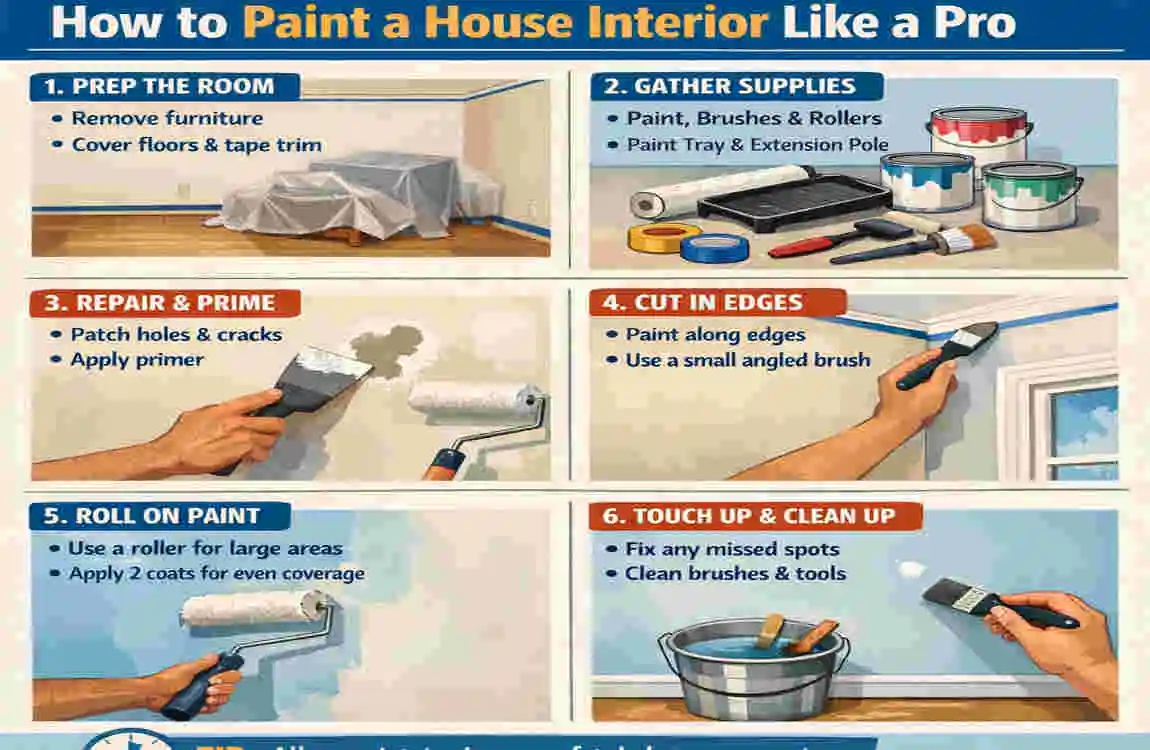
plan Your Color Scheme and Test Samples
Start by choosing a color scheme that complements your home’s style. Follow these steps:
- Assess Room Lighting: Rooms with north-facing windows benefit from warm shades, while cool tones work well in bright, south-facing spaces.
- Use the Color Wheel: Apply the 60-30-10 rule—60% dominant color, 30% secondary, and 10% accent.
- Test Paint Samples: Paint swatches on your walls and observe them under different lighting conditions over 24 hours.
Prep Your Space for Flawless Results
Preparation is key to a successful paint job. Here’s what to do:
- Clear the Room: Move furniture or cover it with plastic drop cloths.
- Clean the Walls: Use a TSP solution to remove grease or dirt, especially in kitchens.
- Repair Imperfections: Fill cracks and holes with spackle, then sand smooth.
- Tape Edges: Apply painter’s tape to trim, windows, and outlets.
Task Time Estimate Common Pitfall
Dust/vacuum walls: 30 minutes/room. Skipping leads to bumpy finishes
Apply primer . ~1 hour dry time. Without primer, stains may bleed through
Prime Like a Pro
Priming is essential to achieve a smooth, long-lasting finish:
- Apply a high-quality primer to seal porous walls and create an even surface.
- Use a tinted primer if you’re transitioning between dark and light colors. This reduces the number of topcoats needed.
Master Painting Techniques
Now for the fun part—painting! Follow these techniques for professional results:
- Cut In Edges: Use an angled brush to paint edges and corners before rolling.
- Roll the Walls: Work in small 3×3 ft sections using a W or M pattern to ensure even coverage.
- Paint Ceilings First: This prevents drips from ruining freshly painted walls.
Techniques Table:
Surface Best Method Pro Tips
Walls Roller + brush Apply thin coats; 2–3 may be needed
Trim Angled brush Slow strokes for crisp lines
Ceiling roller with pole. Use flat paint for minimal glare
Step 5: Add a Second Coat and Clean Up
Once the first coat dries (4–6 hours), inspect the walls under natural light. Apply a second coat for a flawless finish. After painting, clean your tools immediately to avoid dried paint buildup.
Top Interior Painting Secrets from Pros
Want to know the secrets professionals use? Here are some insider tips:
- Tinted Primer: Saves time and effort by reducing the number of topcoats.
- Faux Finishes: Techniques like sponging or stenciling add texture without wallpaper.
- Humidity-Resistant Paints: For homes in Pakistan, choose paints with anti-fungal properties to combat monsoon moisture.
- Lighting Hacks: Paint ceilings lighter than the walls to make the room appear larger and brighter.
Trend Alert: Earthy tones like terracotta and soft blues are expected to dominate in 2026. Use these shades for a modern, stylish look.
Room-Specific House Interior Painting Tips
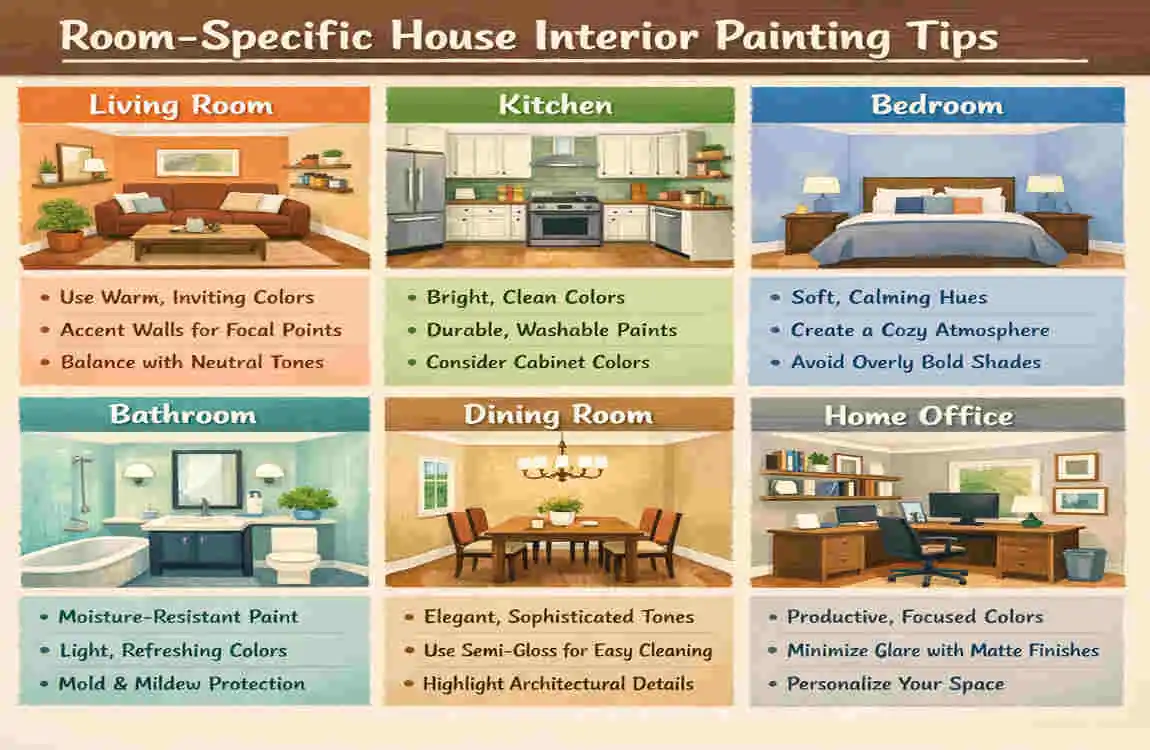
Different rooms have different needs. Here are tailored tips for each space:
- Living Room: Use bold accent colors to create a focal point.
- Kitchen: Opt for semi-gloss finishes that are easy to wipe clean.
- Bedroom: Soft neutrals promote relaxation.
- Bathroom: Use mold-resistant paints and ensure proper ventilation.
Comparison Table:
Room Ideal Sheen Color Ideas
Kitchen Semi-gloss Whites, greens
Bedroom Eggshell Soft grays, beiges
Common Mistakes and How to Fix Them
Even experienced painters make mistakes. Here’s how to fix common ones:
- Skipping Prep: Leads to peeling. Solution: Sand and reapply primer.
- Overloading the Roller: Causes drips. Solution: Use less paint and roll evenly.
- Choosing the Wrong Sheen: Fix by applying a topcoat with the correct finish.
Cost Breakdown: DIY vs. Hiring a Pro
Here’s a quick comparison of house costs:
Option Cost (PKR for 100 sqm)Time
DIY 20,000–40,000 3–5 days
Professional 50,000–80,000 ~2 days
FAQs: How to Paint a House Interior
How long does it take to paint a house interior?
It typically takes 1–2 weeks for an average house.
What’s the best paint for humid climates?
Acrylic latex with mildew inhibitors is ideal.
Can beginners paint a house interior?
Absolutely! With this guide, anyone can achieve professional results.
