

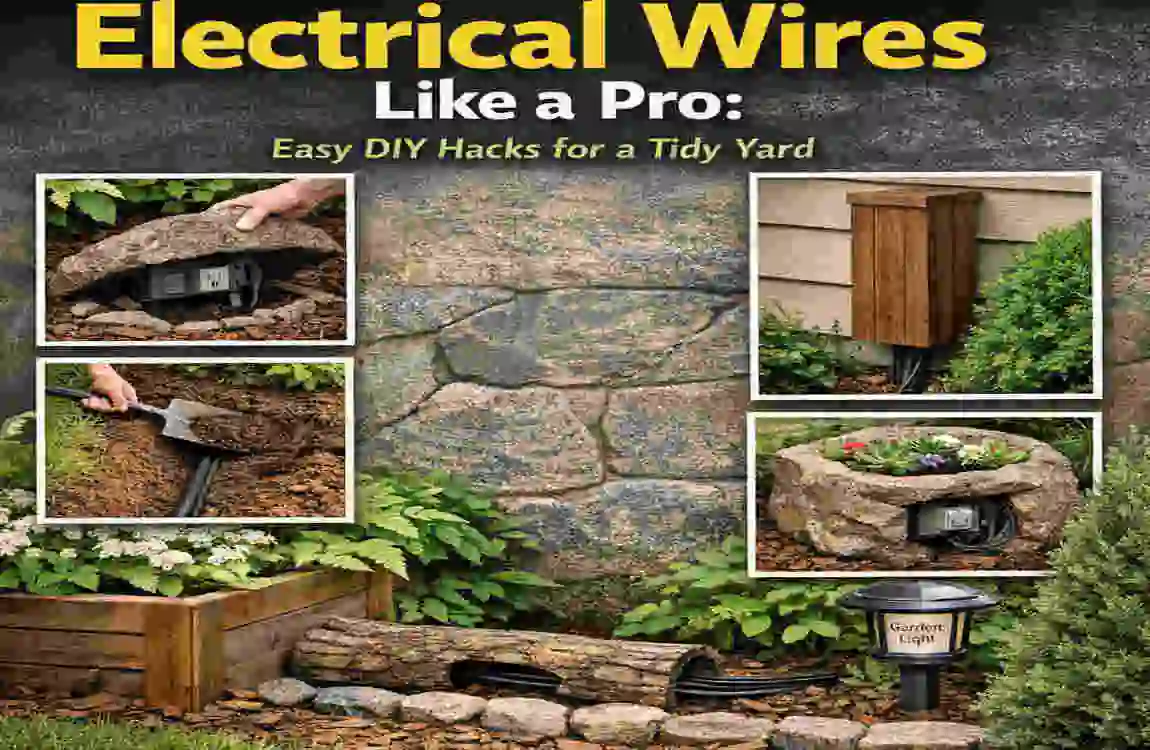
But beyond just looking messy, exposed wires are a genuine hassle. They are a tripping hazard for your kids and guests, a favorite chew toy for the neighborhood squirrels, and they are constantly exposed to harsh weather. If you have been wondering how to hide electrical wires outside of a house, you have come to the right place.
The good news is that you don’t need to hire an expensive electrician or landscape architect to fix this. Whether you are dealing with landscape lighting, pool pump cables, or just a stubborn extension cord, there are plenty of ways to conceal yard power cords yourself.
Why Hide Outdoor Electrical Wires? Common Challenges and Benefits
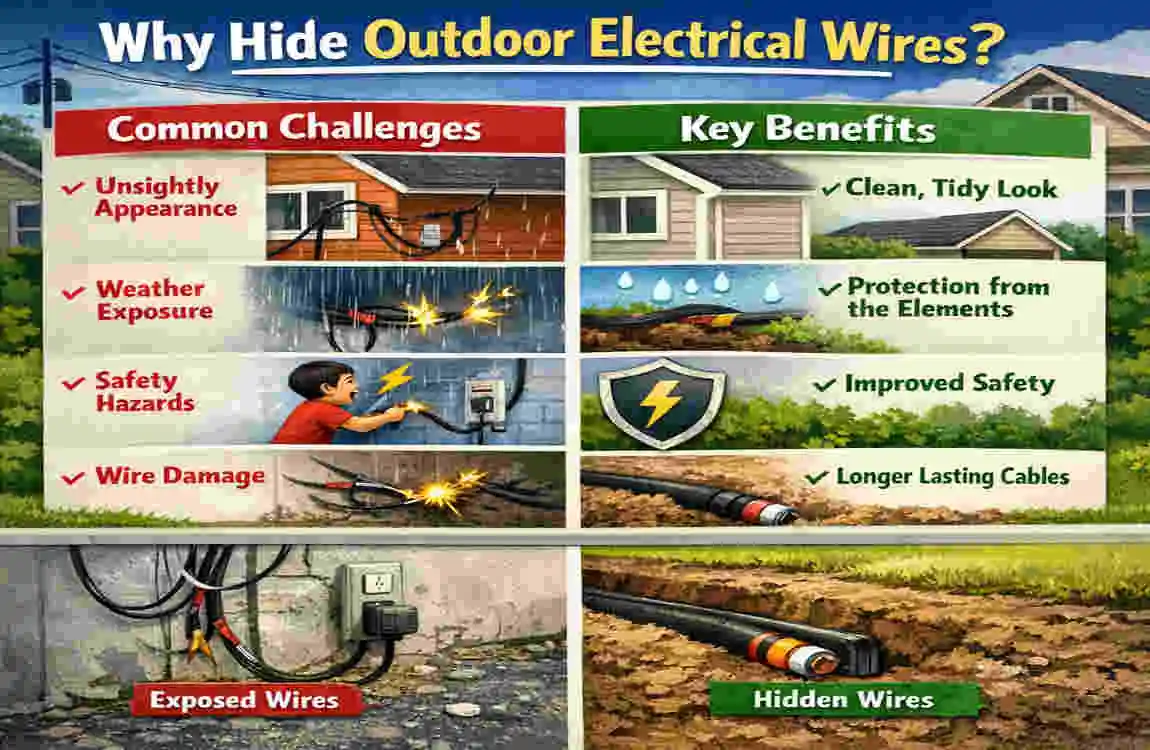
Before we jump into the “how-to,” let’s talk about the “why.” You might think leaving a cord out is no big deal, but problems with exposed outdoor wires go beyond aesthetics.
The Safety Factor
This is the big one. Loose wires are a major tripping hazard. If you have children running around, elderly family members visiting, or even just you carrying a tray of burgers, a loose wire is an accident waiting to happen. Additionally, exposed wires can be damaged by lawnmowers or weed whackers, leading to dangerous electrical shorts.
Pest and Weather Protection
Your backyard isn’t a controlled environment. The sun’s UV rays can over time crack the insulation on electrical cords, making them unsafe. Plus, rodents love to chew on soft rubbery wires. Concealing your wires adds a layer of armor against the elements and critters.
Curb Appeal and Property Value
According to sources like HomeAdvisor, a cluttered yard is among the top homeowner complaints. A tidy yard feels bigger, cleaner, and more welcoming. If you are planning to sell your home, landscape electrical wire hiding shows potential buyers that the home has been well-maintained.
Essential Safety Tips Before You Start
We are about to get our hands dirty, but safety comes first. Dealing with electricity requires respect and caution. Before you attempt any of these hacks, please review this checklist.
- Turn Off the Power: Never work on wiring while it is “hot.” Go to your breaker panel and flip the switch for the circuit you are working on to the OFF position. Use a voltage tester to double-check that the power is truly out.
- Use Outdoor-Rated Gear: Ensure all your extension cords, outlets, and covers are rated for outdoor use. Look for “weatherproof” or “WR” (Weather Resistant) markings.
- GFCI is Your Friend: Your outdoor outlets should always be Ground Fault Circuit Interrupter (GFCI) outlets. These are the ones with the “Test” and “Reset” buttons that cut power instantly if water gets in.
- Call Before You Dig: If you plan on burying anything deeper than a few inches, call 811 (in the US) or your local utility service to ensure you won’t hit a gas or water line.
- Don’t Bury Standard Cords: You generally cannot bury a standard extension cord. If you are burying wire, it usually needs to be inside a conduit (pipe) or be a specific “Direct Burial” type of wire.
Top 10 DIY Hacks: How to Hide Electrical Wires Outside of a House
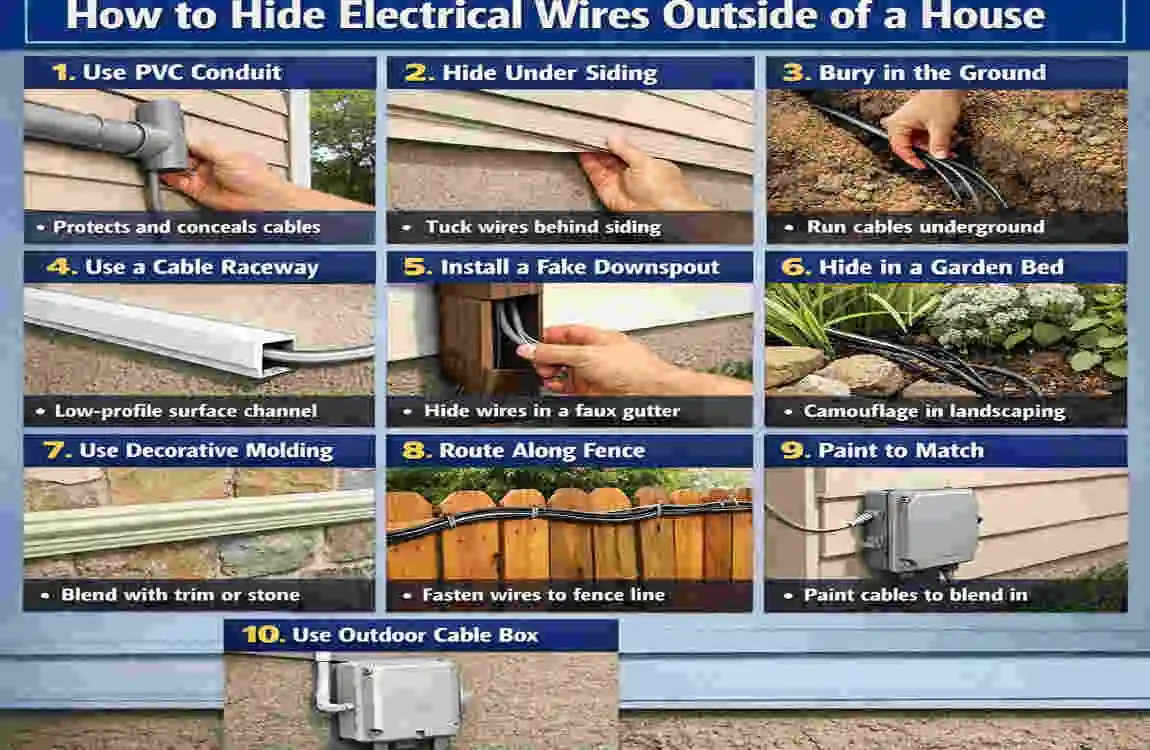
Here is the meat of the guide. We have broken these down into 10 actionable strategies. Whether you want a quick 10-minute fix or a permanent solution, there is a hack here for you.
Bury Wires in PVC Conduit (The Pro Method)
If you want a permanent solution that looks like a professional did it, this is it. Running wires through PVC piping (conduit) underground is the safest way to hide outdoor electrical cords.
- Best For: Permanent lighting, shed power, or pool equipment.
- Difficulty: Medium/Hard (requires digging).
Step-by-Step:
- Dig a Trench: You will need to dig a trench about 12 to 18 inches deep connecting your power source to the destination.
- Cut and Glue PVC: Measure your grey Schedule 40 PVC conduit (for electrics, not plumbing). Cut it to length and use PVC glue to connect the pieces.
- Fish the Wire: Attach a “fish tape” or a string to your wire, then pull it through the pipe.
- Connect and Cover: Connect the conduit to the junction boxes at both ends. Once everything is secure, bury the pipe and replant your grass.
ProsCons
Ultimate protection Requires physical labor (digging)
Invisible finish Harder to move later
Meets most building codes Higher initial cost
Plant Climbing Vines or Shrubs Around Wires
Nature is the best camouflage. If you have wires running up a wall or along a fence, use greenery to your advantage. This is one of the most aesthetically pleasing ways to hide electrical wires outside a house.
- Best For: Wires running vertically on walls or along fences.
Step-by-Step:
- Install a Trellis: Place a wooden or metal trellis in front of the area where the wires run.
- Secure the Wires: Zip-tie the wires to the back of the trellis or the wall itself so they don’t dangle.
- Plant Fast-Growers: Plant climbers like Jasmine, Ivy, or Clematis at the base.
- Train the Plant: As the plant grows, weave it through the trellis to create a thick “green wall” that completely blocks the view of the cords.
- Pro Tip: Be careful with Ivy on wood siding, as it can dig into the wood. Star Jasmine is a great, fragrant alternative that is gentler on structures.
Use Decorative Wire Covers or Looms
Sometimes you can’t bury a wire, and you can’t plant a bush. In this case, use a “line set cover” or decorative loom. These are plastic channels often used for Air Conditioning pipes, but they work perfectly for electrical wires too.
- Best For: Wires running up the side of the house (e.g., to a security camera or floodlight).
Step-by-Step:
- Measure the Run: Measure the distance the wire travels along the wall.
- Mount the Backing: These covers usually come in two parts. Screw the back channel into the wall over the wire.
- Snap the Cover: Lay the wire inside the channel and snap the decorative cover on top.
- Paint to Match: The best part? You can paint these covers to match your siding, making the wires virtually disappear.
Build a Custom Wire Trough from Wood
If you enjoy a bit of woodworking, you can build a rustic wooden box or “trough” to cover wires running along a deck or the base of a wall.
- Best For: Decks, patios, or running wires along baseboards outdoors.
Step-by-Step:
- Select Wood: Use pressure-treated lumber or cedar that resists rot.
- Create a “U” Shape: Nail three strips of wood together to form a long, hollow “U” channel.
- Invert and install: Flip the “U” upside down and place it over the wires. You can screw it into the deck or just let it sit if it’s heavy enough.
- Stain or Seal: Stain the wood to match your deck. It will look like a decorative border rather than a wire cover.
Hide in Landscape Rocks or Mulch
This is a classic landscaping trick. You don’t always have to dig deep; sometimes you need to cover the surface. This is perfect for low-voltage lighting wires.
- Best For: Landscape lighting and garden beds.
Step-by-Step:
- Lay the Wire: Run your wire along the edge of your garden bed.
- Pin it Down: Use “landscape staples” (u-shaped metal pins) to hold the wire tight against the dirt so it doesn’t pop up.
- Cover with Mulch/Rock: Spread a 2-3 inch layer of mulch or decorative river rocks over the wire.
- Maintenance: Check it periodically to ensure the cover hasn’t been washed away by rain.
install Faux Rock or Log Covers
Do you have a large outdoor outlet, a pump, or a junction box protruding from the ground? A fake rock is the perfect solution. These are hollow, fiberglass or plastic covers designed to look like real granite or sandstone.
- Best For: Bulky items like outlets, junction boxes, or well heads.
Step-by-Step:
- Measure the Object: Measure the height, width, and length of the electrical item you are hiding.
- Buy the Rock: Purchase a hollow landscaping rock (available online or at garden centers) that fits those dimensions.
- Place and Secure: Place the rock over the item.
- Anchor It: Most faux rocks come with stakes to secure them to the ground so the wind doesn’t blow your “boulder” away!
Zip-Tie Wires to Fences or Posts with Paint
If you have to run a wire along a fence rail or a pergola post, aim to make it blend in.
- Best For: String lights, pergolas, and wooden fences.
Step-by-Step:
- Run the Wire: Run the wire along the back or underside of the fence rail where it is least visible.
- Tighten it Up: Use zip ties every 12 inches to keep the wire taut. Loose wires look messy.
- Clip the Ends: Cut the tails off the zip ties.
- Paint Everything: This is the secret sauce. Spray paint the wire and the zip ties the same color as the fence. Once it dries, the wire becomes almost invisible to the naked eye.
Create a Wire Channel with Gutter Sections
This is a brilliant DIY hack for hiding electrical wires outside a house using materials you might already have. Old downspouts or gutter sections make excellent protective shields.
- Best For: protecting wires running vertically down a wall or along the ground near a foundation.
Step-by-Step:
- Cut the Spout: Cut a vinyl downspout to the desired length.
- Split the Back (Optional): If the wire is already connected, cut a slit down the back of the downspout to slide it over the wire.
- Mount it: Attach the downspout to the wall using standard gutter straps.
- Camouflage: Paint it to match your house trim. It will just look like another drainage pipe, which is a normal part of a house exterior.
Use Outdoor Cord Clips and Pathway Lights
Sometimes, instead of hiding the wire, you integrate it. If you are running a cord to a specific spot, use the wire path to install pathway lighting.
- Best For: Long runs across a lawn or garden.
Step-by-Step:
- Plan the Path: Layout your wire where you need power.
- Install Solar/Low-Voltage Lights: place garden lights along the same path.
- Clip the Wire: Use outdoor cord clips to attach your power cord to the base of these lights.
- The Visual Trick: The eye focuses on the beautiful lights, and the cord running between them mimics lighting wiring, making it visually acceptable.
DIY Wire Bridge with Pavers and Gravel
If you have a wire crossing a walkway, you cannot just lay it on top—that’s a trip hazard. You need a bridge.
- Best For: Wires crossing sidewalks or concrete paths.
Step-by-Step:
- Create a Gap: If you have a dirt path, dig a small trench. If crossing concrete, you might need a rubber floor cord protector, but let’s assume a garden path here.
- Lay the Pipe: Put the wire in a tough PVC pipe.
- Place Pavers: Lay flat stone pavers over the pipe.
- Fill with Gravel: Fill the gaps between the pavers with gravel.
- Result: You have created a mini “step stone” walkway that safely bridges over your electrical line.
Materials and Tools You’ll Need: Budget Breakdown
You might be worried that these hacks cost a fortune. The truth is, most of these are very budget-friendly. Here is a quick look at what you might spend to hide outdoor electrical wires.
Item Estimated Cost Where to Buy Use For
PVC Pipe (10ft) $8 – $12 Home Depot / Lowes Burying wires
Outdoor Ext. Cord $20 – $50 Amazon / Hardware Store General power
Zip Ties (Pack) 5 Dollar Store / Walmart Securing wires
Landscape Staples $10 Garden Center Pinning wires to dirt
Faux Rock Cover $40 – $100+ Online / Garden Center Hiding outlets
Cord Cover Kit $15 – $25 Hardware Store Wall mounting
Fast-Growing Vine $15 – $30 Local Nursery Natural camouflage
Total Budget: For most of these projects, you can get the job done for under $50. If you are doing the full underground conduit method, expect to spend closer to $100 depending on the distance.
Common Mistakes to Avoid When Hiding Yard Wires
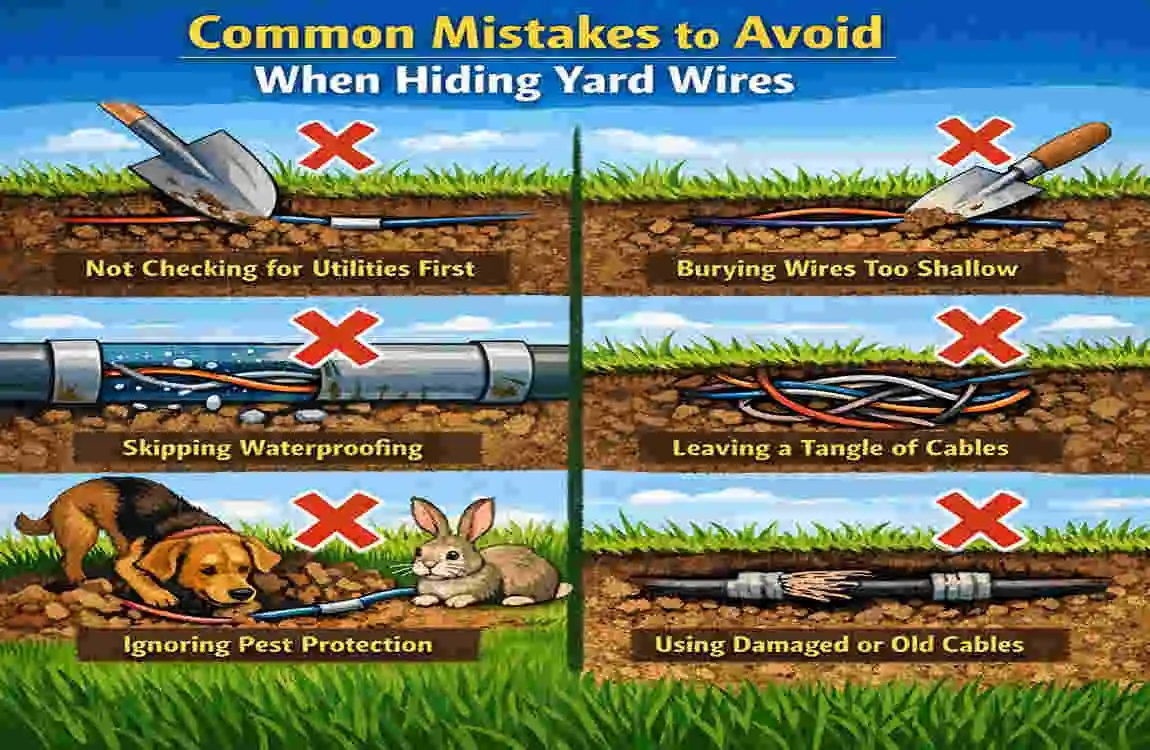
Even with the best intentions, things can go wrong. To ensure your “hidden” wires stay safe and functional, avoid these common blunders.
- Overloading the Circuit: Just because you can hide a cord doesn’t mean you should daisy-chain three of them together. Keep your electrical load in mind so you don’t trip breakers.
- Creating Heat Traps: Electricity creates heat. If you bundle wires too tightly inside a cover or bury them under heavy rugs without airflow, they can overheat and melt the insulation.
- Ignoring Local Codes: If you are selling your house, a home inspector will check your work. Permanent wiring that isn’t up to code (like burying a standard extension cord) can be a red flag.
- Forgetting Drainage: If you use a box or trough, make sure it has drain holes. You don’t want your wire sitting in a pool of stagnant water inside your “protective” box.
- Using Indoor Zip Ties: White, indoor zip ties become brittle and snap after a few months in the sun. Always buy black, UV-resistant zip ties.
FAQs: How to Hide Electrical Wires Outside
Here are some answers to the most frequent questions we get about outdoor wiring.
How to hide electrical wires outside of a house safely?
The safest method is always using rigid PVC conduit buried underground. This protects the wire from physical damage and water. If you cannot dig, using UL-rated outdoor wire covers or running wires inside protective wooden troughs are excellent alternatives.
Can I bury outdoor extension cords?
Generally, no. Standard orange or black extension cords are not designed to be buried. Moisture in the soil will eventually penetrate the coating, causing a short circuit. You must use “Direct Burial” rated wire or place the wire inside a waterproof conduit.
Best plants to hide yard power cords?
You want dense, evergreen plants so the wires don’t show in winter. Boxwoods, Hostas (for shady areas), and Juniper bushes are excellent low-growing options. For walls, Star Jasmine or English Ivy (with caution) work wonders.
Are there cheap ways to conceal outdoor wires?
Yes! The cheapest way is usually paint and zip ties. Simply running the wire neatly along a trim board or fence and painting it to match the background costs less than $10 and is incredibly effective.
How to hide wires along a fence?
Run the wire along the bottom rail of the fence. Secure it with cable clips or zip ties. If you have a wooden fence, you can also tuck the wire under the lip of the top rail. Using a dark-colored outdoor cord usually blends in better with wood than a bright orange one.
What if wires are for landscape lighting?
Low-voltage landscape lighting wire is much safer and easier to hide than 120v power. You can cut a shallow slit in the sod with a spade, push the wire down 3 inches, and step the sod back into place. It doesn’t require deep trenching.
