

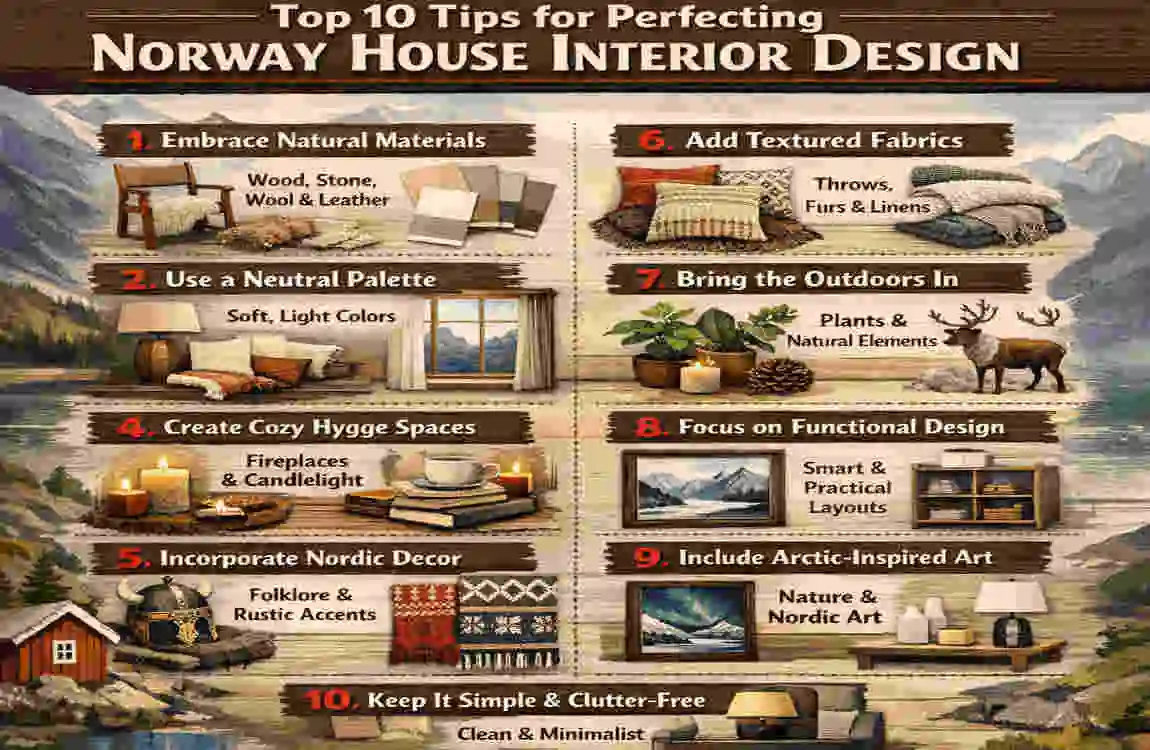
Norwegian interior design has captured hearts worldwide for its timeless appeal. With clean lines, natural materials, and cozy hygge vibes, it strikes the perfect balance between functionality and serenity. Rooted in Scandinavian traditions, this style is all about bringing nature indoors, embracing minimalism, and crafting a space that feels warm and inviting.
| Aspect | Typical Norway trend / style |
|---|---|
| Overall style | Minimalist, cozy, nature‑connected; often called “Scandinavian‑Norwegian” or “Nordic warm minimalist”. |
| Color palette | Light neutrals (white, beige, light grey) with muted blues, greens, and warm browns from nature. |
| Materials | Light woods (pine, birch, oak), stone, wool textiles, and other natural, locally sourced materials. |
| Lighting | Maximizing natural daylight plus soft, warm artificial light (pendant lamps, candles). |
| Furniture style | Clean lines, low‑slung, functional pieces; often multifunctional and with hidden storage. |
| Key mood concept | “Koselig” (warm, cozy, homely) similar to Danish “hygge”; emphasis on comfort and personal details. |
Why Norway’s Interior Design Captures Global Hearts
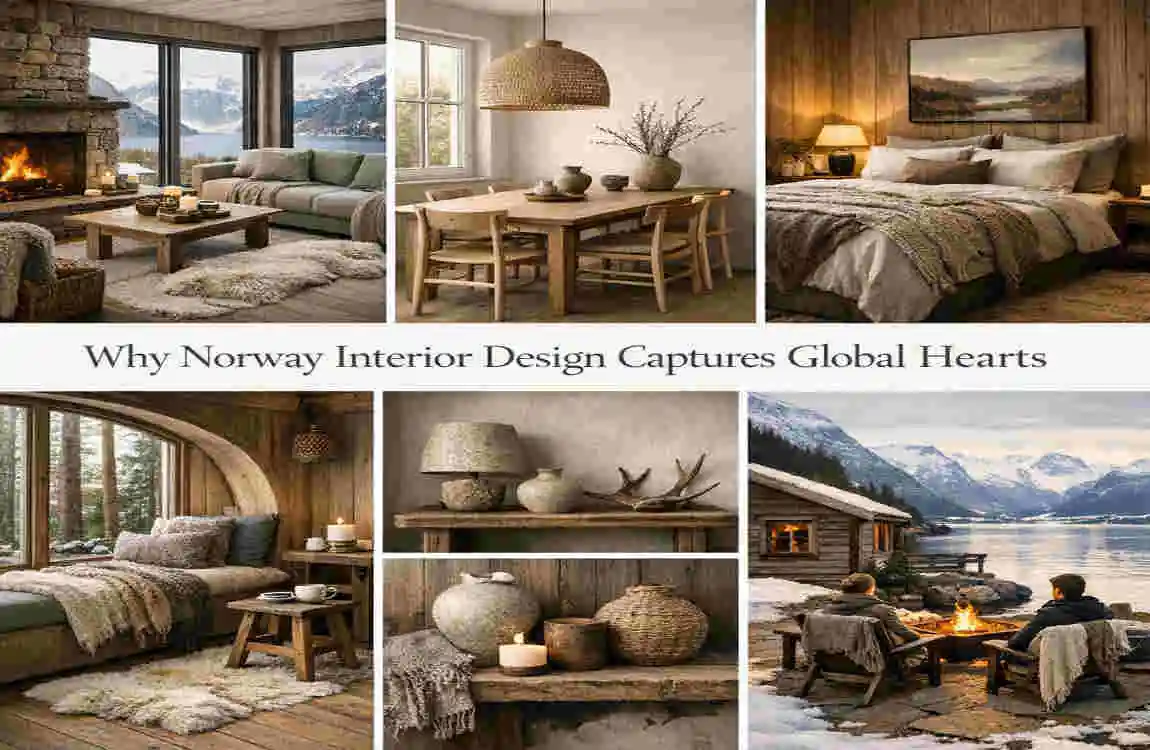
Norwegian interior design is more than a style—it’s a philosophy. It reflects the country’s natural beauty, harsh winters, and commitment to sustainability. Let’s break down what makes it so special.
Core Principles of Norwegian Interior Design
- Minimalism: Less is more. Every item in your space should have a purpose, helping avoid clutter and create room for tranquility.
- Functionality: Inspired by Norway’s challenging climate, the design prioritizes practicality without compromising beauty.
- Sustainability: This style centers on eco-friendly materials and energy-efficient solutions.
- Lagom Living: A Swedish term embraced by Norwegians, “lagom” means balance. It’s about finding harmony in your modern home, not too much and not too little.
Why This Style Appeals Worldwide
According to 2026 trends, searches for Nordic design have increased by 40%, underscoring its growing popularity. The reasons are clear:
- Energy Efficiency: Large windows and natural materials maximize light and insulation.
- Mental Wellness: Neutral tones and clutter-free spaces promote relaxation and focus.
And now, let’s dive into the top 10 actionable tips that can bring this iconic style to life in your home!
Embrace Natural Materials for Authentic Norway Vibes
Natural materials are the cornerstone of Norwegian interior design. They connect your home to the outdoors, fostering a sense of warmth and authenticity.
Why Wood Rules in Norwegian Interior Design
Wood is not just a material; it’s a way of life in Norway. From floors to ceilings, it brings a rustic yet refined touch to modern homes. Its versatility allows it to fit seamlessly into any room.
Best Choices: Pine, Birch, and Reclaimed Timber
- Pine: Known for its light tones, pine is perfect for creating a bright, airy feel.
- Birch: Durable and elegant, birch works well for furniture and decorative accents.
- Reclaimed Timber: Adds character and sustainability to your space.
Implementation Steps and DIY Ideas
- Install wood-paneled walls for a classic Scandinavian look.
- Opt for hardwood flooring to create a sense of continuity across rooms.
- Add wooden furniture, such as dining tables or coffee tables.
- DIY: Sand and stain old wooden furniture to give it a fresh Nordic twist.
Maximize Natural Light with Strategic Windows
One of the defining features of Norwegian homes is their ability to capture and amplify natural light—essential in a country with long, dark winters.
Large Windows and Skylights in Norwegian Homes
Floor-to-ceiling windows and skylights are staples in Norway. They let in as much daylight as possible, creating a bright and cheerful atmosphere.
Sheer Curtains and Light-Reflecting Surfaces
To enhance light further:
- Use sheer curtains or leave windows bare.
- Incorporate mirrors and light-colored furniture to reflect light around the room.
Energy-Saving Glass Options
Consider installing double-glazed windows for insulation and energy efficiency. This not only keeps your home warm but also aligns with Norway’s sustainability principles.
Master the Art of Neutral Color Palettes
Norwegian interiors are known for their calming and harmonious color schemes. Neutral tones dominate, creating a canvas for other design elements to shine.
Whites, Grays, and Earth Tones Explained
- Crisp white walls make spaces appear larger and brighter.
- Soft gray accents add depth and sophistication.
- Earth tones like beige and taupe bring warmth.
Accent Colors: Subtle Blues and Greens
While neutral tones are the foundation, subtle pops of color—like muted blues or forest greens—add personality without disrupting the calm.
Color Hex Code: Best Use in Norway Interior Design
Crisp White #F5F5F5 Walls for light bounce
Soft Gray #D3D3D3 Flooring contrast
Sage Green #B2AC88 Accent walls or accessories
Layer Textures for Warmth Without Clutter
Creating a cozy atmosphere is essential in Norwegian interior design. Layering textures can achieve this while maintaining simplicity.
Wool, Knits, and Linens
Natural textiles like wool throws, knit cushions, and linen curtains add softness and warmth. They are also durable and easy to maintain.
Rug and Throw Styling
- Use layered rugs to define spaces, like placing a smaller rug over a larger one.
- Drape a knit blanket over your sofa for an inviting hygge touch.
Avoiding Overlayering
While layers add warmth, overdoing it can create clutter. Stick to 2-3 textures per space for balance.
Invest in Multifunctional Furniture
Space-saving is crucial, especially in Norwegian homes where functionality reigns supreme.
Space-Saving Norwegian Staples
Look for furniture that serves multiple purposes, like:
- Sofa beds for guests.
- Ottomans with storage for blankets or games.
Furniture Brand Example Key Feature Price Range
Modular Sofa Muto Expandable $800+
Storage Ottoman IKEA Hidden storage $100+
Incorporate Indoor Plants for Biophilic Design
Norwegians have a strong connection to nature, and indoor plants are a great way to bring the outdoors in.
Low-Maintenance Norwegian Greenery
- Snake plants and pothos thrive in low light.
- Ferns add a lush, forest-like feel.
Hanging and Shelf Displays
- Use hanging planters to save space.
- Dedicate a shelf to create a mini indoor garden.
Prioritize Fireplaces and Heating Elements
Nothing says “cozy” like a roaring fire. Fireplaces are often the centerpiece of Norwegian interiors.
Wood-Burning Stoves vs. Electric
- Wood-burning stoves are traditional and sustainable.
- Electric fireplaces offer convenience and a modern touch.
Surrounding Decor Ideas
Frame your fireplace with:
- Stone walls for a rustic look.
- Minimalist mantels for a sleek appearance.
Curate Lighting for Ambiance and Functionality
Lighting in Norwegian interiors is a blend of form and function, designed to mimic natural light.
Layered Lighting: Ambient, Task, Accent
- Ambient: Overhead chandeliers.
- Task: Desk and reading lamps.
- Accent: Wall sconces and LED strips.
Declutter with Minimalist Storage Solutions
Minimalism is incomplete without smart storage. Keep your home organized with these tips.
Hidden Storage Hacks
- Use under-bed storage for seasonal items.
- Install wall-mounted shelves for books and decor.
Add Personal Touches with Norwegian Crafts
Finally, make your space uniquely yours by incorporating authentic Norwegian crafts.
Textiles, Ceramics, and Art
- Add handwoven rugs or ceramic vases for a personal touch.
- Display rosemaling artwork, a traditional Norwegian painting style.
Bringing It All Together: Your Norway Interior Design Checklist
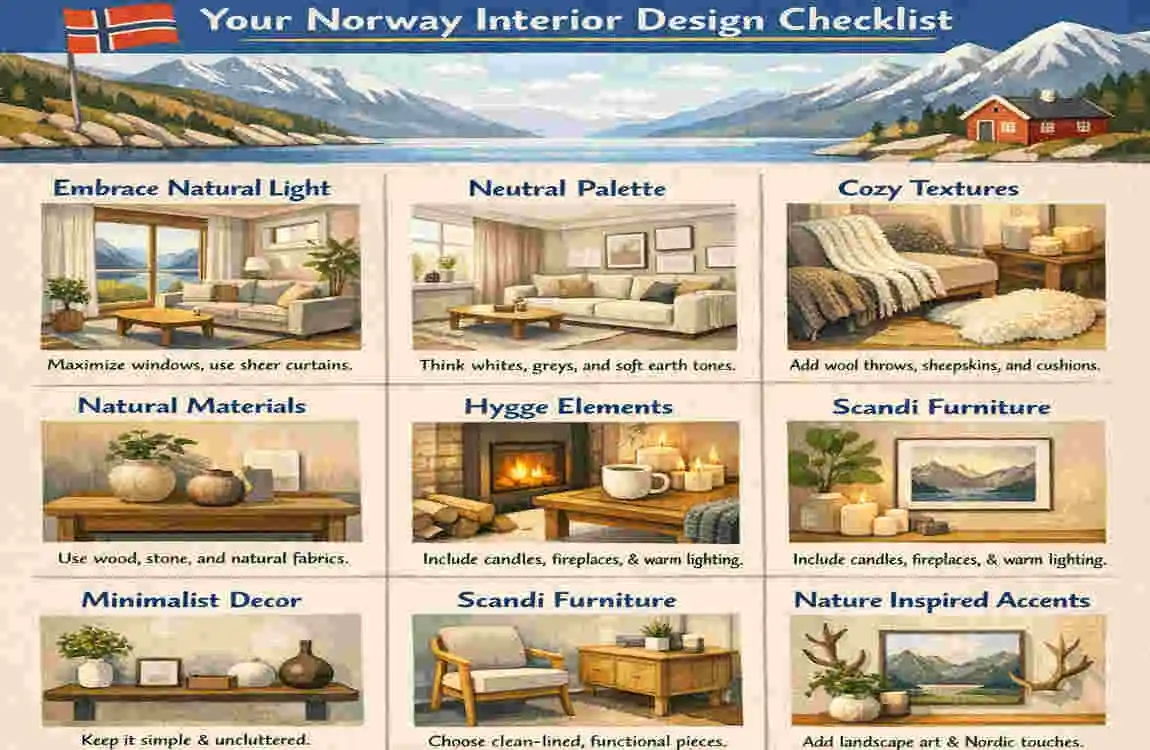
Here’s a quick recap of the top 10 tips:
- Use natural materials like wood and stone.
- Maximize natural light with large windows.
- Stick to neutral palettes with subtle accents.
- Layer textures for warmth.
- Choose multifunctional furniture.
- Add indoor plants for a biophilic feel.
- Install fireplaces for cozy vibes.
- Curate layered lighting for ambiance.
- Declutter with minimalist storage.
- Personalize with Norwegian crafts.
Budget Range: Low, Medium, High
Natural Materials $200 $800 $2000+
Furniture $500 $1500 $3000+
Norway Interior Design FAQ
What is Norway interior design?
Norway interior design is a home style that mixes cozy hygge comfort with Nordic minimalism. It focuses on warm textures, natural materials, soft lighting, clean lines, and calm spaces that feel both practical and welcoming.
What makes Norway interior design different from regular Scandinavian style?
While both styles share similar roots, Norway interior design often feels a little warmer and softer. It still uses minimal furniture and light colors, but it adds more comfort through blankets, wood, candles, wool, and layered textures.
What colors are best for Norway interior design?
The best colors are usually white, soft gray, beige, warm wood tones, and muted blue. These shades create a peaceful look and help the room feel bright, calm, and balanced.
What materials are commonly used in Norway interior design?
Common materials include natural wood, linen, wool, sheepskin, stone, and glass. These materials bring warmth, texture, and a natural feel to the home.
How do I make my home feel cozy but still minimal?
The key is to keep the room simple but not empty. Use a clean layout, then add comfort with a soft rug, a throw blanket, warm lighting, and one or two natural accents like wood or plants.
Is Norway interior design expensive?
It does not have to be. You can create the look on a budget by choosing simple furniture, neutral paint, secondhand wooden pieces, and a few cozy textiles. The style is more about feeling than luxury.
What kind of furniture works best?
Furniture with clean lines, simple shapes, and natural finishes works best. Think of modular sofas, wooden coffee tables, open shelves, and functional storage pieces that do not crowd the room.
Can I use Norway interior design in a small apartment?
Yes, absolutely. In fact, Norway interior design works very well in small spaces because it values light, order, and smart storage. A small room can feel bigger and calmer when it is kept uncluttered.
What lighting works best in Norway interior design?
Soft, layered lighting works best. Use natural daylight during the day and warm lamps, candles, or fabric-shade lights at night. Harsh overhead lighting should be avoided when possible.
How can I add hygge to my home?
You can add hygge by using soft blankets, cushions, candles, warm lamps, natural fabrics, and favorite everyday objects. The goal is to make the space feel comforting and lived in.
What rooms benefit most from Norway interior design?
This style works well in living rooms, bedrooms, kitchens, and bathrooms. It is especially strong in spaces where you want calm, comfort, and practicality at the same time.
Is Norway interior design still popular in 2026?
Yes, it remains very popular. In 2026, people continue to love this style because it feels peaceful, sustainable, and easy to live with. It also fits modern homes that need both beauty and function.
Can I mix Norway interior design with other styles?
Yes, you can. This style blends well with modern, rustic, Japandi, and contemporary design. The key is to keep the base calm and simple, then add a few personal touches from another style.
What is the easiest way to start?
Start with decluttering, neutral colors, and natural textures. Then add one cozy layer at a time, such as a rug, throw blanket, wood accent, or warm lamp.
