

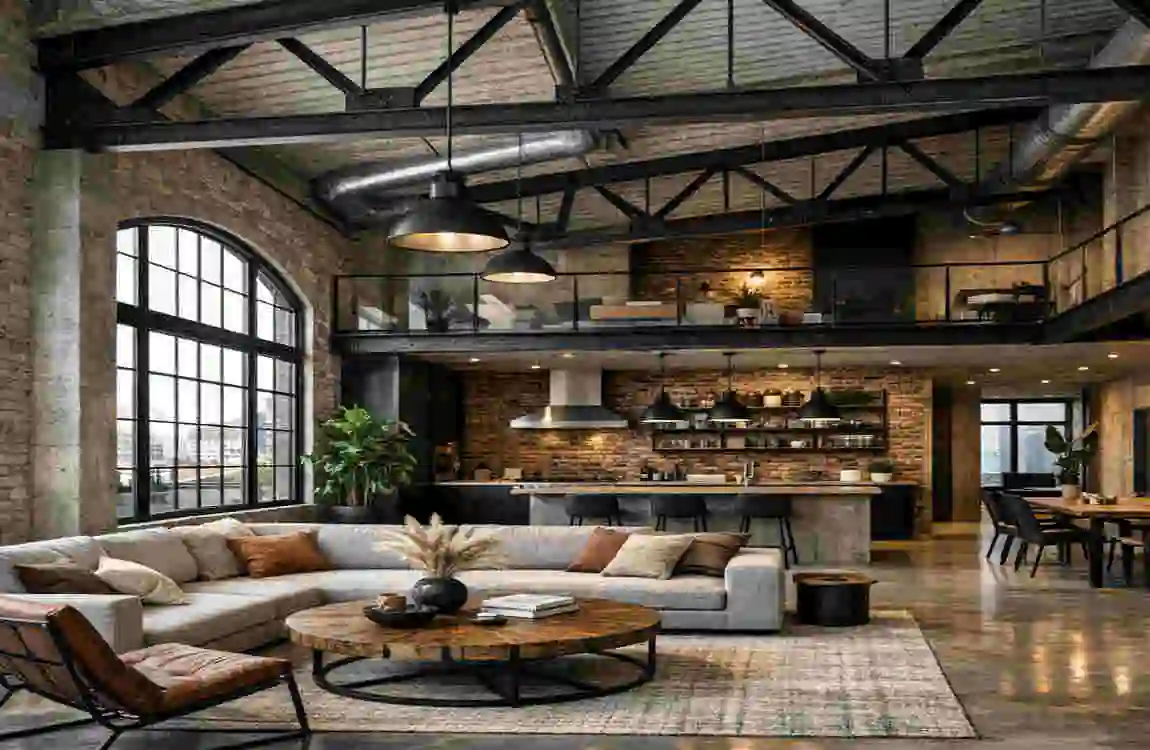
Ever walked into a loft with exposed bricks and metal beams that scream urban cool? You look up and see ductwork traversing the ceiling like a modern sculpture. The floor is polished concrete, cool to the touch, and the windows are massive, letting in floods of natural light. It feels unpretentious, sturdy, and incredibly stylish. That is industrial architecture at work.
But what is industrial architecture, exactly? Is it just unfinished walls and old factories, or is there a deeper design philosophy behind it?
In simple terms, industrial architecture is a design style that celebrates a building’s raw, unfinished, and functional aspects. It takes the gritty, hardworking elements of factories, warehouses, and mills—like steel beams, concrete floors, and exposed piping—and transforms them into a sophisticated living space. It is about peeling back the layers of drywall and paint to reveal the “bones” of a structure.
We are seeing a massive surge in the popularity of this style. According to recent design reports from 2026, searches for “industrial style home design” have jumped significantly. Modern homeowners are moving away from the perfectly polished, cookie-cutter look of the suburbs. They want character. They want history. They want a home that feels solid and authentic.
The History and Origins of Industrial Architecture
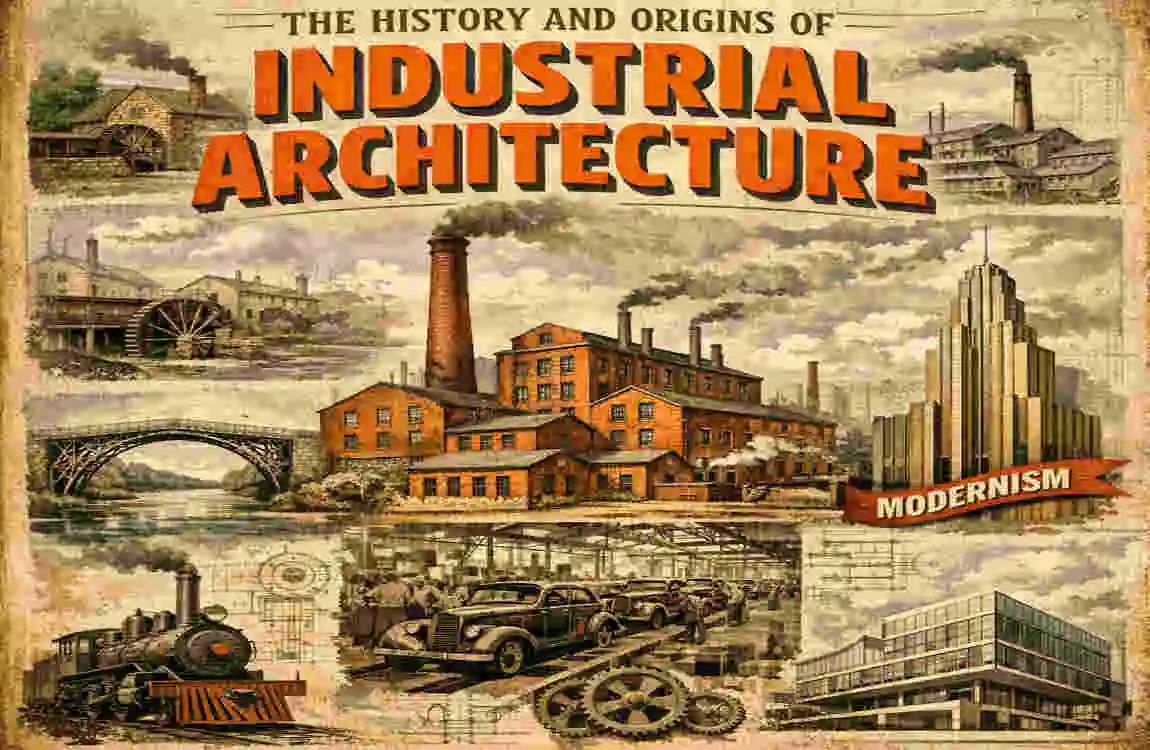
To truly understand what industrial architecture is, we have to travel back in time. This style wasn’t born out of a desire for aesthetics; it was born out of necessity.
The Industrial Revolution Roots
The roots of this design language lie in the 18th and 19th centuries during the Industrial Revolution. As the world moved from hand-crafting to machine manufacturing, businesses needed massive spaces to house large machinery and hundreds of workers. They needed buildings that were fire-resistant, strong, and spacious.
Architects and engineers turned to materials such as cast iron, concrete, and, eventually, steel. These materials allowed for wider floor plans without the need for too many supporting columns. They installed massive steel-grid windows to let in as much natural light as possible because electricity was either nonexistent or expensive. At the time, nobody thought these factories were “beautiful.” They were simply functional beasts of burden.
The Artist Takeover
Fast forward to the mid-20th century. In cities like New York and Chicago, the manufacturing industry began moving from city centers to the suburbs, where land was cheaper. This left behind thousands of empty, abandoned warehouses and factories in districts like SoHo and Tribeca.
In the 1960s and 70s, artists began moving into these spaces. Why? Because they were incredibly cheap, and the massive windows provided the perfect “north light” for painting and sculpting. These artists didn’t have the money to put up drywall or hide the pipes. They embraced the raw look. They lived among the brick and the beams. This was the birth of the “loft apartment.”
From Gritty to Luxury
By the late 1990s and early 2000s, what started as a necessity for starving artists became a trend for the wealthy. Developers realized the charm of these historic buildings. They began converting meatpacking plants and textile mills into high-end condos.
Influence from architects like Le Corbusier, who famously celebrated the “machine for living,” and later Zaha Hadid, who pushed the boundaries of concrete, helped cement this style in the history books. Today, you can see this influence globally. From the converted textile mills in Manchester to the emerging loft conversions in Lahore, Pakistan, the appreciation for raw history is a worldwide phenomenon.
Understanding what industrial architecture is starts with this gritty factory past. It is a style that honors the labor and the materials that built the modern world.
Core Features of Industrial Architecture
So, how do you recognize an industrial home? It isn’t just about being “messy” or unfinished. There is a deliberate curation of elements. If you are planning to design an industrial-style home, these are the non-negotiable features you need to incorporate.
1. Exposed Elements
The most defining characteristic of this style is the refusal to hide the building’s inner workings. In a traditional home, you hide the ductwork behind a drop ceiling and the pipes behind drywall. In an industrial home, you show them off.
- Ductwork: Silver, galvanized air ducts running along the ceiling are a staple.
- Piping: Copper or steel water pipes are left visible, often becoming a design feature in their own right.
- Beams: Whether they are rusty steel beams or rough-hewn wooden trusses, the structural support is on full display.
Raw Materials
Industrial architecture celebrates the “naked” truth of materials. You won’t find plush carpets or floral wallpapers here.
- Brick: Exposed brick walls are the holy grail of industrial design. They add warmth, texture, and color to the space.
- Concrete: Polished concrete floors are incredibly common. They are durable, cool, and sleek and modern.
- Metal: Steel, iron, and aluminum are used for everything from window frames to staircases and kitchen countertops.
- Wood: But not just any wood—reclaimed, distressed wood. It should look like it has a history.
Open Floor Plans
Remember, these spaces used to be factory floors. They were designed to be massive, open halls. Industrial homes mimic this by minimizing interior walls. The kitchen flows into the dining area, which flows into the living room. High ceilings are a must to maintain that airy, cavernous feel.
A Neutral, Moody Color Palette
You generally won’t find bright pastels in an industrial home. The color palette is derived from the materials themselves.
- Base Colors: Grays (from concrete), Blacks (from steel), and Whites (to bounce light).
- Accent Colors: Rust orange (from brick), copper tones (from pipes), and warm browns (from wood).
Lighting and Texture
Since the colors are neutral, the texture is king. The roughness of a brick wall against the smoothness of a glass window creates visual interest. Lighting is also distinct. “Edison bulbs” with visible filaments, hanging from simple cords or encased in metal cages, are the signature lighting style.
Feature Breakdown Table
To help you visualize what industrial architecture is in a practical sense, here is a breakdown of materials and how to use them:
FeatureDescriptionHome Application Example
Exposed Brick Unfinished masonry walls, often red or painted white. Use as a focal accent wall in the living room or behind the bed.
Metal Beams, Structural steel columns, or ceiling supports. Leave ceiling beams exposed; use metal columns as room dividers.
Concrete Polished slabs, often grey and cool. Flooring throughout the ground level; cast concrete kitchen counters.
Large Windows Steel-grid frames (Crittall style) with multiple panes. Floor-to-ceiling windows in the lounge to mimic factory glazing.
Exposed Ducts Visible HVAC systems, usually galvanized metal. Leave the ceiling open (no drywall) to show air conditioning ducts.
Reclaimed Wood Timber salvaged from old barns or factories. heavy dining tables, shelving units, or sliding barn doors.
Adapting Industrial Architecture for Residential Homes
You might be thinking, “This sounds great for a bachelor pad, but can a family live here?” The answer is yes. The beauty of modern industrial design is its adaptability. You don’t have to live in a cold, echoey box.
Loft Conversions vs. New Builds
There are two ways to get this look.
- Adaptive Reuse (The Real Deal): This involves buying an actual old commercial building—a garage, a warehouse, a shop—and converting it into a home. This gives you the most authentic “bones.”
- Industrial Style New Build: This is where you build a house from scratch, but style it to look industrial. You might use cinder blocks for the walls, install a metal roof, and put in concrete floors. This is often easier because you can ensure the insulation and wiring are up to modern code from day one.
Softening the Edge
To make an industrial space livable, especially for a family, you need to balance the “cold” materials with “warm” decor. This is known as industrial chic.
- Textiles: Throw down thick, plush rugs on those concrete floors. Use velvet or leather sofas to add softness.
- Greenery: Plants are essential. The vibrant green of a fiddle leaf fig or hanging vines provides a stunning contrast against red brick and gray concrete.
- Art: Large-scale abstract artworks perfectly fit tall brick walls.
A Local Example
Consider a recent project by a designer in Lahore. They took an old, small textile unit and converted it into a 3-bedroom home. They kept the original high ceilings and the concrete shell but added warm wooden flooring in the bedrooms and installed a sleek, modern Italian kitchen. The result was a home that felt historic but functioned perfectly for a modern family.
Key Design Tips for Your Industrial-Style House
If you are ready to design your own dream industrial house, where do you start? It can be overwhelming to balance the raw with the refined. Here is a step-by-step guide to getting it right.
The Site Assessment
If you are building new, look for a plot that suits the aesthetic. An urban setting is natural, but industrial homes also look striking in raw, natural landscapes where the steel and concrete contrast with trees and rocks. If renovating, check the building’s history. Are those brick walls load-bearing? Is the floor strong enough for concrete pouring?
Collaboration is Key
You need an architect who understands what industrial architecture is. This isn’t a standard suburban build. You need someone who knows how to work with steel frames and open spans. Discuss the “flow” of the house. Since there are fewer walls, you need to define “zones” using furniture and lighting.
Material Sourcing
Don’t just go to the big-box hardware store.
- Salvage Yards: Look for old doors, vintage light fixtures, and reclaimed timber. These items bring instant soul to a new build.
- Custom Metalwork: You might need to hire a local welder to fabricate custom stair railings or window frames.
Room-by-Room Design Guide
The Kitchen: This is the heart of the industrial home. Think “commercial kitchen.”
- Islands: Use a massive stainless steel or concrete island.
- Shelving: Skip the upper cabinets. Use open metal shelving to display your dishes.
- Appliances: Go for high-end stainless steel. A professional-grade gas range is a must.
The Living Room: Make it a lounge.
- Furniture: A Chesterfield leather sofa is a classic choice. It looks better as it ages.
- Centerpiece: A coffee table made from a factory cart or recycled wood pallets.
The Bathroom: Keep it minimal and easy to clean.
- Shower: A wet-room style shower with a glass grid partition.
- Sinks: A cast concrete trough sink looks incredible.
- Fixtures: Matte black or brass taps and showerheads.
The Bedroom: This needs to be the coziest room.
- Placement: If you have high ceilings, consider a mezzanine level for the main bedroom. It creates a private nest overlooking the living space.
- Decor: Use heavy curtains to soften the sound and block light from those massive windows.
Budgeting for the Look
Interestingly, industrial architecture can be both cheaper and more expensive than traditional builds.
- Savings: You save money on finishes. No drywall, no paint, no expensive crown molding or baseboards.
- Costs: You spend more on the structure. Steel beams are expensive. Custom metal windows are pricey.
- Estimate: In the US, costs range from $150 to $300 per square foot. In markets like Pakistan, a high-end industrial finish can cost between PKR 5,000 and PKR 8,000 per square foot, depending on the quality of imported fixtures.
Pros, Cons, and Cost Breakdown
Before you commit, you need to know the good, the bad, and the ugly.
The Pros
- Durability: Concrete and steel are tough. These houses can take a beating. They are resistant to rot and pests.
- Low Maintenance: No carpet to vacuum, no painted walls to scuff. The “worn” look is part of the charm.
- High Resale Value: Because they are unique and trendy, industrial lofts often sell for a premium. Data suggests they can command a 15% higher price than standard apartments in the same area.
- Flexibility: The open floor plan means you can change the layout of your furniture whenever you want.
The Cons
- Acoustics: This is the biggest complaint. Hard surfaces bounce sound. Your home can echo. You will need rugs, curtains, and acoustic panels to dampen the noise.
- Temperature Control: High ceilings mean heat rises. It can be hard to keep these homes warm in winter and cool in summer. You need excellent insulation and ceiling fans.
- Starkness: Some people find the look too cold or “unfinished” for a home environment.
Cost Breakdown
Where does the money go?
- Materials (40%): Steel, glass, and concrete take up the bulk of the budget.
- Labor (30%): While you save on painters, you pay more for specialized welders and masons.
- Systems (15%): HVAC and electrical need to be installed neatly because they are visible. You can’t just hide messy wires behind a wall.
- Finishes (15%): Lighting, taps, and cabinetry.
Real-World Examples and Case Studies
To inspire you, let’s look at where this style thrives.
Brooklyn, New York: The Williamsburg neighborhood is the global capital of industrial chic. Old sugar refineries have been turned into luxury apartments where the original machinery is preserved in the lobby as art.
Shoreditch, London: Similar to Brooklyn, this area was once a slum of factories. Now, it is one of the most expensive areas in London, featuring brick-walled lofts that house tech billionaires and artists alike.
Lahore & Karachi, Pakistan: The trend is catching on in South Asia. In Gulberg and DHA, architects are designing new homes that mimic the industrial look. They are using exposed red brick (a local specialty) and combining it with black metal frames to create homes that feel modern yet rooted in the region’s masonry tradition.
Incorporating Industrial Architecture in Modern Trends
Industrial architecture is not a static relic of the past; it is evolving. In 2026, we are seeing exciting hybrid trends.
The Eco-Industrial Home
Sustainability is huge. Homeowners are combining industrial aesthetics with green technology.
- Solar Panels: The large, flat roofs of industrial homes are perfect for solar arrays.
- Recycled Materials: Using shipping containers to build homes is a sub-genre of industrial design that is incredibly eco-friendly.
- Natural Light: The massive windows reduce the need for artificial lighting during the day.
Smart Industrial
Just because it looks old doesn’t mean it acts old. Modern industrial homes are packed with smart tech.
- Hidden Tech: Smart speakers are hidden in the rafters.
- Automated Blinds: Essential for those giant windows.
- Lighting Control: Smart bulbs let you dim those Edison lights with a voice command, creating the perfect mood.
Frequently Asked Questions (FAQ)
What is industrial architecture in simple terms? It is a design style that showcases the structural and functional elements of a building—such as beams, pipes, and bricks—rather than hiding them. It prioritizes raw materials and open spaces.
Can I build a new industrial-style house from scratch? Absolutely. You don’t need an old factory. You can use steel framing, concrete blocks, and large windows to achieve the same look in brand-new construction. Prefabricated steel homes are a great way to do this quickly.
Is industrial architecture expensive? It can be. While you save on decorative finishes, the structural materials (steel, glass) are costly. A small, custom industrial home usually starts around $100,000 in the US, or PKR 1.5 Crores in Pakistan, depending on land and finishes.
What are the best materials for an industrial home in a hot climate? Concrete is excellent because it has high thermal mass, which keeps it cool during the day. However, you must ensure the roof is well-insulated to prevent the house from becoming an oven. Cross-ventilation through high windows is also crucial.
Can I DIY industrial features in my current home? Yes! You can strip plaster off a wall to expose the brick underneath. You can replace light fixtures with metal pendants. You can install a sliding barn door. These small changes bring the industrial vibe without a full renovation.
