
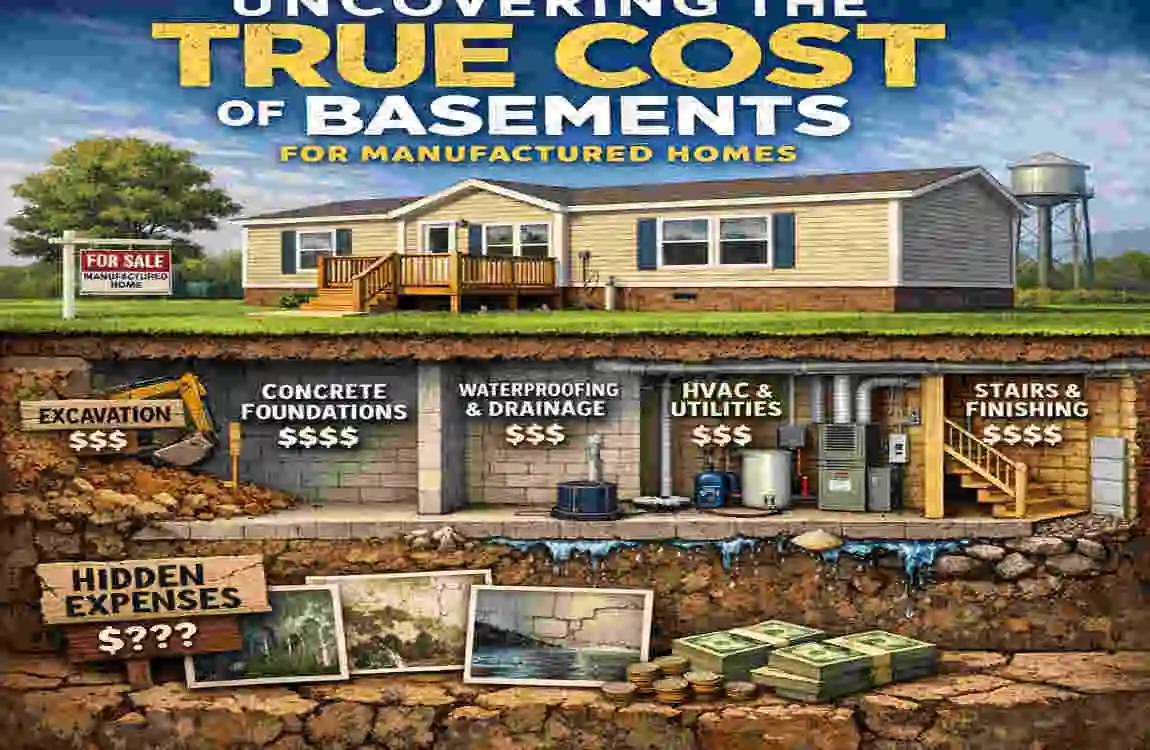
If you’re considering adding a basement under your manufactured home, you’re probably asking yourself one key question: how much does it cost to put a basement under a manufactured home? It’s a smart question because understanding the costs upfront can save you time, money, and a lot of headaches down the road.
We’ll explore what house basements under these homes actually are, the factors that drive up or reduce expenses, detailed price breakdowns, and helpful tips for planning and budgeting. Whether you’re dreaming of extra living space, storage, or boosting your home’s value, this guide will help you make informed decisions.
What Is a Basement Under a Manufactured Home?
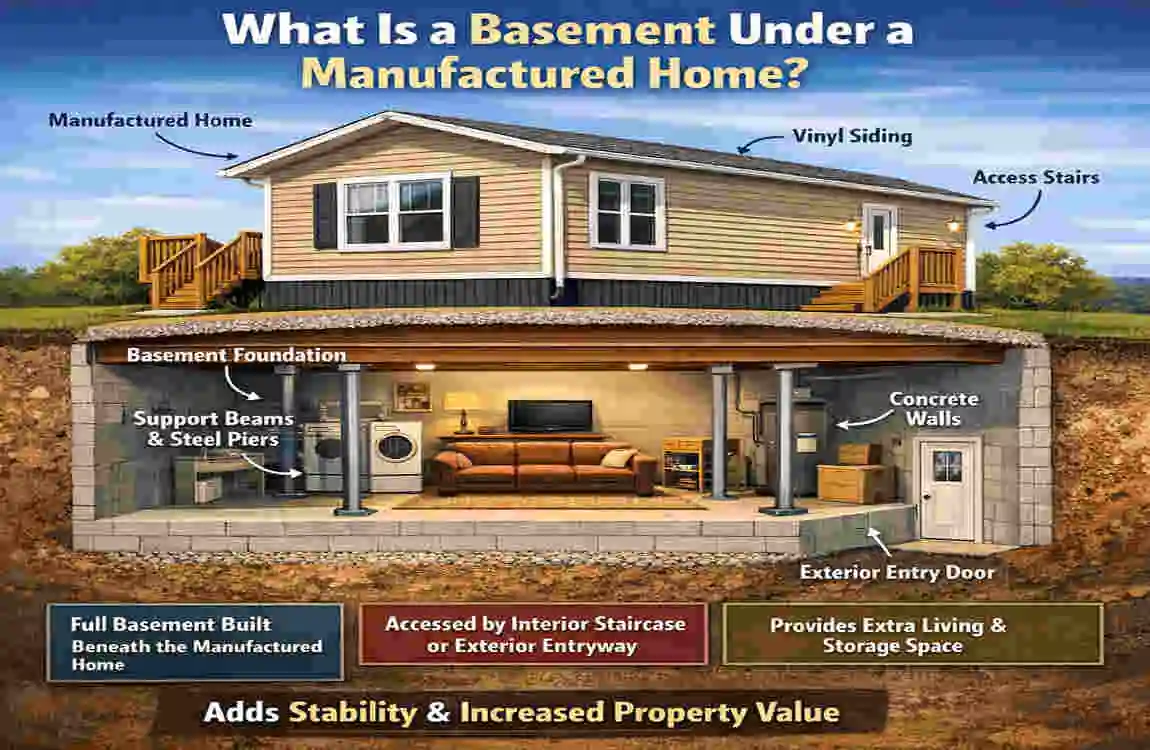
To get started, let’s clarify what we’re talking about when we say “basement under a manufactured home.”
What Are Manufactured Homes?
Manufactured homes, sometimes called mobile homes, are factory-built houses that are transported to your land and set up. They differ from traditional homes mainly in construction and installation processes, but offer affordable housing options with flexibility.
How Basements Fit In
Unlike traditional homes, basements under manufactured homes are not always standard. They can be added either during installation or later as a foundational upgrade. This basement acts as an additional level below the house, providing space for storage, utilities, or even expanded living areas.
Common Types of Basements for Manufactured Homes
- Full Basement: A complete underground space with enough height to stand up and walk around. It often includes finished walls and floors.
- Crawl Space: A shallow basement, just tall enough to crawl through, mainly used for access to plumbing and electrical systems.
- Daylight Basement: A basement where one side is exposed to daylight, often built on a slope.
Why Add a Basement?
Adding a basement to your manufactured home can:
- Increase your living area or storage.
- Improve your home’s resale value.
- Provide better foundation support.
- Allow for easier maintenance of utilities.
Key Factors Influencing the Cost of Basements for Manufactured Homes
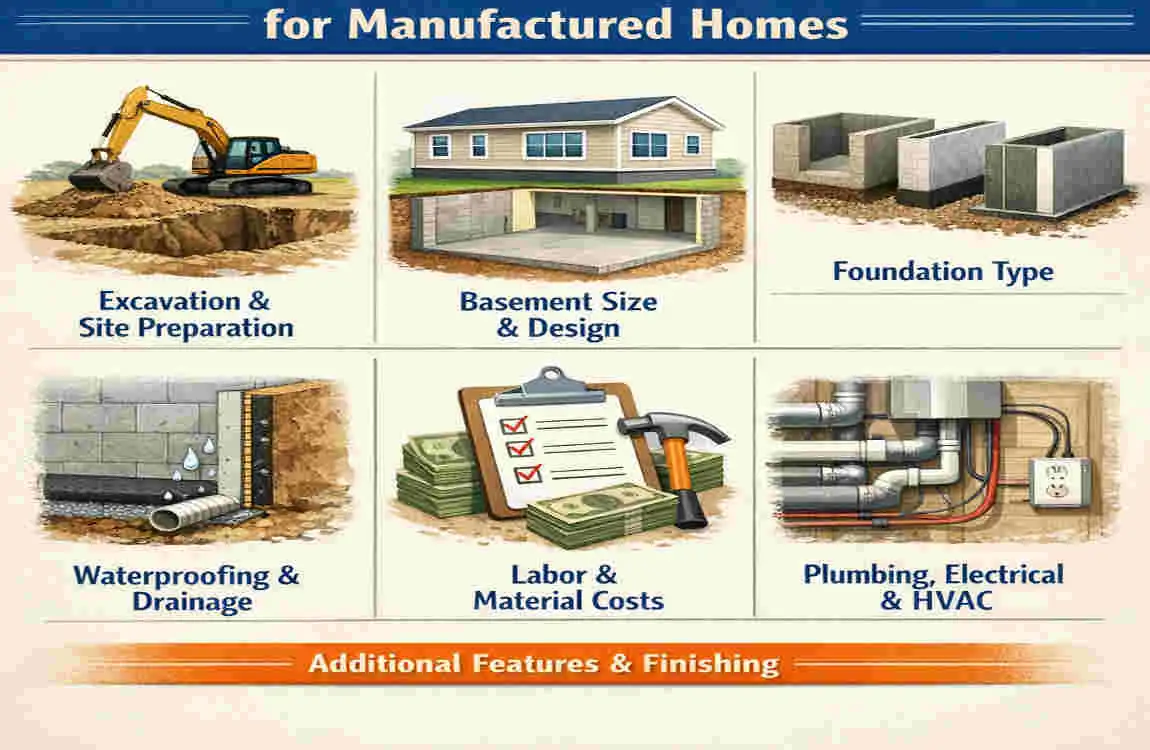
Now, let’s break down the main factors that influence how much you’ll pay for a basement under your manufactured home. Knowing these can help you budget and plan better.
Size and Complexity of the Basement
The bigger and more complex your basement design, the higher the cost. A simple crawl space will cost less than a full basement with rooms, bathrooms, and utilities.
Site Conditions
Your land’s terrain and soil type play a significant role. Rocky soil or sloped terrain requires more excavation work, which means higher expenses.
Permits and Local Building Codes
Different regions have their own rules. You’ll need permits, inspections, and possibly special modifications to meet local building codes, all of which add to the cost.
Foundation Type
Basements can be built using different foundation styles:
- Poured Concrete: The most common and durable, but generally more expensive.
- Concrete Block: Cheaper but may require more maintenance.
- Precast Panels: Faster to install, but can be pricier upfront.
Waterproofing and Drainage
Basements need protection from water intrusion. Quality waterproofing and drainage systems are essential, but they increase costs.
Insulation and Ventilation
To keep the basement comfortable and prevent moisture problems, proper insulation and ventilation are necessary.
Electrical and Plumbing Installation
If you want utilities in the basement, wiring and plumbing add extra costs.
Finishing Touches
Adding flooring, drywall, bathrooms, or heating systems will increase the price but also improve the basement’s usability.
Detailed Cost Breakdown: How Much Does It Cost to Put a Basement Under a Manufactured Home?
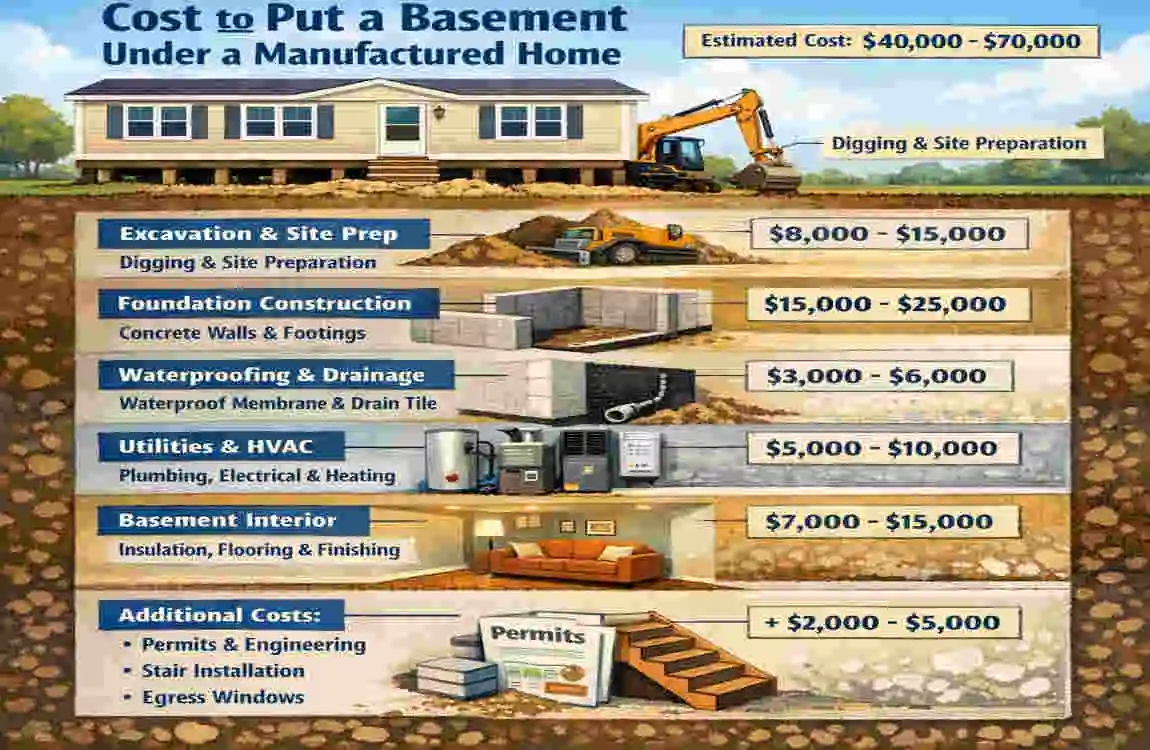
Let’s get into the numbers — understanding typical cost ranges can help you set realistic expectations.
Basement Type Average Cost Range (USD)Notes
Crawl Space $5,000 – $12,000 Basic access and utility space
Full Basement $20,000 – $50,000+ Finished space with plumbing & wiring
Daylight Basement $30,000 – $60,000+ More complex excavation and walls
Regional Cost Variations
Costs vary widely depending on where you live. For example:
- Urban areas often have higher labor and permit costs.
- Rural locations may have cheaper land but higher transportation costs for materials.
Foundation Cost Differences
- Poured concrete foundations typically add 20-30% more than concrete block.
- Precast panels save time but can increase material costs by 10-15%.
Extra Expenses to Keep in Mind
- Permits and inspections: $1,000–$3,000 depending on location.
- Contractor fees: Usually 10-20% of total project cost.
- Unexpected site issues: Always budget an extra 10-15% for surprises.
Real-World Example
Consider a homeowner in Ohio installing a full basement under a 1,200 sq ft manufactured home:
- Excavation and foundation: $25,000
- Waterproofing and drainage: $5,000
- Electrical/plumbing: $4,000
- Finishing (flooring, walls): $6,000
- Permits and fees: $1,500
Total: Approximately $41,500
Planning and Design Considerations to Optimize Costs
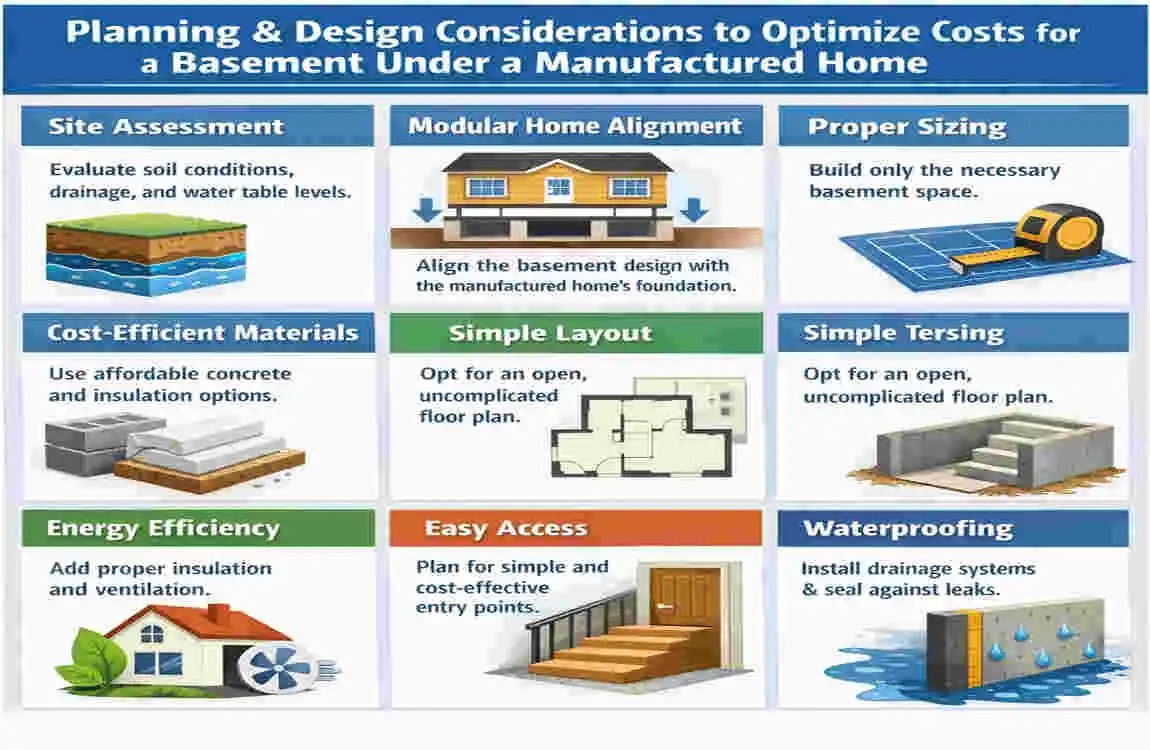
Thoughtful house planning can save you thousands. Here’s how to approach your basement project wisely.
Effective Budget Control Tips
- Set a clear budget early: Know your limits to avoid overspending.
- Prioritize essential features: Focus on the basics first; add extras later.
- Plan for future expansion: Design your basement with potential upgrades in mind.
Choosing the Right Basement Type
Think about what you need:
- Storage only? A crawl space might be enough.
- Extra living space? Invest in a full or daylight basement.
Working with Contractors
- Get at least three quotes.
- Check references and past projects.
- Ask for detailed cost breakdowns.
Site Evaluation
Have professionals assess soil type, slope, and drainage. Proper preparation reduces costly surprises.
Future Use Planning
Decide if the basement will be:
- Living quarters
- Storage
- Workshop or utilities area
This will influence design and finishing costs.
Pros and Cons of Adding a Basement Under Manufactured Homes
Every project has ups and downs. Let’s weigh the benefits against the challenges.
Benefits
- Extra space: More room for living or storage.
- Increased property value: Makes your home more appealing.
- Stronger foundation: Better stability and durability.
Challenges
- Higher upfront costs: Basements can be expensive to build.
- Potential water issues: Requires good waterproofing.
- Longer build time: Adds complexity to installation.
Cost vs. Benefit
Ask yourself: Do the benefits justify the spending in your situation? For many, the added space and value make it worthwhile.
Maintenance and Long-Term Costs of Basements Under Manufactured Homes
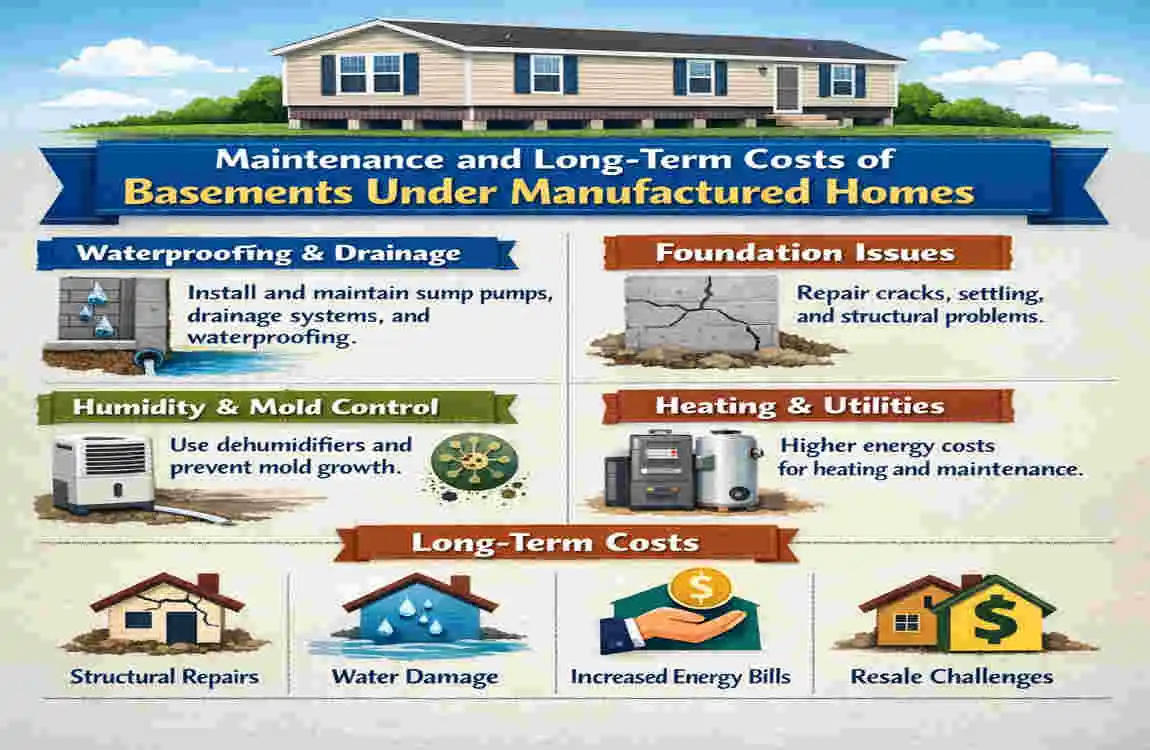
Your basement isn’t a one-time cost. Here’s what to expect over time.
Waterproofing Upkeep
Inspect and maintain drainage systems yearly to prevent leaks and mold.
Insulation and Ventilation Maintenance
Keep vents clear and insulation intact to avoid moisture and energy loss.
Structural Monitoring
Watch for cracks or shifting foundations, especially after heavy rains or freezing weather.
FAQ: Cost to Put a Basement Under a Manufactured Home
Can you put a basement under a manufactured home?
Yes, you can install a basement foundation under most manufactured or modular homes . However, experts often recommend buying a home that is specifically designed for a basement from the factory . Having the factory design and prep the manufactured home for a basement setup usually costs an extra $1,000 to $2,000 upfront .
How much does the actual basement construction cost?
The total cost to build a standard basement usually ranges between $20,000 and $80,000 . On average, you can expect the construction to cost around $33 per square foot . For a 1,000-square-foot home, a complete basement project—including excavation and all necessary finishing—typically runs about $50,000 to $60,000 .
How do the individual construction costs break down?
If you are pricing out specific parts of the project, the foundation walls alone usually cost around $30,000, while pouring the concrete pad starts at roughly $14,000 . Your final price will vary up or down depending on the size of the basement, the specific type of foundation required, and your property’s location .
Is adding a basement worth the investment?
Generally, yes. Putting a basement under your manufactured home adds substantial square footage and premium storage space . Because of this extra space, it can significantly increase your property’s overall appraisal and resale value .
Are there any hidden challenges or risks?
There are a few things to keep in mind. First, adding basement entryways or stairs after the fact can be difficult, and physically attaching new structures to the manufactured home can actually void your warranty . Second, if you need a loan for the project, be prepared to shop around—financing is possible, but not all lenders will cover basement additions for manufactured homes .
