

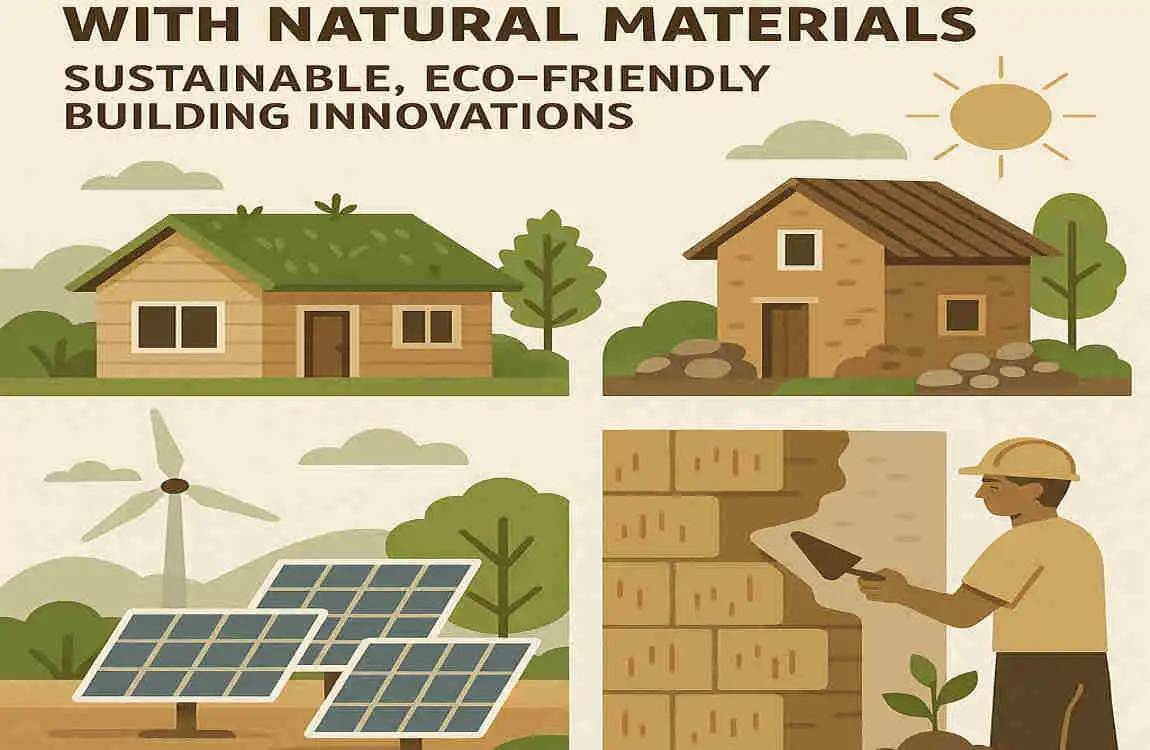
In recent years, the construction industry has undergone a massive transformation. With growing awareness of climate change, resource depletion, and the need for healthier living environments, sustainability has become a key focus. Among the many approaches to sustainable construction, the use of natural materials has gained significant traction. These materials not only reduce the environmental impact of construction but also contribute to healthier, more energy-efficient homes.
The Growing Demand for Sustainable Construction
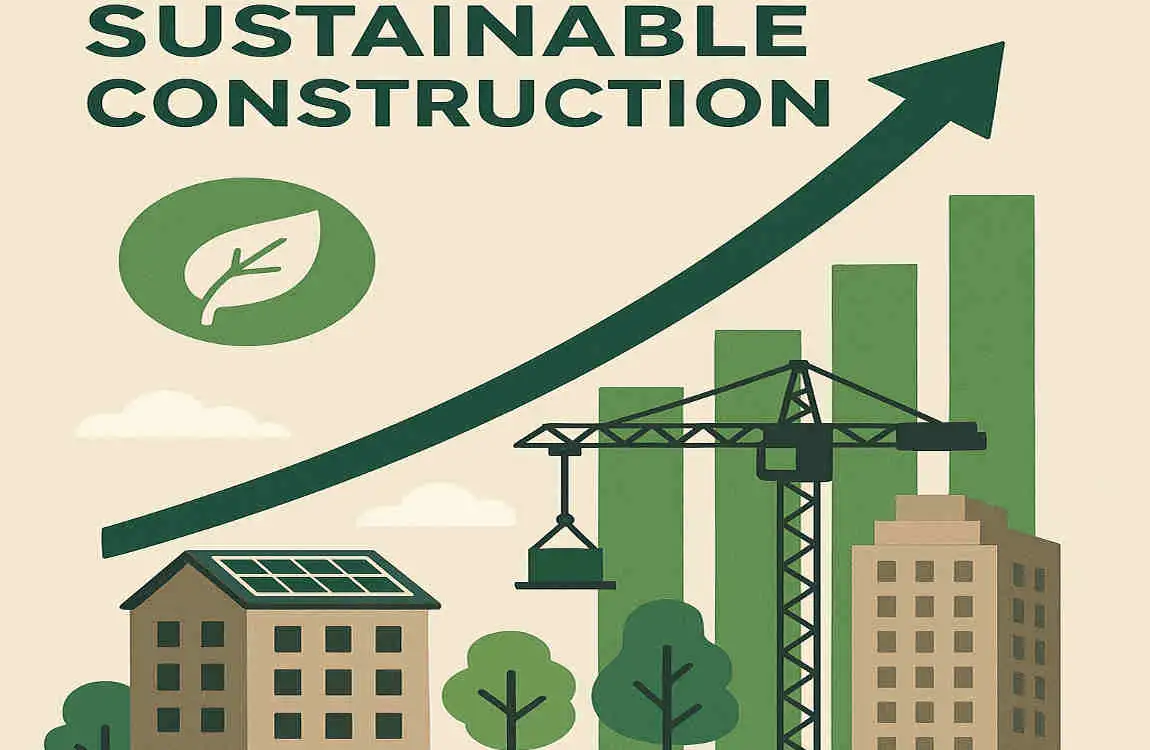
Why Sustainability Matters in Construction
The construction industry is one of the most significant contributors to global carbon emissions. According to a report by the Global Alliance for Buildings and Construction, the sector accounts for nearly 38% of global CO2 emissions. This staggering statistic underscores the urgent need for sustainable alternatives.
In addition to environmental concerns, consumer preferences are shifting. Modern homeowners are prioritizing eco-friendly homes, not just for their environmental benefits but also for healthier indoor environments. Natural materials play a crucial role in meeting these demands by reducing toxins, such as volatile organic compounds (VOCs), and improving air quality.
Benefits of Using Natural Materials
Natural materials in construction offer multiple advantages:
- Lower Carbon Footprint: Materials such as bamboo, rammed earth, and hempcrete have significantly lower embodied energy than conventional materials like concrete and steel.
- Healthier Living Environments: Natural materials are often free of toxic chemicals, promoting better indoor air quality.
- Aesthetic Appeal: Natural materials offer warmth, texture, and timeless beauty that synthetic materials can rarely replicate.
- Energy Efficiency: Materials such as rammed earth and straw offer excellent thermal insulation, reducing energy consumption for heating and cooling.
Leading Natural Materials in House Construction
The use of natural materials in house construction is as diverse as it is innovative. Let’s explore some of the most popular and impactful options.
Bamboo: The “Green Steel” of Construction
Bamboo is often referred to as nature’s supermaterial due to its rapid renewability, strength, and versatility. It grows quickly (some species grow up to 3 feet per day!) and can be harvested sustainably without harming the environment. Bamboo is widely used for everything from structural elements to flooring to decorative finishes.
Key Benefits:
- High tensile strength, often compared to steel.
- Lightweight and easy to transport.
- Naturally resistant to pests and moisture when appropriately treated.
Rammed Earth: Ancient Technique, Modern Appeal
Rammed earth is an ancient building technique experiencing a revival. It involves compacting layers of earth into molds to create solid walls. Its durability and thermal mass properties make it ideal for energy-efficient homes.
Why Choose Rammed Earth?:
- Provides excellent insulation, reducing heating and cooling needs.
- Highly durable and long-lasting.
- Has a natural, earthy aesthetic that blends with the environment.
Mass Timber and Cross-Laminated Timber (CLT)
Mass timber and cross-laminated timber (CLT) are revolutionizing the construction industry. These engineered wood products are highly structurally sound and sustainable. Mass timber is increasingly used in large-scale projects, including multi-story buildings.
Advantages:
- Sequesters carbon, helping to offset emissions.
- Strong and flexible, suitable for a variety of designs.
- Prefabricated options reduce construction time and waste.
Recycled Bricks and Reclaimed Wood
Using recycled bricks and reclaimed wood aligns with the principles of the circular economy. These materials reduce waste, conserve resources, and add character to homes.
Why Are They Popular?:
- Recycled bricks reduce landfill waste and require less energy to produce.
- Reclaimed wood offers a rustic, unique look and reduces deforestation.
Hempcrete: Lightweight and Insulating
Hempcrete, made from hemp fibers mixed with lime, is a lightweight, breathable material gaining popularity for sustainable homes.
Benefits:
- Excellent insulation properties.
- Non-toxic and mold-resistant.
- Acts as a carbon sink, sequestering more CO2 than it emits during production.
Mycelium and Straw Panels
Emerging materials like mycelium (fungi-based material) and straw panels are pushing the boundaries of what’s possible in eco-friendly construction.
- Mycelium: Grown from fungi, it’s lightweight, fire-resistant, and biodegradable.
- Straw Panels: Highly insulating and renewable, often used in passive house designs.
Innovations in Natural Material Use
3D Printing with Earthen Materials
3D printing is revolutionizing construction, and when paired with earthen materials, it becomes a game-changer. Companies are now using soil, sand, and clay to 3D-print walls and structures.
Benefits:
- Reduced material waste due to precision printing.
- Faster construction times.
- Customizable designs with natural aesthetics.
Integration with Smart Technologies
Smart homes are becoming increasingly popular, and natural materials are being integrated into these designs. For example:
- Bamboo and wood panels are used with intelligent lighting systems to provide an eco-friendly ambiance.
- Hempcrete walls paired with smart thermostats enhance energy efficiency.
Prefabrication and Modular Construction
Prefabrication with natural materials is gaining momentum due to its ability to reduce waste and construction time. Modular homes made with CLT panels or recycled materials offer a sustainable alternative to traditional construction.
Eco-Friendly Building Techniques and Design Approaches
Biophilic Design
Biophilic design connects homeowners with nature by incorporating natural elements like green walls, large windows for natural light, and indoor plants.
Designing for Deconstruction
This approach emphasizes building homes that can be easily dismantled, allowing natural materials to be reused or recycled at the end of their lifecycle. This reduces construction waste significantly.
Challenges and Solutions in Using Natural Materials
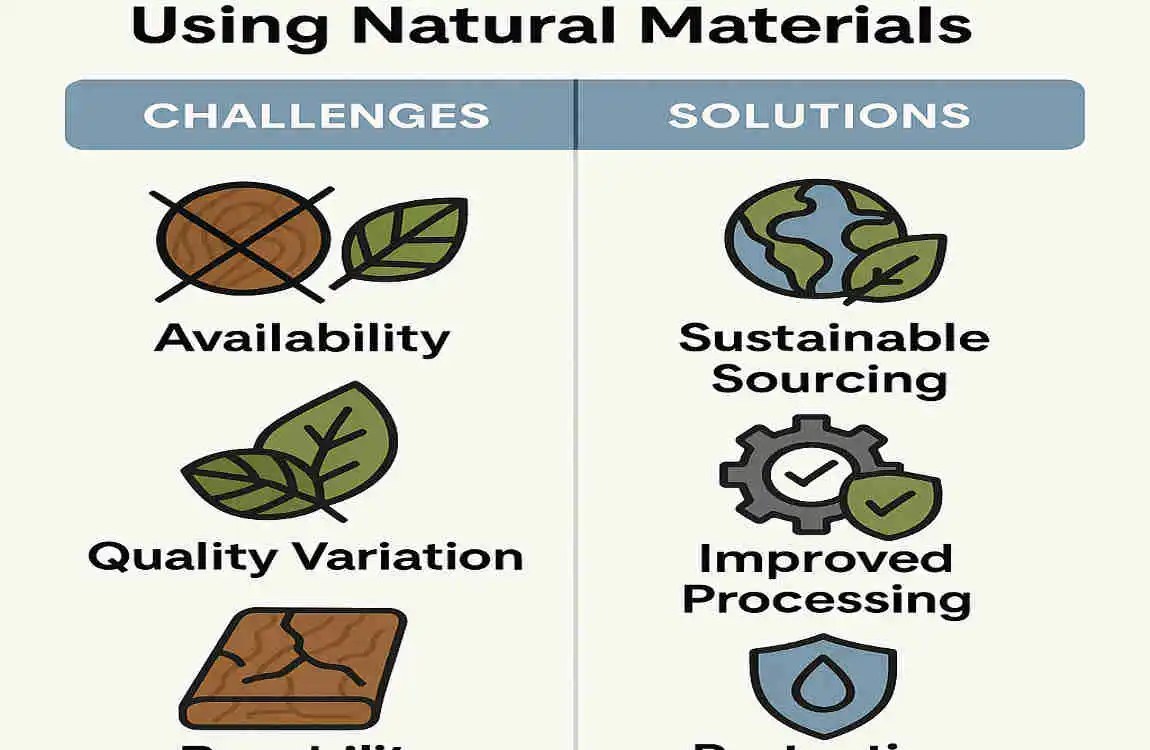
Common Challenges
- Sourcing: Natural materials may not be readily available in all regions.
- Cost: Natural materials can be more expensive than conventional options initially.
- Building Codes: Regulations may not always accommodate innovative materials like hempcrete or mycelium.
Solutions
- Material Treatments: Improved treatments enhance the durability and performance of materials like bamboo and wood.
- Hybrid Structures: Combining natural materials with engineered options creates stronger, more versatile constructions.
Future Outlook and Trends
Policy and Regulations
Governments worldwide are introducing policies to incentivize sustainable construction, thereby driving the adoption of natural materials.
Emerging Materials Beyond 2025
Keep an eye on algae-based materials, biodegradable polymers, and advancements in bio-composites. These materials promise to revolutionize the industry further.
Practical Tips for Builders and Homeowners
- Research Local Options: Choose materials that are locally available to reduce transportation emissions.
- Work with Experts: Hire architects and builders experienced in sustainable construction.
- Blend with Modern Features: Combine natural materials with energy-efficient technologies like solar panels and smart home systems.
