

The wind is howling outside, rattling the skirting of your mobile home. You stumble into the kitchen to make that essential first pot of coffee, turn the faucet handle, and… nothing. Not a drop. Panic sets in instantly. You realize the silence isn’t just a lack of water; it’s the sound of a looming financial disaster.
According to the Insurance Institute for Business & Home Safety, over 250,000 homes experience pipe bursts each year due to freezing conditions. That is a quarter of a million headaches, wet floors, and insurance claims. But here is the good news: you don’t have to be a statistic. With the right knowledge and a little bit of elbow grease, you can protect your plumbing.
Understanding Pipe Freezing Basics

To beat the freeze, you first have to understand the enemy. Freezing isn’t just about water getting cold; it is about physics. When water freezes, it expands by about 9%. That might not sound like a lot, but in a confined space like a copper or PVC pipe, that expansion can create thousands of pounds of pressure per square inch.
Eventually, the pipe can no longer withstand the pressure and splits. Interestingly, the burst doesn’t usually happen where the ice forms. It happens downstream of the blockage, where pressure builds up between the ice dam and the closed faucet.
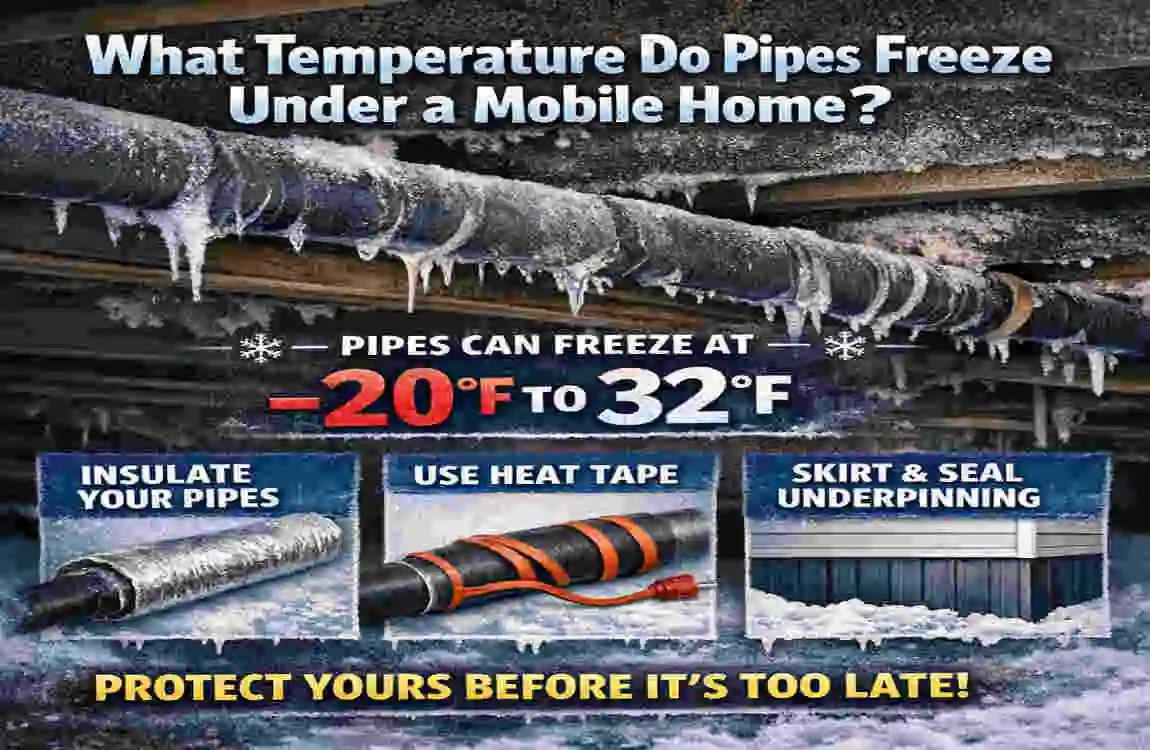
What Temperature Do Pipes Freeze Under a Mobile Home?
We gave you the short answer (20°F), but the real answer is a bit more nuanced. The 20°F threshold is generally considered the “breaking point” for uninsulated pipes in an exposed crawl space. At this temperature, the heat loss is rapid enough that the water inside loses energy faster than it can retain it.
However, many experts warn that you should be on “high alert” once the forecast hits 32°F (0°C). Why? Because wind chill plays a massive role. If it is 30°F outside but a 20 mph wind is whipping under your mobile home, the rate of heat loss accelerates dramatically.
Material Matters: Not All Pipes Freeze the Same
The type of plumbing you have under your mobile home dictates how much time you have before disaster strikes. Different materials conduct cold differently and have varying levels of flexibility.
- Copper: This is a metal, which means it is a fantastic conductor of heat and cold. Copper pipes transfer the freezing outdoor temperatures to the water inside very quickly. They are also rigid, meaning they are likely to burst quickly when ice expands.
- PVC (Polyvinyl Chloride): Common in waste lines and some supply lines. PVC becomes brittle when it gets cold. While it insulates slightly better than copper, it has zero flexibility. If water freezes inside PVC, it shatters like glass.
- PEX (Cross-linked Polyethylene): The gold standard for modern mobile homes. PEX is flexible. It can expand slightly to accommodate freezing water, making it much more resistant to bursting. It doesn’t make it freeze-proof, but it gives you a larger margin of error.
Here is a quick breakdown of how these materials handle the cold:
Pipe Material Freezing Risk Threshold Burst Risk Thermal Conductivity
Copper High (25°F – 28°F) High Very High (Freezes Fast)
PVC / CPVC Medium (20°F – 25°F) High Medium (Becomes Brittle)
PEX Low (15°F – 20°F) Low Low (Flexible)
Why Mobile Homes Face Higher Freeze Risks
You might be wondering, “My cousin lives in a brick house down the street and never worries about his pipes. Why do I have to?”
The answer lies in the architecture. Mobile homes face unique challenges that make them significantly more vulnerable to winter weather than traditional site-built homes.
The “Bridge Effect”
Think about a bridge on a highway. Signs always warn that “Bridge Freezes Before Road.” This happens because cold air circulates both above and below the bridge surface. Your mobile home is essentially a bridge.
Because your home is elevated, cold air can rush underneath your floorboards. In a traditional home, the earth insulates the basement or slab, keeping it relatively warm year-round (around 55°F). Your mobile home’s plumbing is hanging in the air, separated from the freezing wind by only a thin layer of skirting and maybe some belly wrap.
Crawl Space Ventilation and Skirting
We all know that ventilation is important for preventing mold, but in winter, those vents are open doors to Arctic air. If your skirting (the barrier around the base of your home) has cracks, holes, or missing sections, the temperature under your home will be almost identical to the outside temperature.
Furthermore, many older mobile homes have compromised “belly wraps.” The belly wrap is the black plastic sheeting holding the insulation up against your floor. If critters have torn holes in it or it has sagged over time, your pipes are left naked to the cold.
Regional Factors vs. Expectations
Mobile homeowners in Alaska insulate their pipes. But the biggest disasters often occur in places not used to extreme cold—like Texas, the Carolinas, or even during a harsh winter in Lahore, Pakistan.
In these moderate climates, homes aren’t built with heavy-duty freeze protection in mind. When a freak cold front hits and drops temperatures below 25°F for 24 hours, the damage is catastrophic because the homeowners weren’t prepared.
Common Myth Buster: Many people believe that skirting alone prevents freezing. This is false. Skirting blocks the wind, which helps, but it provides almost zero thermal insulation. If it is 10°F outside, the air inside your skirting will eventually reach 10°F without a heat source.
Signs Your Pipes Are About to Freeze

You usually get a warning before the main event. If you know what to listen to and look for, you can intervene before a pipe actually bursts. Action taken at 28°F can save you thousands of dollars, whereas action taken once the pipe is solid ice is usually too late.
Pay attention to your home. It will talk to you.
Early Warning Signs
- The Sputter: When you turn on the faucet, does the water sputter or spit air? This often means ice is forming somewhere in the line, creating air pockets.
- The Pressure Drop: A sudden decrease in water pressure is the #1 sign. If your powerful shower becomes a sad trickle, ice is narrowing the pipe diameter.
- Strange Noises: You might hear clanging, banging, or gurgling coming from the walls or the floor. This is the sound of ice chunks moving or water trying to squeeze past a blockage.
- Frosty Pipes: If you can see your pipes (perhaps under a sink or through an access panel), look for visible frost on the exterior of the pipe.
- Unpleasant Odors: If the sewer line freezes, sewer gas cannot escape through the vent, and it may back up into your home. If your bathroom smells like rotten eggs during a freeze, you have a problem.
The Visual Check
If you suspect trouble, bundle up and grab a flashlight. Go outside and inspect the underside of your home.
- Look for bulging sections of pipe.
- Look for icicles hanging from the bottom of your home (the belly board). This indicates a leak has already occurred, and the water is freezing as it exits.
- Check your skirting for new gaps where wind might be blasting in.
Urgency is key here. If you notice any of these signs, do not go back to bed hoping it will get better. It won’t. Skip down to the “What to Do If Pipes Freeze” section immediately.
Step-by-Step Prevention Guide: Protect Pipes Before Freezing Hits
The best way to handle a frozen pipe is to avoid it in the first place. Whether you are prepping for a known blizzard or want peace of mind for the season, follow this comprehensive guide.
Insulation Tactics for Under-Mobile-Home Pipes
This is your first line of defense. You need to wrap the pipes themselves.
- Foam Pipe Sleeves: These are cheap and effective for moderate climates. They look like pool noodles with a slit down the side. You slide them over the pipe.
- Pro Tip: Don’t leave the slit open! Use duct tape or zip ties to seal the slit shut, and tape the joints where two tubes meet.
- Fiberglass Wrap: For colder climates, strips of fiberglass insulation wrapped around the pipe provide a higher R-value (insulation efficiency) than foam insulation. You will need to wrap this in plastic afterward to keep moisture out.
- Heat Tape (The Holy Grail): For mobile homes in areas that regularly drop below freezing, insulation alone isn’t enough. You need an active heat source. Heat tape (or heat cable) is an electrical wire you wrap around the pipe before installing the foam insulation.
- Cost: A DIY heat tape setup usually costs between $50 and $100, depending on length.
- Safety: Ensure you buy heat tape with a built-in thermostat so it only turns on when the pipe gets cold. Never overlap heat tape, as this can cause a fire.
Skirting and Belly Wrap Upgrades
Think of skirting as the windbreaker and the belly wrap as the thermal underwear for your home.
- Skirting Check: Walk around your home. Are there gaps? Use spray foam (Great Stuff works wonders) to seal small holes. For larger gaps, use plywood or replacement skirting panels. Ideally, you want insulated skirting (foam-backed vinyl), which helps retain ground heat.
- The Belly Wrap: If your underbelly is torn, you are losing massive amounts of heat. You can buy “belly repair tape” specifically designed for this. It is incredibly sticky and waterproof. Patch every tear you see.
- Insulate the Skirting: If you have standard vinyl skirting, consider gluing rigid foam insulation boards to the inside of the skirting panels. This creates a much warmer buffer zone under the house.
Heating and Monitoring Solutions
Technology is your friend here.
- Pipe Heat Cables: As mentioned, these are essential. Plug them into a GFCI outlet.
- Space Heaters (Use with Caution): During extreme cold snaps, some homeowners place a ceramic space heater in the crawl space near the main water inlet. Warning: This is a fire risk. Only do this if you have a safe, level surface, the heater has tip-over protection, and you can monitor it.
- Smart Sensors: Devices like YoLink or other smart home water sensors can be placed near your main water line. You can set them to alert your phone if the temperature drops below 35°F. This gives you time to act before the 20°F freeze occurs.
- The Dripping Faucet: This is the oldest trick in the book because it works. Moving water is harder to freeze than standing water. When the forecast dips below 28°F, leave the faucet furthest from your main water inlet dripping slightly. You want a steady drip or a very thin stream. Both the hot and cold knobs should be slightly open.
Your Ultimate Winterization Checklist
Print this out and stick it on your fridge!
- Inspect Skirting: Close all vents and seal gaps.
- Disconnect Hoses: Remove garden hoses from outdoor spigots. If you leave them attached, the water inside expands and cracks the faucet assembly inside the wall.
- Apply Heat Tape: Check existing tape to ensure it’s working (it should feel warm to the touch).
- Wrap Pipes: Ensure all exposed pipes are covered in foam or fiberglass.
- Check Belly Wrap: Patch any holes.
- Locate Main Shut-Off: Know exactly where your main water shut-off valve is. You don’t want to be searching for it in the dark while water sprays everywhere.
- Service the Furnace: A warm house helps keep the crawl space slightly warmer.
- Open Cabinet Doors: On freezing nights, open the cabinet doors under your kitchen and bathroom sinks. This allows warm air from your living room to circulate through the pipes.
- Drip Faucets: Do this when temps hit 28°F.
- Keep Thermostat Steady: Don’t lower the heat at night during a freeze. Keep it at a steady 68°F or higher.
What to Do If Pipes Freeze Under Your Mobile Home

You woke up, turned the knob, and… nothing. The worst has happened. Don’t panic. Panic leads to mistakes, and mistakes lead to fires or floods.
Shut Off the Water
Immediately turn off the main water supply to your home. If a pipe has already burst, it might be sealed by ice right now. Once you thaw it, that ice dam will vanish, and water will flood your home. Shutting off the water prevents this secondary disaster.
Open the Faucets
Open all the faucets in your house. This relieves pressure and gives the steam/water somewhere to go as you thaw the pipes.
Locate the Freeze
Usually, the freeze happens in the most exposed area—likely where the water line comes out of the ground and enters the home. Use your hands to feel the pipes; the frozen section will feel intensely cold and solid.
Thaw Safely
NEVER use an open flame. No blowtorches, no propane heaters, no lighters. You will melt the pipe or set your home on fire.
- Hairdryer: This is the safest, most effective tool. Point a hairdryer at the frozen section, starting from the faucet side and working your way back toward the frozen area.
- Heat Gun: Effective, but be careful not to overheat PVC pipes.
- Hot Towels: Wrap the pipe with towels soaked in hot water.
- Space Heater: Point a space heater at the frozen section (keeping a safe distance) to warm the general area.
Check for Leaks
Once water starts flowing, slowly turn the main valve back on. Have someone inside the house watch for leaks while you listen underneath. If you hear rushing water or see a leak, turn the main off again immediately and call a plumber.
Insurance Tip: If you have a burst pipe, take photos of everything immediately. Do not throw away the broken pipe segments; the adjuster might need to see them. The average cost of water damage claims is over $5,000, so documentation is vital.
Long-Term Mobile Home Plumbing Protection Strategies
If you are tired of worrying about the temperature every winter, it might be time for some permanent upgrades.
Upgrade to PEX
If your mobile home still has old gray polybutylene pipes (common in 1980s-90s homes) or rigid copper, consider repiping with PEX. PEX is the industry standard for a reason. It is cheaper to install than copper, retains heat better, and its flexibility makes it incredibly resistant to freeze damage.
Install a “Water Key” Valve
Install a shut-off valve inside your home (perhaps in the utility closet). Many mobile homes only have a shut-off outside in the dirt. Having one inside means you can shut the water off quickly in an emergency without crawling into the mud.
Yearly Inspections
Make a habit of crawling under the home (or paying a neighborhood handyperson to do it) every autumn. Look for insulation that has fallen, heat tape that has come unplugged, or animals that have moved in.
Prevention Strategy, Estimated Cost, Long-Term Savings
Heat Tape & Foam $50 – $150 Saves thousands in burst pipe repairs.
Insulated Skirting $800 – $1,500 Lowers heating bills by 10-20% & prevents freezing.
PEX Repiping $2,000 – $4,000 Increases home value, lowers insurance risk.
FAQ: Quick Answers on Pipe Freezing
Q: What exactly is the temperature that pipes freeze under a mobile home? Generally, pipes begin to freeze at 20°F (-6°C). However, if it is windy or your skirting is poor, freezing can occur at temperatures as high as 28°F (-2°C).
Q: How long does it take for pipes to freeze at 20 degrees? It depends on the insulation, but typically, if temperatures stay at 20°F, an uninsulated pipe under a mobile home can freeze solid in as little as 4 to 6 hours.
Q: What is the best insulation for mobile home pipes? Fiberglass wrap with a vapor barrier is excellent. Still, for ease of use and effectiveness, a combination of electric heat tape covered by foam pipe insulation tubes is the best protection for mobile homes.
Q: Can skirting alone prevent pipes from freezing? No. Skirting blocks the wind, which helps reduce the rate of cooling, but it does not add heat. In sustained freezing temperatures, the air inside the skirting will eventually reach freezing temperatures without an added heat source (like heat tape) or insulation on the pipes themselves.
Q: What if I can’t access the crawl space to insulate? If you physically cannot get under your home, focus on keeping the interior very warm, opening all under-sink cabinets to let heat reach the pipes from the inside, and leaving faucets dripping during cold snaps. You should hire a professional to install heat tape as soon as possible.
