

Imagine this scenario: It’s a beautiful morning in Lahore. You walk out into your yard with a cup of tea, ready to enjoy the greenery you’ve worked so hard on. But as you step onto the grass, your foot sinks slightly into the ground. You look down and see a strange, raised ridge zig-zagging across your lawn like a miniature mountain range.
While we often think of moles as garden nuisances that ruin flowerbeds, these industrious little diggers don’t respect boundaries. If the soil conditions are right and the food source is plentiful, they will tunnel right up to—and under—your foundation.
Understanding Moles: Can They Really Get Under Your House?
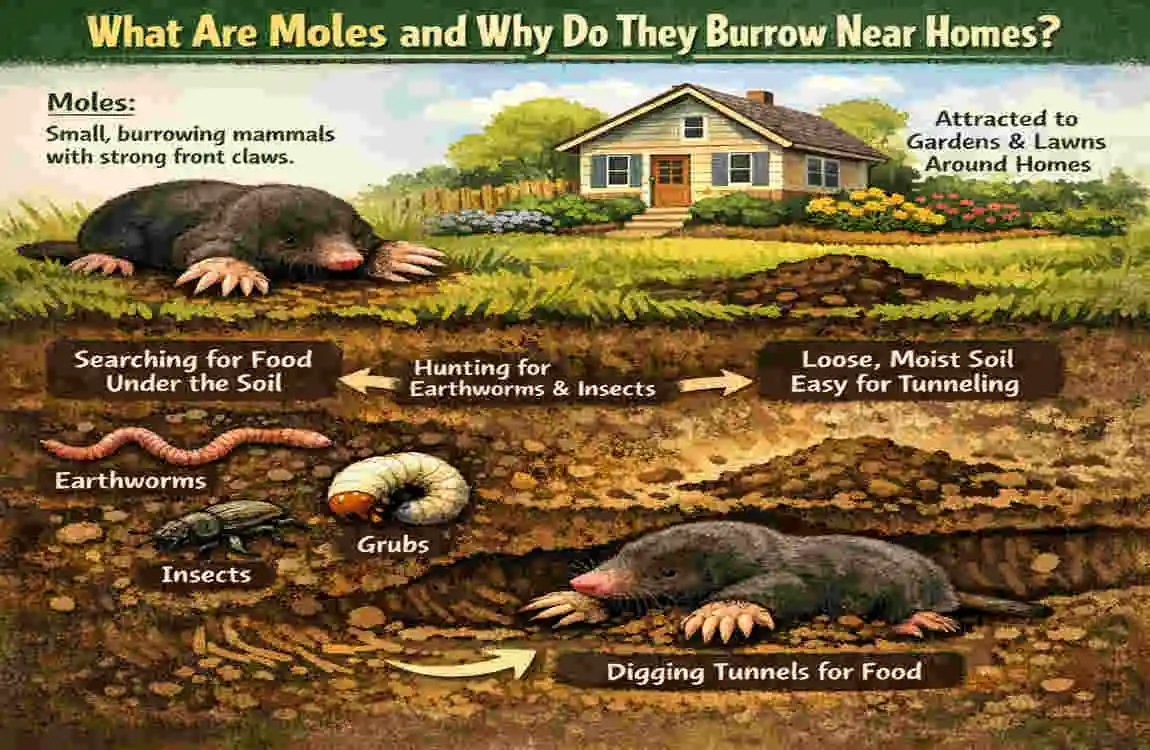
To understand how a small, furry creature can cause structural anxiety, we first need to understand what a mole actually is. Many homeowners mistake them for rodents, like mice or rats. However, moles are actually mammals belonging to the order Eulipotyphla. They are insectivores, meaning they don’t eat your plants—they eat the bugs eating your plants.
So, why do they burrow near homes?
Moles have powerful, paddle-like front limbs, perfectly suited for swimming through soil. They are constantly on the hunt for earthworms, grubs, and other soil-dwelling insects. Unfortunately for us, the soil around our foundations is often kept moist by garden hoses, flower beds, and shade. This creates a perfect environment for worms, which in turn makes it a 5-star restaurant for moles.
How Moles Tunnel Under Foundations
When asking “can moles get under your house,” you need to look at their engineering capabilities. Moles create two types of tunnels:
- Surface Runs: These are the raised ridges you see on the lawn. They are usually just 2 to 8 inches below the surface and are used for feeding.
- Deep Runs: This is where the danger lies. These tunnels can go down as deep as 3 feet or more. These are used for shelter, raising young, and escaping extreme temperatures.
Because foundations, crawlspaces, and concrete slabs often provide a temperature-controlled environment, moles are naturally drawn to dig beneath them. They can exploit small cracks in slabs, gaps under doors, or erode the soil around your plumbing pipes to create a superhighway right under your living room.
Consider the stats: A single mole can dig up to 18 feet of tunnel in just one hour. If left unchecked, one mole can create over 150 feet of new tunnels in a single day. Now, imagine if you have a family of them working beneath your floorboards.
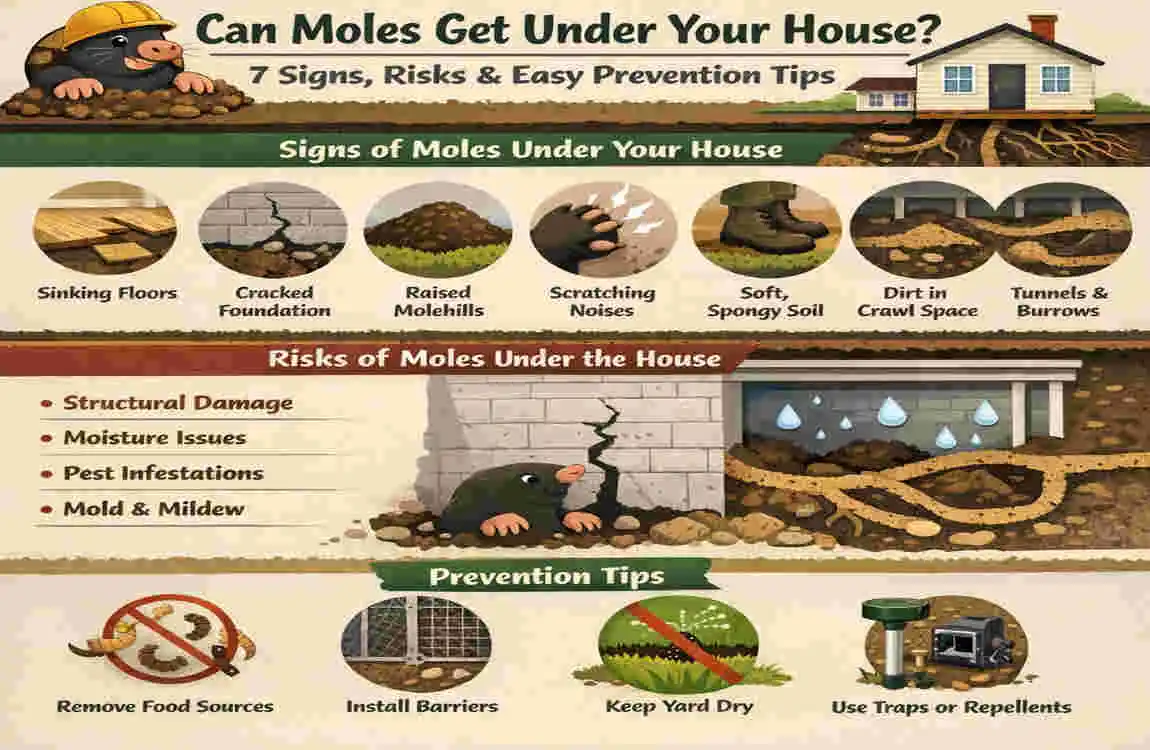
7 Telltale Signs That Moles Have Invaded Under Your House
Recognizing the problem early is half the battle. If you aren’t sure if you have a mole problem, you need to play detective. The signs are often subtle at first, but once you know what to look for, they become undeniable.
Here are the 7 clearest signs that answer the question, “can moles get under your house?” with a resounding yes.
Raised Ridges and Volcano-Shaped Mounds
This is usually the first visual cue. If you see raised ridges of soil traversing your yard that stop abruptly at your house’s foundation, it is a bad sign. Even more telling are “molehills.” unlike ant hills, molehills look like little volcanoes made of loose, clumpy dirt. If these mounds are appearing right next to your exterior walls or porch, the tunnels almost certainly extend beneath the structure.
Wilted or Dying Grass Patches
Have you noticed strange yellow or brown shapes in your otherwise green lawn? When moles tunnel near the surface, they separate the grass roots from the soil below. This cuts off the plant’s access to water and nutrients. If these dead patches are tracing a path toward your home, the mole is likely following a food source that leads right to your foundation.
Soft, Spongy Ground That Sinks Underfoot
This is often described as the “squishy” feeling. You might be walking along the perimeter of your house and suddenly feel the ground give way slightly, like stepping on a very soft sponge. This indicates that the soil structure below has been compromised by extensive tunneling. It is a major red flag that the earth supporting your foundation is being hollowed out.
Sudden Cracks in Your Foundation or Walls
This is the sign every homeowner dreads. If moles remove enough soil from beneath a concrete slab or beam, the foundation settles into the void. This settling causes stress fractures. You might notice hairline cracks in your basement floor, on the exterior concrete, or even diagonal cracks appearing in the drywall inside your home.
Increased Insect Activity Near the Foundation
Remember, moles are there for the food. If you suddenly see a massive increase in crickets, beetles, or grubs near your home’s perimeter, a predator is likely close behind. Moles will follow the food density. If the grubs are under your crawlspace, the moles will be too.
Noises or Vibrations Under Floors
This sounds like a scene from a horror movie, but it happens. If you have a crawlspace or a home raised slightly off the ground, you might actually hear the scratching or digging sounds, especially at night when the house is quiet. Some homeowners even report feeling slight vibrations on the floorboards as the moles excavate the hard earth below.
Dirt Piles Near Utility Entries
Check where your AC unit sits or where pipes enter the house. Moles prefer to dig in soil that has already been disturbed because it is looser. The area around utility lines is prime real estate for them. If you see fresh piles of dirt pushed up against these entry points, they are likely using the utility gap as a front door to the underside of your house.
Differentiating Moles from Voles or Gophers
It is crucial to know your enemy. Here is a quick way to tell them apart:
Feature Moles Voles Gophers
Diet Insects, Worms, Grubs Plants, Roots, Bulbs Roots, Tubers, Plants
Tunnels Closed, raised ridges Open surface runways Large mounds, plugged holes
Appearance Paddle-feet, no visible ears Mouse-like, visible ears Rat-like, visible pouches
Damage Soil disruption Chewed bark/plants Devoured plants
Serious Risks: What Happens If Moles Get Under Your House?
You might be thinking, “Okay, so they are digging. Is it really that big of a deal?”
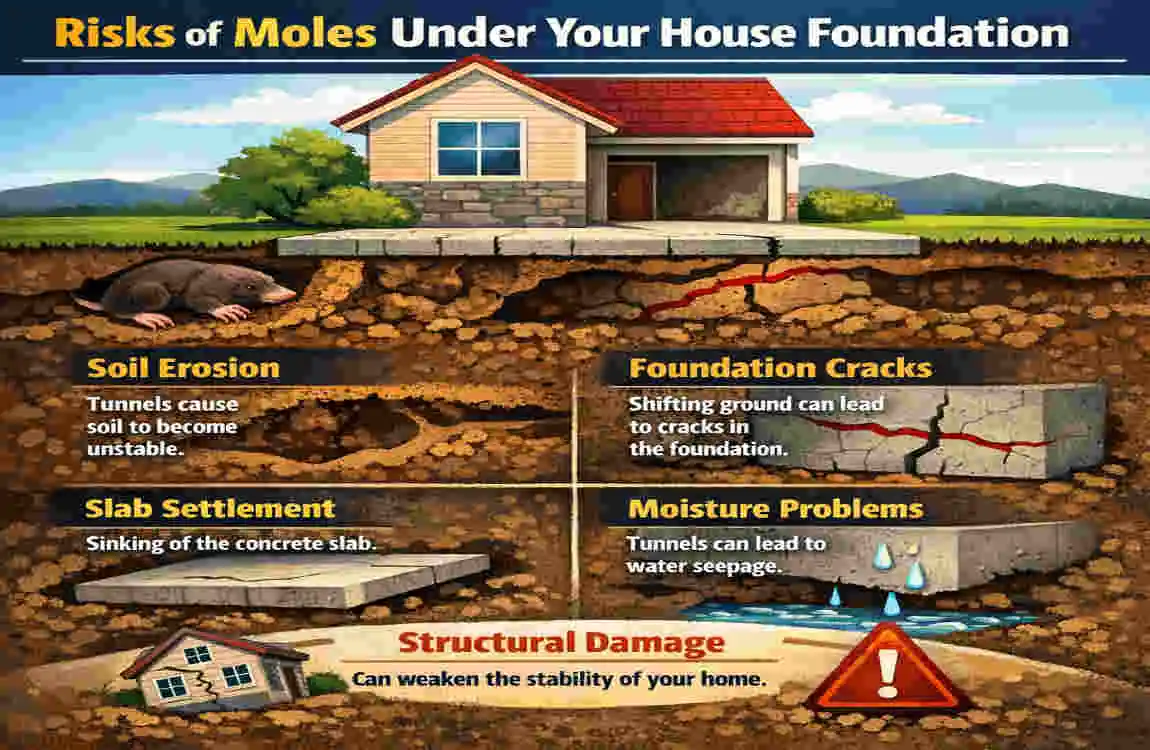
Unfortunately, the answer is yes. The risks associated with moles getting under your house go far beyond cosmetic damage to your lawn. The structural integrity and safety of your home can be compromised.
Structural Damage and Foundation Settling
The soil beneath your foundation is packed tight to support the immense weight of your house. When moles tunnel through this, they create air pockets. Over time, or after a heavy rain (like the monsoon rains common in Lahore), the soil above these tunnels collapses. This leads to foundation settling, which can cause doors to stick, windows to jam, and walls to crack. Repairing a foundation can cost thousands of dollars.
Plumbing Vulnerabilities
Your water and sewage pipes are often buried underground. While moles don’t eat pipes, their digging removes the support around them. This can cause PVC or clay pipes to sag and eventually snap or crack. A broken sewer line under a house is a nightmare scenario that involves major excavation to fix.
Electrical Hazards
If you have a crawlspace, you likely have wires running beneath your floor. Moles generally stay in the dirt, but if they breach the surface into a crawlspace, they can disturb wiring. While they don’t seek out copper, their clawing can accidentally damage protective coatings, leading to shorts or fire hazards.
Health Issues
Moles create pathways. These pathways allow moisture to rise from deep within the earth into your crawlspace or basement. Excess moisture leads to mold and mildew growth, which can circulate through your home’s HVAC system. Furthermore, mole latrines and nesting materials can introduce allergens and bacteria into the air you breathe.
Pest Escalation
Think of mole tunnels as a subway system for other pests. Once a tunnel is dug, it is often used by mice, rats, and even snakes to gain easy access to your home. By ignoring the moles, you might be inviting a whole ecosystem of pests into your basement.
Long-Term Costs
Consider this hypothetical case study:
- Cost of prevention: $100-$200 (Repellents and minor landscaping).
- Cost of ignoring it: $5,000+ (Foundation piering, drywall repair, and plumbing excavation).
The impact on your property value is real. A house with a history of foundation issues is much harder to sell.
Step-by-Step: Inspecting for Moles Under Your Home
If you suspect activity, confirm it before you buy traps. Here is a simple step-by-step inspection guide you can do yourself.
- The Dawn/Dusk Patrol: Moles are most active early in the morning or late in the evening. Walk your yard during these times. Look for fresh, damp earth on top of the mounds.
- The Probe Test: Take a long screwdriver or a thin metal rod. Poke it into the raised ridges or suspect soft spots. If the rod suddenly drops a few inches without resistance, you have hit a tunnel. Follow the tunnel to see if it leads toward the house.
- The Flood Test: This should be done with caution. If you find a tunnel heading under the house, put a garden hose in it and turn it on low. Watch where the water goes. If it disappears endlessly, you have a deep run. Note: Do not do this for long periods if you have a basement, as you don’t want to cause water damage.
- Crawlspace Check: Grab a bright flashlight and, if you have one, a snake camera. Shine the light around the perimeter of the crawlspace walls. Look for mounds of fresh dirt that shouldn’t be there or daylight peeking through from outside soil.
- Monitor Activity: Flatten a section of the ridge with your foot. Check it again in 24 hours. If the ridge is pushed back up, the mole is active and currently using that tunnel.
7 Easy Prevention Tips to Keep Moles Out
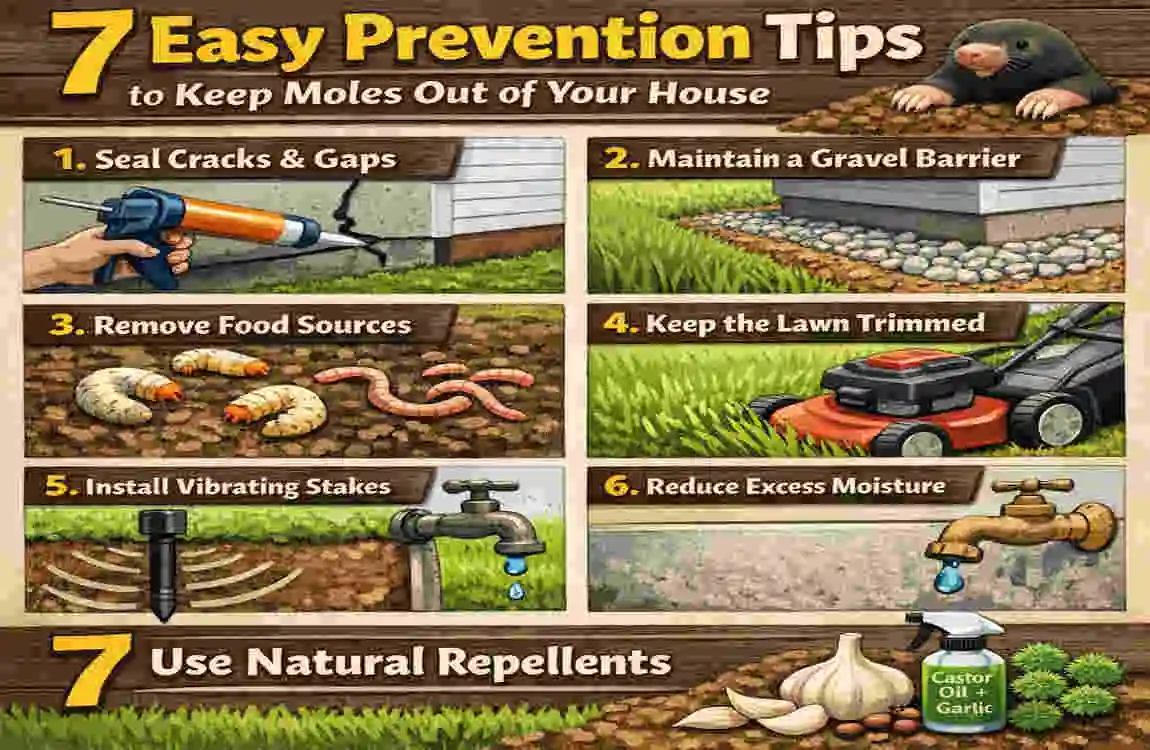
Now that we know the answer to “can moles get under your house” is a definitive yes, let’s talk about how to stop them. You don’t always need expensive chemicals. Often, changing the environment is enough.
Improve Yard Drainage
Moles love soft, moist soil because it is easy to dig through. If your yard has standing water or your gutters drain right next to the foundation, you are inviting them in.
- Action: Extend downspouts away from the house. Aerate your lawn to prevent water pooling. If you have low spots, fill them in to keep the soil firmer.
Reduce Grub Populations
No food, no moles. It’s that simple. Moles are there for the buffet.
- Action: Treat your lawn with milky spore (a natural bacteria) or beneficial nematodes. These kill the grubs without harming pets or the soil. If the food source vanishes, the moles will move to your neighbor’s yard.
Install Underground Barriers
This is the most effective physical solution for protecting your foundation.
- Action: Dig a trench about 2 feet deep and 6 inches wide around your home. Install 1/4-inch hardware cloth (wire mesh) in an “L” shape—straight down and then bending outward at the bottom. Fill the trench back in. Moles cannot dig through the wire.
Use Mole Repellents
Moles have very sensitive noses. Strong scents can drive them away.
- Action: Castor oil is a proven repellent. You can buy premade granules or mix your own spray (part castor oil, part dish soap, part water). Spray this around the foundation and over the tunnels. Ultrasonic devices that emit vibrations can also work, though results vary.
Maintain Lawn Health
A healthy lawn is surprisingly resistant to pests.
- Action: Don’t overwater. Deep, infrequent watering encourages grass roots to go deep. Still, it allows the topsoil to dry out slightly, making it harder for surface tunneling. Keep the grass cut high to encourage strong root systems that are harder for moles to disrupt.
Seal Entry Points
Stop them at the gate.
- Action: Inspect your foundation for any cracks. Use a high-quality concrete caulk or expanding foam to seal gaps where pipes or wires enter the home. If you have vents in your crawlspace, ensure the screens are intact and not rusted through.
Encourage Natural Predators
Sometimes, you need to let nature do the work.
- Action: Owls and snakes are natural predators of moles. While you might not want snakes, installing a barn owl box in a high tree can encourage these birds of prey to patrol your yard at night.
DIY vs. Professional Prevention in Lahore
If you are living in a region like Lahore, the intense monsoon season changes the game. The soil becomes incredibly soft. In this case, DIY barriers might settle. It is often worth consulting local construction or pest control experts who understand how local soil types respond to water saturation, ensuring your barriers stay intact year-round.
Red Flags: Hire Pros If Moles Are Under Your House
While I am a huge fan of DIY solutions, there comes a time when you need to call in the cavalry. “Can moles get under your house” is one question; “Can I get them out by myself” is another.
You should hire a professional if:
- The infestation is massive: If your yard looks like a battlefield, one person with a trap won’t fix it.
- There is structural damage: If you see cracks in the walls, stop immediately and call a pro. You don’t want to make the foundation worse.
- The tunnels are inaccessible: If the moles are deep under a concrete slab, you cannot reach them with standard traps. Professionals have access to fumigation tablets and specialized baiting systems that are not available to the public.
In Pakistan, professional pest control services for mole removal can range from PKR 5,000 to PKR 20,000 depending on the severity and the size of the property. It is a small price to pay compared to the cost of fixing a sunken foundation.
Frequently Asked Questions (FAQs)
Can moles get under concrete slab houses?
Yes, absolutely. While they cannot dig through the concrete, they dig under it. They exploit cracks in the slab or tunnel in from the dirt perimeter, removing the soil support that holds the slab up.
How long does it take to get rid of moles under a house?
With aggressive treatment (trapping and repellents), you can usually clear an infestation in 1 to 4 weeks. However, if you don’t remove the food source (grubs), new moles may move in shortly after.
Are moles dangerous to humans or pets?
Generally, no. Moles are not aggressive and will rarely bite unless handled directly. They do not carry rabies as often as other wildlife. The main danger is tripping over their tunnels or the structural damage they cause to the home.
Do mothballs repel moles under homes?
This is a common myth. Placing mothballs in tunnels is largely ineffective because the chemical evaporates slowly in the soil, and moles block off that section of the tunnel and dig a new one. Plus, mothballs introduce toxic chemicals into your soil.
What is the best time to prevent moles in Pakistan?
The best time is usually early spring (February/March) before the breeding season begins, and again in late autumn before the cold sets in. However, in Lahore, prep your drainage before the monsoon season (July/August) to prevent soft soil that attracts digging.
Can moles chew through water pipes?
Moles do not eat plastic or metal, but their strong claws can scratch and damage soft PVC pipes. More commonly, their tunneling removes the soil supporting the pipe, causing it to sag and break under the pressure of the earth above.
