

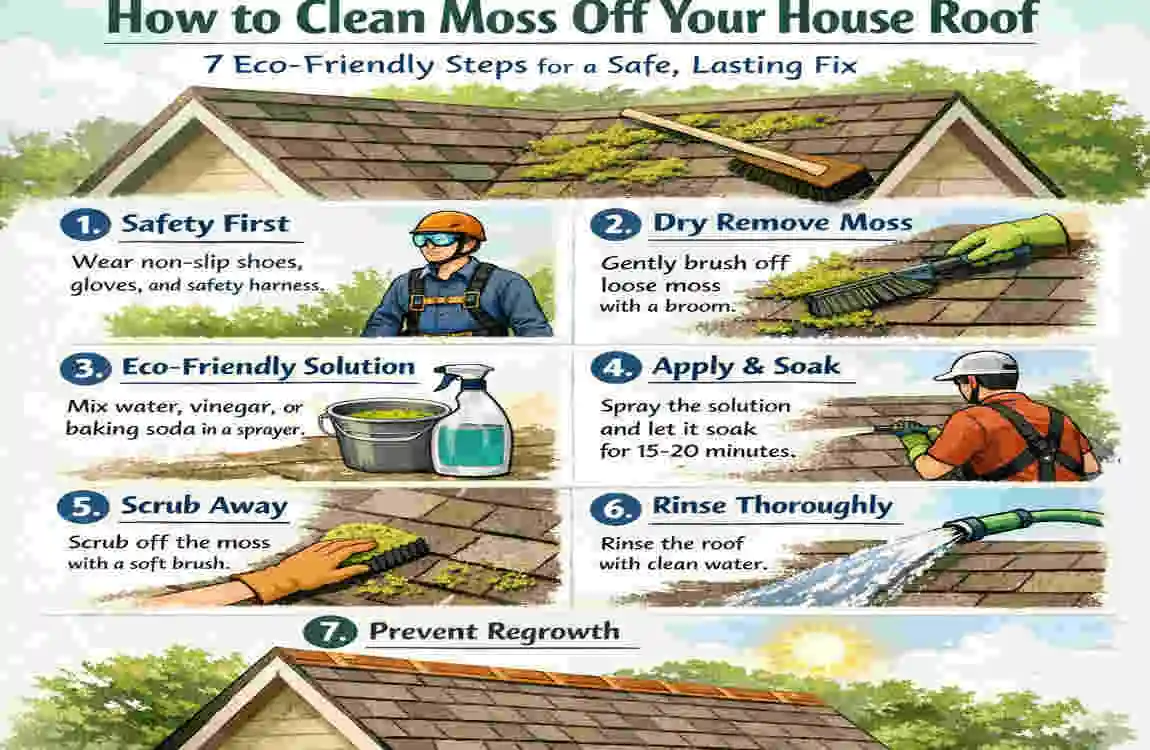
It is a crisp morning after a long, rainy winter in Lahore. You step outside with a cup of chai to admire your home, look up, and there it is. Instead of clean, crisp shingles, you see velvety, dark green patches creeping across your roof. If you are spotting these green streaks, you are definitely not alone. Moss absolutely loves humid climates, and whether you are in Pakistan’s Punjab region or the Pacific Northwest, it is a persistent guest that refuses to leave.
While moss might look charming in a forest or a fairy garden, it is bad news for your home. Unlike simple dirt, moss is a living organism that acts like a sponge. It traps moisture right against your roof materials, slowly eroding shingles and eventually leading to rot. If left unchecked, this fuzzy green invader can shorten your roof’s lifespan by 10 to 20 years. That is a massive financial hit for a problem that starts so small.
The best part? We are avoiding harsh chemicals. Bleach might work fast, but it ruins your garden soil and can discolor your roof. Instead, I’m going to walk you through 7 eco-friendly steps that are safe for your family, your pets, and your lawn.
Why Moss Grows on Roofs and Why You Should Act Fast
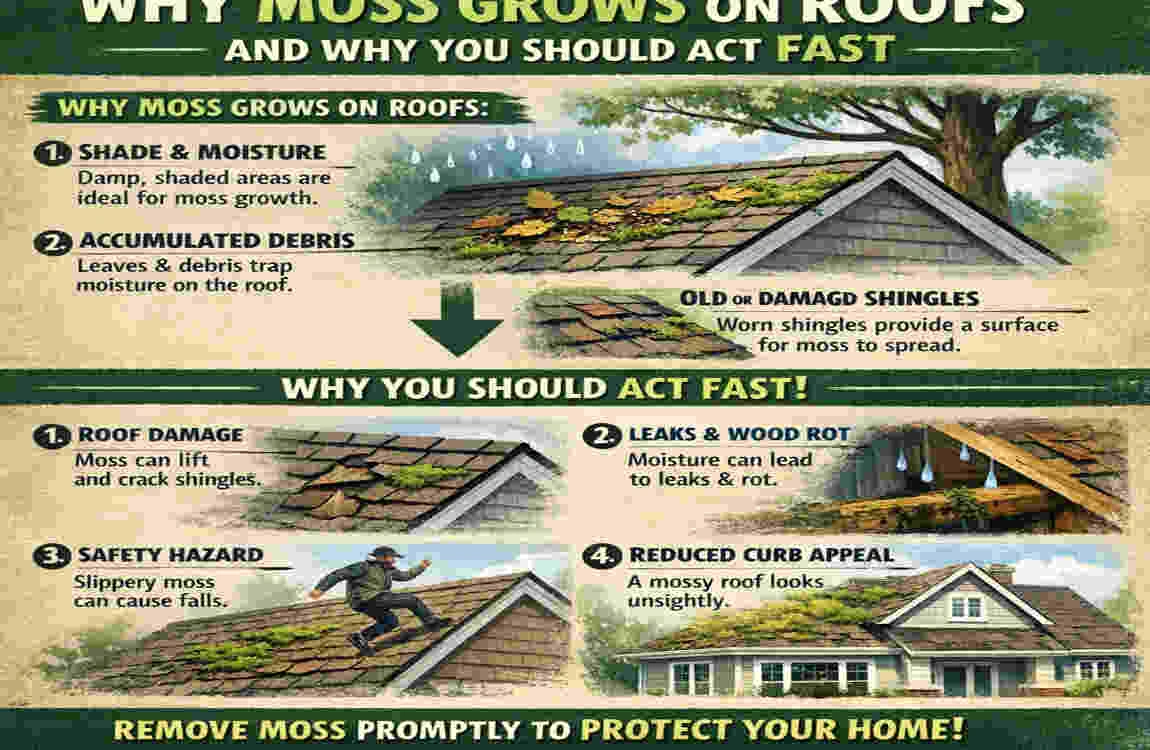
Before we grab our ladders, it is crucial to understand exactly what we are fighting. Many homeowners confuse moss with algae or lichen, but they are different beasts. Moss belongs to a group of plants called bryophytes. Unlike most plants, which have roots, moss clings to surfaces with tiny thread-like structures. It thrives in environments that offer three things: shade, moisture, and poor ventilation.
In places with high humidity or heavy monsoon seasons, such as parts of Pakistan and tropical climates, moss growth is accelerated. It loves the texture of asphalt shingles and clay tiles because they hold onto water. If your house has tall trees casting shadows over the roof, or if bird droppings have provided natural fertilizer, you have created a perfect 5-star hotel for moss.
The Risks of Ignoring the Green Fuzz
You might be thinking, “It’s just a little green patch, can’t I leave it for next year?” The short answer is no. Here is a breakdown of why delaying cleaning moss off house roof areas is a dangerous game:
IssueImpact on Your HomePrevention Tip
Moisture Trapping Moss acts like a wet blanket, causing wood rot and underlayment leaks. Trim overhanging branches to let sunlight dry the roof.
Shingle Degradation As moss freezes and thaws, it lifts shingles, leading to repair costs of $500-$2,000 (or PKR 150k+). Schedule annual roof inspections before the rainy season.
Reduced Curb Appeal A mossy roof looks neglected, potentially lowering your home value by 5-7%. Implement a seasonal eco-cleaning routine.
Structural Weight Wet moss is heavy; extensive growth adds unnecessary stress to the roof structure. Clean gutters and roof valleys regularly.
The Health and Safety Angle
Beyond the structural damage, there is a safety aspect. Moss is incredibly slippery. If you ever need to go up there to fix a tile or clean a chimney, a mossy roof is a slip-and-fall accident waiting to happen. Furthermore, as moss traps moisture, it encourages mold growth, which can release airborne spores that affect the air quality around your home.
When should you call a pro? While this guide is designed for DIY success, know your limits. If your roof is extremely steep (a pitch greater than 4/12), or if the moss coverage is nearly 100% thick carpet, it might be safer to call in experts. However, for most standard homes, understanding moss growth is key before cleaning moss off house roof shingles yourself.
Tools and Materials for Eco-Friendly Roof Moss Removal
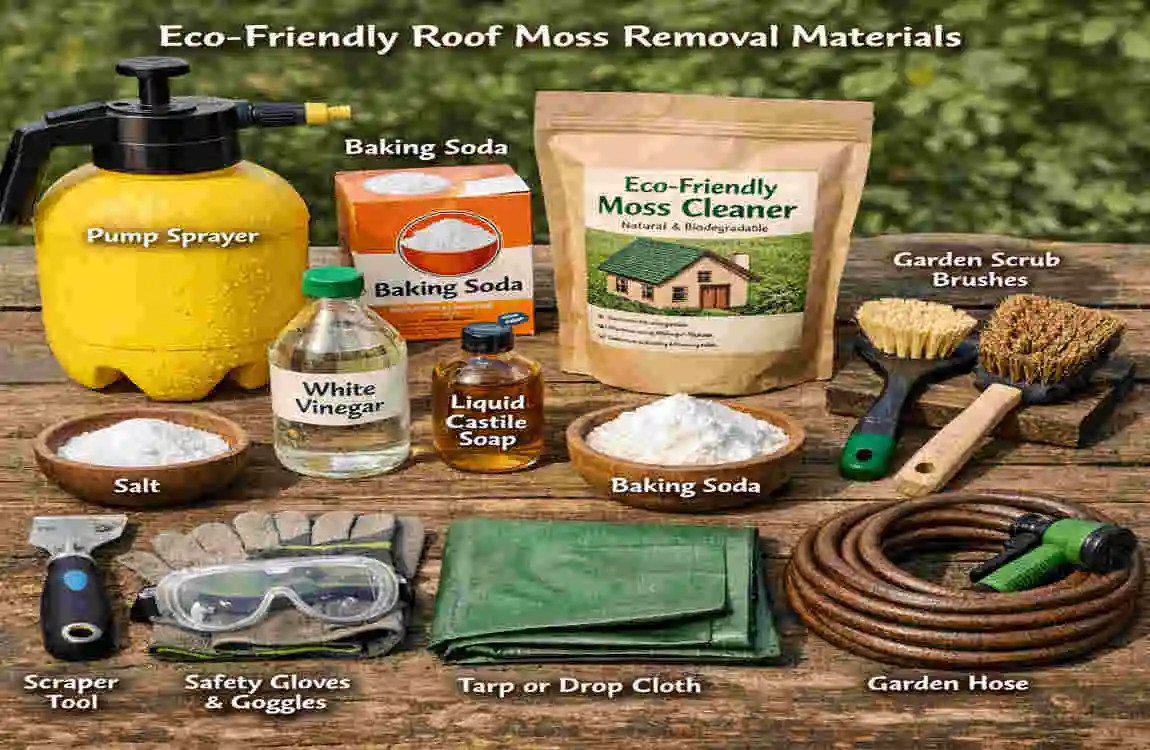
To get the job done right, you need the right gear. The good news is that because we are going the eco-friendly route, you don’t need to buy expensive industrial chemicals. You likely have many of these items in your pantry or garage.
Here is your shopping list for safe ways to clean roof moss:
- Soft-Bristle Brush: This is non-negotiable. Never use a wire brush; it will strip the protective granules off your shingles. A long-handled scrubbing brush is ideal.
- Garden Hose: You need a hose long enough to reach the roof. Attach a spray nozzle that produces a “jet” stream but still offers control.
- The Eco-Solution: You will need a large supply of White Vinegar (distilled) or Baking Soda.
- Dish Soap: A basic, non-detergent biodegradable liquid dish soap works best.
- Pump Sprayer: A standard 1-2 gallon garden sprayer helps apply the solution evenly.
- Safety Gear: This includes non-slip rubber-soled shoes, heavy-duty work gloves, and safety goggles to protect your eyes from splashback.
- Ladder & Stabilizer: A sturdy extension ladder is essential.
Estimated Cost Breakdown
If you were to hire a professional roof cleaning service, you could easily spend upwards of PKR 10,000 to PKR 25,000 ($100-$300) depending on the size of your roof. Doing it yourself significantly cuts that cost.
ItemEstimated DIY CostProfessional Cost
Cleaning Solution ~PKR 500 – 1,000 N/A
Equipment ~PKR 1,500 (if buying new) Included in service
Labor Free (Your weekend) High
Total ~PKR 2,000 – 2,500 PKR 10,000+
Pro Tip: If you are in Lahore or similar cities, head to local markets like Anarkali or Tollinton Market to buy vinegar in bulk gallons—it is much cheaper than buying small bottles from the supermarket.
Safety Precautions Before Cleaning Moss Off Your House Roof
I cannot stress this enough: Gravity is not your friend. Before you even step on a ladder, we need to prioritize safety when cleaning moss off house roof surfaces.
Check the Weather Forecast Never attempt to clean a roof on a rainy, windy, or freezing day. You want a cool, overcast day. Why? Because on a hot sunny day, your cleaning solution will evaporate before it kills the moss. On a wet day, the roof becomes an ice rink.
Assess the Roof Pitch Look at the angle of your roof. If it is a standard, walkable slope, proceed with caution. If it feels steep just looking at it from the ground, do not risk it. It is not worth a broken leg.
Ladder Logic Place your ladder on firm, level ground. Use a “ladder stabilizer” or standoff arms—these rest against the roof surface or siding and prevent the ladder from sliding to the side. Always follow the 4-to-1 rule: for every 4 feet up, the ladder’s base should be 1 foot out from the wall.
The Buddy System Never work alone. Have a spotter on the ground who can hold the ladder, hand you tools, and call for help if something goes wrong.
Electrical Hazards Look up! Are there power lines near your roof? Be incredibly careful with long brush handles or ladders near electricity.
Important Legal Note: If you have an older home with asbestos-cement tiles, do not scrape or pressure-wash them. Disturbance releases harmful fibers. Consult a specialist immediately.
7 Eco-Friendly Steps to Clean Moss Off Your House Roof
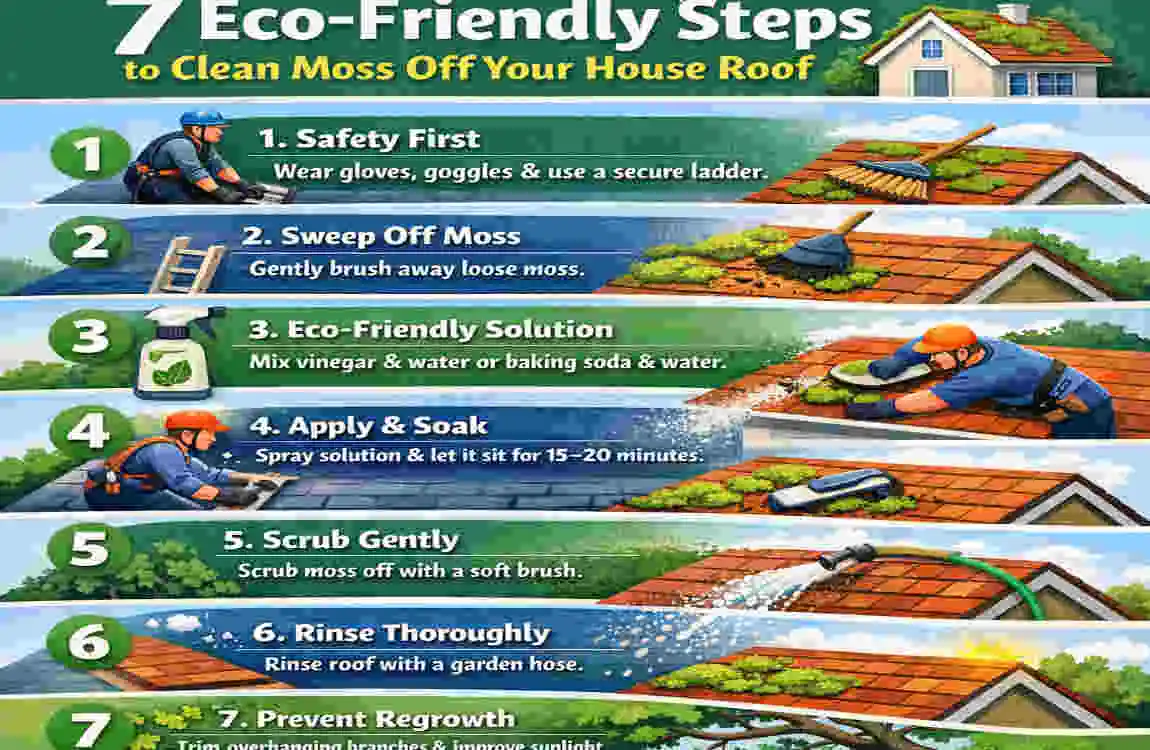
Now that we are prepped and safe, let’s get to work. Follow these steps sequentially for the best results.
Inspect and Prepare Your Roof
Before you start scrubbing, you need a plan of attack. Start with a visual scan from the ground using binoculars. Identify the areas with the heaviest growth. Are the shingles damaged? Are there loose tiles? You don’t want to scrub a loose tile and have it slide off.
Once you are safely on the roof (or working from the ladder at the eaves), use a broom or a leaf blower to clear away loose debris, such as leaves, twigs, and pine needles. This debris holds moisture and hides the moss.
Why this matters: Cleaning moss off house roof shingles is useless if you leave piles of rotting leaves behind. They will restart the moss cycle immediately. Also, check your gutters. If they are clogged, the water you use to rinse the roof will have nowhere to go, potentially causing overflow damage to your siding.
Trim Overhanging Branches and Improve Airflow
This step is often overlooked, but it is actually the most important for prevention. Look at the trees surrounding your house. Are branches hanging directly over the roof?
These branches act as a sun-block, keeping your roof in perpetual shade. They also drop organic matter (leaves/sap) that feeds the moss. By pruning these branches back, you allow sunlight to hit the roof. Ultraviolet (UV) light is a natural moss killer.
Action Item: Trim back any vegetation to create at least a 6-foot clearance from your roof. This simple act can prevent 70% of future regrowth. It improves airflow, allowing the wind to dry out your shingles after a rainstorm. A dry roof is a moss-free roof.
Apply a Natural Moss-Killing Solution
Now for the chemistry—without the harsh chemicals. We are going to make a solution that dessicates (dries out) the moss.
The Magic Recipe:
- Mix equal parts white vinegar and water (50/50 mix).
- Add a generous squirt of dish soap.
Why it works: The acetic acid in vinegar attacks the moss, while the dish soap acts as a “surfactant.” This breaks the surface tension, allowing the vinegar to stick to the moss rather than rolling off the waxy leaves.
Application: Pour this mixture into your pump sprayer. Saturate the mossy areas thoroughly. You want the moss to be thoroughly soaked in this solution. Once applied, let it sit. Do not rinse it off immediately. Let it dwell for 20 to 45 minutes. This gives the acid time to penetrate the root-like structures.
Gently Brush Away Loose Moss
After the solution has done its work, the moss should look slightly different—perhaps a bit wilted or lighter in color. Now comes the manual labor.
Using your soft-bristle brush, start scrubbing the moss. Here is the golden rule: Always brush downward.
You must brush from the top of the shingle to the bottom (in the direction water flows). If you brush upward, you risk lifting the shingle edges and breaking the seal that keeps your roof waterproof.
Be Gentle: You are cleaning moss off house roof shingles, not scrubbing a cast-iron skillet. Asphalt shingles are covered in tiny granules that protect the roof from UV rays. If you scrub too hard and see a lot of colored sand in the gutter, you are scrubbing too hard. The goal is to dislodge the moss chunks, not strip the roof.
Rinse Thoroughly with Eco-Friendly Water Flow
Once you have loosened the moss, it is time to rinse. Grab your garden hose.
Using a medium-pressure spray, rinse the roof from top to bottom. Watch as the moss clumps slide down into the gutters.
Crucial Warning: Do not use a high-pressure power washer. I repeat, put the pressure washer away. High-pressure water can blast the granules right off your shingles and force water under them, leading to rot. A standard hose is plenty strong enough for eco-friendly moss removal.
As you rinse, keep an eye on your downspouts. All that moss has to go somewhere, and it will likely clog your gutters quickly. You may need to stop rinsing periodically to clear the gutter blockage so the water can drain freely.
Apply Preventive Treatments
Congratulations, the moss is gone! But we want to make sure it stays gone. This step ensures a “lasting fix.”
Option A: The Baking Soda Method If you have leftover moss spores (which you can’t see), a baking soda treatment can inhibit them. Moss loves acidic environments. Baking soda is alkaline (basic). By spraying a mixture of baking soda and water on the roof, you alter the pH balance, making the surface inhospitable for moss.
Option B: Zinc or Copper Strips For a long-term, passive solution, consider installing zinc or copper strips along the roof ridge. When it rains, water flows over these metal strips, picking up microscopic metal ions. These ions wash down the roof and act as a natural herbicide, preventing moss and algae from growing. It’s like a forcefield for your roof.
Monitor and Maintain for Lasting Results
You have done the hard work; now maintain it. Cleaning moss off house roof areas isn’t a “one and done” forever task, but it shouldn’t be a yearly struggle either.
The Schedule:
- First Month: Check the roof weekly. If you missed any spots, the remaining moss might turn yellow and die from the vinegar treatment. You can gently brush these dead bits off.
- Seasonally: Inspect your roof before and after the rainy/winter season.
- Yearly: Re-apply the baking soda spray or a light vinegar mist as a preventative measure, even if you don’t see thick moss yet.
By catching it early, you will never have to do the heavy scrubbing again. You can spray and walk away.
Common Mistakes to Avoid When Removing Moss from Your Roof
Even with the best intentions, things can go wrong. I have seen homeowners damage their roofs trying to clean them. Here are the pitfalls you must avoid:
- Pressure Washing: I mentioned this before, but it bears repeating. It can void your roof warranty and reduce the life of your shingles by years.
- Using Bleach: While effective at killing moss, bleach is toxic to the plants around your house’s foundation. Runoff can kill your prize roses or contaminate local water sources. It can also discolor your roof tiles.
- Scraping Too Hard: Using metal tools or stiff brushes can tear shingles.
- Ignoring the Gutters: If you wash moss into the gutters and leave it there, it will clog the downspouts. This causes water to back up under the roof eaves, causing fascia rot.
Before and After Expectations: When you finish, your roof might not look “brand new” immediately. It may take a few rain showers to wash away the final bits of dead moss and dust. Be patient. The result will be a clean, functioning roof that adds value to your home.
Long-Term Prevention: Keep Moss Off Your Roof for Good
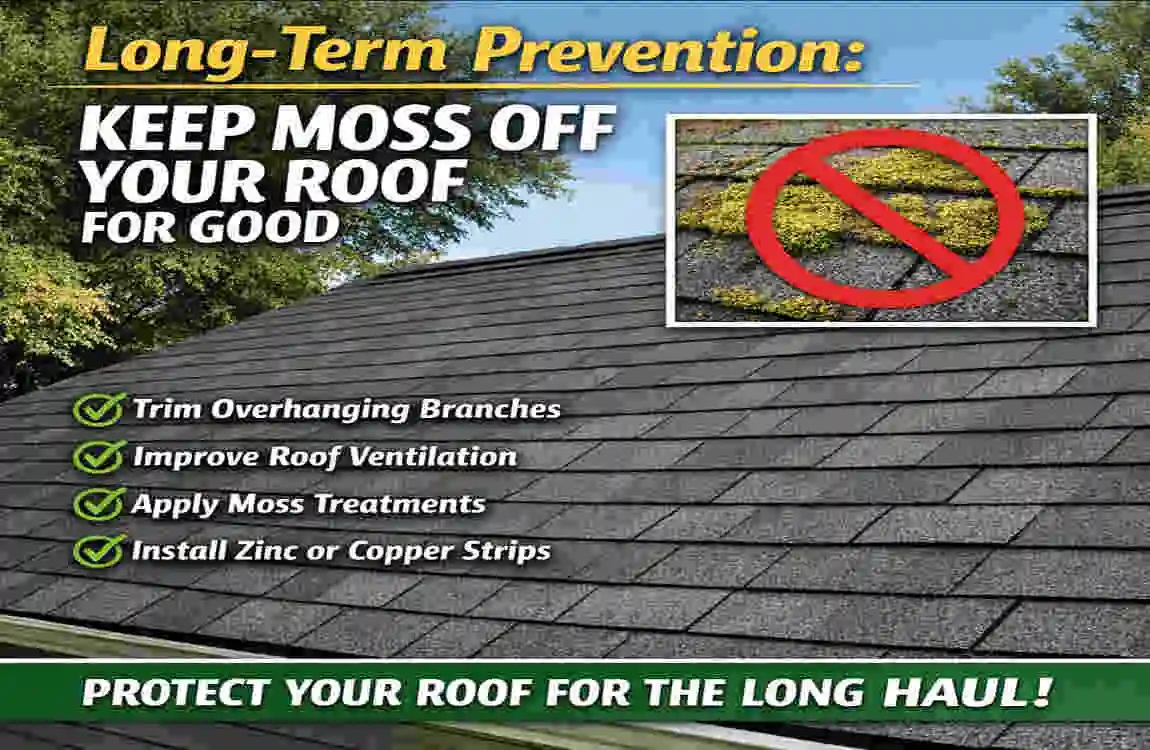
If you really want to “future-proof” your home against moss, you need to look at the bigger picture.
Improve Attic Ventilation: Moss loves a cool, damp roof surface. If your attic is poorly ventilated, heat can get trapped or fail to circulate, keeping the roof deck damp longer. Ensuring you have proper soffit and ridge vents helps the roof dry out from the inside out.
Smart Landscaping: We talked about trimming trees, but consider what you plant in the future as well. If you are planting new trees, position them so they won’t eventually cast shade on the north side of your roof (or the shaded side). Choose sun-loving plants for the perimeter of your home to encourage a drier micro-climate.
Roof Coatings: Clear, eco-friendly sealants are available at hardware stores that you can apply over your shingles. These fill the pores of the asphalt, making it harder for moss roots to take hold.
FAQs: Cleaning Moss Off House Roof
Q: Is vinegar safe for all types of roofs? A: Generally, yes. Vinegar is safe for asphalt shingles, concrete tiles, and metal roofs. However, if you have limestone-based tiles, acids can cause etching, so use a very diluted solution or stick to baking soda.
Q: How long does it take for the moss to die after spraying? A: You should see the moss turning yellow or brown within 24 to 48 hours. Once it’s dead, it loses its grip on the roof and is much easier to brush off.
Q: Can I leave the dead moss on the roof? A: It is better to remove it. While dead moss will eventually wash away, it can take months to do so. In the meantime, that dead organic matter can trap moisture and debris, encouraging new growth.
Q: How often should I perform moss removal from my house roof? A: In humid climates like Lahore or the Pacific Northwest, a light cleaning once a year is recommended. In drier climates, every 2-3 years is sufficient.
Q: Is laundry detergent safe to use? A: Powdered laundry detergent is a popular “old school” trick. While the chemicals can kill moss, they aren’t always eco-friendly and can leave a slippery residue. We recommend dish soap and vinegar for a greener approach.
