

It is the middle of July. The sun is blazing down, the asphalt outside is practically melting, and inside your home, the air conditioner is humming loudly, struggling to keep up. We have all been there—standing in front of the AC vent, waving our hands, hoping for a gust of arctic air, but only feeling a mild breeze. In places like Lahore or Karachi, where temperatures regularly soar past 40°C, this isn’t just uncomfortable; it is a battle for survival.
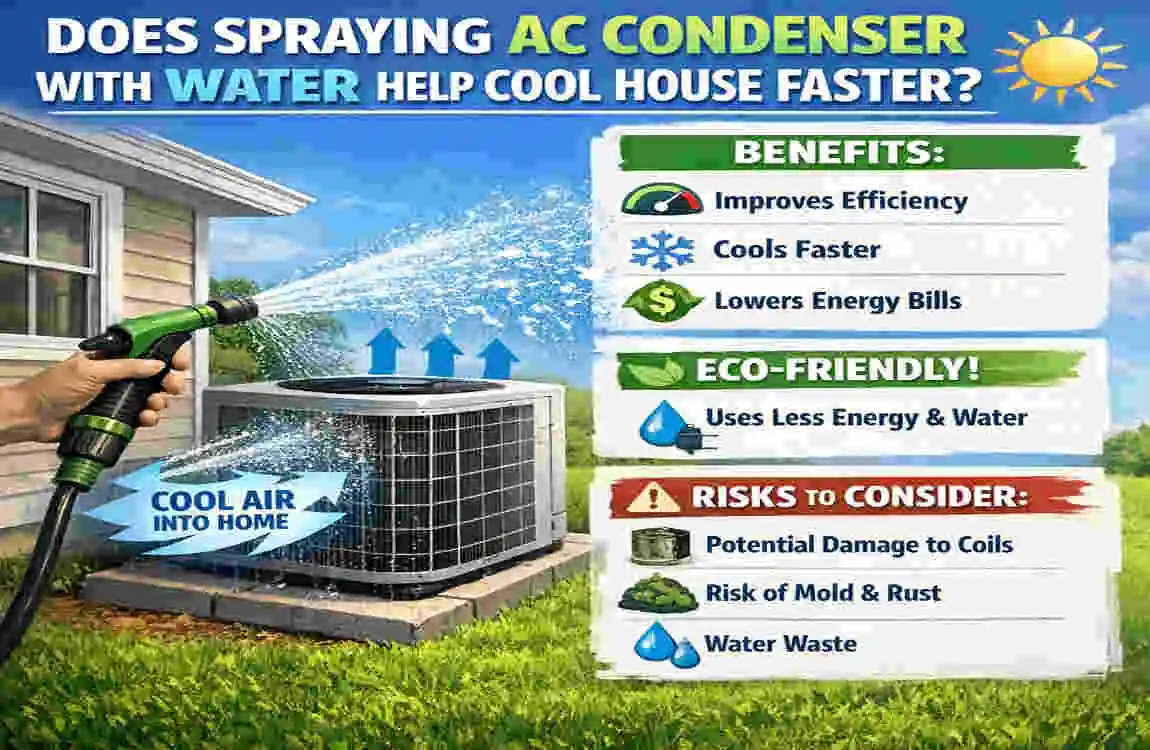
The short answer? Yes, it absolutely can help cool your house faster in the short term. However, like most things in life, it comes with specific conditions, some pretty impressive eco-perks, and legitimate risks that we need to unpack before you grab your garden hose.
The Science: How Spraying the AC Condenser with Water Works
To understand why this hack works, we first need to understand how your air conditioner actually functions. It isn’t just “making cold air.” It is actually a heat removal machine.
AC Condenser Basics: The Heat Rejector
Your air conditioning system has two main coils:
- The Evaporator Coil: Located inside your house. It absorbs heat from your indoor air.
- The Condenser Coil: Located outside (the big noisy unit). Its job is to dump that heat into the outdoor air.
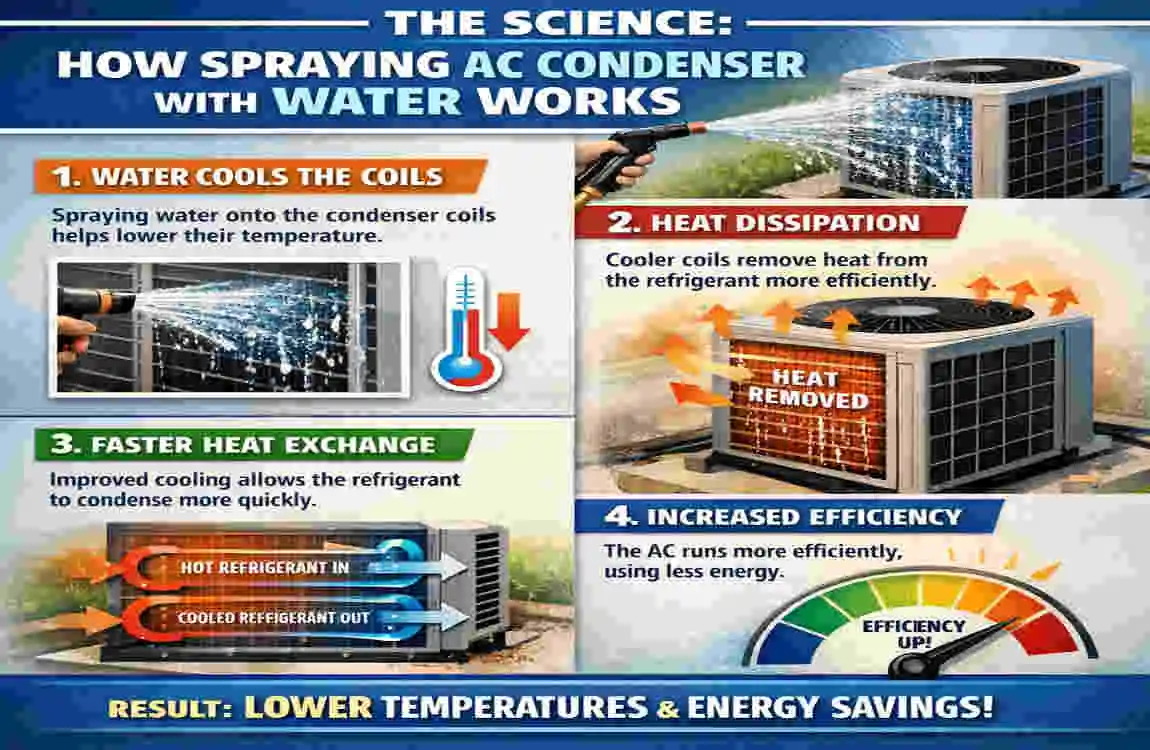
Imagine your AC as a pump. It pumps heat from the inside to the outside. The condenser is the exit door for that heat. When the refrigerant (the gas inside the tubes) reaches the outdoor unit, it is incredibly hot and under high pressure. The fan in the outdoor unit blows air over these hot coils to cool the refrigerant down, turning it back into a liquid so it can cycle back inside and absorb more heat.
Here is the problem: Dirt and Heat. According to ENERGY STAR, if your condenser coils are dirty or if the outside air is scorching hot (say, 45°C), the unit struggles to dump that heat. It is like trying to cool off a hot cup of coffee in a warm oven—it just doesn’t work efficiently. Dirt buildup alone can reduce efficiency by 20-30%.
The Water Spray Mechanism: Evaporative Cooling
This is where the water comes in. When you ask, “Does spraying the AC condenser with water help cool the house faster?” you are essentially asking about evaporative cooling.
Water has a high latent heat of vaporization. This is a fancy physics term that means water absorbs a massive amount of heat energy when it changes from a liquid to a gas (evaporation).
When you spray water on the hot condenser coils:
- The water hits the hot metal fins.
- It instantly absorbs heat from the metal, causing it to evaporate.
- This rapidly lowers the coils’ temperature—much faster than air alone could.
Does It Actually Help?
Yes. Studies and experiments, including data published in ASHRAE journals, suggest that misting the condenser can significantly lower the coil temperature.
This creates a “head pressure drop.” When the pressure drops, the compressor doesn’t have to work as hard. This results in:
- Faster Cooling: The refrigerant returns indoors much cooler, allowing it to absorb indoor heat more aggressively.
- Temperature Drop: You might see the air coming out of your vents drop by 5-10°F almost immediately after spraying the unit.
Proven Benefits: Cooling Boost and Eco Wins
If you decide to try this, what tangible rewards can you expect? It isn’t just about comfort; it is about efficiency and the environment.
Instant Cooling Gratification
We have seen real-world tests in Lahore neighborhoods where residents sprayed their units during peak heat hours (2 PM – 4 PM). The results were immediate. Rooms that felt “stuffy” suddenly became crisp and cool within 15 to 20 minutes.
If you are hosting a party or just returned home to a baking hot house, this is the “turbo button” for your AC.
Significant Eco Hacks
We are all trying to be greener in 2026. Your air conditioner is likely the biggest carbon offender in your home. When the compressor works overtime, it draws a massive amount of electricity (kilowatt-hours).
By cooling the coils with water, you reduce the compressor’s workload.
- Carbon Footprint: Less energy used means fewer fossil fuels burned at the power plant.
- Refrigerant Strain: High heat creates high pressure, which can lead to leaks. Keeping the unit cool reduces the risk of refrigerant leaks, which are terrible for the ozone layer.
- Energy Saved: A single effective spray session can save roughly 0.5 to 1 kWh of electricity, depending on the unit size and duration of use.
Serious Bill-Cutting Potential
This is what you really want to know. Can this lower your bill? Yes. An AC unit running efficiently can consume 10-25% less power.
Let’s look at the math for a standard 2-ton unit in Pakistan:
- Inefficient running cost: High amps due to heat could cost you significantly more per hour.
- Efficient running cost: Lower amps due to water cooling.
If you save just PKR 500 to PKR 1000 a month during the summer by keeping your unit efficient, that is money back in your pocket.
The Efficiency Formula:
Efficiency Gain = (ΔT water evaporation) / Ambient Temp
Simply put, the hotter it is outside, the more water evaporates, and the more money you save. When you pair this with other hacks—like using solar fans or proper roof insulation—you could be looking at total cooling bill cuts of up to 40%.
Step-by-Step Guide: Safe Spraying Technique
Okay, you are convinced. You want to try it. But please, do not just blast your AC with a pressure washer. That is the quickest way to destroy your unit. You need to do this carefully.
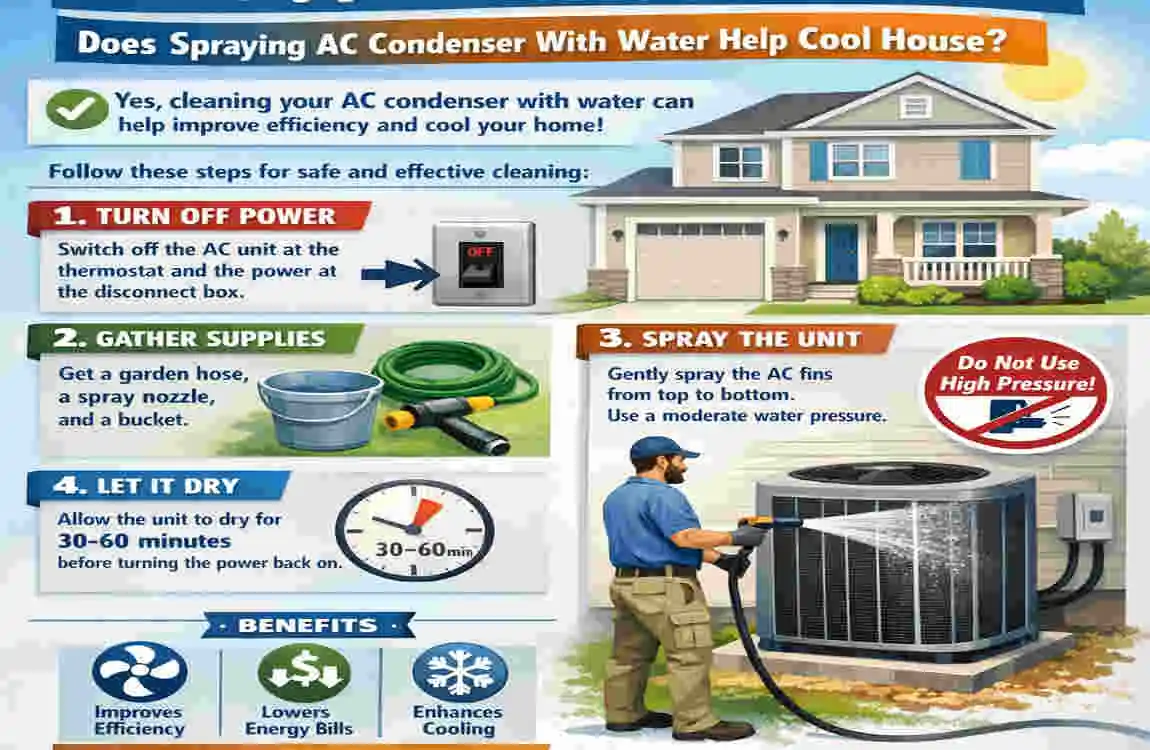
Here is your safe, step-by-step guide to answering “Does spraying the AC condenser with water help cool the house?” without breaking your machine.
Preparation Checklist
Before you start, gather these items:
- Garden Hose: Ideally with a spray nozzle that has a “Mist” or “Shower” setting.
- Soft Brush: For clearing away cobwebs or leaves.
- Safety Gear: Wear rubber-soled shoes to prevent slipping or electrical grounding issues.
Process
Power Down (Crucial!)
Go to your circuit breaker box or the outdoor disconnect box near the AC unit. Turn the power OFF.
- Why? Water and electricity are a deadly mix. Never spray a running unit when cleaning it deeply. If you are doing a light mist while it runs (an advanced technique), stay far away from the electrical panel. For beginners, turn it off first.
Visual Inspection
Look at the fins (the thin metal grates). Are they bent? Are they covered in a thick blanket of dust?
- If there is a thick layer of dust/mud, water alone might turn it into sludge. You might need a chemical cleaner first.
- If it is relatively clean, proceed to the water spray.
The Gentle Spray
Turn your hose on. Do not use high pressure. High pressure can bend the delicate aluminum fins, blocking airflow and ruining the unit forever.
- Angle: Spray from the top down.
- Pattern: Use a “shower” or “mist” setting.
- Duration: Spray for about 10-15 minutes. You want to thoroughly soak the coils and wash away loose dust, allowing the water to penetrate the fins.
Let It Drip
Wait a few minutes for the excess water to drip off. The coils should still be damp.
Power Up
Turn the breaker back on. Go inside and lower the thermostat. You should feel the difference rapidly.
Pro Tip for Misting Systems: Some people install permanent systems that spray while the unit runs. If you do this, ensure the nozzles point away from the fan motor and electrical box.
Risks and Downsides: What Could Go Wrong
I am writing this as a professional who wants you to save money, not spend it on repairs. We have answered “Does spraying the AC condenser with water help cool the house faster?” with a yes, but we must discuss the risks.
The Hard Water Menace (The Lahore Problem)
In many cities, especially Lahore, the tap water is “hard.” This means it is rich in dissolved minerals, such as calcium and magnesium.
- The Scale Effect: When water evaporates on your hot coils, it leaves these minerals behind. Over time, this forms a white, crusty layer called “scale.”
- The Irony: This scale acts as an insulator. Eventually, the scale will prevent the heat from escaping the coils. You will end up with a unit that works worse than before.
- Solution: If you have hard water, do not spray your AC daily. Only do it occasionally for cleaning, or use filtered/distilled water if possible.
Corrosion and Rust
Your AC coils are usually made of copper or aluminum. While they are designed for outdoor use, constant exposure to water (especially if you install a permanent mister) can accelerate corrosion. Rusted coils eventually leak refrigerant, leading to a repair house bill that costs thousands (PKR 5k+ easily).
Electrical Hazards
If you are careless and spray water directly into the electrical control box (usually located in the corner of the outdoor unit where the wires go in), you can cause a short circuit. This can fry your capacitor, blow the compressor, or spark a fire.
Warranty Voids
Did you know that 15% of DIY hacks can void your manufacturer’s warranty? Carrier, Daikin, and Gree all have strict guidelines. If a technician sees that you have modified the unit with a misting system or that it is damaged by water scale, they might refuse your warranty claim.
Pros vs. Cons Table
To make this easy to digest, here is a quick comparison:
Aspect Pros Cons
Cooling Speed: Helps cool the house faster (+10°F boost). The effect is temporary (1-2 hours) as the water dries.
Cost : Free DIY hack (just water cost). Potential repairs if electricals get wet (PKR 5,000+).
Eco Impact lowers immediate energy consumption. Wastes water if done excessively.
Longevity reduces heat stress on the compressor. Hard water scale can reduce coil life by 2 years.
Maintenance cleans off light dust. Can turn heavy dust into mud/sludge.
Better Alternatives: Eco Hacks Without the Spray
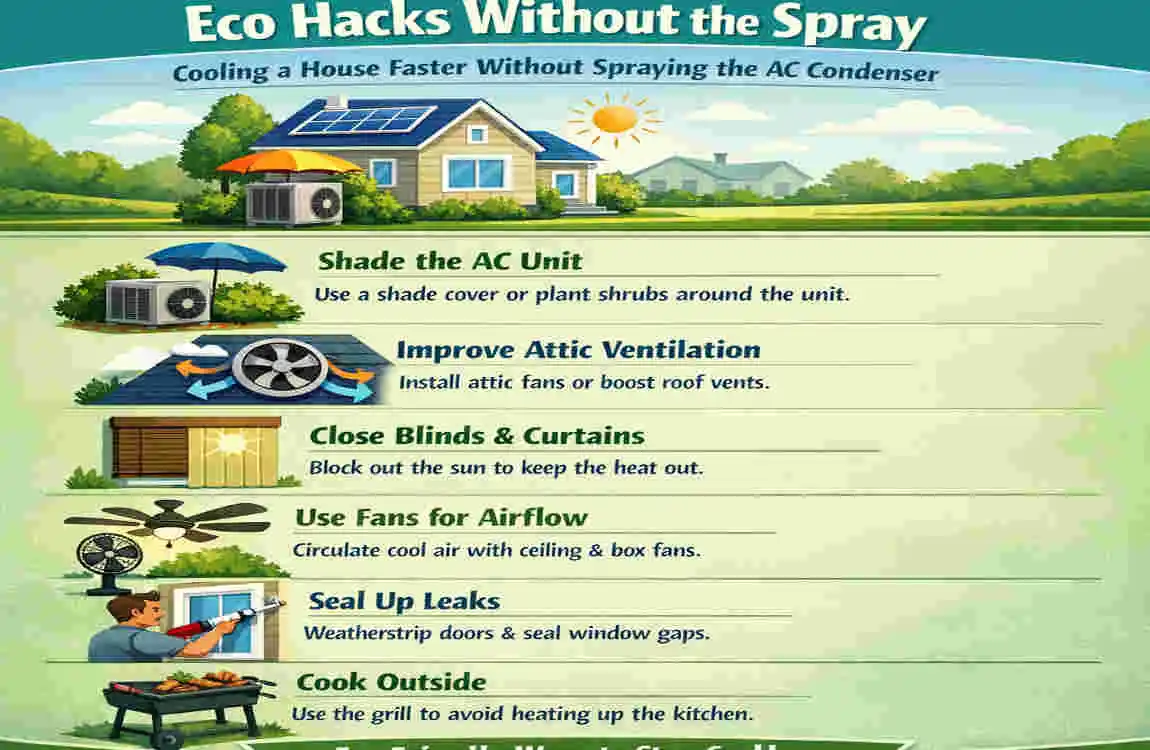
If the risk of hard water scaling scares you, or if you don’t want to mess with the hose, there are other ways to answer the need for a cooler house without the water risks.
Professional Maintenance Musts
Nothing beats a professional cleaning. Once a year, preferably in spring, hire a technician to use a chemical foaming cleaner. This removes the deep grime that water alone cannot touch, restoring your unit to 95% of its original factory efficiency.
Shade the Condenser
This is a passive eco-hack. If your outdoor unit sits in direct sunlight at 2 PM, it is baking.
- Plant Trees: Plant a shrub or small tree a few feet away to cast a shadow on the unit.
- Install an Awning: Build a simple shade cover above the unit (ensure you leave plenty of clearance for airflow).
- Result: This can lower the ambient temperature around the unit by 5-6 degrees without using a drop of water.
Smart Upgrades
- Variable-Speed Compressors (Inverter ACs): If your unit is over 10 years old, swap it for an Inverter AC. They naturally adjust their speed and automatically save 30-50% on bills.
- Ceiling Fans: Run your ceiling fans counter-clockwise. This creates a wind-chill effect, allowing you to set your thermostat at 26°C while feeling like it is 24°C.
Solar Integration
With the 2026 solar incentives in Pakistan, running your AC during the day with solar panels is the ultimate bill-cutter. It effectively makes your cooling “free” during peak sun hours.
FAQs: Answering Top Searches
Here are the most common questions people ask when they search “Does spraying the AC condenser with water help cool the house?”
Q: Does spraying the AC condenser with water help cool the house immediately? A: Yes. The evaporation of water instantly removes heat from the coils, lowering the pressure and allowing the AC to blow colder air inside within minutes.
Q: Is it safe to spray water on my AC while it is running? A: It is generally safe to lightly mist the coils (fins). At the same time, it runs as long as you stay away from the electrical motor and fan. However, for a deep clean, always turn the power off first to avoid shock hazards.
Q: Can I use rainwater or tap water? A: Rainwater is actually better because it is naturally “soft” (no minerals). Tap water, especially in areas with hard water, can cause scaling. If you must use tap water, do it sparingly.
Q: How often should I spray my AC condenser? A: For cleaning purposes, once a month during the summer is sufficient. For cooling (misting), use it only during extreme heatwaves to avoid corrosion and mineral buildup.
Q: What is the best alternative for humid climates like Lahore? A: Since humidity reduces evaporation rates, misting is slightly less effective in high humidity. The best alternative is to shade the unit and ensure maximum airflow around the condenser.
